Category

Ausstellung

Category
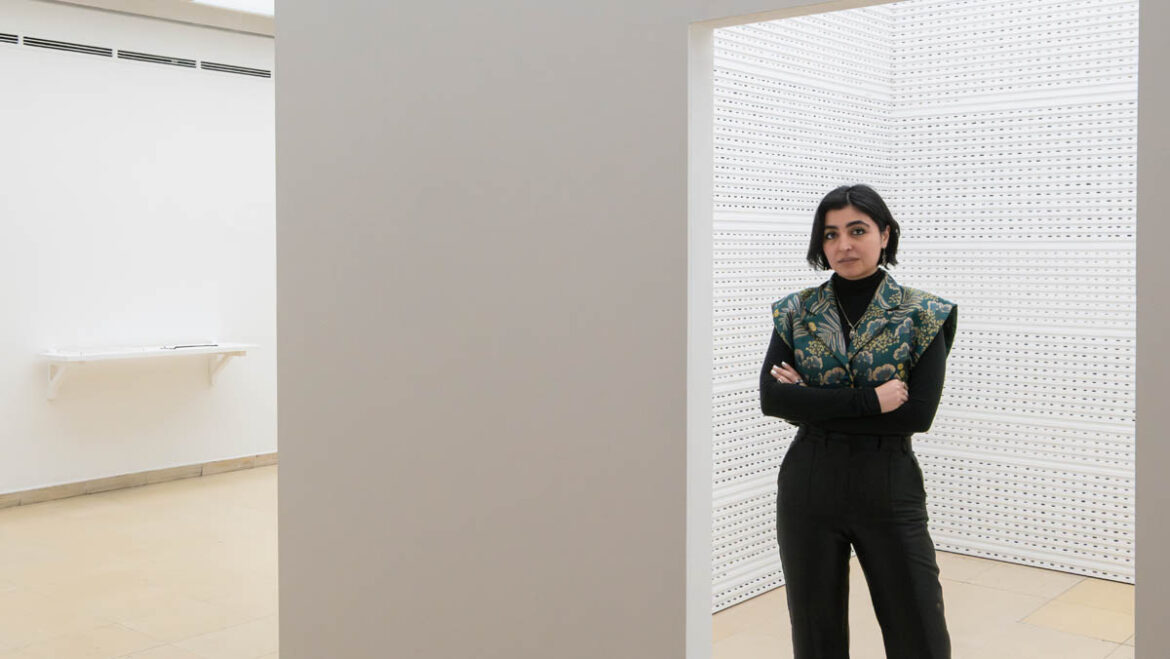
Photo: Alessandro Santi
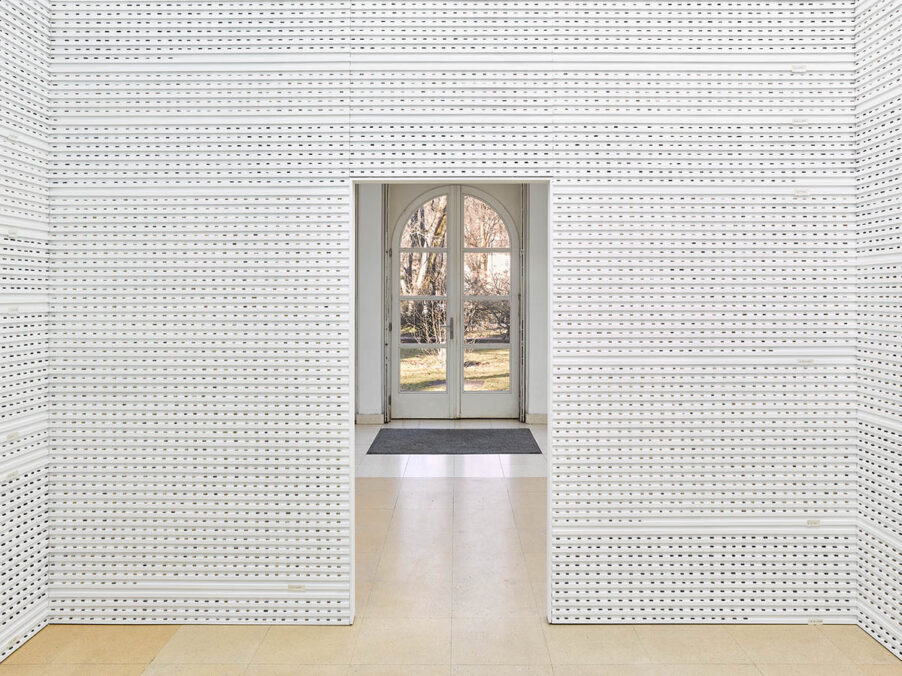
exhibition view: Claudia Larcher – Extinction Story. Photo: Alessandro Santi

The video you created emerges from a long research process. It involves the elaboration of memories, archival investigation, and a reinterpretation of the past — because you, too, are part of the story. How was it for you to deal with this process? What was it like to be both an artist and the grandson of Josep Schreiber?
It’s always difficult when you are deeply immersed in a story. For me, it was very important to try to keep some distance while at the same time preserving my personal connection. I had already worked with family stories in the past through my artistic practice: you have to confront pain but also navigate different possible narratives. It is common, when you talk with relatives, to hear the same story in different versions. For me, it was crucial to investigate this “unspoken” dimension that came from my relatives but also from my grandfather himself. He never talked, for example, about his war years (speaking about them was forbidden), and he rarely opened up about his life. So even when I was younger, I always tried to take advantage of those rare moments of confession during family dinners to investigate his past more deeply. Over the years, I collected different stories and often realised that I had multiple versions of the same events. The only clear thing was his deep love for his bird collection. For me, it was a mysterious and fascinating topic because the entire family revolved around it. Organising the collection, cataloguing it, and sorting all the collected materials had been part of my grandmother’s childhood, and later became part of mine as well. The collecting process that once drove my grandfather evolved, in some ways, in parallel with my artistic practice. Categorisation and analysis became tools capable of building a system that holds the world together, exactly as art does. For me, it was very important to reinterpret this background and create something deeply personal: for example, I inserted fictional images among the real vintage photographs, opened up new narratives, and highlighted the contradictory meanings that eggs can represent.

Since the very beginning of the video, you get the feeling of opening a family archive. As we move through it and continue with your work, we realise there is something more behind the linear version of the story. What was your relationship with the family archive, and where did you collect all these materials?
The first important thing to say is that my grandfather was never at home. There was a large part of his life that was unknown to us because all his favourite activities happened outside the family: collecting eggs, hunting, and climbing were things he usually did on his own. I remember that he was a schoolteacher; on the very day school ended, he would pack his things and leave on his exploration trips. All the photographs and the egg collection are materials I had access to only after my grandfather died in 1998. My grandmother wanted to share this family heritage with her children and also write something about it. So for me, in creating the video, it was essential to explore the archival material, beginning with the photo album, the written documents, and the oral memories. I worked a lot with my aunts, who began flipping through the album and telling me the stories they knew.

But none of us had those memories with him, so most of the pictures were not taken by family members but by people outside the family, people we don’t know.

That mystery has always fascinated me. Also, part of the original archive was thrown away by my uncle in the past because of some old family arguments, so the version I have today contains several gaps, which I tried to transform into potential narratives.

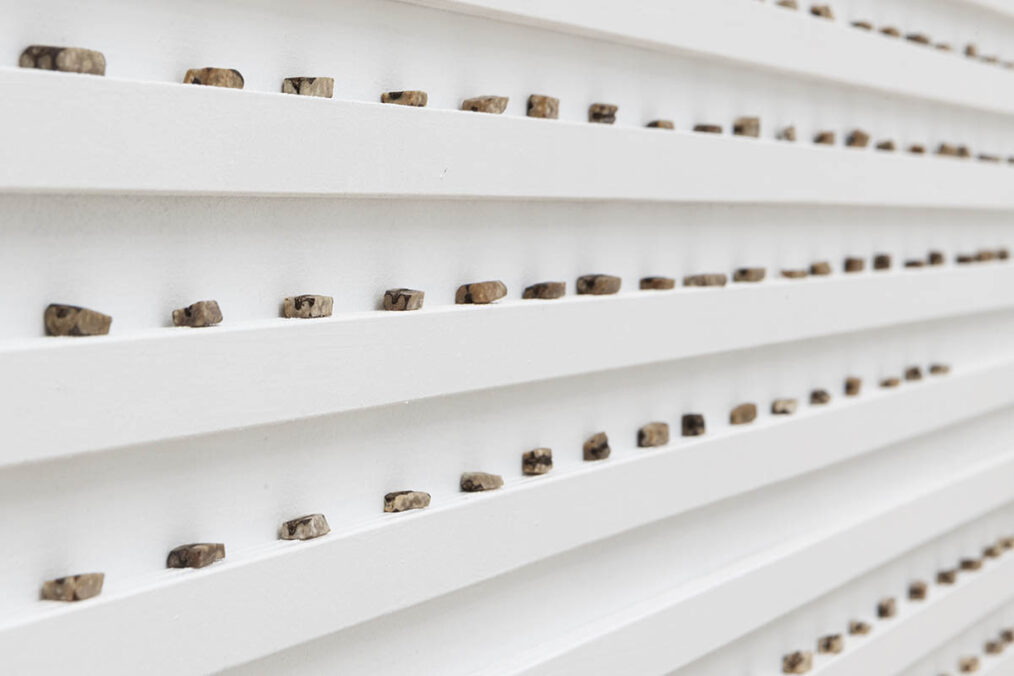
exhibition view: Claudia Larcher - Extinction Story. Photo: Alessandro Santi
exhibition view: Claudia Larcher – Extinction Story. Photo: Alessandro Santi

The most interesting thing for me is that Extinction Story explores the roots of collecting: the burning desire behind it, the utopia of making knowledge tangible. You have a strong sense of contrast, as you say at one point in the video: “a continuous tension between possession and loss, precision and stubbornness, devotion and blindness.” How did you shape your personal view of the story?
For me, it was fundamental to create a tension between real and open narratives. I created some of the photographic elements myself and tried to integrate them seamlessly into the flow of the story. In the second part of the video, I also wanted to give more space to my personal interpretation. For example, some of the eggs stimulated my imagination and pushed me to interpret them. There is a very large egg that seems to belong to a bird from outside Europe. But I’m sure my grandfather never travelled to Australia, so I began imagining the birds and the stories that could be hidden behind these materials. The eggs turn out to be contradictory elements that embody both origin and absence. They gather stories, and at the same time, they are archives of places, eras, mistakes, relationships, and losses. The first loss is that I have no real information about the collecting process itself. My grandfather never brought a camera with him to film, and he never wrote about his methods. So I started collecting on my own. I received all these boxes of eggs and discovered that some had been excluded from the collection because they were not properly preserved. This led me to ask myself: What are the rules for collecting bird eggs? Why did he have only wild bird eggs and not those of domesticated species? I know, for example, that after egg collecting became illegal, he changed some dates; he also didn’t preserve certain eggs properly, sometimes making two holes in the shell instead of one, as he should have. So there are inconsistencies, mistakes, and small acts of concealment that reveal another layer of the story. For me, these gaps and imperfections became an important part of the narrative. They opened up spaces for imagination, allowing me to construct new possible interpretations. In this sense, the archive is not only a place of memory but also a place of projection — a fragile system where truth, omission, and invention coexist.

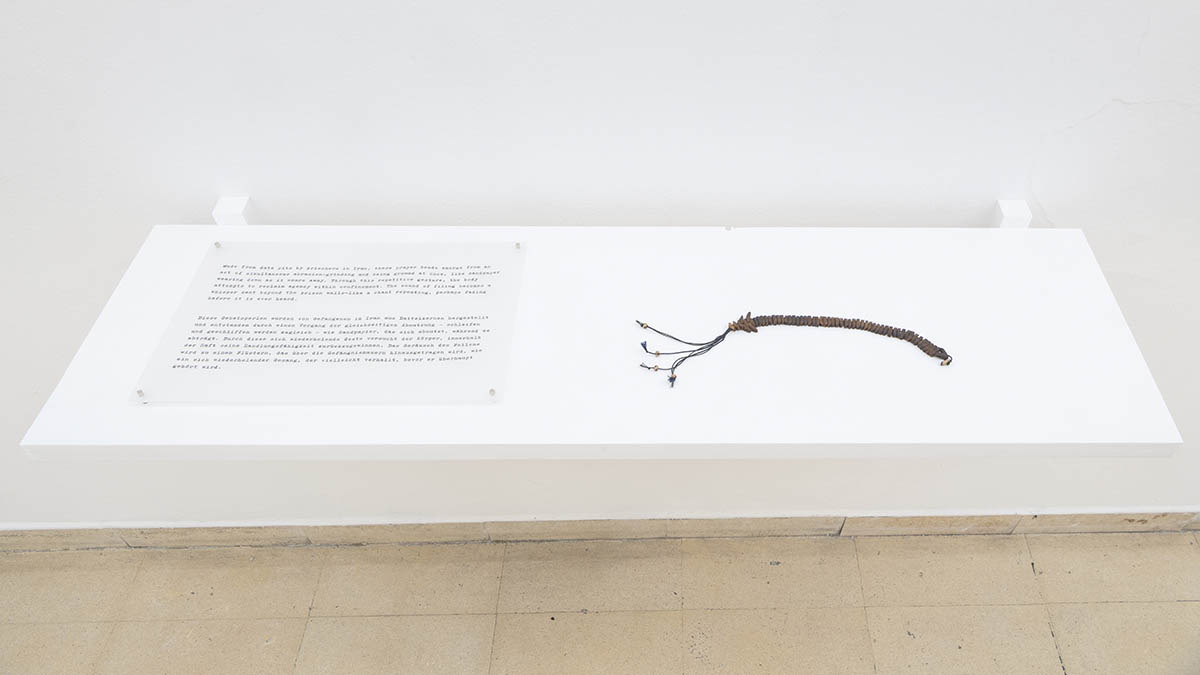
exhibition view: Claudia Larcher - Extinction Story. Photo: Alessandro Santi
exhibition view: Claudia Larcher – Extinction Story. Photo: Alessandro Santi

There is also another strong dualism, and at the same time a form of compenetration, between AI and the analog. The processes intertwine, revealing that data can act as a means of creating closeness and exposing the common ground that emerges when personal stories are compared. What was your way of integrating AI and archival materials while creating the video?
There is also another strong dualism, and at the same time a form of compenetration, between AI and the analog. The processes intertwine, revealing that data can act as a means of creating closeness and exposing the common ground that emerges when personal stories are compared. What was your way of integrating AI and archival materials while creating the video? Since I started working with artificial intelligence, I have always kept in mind that the data AI uses is based on archives of knowledge, numbers, and algorithms. Honestly, I don’t see a major difference between AI and analog archival materials, because in both cases, there are gaps in knowledge and information that we are unable to reconstruct — and at the same time, both are manipulated. As my family stories show, but also as AI demonstrates, there is nothing fully reliable that we can completely trust. I don’t trust AI anymore, because I know that people can manipulate archives and data. The supposedly objective element always comes from people who interpret, filter, and transfer their own biases into the digital archive. So I used these AI tools with the direct awareness that they might not work properly. The last part of the video, in fact, is dedicated to bird sounds, which I created using real recordings and bird call whistles. I set up one of these bird cameras in a bird cage at my countryside house in Styria and tried to record some of the birds that visited. I noticed that sometimes the system made mistakes, and the species identified by the device did not match the actual bird. I also tried an app that was supposed to identify bird species from their eggs: most of the time, it couldn’t determine the correct species and kept suggesting the same bird repeatedly. This experience was very inspiring for me and raised many questions about the weight of truth and reality today, especially when things claim to be scientific but fall short.

exhibition view: Claudia Larcher - Extinction Story. Photo: Alessandro Santi
exhibition view: Claudia Larcher – Extinction Story. Photo: Alessandro Santi

Considering this distrust of AI, do you think it can empower and enrich your artistic research? Aren’t you afraid of it?
Yes, I am afraid. On the other hand, I use AI as an assistant because it helps me conduct research very quickly. For example, I used it to digitise the handwritten catalogue that my father gave me, which I wasn’t able to open anymore because it had been created 20 years ago and the file was corrupted. The indexing was wrong. I always try to remain very conscious and maintain some distance when I use AI, because it can hallucinate and, most of the time, it can provide incorrect information. For instance, I did some research to see whether certain species were extinct or not. There is one bird that is endangered, the European turtle dove (Streptopelia turtur), which has a very peculiar appearance. At times, it seems almost like a zombie, appearing as if it is decomposing. Using AI, I managed to animate it and make it move, but the result I kept was deliberately unsettling. I was interested in maintaining this connection to endangered species. I love working with AI in this way, but at the same time, I am aware of how much effort, time, and energy it requires. It is a technology that consumes a huge amount of resources and carries contradictory aspects related to the climate crisis, which we often overlook. Big tech companies tell us that as technology progresses, it will be easier to find solutions to climate change, but the point is that it is we who must change — because they will not. AI is a powerful tool, full of potential, but it is our responsibility to use it critically, thoughtfully, and ethically.

exhibition view: Claudia Larcher - Extinction Story. Photo: Alessandro Santi
exhibition view: Claudia Larcher – Extinction Story. Photo: Alessandro Santi

If we walk around the Recontemporary space, we get the impression of being immersed in a contemporary Wunderkammer. The effect is almost as if we are continuing the video in a context that seems out of ordinary space and time. What was the reasoning behind this choice?
I was very surprised to discover this foundation, which works exclusively with video and new media in the heart of Turin, and I felt it was the perfect corner to present this project, which was also one of the winning projects of the open call for collaborations organised by Phileas — the Austrian Office of Contemporary Art. The setting was created by the team at Recontemporary in collaboration with the Italian designer Giorgia Mirabella from The Secret Home. Their goal was to reinforce the idea of mixing epochs, layering elements from different eras, blending ancient and contemporary objects, and emphasising a dialogue that spans across time. Every detail was carefully considered to create a sense of curiosity, discovery, and wonder. There is a cosy yet contemplative dimension to the space that I felt would complement the video perfectly. I wanted to design an environment where people could feel both welcome and intrigued,  a place that balances familiarity with the unexpected. The result is a space that exists somewhere between a natural history museum and the living room of a granny. Old tapestries, cinema seats, and dark blue walls create a unique atmosphere that encourages visitors to pause, look closely, and reflect. The location itself adds another layer to the experience. Situated in the city centre, just around the corner from the Mole Antonelliana, the main monument of Turin, the space is highly visible from the street. I loved the idea that passersby might be drawn in by the unusual display, the rich textures, and the video that is partially visible from outside. It creates a subtle invitation: to step into a world that feels both intimate and extraordinary, where history, memory, and contemporary art intersect.

The space is not just a setting for the video but it becomes part of the narrative itself, extending the themes of layering, memory, and temporal exploration into a physical, immersive experience.

How was it for you to develop this international collaboration? Do you think that you’ll have the opportunity to present the project in Austria in the future?
Extinction Story was made possible thanks to the support of Phileas — The Austrian Office of Contemporary Art, Forum Austriaco di Cultura Milan, the City of Vienna, and Kulturamt Vorarlberg. These institutions allowed me to cover production costs and travel expenses, as well as providing strong communication support to promote the project, alongside Recontemporary itself. I believe it is always important to have support that legitimises my concepts and the way I like to develop projects. For example, it allows me to hire an assistant, buy new props, take the proper time to work on details, and dive deeply into the creation process. Producing a video work may not seem like much from the outside, but it often requires a long time to develop the storytelling, carefully construct each frame, and make the project meaningful by transferring my personal vision and practice. The support also helped me overcome a practical challenge: I discovered that Italian law is stricter than Austrian law regarding what items you can import. My first idea was to bring some of the eggs from the collection to Recontemporary and display them. However, the airline told me it wasn’t allowed because I would have had to prove they were not wild birds, which I couldn’t. So instead, I bought some handcrafted fake eggs from an American artisan. Regarding the possibility of presenting the project in Austria, I would love to do it, and it will be shown at Francisco Carolinum in Linz in 2026 due to my solo show there, curated by Eva Fischer, extending its dialogue and reach internationally.

Solo Exhibition: Claudia Larcher – Extinction Story
Exhibition duration: 26 Nov 2025 – 17 Jan 2026

Address and contact:
Recontemporary Foundation
Via Gaudenzio Ferrari 12/b, Turin (IT)
www.recontemporary.com, www.instagram.com/recontemporary

Claudia Larcher – www.claudialarcher.com


Note: Extinction Story was made possible with the support of Phileas – The Austrian Office of Contemporary Art and Forum Austriaco di Cultura Milano, the Federal Ministry of Arts and Culture of the Republic of Austria, and the City of Vienna. 

Claudia Larcher’s work includes video animation, collage, drawing, photography and installation. In the course of her artistic research, Larcher has spent the last years researching intensively on the impacts and use of Artificial Intelligence. The Vienna-based artist has presented her work in numerous exhibitions in Austria and abroad, including Anthology Film Archives NYC, Slought Foundation Philadelphia, Calouste Gulbenkian Foundation Lisbon, Centre Pompidou Paris, Museum of Contemporary Art Roskilde, Ars Electronica Festival Linz, Kunsthalle Wien, Tokyo Wondersite Japan, Manifesta 13, Gray Area Festival San Francisco, etc. She has received numerous prizes, including the Kunsthalle Wien Prize 2008, the Outstanding Artist Award of the Federal Chancellery 2016, the Kulturpreis Vorarlberg 2018, as well as the Hilde Goldschmidt Prize 2019 and the Austrian Art Award 2023.