Season 2, Episode 4: A Conversation with Anh Tuấn Nguyễn
An: You’ve been travelling for quite a while now. How come it took you so long to get here from Hanoi?
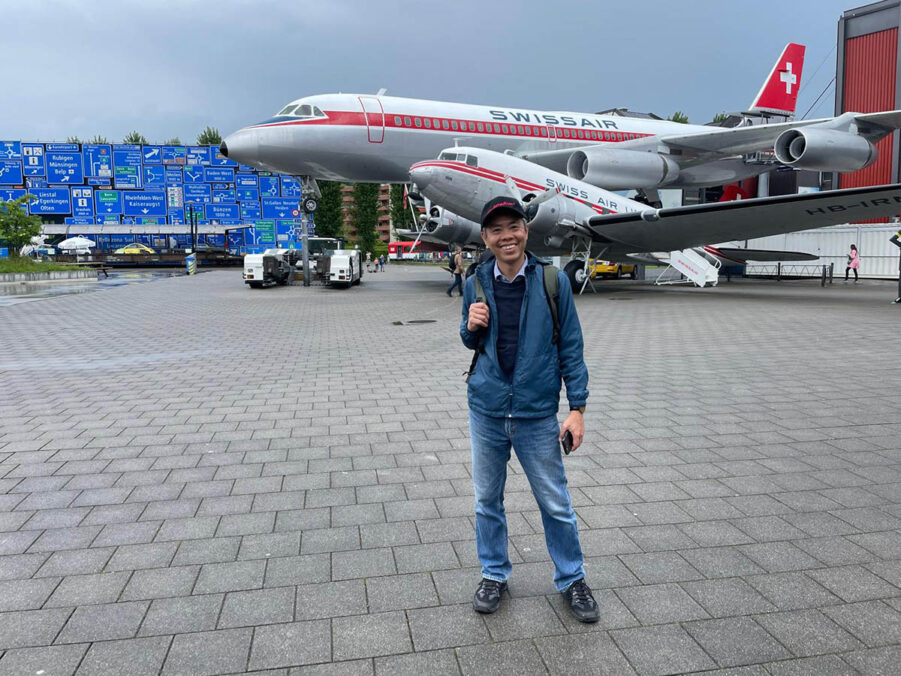
Tuan: Yes, I started out in Switzerland. First, I visited Zürich for a few weeks. Then I moved to Bern for another ten days, followed by three days in Geneva. Then one week in Paris and now in Italy – Milan, Padua and Venice – before going back to Hanoi.
A: What is the purpose of the trip?
T: It’s kind of multi-purpose. I used to be in Europe before but it was always quite short. For me, the most important thing now was to understand how the art scene in Switzerland operates. At Heritage Art Space, we connect artists with organisations for social and urban development. We try to find ways to make art connect with social issues and see how it can create a small impact. I am part of a research group that wants to develop a creative network in Vietnam. I am interested in understanding artistic working conditions worldwide.
A: You are the artistic director of Heritage Art Space. Why did you choose that name?
T: Actually, I didn’t pick the name. It was already its name from the beginning.
A: You joined later?
T: Heritage Art Space was initiated in 2014. At that time, it was situated in a new high-rise building. The investor of the building was an art patron and she had a small collection. Her artist friends suggested to do something on the ground floor, like an art centre. It was big and it also had a space for a library. She had employed a manager, but that didn’t work out. Then someone introduced me and, at that time, I had quit my job at the fine arts university in Hanoi.
A. So, you’d been at the Vietnam University of Fine Arts beforehand – why did you quit?
T: Yes, I was there for almost 15 years, at the Art Institute of the Vietnam University of Fine Arts, but I didn’t see a future for myself. I started studying curating by myself, as a self-study. There was no program in Vietnam and I had no money to go abroad to study. I just learned by doing. Slowly, people started to recognise me as a curator.
Someone introduced me to the owner of Heritage Art Space and I took over at the beginning of 2016. The name was already there.
A: ‘Heritage Art Space’ sounds good.
T: Yes, ‘heritage’ suggests that we safeguard our past. We are connected to our heritage culture all the time, also in contemporary art. A few days ago, I visited the Design Museum here in Milan. For me, good design has no age. We’re missing out on something when we stay in our current time. When we think to design something for the future, we have to consider the past.
A: How important is it for Heritage Art Space to be connected with other artists and art spaces worldwide?
T: It’s essential. It’s the only way to be sustainable. Also within Vietnam, circumstances vary in different provinces. We’re in Hanoi, so it’s a big city where we have a lot of resources. We have a social media channel on which we share different kinds of opportunities for artists, grants, residency programs, opportunities in film, music, dance, and visual arts.
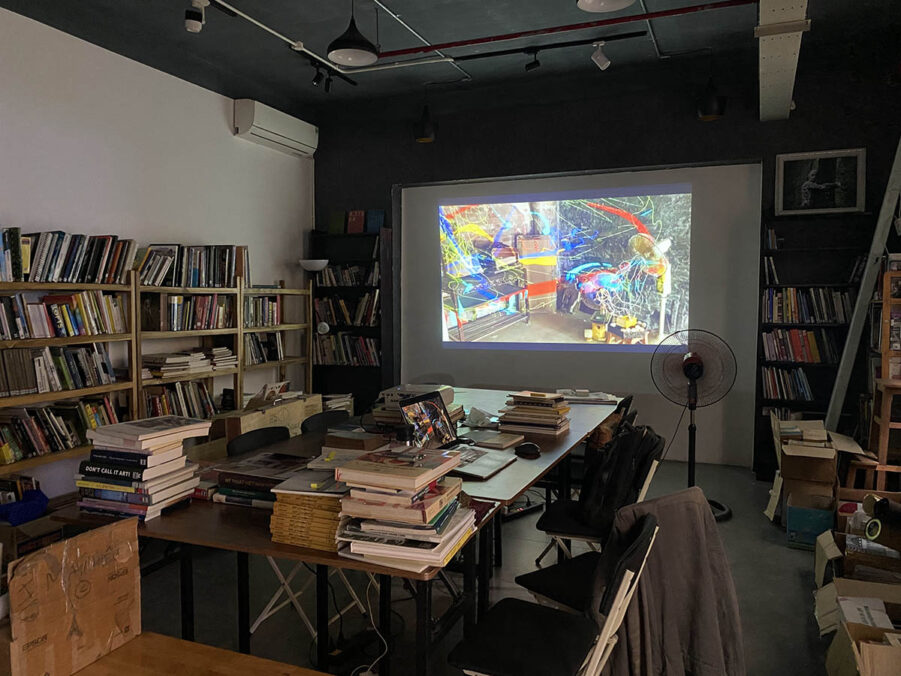
Heritage Art Space used to have this big space in a high-rise. But that was just for four years and in 2019 we had to move out. It was okay. We had done a lot of programs there but it was also in the city’s outskirts. In the city centre, we could only afford to rent a small space where we had our library. But in the ecosystem of Hanoi, it is very easy to rent a space for exhibitions. When I need to show something, I can ask a partner in the network and I just pay a small fee for the maintenance.
The more we can rely on a network, the more sustainable we can be, while collaborating with different partners. It creates a community that provides inspiration and support and to which we can introduce artists.
A: How was your experience in Switzerland?
T: I got to meet a lot of small art organisations and because we got to meet in person, we could talk and really get to know each other. This way, I can connect Vietnamese artists or artist friends in the network, and make it circulate. That’s very organic.
A: Is that one of the joys for you as art director, to be able to create these connections?
T: Yeah, I think so. Not only for myself, but also to support the people around me. I don’t want to do short-term projects – I mean, I don’t want to let the artist come to work with me just one or two times. I want to have a long-term partnership. So the way we are working is to expand the network and support more people in partnerships and friendships. This is the way to create something healthier and also more meaningful.
A: Are there any particular insights you acquired during your trip in Switzerland?
T: When you haven’t been to Switzerland, there are rumours that it is quite rich or, let’s say, there’s a lot of support for the arts. And that is true – but it’s not the whole picture. The subsidising reminded me actually of Vietnam during the Cold War time, when it was a top-down policy, with the government supporting art associations and artists. But, when that finished, the system collapsed.
When I came to Switzerland, I saw something similar. I visited an organisation that has been around for 10 to 15 years, but their main income is from the canton. It is a difficult time now, with many budget cuts, so they think that they might have to close. Even all of the members – just like us at Heritage Art Space, there’s two or three members in the organisation – have another side job to make a living and to maintain the space.
It’s the same with the art galleries too. The big scale galleries don’t collapse, but the small to mid-scale galleries have a lot of challenges to survive. Art is an investment, so in these difficult times, people want to focus on something that has a more obvious value. I can see that it’s similar to Vietnam or similar to everywhere. The independent organisation is actually not really independent: you depend on outside support – which might be government, corporations or patrons.
A: Here, at the Boxing Gallery, you will present the Mobility Project. Could you tell us a little about how this came about?
T: Yes, it’s our research project in collaboration with the University of the Arts in Bremen, Germany. We invite artists for residencies to conduct research on how to create a new vision on mobility, in a sustainable way.
A: What does mobility mean in the context of Hanoi?
T: Obviously, it’s about transportation, traffic, shipping. But we also think about invisible mobility, like the transaction of money. We send money around the world. It’s all invisible movement and it changes in value when it is sent to a different country. And then there is digital mobility.
Vietnam is a cheap-labour country. Workers are stuck in the factory to create a production that goes around the world. It’s an immobile situation. And then there is the migration worker, moving to different countries worldwide.
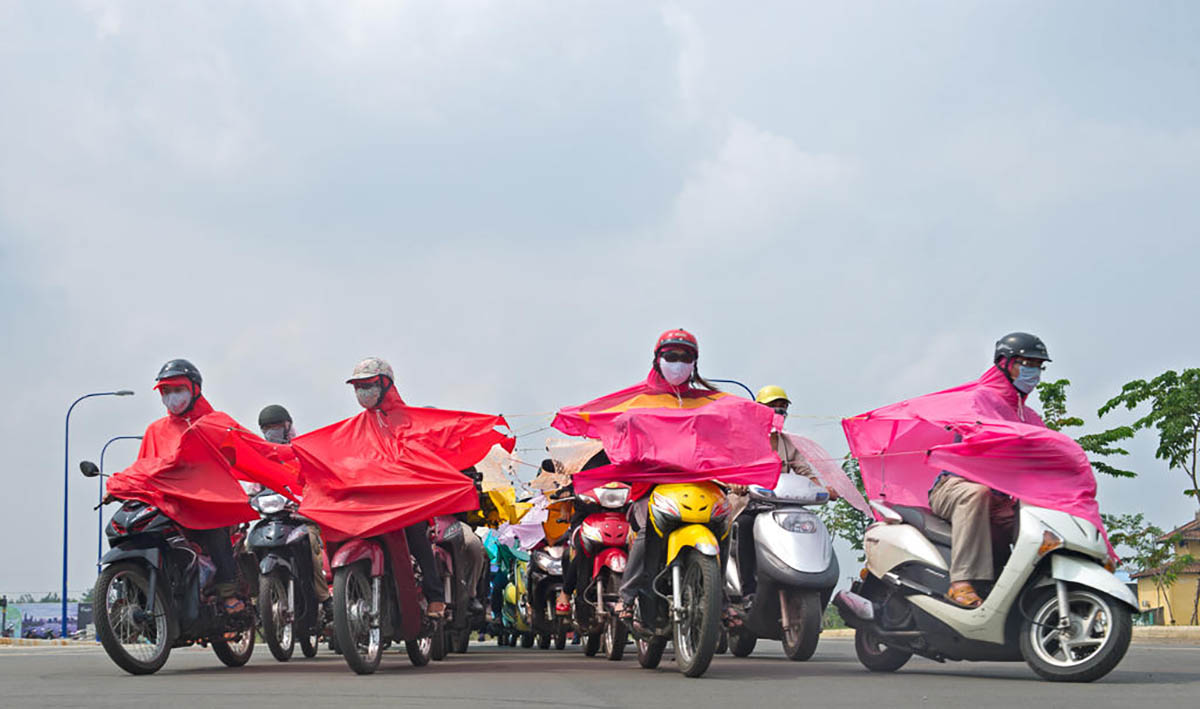
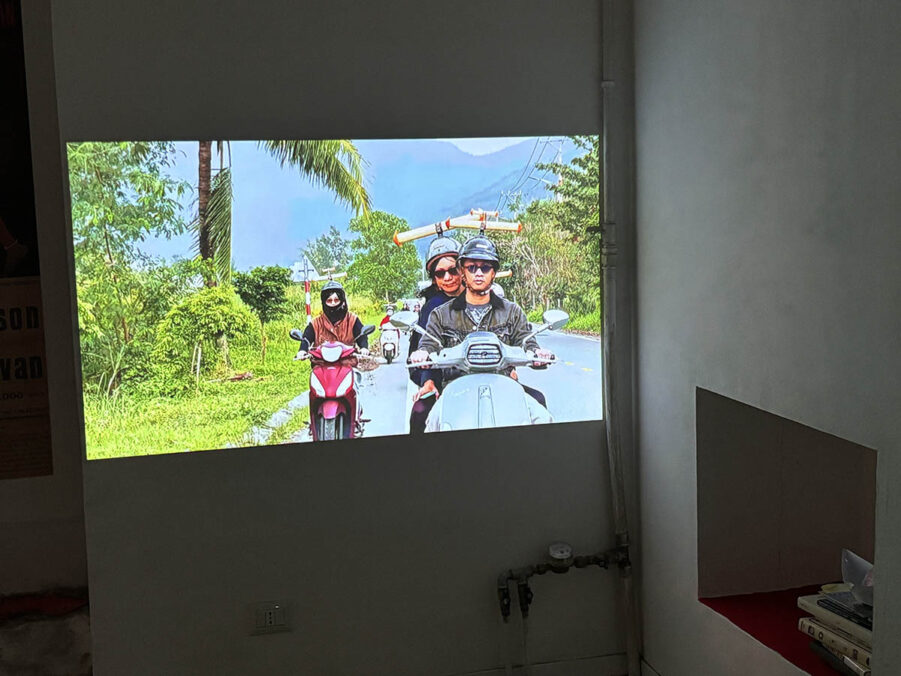
A: Today you’re going to talk about artistic interventions with the motorbikes in Hanoi. The ‘motorino’ is also an Italian phenomenon. But in Hanoi, it’s taken to another level!
T: Yes, I think it’s taken to the highest level! (laughs)
A: As we said earlier, you’ve been very mobile yourself for more than a month. What do you enjoy most about travelling?
T: I’m an introvert, so I like to travel in silence, just by myself, and to put my body in different states of change. I like to be in the train, to see the landscape flowing by outside the window. It makes me feel like I’m moving through different landscapes, cultures, different layers of physical locations. But at the same time, I also get to do nothing, to think nothing: it is to stand still and to move at the same time.
Link to preview episode. www.les-nouveaux-riches.com/the-balcony-project-space/
About the Series: Curating, writing, and teaching takes An Paenhuysen to many places across the art world, but lately she has been working towards living and working between Berlin and Italy. In November 2024 she became the director of The Boxing Gallery in Milan, an art space under the auspices of the Fondazione Arthur Cravan, dedicated to happenings in the spirit of the dadaist, boxer, and poet Arthur Cravan. In this second season of interviews, An invites you to experience conversations with some of the interesting people and initiatives she encounters on her journeys through the Italian art scene, like young Italians or an art foundation that is more than real.