You studied textile design. What led you to move from textiles to painting?
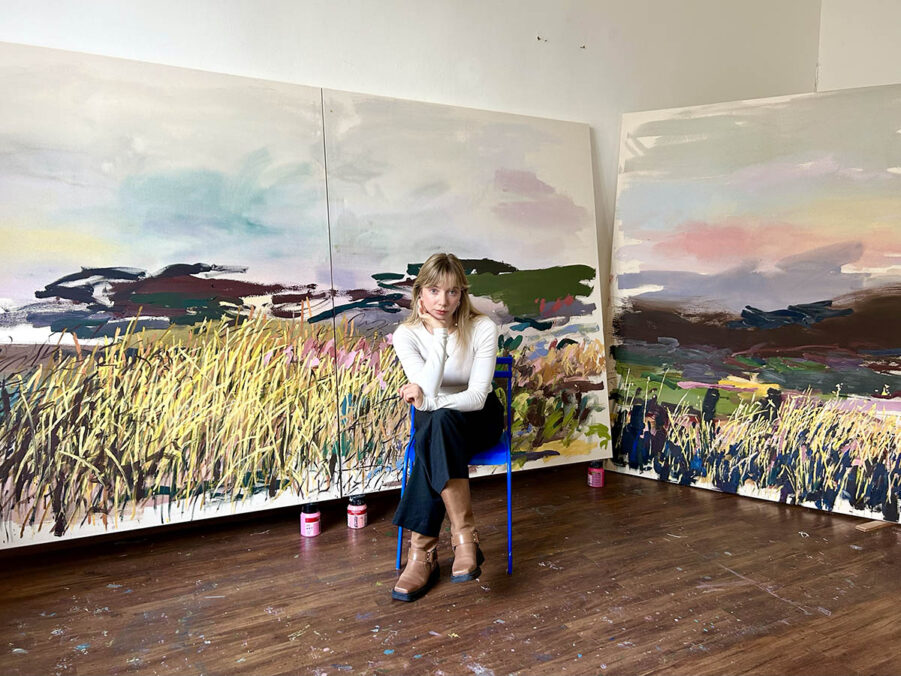
When I went on an Erasmus exchange to Budapest, I studied weaving and learned to work on traditional looms. At that time, I kept sketchbooks combining drawings with fragments of poems and song lyrics. I began painting those compositions from my sketchbooks directly onto the warp while weaving, allowing the colours to show through in the finished tapestry. This experience gradually led me toward painting. I have always felt a strong connection to traditional techniques and handicrafts. Later, when I started painting on canvas, I began combining it with embroidery.

Does memory play a role in your work?
Yes, memory plays a central role in my work. I often return to places I have visited, to the feelings they left behind. Sometimes these memories are obvious. Other times, they blur and layer like mist. There are moments when I lose myself in that process, the landscapes merge, memories overlap, and the image no longer represents a specific place but several at once. Yet the underlying emotion always remains the same.
Is there a question you ask yourself before you start painting?
I often ask myself: How did I feel in that place? What emotion do I want this painting to carry? Am I speaking in my own voice, or are other voices whispering through me? When I realise I can’t hear my own voice clearly, I know I need to pause, to find it again before I start painting.
What experiences from working with textiles still influence your painting today?
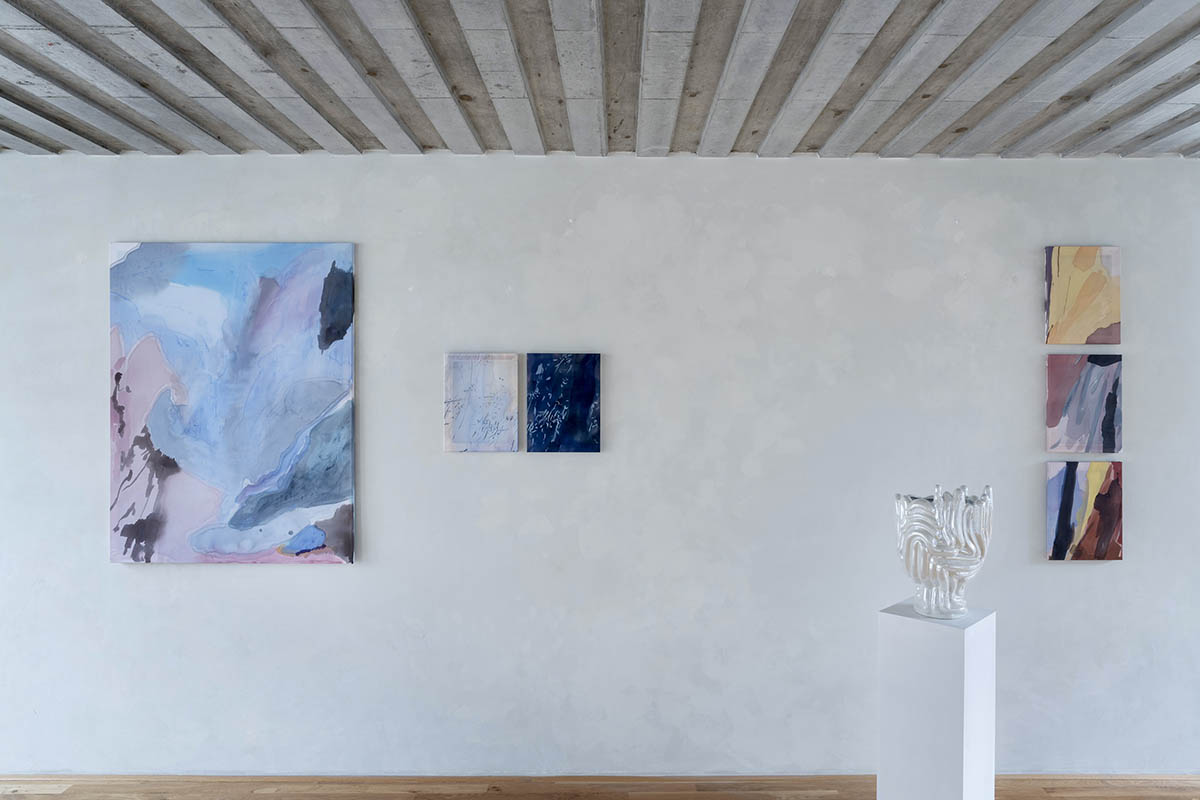
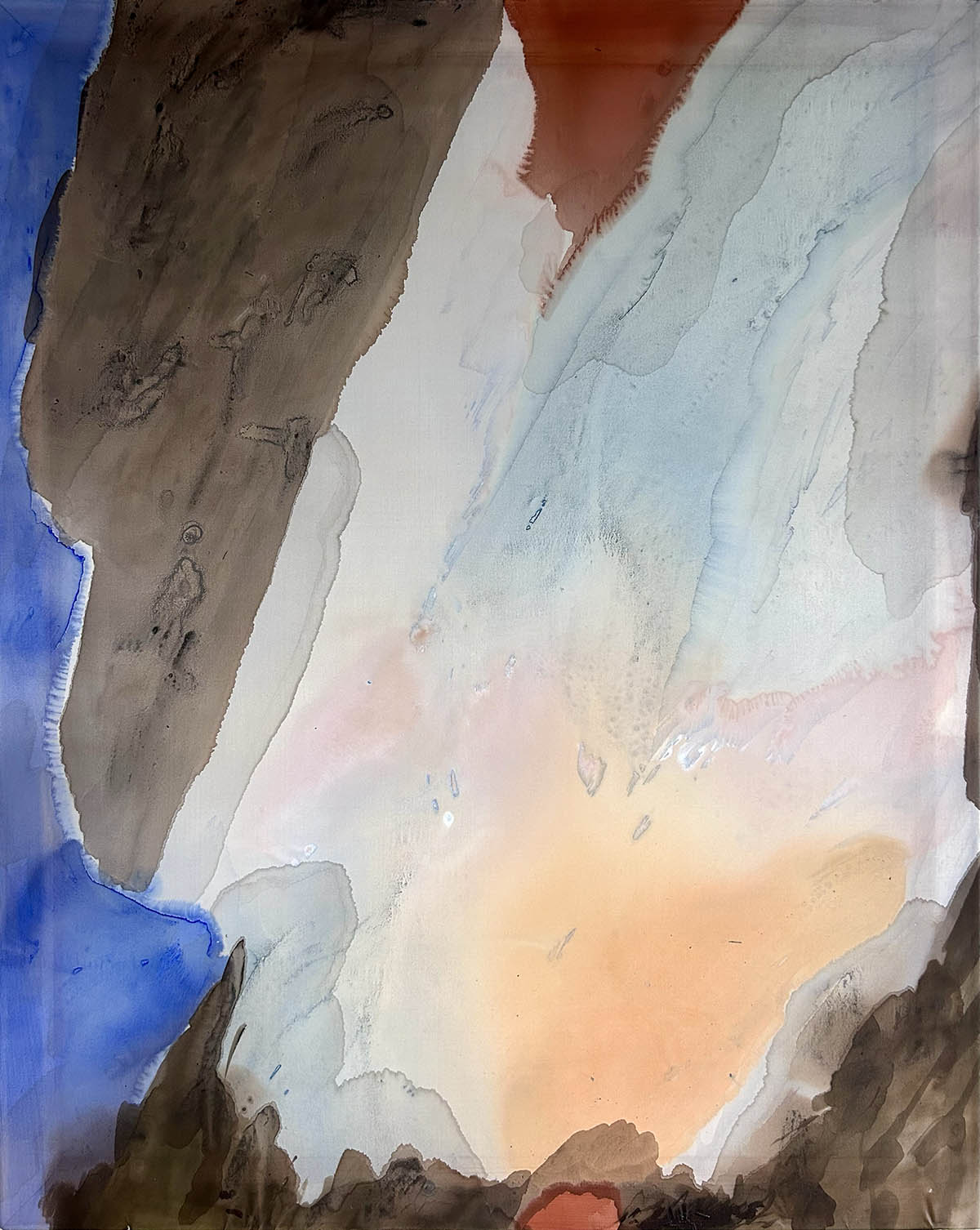
I still feel a strong connection to materiality itself. That’s why I paint on unprimed canvas. Sometimes I like to paint with my hands, to feel the surface of the canvas. This year I also created a series painted on silk, so the relationship between me and textiles definitely continues.
What role does intuition play in your process?
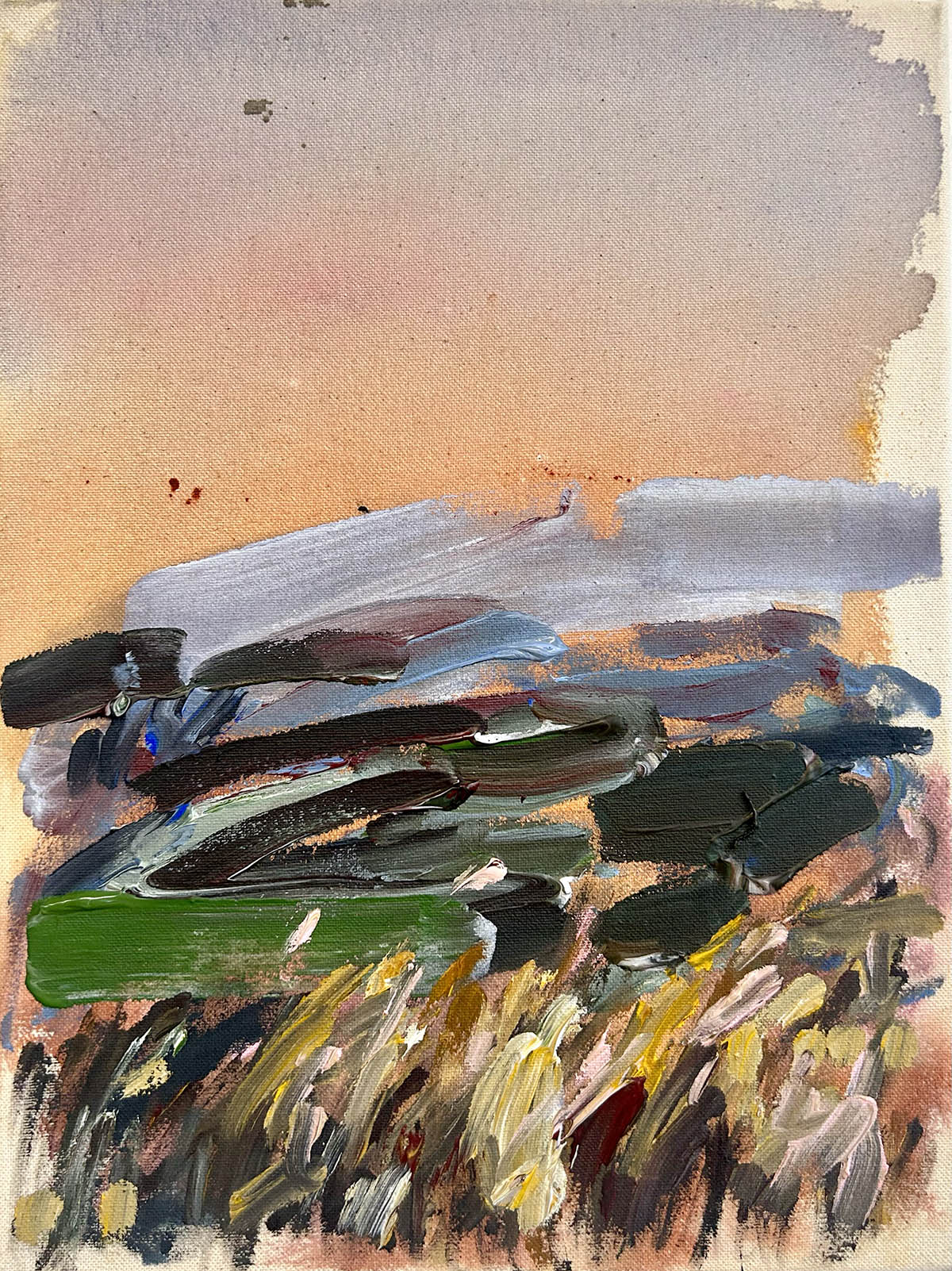
At the beginning of each painting, I let intuition lead. I usually start with a loose, expressive watercolour underpainting, enjoying the spontaneity of that moment. Then, through additional layers, a landscape slowly begins to appear.
What does a typical day in your studio look like?
I usually arrive at the studio after breakfast, stopping for a matcha latte on the way. I light an incense stick, change into my work clothes, and take a moment to look at what I painted the day before, to reconnect with its atmosphere. Then I put on some music and start painting. Some days, though, I don’t paint at all. I spend time in the studio, read a book, and wait until I feel ready again.
How does your perception of your own works change over time?
There are some paintings I can’t look back at, especially those made during difficult periods in my life. At the time, I didn’t fully realise what I was expressing. I was trying to be honest with myself. But when I look back now, I can see a kind of evolution; every stage of my life has left its mark on my work in a way that feels genuine, shaping who I am today.
What projects are you currently working on?
This year I had three exhibitions, and now I’m taking a short break from painting. I’m waiting, observing, allowing new ideas to come to me so I can be ready for the next projects. These pauses are often the hardest moments in my practice. I can’t paint on command. I need to feel it deeply for the work to stay honest.
What do you wish to experience in 2026?
Regarding my artistic journey, I would love to take part in an art residency. In February, my boyfriend, who is also a painter, and I are going to a residency in Tenerife, but I hope to experience another one later in the year. I feel that being in a new environment and letting the landscape influence me is exactly what my practice needs right now.
Michaela Červená – www.instagram.com/michaela__cervena/