No time like the present to talk about heritage as a tradable asset. “But contrary to the Eurocentric and modernist prejudice, I believe there are no inherent politics in the reanimation of heritage, just as democracy itself can lean toward radical inclusion as well as promote disastrous programs of militarist neoimperialism”.
Sveta Mordovskaya and Tereza Glazova belong to a similar generation, separated by a slight—yet geopolitically significant—gap. Both live and work in Zurich, and their artistic practices are shaped by the post-Soviet condition as it circulates within the contemporary image economy. Throughout this economy, a ghostly identity is projected onto a fragmented territory named “Eastern Europe.” Our last names (mine included) place us there within a globalized cultural sphere. But does this identity ever truly belong to us, or is it something continually assigned, performed, and exchanged?
Thinking about Eastern Europe is hard when you are, in fact, from Eastern Europe—a place that has never been east to the point from which you are standing. It often feels like defending a doctoral dissertation on who you are and failing, asking for a new deadline: there is simply too much history to unpack in a classroom of people who don’t speak your language. Still, I will try by examining one work per artist.
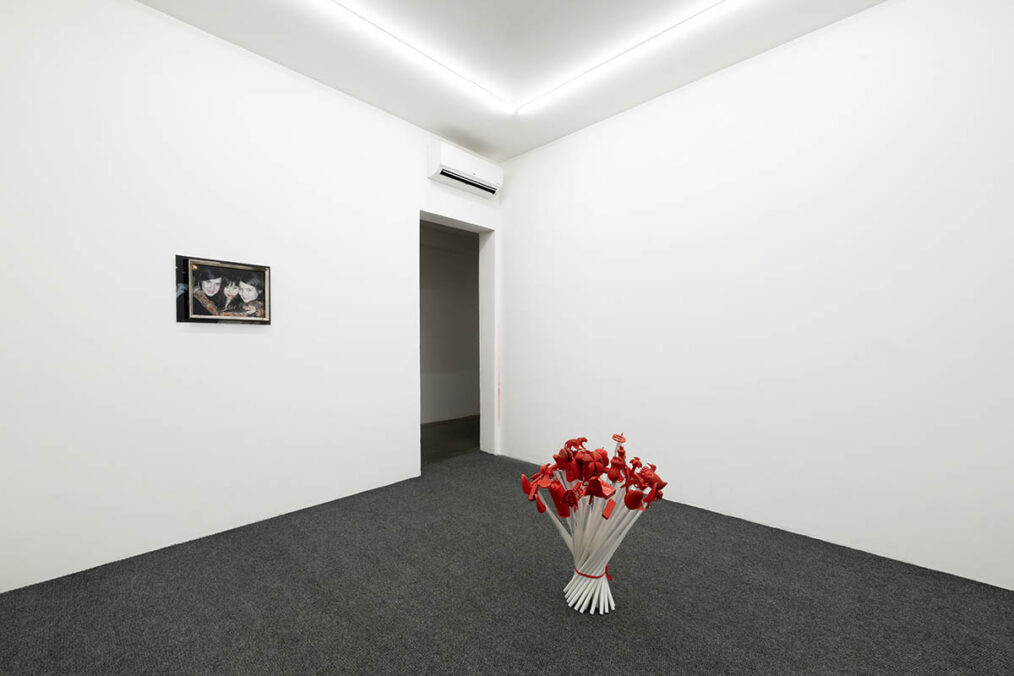
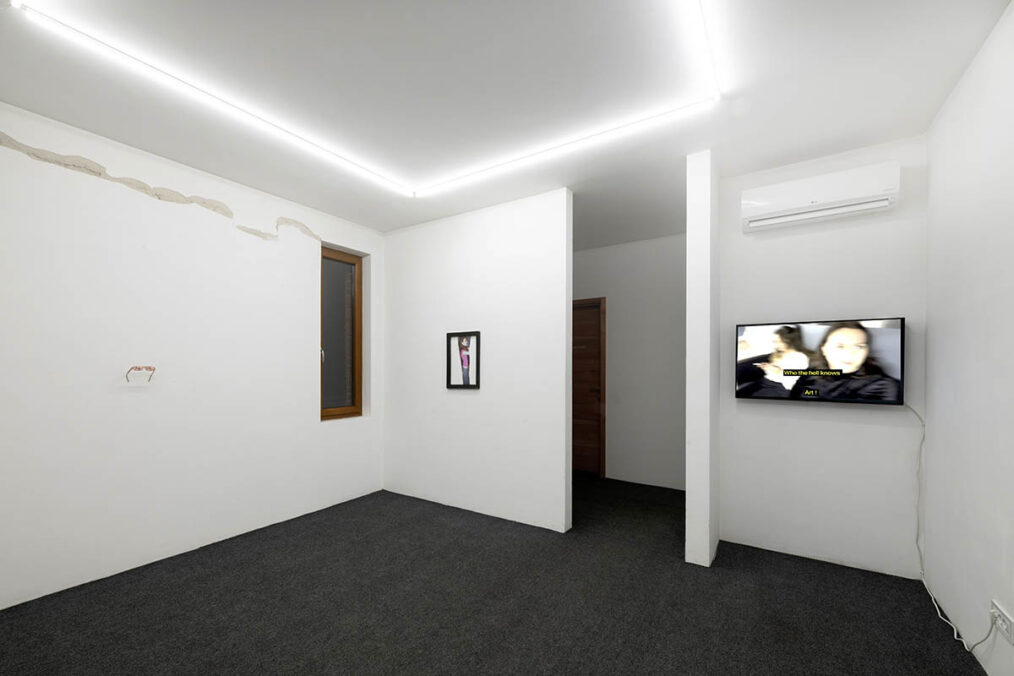
Tereza Glazova’s Girl with а Bouquet, Without Face:
Tereza describes the so-called “bouquet portrait”, a social-media phenomenon: a girl intentionally hides behind her oversized roses, her body is reduced to a signaling surface, a wish universally tied to the image of the “Eastern girl”. The image is not so much about her as it is about the man behind the bouquet, who remains physically absent yet appears through the scale of spending, his money and admiration replacing his body. Tereza has compared this image to another trope, the figure of the American man holding a giant fish: in both cases, achievement is measured through display, the capacity for grand gestures: the bouquet becomes a flex, a status marker, a soft monument to male generosity/female desirability.
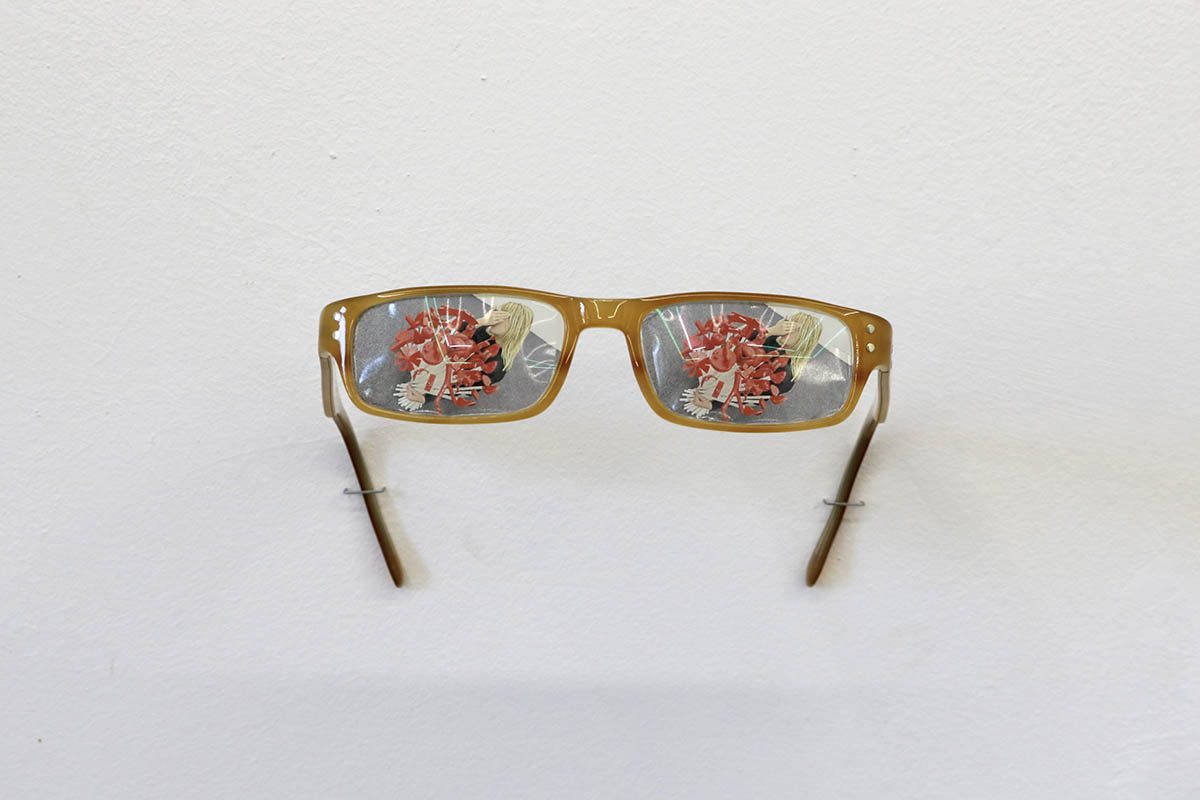
Formed within the aftermath of socialism’s collapse — a moment when everything felt possible and sexy, as Tereza says herself, and glamour functioned less as style than as aspiration — the bouquet image sits in a “familiar clash: Louboutins and a Mercedes against a Soviet panel building, grandmothers and alcoholics at the entrance”. If Vermeer’s Girl with a Pearl Earring reveals the subject through an object, Girl with а Bouquet, Without Face does the opposite: the object hides the subject, leaving only the transaction – another one of Tereza’s precise insights.
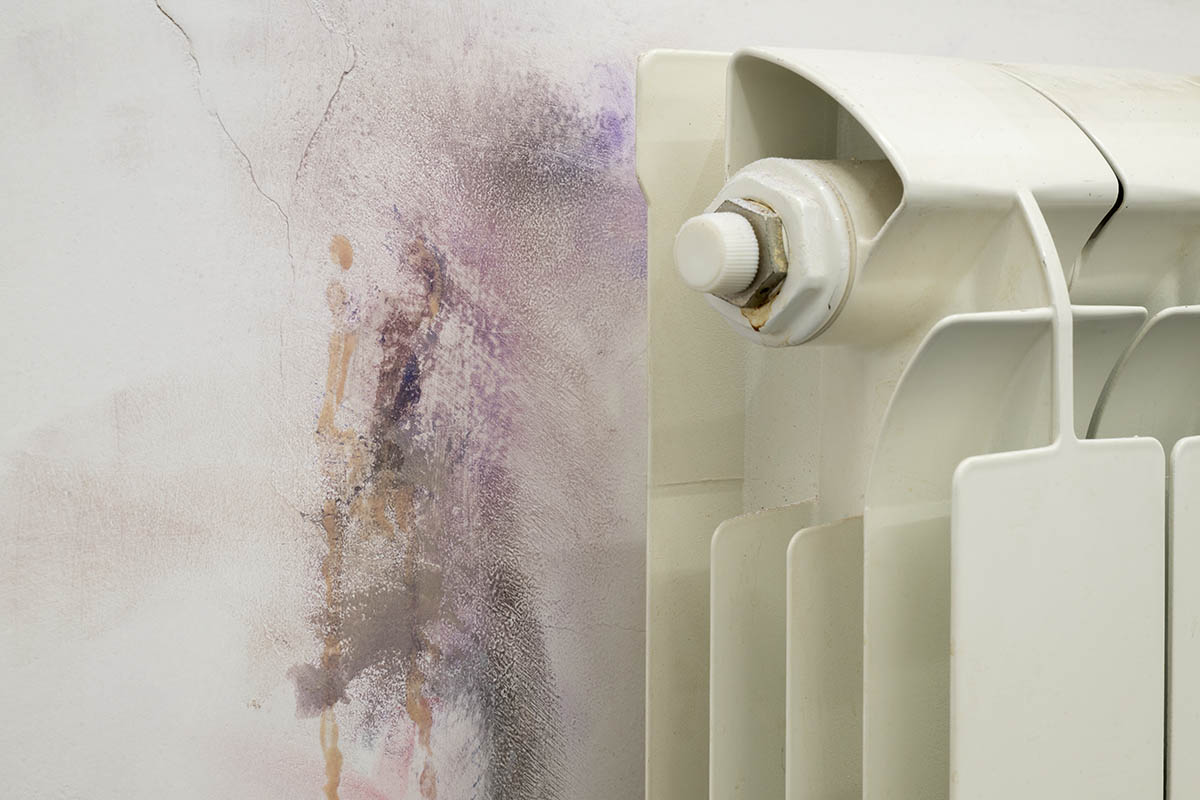
Sveta Mordovskaya’s Make-Up Marks:
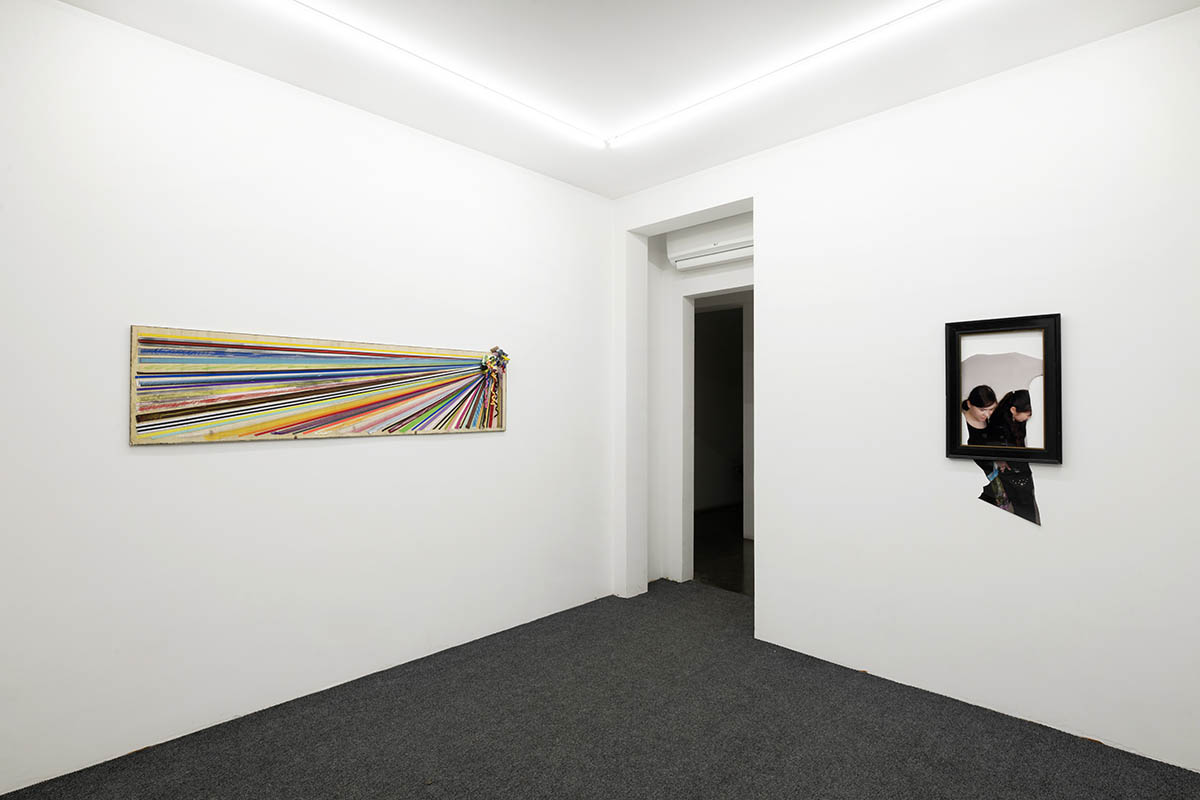
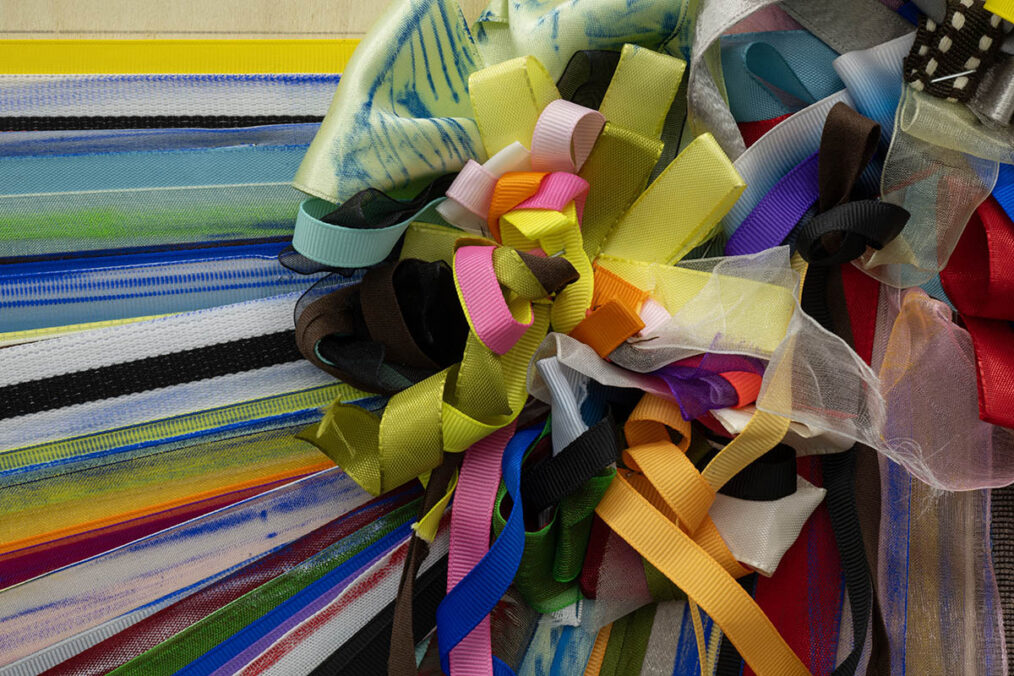
Sveta already used make-up on a museum wall before, to write her own name and the title of the show. This time, the logic extends into her use of make-up as a gesture that marks the space, rather than decorating it. The material functions as a tool of presence: a way of insisting on visibility without representation and treating the space as a body that can be shaped as volume- not void. The risk of slipping into abstraction is acknowledged, and it stays, deliberately; make-up hovers between control and excess.
Read against the history of American abstract expressionism, the contrast becomes pointed. Where masculine gesture once claimed universality through heroic abstraction, Sveta’s gestures are materially specific: they don’t transcend, they are not spills from her subconscious self, rather they situate themselves in context. They are cosmetic and decisive, in the way that plastic surgeons approach facelifts. Absence becomes a thing to materialize, a theme underlined through her use of frames in other works. Most directly speaking: the frame is what decides whether you’re in or out; make-up is needed if you’re in the spotlight.
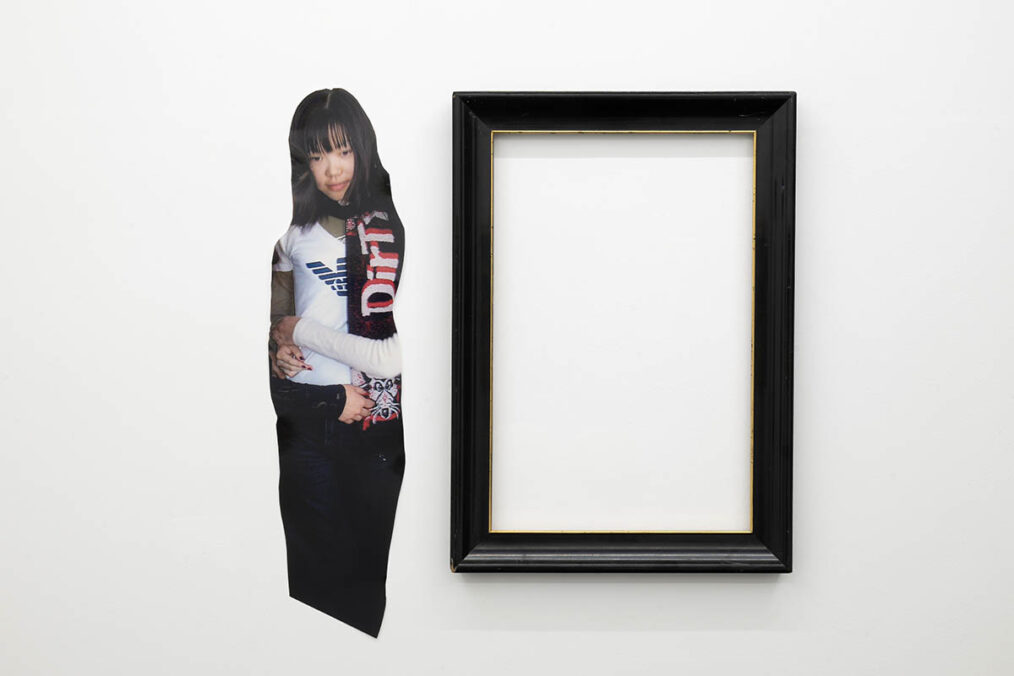
As an Eastern European girl (now woman), I have always had to be smarter than they expect me to be, “they” being everyone, including people from my own country, of all genders. I felt this by proxy in Tereza’s video “Dad’s birthday at the billiard bar,” in which members of her extended family discuss her work.
As the meme goes, every Slavic girl has to decide by the age of sixteen who she will become: Marina Abramović or Melania Trump. I think they are the same person.
Exhibition: Sveta Mordovskaya and Tereza Glazova – UNTITLEД
Exhibition duration: 24 January – 21 March 2026
Address and contact:
Autokomanda
Tikveska 1, 11010 Belgrade
www.autokomanda11010.com
Tereza Glazova (b. 1996, Riga, Latvia) is an artist based in Zurich. Her practice reflects a curiosity about consumer culture, lifestyle trends, and the shifting hierarchies of taste. By examining the changing roles of icons, monument,s and social structures, her work investigates how power and memory are negotiated and how societies continuously reinvent themselves. She holds an MA from ZHdK (Zurich) and her recent solo shows include those at Portland, Zurich (2025), ancontemporanea, Ancona (2023); Longtang, Zurich (2021, as part of Nusser Glazova).
Sveta Mordovskaya (b. 1989, Ulan-Ude, USSR) lives and works in Zurich. She uses a wide range of materials, most recently including photographs from her personal archive taken before she became involved in art. She graduated from Zurich University of the Arts in 2016 and received her MFA from the Academy of Fine Arts Vienna in 2021. Recent solo exhibitions include Fotografieren, Drei, Cologne (2025); Costume, Kunsthaus Biel (2024); The Beast, King‘s Leap, New York (2023).
Autokomanda is a contemporary art space located in an off-center apartment in Belgrade. Run by Voždovačka galerija (a Belgrade-based non-profit), it operates as a kunstverein, supported by members, patrons, and project-based financial and in-kind contributions. The space mostly organizes duo exhibitions, treating dialogue as a core working method rather than a format. With three rooms, exhibitions often grapple with the instability of binaries: pairing practices, positions, or sensibilities that resist clean oppositions and instead unfold through tension, overlap, and conversation. Autokomanda takes its name from a major crossroads in Belgrade—where the city’s center and periphery meet, and where the main Serbian highway merges into the European route E75, running from Norway to Greece. The name works as a double entendre: autokomanda refers both to traffic directions and to self-commanding—a self-directed structure that reflects how the space operates. Conceptually, the programme engages questions of center and periphery across shifting geographies, from the Western Balkans and the EU to the Mediterranean and the post-Soviet space. Rather than addressing these relations abstractly, Autokomanda approaches them directly and materially, through artistic practice, exhibition making, and spatial constraints. The project prioritizes practices that expand how art is looked at locally and read internationally, without relying on moral frameworks or didactic positions.