
How did you come to the point where you are now, practice-wise? Are you always collaborating?
I’m always collaborating with landscapes and most of the time also with people. Landscape is my main collaborator, I would say. And this relation started ten years ago or so. I am from Carinthia. And I have a relationship to the landscape here, to the mountains, although I was not working with them for a very long time. Also, for reasons, because I found them in the ideologies connected to Austria that are quite right-wing, conservative. I did not find the mountain very appealing. Apparently, I got interested again in exploring the landscape. I used to, I’ve been working outdoors for quite a long time. And I rediscovered the landscape here also when I was collaborating with a performer and a singer. And it took me a while to understand that maybe the mountains and the ideology are not necessarily linked with each other. That you can find different approaches to them. Reforest is also made in Carinthia.
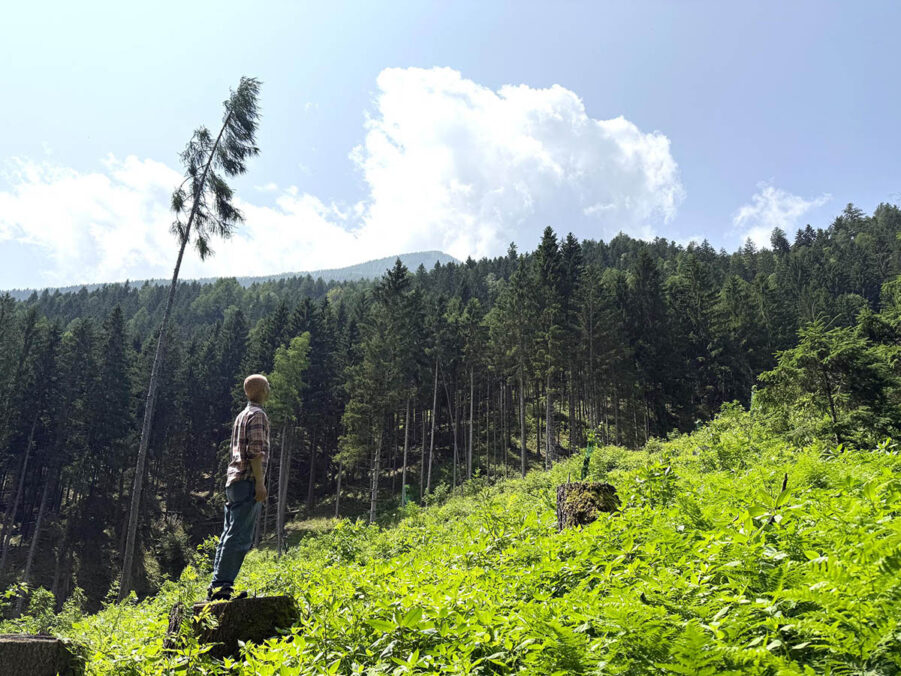
I discovered a way of working with the landscape that is very body-based. So, trying not to use the landscape, or abuse the landscape as a backdrop, but really entering some sort of… relationship with it. By sensing it, by listening to it, by feeling it, by touching it, and being touched by it.
I’m always interested in the question of: how does the landscape move you? In all senses, literal dance movement, but also, for example… it motivates me to write.
How are you connected with it in a sense of power, let’s say? Do you see landscape as more powerful than you? Do you see it as a companion?
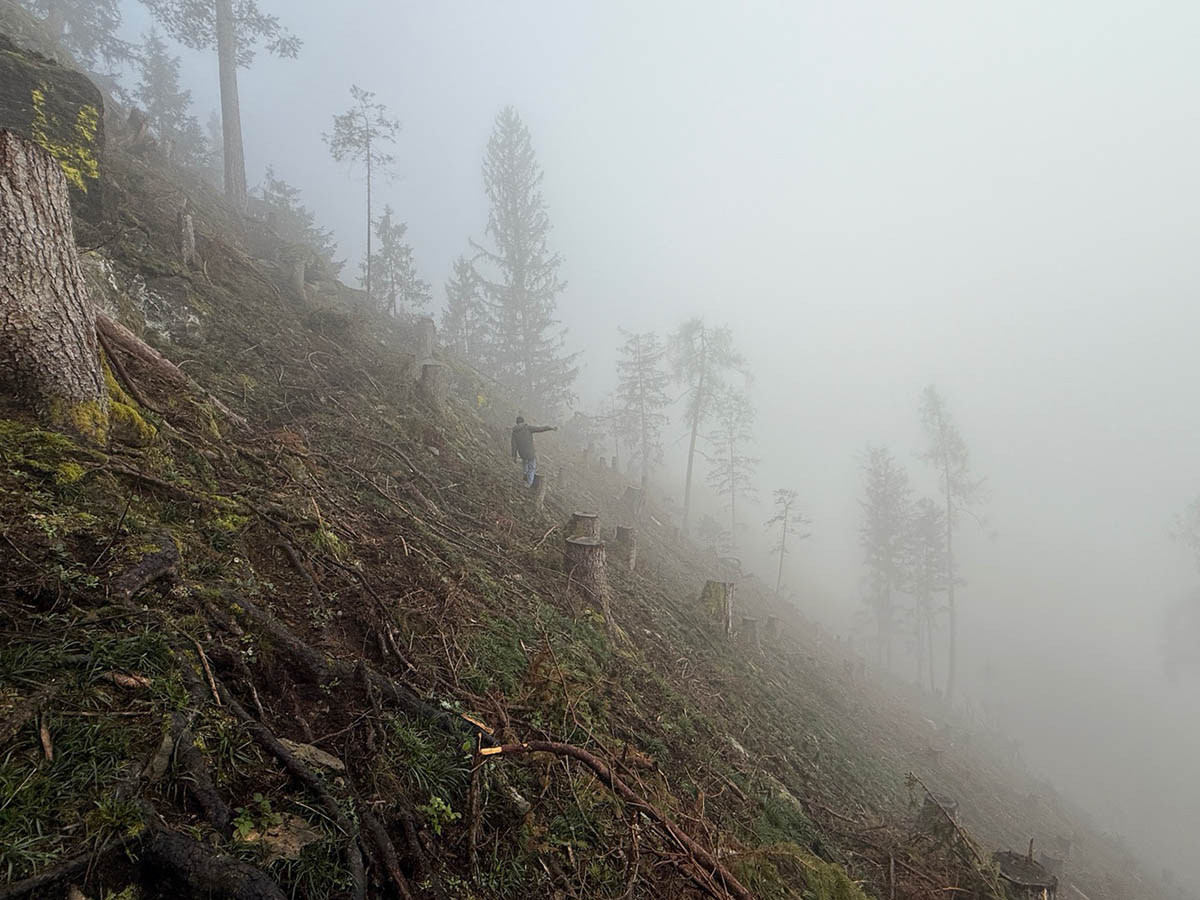
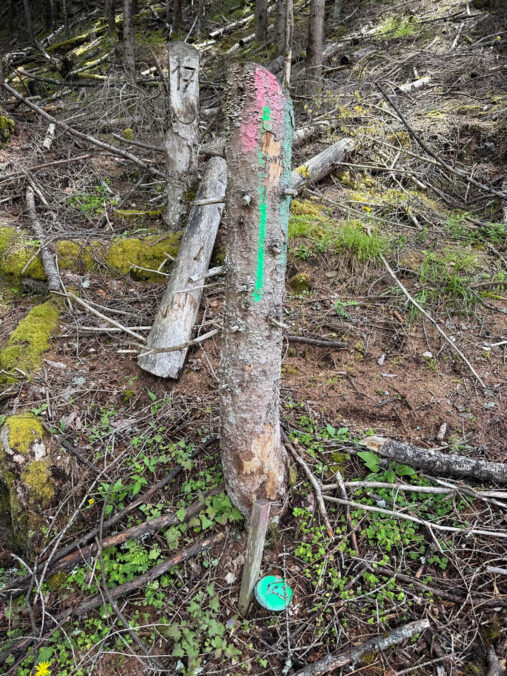
I think it’s the full range. It also depends on time. I think one of the crucial things when you work with landscapes is: how much time do you have? Can you go there for two days? Maybe you don’t have the resources, maybe it’s far away, and maybe it’s an effort to go there. Then it’s understandable that you are only there for two days. On Reforest, we worked for a year, so we started last year in November to visit this forest, and we visited this forest regularly every season, five to six times now. So there is a relationship between you and this landscape and all your projections that you have—your romantic fantasies, but also other feelings. And then… I think I am always a bit hesitant, at least for me personally, to call it a companion from the very beginning. Because this is again imposing something onto it. So maybe you just allow what’s there. Maybe it’s not a companion at the beginning—it’s strange, or it’s not interesting, or unfamiliar.
And then, of course, it also depends on the character of the landscape. I used to work with much more impressive landscapes than, for example, this forest, which is really the forest just around the corner.
Can you name some other location?
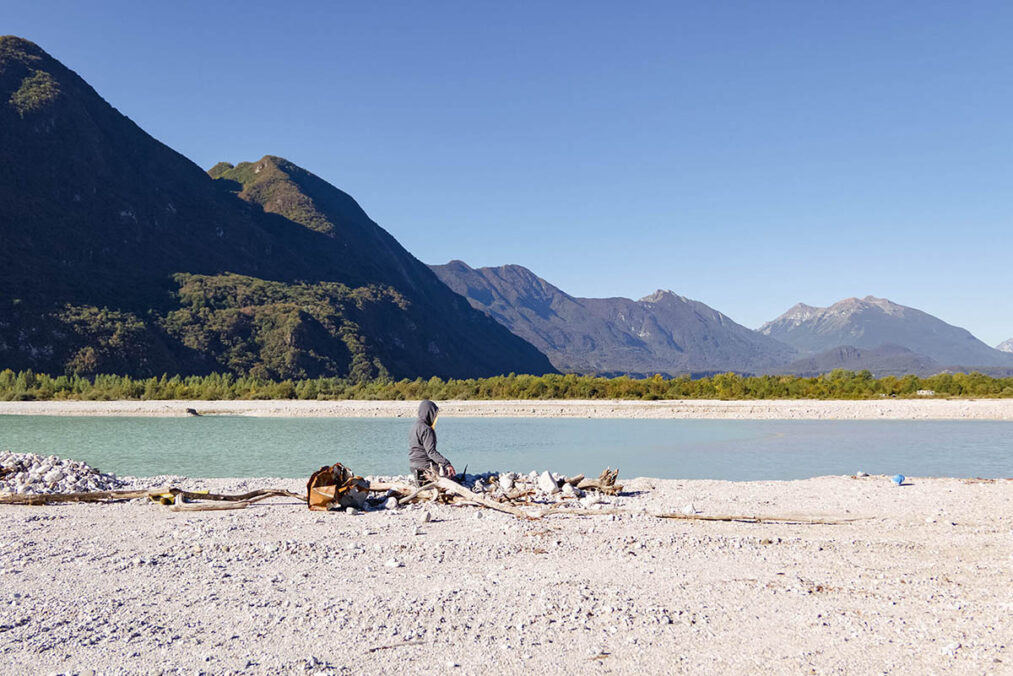
The piece I did, together with the musician I’m working with now, Judith Hamann. And next to us, also together with a dancer, we did a piece about the Tagliamento River. The river is also famous because Pasolini comes from the area and talks about it, and also the images—he filmed about this river. So this is one of the last wild rivers in Europe, like longer ones. And a wild river means that it doesn’t have this contained riverbed. It looks like a field of stones with a bit of water. Depends on the season. It’s not regulated. It depends on the snow melt, on rainfall. You are normally alone there, at least in the area where we went, because it’s not very interesting for tourists. It’s a bit forgotten. And this is, for example, an impressive landscape. You feel very small, but in a very nice way. You feel exposed and embedded at the same time.
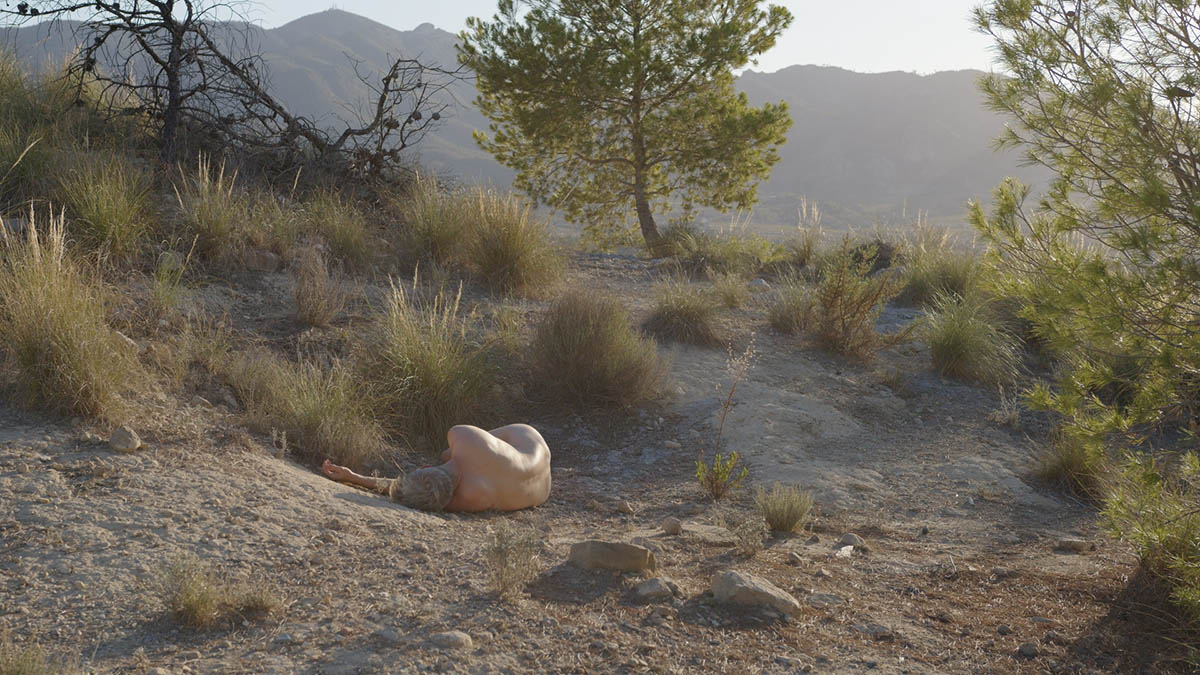
And another piece I did in 2020: I started filming at an artificial lake at 2,500 meters that is part of the hydroelectric power plant. In Austria, you have a lot of them, most of the energy. I filmed myself in the south of Spain in a very dry, also very historically charged landscape. I also worked a lot in Lausitz. That’s the former coal mining area in Germany that is now re-naturalized. This is the term. When you stop coal mining, you have to renaturalize the landscape. There are lakes, dunes, and trees, and everything is planted. And there are insufficient lakes because it will take I don’t know how many years for them to work out.
And we filmed there, I think in 2018/2019. It looks really like Star Wars. It’s a very strange atmosphere there.
I used to be interested in these moments where the Earth appears as a foreign planet. Where the strangeness of where we are becomes visible.
How would you define landscape in your own words?
Landscape is a problematic term. I mean, especially landscape in art history, it is problematic. It’s very heavy, it’s very colonial, and it’s a fantasy of a landscape. It’s at least problematic. It takes an effort of deconstruction to come to a point where you can unfold the ambivalence it had. Because it used to be a relationship to a surrounding, but also a problematic one. But it was a relationship. It has been the term for an artistic relationship to a landscape. That’s why I personally would not skip it, but use it cautiously.
People who live in the city are not at all surrounded by nature. It’s literally a matrix of buildings and spaces, really limited and really calculated for the sake of capitalism, obviously. Without any moment of connection with anything except work and consuming. Do you think that for us, in this moment in society, this strangeness you mentioned is happening much more often because we are not used to so many things? Or do you think it’s always like this?
I mean, I also worked in the city. I made a project in Berlin, three years on an abandoned area which was by then the biggest leftover. Berlin was full of abandoned areas 25 years ago. But now there are buildings, there are construction sites everywhere. And of course, you can also find these lots in a city where you suddenly perceive the sunrise differently, or you see a tree, or something like this. So I think it does exist in the city, but of course, the city is not made for that. The interesting thing about this Reforest project is that when reading about the history of forests, at least in Germany, Austria, people used to live in the forests. Like for quite some time, until the Middle Ages. So the opposition between city or settlement or village and forest is not that old.
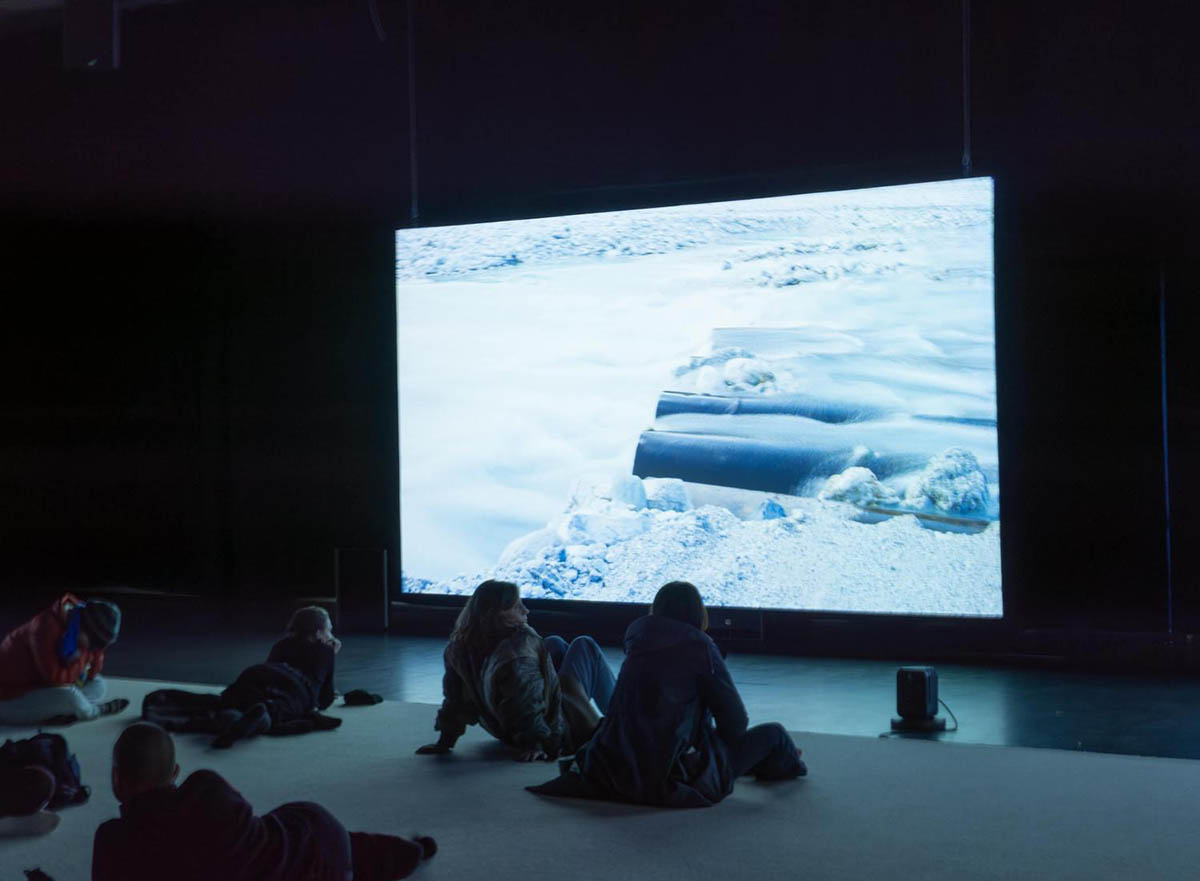
Then there is also the fact that you have to fight the forest, because the forest tends to come back and come to you. It’s growing. So once you establish the difference between a village or settlement and a forest, you have to fight it. Or suddenly it’s in a different mode, and you are in a different relationship to it. It’s intrusive. And also, you don’t want to have people living there anymore, because you can’t control them. It’s a lot about the state. Suddenly, the state, or in the case back then, the Kaiser, owns the forest and wants to control it, and doesn’t want to have people living there. Then they become the other, who we meet again in fairy tales: witches, or people like that. And the forest is always about anarchy, also. So you want to control. You don’t want to have anarchy there.
I feel that the power game or power struggle with nature comes actually from fear. The fear state had fear of what could happen in an area not controlled by it.
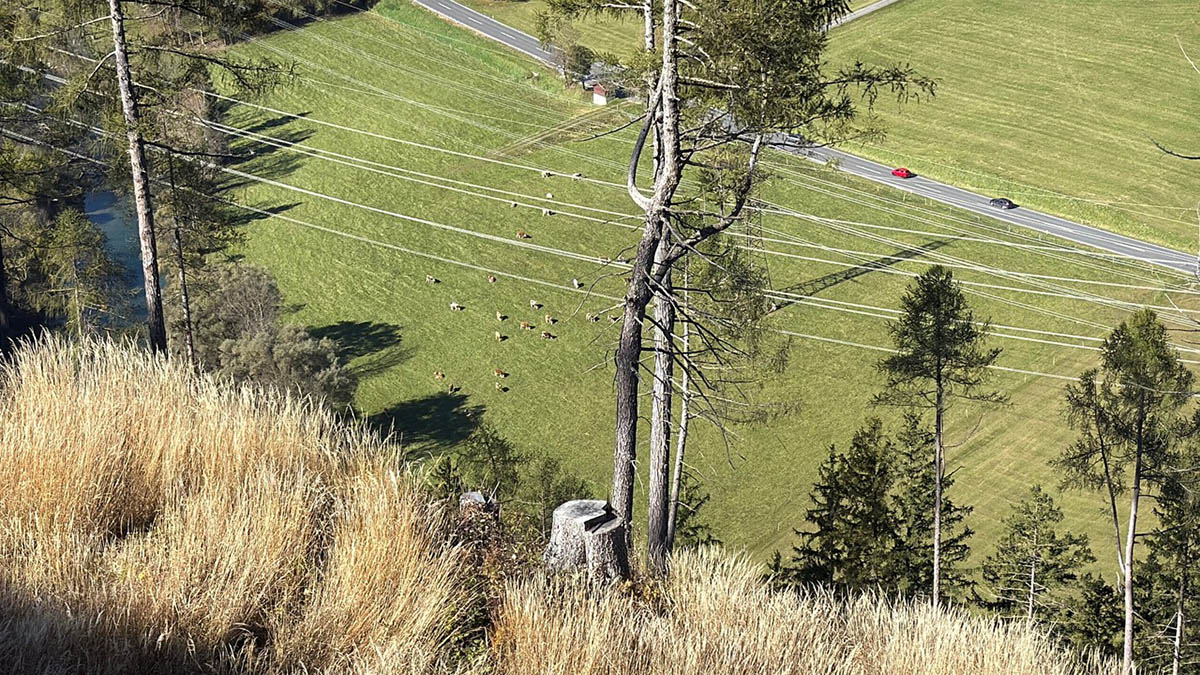
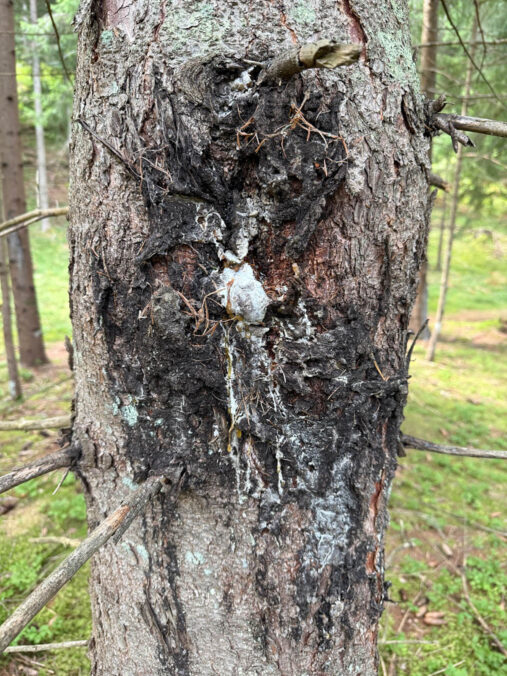
I mean, it’s also for sure the first territory that Europeans colonized. It’s clear. The training ground for colonization. We don’t need to… yeah, I will mention it, but it’s pretty clear. When it comes to Reforest, we had this feeling come up: okay, so this world is really in a catastrophic situation, or the worst at least that I have experienced as long as I am here. And we go to the forest. So this sounds like the cliché par excellence: okay, let’s escape. It sounds like escapism in its boldest sense. And at the same time, you notice extremely in this situation that the forest is not a refuge anymore. I don’t know when it stopped being one—I think a long time ago. The forest is in bad shape. The forest is a site of destruction. The forest is an economical place. It’s a workplace. And you see a lot of sick trees. You notice the monoculture basically, it’s all spruce. So it’s not that you can escape from anything. This refers, maybe, back to your question about the strangeness of the planet, if this is a new thing. I think what is new, or maybe new, is that we start to understand that something is withdrawing. Something that was perceived differently, that we used to call “nature,” and it doesn’t matter now if this is the right or wrong notion, something that promised eternity, stability, shelter, despite all the natural danger that also comes from it.
This is withdrawing.
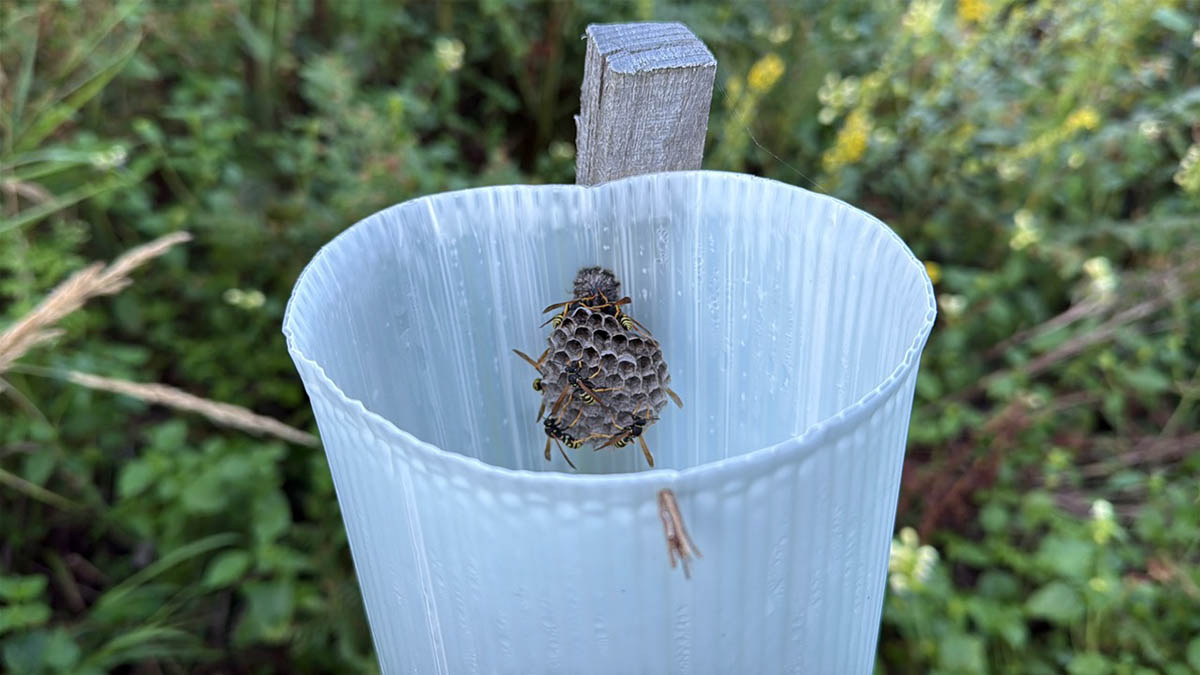
When we go to the forest, to any landscape, we witness and experience this withdrawal. And that might unfold some kind of strangeness. And also, we are aliens. We are alien to that, and that is alien to us. At the same time, I think it opens up the chance to understand—because this is the strongest feeling you get, especially when you work with the forest—that this is a space of living beings. This is a living space of relations. And to experience that, to sense that, makes a difference.
In December, there are three days when Reforest takes place in brut Vienna. It is, as you say “live-environment” more than just a performance or the exhibition. Tell me about the collaboration factor. What is your connection with Judith Hamann and Michiyasu Furutani, and what is the relation between you three, and how did you come together?
Yeah, I mean, with Judith, I’ve been working now for two or three years and two or three projects. What is important about this collaboration is that we each have our means: Judith comes from sound art. Furu comes from dance and Butoh, but also works with objects. I come from writing and filming. We relate first to the landscape. So the relationship between us is the project. Of course, we decided to go there together, but we are not coordinating ourselves. The focus is on the relationship to the landscape. We want to first be somewhere, be present in the sense of being with this landscape with the means we have artistically, and then out of that unfolds a relationship between us, and also between sound, images, movement, and writing. So we do not follow a plan.
Is there some kind of scenery imagined, and are there any goals and results you want to achieve while working on the piece?
No. And it’s harder than one might think, because if you don’t want to impose anything on the landscape, but you want to get to know it, you don’t know the outcome. You don’t know if you will find something. It’s risky. And it’s much more risky than having a plan. I’m very grateful to Judith and Furu. You need the right people for this. There was never a moment of: “What are we doing here? What is our purpose?” Never.
What did you bring with you, any equipment?
I mean, I used to film also with a proper camera and tripod and everything. This time, in the forest, we went with our phones. First, because we had no plan of what to film—we didn’t know. Second, it’s a mountain. You have to climb. It’s not cool to carry a lot of equipment. So we wanted to be as free as possible, as spontaneous as possible, accepting imperfections or technical issues. For me, this was hard, but I’m very happy we did it. The phone has its own life; it’s interesting how the technology reacts with the natural environment. We went with microphones, Judith had very small ones, and we went with phones.
That was it. We let go of everything. We didn’t plan where we would go. At the beginning, we didn’t talk; we had silent walks. We didn’t discuss or speak. We just went and followed each other. After a while, sites established themselves. We wanted to see what changed. All was within walking distance. We never used a car. At a certain point, you also notice that it brought us closer to each other. It brought us closer to the landscape. This is ethically interesting: as soon as you relate to a site, it changes your relationship. It also changes the relationship between humans. We seem to overlook that we share space. One motivation for doing projects outdoors and with landscapes is to more and more understand, not discover, but sense that we share space.
“Live-environment.” What does this mean in correlation to the space where the actual event is happening? And what in relation to the audience?
It used to be confusing for people who come to a performing arts venue and maybe expect a classical setting and sit for the audience in a theater manner, and then suddenly there is a lot of installation going on, so I started using this phrase to explain it more on point.
There is a sentence I read recently that goes something like”… Because we are so little surrounded by nature, we decided to bring nature into museums.” The idea that we bring nature into institutions because it is comfortable. How do you see the institutional space for this project?
Yes, I understand. If we said, “Let’s invite 50 people to join us in the forest,” it would be something completely different than having it in a performing arts space. So the institutional frame regulates the capacity. And the project is multidisciplinary, that’s essential. You can’t just show photographs or videos. It loses too much. We were very cautious about taking things from the forest. When does it become extractivism? Who owns what? If we take something, do we bring it back? We borrow things. But we try to be respectful. That’s a big difference from the 18th or 19th century “take it and put it in the museum.”
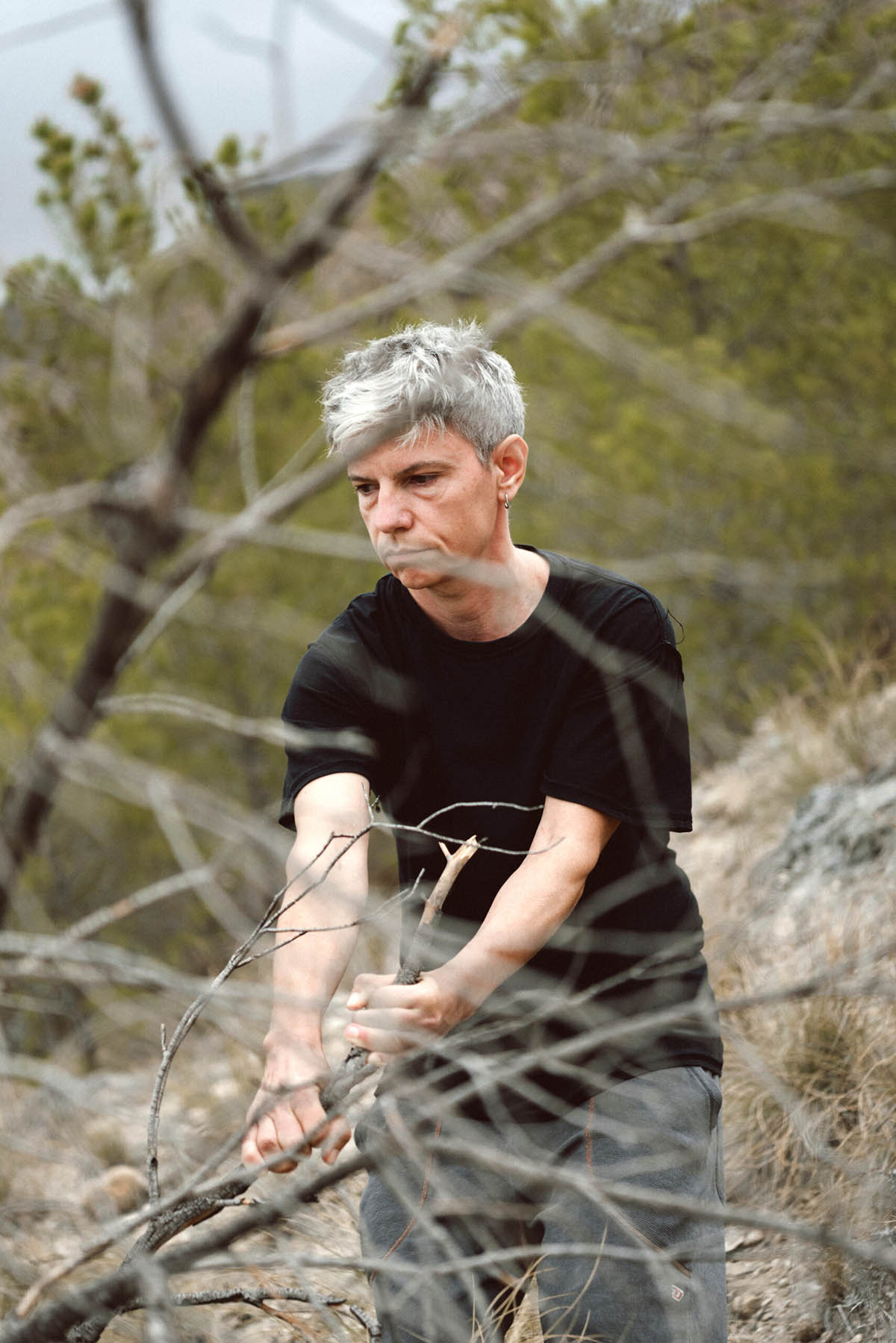
To talk about nature is always cultural. And thinking in terms of culture–nature binaries changes your perceptual optics. I discussed with colleagues, asking: What is the opposite of culture?
We concluded that nature is the opposite of culture. That changed my perspective a lot.
Exactly. I’m interested in exhibiting the relations we have, not the forest’s materiality. I’m not planting trees in the theatre. I want to create a space where we can share feelings we have toward a landscape. It doesn’t matter whether someone has been to that specific site. What is lacking today is shared spaces for expressing emotion.
Can you speak about your writing? How does this part of your practice relate to everything else?
Writing was my first artistic relationship. I’ve always written. It’s still at the center, even when there is no language in the project. Writing is the closest I get to expressing emotions in a condensed, materialized form— not private, not therapeutic— but precise. In Reforest, there is a text at the beginning that I read. It’s part of the journal I kept during the year. It takes me about twenty minutes to read it. It gives background information about the forest and how we experienced it. There will also be five short poems in addition to it. The writing is also the hardest part, but that’s because of my relationship to writing. It’s the most intimate medium for me.
Poems allow you to enter a dialogue with something you cannot grasp. That’s the poetic function of language. That’s why it’s essential for me.
Adam Man with Judith Hamann & Michiyasu Furutani – Reforest
Live environment / dance / performance / music / installation
World premiere in German and English | Duration: 80–90 minutes
11–13 December 2025, each day from 8 pm
More information and tickets: www.brut-wien.at
Address and contact:
brut nordwest
Nordwestbahnstraße 8–10, 1200 Vienna (accessible)
www.brut-wien.at
Adam Man – www.adamman.com
Adam Man stages landscapes like others stage plays or operas. For Reforest, the interdisciplinary artist joined up with musician Judith Hamann and butoh dancer Michiyasu Furutani to repeatedly visit and document a forest suffering from the effects of the climate catastrophe. The endeavour has resulted in an artfully designed landscape made of texts, videos, sound, dance, language, and collected artifacts from ill-treated nature. Reforest brings the forest to the theatre, displaying the disaster, but also sparking some hope.
Adam Man is a multidisciplinary artist working with live performance, video, and text, often exploring the relationship between the human body and landscape. For the past years, he has created “live environments”, performances, and installations that merge movement, space, and environment, inviting audiences to experience body, land, and poetry as interconnected. He studied literary studies and philosophy in Vienna, Paris III, and St. Petersburg (MA in philosophy), and was part of an interdisciplinary graduate school at the Freie Universität Berlin on a PhD scholarship.
A co-production of Verein Katapult and brut Vienna. Supported by the Cultural Department of the City of Vienna (MA7) and the State of Carinthia Culture.