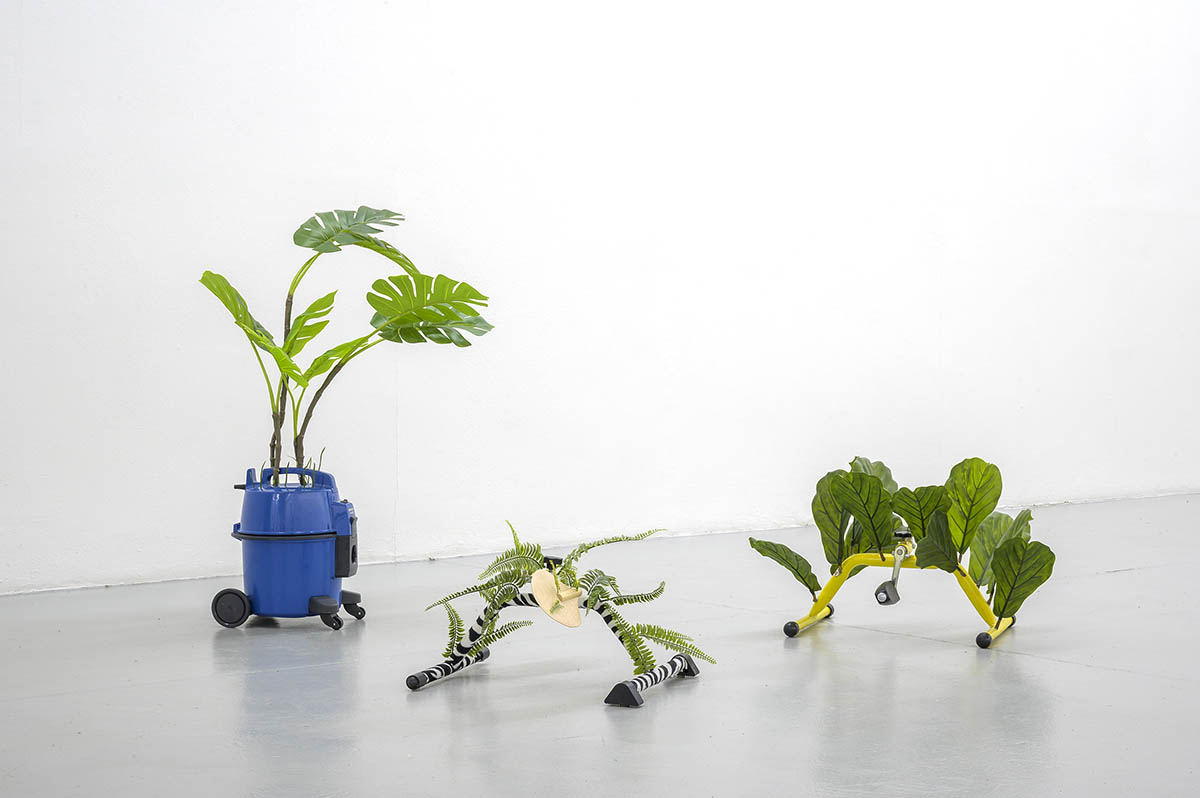
Many of your works combine nature and architecture. Is this building a conflict or uniting the topics?
I enjoy tracing the thread of their connections through materials, and the references architecture makes to nature. Our interiors are populated by „survivors“ of the outside world. These take the form of vegetal ornaments, animal figures, indoor plants, pets, paintings, or even wallpaper—and the list is long. The representation of the natural world in our living environments acts as a window to the outside; it is something that connects us to plants, the earth, and animals, even though our constructions tend to sever us from this world and destroy it.
In his book „Why Look at Animals“, John Berger described domestic animals as „mementos“ of the outside world. I am very fond of this idea. Why surround ourselves with witnesses of non-human life? Why sculpt leaves out of stone, keep an aquarium, or grow plants artificially? This points to a profound necessity to connect with the „outside“. I like to blur the boundary between exterior and interior, to confound the nature/construction interface, and to extract ornamentation from its architectural narrative to decontextualize it and focus on its symbolic value.
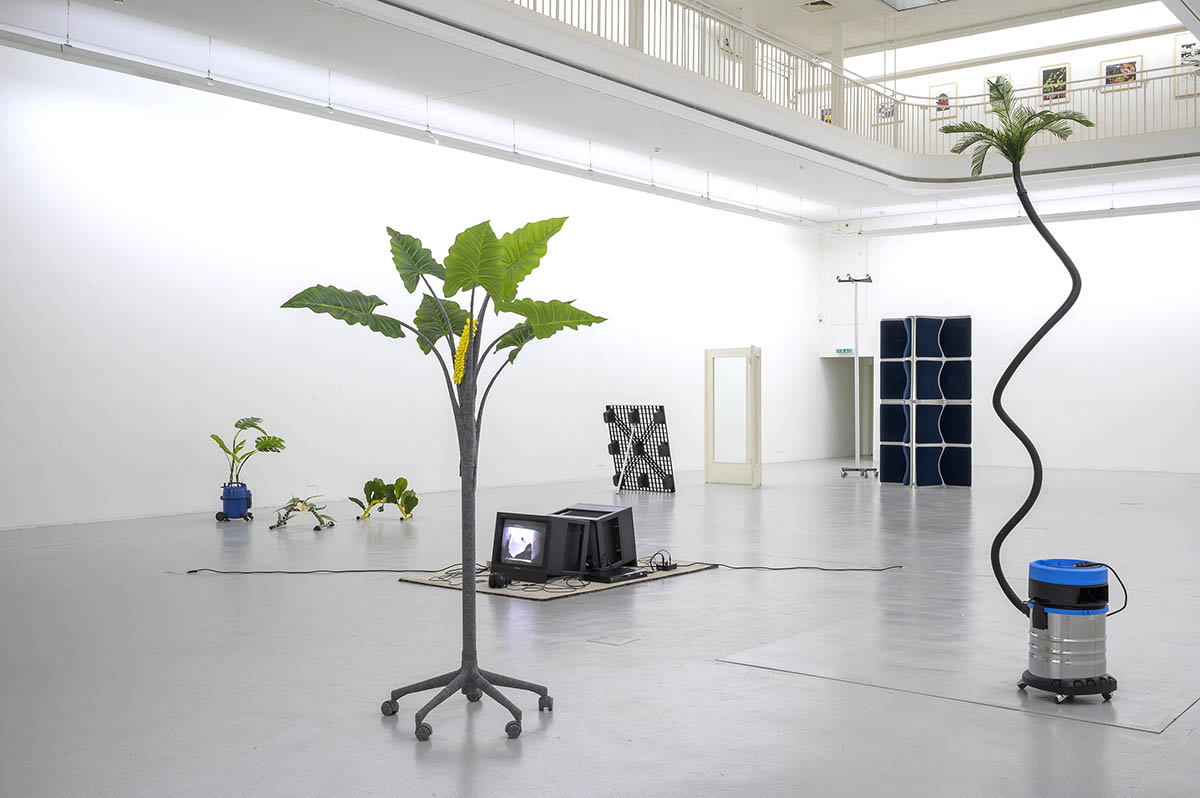
How much preparation/planning goes into this? How do you approach the implementation?
Implementation and planning depend heavily on the nature of the project. A significant amount of time can pass between the moment an idea strikes me and the moment I can bring it to realization. I begin by prospecting for materials and conducting various tests to see how they will react to the transformations I wish to impose on them. If the sculpture is large and complex, I have to plan many stages and be patient. However, I also work on much more spontaneous, smaller projects with more minimalist interventions. I create many sculptures using the objects that surround me. Some also remain at the stage of sketches or drawings; sometimes, they don’t need to become physical sculptures.
What role does the body play in your artistic practice?
In the themes I explore, there is always the question of the individual passing through. My work often contains an element of anthropological inquiry, sometimes with an ironic twist. Who are we? What shapes our daily lives? What are our needs and desires? How is the body subjected to a context, and what does it become within that context?
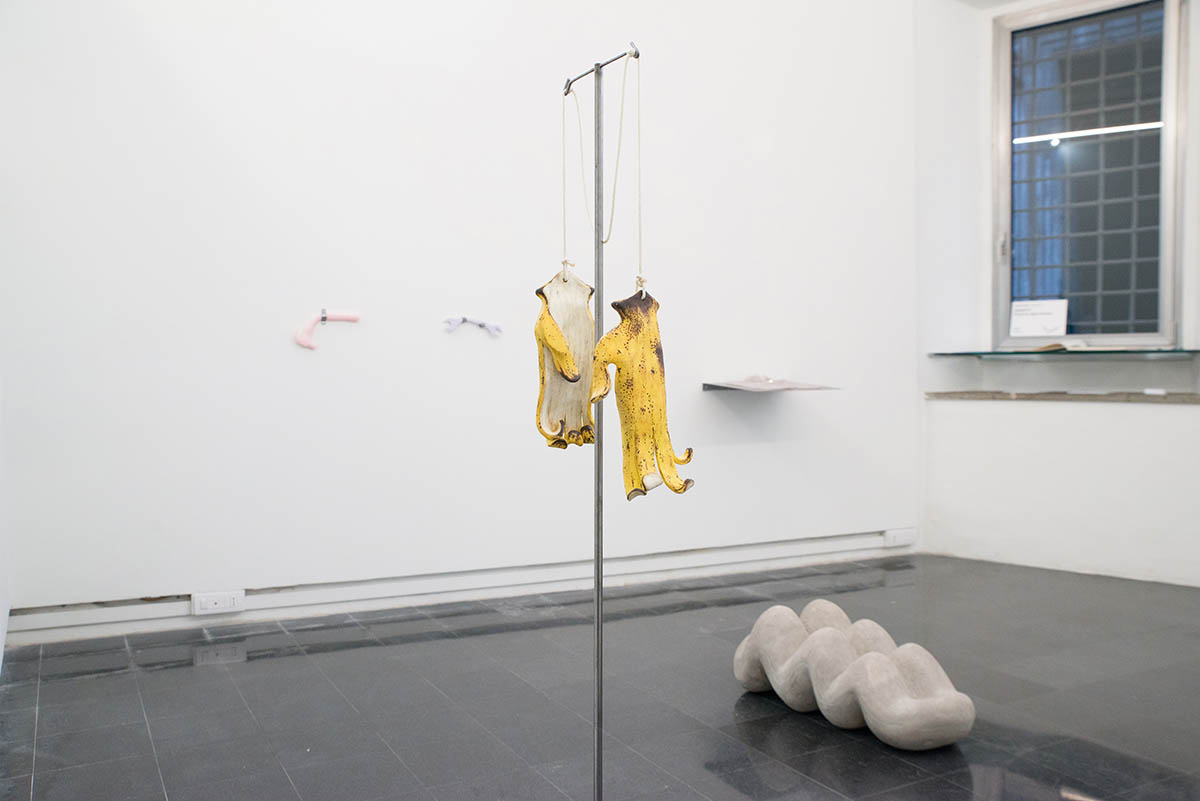
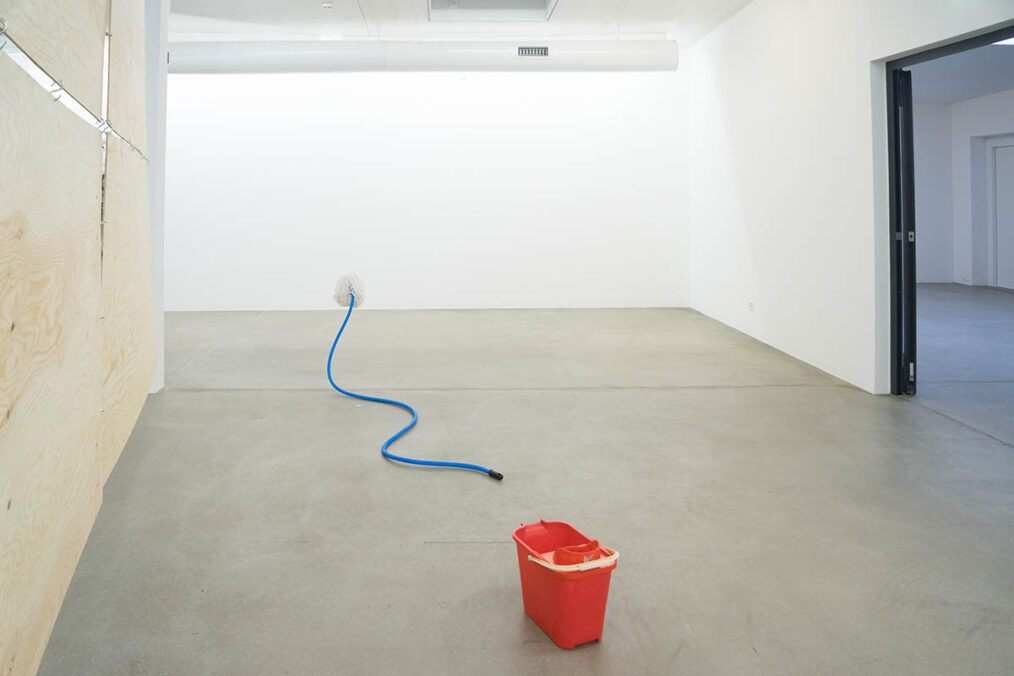
In other words, I question the place the body occupies in the home, at work, in the office, and in public spaces, and what it is subjected to. How it is both preserved and threatened. I am also very attentive to its correspondences in space: I see furniture, handles, the house, and everything around us as imprints of the body. A broom handle is simultaneously the „positive“ of the hollow of a hand and a tool calculated for the height of a standing person. I also pay attention to the anthropomorphism of objects and our capacity to project alter-egos onto the forms that surround us. This propensity to seek a reflection or a double in our surroundings amuses and inspires me.
Furthermore, I question the relationship between the body and the digital or immaterial world—its relationship with the interface that leads us toward virtual spaces: the screen, the workstation, the keyboard, etc. What becomes of the body when faced with that which replaces it or makes it disappear?
What role does music play?
It stimulates my imagination enormously. When I listen to a track, I often think of the music video I would make, or of drawings and sculptures that would come to life. The relationship between rhythm and image fascinates me. I love animating objects or images with sound. I have always been fascinated by music video creation, like those of Michel Gondry or Spike Jonze. I haven’t had the time in recent years, but I would love to direct video pieces that connect sculpture, drawing, performance, and music.
At what point do you recognize that a material is the right choice for a work?
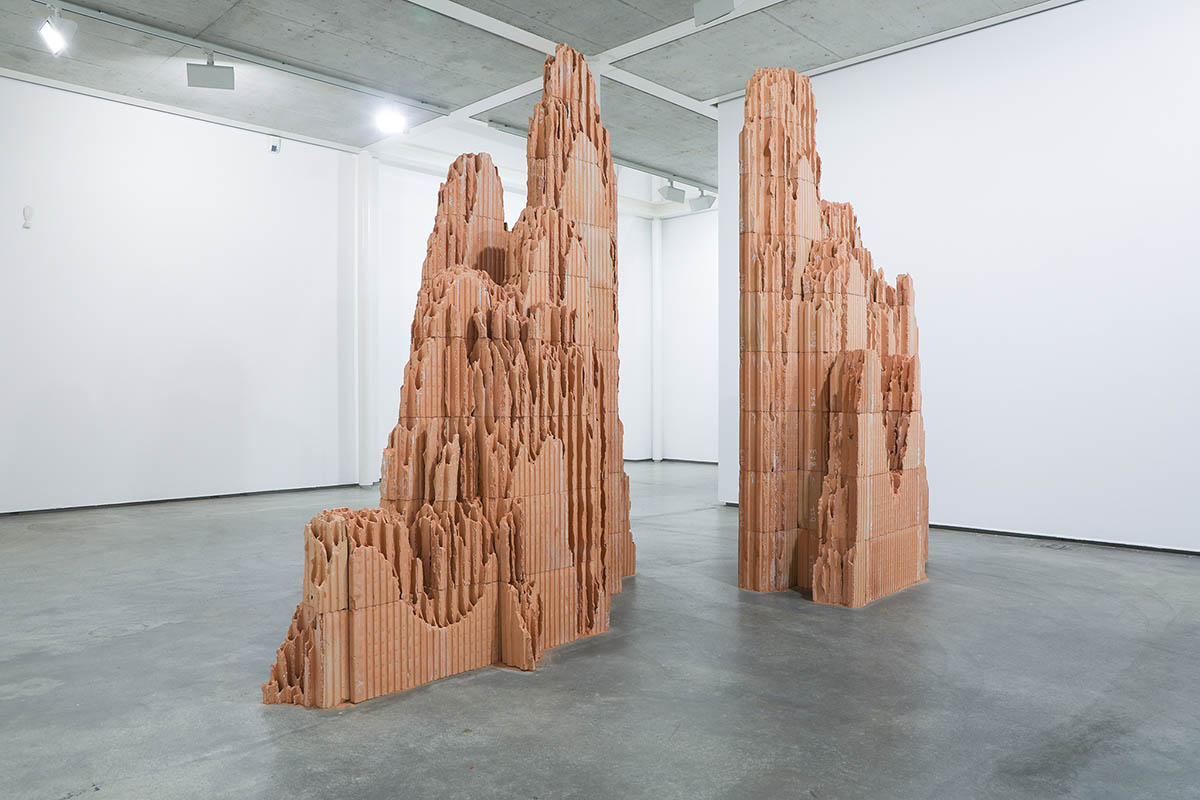
Material is often a starting point. I reappropriate it and operate a shift that allows for a re-reading of the object and its original context. Moreover, I like the viewer to be able to understand a work through the familiarity they already have with the material. When I use bricks to sculpt cliffs, the viewer understands both the evocation of the landscape and the reference to construction and habitation. It is an entry point they already possess, allowing them to reach the core of the subject. Similarly, if I transform a sink plunger into a palm tree, the audience understands the reference to both the restroom and the deserted island; they must then „deal“ with these two worlds merging. Many of my works have a very haptic aspect because their materials are so familiar to us; we feel no complexity toward them.
Is space a social construct?
It depends on which space we are talking about, but of course, it does not merely describe natural realities; it reflects organizations resulting from collective decisions and power dynamics. In my work, I am interested in objects that symbolize, through metonymy, socially connoted spaces—such as the office chair for the world of work, or the palm tree for exoticism and vacations. These objects have no precise geographical inscription or individual specificity: they are everywhere and nowhere at once, identical wherever you are on the globe. They represent work on one hand and the paradisiacal beach on the other, within a system that functions on these social constructs. I like to collide and merge these artificial worlds, which are theoretically designed to oppose each other, by drawing attention to their paradoxes and limits.
How do the places where you’ve exhibited or worked influence your art?
I have had the chance to work in many different contexts, whether for exhibitions abroad or residencies. These opportunities have been very nourishing, especially through the encounters and collaborations they sparked. I have occasionally evolved works based on exhibition contexts or exchanges with colleagues and curators. This was the case for the Falaise (Cliff) series, for example, which I had to readapt for each exhibition according to the size and constraints of the venue.
I could also cite the example of the lockdown, after which I wanted to create pieces about the domestic sphere using materials I had lived with for two months. This resulted in brooms in the shape of escaping snakes or dancing household utensils. Finally, the places where I have lived have a great influence on my work. Studying in Strasbourg and spending time in contact with Switzerland and Germany greatly nourished my taste and practice, in the same way my years in Paris or Rome did.
Your works often focus on fluid transitions between architecture and landscape or body and nature. Do you see metamorphosis as a poetic device or as a critical reflection on our environment?
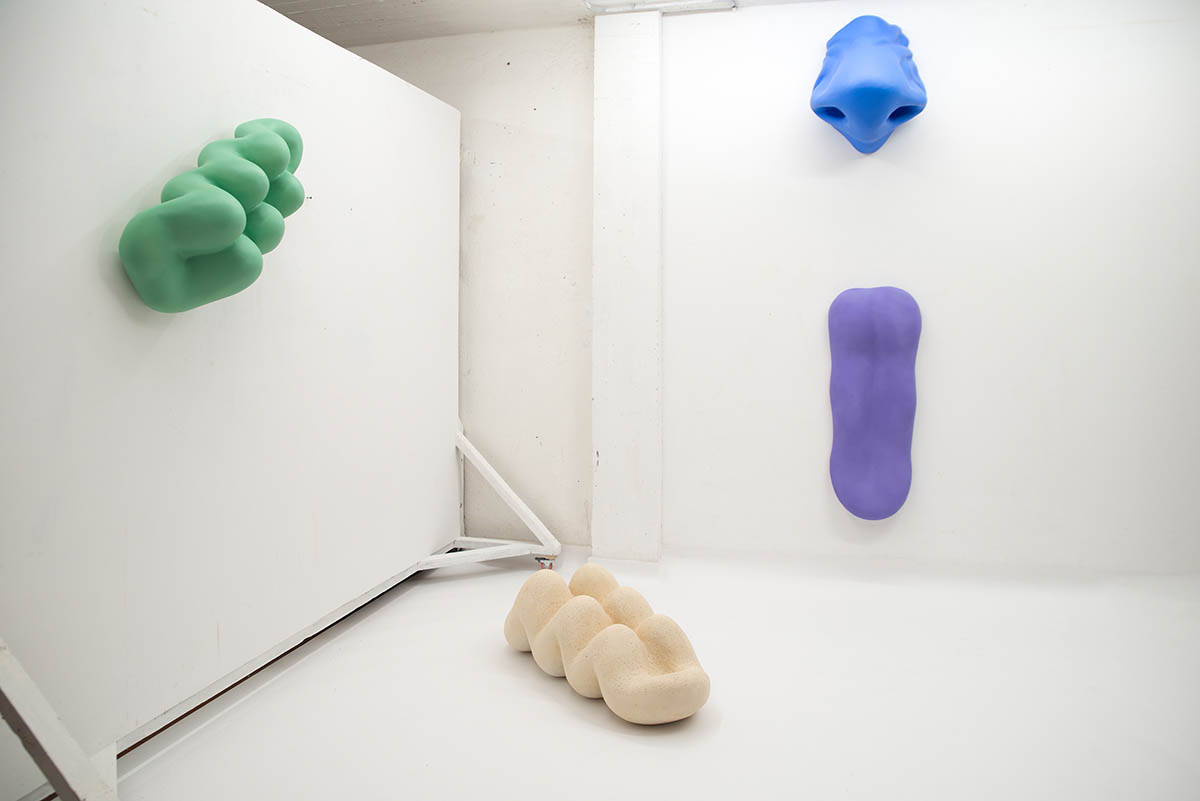
I often think of a positive connotation when I think of metamorphosis, though it isn’t necessarily so. What pleases me are the correspondences between these worlds—landscape and architecture, body and nature, which we can already observe in language. In my work, metamorphosis often involves a hybridization of bodies. „Body“ can be understood here as that of a person, but also that of an object, a building, or a landscape. The question of hybrid nature appeals to me because it describes a connected vision of worlds, objects, individuals, and the living, allowing entities to be complex and rich. I feel myself to be of a hybrid nature, in terms of the socio-cultural components that constructed me and the different roots that compose me. Thus, metamorphosis is poetic because it evokes hybrid natures, but also critical because it explicates the need to transform to resist.
What topics are you currently most interested in? What are you working on at the moment?
I am currently developing a series on a fragmented portrait in space, playing with the notion of „body-architecture“ and drawing inspiration from linguistic correspondences between habitation and the body. I mentioned earlier the imprints of the body or the projections we make of it onto our environment. These correspondences are also often hidden in language and are very evocative. We use many words from the architectural lexicon to speak of the body: the arch of the foot, the skeletal framework, the spinal column, as well as corporeal lexicon to speak of architecture: the heart of a city, the skin of a building, the foot of a column, the mouth of the tunnel, and so on. I am therefore developing a new series of sculptures on this theme.
Axel Gouala – www.axelgouala.com, www.instagram.com/axel_gouala
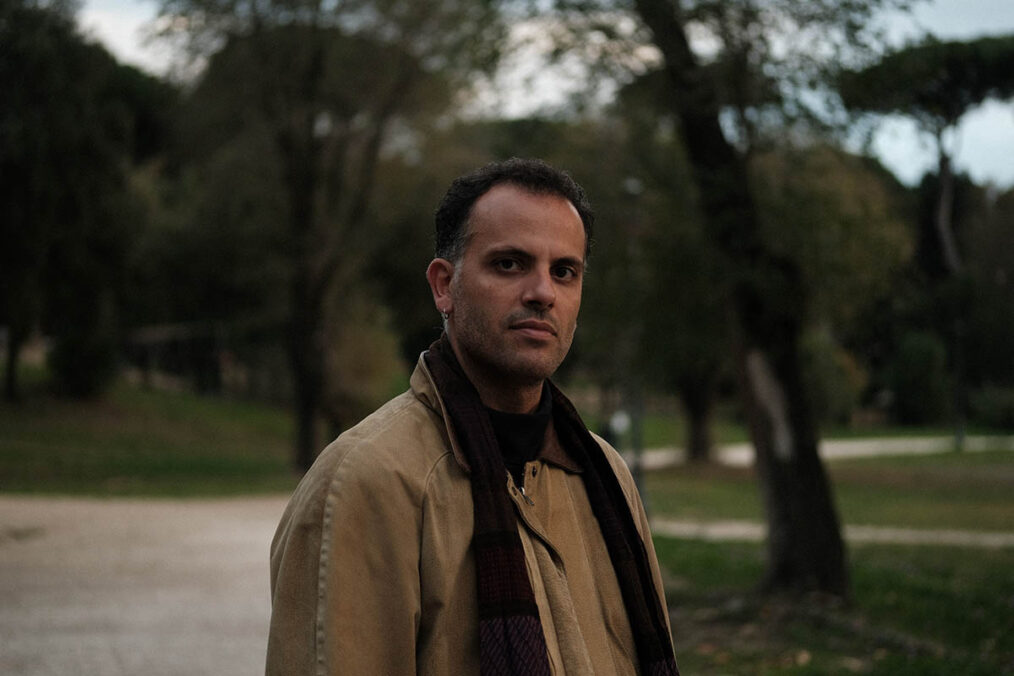
Axel Gouala (b. 1987, Paris) is a French artist based in Rome. He graduated with an MFA from the Haute École des Arts du Rhin in Strasbourg in 2014 and lives between France and Italy.
His work has been recognized with several Prizes in France, Switzerland, and Italy, and has received support from recognized cultural institutions such as the French Ministry of Culture, the Goethe Institut, and the Institut Français. He has exhibited in several Biennales and Art centers in Europe, including the Cité Internationale des Arts de Paris, the CEAAC (France), the Kunsthalle Basel, the Kunsthalle Palazzo (Switzerland), the Casino Luxembourg, the Kunstverein Freiburg, the Künstlerhaus Bethanien Galerie (Germany), the Meetfactory (Czech Republic), and the Mattatoio Roma (Italy).