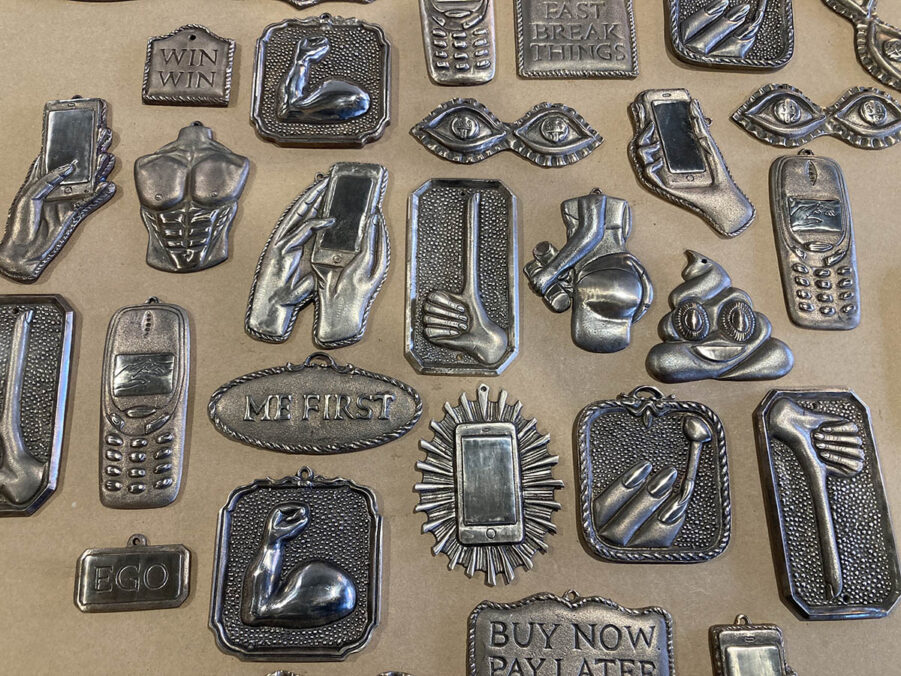
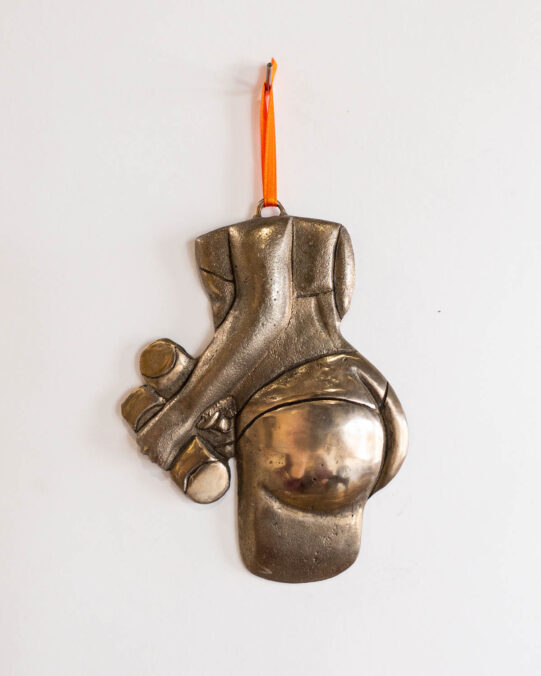
Her studio desk is densely covered with small cast metal objects arranged in repetition: hands gripping smartphones, hyper-defined male torsos, accentuated female body parts holding dumbbells, eyes with emoji pupils, and dollar signs stamped onto their tongues. These sit alongside casts of early Nokia phones and plaques stamped with WIN WIN, ME FIRST, EGO, and MOVE FAST AND BREAK THINGS. These objects form L’Opium du Peuple (2026), as the first work emerging from The Last Days of Wonder, extending Odermatt’s ongoing engagement with belief systems, rituals, and sacrificial offerings through her interpretation of ex-votos. Historically, ex-votos are devotional offerings—objects given in moments of crisis, gratitude, or hope, often representing injured body parts or experiences of suffering. For Odermatt, they become a point of departure to ask what occupies our fears, desires, and dependencies today. Rooted in a long-standing personal fascination—shaped by early encounters with votive paintings and extended through years of research and travel across Europe and South America—she translates this ritual language into a contemporary visual vocabulary. In place of healing limbs or divine intervention, her objects point to the contradictions of the present: self-optimization, digital attachment, individualism, and the logic of neoliberal mantras—rendered with sharp humor that remains central to her practice.
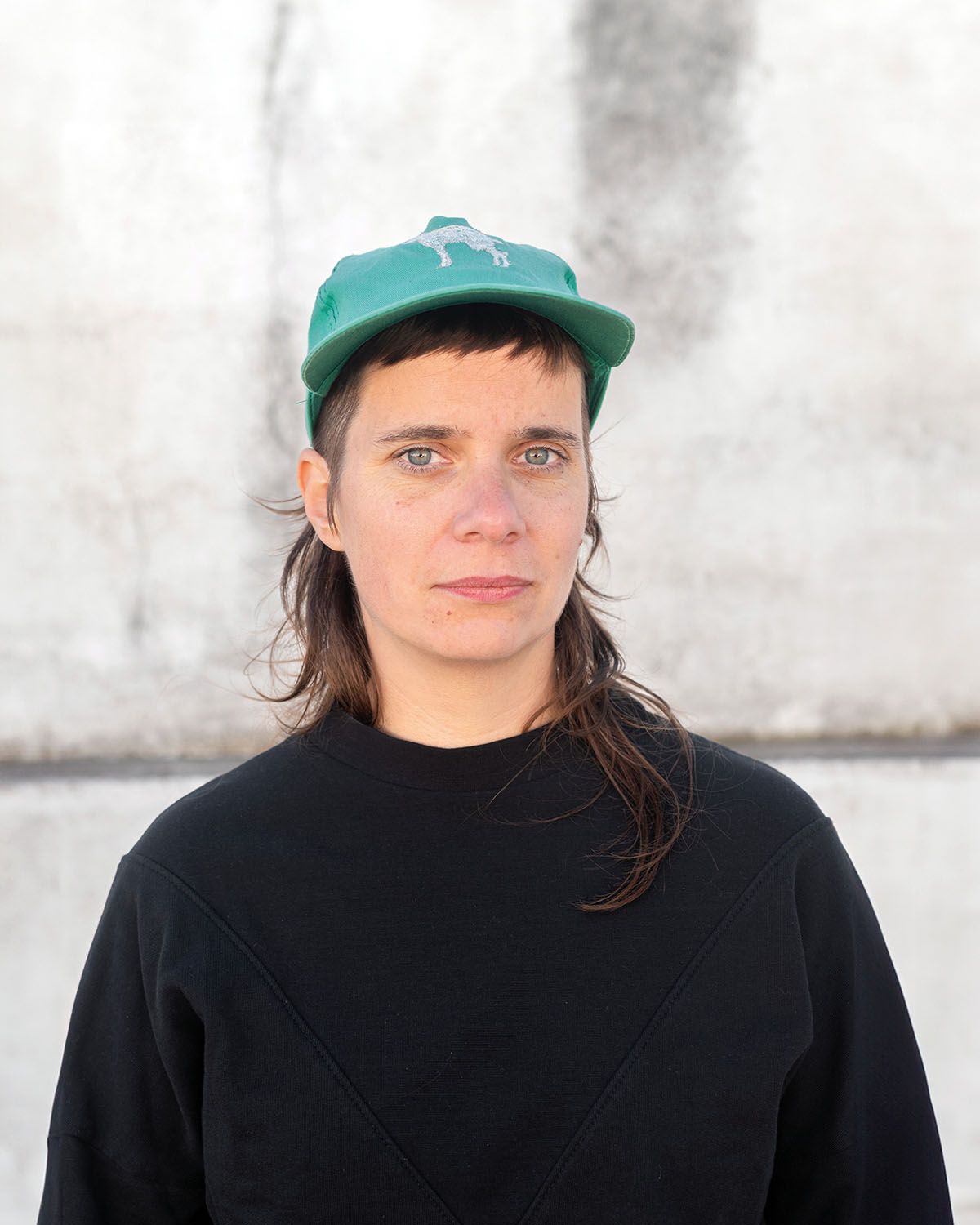
For Odermatt, this is also a deeply personal story. Growing up in the Catholic canton of Nidwalden, she recalls annual school pilgrimages to the mountain church of Maria Rickenbach, known for its walls covered with ex-voto paintings. She remembers being both fascinated and unsettled by them—drawn to their intensity while questioning the religious framework they belonged to. These early memories have stayed with her, and the idea of creating her own version of ex-votos now unfolds in The Last Days of Wonder.
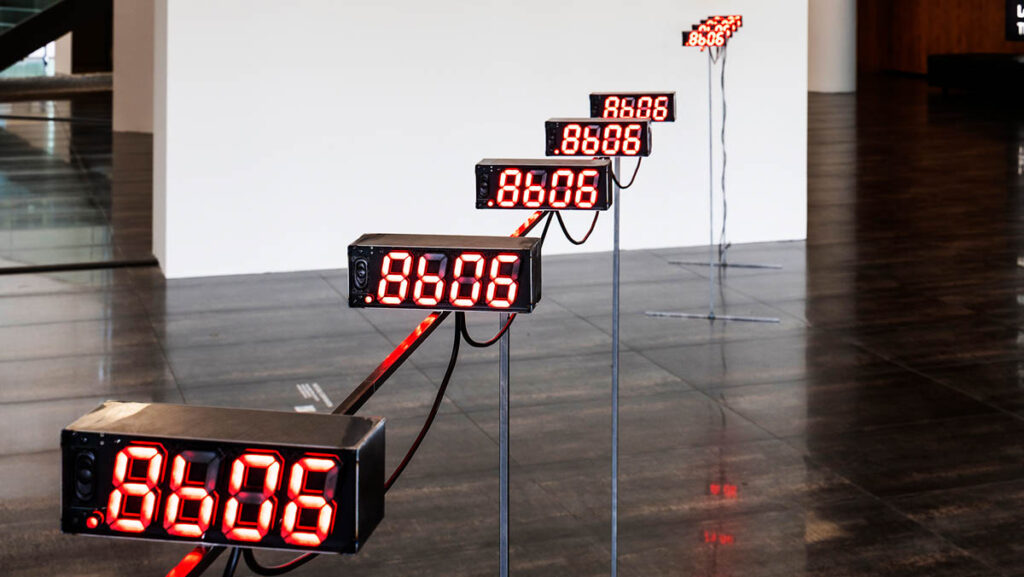
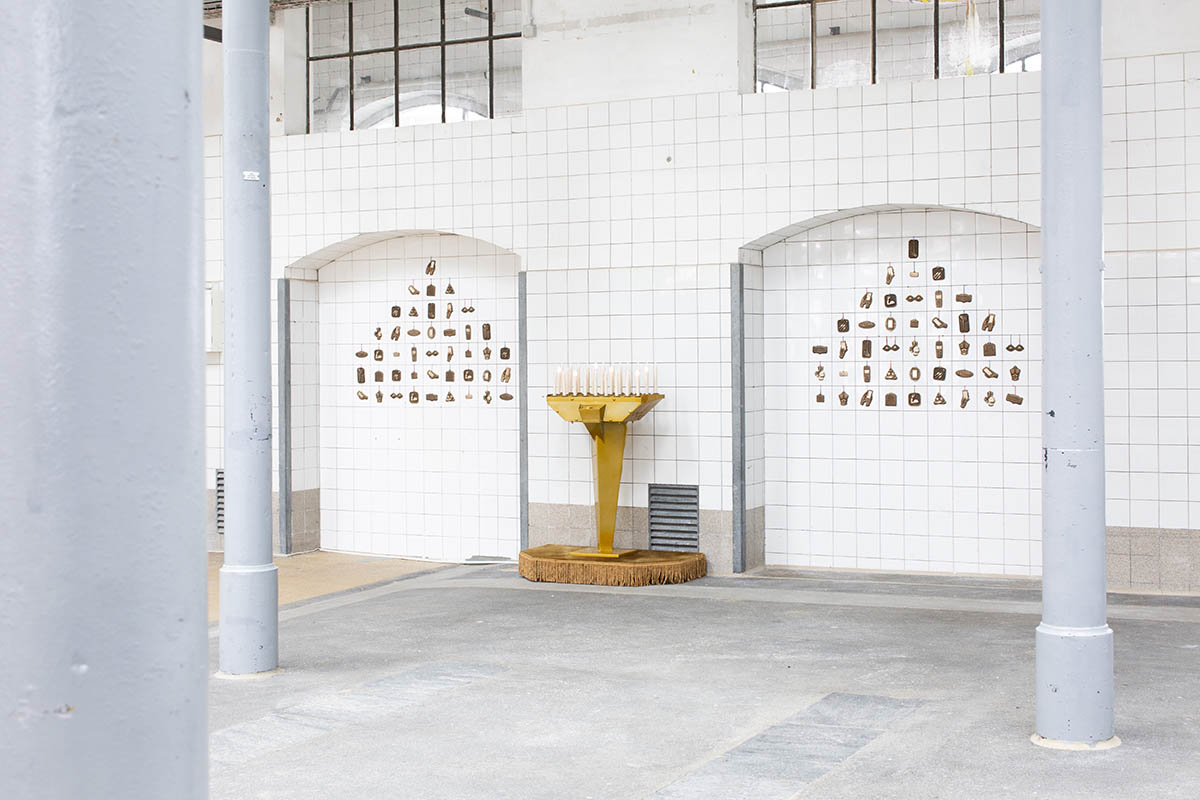
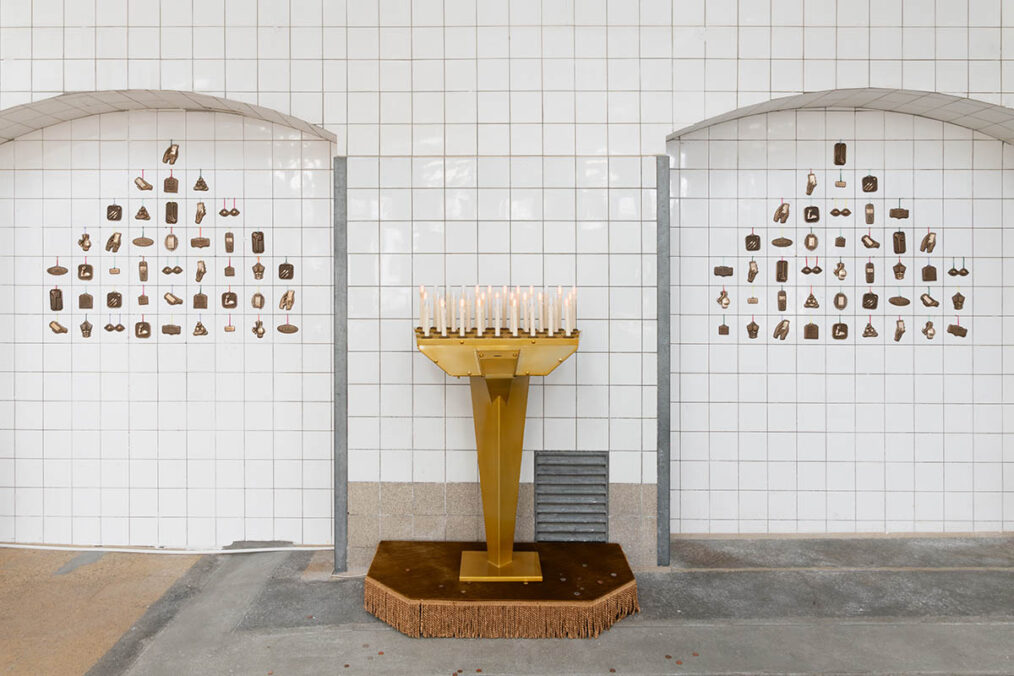
Alongside these bronze cast objects, a second work titled Try Again Later (2026) forms a central element of the project. It is an electronic candle-offering box—commonly found in churches. Odermatt located one close to Rome and reconfigured it for this work. The piece invites visitors to insert a coin, triggering the illumination of one of its candles. Developed in collaboration with her brother, David Odermatt, a 3D animator and motion designer, each candle contains a hidden letter, gradually unfolding a message as more lights are activated. What ultimately appears when all candles are lit is an automated error message, replicating the detached language of digital interfaces that offers no resolution.

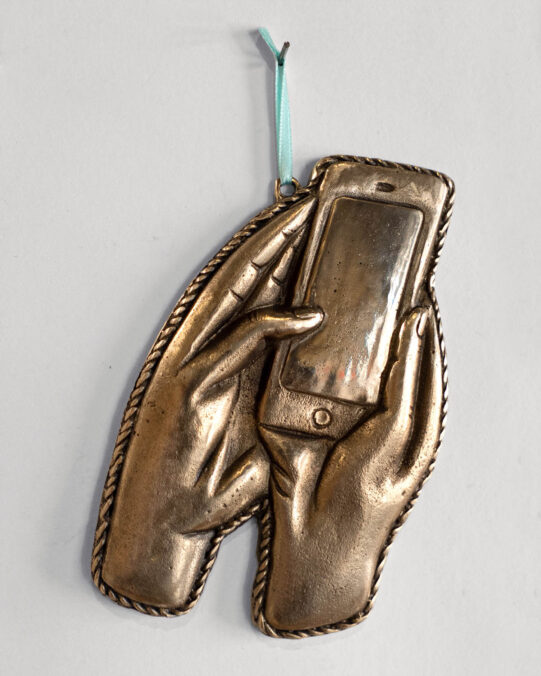
Surrounding this work, L’Opium du Peuple unfolds as a group of contemporary ex-votos cast in bronze. Originally carved in wax and produced in collaboration with the Fonderie Blondeau, these forms translate votive traditions into symbols of digital and consumer culture: smartphones, emojis, idealized physiques, and an exaggerated thumbs-up—an emblem of digital validation. Hands hold devices like devotional objects, while phrases such as MOVE FAST AND BREAK THINGS, made famous by Mark Zuckerberg, circulate like mantras. The title explicitly draws on Karl Marx’s notion of religion as the “opium of the people,” later extended by Walter Benjamin’s definition of capitalism as a form of religion, underpinning the work’s conceptual framework.
In Odermatt’s work, the smartphone becomes a cult object, body optimization a form of devotion. Emojis replace sacred symbols. Meaning, belonging, and identity are sought through phones, algorithms, and the logic of individualism. In this shift, capitalism assumes the role of religion—offering new promises of salvation through technology, consumption, and self-perfection.
This shift, however, is not without consequence. Odermatt points to a growing dependency on these systems—one that shapes behavior while eroding attention and knowledge. These changes, she says, are particularly troubling in relation to their impact on society and democracy. Through The Last Days of Wonder, she opens a space for reflection rather than offering solutions: “What occupies us today? What makes us anxious, what makes us ill, what do we seek protection from in a world shaped by hyper-capitalist and neoliberal conditions?” If crises are no longer attributed to fate or divine forces, but are clearly human-made, then the question of responsibility becomes central, says Odermatt, raising her underlying question: who, ultimately, is accountable?
The articulation of her own vocabulary of symbols and belief systems has long been central to Odermatt’s practice. Trained as a graphic designer, she recalls the moment she realized her work would remain bound to the screen and the flatness of print. She desired to work with her hands—to touch, grasp, and engage with material directly. What followed was a translation of her graphic thinking into a tactile practice. Across textiles, metal, wax, acrylics, objects, video, and installations, the graphic logic of composition remains: color, line, layering, and typography are still carefully arranged, but now rendered, cast, and stitched by hand, and assembled in three-dimensional space.
At the same time, she reflects on her association with textiles with a certain ambivalence: “I got a bit tired of being labelled as a textile artist, so I thought, maybe I just go the opposite way and use a material that is the opposite of textile—something very hard, almost indestructible.” While she continues to work with textiles, her practice expands beyond it, opening toward new material and conceptual possibilities.
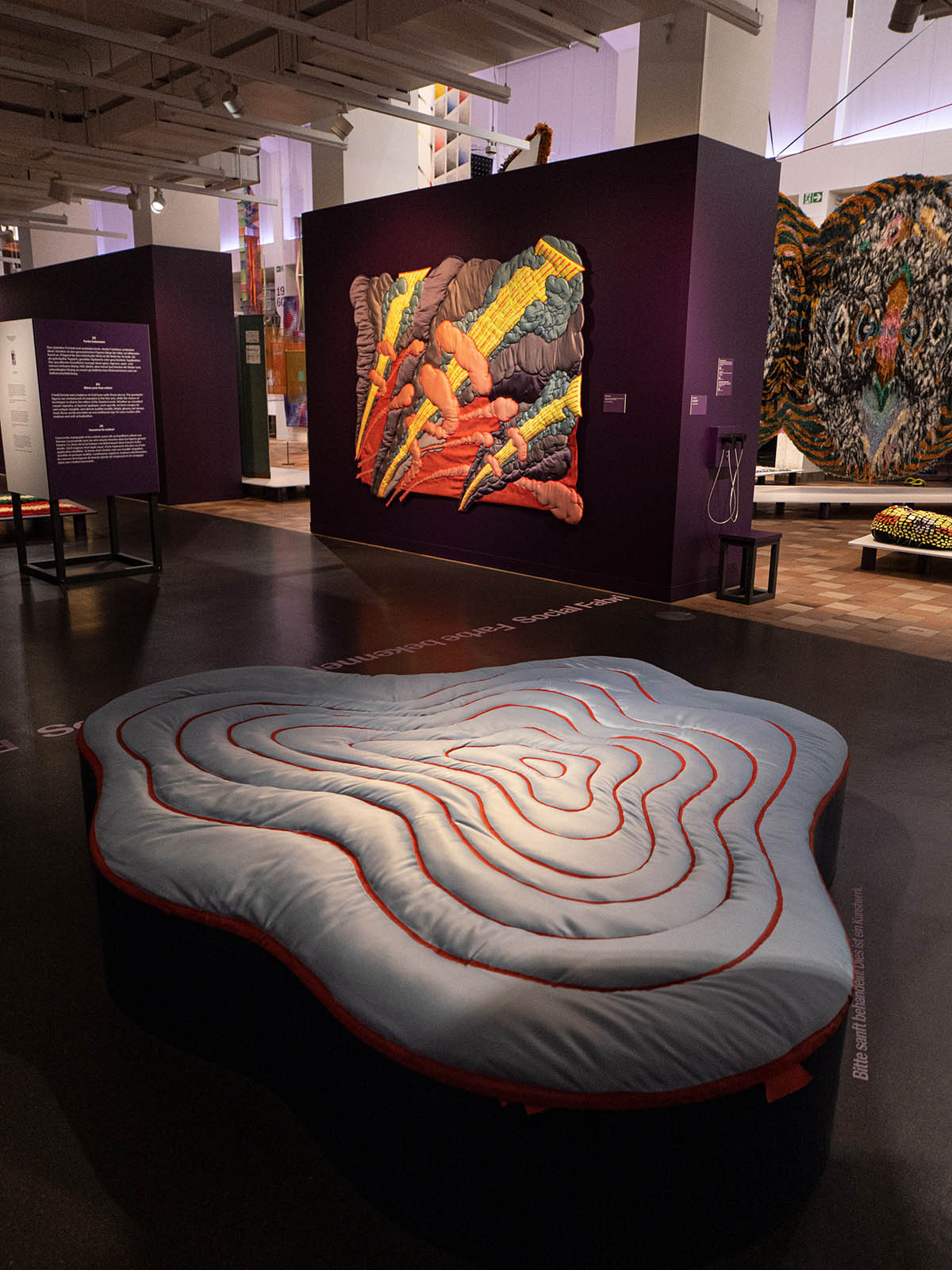
One of the reasons Odermatt is often recognized as a textile artist is her participation in the exhibition Textile Manifesto: From Bauhaus to Soft Sculpture at the Museum für Gestaltung in Zurich in 2025, curated by Sabine Flaschberger. Bringing together works by over 90 artists, the exhibition presented six of Odermatt’s works, including No One is an Island (2024), positioned at the entrance of the exhibition—a soft sculpture, layered as an island, accompanied by her monograph. Another of her soft sculptures, There’s a Crack in Everything (That’s How the Light Gets In) (2021), also became the exhibition’s poster. The museum later acquired one of her works, marking a further institutional recognition following her solo exhibition at the Nidwaldner Museum and the publication of her monograph. (Longing to Belong, edition clandestine, 2023)
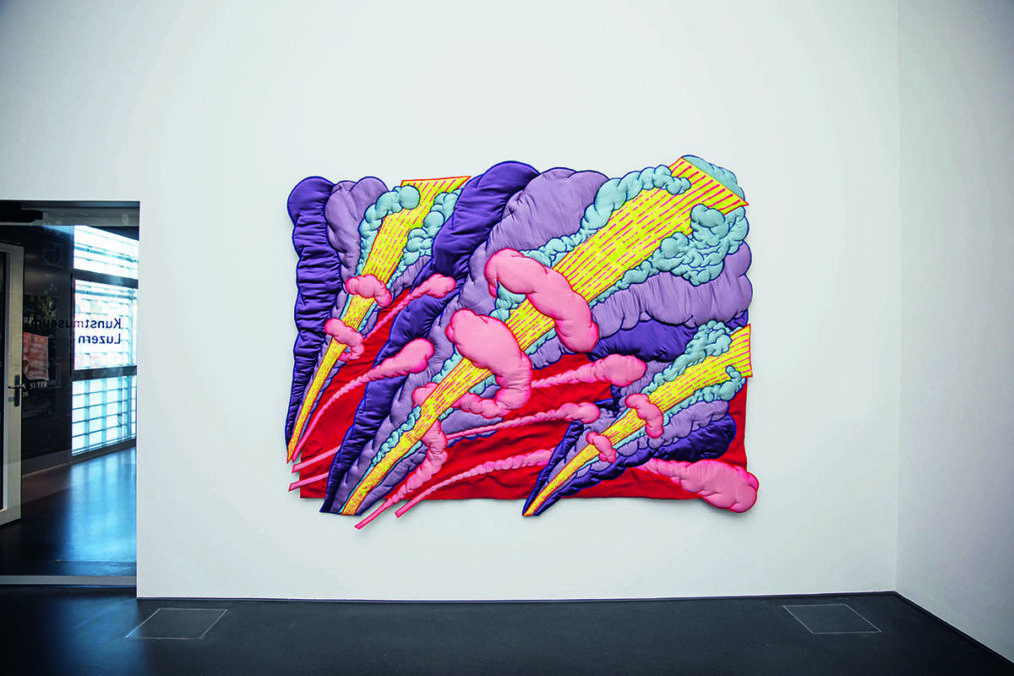
This association is also partially tied to her work with soft sculpture, as reflected in the exhibition’s title. Soft sculptures are three-dimensional works made from flexible materials such as fabrics, fibers, plastics, and rubber. As art historian Ferren Gipson notes, their origins are traced back to 1957, when Claes Oldenburg filled a woman’s stocking with newspaper and hung it on a wall.1 Odermatt’s soft sculptures are immediately recognizable: quilted surfaces, vivid colors, padded volumes, and stitched lines form a distinct visual language, realized with precision yet guided by intuition.
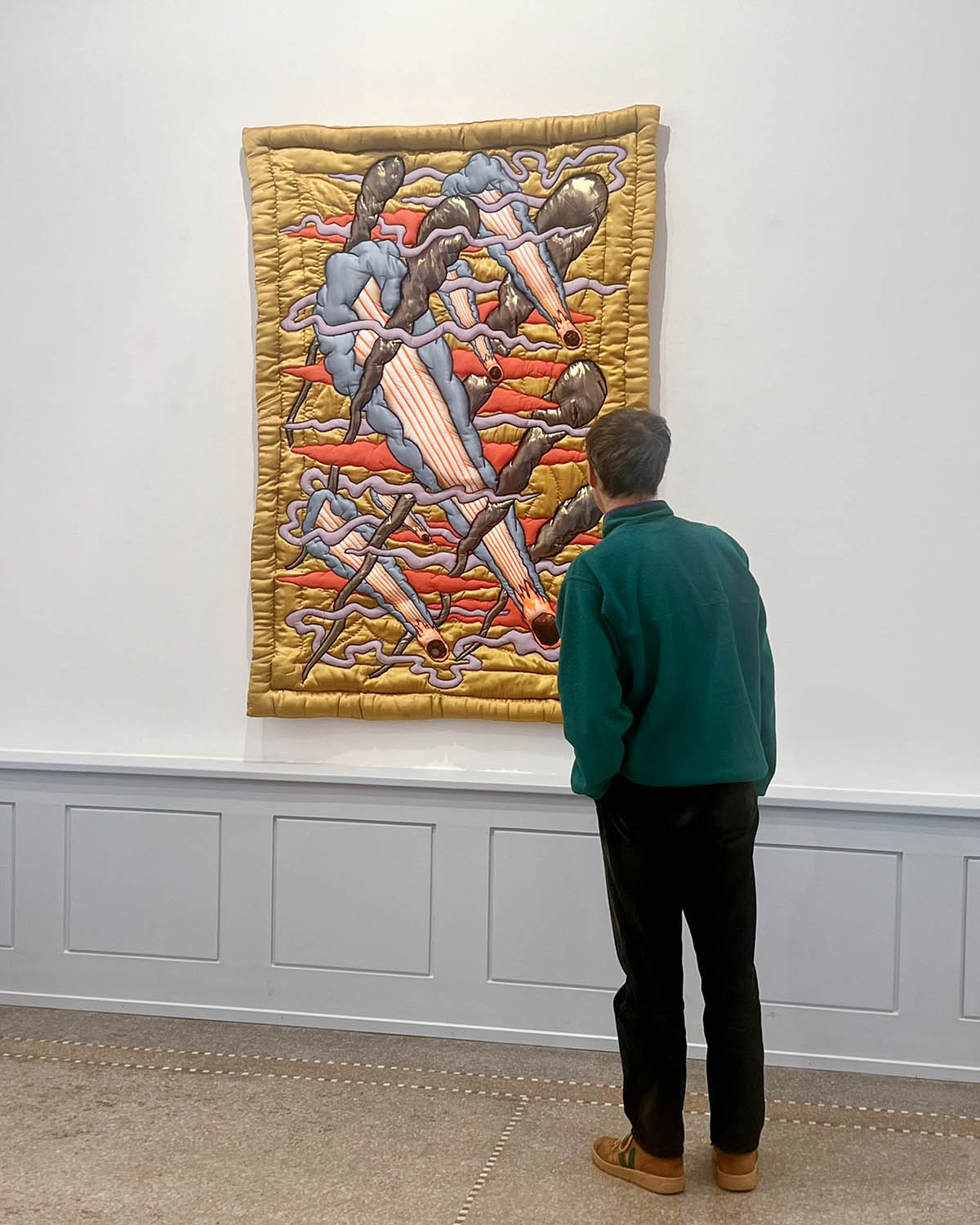
In her most recent soft sculpture, As Long as the Music Is Loud Enough, We Won’t Hear the World Falling Apart, Part I (2025)—with Part II currently in the making— meteors cut across padded surfaces, with their impact softened through color and form. Catastrophe and calm coexist. It is within this tension that reality is partially concealed, says Odermatt. Rather than turning away from the realities, the work invites a closer engagement with them. The title, taken from a film line, “feels fitting for our overwhelming times,” she notes.
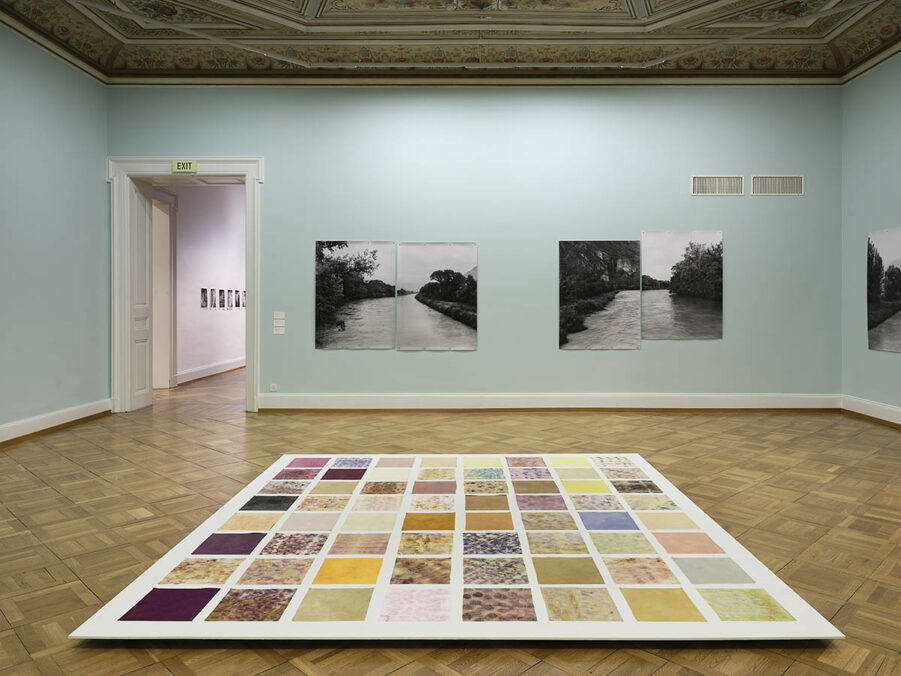
Nature remains a constant reference point in her visual language, rooted in her upbringing in Nidwalden and her proximity to the Alpine landscape. She is drawn to natural forces—mountains, volcanoes, fire, explosions, collisions—not only for their power, but for the sense of humility they evoke. These forces appear in her works as symbols of wonder, instability, and vulnerability, and as miracles that are both beautiful and unsettling. This sensitivity is present in Tagebuch der Langsamkeit (Diary of Slowness) (2022-ongoing), a work that emerged from her residency in Senegal and gradually unfolded through walking as a practice. Working with natural dyes derived from plants that she gathers during her walks, Odermatt creates small silk pieces that record specific places and moments. Arranged as a grid on the floor, the work forms an abstract, borderless landscape. It is both poetic and political: an act of resisting acceleration and ideas of constant progress, while embracing slowness and presence.
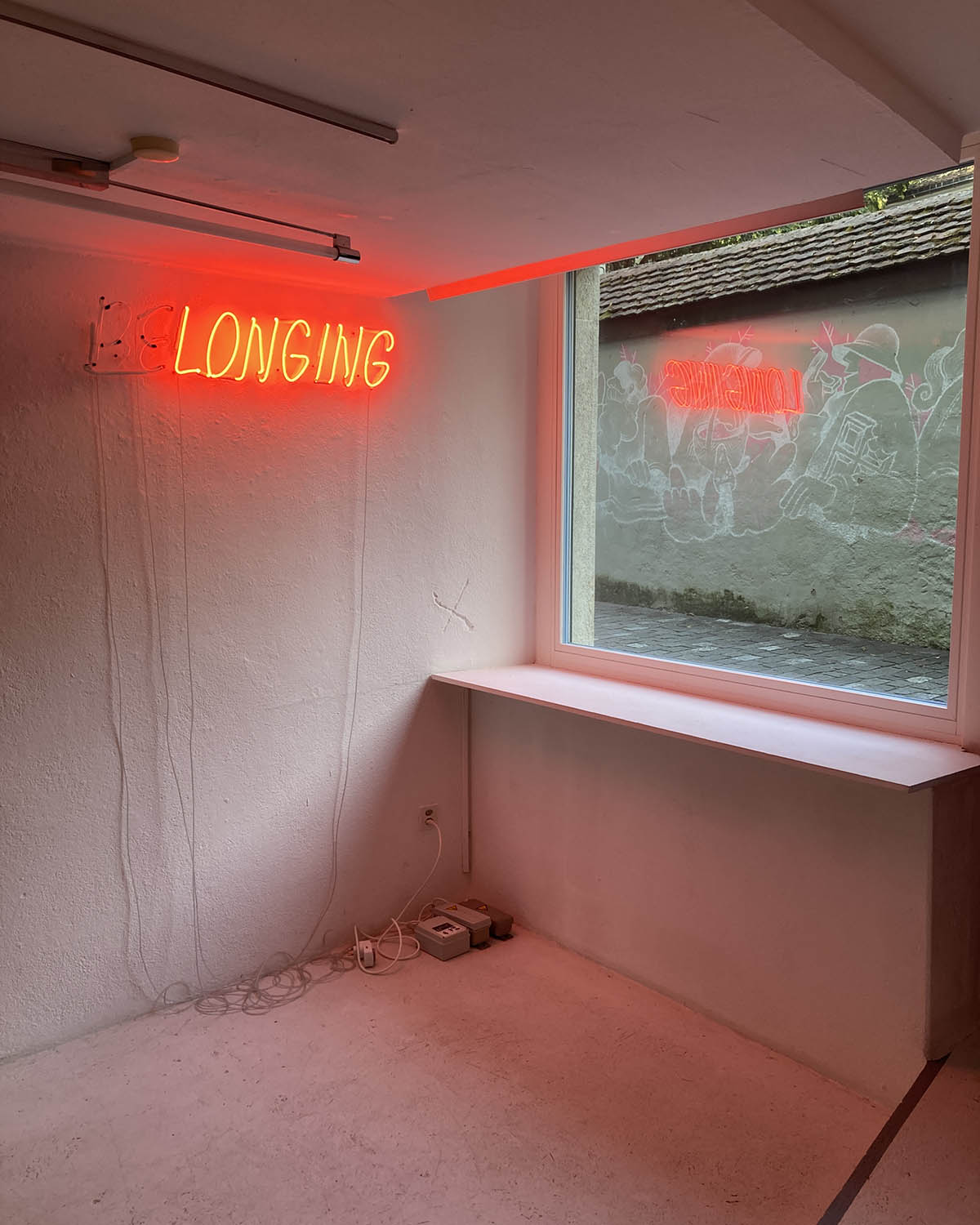
Questions of belonging and identity take a different form in (Be)longing (2023). The neon work grew out of writing as a way of thinking. At the time, she was working with the German words Sehnsucht (longing) and Zugehörigkeit (belonging), when she became drawn to the English word “belonging” and to the way it contains “longing” within it. This linguistic overlap reflects an inner tension between connection and searching. The flickering neon light on the first two letters “Be” underscores this instability, keeping belonging in a state of flux.
Odermatt’s practice resists being confined to a single medium or topic. It already carries the scope of a retrospective, while she remains grounded in constant movement, driven by an ongoing impulse to expand and further develop her visual language. Her work emerges from a continuous process of observation, interpreting, and translating the contradictions of the present into material form without being overwhelmed by them. “I do not believe that art changes the course of the world. Rather, my practice is an attempt to make some sense of the chaos of the present,” she says, adding that it is also about laughing at the absurdities of our time. Grounded in exquisite attention, Odermatt’s practice holds space for critical reflection on a data-driven world that increasingly resists it.
The first group of works from The Last Days of Wonder is currently on view at Quartier Général, La Chaux-de-Fonds, as part of the group exhibition fasTnacht, until 26 April 2026. Her next exhibition will take place at Espace Libre, Biel/Bienne, from 3 June to 5 July 2026, as part of Tension de Surface.
Corinne Odermatt – www.corinneodermatt.ch, www.instagram.com/corinne_odermatt/
- Gipson, Ferren, Women’s Work: From Feminine Arts to Feminist Art (London: Quarto Publishing, 2022) ↩︎