Once referred to as Object X, Vila 31 was built in the early 1970s as part of Tirana’s former leadership area, a closed residential zone for Enver Hoxha and other senior officials. As historian Elidor Mëhilli writes, the villa was “an uneasy blend of architectural styles” and later became “an informal site of the rewriting of history”1, a place where private life and secrecy continuously shaped how history was told and retold.
The villa, with its combination of official splendour and domestic intimacy, reflects the contradictions of power: while it was a private space for the dictator, it also stood as a symbol of authority and surveillance over the city. Today, Vila 31 x Art Explora residency reopens the space as a place for artistic research. The program, since the beginning of 2025, welcomes artists and researchers for three-month residencies, providing studio apartments, production and exhibition spaces. Particular attention is paid to artists and researchers based in the Southeast Europe Region while also welcoming international participants. Through this residency, Vila 31 is successfully transformed into a space of collaboration and experimentation. But now, how can the artistic work of these actors dismantle the architectures of power that once shaped silence?
Anna Ehrenstein and Damir Avdagić – both selected artists of this year’s residency programme – explore historical and socio-political questions, presenting methods that resonate strongly with the villa’s entangled past. They each proposed different ways of making art rooted in relational practices, not merely as abstract ideas, but as concrete methods of dialogue with others. For Anna Ehrenstein, belonging is not inherited but built through collaboration. She explores how migration, technology, and privilege do influence who is included or excluded. In her project Tools for Conviviality (2021)2, she works with migrant communities to create videos that intertwine personal stories with wider social realities.
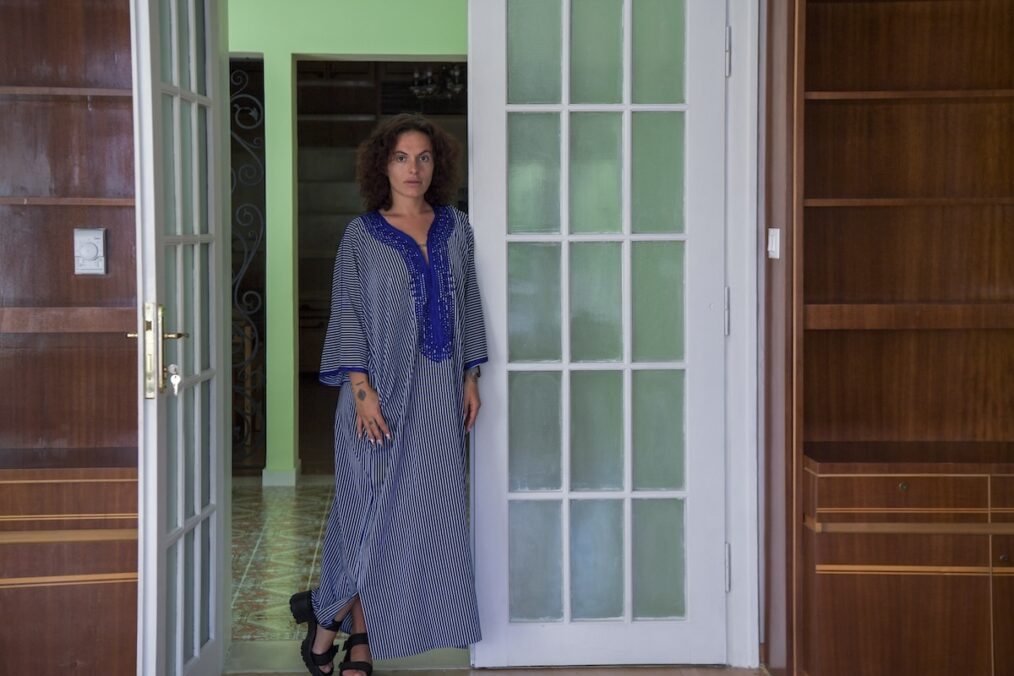
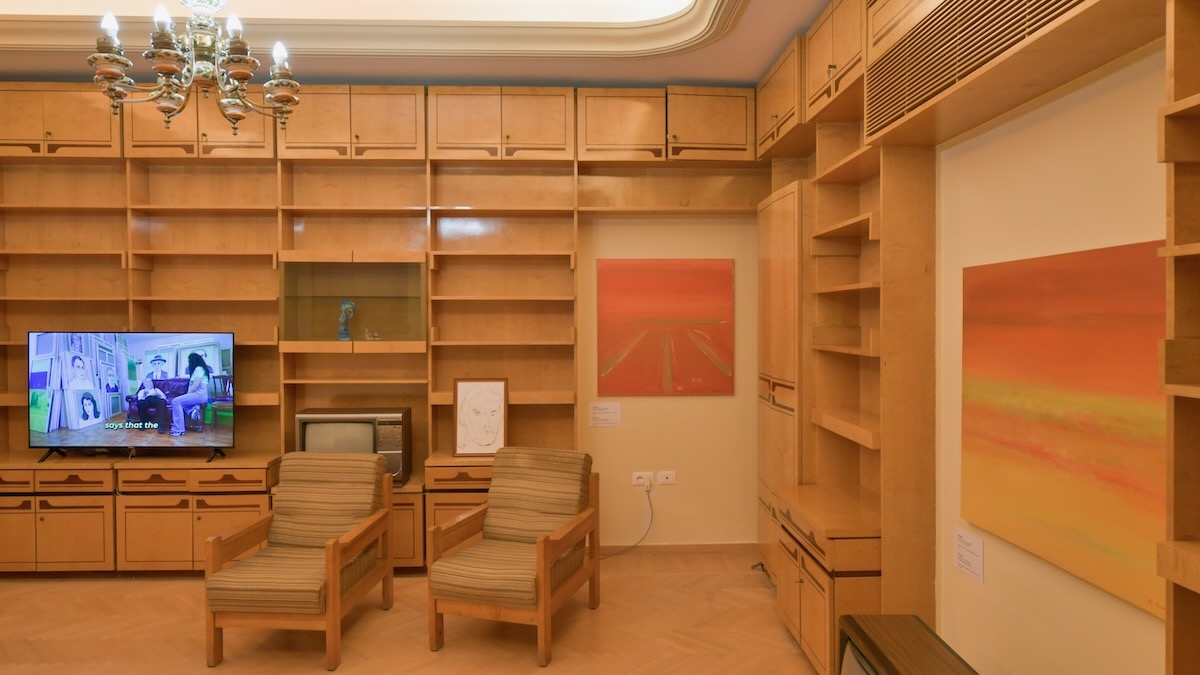
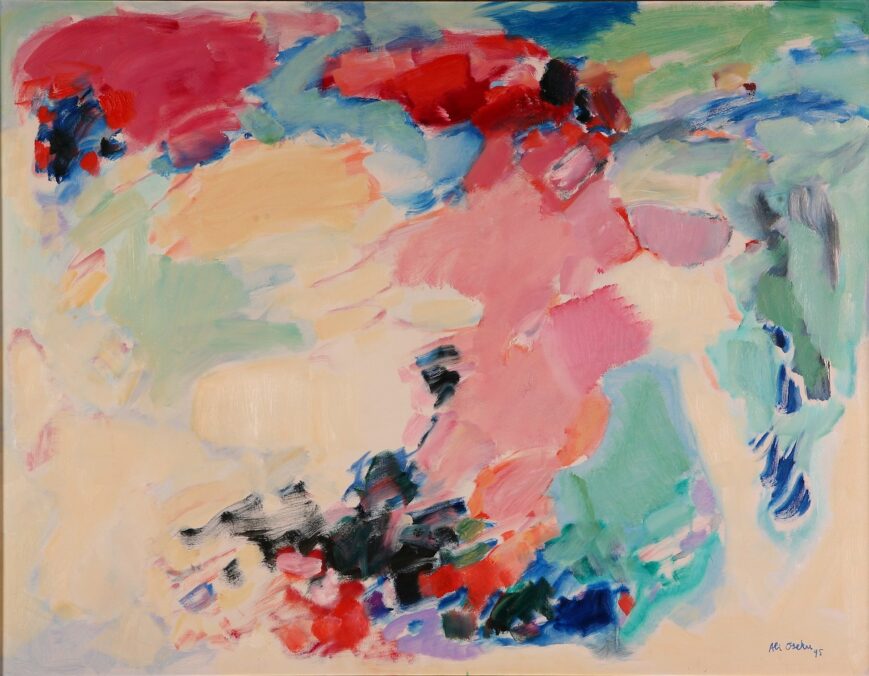
Personal interviews are overlaid with images of communal spaces, emphasizing how shared environments structure social bonds. Through these shared processes, she turns collaboration into a method of care. In this way, she holds space for others and forms new relations through images and gestures. During the open studios 21–23 November, Anna Ehrenstein added another layer to her practice through and with the help and work of her uncle, the painter Ali Oseku (1944 – 2024), who spent twenty years imprisoned under the former communist regime. Some of his abstract paintings were installed inside the Villa 31house, communicating a need for introspection within an otherwise historically charged space. Ehrenstein also presented an interview recorded during Oseku’s final year, along with her new video work The Unreality of Memory (year), which uses AI-scraped online material labeled “Albanian history” to reveal how identity is constantly distorted and reshaped.
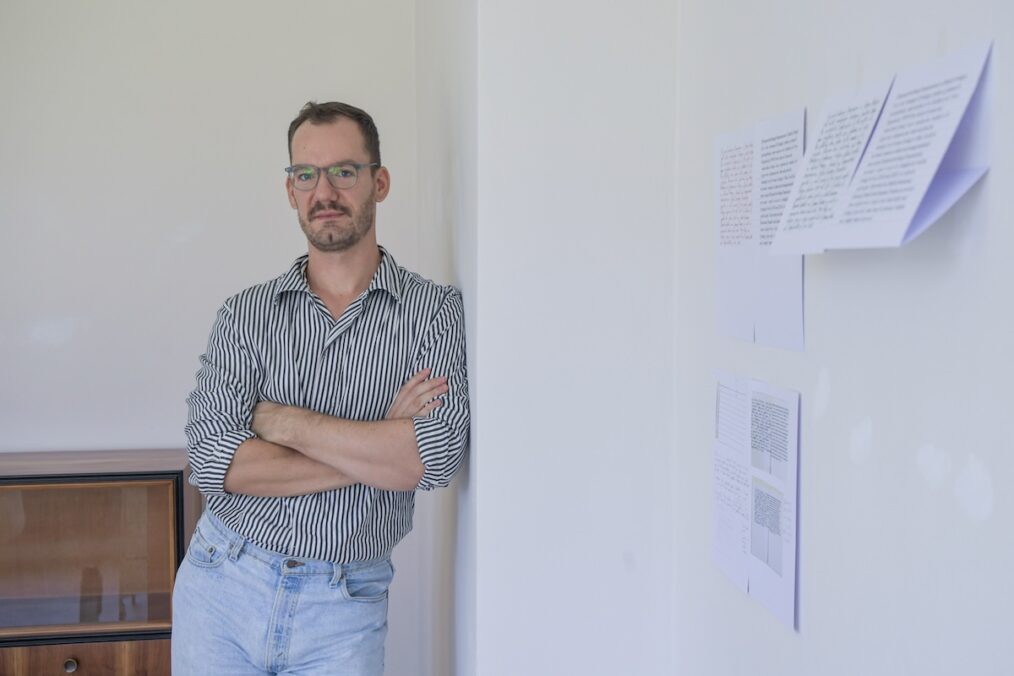
On the other hand, Damir Avdagić focuses on memory and storytelling, transforming lived experiences from the former Yugoslavia into video works and installations. In Reenactment/Process (2016)3, participants restage family conversations about the yugoslav war, revealing how meaning shifts with every translation and retelling. This work considers speech, silence, and repetition as fragile grounds for understanding, where testimony becomes both performance and encounter. By focusing on these interactions, Avdagić highlights how memory is and will always be reinterpreted. He drew on the open studios, to highlight translation as a fragile but important way of remembering. He presented two video works: Repriza/Uzvraćanje (2018) and Prolazi između 1980–2021. Both of them traced how oral histories from the former Yugoslavia shift across generations. Presented in the studio where he had been working for weeks, the videos created an intimate environment where these inherited stories felt alive.

Avdagić also shared his new performance Prevođenje (Përkthimi), developed inside Vila 31 and performed on 21–22 November, in which testimonies from his family archive were translated live from Bosnian into Albanian.
Together, these practices reimagine Vila 31 as a living structure of care. The villa, once a space of authority, power and silence, is transformed into a place where collaboration is present on a daily basis. In this sense, it follows what Fred Moten and Stefano Harney describe as “a study is what you do with other people”4 a way of learning and being together that turns into a collective practice. Revisiting the villa is therefore not only an engagement with its architecture or history, but also an encounter with the practices of care, memory, and relationality that now animate it. The house no longer dictates; it listens. In this way, Vila 31 becomes a place for careful practice, where listening and belonging finally come together now to form new possibilities for understanding and connection.
- Mëhilli, Elidor. A Short History of Object X. 2025. ↩︎
- “Tools for Conviviality.” Accessed 2025.
https://annaehrenstein.com/tools-for-conviviality.html ↩︎ - “Reenactment/Process.” Accessed 2025.
https://damiravdagic.com/work#/reenactment/ ↩︎ - Moten, Fred, and Stefano Harney. The Undercommons: Fugitive Planning and Black Study. New York: Minor Compositions, 2013. ↩︎
Note: This article was created during the Practical Workshop on Art Writing led by Dalwin Kryeziu and Adela Demetja. Organized by Tirana Art Lab – Center for Contemporary Art as part of Curating with Care II: Dealing with the Past in Curatorial Practice, with the support of Goethe Zentrum Tirana, hosted by Vila 31 x Art Explora.