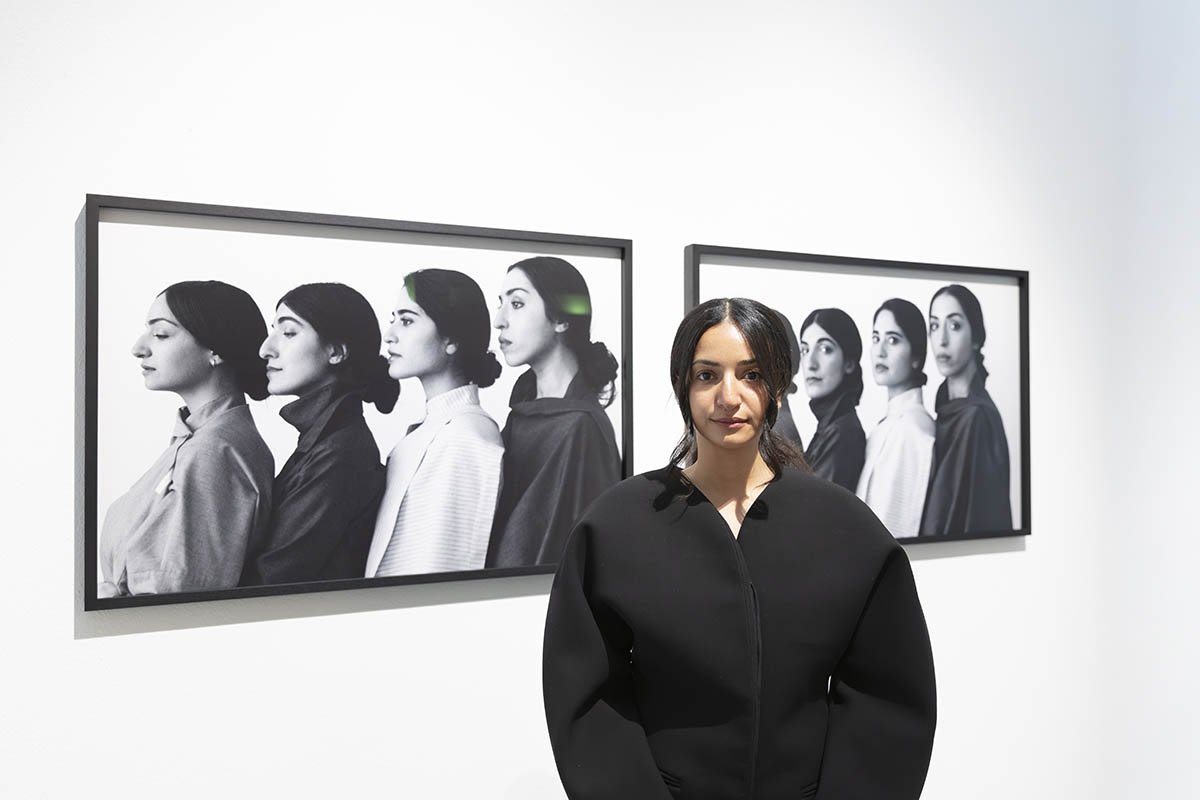
In Body as Resistance, her first institutional solo exhibition at Huis Marseille in Amsterdam, she presents works spanning more than a decade that trace female solidarity, myth, belonging, embodied knowledge, and matriarchal memory, while revealing the depth, complexity, and beauty of women’s identities in the Arab world and beyond.
Rietveld
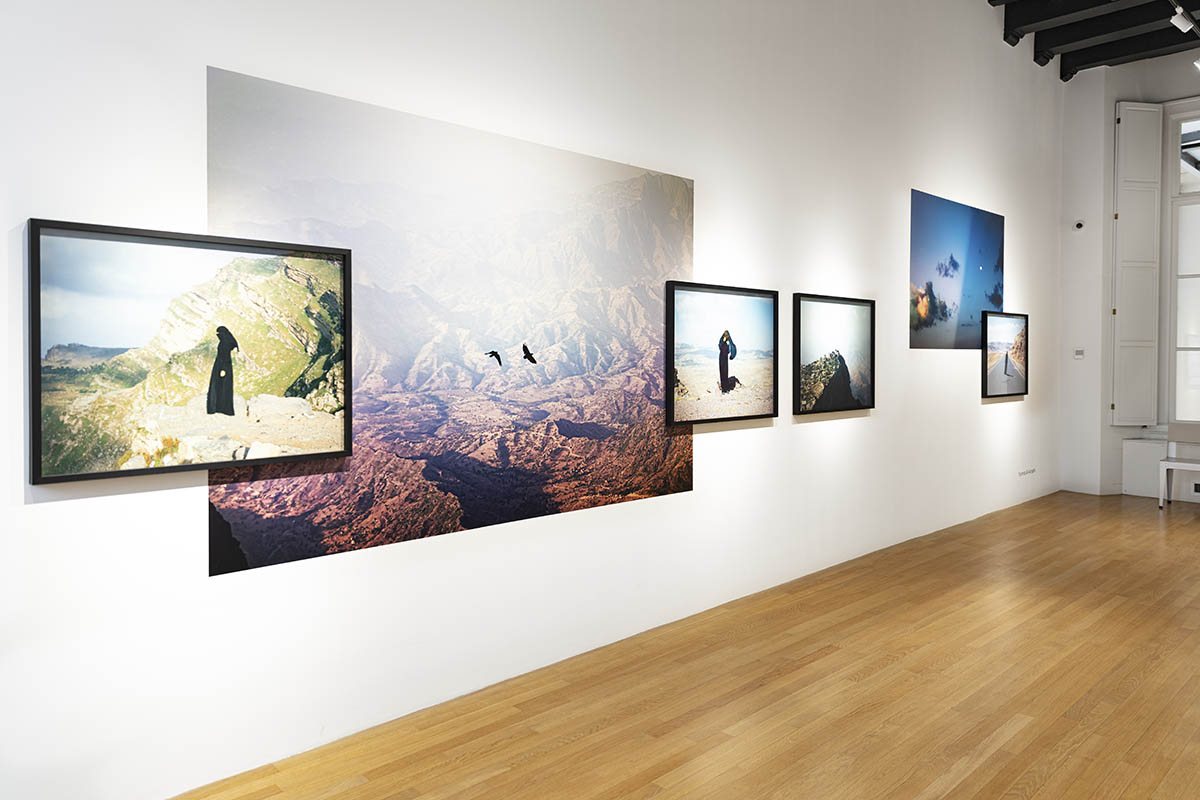
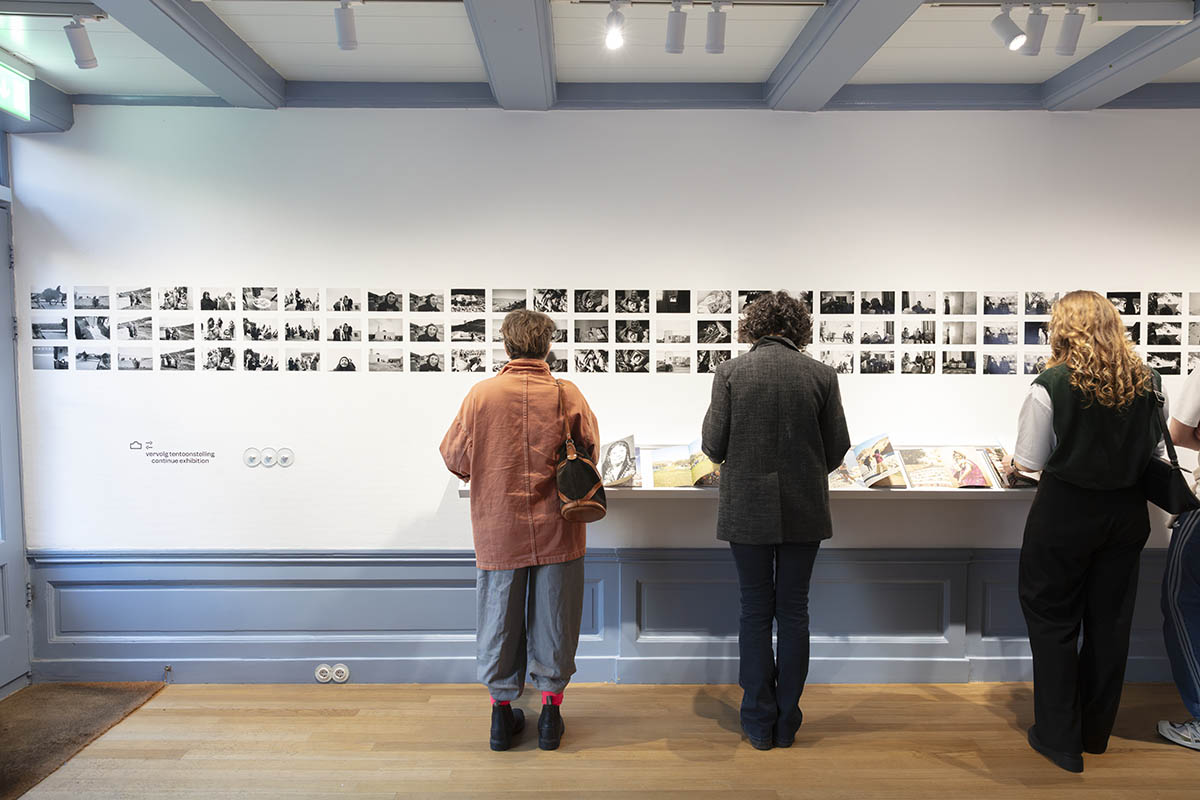
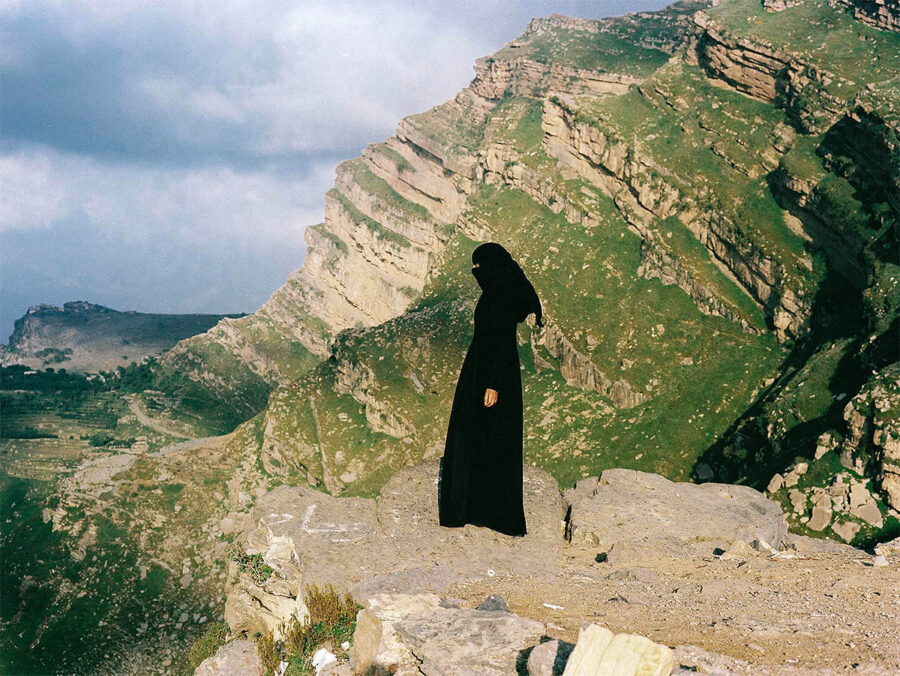
Upon entering the seventeenth-century canal house of Huis Marseille, suffused with natural light, the viewer is carried into the vast landscapes of northern Yemen. Mountains stretch across the surface in muted tones of rose and ash, their ridges folding into one another as birds cross the open sky. Yet unmistakably, it is the poetic presence of a veiled woman—standing in harmony with this majestic terrain—that commands attention. Self-contained, graceful, and resistant, the veiled woman unsettles the stereotypes through which the Western gaze has sought to define such bodies. Across the Northern Yemen series (2014), the exhibition’s poster image, I Am Whoever You Want Me to Be (2018), comes into view. It is a self-portrait of Al-Arashi in a luminous purple burqa, crowned with a fruit basket referencing the Brazilian dancer Carmen Miranda and mobilising exoticism through performance. The work extends the artist’s ongoing negotiation with Western image-making, where, as she says, “assumptions about identity and the Muslim body attach themselves to the work regardless of intention.”1 Using the familiar visual language of mass media rather than rejecting it, Al-Arashi unsettles such prejudices from within.
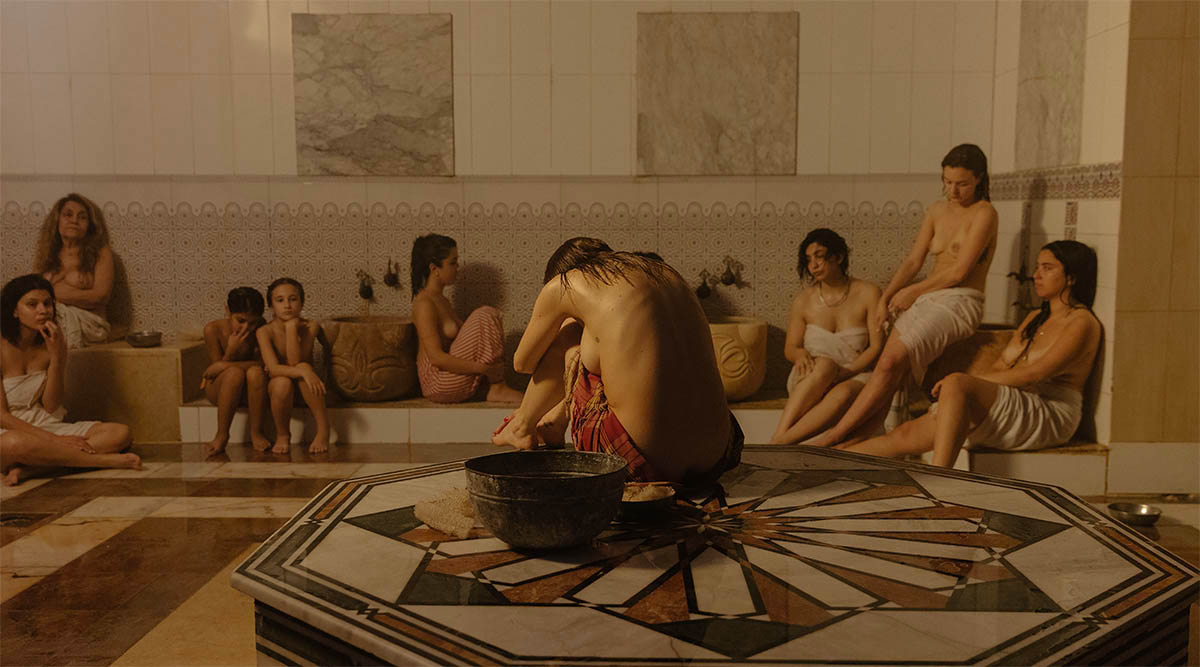
Inside the opulent first-floor gallery known as the Red Room—defined by the deep red panelling and an ornate ceiling featuring mythological figures—the Shedding Skin series (2017) unfolds in tension with the embedded colonial histories of the space. The work features the artist’s friends and collaborators, nude within a monumental hammam scene photographed in Beirut during her time living there. Here, Al-Arashi counters the overly sexualized visions of the “Orient” and restores hammam as a sacred space of gathering and healing, where women care for one another, and the gesture of scrubbing each other’s skin becomes an act of shedding colonial depictions inscribed upon the bodies of Arab and Muslim women.
Raised in post-9/11 Washington, D.C., amid intersecting cultures, languages, and traditions, and surrounded by Muslim women who mostly covered themselves, Al-Arashi turned to photography as a way of locating herself within an increasingly politicized visual world.2 The Bush administration’s “War on Terror” saturated American media and public discourse with rigid East–West binaries, casting Arab and Muslim identities as inherently suspect. Within this charged atmosphere, image- making initially served Al-Arashi as a means of negotiating identity and belonging in a cultural climate that confined Muslim women to reductive roles. Beginning her career as a documentary photographer for major international publications, she soon confronted the asymmetries embedded in representation itself—the camera’s capacity to “capture,” “shoot, ” “take,” and fix its subjects within predetermined narratives, a condition she has described as the “violence” inscribed in photography’s very vocabulary.3 This recognition redirected her practice toward a political and conceptual language. Within this shift, she found resonance with Audre Lorde’s definition of the erotic—as a source of creative force and self-affirming resistance. For Lorde, the erotic is an assertion of women’s lifeforce, a reclaiming of joy, knowledge, and embodied power from systems that oppress them. It is a fearless capacity for shared feeling and the expansion of joy. This understanding runs insistently through Al-Arashi’s oeuvre and surfaces with particular clarity in Aisha, her award- winning book presented on the ground floor as a spatial and immersive installation.
Aisha emerges from the artist’s desire to understand the fading tattoo traditions inscribed on her great-grandmother’s face, alongside her rejection of the colonial framing of these women as illiterate or uneducated, and therefore unworthy of respect—a narrative she found preserved in Western archives. Unable to return to Yemen because of war, Al-Arashi instead travelled through Morocco, Algeria, and Tunisia, listening to women speak about tattoos representing protection, devotion, menstruation, marriage, love, and loss. Suns, moons, Fatima’s hand. Symbols once dismissed as primitive reappear in Al-Arashi’s work as intimate inscriptions of memory and cosmology. The installation unfolds as a living archive—images, books, and a video in which Al-Arashi’s writings are heard in her own voice—restoring a tradition at risk of disappearance to collective memory while documenting emotional encounters formed on this journey, rooted in trust, solidarity, and shared joy.
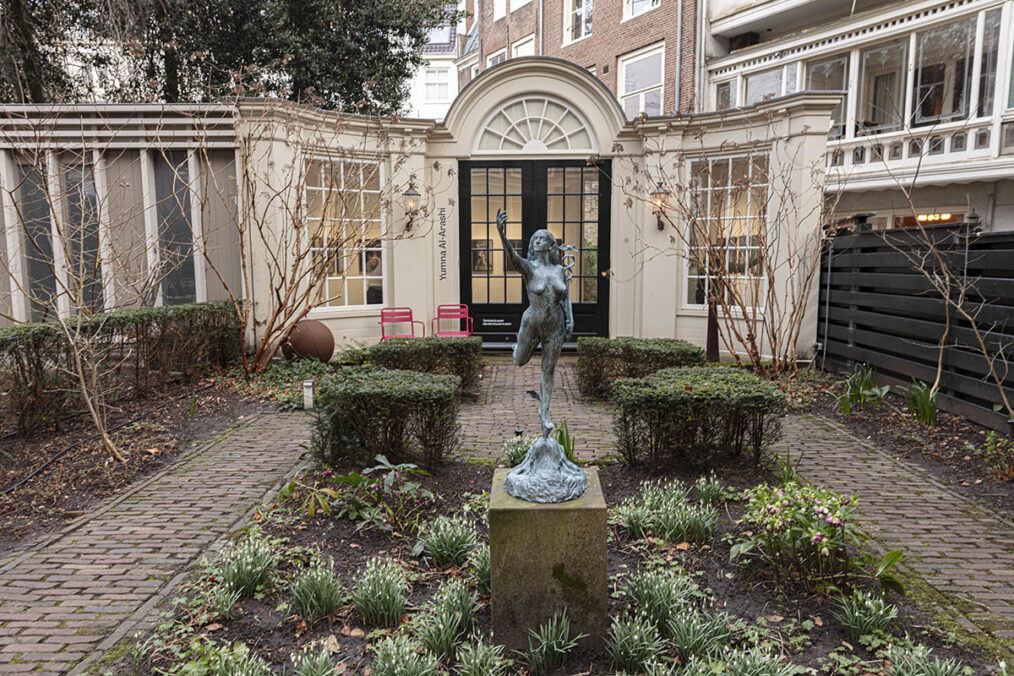
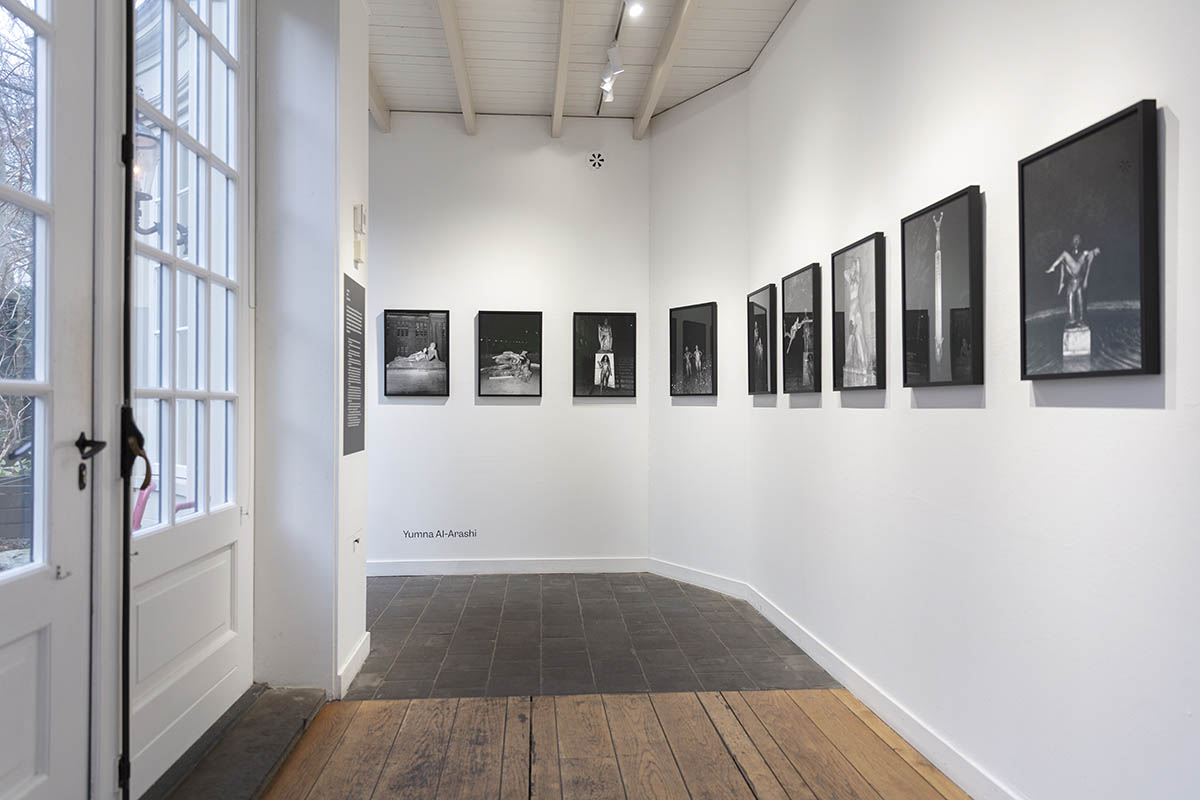
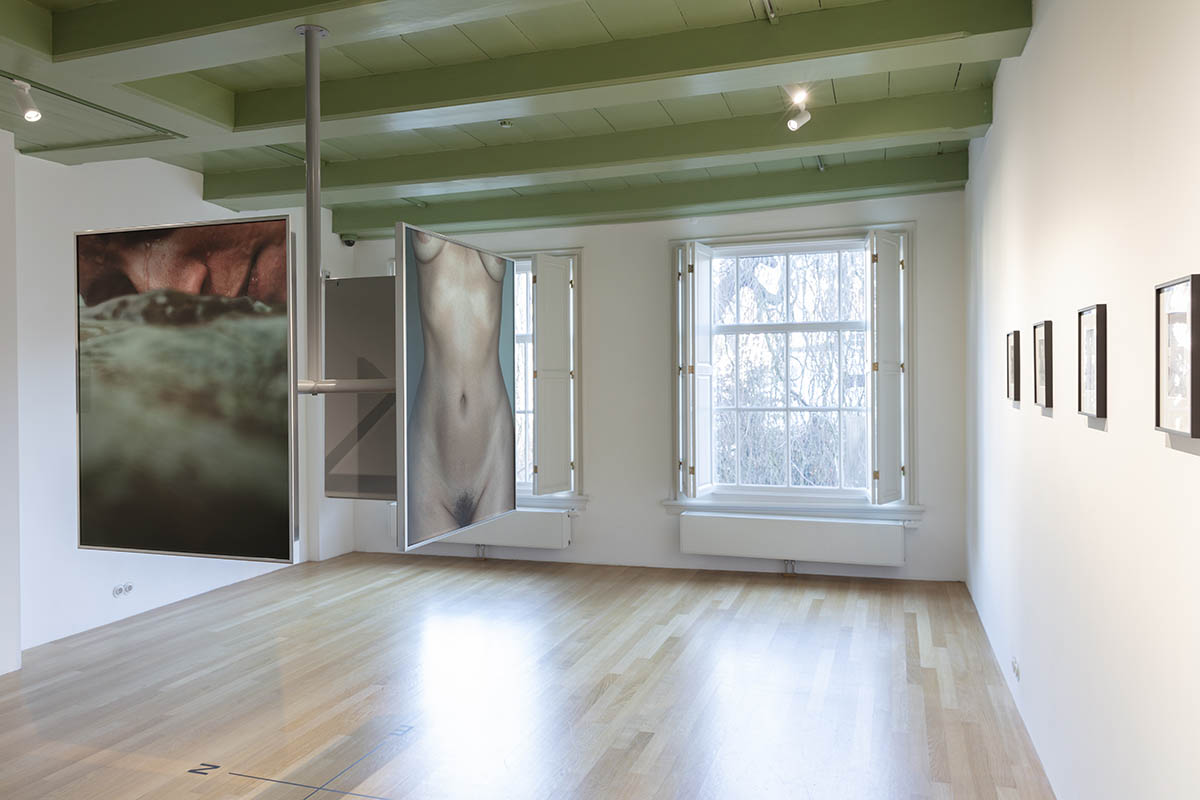
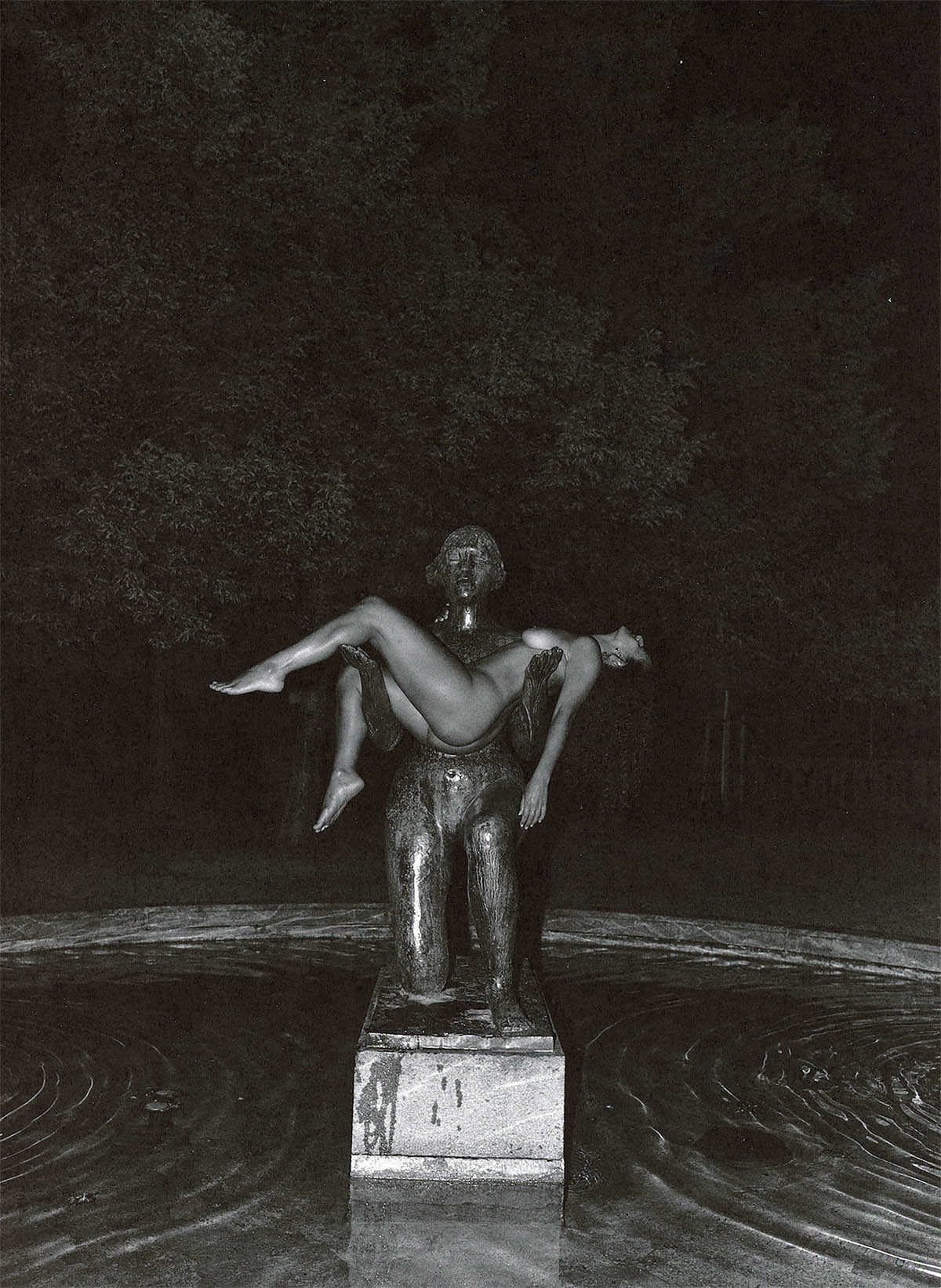
Al-Arashi often turns the camera onto her own body through self-portraiture, challenging the authority of the male gaze and the power relationship between the photographer and subject. In her series Looking at Me Looking at You Looking at Me (2018) presented on the third floor, she stages this tension through the inclusion of a mirror, folding the act of looking back onto itself and destabilizing the position of both image-maker and viewer. By subtly shifting the angle of the mirror in each image, she maintains control over what is revealed, tracing the fine line between embodiment, sexualization, and the male gaze. In the Let Me In series (2024–ongoing), presented in the Tuin gallery—a converted garden house set within the museum’s quiet garden—she extends this inquiry into public space. Placing her nude body beside Zurich’s anonymous nude female sculptures, she confronts the normalization of women’s nudity and the persistence of these largely male- authored figures within the city’s urban landscape.
At the garden’s centre, aligned with the Tuin gallery’s glass doors and in dialogue with the Let Me In series, rises a steel sculpture of Al-Arashi’s self-portrait as Flying Mercury (2026), replacing the version by the Flemish sculptor Giambologna that traditionally occupies this site. For the duration of the exhibition, Giambologna’s figure is set aside in a half-open crate, held at a visible distance from Al-Arashi’s own. This playful displacement underscores her use of familiarity as a strategy to unsettle inherited hierarchies of representation. By inhabiting a sculptural form historically reserved for heroic masculinity, she reclaims the space through her own body—echoing her assertion that choosing how she appears becomes both her greatest political act and her rebellion. Body as Resistance, curated by Yumna Al-Arashi, Nanda van den Berg, and Désirée Kroep, is on view at Huis Marseille in Amsterdam through June 21, 2026.
Exhibition: Yumna Al-Arashi – Body as Resistance
Exhibition duration: 14.02.2026 — 21.06.2026
Address and contact:
Huis Marseille, Museum for Photography
Keizersgracht 401, 1016 EK Amsterdam
www.huismarseille.nl
Yumna Al-Arashi – www.yumnaaa.com, www.instagram.com/yumnaaa/
- Samantha Jensen, “The Politics and Poetics of Yumna Al-Arashi,” GQ Middle East, February 12, 2026, https://www.gqmiddleeast.com/article/the-politics-and-poetics-of-yumna-al-arashi ↩︎
- Alexxa Gotthardt, “This Photographer Is Upending the Stereotypes That Shackle Muslim Women,” Artsy, September 7, 2016, https://www.artsy.net/article/artsy-editorial-this-photographer-is-upending-the-stereotypes-that-shackle-muslim- women ↩︎
- Yumna Al-Arashi, Nanda van den Berg, and Désirée Kroep, Body as Resistance, exhibition text, Huis Marseille, Amsterdam, 2026. ↩︎