Can you walk us through the process from slide to final print?
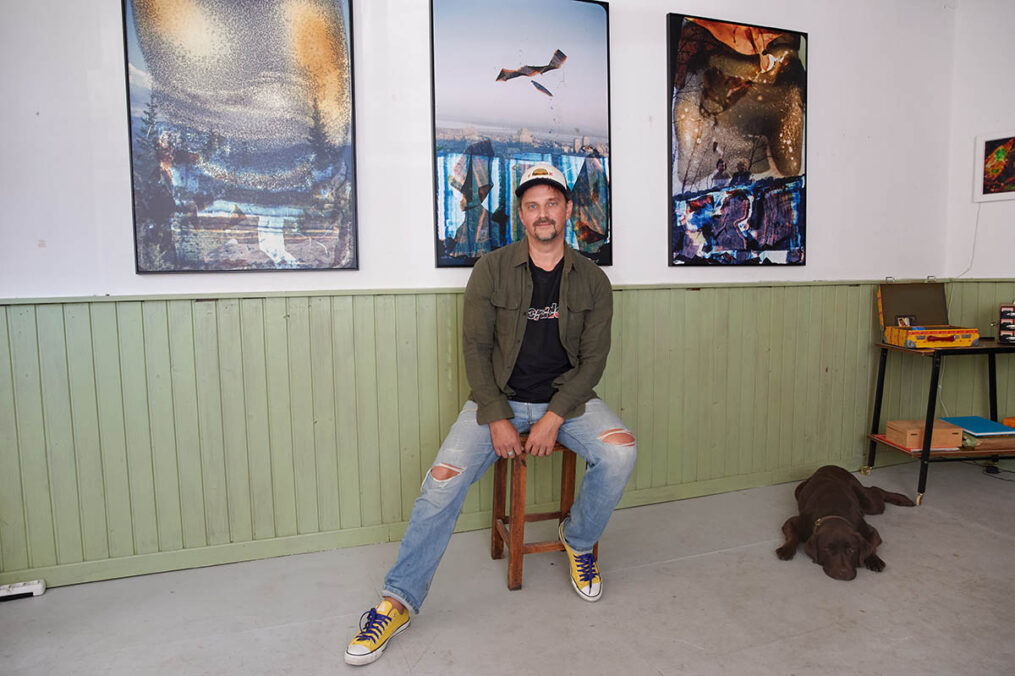
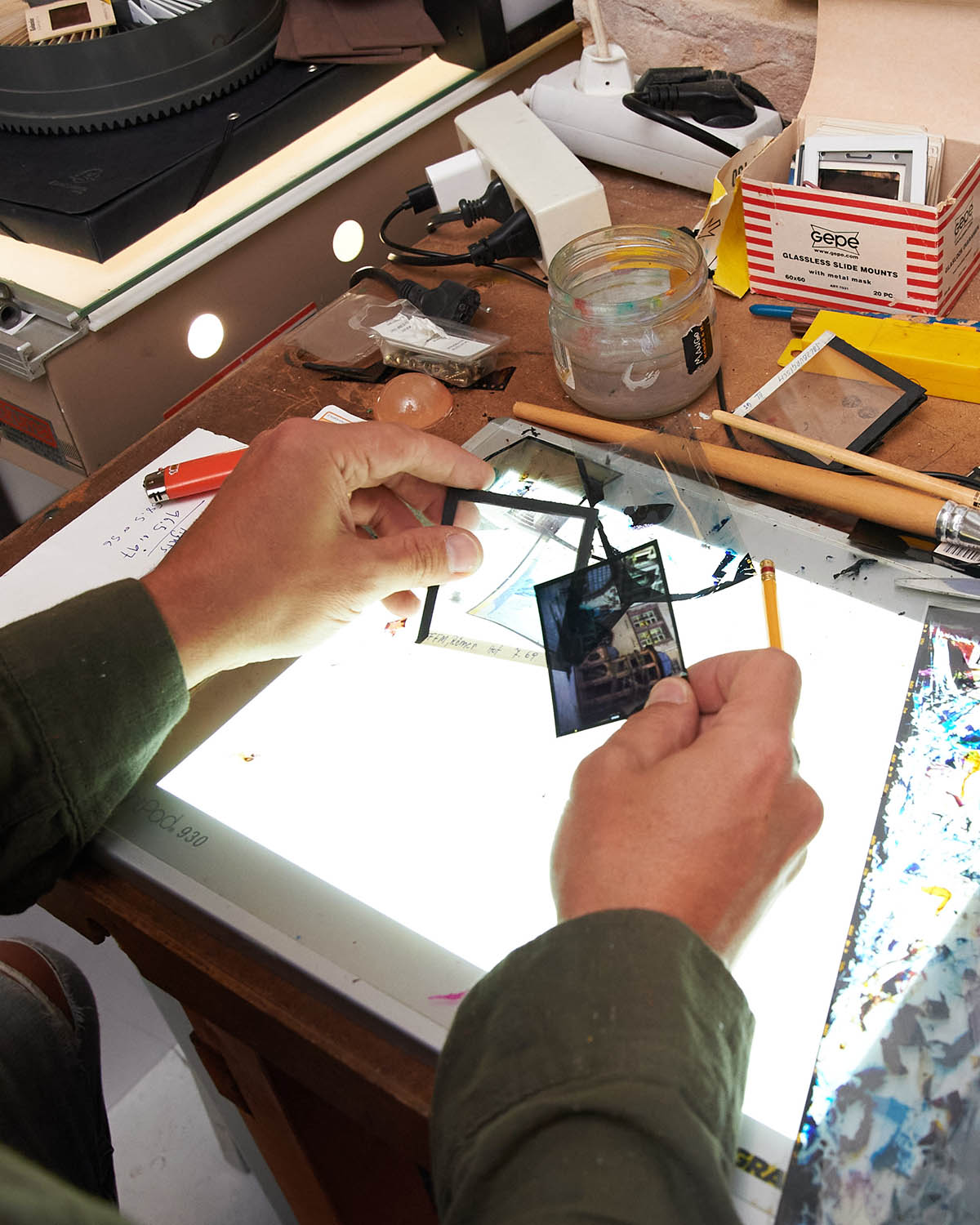
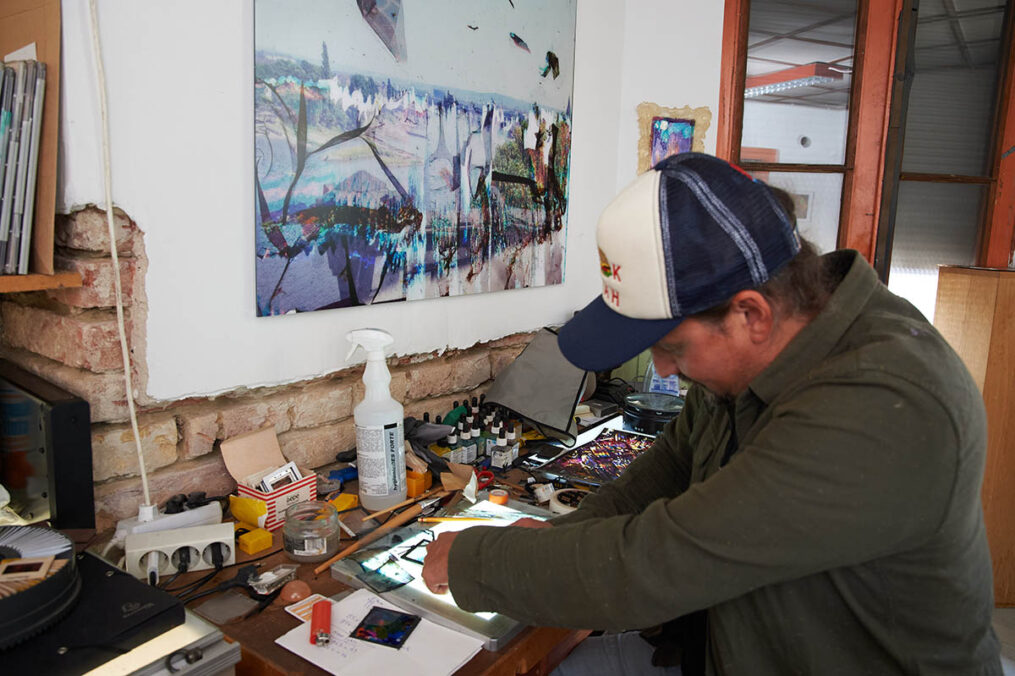
It starts with color slides (color transparencies or E6 color film). I collect and combine materials, sometimes my own family’s slides from my grandmother, father, or mother, and sometimes slides I find at flea markets. I also shoot my own film from 35mm to 4×5-inch slides, and use these images as the basis of works, sometimes combining found images within this self-shot material. I place the slide on a light table and work directly on it, using a variety of methods I have honed and invented over the years to achieve different results. Afterwards, I digitize the slide, but in no way alter the image digitally. It’s vital that the entire process happens on the film and in analog form. What’s fascinating is that the scanning process reveals details that are not visible otherwise: hidden textures, micro-worlds, and unexpected colors. In that way, I treat film sculpturally, almost performatively, while working on it, as a material in itself, and not just a medium or technique. One might call this “being-in-photo”.

How did you arrive at this technique of working with color slides (analog film)?
During my bachelor’s studies in California, I spent a year abroad in England. I had a lot of time to experiment: sketching, drawing, and photographing while traveling. That’s when I began layering multiple exposures directly in the camera: two, four, or sometimes up to ten or twelve on one slide. It was about constructing images without knowing what I’d created until the film was developed. Out of that came a large series called “Echoes.”
Years later, in Vienna, I found a case of slides at a flea market and thought, „Why not use this as my base, as my canvas?“. Having studied Art-History, I was knowledgeable about many art movements, and it was absolutely paramount that I find a visual language that was, at least for me at the time, unknown and without precedent. So I began manipulating the film and creating works of art that were, even for me, unexpected, fresh, and inspiring. Of course, I discovered artists over the years who had/have worked with similar methods, such as Len Lye, who have, to be sure, inspired and informed some of my work. I’ve always been fascinated by space, physics, and the relation between micro and macro worlds; this technique felt like a way to explore those ideas visually.
I’ve always been fascinated by space, physics, and the relation between micro and macro worlds; this technique felt like a way to explore those ideas visually.
There is a variety of scales you are working with, especially since it is an edition series-based work. What are the sizes of the prints you usually work with?
In photography, we have the possibility of editions. I usually make editions of three to five, keeping the edition count small to preserve the fine art quality. For me, the edition isn’t defined by size; I set a minimum, usually around 80 × 110 cm, but the works can be customized as much as the space and the work itself allow. If someone wants a piece for their wall at 100 × 130 cm, or even more, that’s possible. There’s also the idea of offering a unique piece, more like a painting, where the original slide would be presented inside a vintage slide viewer as a three-dimensional object.
I want the works to be lived with, in someone’s home, in an office, or better yet on public display in a museum or institution, so I remain flexible in customizing formats.

The exhibition title also suggests a dialogue with time. Can you tell us more?
My wife actually came up with the title for this exhibition. In the series I’m showing at Frei.Haus, much of the material comes from autobiographical sources. My grandparents traveled widely before my mother was born, and their photographs enter into dialogue with my present interventions. I love to feel the fabric of time between the past and present weaving us together and connecting us, individually and collectively; the past lives within and through us, and this show is in some ways about revealing and highlighting this unique human condition. I’ve always been very nostalgic, someone who feels connected to the past as much as the present. Working with analog photography feels natural, almost inevitable.
I’ve always been very nostalgic, someone who feels connected to the past as much as the present. Working with analog photography feels natural, almost inevitable.
Do you use digital photography in your artistic work?
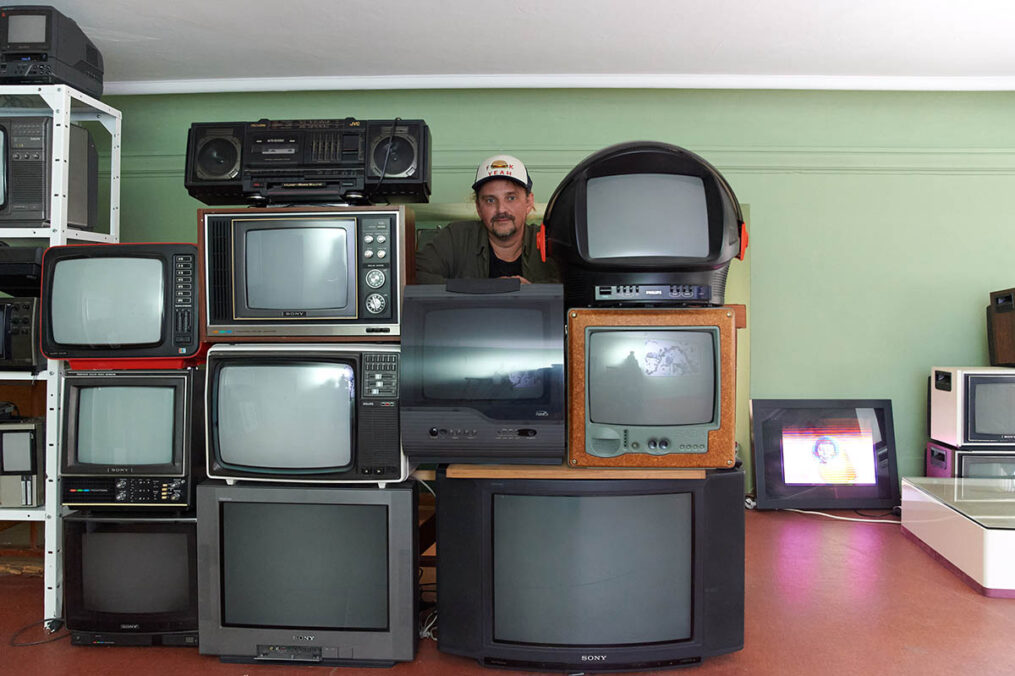
For everyday life, yes, but for my practice, I’m drawn to the physical object. Touching the material, entering the moment of the unchangeable act, is crucial in my process. There is no “command + z” or undo. What happens in the film is final, and since each piece of film is unique, one move can destroy the original in a very final way. That being said, I can imagine translating my work into digital projects. For example, a large projection of my scans where viewers navigate with a joystick, zooming in 6,000% to enter a microscopic world.
Even in that scenario, the tactile origin of the material remains crucial to you. You often use the term “expanded photography.” What does it mean for you?
I see my work as expanding the theoretical and material framework of photography. The result is still a photograph, but the process pushes beyond what photography has traditionally meant. I think that photography doesn’t need to document reality; it doesn’t need to show anything specific. For me, it’s about the material act. I sometimes describe this as “expanded photography,” a term inspired partly by François Laruelle’s “The Concept of Non-Photography.”
In my work, the act of manipulating the film transforms it into something beyond conventional photography while still rooted in the photographic medium. Sometimes that means reworking my own images, sometimes bringing found slides into the present. I don’t have a final definition, but for me, the term acknowledges this in-between territory.
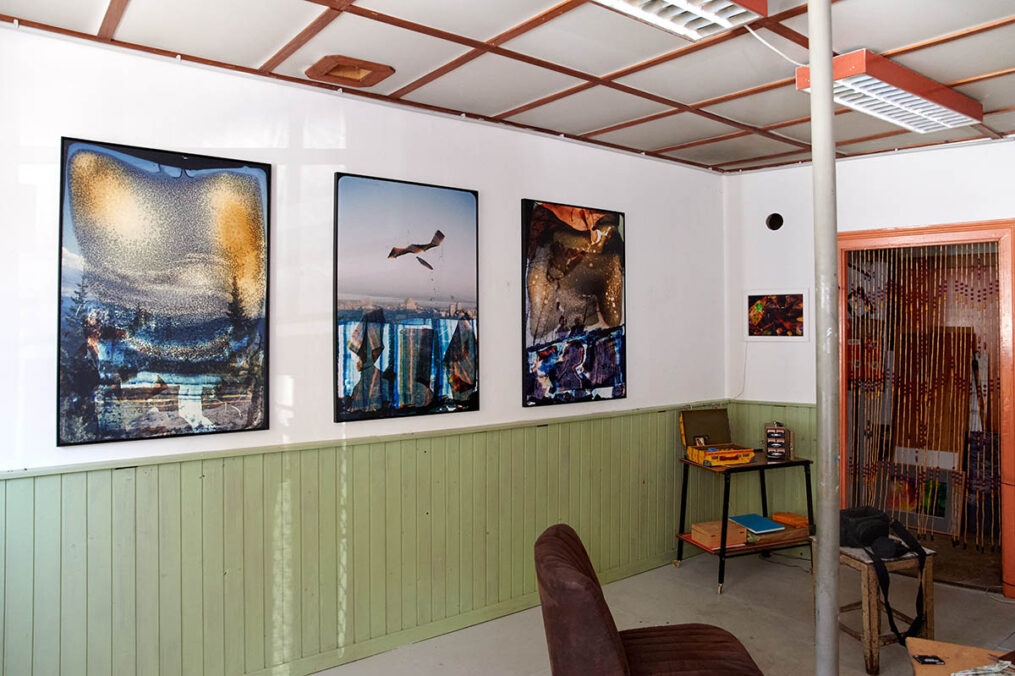
PAST: PRESENT exhibition was curated by Esther Hladik. How did that collaboration begin?
After having a short private portfolio review with her (thank you, Marko Zink), I invited her for a studio visit and proposed a collaboration for my next exhibition, which became the upcoming show, PAST: PRESENT. I had prepared a small selection of works, and I was curious to see what she connected with. She immediately gravitated toward many of my family slides, which surprised me but also felt right. From there, we refined the selection together.
Her curatorial approach balanced the aesthetic qualities of my interventions with the subject matter of the images—people, places, and memories.
I tend to move often toward pure abstraction, while she intuitively gravitated toward my new autobiographical works. That brought me back into dialogue with the personal side of my material, and I created new works because of it. It was my first experience being curated so directly, and I’m very grateful. Esther is incredibly busy, so the fact that she approached this project with an emotional connection and dedicated the time means a lot.
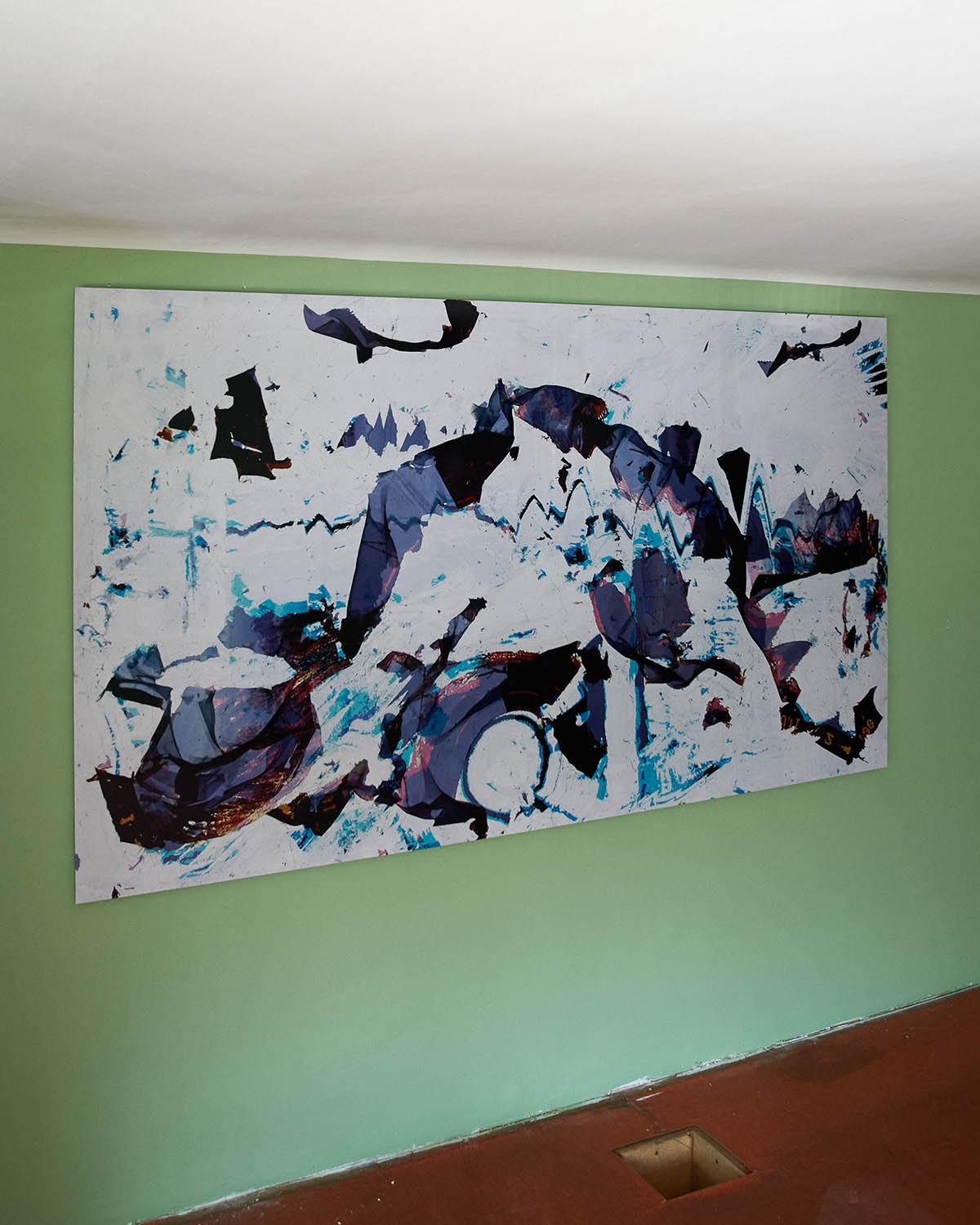
Exhibition: Austin Settle: PAST: PRESENT curated by Esther Hladik
Opening: September 18, 2025, at 6:00 pm.
Duration: September 18 – September 25, 2025
Location: Frei.Haus, Wiedner Hauptstraße 30, 1040 Vienna
Austin Settle – Born in California in 1980, Austin Settle studied Art History at the University of California and graduated from Santa Barbara with a Bachelor of Arts degree. After completing his senior year abroad at the University of Nottingham, England, he embarked on a sojourn that would lead him throughout Europe on a journey of artistic self-discovery. www.austinsettle.net, www.instagram.com/austincsettle/
In PAST: PRESENT, Austin Settle moves beyond mere retrospection. It is an exhibition about how the material of memory, in the moment of its disruption, speaks a new language.