The Brenninkmeijer family founded the Draiflessen Collection in 2009, and it became a nonprofit art museum in 2017. Can you tell us more about the Collection?
Barbara: Beyond the extensive archive on the founding family, which includes written documents such as manuscripts and contracts, as well as photographs relating to both the family’s and the company’s history, the collection also encompasses three-dimensional objects, paintings, textiles, and fashion. The Brenninkmeijer family owns C&A, the global fashion retail chain, so the collection also focuses on fashion and textile history in general. In addition, the Draiflessen Collection holds historical prints, illustrated books, and manuscripts, including works by Albrecht Dürer, Rembrandt, and other artists from the fifteenth to the seventeenth centuries.
The contemporary art collection continues to evolve and expand. The most recent acquisitions are two impressive works by the young London-based artist Olga Grotova. The contemporary collection includes a work by the young Dutch artist Renée van Bavel. The breadth of the collection allows for a rich and varied exhibition program, viewing the collection from different perspectives and bringing historical works into dialogue with contemporary artistic positions in various ways.
How many objects in the exhibition Unfolding Memories are from the collection and are connected to family history? How was the selection process?
Barbara: The initial idea was to work with historical photo albums from the Archive depicting the wider Brenninkmeijer family circle. Olesja and I discovered those albums, part of an earlier exhibition, THE ART OF PRESERVATION (2015-2016). We reviewed the archive holdings and found many private family albums, especially from the late 19th century and early 20th century. For the exhibition Unfolding Memories, we focused on the albums from the late 1890s until the 1940s.
The exhibition raises several questions: What is the relationship between the album as an object, the album as a place of memory, and the photograph itself? How were these photographs taken? And what do we actually remember when we look at these albums? Do these images shape our memories? And is there always something missing, even when we think a photograph tells us everything?
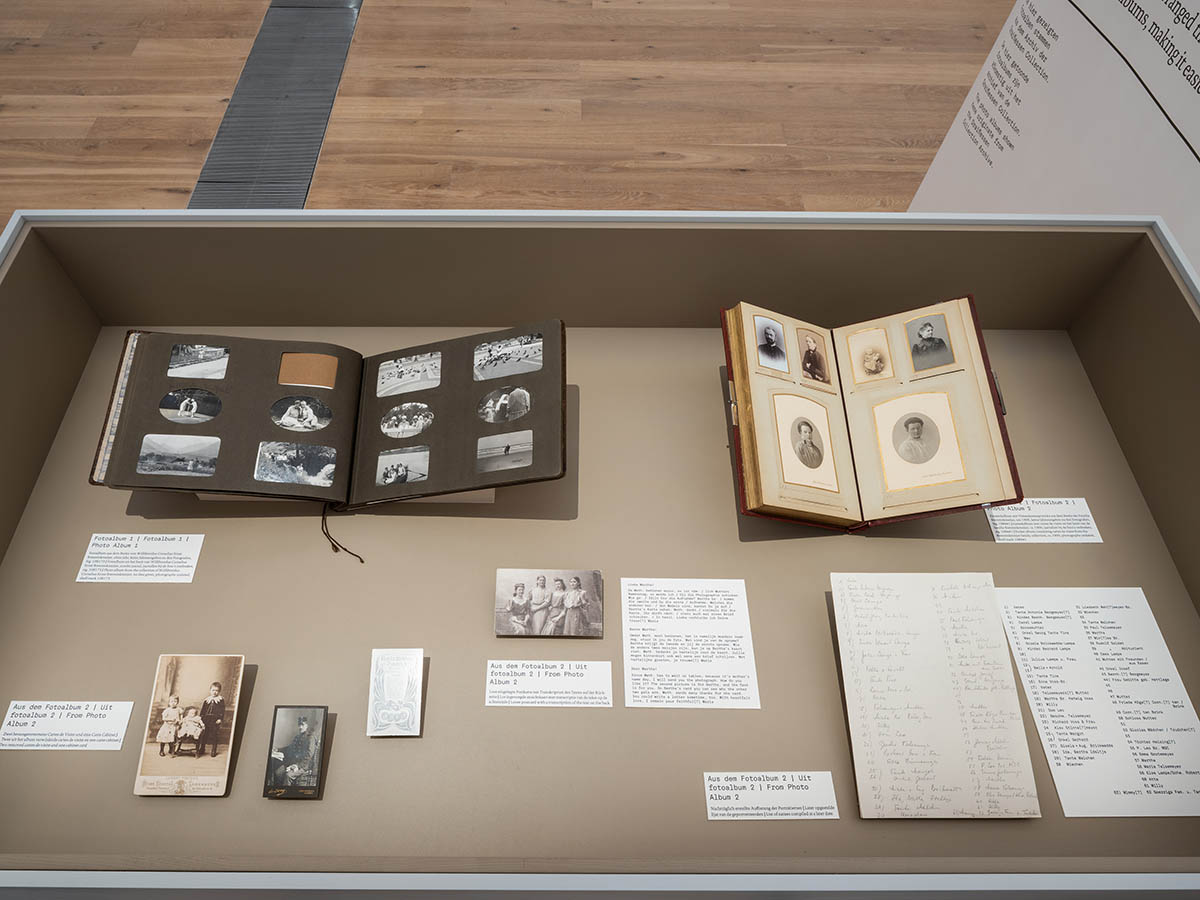
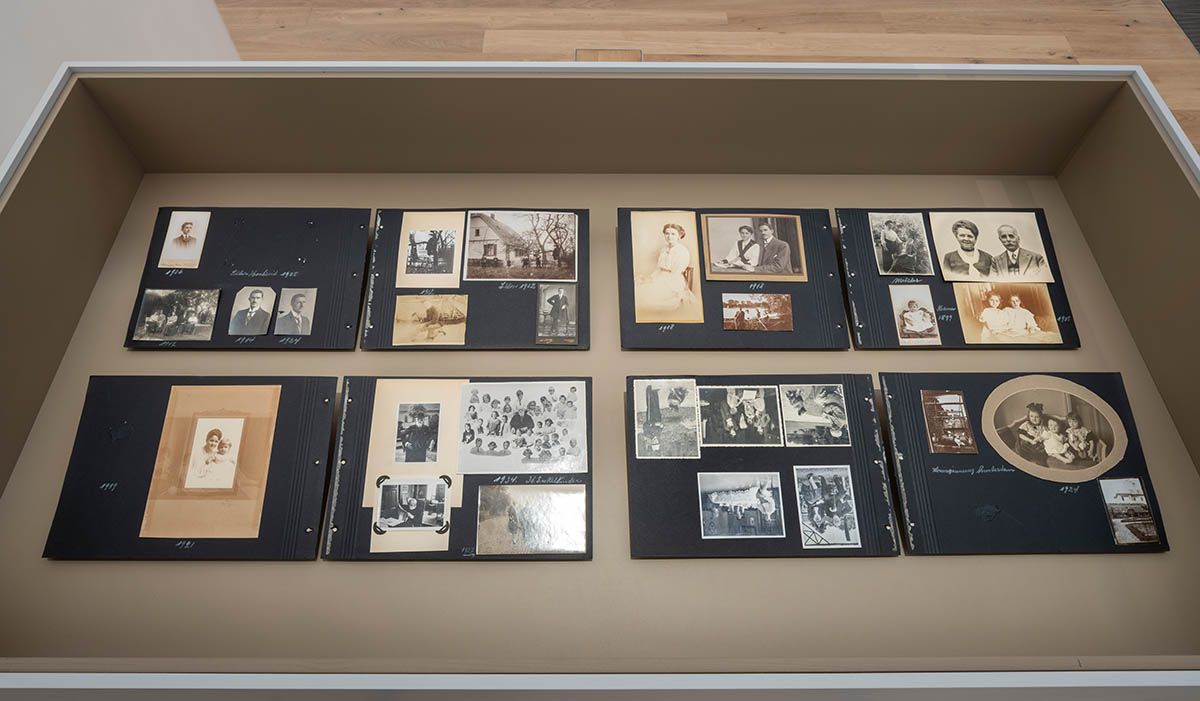
We chose 17 albums. At first, we browsed through the pages and were thrilled by the range of design strategies and materialities across them and also the ways they were organized and produced.
Olesja: We selected albums dating from the late nineteenth century to the 1940s; they show specific ways of handling photographs. By the end of the 19th century, photography became increasingly part of everyday life, and taking photographs became an everyday activity. The growing volume of private photographs at the turn of the century created a need for selection, organization, and preservation. This is when the photo album became a key medium for doing so.
The photo album is not simply an illustration for a family history. They have covers made from fabric or leather. They are objects in their own right. We ask: what happens when private photographs end up in a museum? What changes when the family members who understood these photographs are no longer alive? This is why we have placed the albums in dialogue with contemporary artists.
They show that collecting, arranging, commenting on, and sometimes even moving images are creative acts. They are never completely innocent and one-sided.
The title Unfolding Memories refers to the process of exploring memories and viewing them in a new light through new contexts and perspectives. Could you explain that in more detail?
Barbara: The album is a clear storyteller but simultaneously creates an unreliable narrative. The way people are presented is according to their understanding of their social situation and the society they lived in. This is especially true of early studio photography, when people went to a photographer to have a portrait taken of themselves or their family, by appointment. This self-presentation was shaped by social and photographic conventions, and available technology at that time.
When you start not just looking at a photo but starting to ask, “What does it show? Who took the photograph? Who selected the photographs, who arranged them, and who maybe removed something? Who made a note on the surrounding pages? What happens when the people related very closely to the portrayed individuals are not around anymore? What happens to these stories and to these narratives and to the personal way of talking about your family and the circumstances?”
In the exhibition, you refer to the memories as selective, performative, and shaped by this social and economic movement. Can you give us an example of the works from the contemporary positions exhibited where this aspect of the concept is clearly visible?
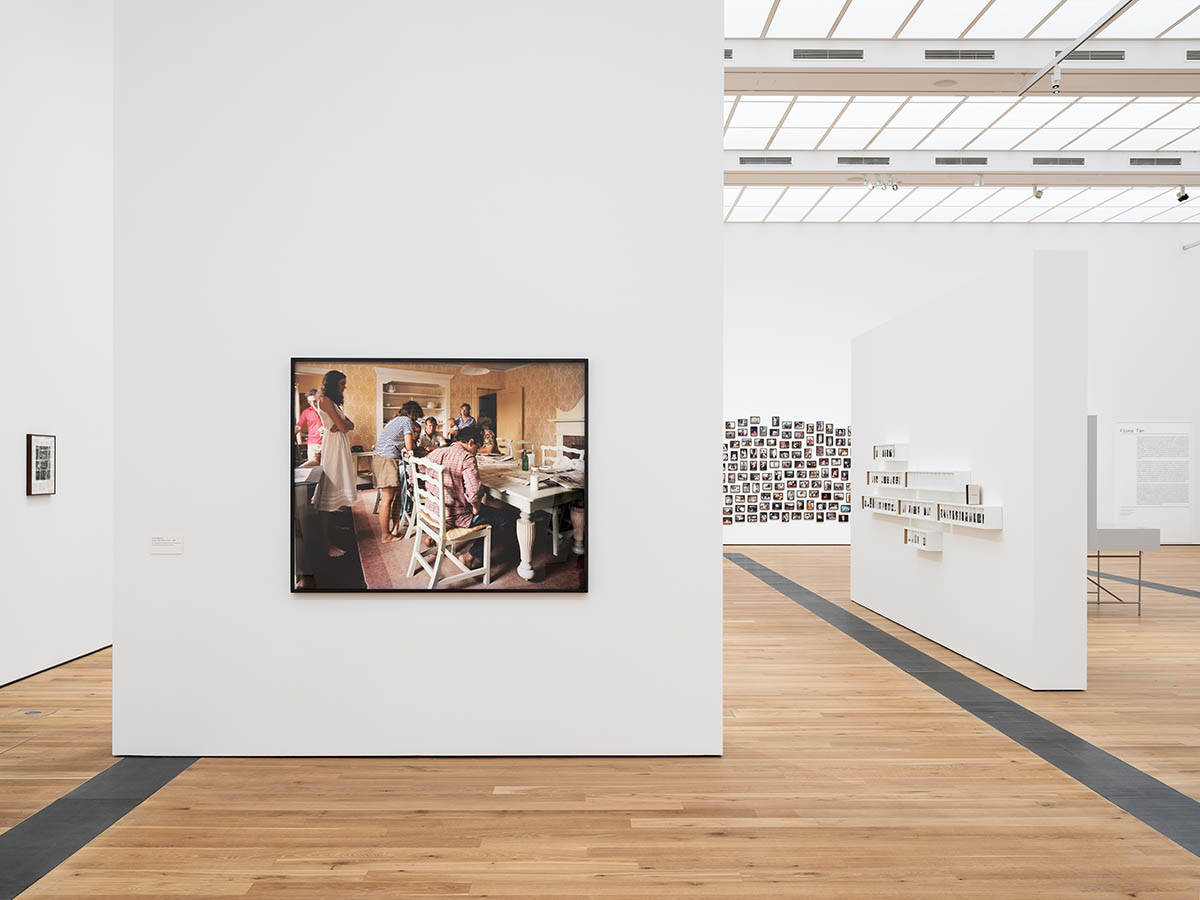
Barbara: Tina Barney’s photograph titled Sunday New York Times (1982) presents a family gathering around a long table. The scene feels immediate, even slightly chaotic. It shows a family ritual that takes place every Sunday. You can see the relationships between the people in the way they are grouped within domestic space, in their gestures, their clothing, and the room. The photograph speaks about class and habits that probably repeat from one generation to the next. As is often the case in Tina Barney’s work, the photograph looks like a snapshot. The scene seems spontaneous and unstaged, but in fact, it is staged.
The other artist I would like to point to is Jim Goldberg and his series Rich and Poor, created between 1977 and 1985. He photographed people in very different living contexts, from San Francisco low-income hotels to wealthy people in their homes. The photographs let us read the interiors, furniture, clothing, and body language, and, almost without noticing, we assume a lot about the people depicted. Goldberg was so clever and asked the portrayed people to make handwritten comments on the photograph, and these notes actually reveal a lot more. Suddenly the image is no longer enough. Someone who looks confident might describe himself as unhappy; someone whose circumstances seem very difficult might speak about affection, ambition, or something entirely unexpected. Goldberg doesn’t simply replace a visual stereotype with a correct written explanation. The words are a form of self-representation, and they do not merge with the photograph, what we see.
There is no final objective version and one truth, waiting for us to understand the image or to have a clear, one-layered answer. On the contrary, the combination of image and text opens up many interpretations.
How about Bieke Depoorter’s work As It May Be? She also adds notes on top of the images in the series. Can you tell us more about it?
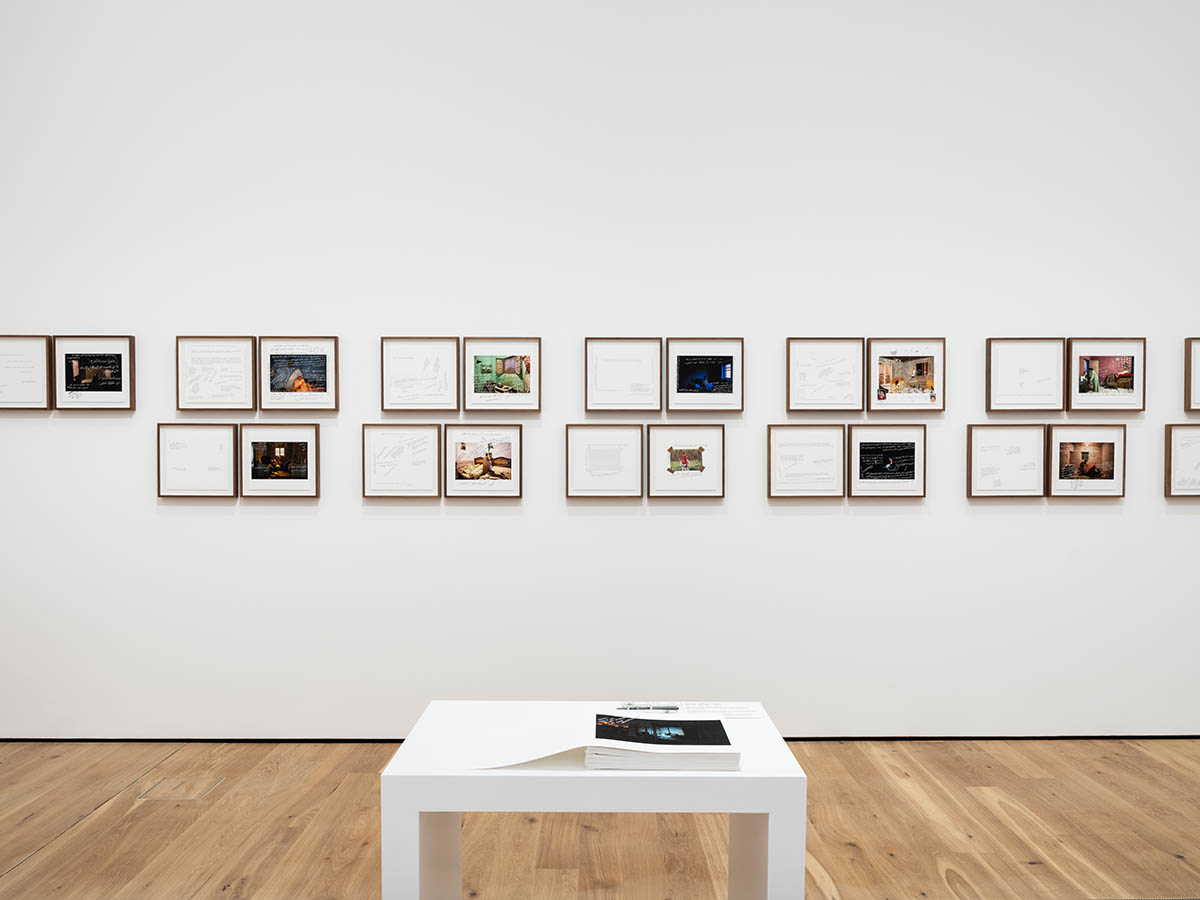
Barbara: Bieke Depoorter traveled to Cairo and other cities in Egypt during the Arab Spring of 2011–2012 to document the daily lives of the residents outside the iconic scenes of political demonstrations. She was more interested in this political situation from the perspective of homes and families. She asked strangers if she could stay with them for the night—a method she developed in former projects. Experiencing firsthand how strongly people protected their private spaces from external eyes and how uncomfortable they felt about being photographed in their homes. In Egypt, by this time, it was difficult; inviting a foreigner into your private home was always a risk. The people were so cautious. Who’s this foreigner? Might it be a spy? Might it be someone from the government who tries to find out where the revolutionaries are and tries to get hold of them?
When she went back to Belgium with the photos, she had the selection, but she felt quite uncomfortable, as if something was missing. She decided she would rather not be the one making a final “look” of the book, so she went back to Egypt in 2017 with a dummy of the photo book. There, she asked people she hadn’t photographed if they were willing to look at the photos and write down whatever came to mind directly on the images. The image and then the handwriting of different people entered into a dialogue. Sometimes people just wrote what they had in mind in that moment: a comment on her project or on the fact that she didn’t see the whole picture of what was going on. These comments were often critical and offered different perspectives.
Olesja, how about you? What would be the contemporary position you would like to point at?
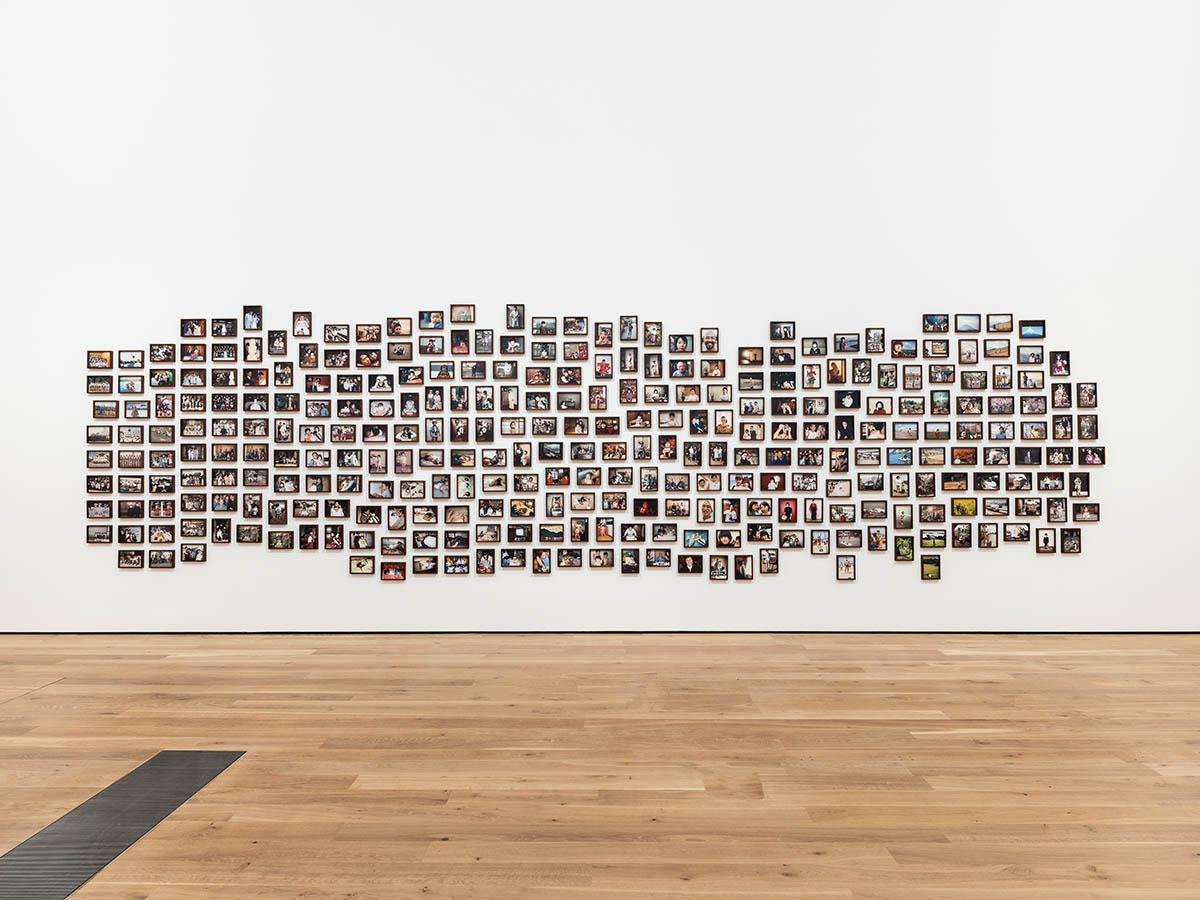
Olesja: Well, an excellent example for me is the work by Fiona Tan titled Vox Populi Tokyo. She is from Indonesia and has been living in the Netherlands for quite some time. She has created a series of works: Vox Populi London, Vox Populi Switzerland, Vox Populi Sydney, and Vox Populi Norway. In all five locations, she always followed the same approach. She put out a call, asking strangers to bring her their family photo albums. Each time, she received several albums; she would select photographs and arrange them into a tableau for the exhibitions. She doesn’t simply arrange these private photographs haphazardly; she creates a narrative inside of them. This is what we’ve observed time and again in the albums: naturally, when people arranged their photos in a sequence across the double pages, a little story emerges—one that makes much more sense to them than to us—as a way to tell their life story or the history of their family. In the exhibition Unfolding Memories, her work Vox Populi Tokyo consists of 305 smaller photographs displayed on a large wall; the whole installation is about eight meters long.
In Vox Populi Tokyo, Fiona Tan was particularly interested in the question of how people present themselves when they’re being photographed in private settings and when they’re taking photos for the public. How do we pose, do we laugh, and how do we interact with one another?
In terms of exhibition design and spatial arrangement, how did you handle the distinction between private, public, intimate, and non-intimate?
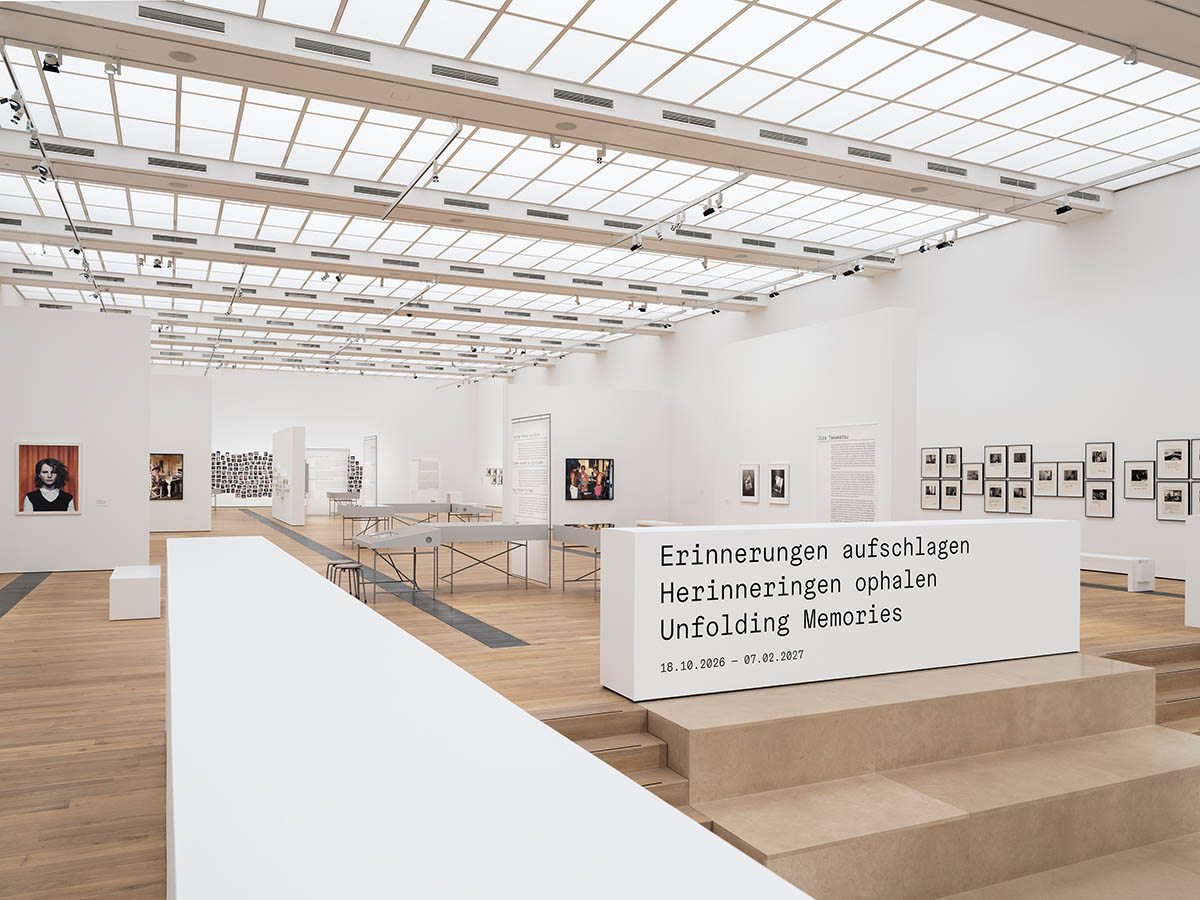
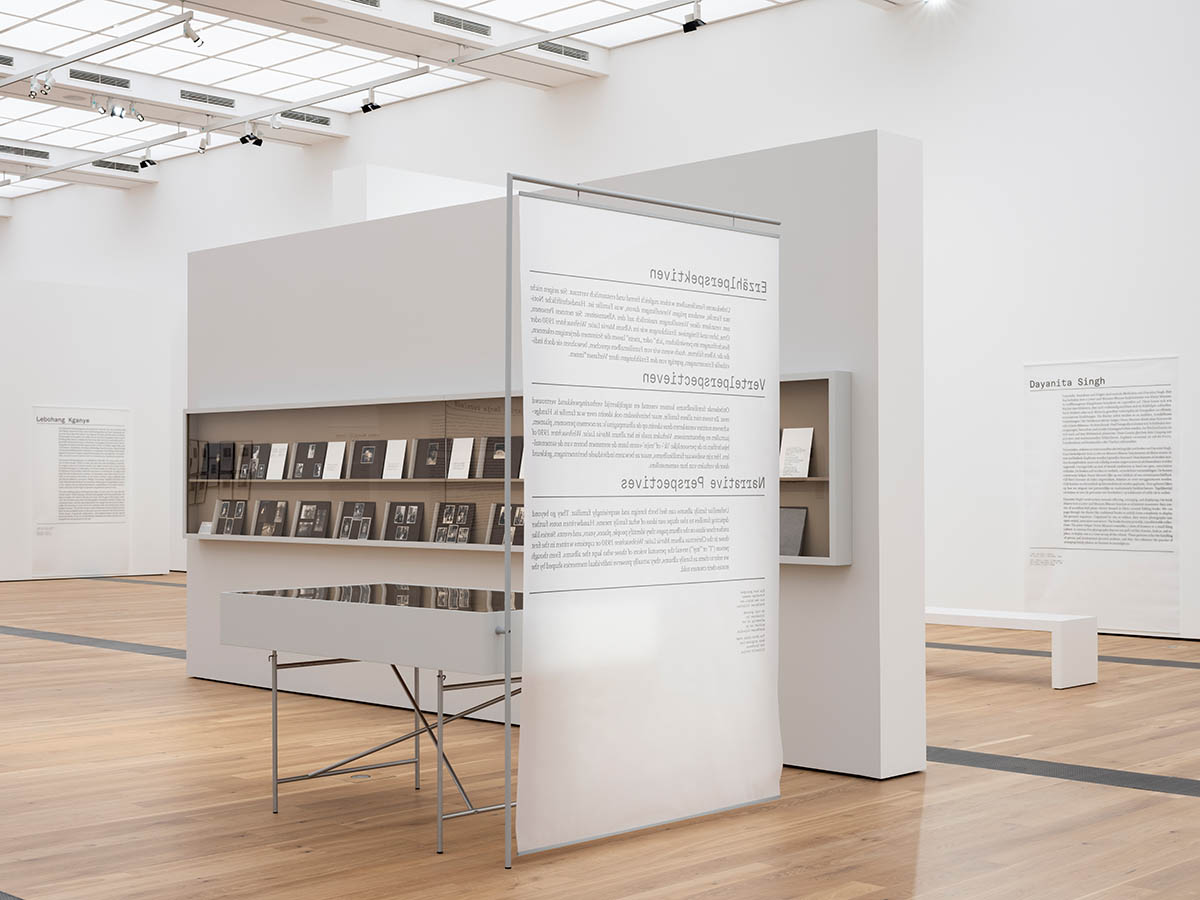
Barbara: That was a challenge—a family album is something you look at in a small circle. Someone might sit beside you and tell you who the people are. In a museum, the situation changes completely. The photographs are now shown to strangers, and the original voices are often no longer there. We tried to create conditions in which visitors could look closely, slowly, at the albums. In the exhibition, there are also two videos showing flipping through the albums.
Olesja: Some albums contain individual photographs that were slipped inside or perhaps even fell out of the pages. We display these next to the corresponding albums so that life happens between the pages as well.
Barbara: We are displaying the historical albums alongside the contemporary artworks, rather than isolating them. We created a sense of resonance between the albums, artworks, and the exhibition space.
We wanted the exhibition to feel open, light, and exploratory—a space that leaves room for visitors’ own thoughts, associations, and preconceptions.
Unfolding Memories is followed by a publication available on site and by order. What texts did you include? How does the publication design communicate the exhibition vision?
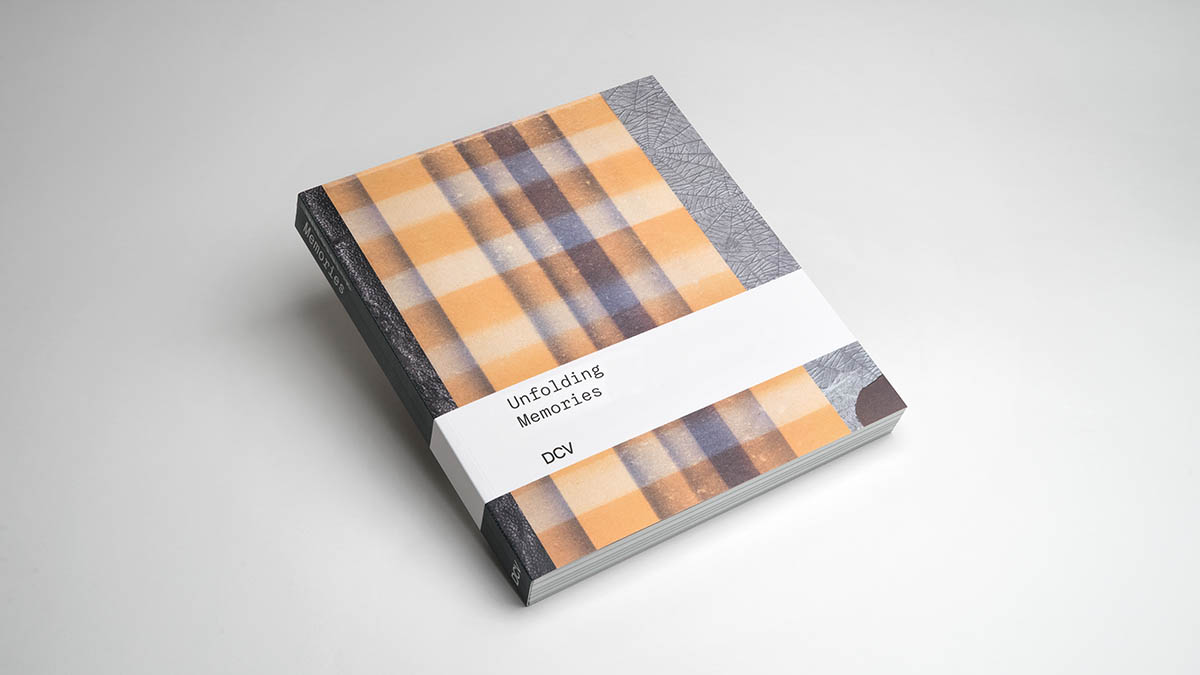
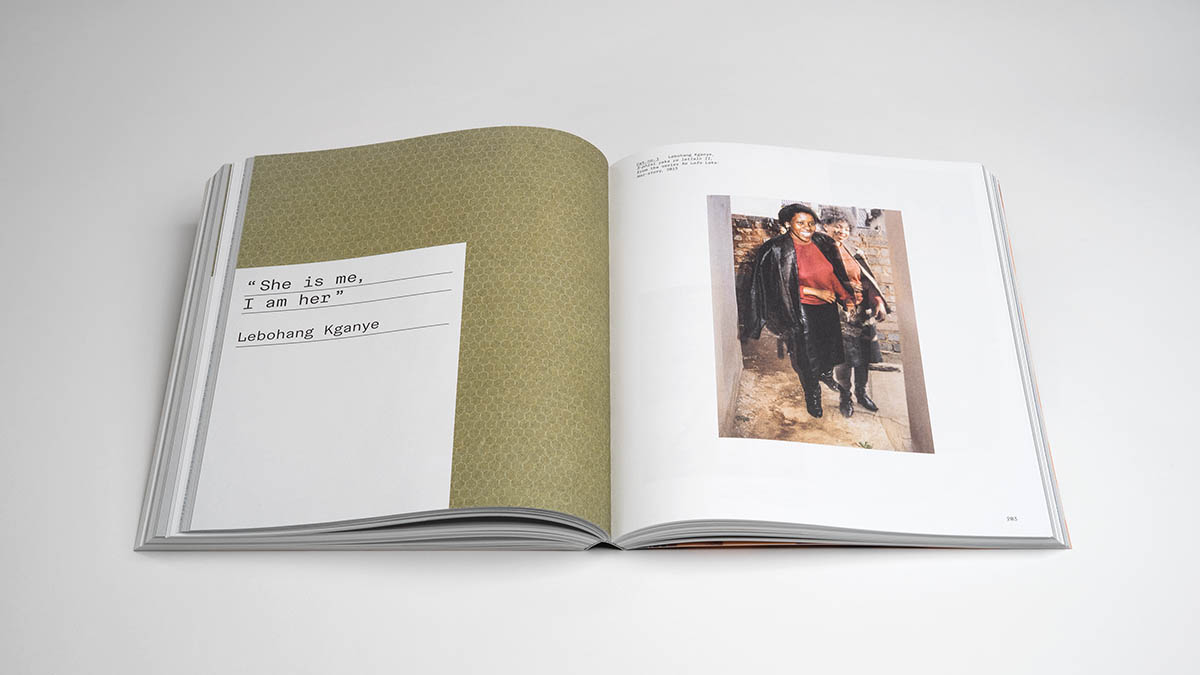
Olesja: In principle, what we do in the exhibition, we achieve in this book format in the catalogue. We organized the historical photo albums in a way that caught our attention as we studied them. In the catalogue, there is a text for each artwork in the exhibition, accompanied by extensive illustrations. The catalog features five essays addressing, for example, the blank spaces in the albums, the perspectives within them, the image compositions, and the experience of flipping through them.
We worked with Cologne-based graphic designer Carmen Strzelecki, who created the beautiful graphic design for the publication. She drew inspiration from the photo albums themselves, bringing together details from different albums, such as the covers or half-titles, and combining them with cut-outs of tracing paper to create collages.
Do you think that engaging with the exhibition might inspire visitors to revisit their family photographs, create photo albums, and reflect on their personal histories?
Barbara: That would be wonderful. We probably all take photographs. Those images are stored on phones and in the cloud, often automatically. The smartphone, or the algorithm behind it, does a lot of work that in paper albums you have to do by hand. The question might be whether we will make time to look together at these albums, to tell stories and to ask what our pictures don’t show. Is there something that might be forgotten?
Olesja: What I found particularly interesting was that after the opening, several people told us that they went home and looked through their own old albums. During the exhibition tours, we noticed people talking about their albums. That’s beautiful: we bring this historical object into the exhibition, and it becomes a trigger for people’s own stories.
Exhibition: Unfolding Memories
Curated by: Olesja Nein, Dr. Barbara Segelken
Featuring works by the artists Njideka Akunyili Crosby, Tina Barney, Bieke Depoorter, Jim Goldberg, Lebohang Kganye, Dayanita Singh, Jiro Takamatsu, Fiona Tan, Karine Zenja Versluis, Gillian Wearing, and family photo albums from the Draiflessen Collection Archive.
Exhibition duration: 18 October 2026 – 7 February 2027
Opening hours: Wednesday to Sunday: 11:00 a.m. – 5:00 p.m.
First Thursday of each month: 11:00 a.m. – 9:00 p.m.
Address and contact:
Draiflessen Collection
Georgstr. 18, 49497 Mettingen
www.draiflessen.com
View all upcoming events here.
After its founding in 2009 on the private initiative of the German/Dutch entrepreneurial family Brenninkmeijer, the Draiflessen Collection became a non-profit art museum in 2017. As such, it regularly presents epoch-spanning exhibitions on various topics that move between areas of tension such as tradition and future, faith and doubt, borders and freedom, reality and fiction, and which are illuminated from an artistic and scientific perspective and aim to stimulate discussion. To this end, the Draiflessen Collection places a special emphasis on education and dialogue.
At the heart of the Draiflessen Collection, together with the Liberna Collection on permanent loan, is a collection of high-quality manuscripts, miniatures, incunabula, books after 1500, prints and hand drawings—mainly from the 15th to 17th centuries. This part of the collection can be counted as one of the most important Dutch specialist libraries of the Golden Age worldwide. It is open to the public in the specially equipped study hall and opens up exciting insights to visitors through accompanying exhibitions.
The Draiflessen Collection also includes an extensive archive for collecting, safeguarding, and researching the family and business history of the founding family. With DAS Forum, a place of interdisciplinary exchange was established in 2018. As a platform, it offers space for a wide variety of questions relating to the topic of family businesses with various event formats from smaller workshops to symposia – accompanied by thematically corresponding exhibitions – and at the same time provides an insight into the otherwise rather hidden topics and work of the archive and its collection of objects.
From the very beginning, the Draiflessen Collection has been conceived as a lively place that focuses on encounter, inspiration and dialogue, and that makes it possible to exchange and pass on experiences, as well as to get to know and acknowledge other perspectives. In this sense, the museum also deliberately relies on cooperation: In addition to exhibition takeovers by other museums, the Draiflessen Collection initiates and develops joint projects with international partners from the cultural sector. It sees itself as a lively place for cultural exchange, in which dialogue—including cross-border dialogue—plays an essential role.
The name “Draiflessen” is a word construction derived from the old, secret language of the Tüötten. Its two root words stem from “drai” (meaning: three, Trinity, turn, do business) and “flessen” (meaning: flax, linen, home) and express themes that are meaningful for the founding family: its close relationship to its Westphalian origins, its Christian faith, and its entrepreneurship, which, at its time, had its beginnings in the textile trade.