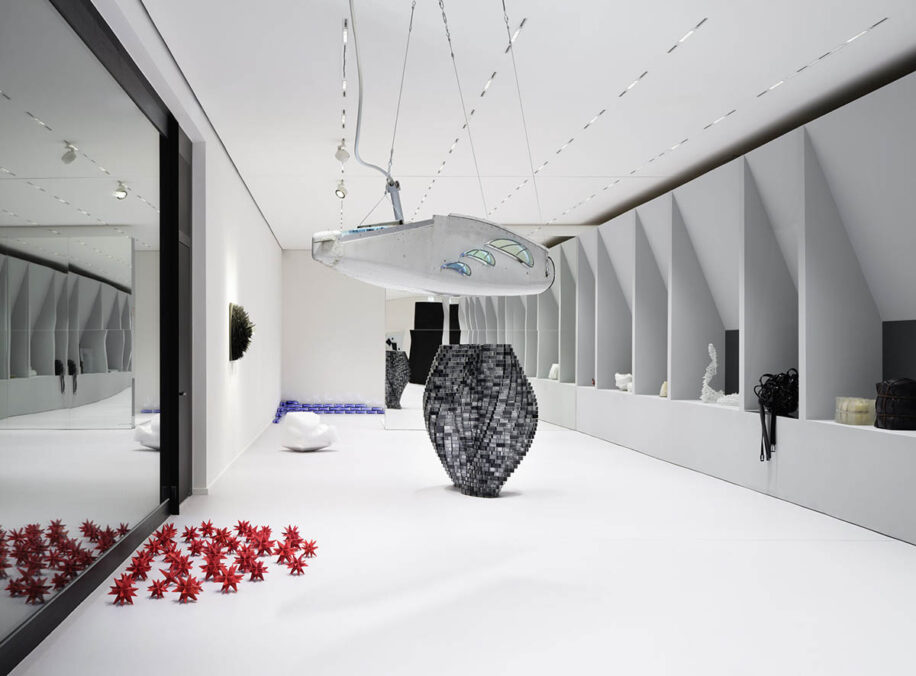
It is in the nature of the exhibits and their presentation that we ‘wander’ and ‘widen‘ our horizons. “Sculpture expands the possibilities of our own horizon and allows us to expand our imagination,” says the artist Tony Cragg. And Janusz Walentynowicz: “My sculptures are points of balance, moments of the future.”
This view into the future is manifested in the inventions of working with glass as a material. It began with the origins of the studio glass movement in the late 1960s and in Europe especially in the 1970s. This movement saw itself as avant-garde in its philosophy and progressive methods. In a new understanding of themselves, artists used glass not to create decorative objects, but autonomous, individual objects with artistic value – in a process of free creative energy and experimental use of the material, way from use and function, toward concept and content. They certainly inspired artists who were previously unfamiliar with or did not appreciate this material, encouraging them to expand the range of materials they used to include glass. Future Horizons thus reflects the ambitions of the studio glass movement, as well as the growing passion of younger contemporary artists in recent years to experiment with glass in the context of their own work and to combine it with future-oriented media.
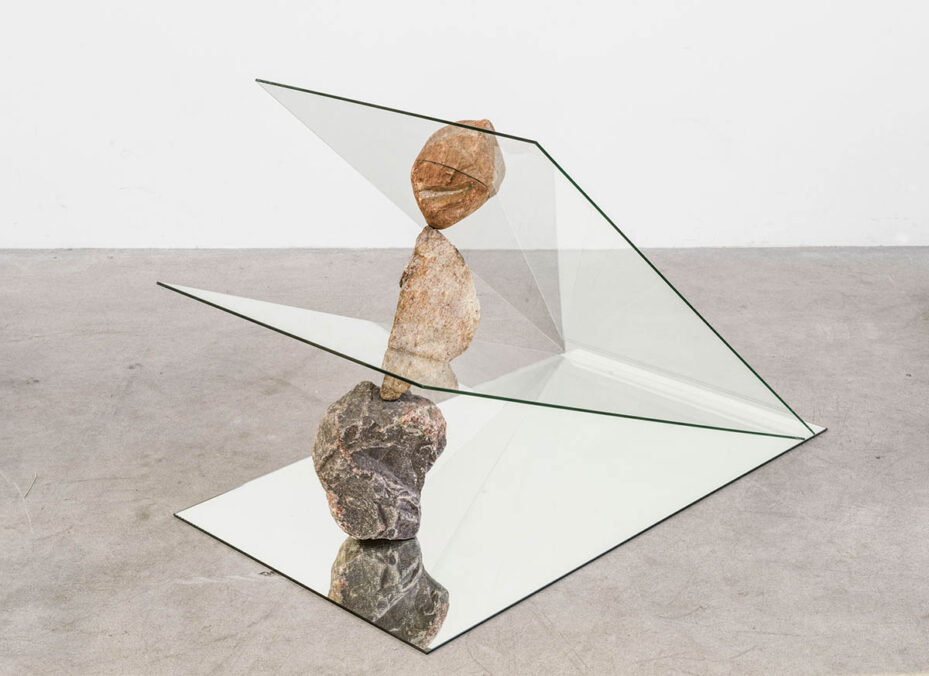
Future Horizons also encapsulates the vision of the Alexander Tutsek-Stiftung. Through its generous commitment over the past 25 years to contemporary sculpture and installations using the medium of glass and contemporary photography, as well as to teaching and research in the fields of materials and engineering science, it is the stated mission of the two founders – entrepreneur Alexander Tutsek († 2011) and his wife, scientist Dr. Eva-Maria Fahrner-Tutsek – to help shaping the future and contribute to a successful human coexistence. All this is done with faith in the potential of art and science to stimulate ethical action.
Presentation of the works
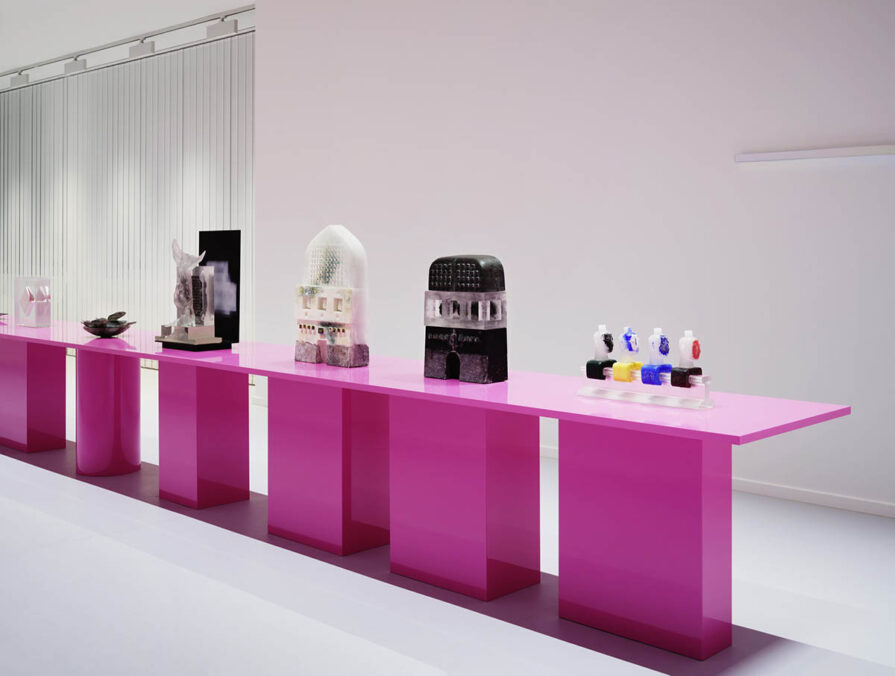
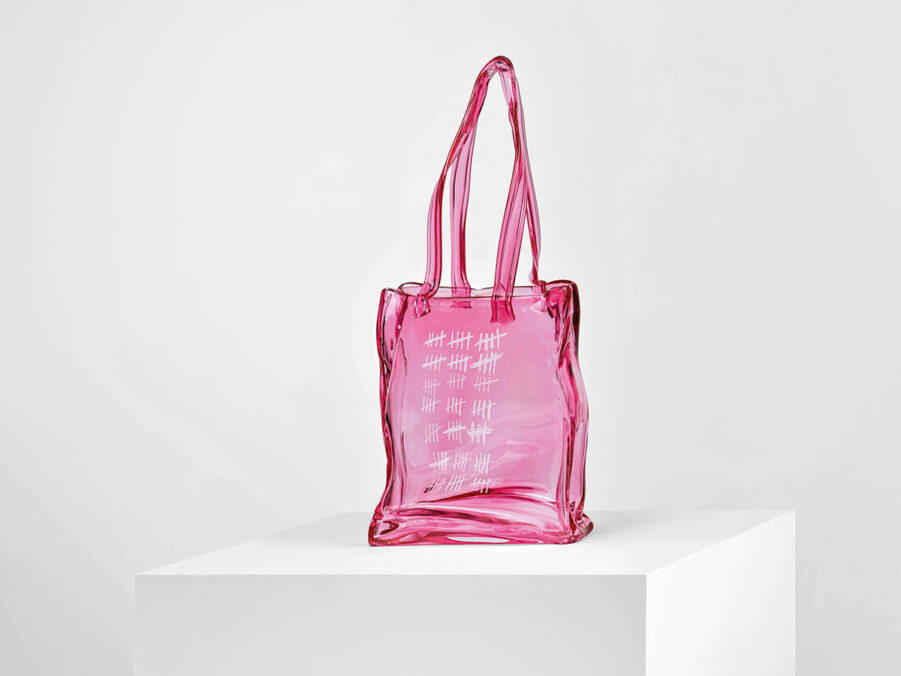
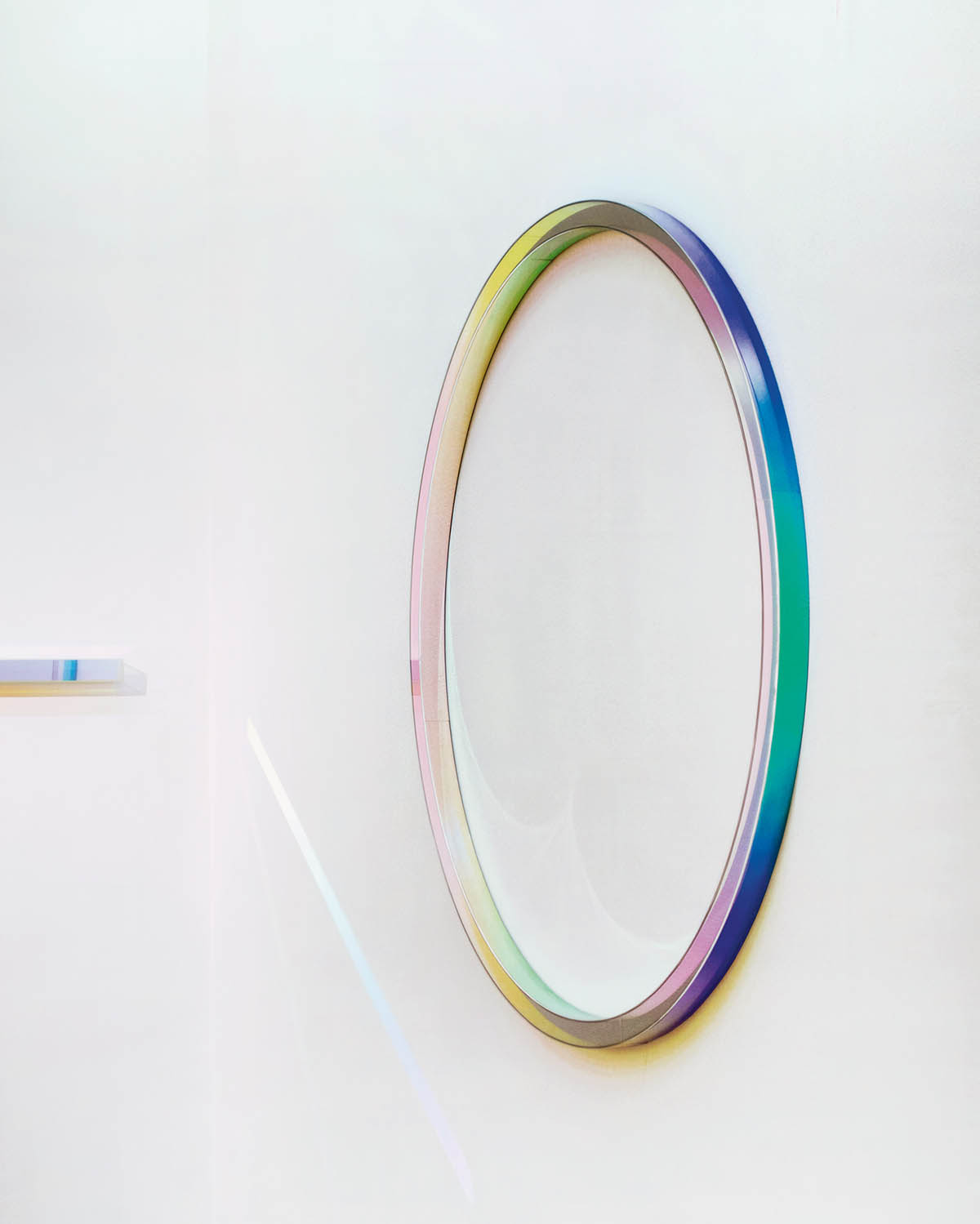
The exhibition presents on two spatial levels works that have emerged from the studio glass movement as well as from the field of contemporary art . According to the curatorial concept, the selection of exhibits and the exhibition architecture open up two spaces for reflection and resonance: the BlackBox – spacious and dynamic, bright and energetic – contains the sculptures, mostly silver, transparent, white or black, freely arranged in the space, lying on the floor or suspended from the ceiling. Others, smaller in size, are arranged in an “endless” linear choreography: like SILVER LININGS. VISIONS, they appear on the reflective horizon. The BlackBox FirstFloor surprises with the unfolding of objects in a rich palette of colors, whether blue, green, yellow, or pink, and with a different design: ABUNDANCE. EXPANSION OF THE MIND, could be the title of this space. With their different energies and “temperatures,” both exhibition levels invite the audience to “wander,” to physically experience walking around: primarily to view the artworks, but also to relate to themselves – in relation to the work and in relation to others – and thus, through movement and reflection, to become part of the whole.
Exhibition architecture
The exhibition design, created by Berlin-based architects Bruzkus Greenberg, takes advantage of the two exhibition spaces by using different color schemes – in the BlackBox, the colors range from silver to black, while in the BlackBox FirstFloor, the colors explode. On both floors, the gallery space ends with mirrored surfaces that double the perception of the rooms. The architects want visitors to look into the horizon and view the works in the flow of time, rather than just looking back. The mirrors in the display cases also seem to extend the sense of space beyond the walls of the gallery, playing with perspective and the perception of spatial boundaries. A seemingly endless niche along the right wall can be walked through, and works by individual artists are displayed in the gray-silver area with mirrors as a backdrop. The reflections invite visitors to view the individual objects in the context of the simultaneously visible space behind them. The mirrors create a boundless space. They transform the idea of the exhibition into architecture; they are a spatial metaphor for openness to future horizons.
Artists: Philip Baldwin/Monica Guggisberg, Monica Bonvicini, Mark Bradford, Dale Chihuly, Tony Cragg, Erwin Eisch, Simone Fezer, Sayo Fujita, Sachi Fujikake, Josepha Gasch-Muche, Donghai Guan, Jens Gussek, Mona Hatoum, Franz Xaver Höller, Shirazeh Houshiary, Tao Hui, Ann Veronica Janssens, Hassan Khan, Ju Young Kim, Shima Koike, Yoshiaki Kojiro, Alicja Kwade, Antoine Leperlier, Stanislav Libenský/Jaroslava Brychtová, Jessica Loughlin, Tanya Lyons, Haroon Mirza, Masayo Odahashi, Sibylle Peretti, Laure Prouvost, Gizela Šabóková, Masahiro Sasaki, Kiki Smith, Jana Sterbak, Neringa Vasiliauskaitė, František Vízner, Ursula von Rydingsvard, Janusz Walentynowicz, Qin Wang, Pae White, Terry Winters, Ann Wolff
Exhibition: Future Horizons
Curated by Dr. Petra Giloy-Hirtz and Dr. Eva-Maria Fahrner-Tutsek
Exhibition duration: 10 October 2025 – 19 July 2026
Address and contact:
Alexander Tutsek-Stiftung
Georg-Muche-Straße 4, 80807 Munich
www.atstiftung.de
The Alexander Tutsek-Stiftung is a non-profit foundation based in Munich that supports contemporary art and science. It was established in December 2000 by the entrepreneur Alexander Tutsek and Dr. Eva-Maria Fahrner-Tutsek to share responsibility for the cultural foundations of our society. The foundation’s vision is a vibrant world of art and science that drives social progress and contributes to a successful human coexistence. With its commitment and its funding projects, it focuses in particular on neglected, overlooked or even special and particular areas in art and science, and aims to strengthen them sustainably.