How did you start working together, and how are your practices connected?
Andreas Palfinger: The artistic collaboration happened almost instantly when we first met in New York some years ago. It grew from a long-standing shared understanding of each other’s work and a mutual interest. In the case of the exhibition Mutation Methods, we shared interests in how objects, architecture, and everyday environments shape perception and social reality. I feel I understood her work really well, almost instantly, when we met. It helps a lot when we work on the same frequency.
Aysin Bahar Sahin: I am coming from a more technical side of architecture, and I feel Andreas really brought this creative and artistic side in me. Both of us approach design and spatial practice as an expanded field that moves between art, architecture, and research. Our practice is rooted in observing how material culture operates within daily life, and how seemingly functional elements become carriers of meaning, memory, and ideology.
How did it come to the exhibition? How did you get in contact with EBORAN Gallery?
Andreas Palfinger: The connection to the exhibition at EBORAN Gallery developed organically. I had lived in Salzburg for many years, and I am originally from the region, which created a natural link to the local art context. The invitation grew over the past year, The invitation grew over the past year when a former Professor approached me, and the idea matured into a concrete project.
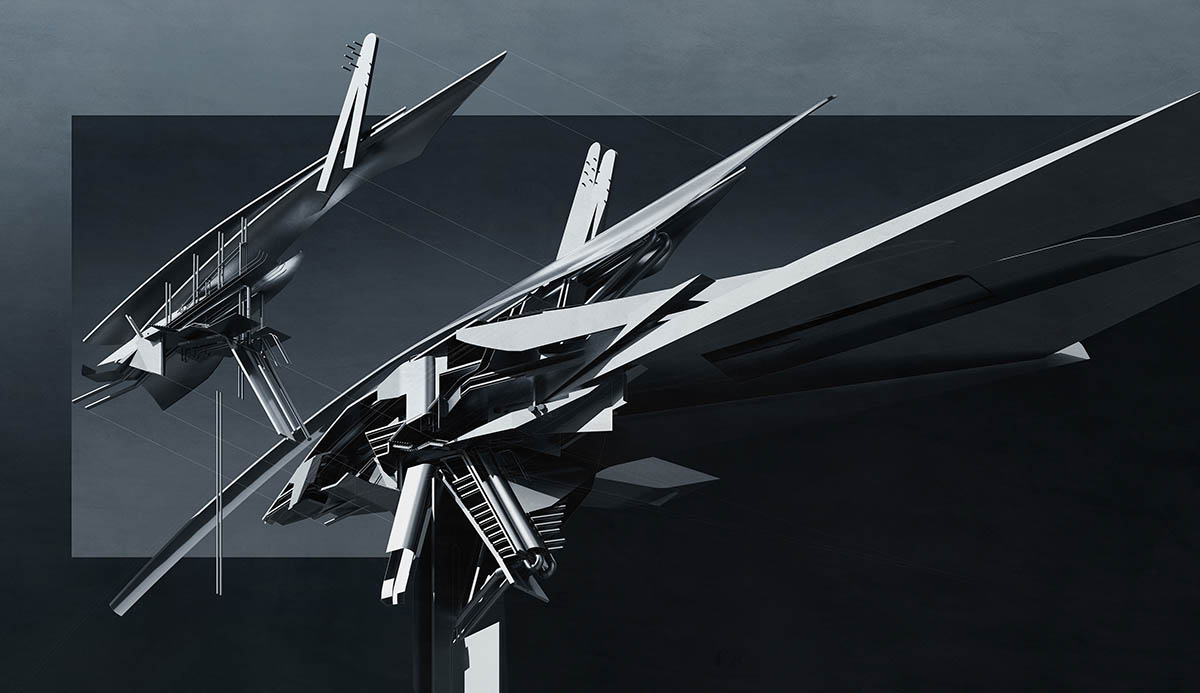
Aysin Bahar Sahin: Yes, we already collaborated on a project in China, and we knew we were going to work together again soon. The result of our conversation is the exhibition Mutation Methods, which examines objects as active constructors of reality and starting points for spatial transformation and architectural thinking. The project comes from a thought in a broader discourse on how everyday forms influence the ways we inhabit, understand, and design space.
„Mutation Methods“, can you explain the title?
Both: The title Mutation Methods refers to change as a constant condition of everything in and around us. It points to processes in which objects, meanings, and environments are continuously shifting.
Mutation in the context of our exhibition is not understood as a dramatic rupture, but as an ongoing transformation embedded in everyday life.
The exhibition investigates how objects evolve through use, context, and interpretation, and how these changes affect architectural and social realities. The “method” lies in observing, dissecting, and reconfiguring the material world to reveal hidden structures and relationships.
What was the start of the project, and can you elaborate more on the concepts?
Aysin Bahar Sahin: We believe that instead of looking for the right thing, sometimes the right thing comes to you. Matching our first ideas and sketches for sculptures, one morning, an advertisement for a used Maserati car handle popped up and we saw its potential. The fact that the function of that object is something that is used every day brought us more into the notion of everydayness and the importance of questioning not only the design of the objects, but also the whole histories around them.
Andreas Palfinger: Materiality plays a decisive role in this transformation. By working with materials such as industrial silver finishes and burned wood, the project stages a contrast between polished surfaces and traces of labor, time, and decay. These materials highlight the layered nature of objects: their aesthetic appeal, their technical function, and the histories and infrastructures that sustain them. The sculptural works do not simply represent objects but unfold their internal logic and embedded narratives.
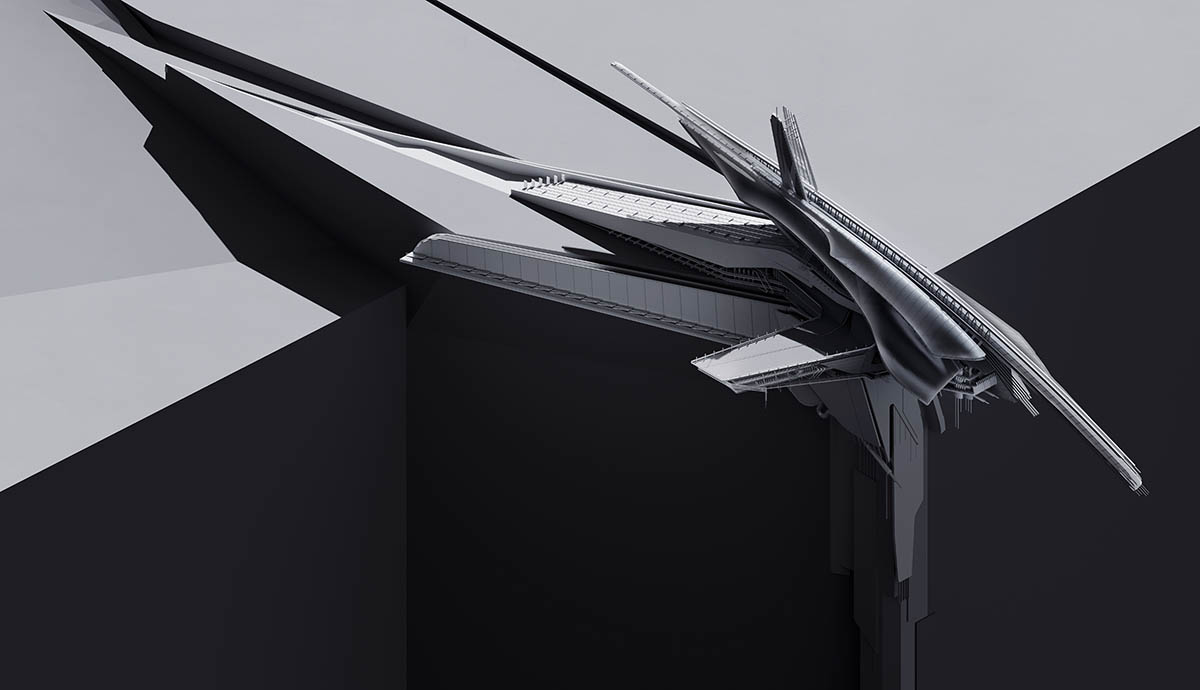
Both: The exhibition raises the question of whether it proposes a design methodology, a philosophical argument, or both. In practice, it operates at the intersection of these approaches. On the one hand, it suggests a method of working: starting from an object, analyzing its functions and contexts, and translating it into spatial and architectural forms. On the other hand, it advances a philosophical reflection on visibility, labor, and the construction of reality. The sculptures function as mediators between object and architecture, occupying a space where design becomes critical inquiry.
A central point of departure for the project was research into everyday objects that resonate with the artists’ own experiences and histories. During this process, attention was drawn to a car door handle—an object often overlooked yet deeply embedded in systems of production, design, and social interaction. Its presence in advertising and urban environments triggered a chain of associations that ultimately led to its translation into sculptural form. The handle became both a reference and a catalyst: a functional element transformed into an artistic and architectural inquiry.
Ultimately, Mutation Methods positions itself as both a spatial argument and a methodological proposal. By bridging object, sculpture, and architecture, the exhibition explores how realities are produced and transformed.

The exhibition is curated by Mia Meus, curator for Art, Science, Design & Technology. What was her role in the project, and was it first time collaborating with her?
Aysin: No, it is not our first project together; Andreas has collaborated before and has known Mia for a long time. We thought it would be amazing to have someone who already knows our practice guiding us through the process. Andreas has not been living in Austria for a long time now, and for me, it will be my first time coming to Austria for an exhibition.
Mia’s role was to provide curatorial guidance, contribute to the textual framing, and situate the project within the Austrian context. This dialogue sharpened the conceptual clarity of the exhibition and helped articulate its methodological dimension. Her curatorial approach supported an open exchange, enabling us to really refine our ideas, thoughts, and place them in words, but still maintaining the experimental side of the project.
What were your thoughts behind the sculpture Two Nows (Mutation_01)? And how it is decided what is made visible and what is hidden.
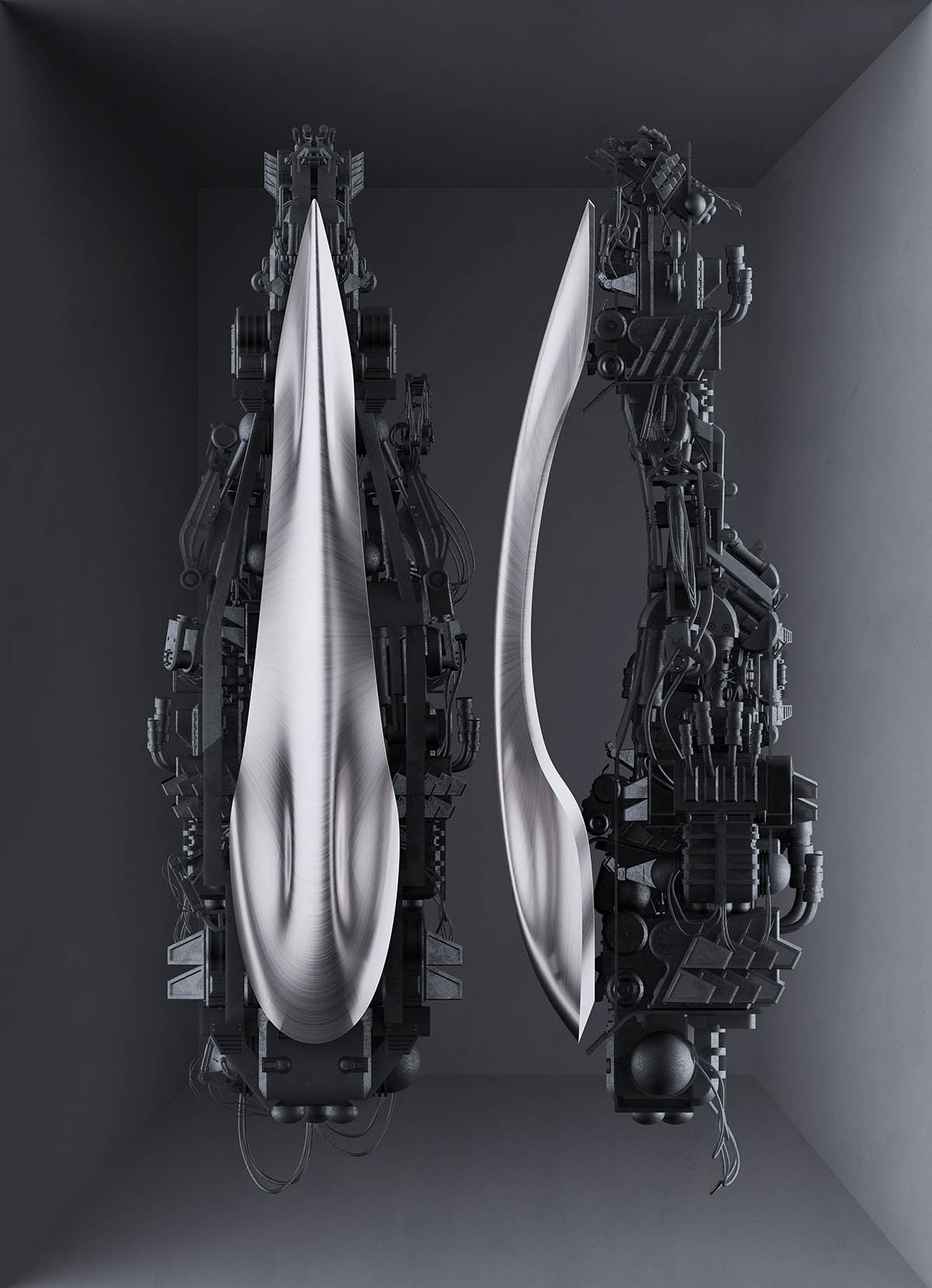
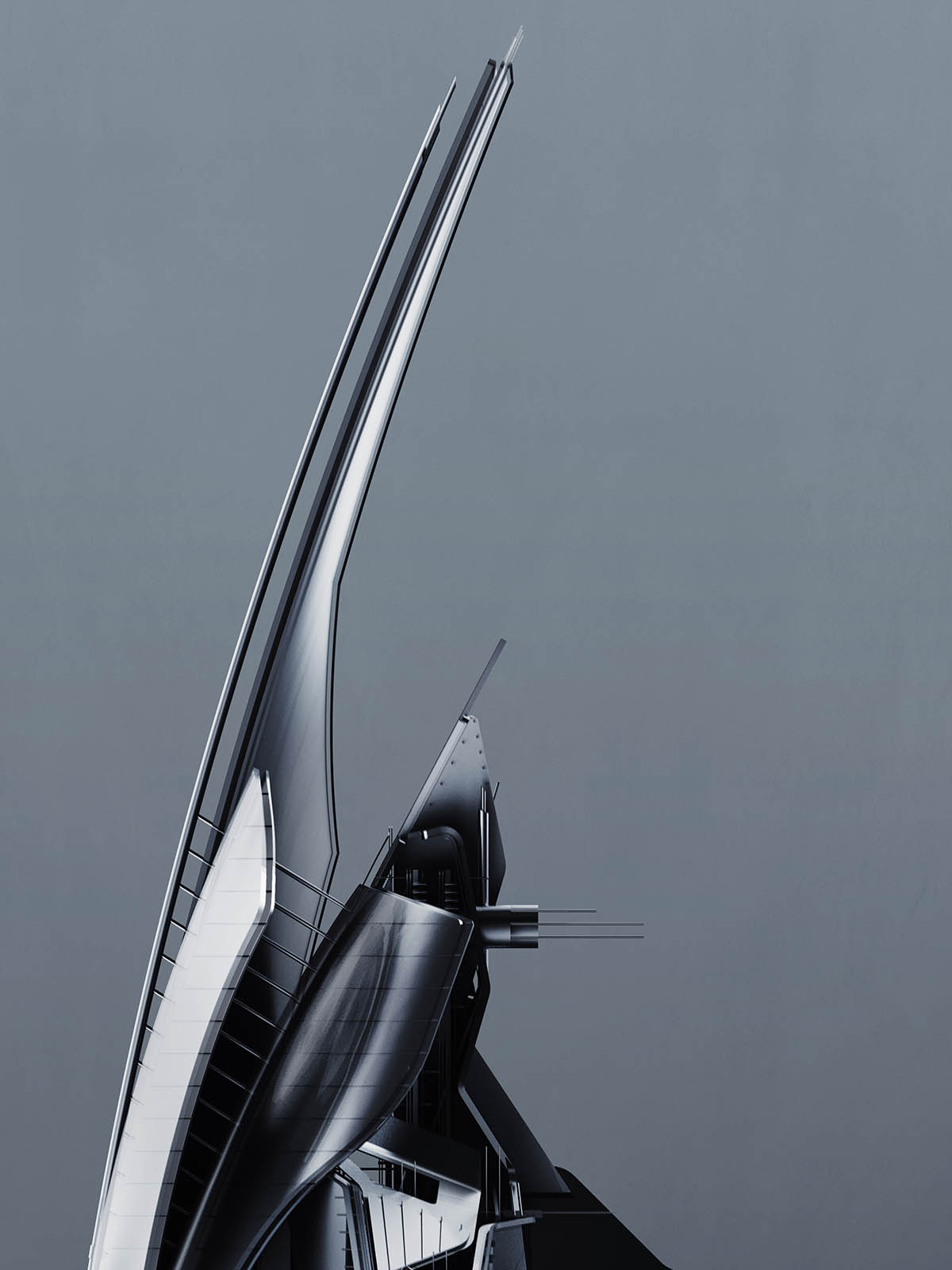
Both: The semiotic analysis of the door handle leads to the sculpture Two Nows (Mutation_01). This work reflects the tension between a visible, glossy surface and an invisible reality of work, maintenance, and preservation. It asks how decisions are made about what becomes visible and what remains hidden. The sculpture embodies two temporalities: the present of aesthetic appearance and the ongoing processes that sustain it. By fragmenting and reinterpreting the object, the work expands into questions of space, structure, context, and use.
„Speaking of the sculpture(s), the 2.60m long silver object is produced locally by Fräszentrum GmbH in Hallein, an architectural concept model is produced by Jonathan Lee in New York, and for smaller models, we are working in London with Josef Stoger for clay 3D-printing and Kyryll Dmytrenko for 3D-printing.
“Everyday Objects and the Archaeology of Realities: At the center is the idea that objects are not neutral, but contain and enable meaning, history, and social realities.” Can you elaborate on it?
Both: At the core of the exhibition is the idea that everyday objects are not neutral. They carry histories, cultural meanings, and social realities. They shape behavior, define relationships, and structure environments. To speak of the “archaeology of realities” is to acknowledge that each object contains layers of intention, production, and interpretation. Through artistic intervention, these layers become visible, revealing the complexity of what is often perceived as ordinary.
Andreas Palfinger: Neutrality, in this sense, is a myth. Objects always have potentiality—they can generate new meanings, provoke different uses, and participate in changing social conditions. By isolating and recontextualizing them, the artists activate this potential. The exhibition demonstrates how a single element can unfold into a network of associations and spatial possibilities, transforming the way we understand both design and architecture.
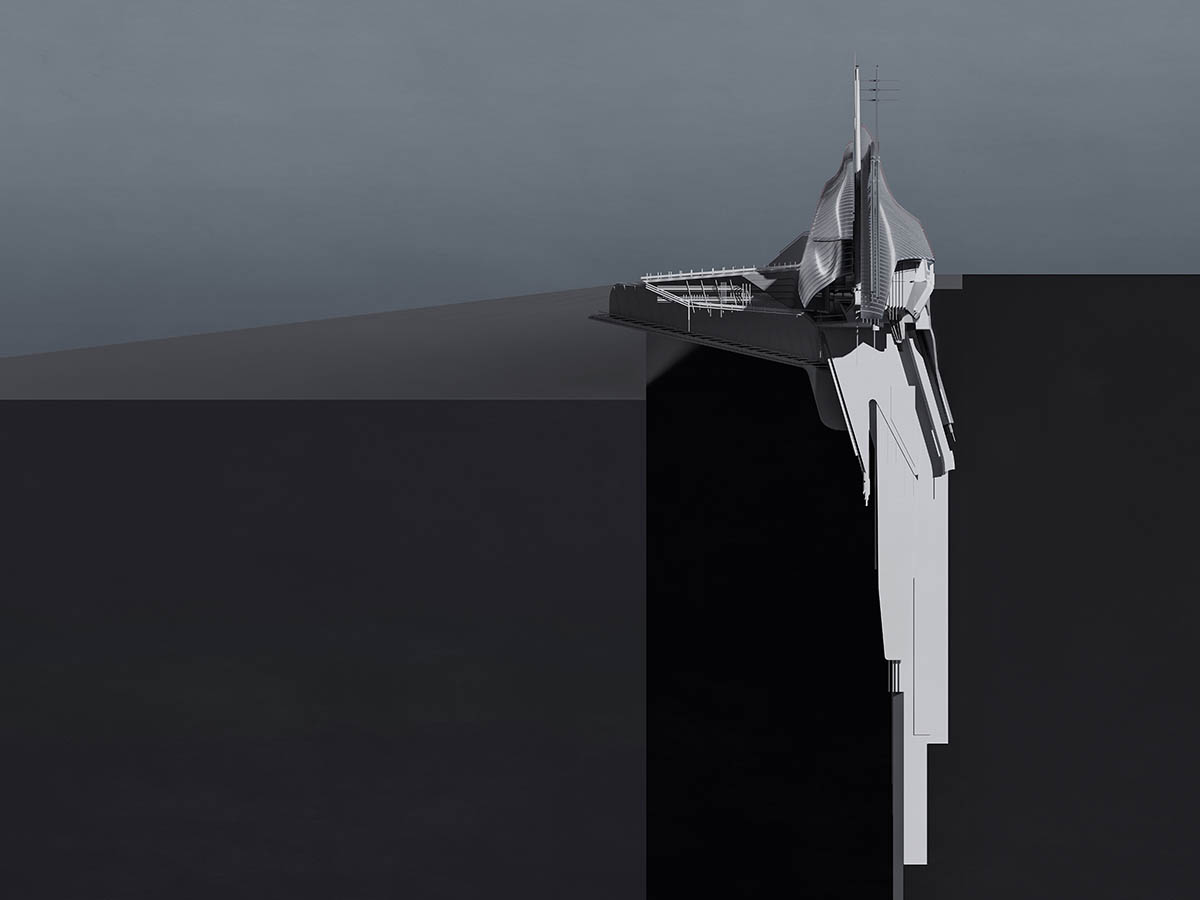
Language itself becomes a theme within the exhibition. Each viewer understands and interprets objects differently, and meaning is never fixed. They invite reflection on how reality is constructed through perception, materiality, and discourse. The exhibition is followed with essay written by Prof. Alex Jiahong Lu. Can you tell us more about it?
Both: The theoretical dimension of the project is deepened by Prof. Alex Jiahong Lu’s essay. The collaboration with him is rooted in a long-standing intellectual exchange. He contributed a text that approaches the work from a socio-technical perspective, focusing on how infrastructures and technologies shape everyday life. His writing introduces a poetic perspective to our work, emphasizing the endless possibilities of interpretations and the instability of language. Through conversations and very pointed questions, he helped us articulate specific aspects of the project and highlight its broader implications.
Are you going to be present for the opening?
Both: We will both be present in Salzburg, arriving some days before the opening from New York and London. Also, Mia Meus will join from Vienna, and Alex Jiahong Lu from New York; they both will give the introduction talk at the opening on March 13.
Exhibition: Andreas Palfinger & Aysin Bahar Sahin: Mutation Methods
Opening: March 13, 2026, at 7:00 PM
Duration: March 18 – April 10, 2026
Address and contact:
Eboran Galerie
Ignaz-Harrer-Straße 38, 5020 Salzburg
www.eboran-galerie.net
Aysin Bahar Sahin (TUR) is a creative and detail-oriented Architectural Designer based in New York. She works with a strong passion for transforming ideas into functional, aesthetic, and sustainable spaces. With a deep appreciation for both modern innovation and timeless design principles, she brings a unique blend of creativity and technical expertise to every project she undertakes. Her work is driven by the belief that architecture is not only about structures, but also about enhancing the way people live, work, and connect with their environments. From concept development and space planning to material selection and visualization, Aysin focuses on delivering designs that are both visually striking and practical. www.instagram.com/aysjnji/
Andreas Palfinger (AT) is a London and New York-based architectural designer and interdisciplinary artist, practicing within the frameworks of organic–parametric geometry, narrative media, and speculative fiction. Besides his independent practice, Andreas is working at Zaha Hadid Architects. He was a Fulbright Scholar at Pratt Institute in New York and is teaching his studio course ›Biomorphic Topologies‹ at the Parametric Architecture Academy. www.instagram.com/andreas_palfinger/