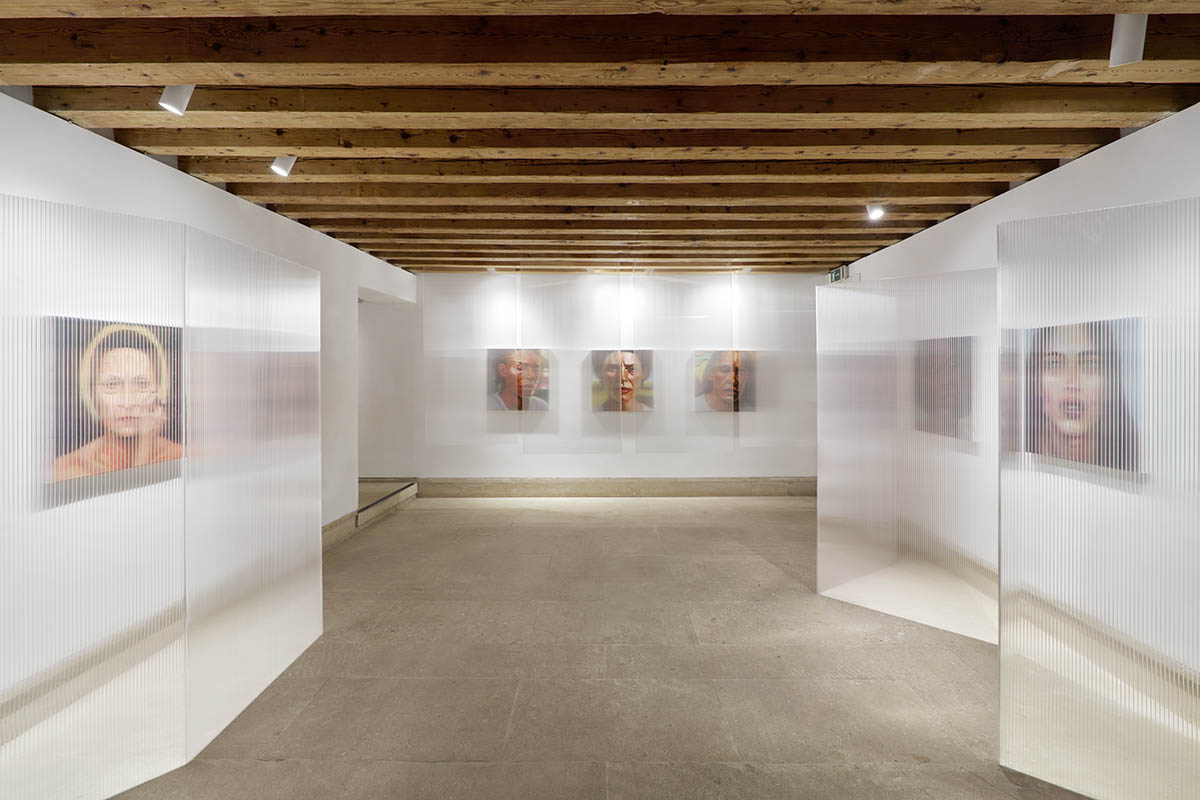
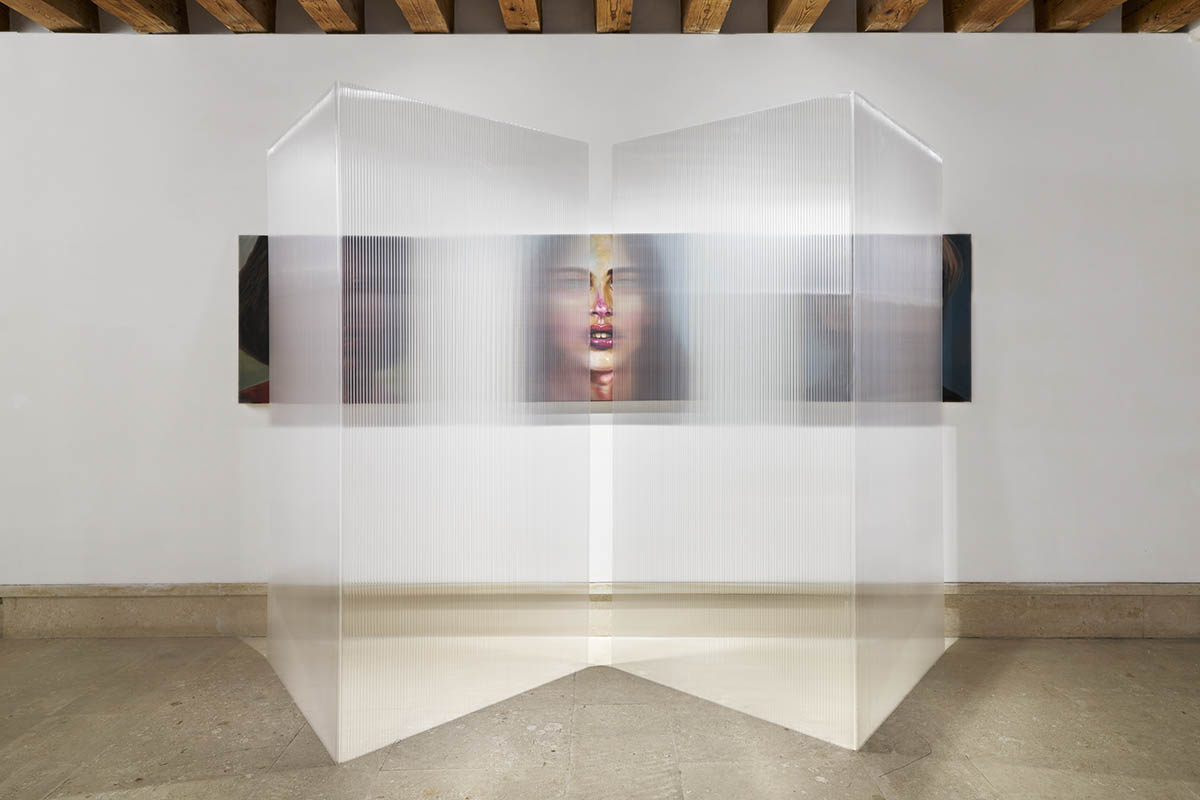
Venice trains you to consume art at speed: a map in one hand, a phone in the other. At A plus A Gallery, with “neither artificial nor intelligent”, Ahmet Öğüt exhibit ten oil portraits sit behind translucent screens that interrupt the face. When you plan a trip to Venice as an art lover, you can get swallowed by abundance. Foundations, galleries, parallel shows, vernissages, and studio visits can easily fill your schedule. To choose well you study in advance: who is the artist, what does the gallery stand for, what is the right context, what should I not miss. We rely on established values of what is “good” or “important” to justify our time. What we perceive as personal taste is increasingly a reflection of the data selection we are fed by digital feeds.
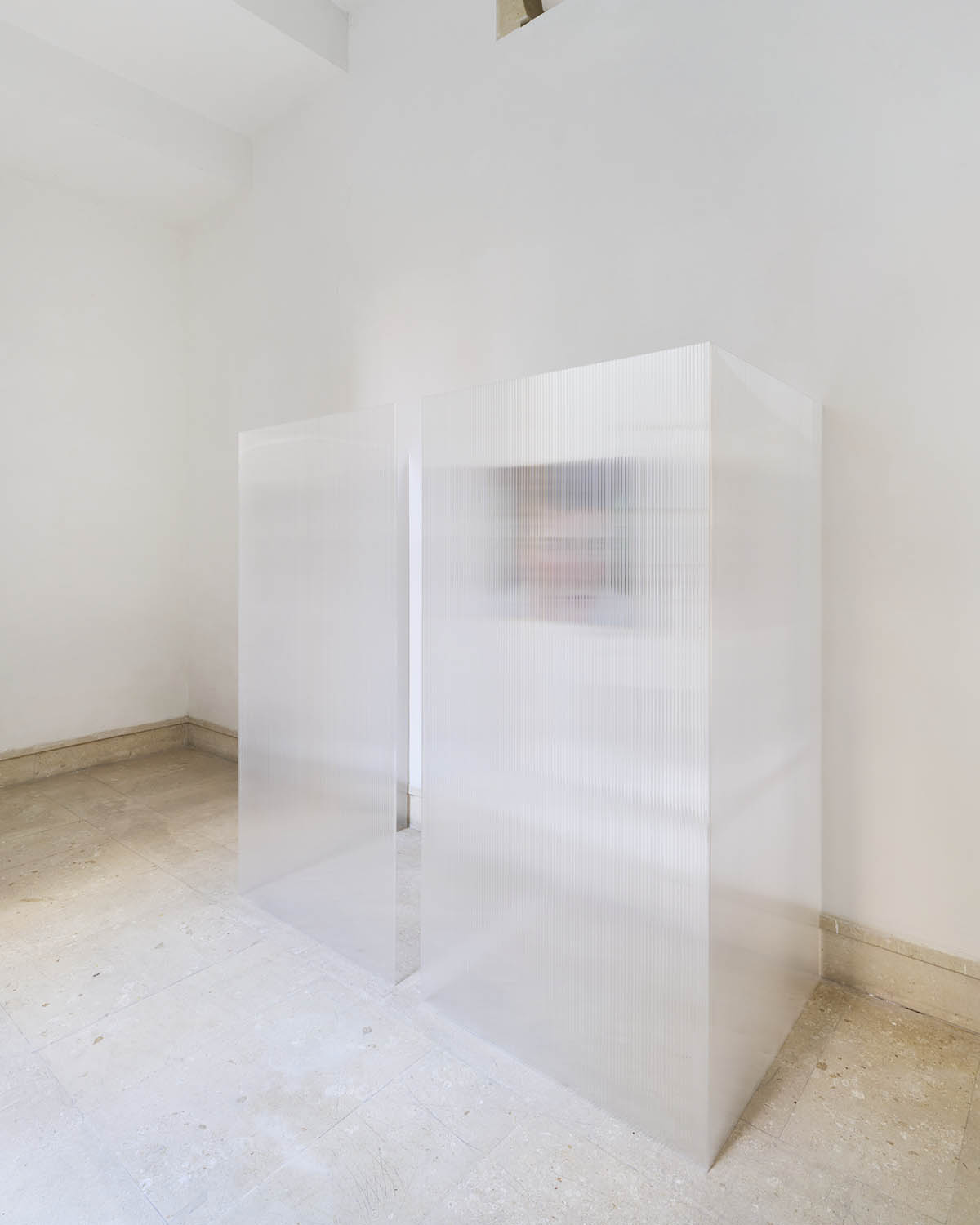
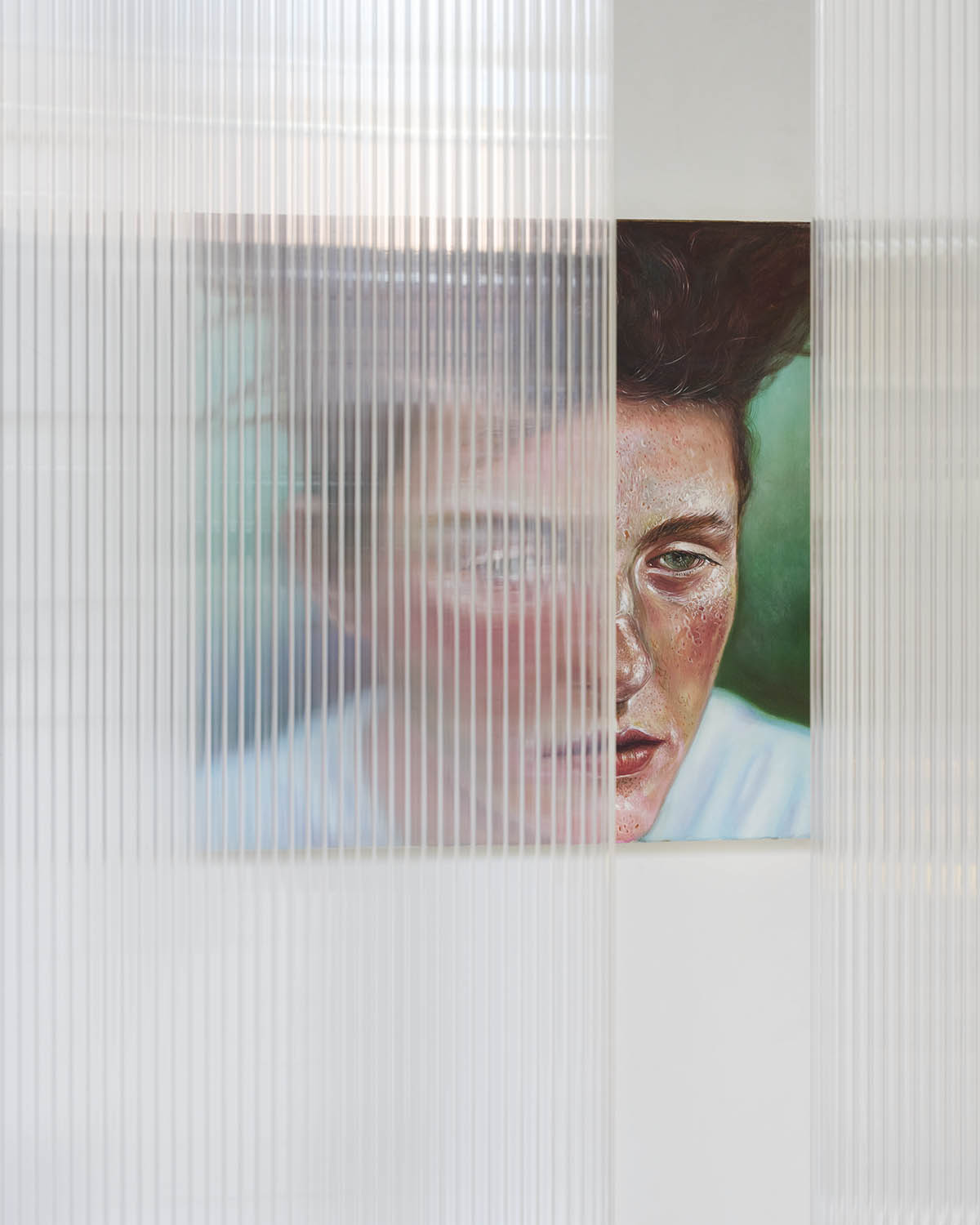
But following this rigid path means you might miss something more interesting, something you are intuitively drawn into. It can happen that a wide window catches your eye, half-hidden between narrow walls on Calle Malipiero. You move closer and glimpse a painting, but only a fragment of it: the image sits behind translucent panels that require a subtle shift of the body to see more. You are at the A plus A gallery of Venice, and you are about to experience Ahmet Öğüt exhibition “neither artificial nor intelligent”. You enter and at first you don’t even understand what kind of situation you’ve walked into. You’re handed a list of names and asked to match them to the paintings. Is this a game? Is the artist testing my confidence? Am I, without noticing, turning into a machine-learning classifier, profiling faces and bodies, assigning identities based on my own internal archive of stereotypes? And who am I to do that?
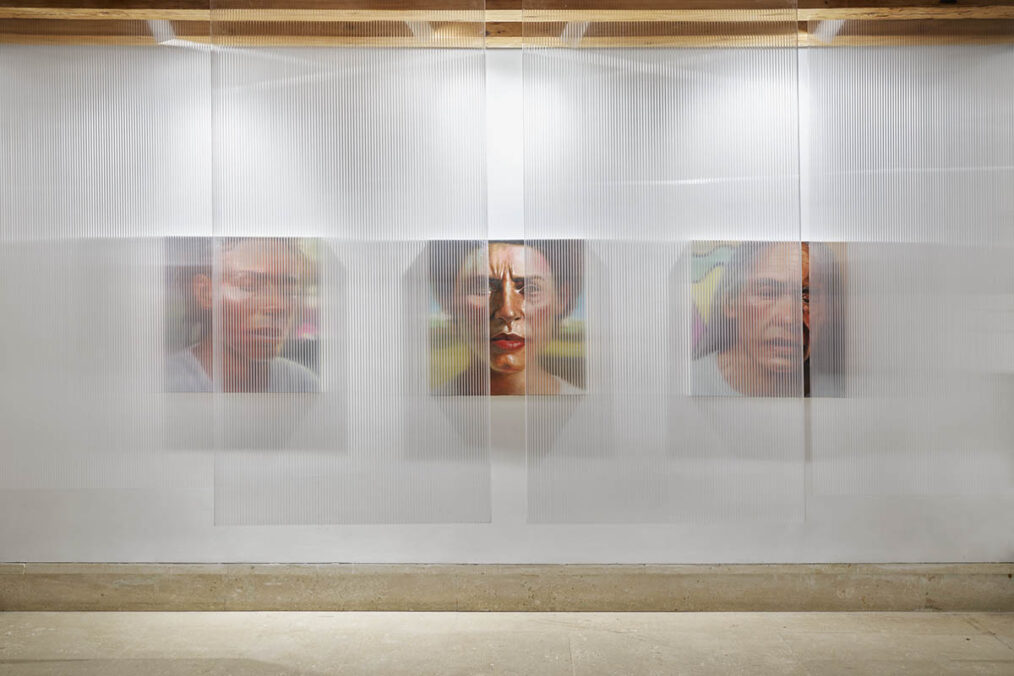
The face is a mystery that shouldn’t be “solved” quickly. Looking at someone is not the same as knowing them; knowledge takes time, and time is exactly what this exhibition demands. It exposes how easily we leap from appearance to assumption and how familiar that leap has become in the age of datasets.
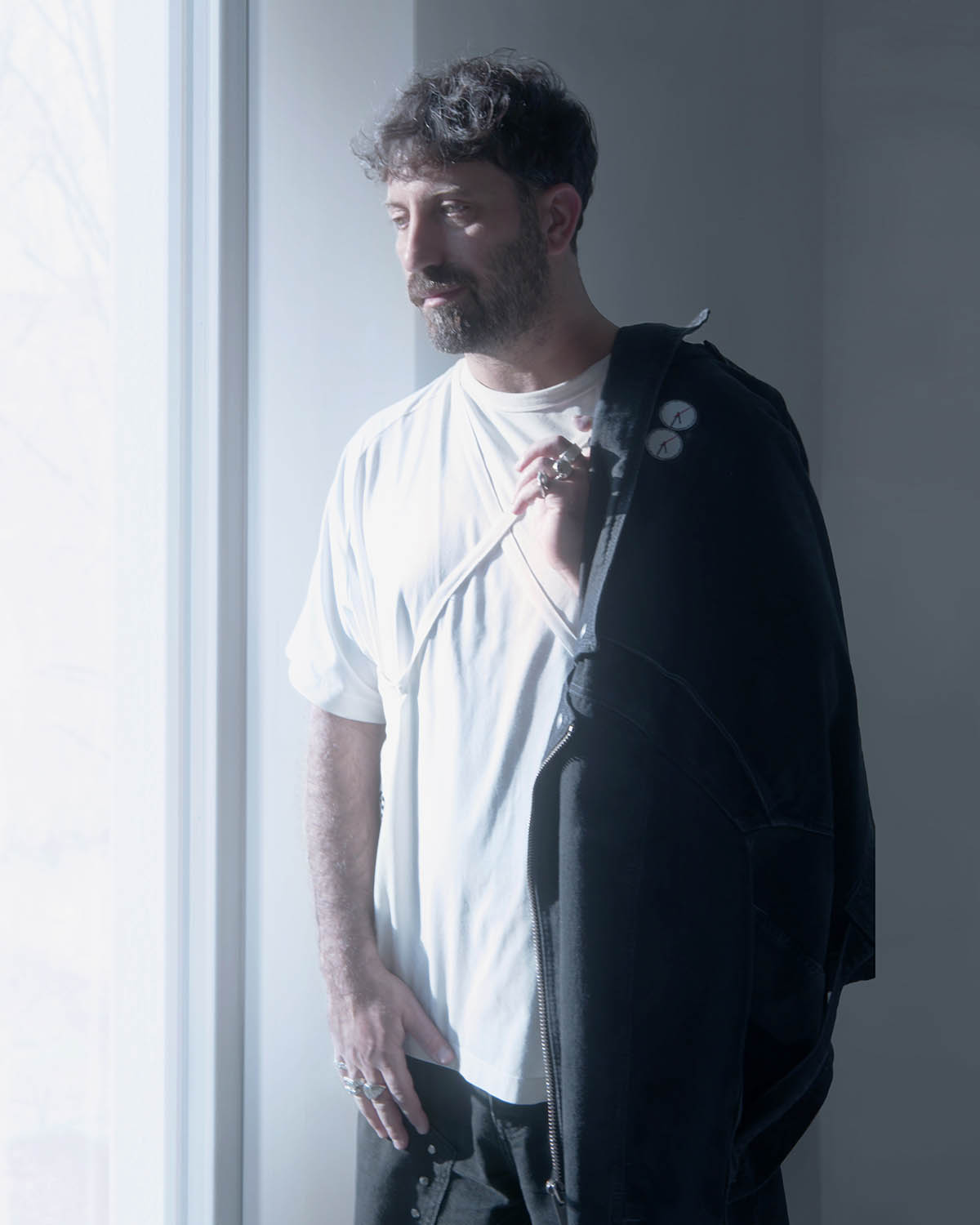
Ahmet Öğüt Born in Silvan, Diyarbakır, and trained in the painting department of Hacettepe University, he spent twenty years as a nomadic conceptual artist. From the social solidarity of The Silent University to the institutional parody of the Intern VIP Lounge, his work has historically activated networks. Now, he returns to the brush to starve the algorithm. To protect the work from being harvested as data, the encounter insists on presence, revealing how our attention has been trained to outsource judgment to training sets.
What follows is our conversation focused on why a conceptual artist returns to the brush now; how bias travels from historical human atlases into datasets; and how uncertainty can be a form of intelligence.
LR: Why this exhibition now? Why does it feel urgent?
AO: In Turkish, the word contemporary carries two meanings: one closer to “modern” in style, and the other to the art of today. I am interested in the second, what is happening right now, always in dialogue with both recent and distant histories. When I began working, video and photography were automatically considered contemporary, while painting was not. I was curious about what is contemporary. I developed an idea-based practice: first the concept, then the medium. Returning to painting now is also a way of reactivating analog skills, and of restoring the dialogue between hand and mind, to understand our present through more than just speed.
LR: You describe yourself as a visual learner who built a “database” from magazines. How did that shape this project?
AO: Because I didn’t speak English early on, I learned through images. I studied printed magazines, noted artists’ names, and memorized images, slowly building my own mental archive. That visual training stayed with me even as I moved into conceptual work. Years later, someone told me that I had “moved too far ahead with my mind yet left my soul behind.” This made me reconsider the role of skill and making. Painting keeps a certain kind of thinking alive: it activates the dialogue between hand and mind, rather than isolating the idea from the act of making.
LR: Why portraits of artists and why mix real and fictional ones?
AO: I wanted to make portraits of artists who are considered successful, even when that success coincides with burnout. In the art world, success does not necessarily correspond to a healthy life. The figure of the artist allowed me to address these contradictions, because it is often idealised while remaining structurally precarious. Moreover, the very idea of the “international artist” is already a kind of utopia, since access to mobility, visas, technology, and even the internet is unevenly distributed. For this reason, I chose to mention only cities rather than countries, in order to avoid reinforcing a nation-state framework. I don’t say that these people are from those cities, only that they are in those cities—an ambiguity that often leads viewers to mistake real people for fictional ones and vice versa. I had to challenge my own stereotypes and automatisms. I had the chance to reflect, and to make edits and adjustments. Actively questioning assumed gender, age, ethnicity, and choice of discipline when imagining each member of this artistic community became a productive exercise.
LR: The exhibition asks viewers to “match” names and faces. What does that mechanic do?
AO: I wanted the audience to be active rather than passive, so I replicated this challenge by providing a list without revealing who was who. This series features depictions of artists specialising in various mediums, each situated in a different city worldwide. I make oil paintings of each character using manual modifications. Except for the works based on real artists, I was able to make all kinds of adjustments. The fictional figures are therefore not based on a single image or face but are composites.
LR: You connect this to machine learning. How, exactly?
AO: The series aims to challenge the coded gaze and cognitive bias. More importantly, this challenge extends beyond the errors of AI to encompass our own stereotypical views and pre-made judgements. Because I do not specify the identity of each character, the series confronts the viewer in the act of reading the images: it questions why we associate certain visual cues with particular places, identities, or artistic disciplines. Although machine learning algorithms can analyse vast numbers of images within seconds, this data is still funnelled through centralised systems designed by humans, often grounded in Western perspectives. No matter how much AI advances, these structural biases persist. Their roots can be traced back to colonial epistemologies of the 18th century, when Western anthropologists and geographers produced climatic and racial charts (such as the Human Race Atlas), falsely categorising humanity according to outdated and problematic standards.
LR: Why design the show around fragments and partial visibility?
AO: Images circulate so quickly today that many people feel they no longer need to encounter the original. I wanted to celebrate that encounter. Fragments can still be visible, and documentation can exist, online viewers can get a glimpse, but the complete paintings are for the space. It took a long time to find the right display solution, precisely because I didn’t want documentation to replace the experience.
LR: Do you see “human error” inside the paintings themselves?
AO: Yes. Even when I work from real people, I’m often using a photograph, so it is always a depiction of a depiction. With fictional portraits, I can shift variables more freely, gender, ethnicity, age, if it helps challenge the viewer’s “algorithm.” But even then, you return to the blind spots of your own gaze. Sometimes I revise the details in the paintings afterward, and in some works, there are multiple versions layered on top of each other; an X-ray would reveal earlier decisions, even other figures.
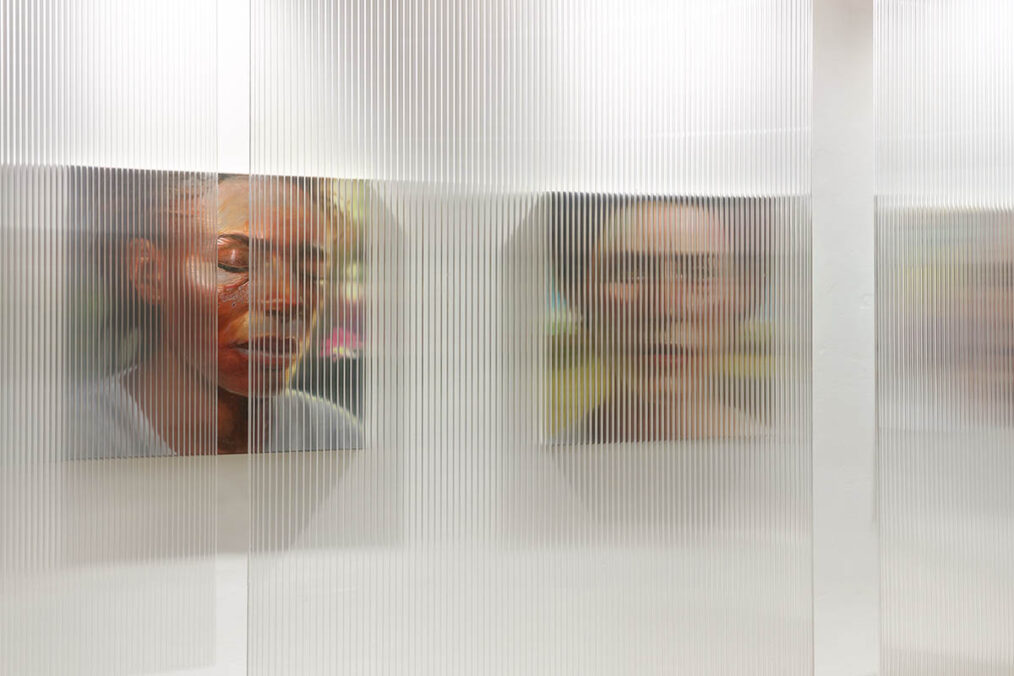
LR: You’re also controlling access: slowing down, insisting on presence. How do you balance that with engagement?
AO: It wasn’t easy for me. I usually want new work to be seen immediately. But acceleration doesn’t automatically create access, it often creates more distraction. Even when everything is online, people say, “I’ve seen it, but I haven’t really seen it.” Effort matters. Today, even thirty seconds is an effort, and when someone chooses to give more time, the work can stay with them. I think of this project over time, not as a single exhibition. I made these paintings in many different places so they can eventually be shown where they are, connected to local audiences, rather than endlessly shipped.
LR: I worry this could become a “luxury resistance,” especially in Venice. What’s your response?AO: Venice isn’t a fictive backdrop. There are local communities there year-round, an underground scene, and a deeply rooted painting tradition in the academy that is often overlooked. For some, Venice represents luxury, but it can also be the opposite, and it’s important to acknowledge the people who actually live there.
LR: You call returning to painting “radical.” Why is it radical now?
AO: For me, painting is a radical act, precisely because I’m known as a conceptual artist. For someone else, it might be an easy or even lazy choice, but for me it’s unexpected. When I graduated from a painting department, painting was what everyone assumed I would do, so I didn’t. I chose a practice that wasn’t even clearly defined around me at the time. Now that I’m “defined” as a conceptual artist, returning to painting in some of my projects once again challenges those expectations. If we claim to be open-minded, we should remain open to purpose. I need a reason and the right timing; I’m not working by default. And we should ask why we keep building hierarchies, between mediums, geographies, ethnicities, and genders, before we even arrive at the art itself.
Ahmet Öğüt – www.ahmetogut.com, www.instagram.com/ahmet__ogut/
On view:
Saved by the Whale’s Tail, Saved by Art
Solo Project
Art on the Underground
& New Contemporaries
London
19 September 2025 – December 2026
Singapore Biennale 2025
31 Oct 2025 – 29 Mar 2026
What Are Our Collective Dreams
The Zachęta – National Gallery of Art Warsaw
Oct 22, 2025- Feb 17, 2026
neither artificial nor intelligent
A plus A Gallery, Venice
Nov 6, 2025 – Feb 8, 2026
Translated into Socialism
Moderna galerija, Ljubljana
June 12, 2025–February 8, 2026
East Remains Possible
MoCA Skopje – Museum of Contemporary Art
Nov 13, 2025 – March 29, 2026
Museum Yet to Be
Museum of Contemporary Art of Montenegro
12 Dec 2025 – 12 Mar 2026