You were born in a post-socialist context where both collapse and inheritance shaped images of masculinity. How do those historical and social conditions linger in your painted figures, even when they appear contemporary or personal?
Western stereotypes of Eastern European emotional reserve often misread cultural differences in how compassion is expressed. That ambiguity of intentions, along with the proximity of both care and violence, informs how my figures operate. Violence, in my view, is not exceptional but ambient, and its social manifestations can bruise as much as its physical ones.
My early years coincided with a period of growing pains, related instability marked by visible corruption, uncertainty, and lawlessness. At the same time, there was a strong culture of mutual support. People relied on one another in practical ways, which fostered a form of empathy expressed through gestures rather than words. I was fortunate to have strong male role models within my family, which didn’t complicate masculinity but rather just showed one of its versions.
I moved frequently between family members and cities, which encouraged observation without a fixed sense of belonging. This position of being present but not fully embedded has persisted in my work, as I have an interest in social performance, gesture, and the unspoken transactions that structure belonging and identity. These dynamics often remain unofficial or unlabelled, but they carry real weight.
Can you provide an insight into your process?
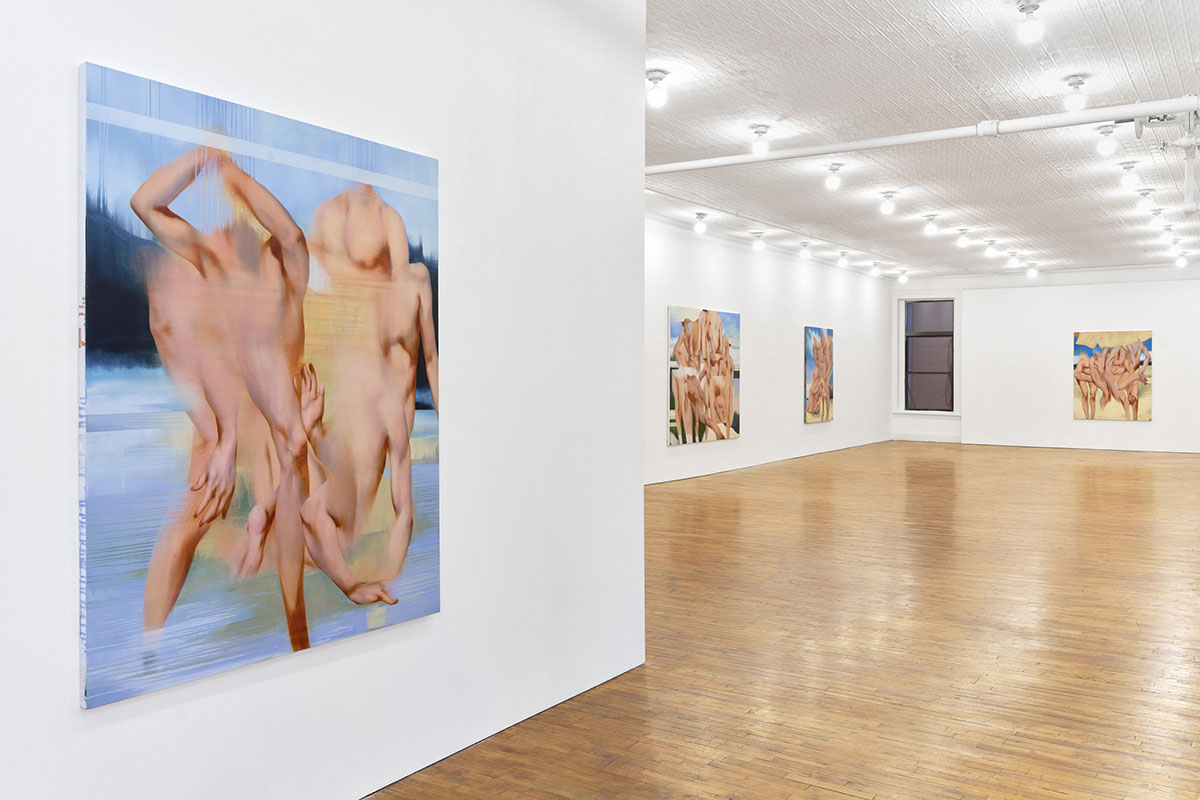
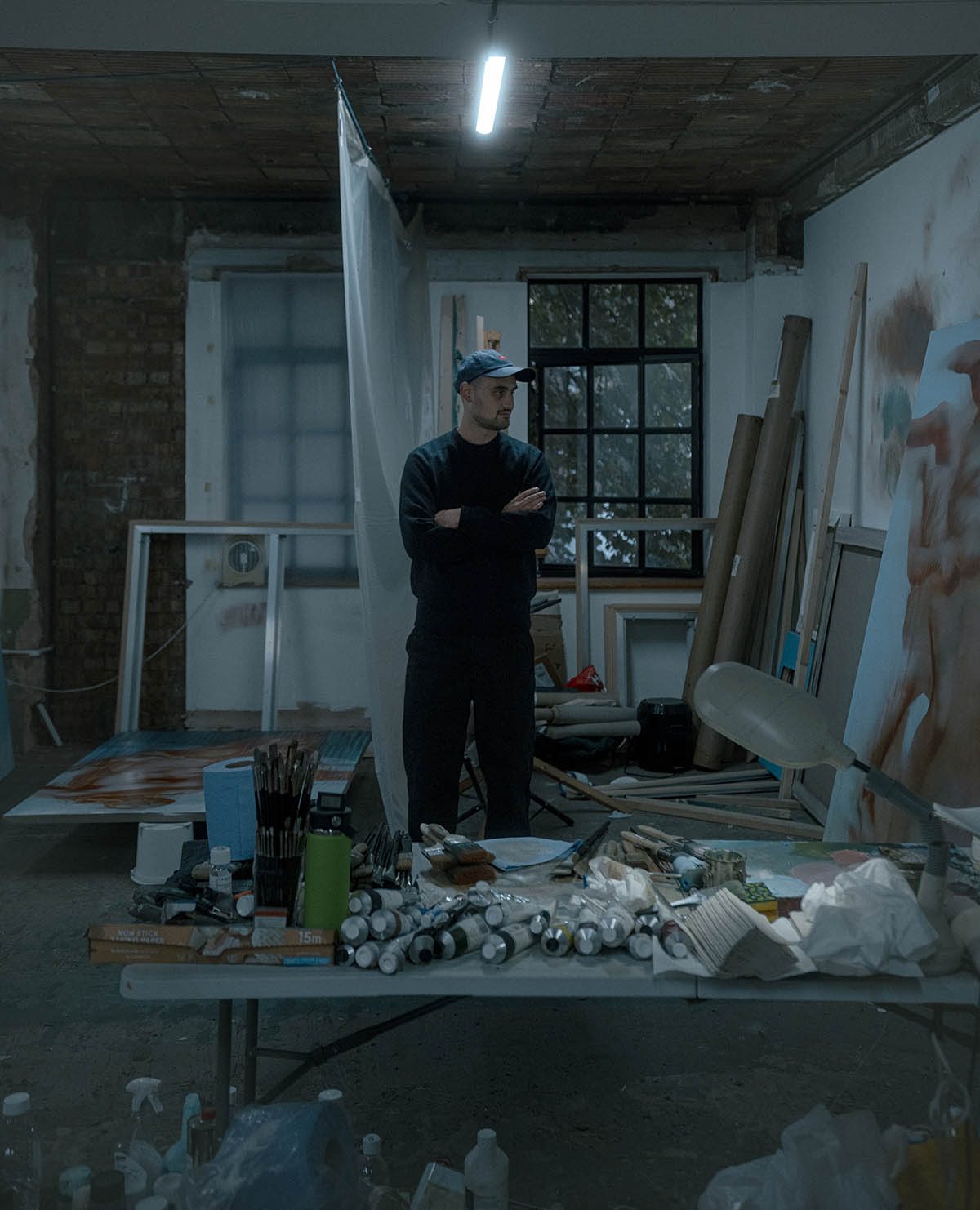
I think of the studio primarily as a place of execution rather than a place for reflection. It is intentionally sparse, without much furniture or my books. The paintings evolve through an iterative process of inclusion and exclusion, where erasure, abrasion, and revision are iterated. This resistance is central to my interest in how perception and narrative operate within figurative painting.
Because the time spent painting is physically active and impulsive, I use time outside the studio for reflection and planning. The surfaces accumulate slowly, even if individual sessions are intense, allowing the work to accrue naturally.
Bodies in your paintings often appear exposed, fragmented, or emotionally ambivalent. How do you think of them?
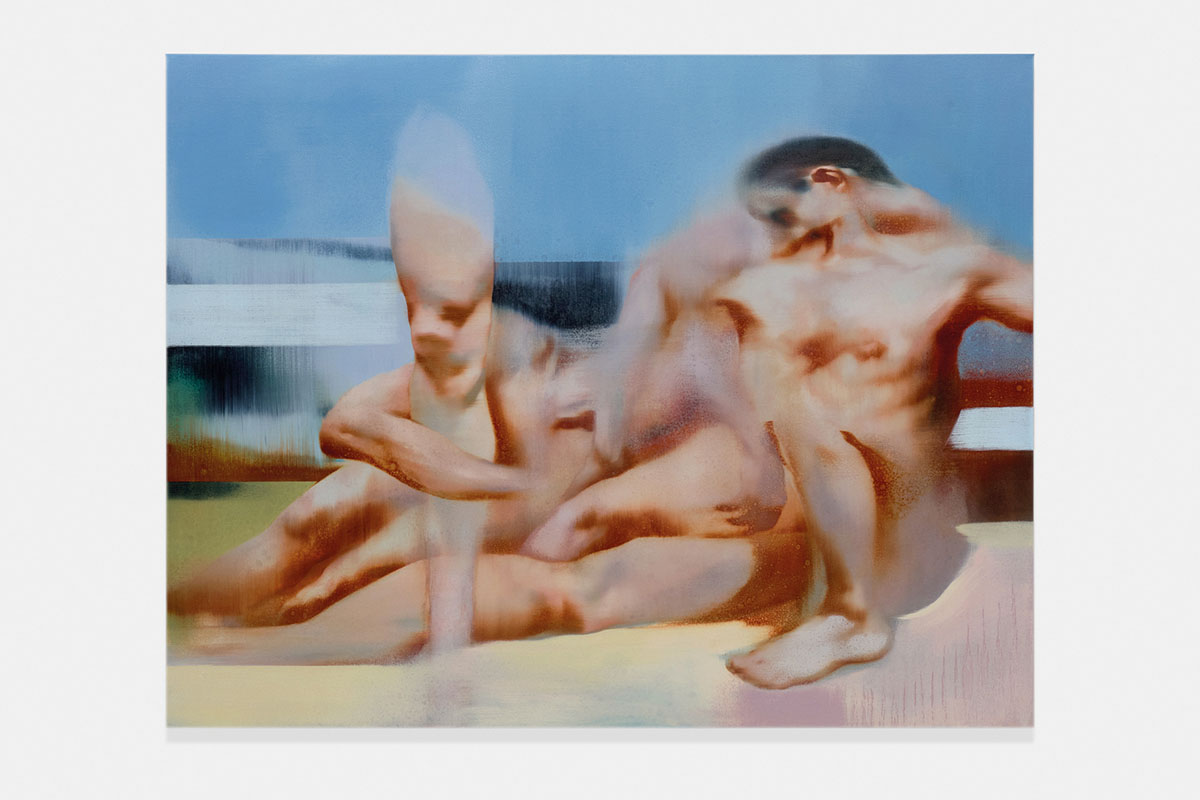
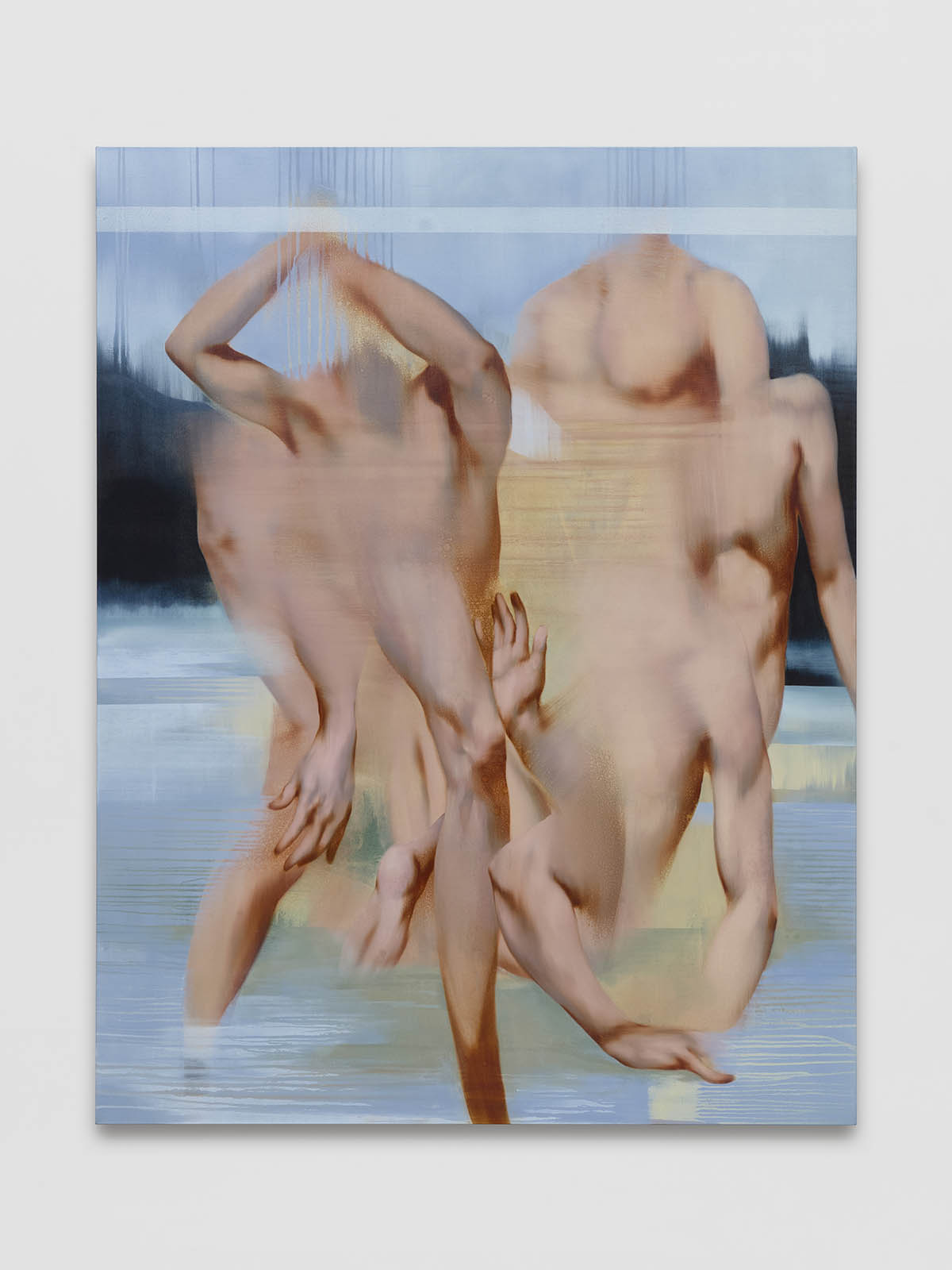
I reject what I think of as a dictatorial approach to figurative painting, where the image asserts a fixed meaning or hierarchy. While my work is rooted in the human figure, it is equally concerned with structure, rhythm, and the instability of form.
Fragmentation allows the figure to function less as a character and more as a site of interference, where gesture, memory, and perception overlap. The body becomes a vessel of tension rather than a resolved identity.
How do discontinuity, loss, and improvisation translate into your painterly language—gesture, erasure, repetition, or excess?
Around 2021, an artist friend of mine showed me an early AI image generator. Its crude outputs resembled a kind of accidental gestural abstraction, and this encounter reinforced my growing reluctance to stage or predefine paintings through reference. I had already been interested in automatism and symbolism, but I was searching for a way to embed those ideas at the level of decision-making rather than citation.
At a certain point, I abandoned the attempt to resolve images in advance and began working through the accumulation of gestures and motifs, allowing each mark to condition the next. Meaning emerges through this process rather than being imposed on it. I think of painting as a catalyst rather than a container, a space where tension can be sustained rather than resolved.
I work on multiple canvases simultaneously, often five to ten, which allows ideas to circulate between them. They operate as a group rather than as isolated images. This approach keeps my output relatively modest, but deliberate. In contrast to the current drive toward visual perfection within AI-generated imagery, I remain interested in error, hesitation, and misalignment as fundamentally human conditions.
There is a tension in your work between intimacy and exposure, desire and discomfort. How do you negotiate painting desire without reproducing dominant or consumable images of the body?
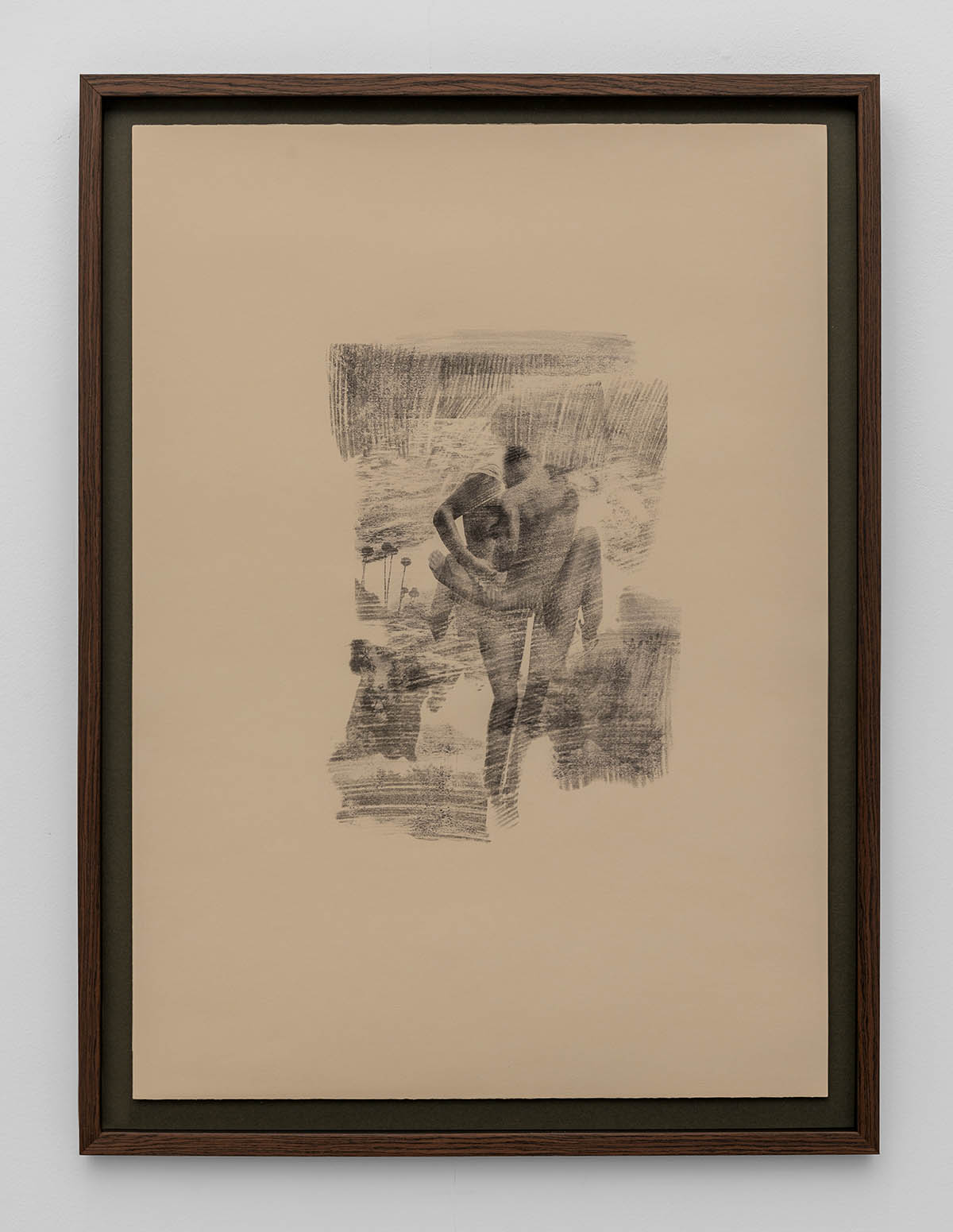
The anatomical fragments in my paintings function as charges or avatars rather than gendered bodies. They are not intended to represent specific identities but to register states of attraction, aggression, vulnerability, and co-inhabitation that cut across experience. In this sense, the figures operate as traces rather than discrete entities.
I am interested in the instability of these readings, and in how pleasure can coexist with unease without collapsing into spectacle.
Painting today is often positioned between tradition and critique. How do you relate to the history of figurative painting, and where do you feel alignment or resistance?
I am aware of the tension between tradition and critique in my practice. I aim to work in a way that acknowledges modernist structures without repeating their motifs. If there is an alignment, it is more rhythmic than aesthetically driven.
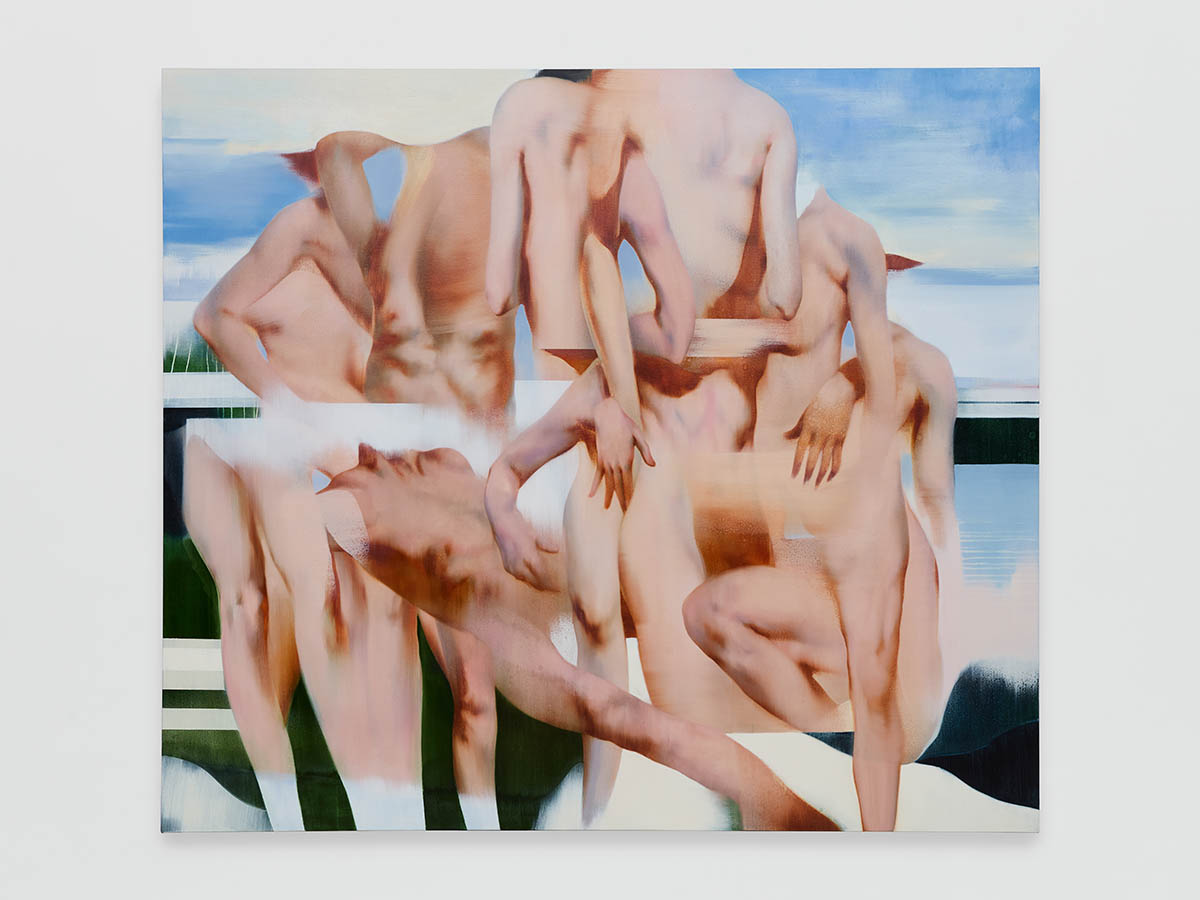
While I value art history deeply, I am selective in how it enters the work. My focus remains on how familiarity shapes interpretation, and how subtle deviations can destabilise expectation. The paintings are structured to operate within that space of recognition and disturbance.
Your surfaces often feel unresolved, as if resisting closure. Is this resistance connected to political or biographical uncertainty? Do you feel you leave a work open rather than „complete“?
The paintings conclude when I am out of moves. I rely on intuition informed by reconsidering motifs over time rather than a predefined sense of completion.
Openness is not a failure of resolve but a structural condition of how the paintings operate.
Queer readings are often projected onto figurative painting that departs from normative masculinity. How do you feel about interpretation becoming a shared space of projection, misreading, or productive misunderstanding?
Once the work leaves the studio, interpretation is no longer mine to control. I am interested in how visual cues generate first and second readings, and how superficial and deeper readings can jostle against each other. That tension is more exciting to me than producing an image that is easily consumable or dictatorial in narrative. I am not interested in making a product.
Preslav Kostov – www.preslavkostov.com, www.instagram.com/preslavkostov/, www.taradowns.com/artists/preslav-kostov
Preslav Kostov (b. 1998, Bulgaria) lives and works in London, UK. Kostov received his BA at Leeds Arts University (Leeds, UK) in 2020 and received his MA at the Royal College of Art (London, UK) in 2023. Selected exhibitions include: “Coming Up Roses,” Berntson Bhattacharjee, London, UK (2025); “Soft Focus,” Tara Downs, New York, US (2025); “Between the five wells,” Tara Downs, New York, US (2024); “Notes Toward a Shell,” Tara Downs, New York, US (2024); “Softer, Softest,” Guts Gallery, London, UK (2024); “Beauty in chaos,” Hew Hood Gallery, London, UK (2024); “The Arcadian Dream, Spurs Gallery, Beijing, CN (2024); “New Now,” Guts Gallery, London, UK (2023); “Manifest,” SixtySix London, London, UK (2023); “Touch-a-touch-a-touch- me, Berntson Bhattacharjee Gallery, London, UK (2023); “From The Cloud,” Baert Gallery, Los Angeles, US (2023); “Skin Deep,” Studio West Gallery, London, UK (2023); “A consciousness harnessed to flesh,” D Contemporary, London, UK (2023); “Now introducing 2022,” Studio West Gallery, London, UK (2022). His work is included in the permanent collection of The Nixon Collection, London, UK.