Can you tell me something about your childhood? How did you get interested in art?
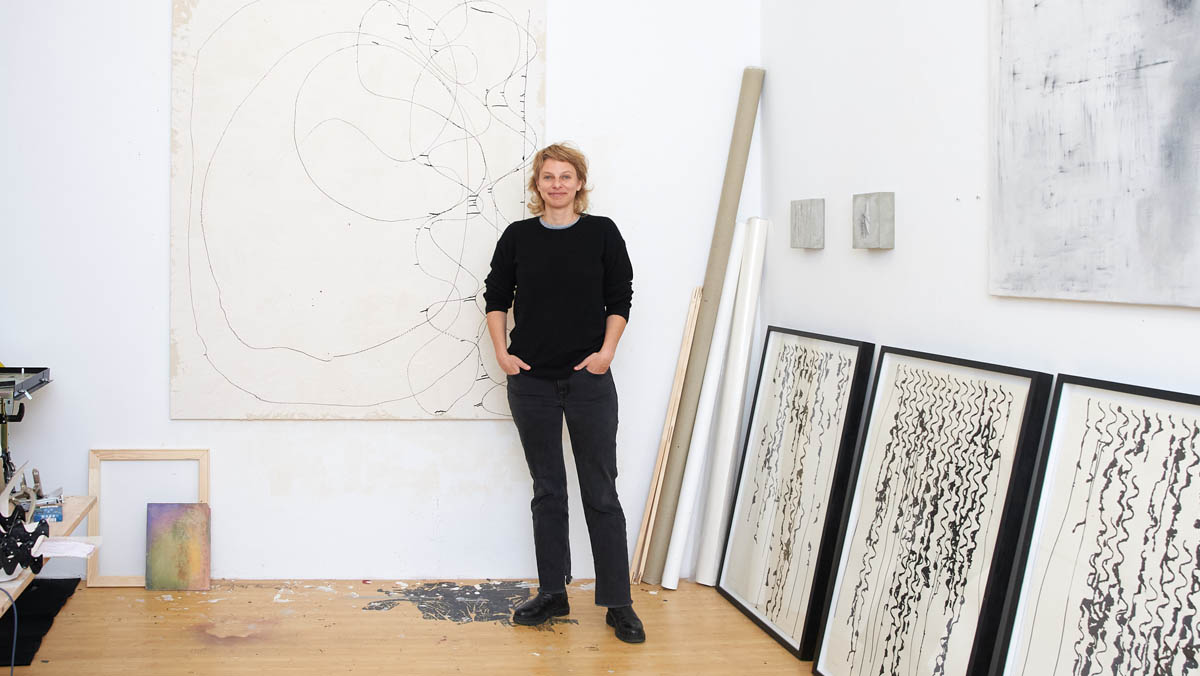
I’m a child of immigrants. Growing up, I often felt “otherly,” never quite fitting in. This sense of detachment shaped me and continues to flow through my work. I started with photography, encouraged by my art teacher at school to pursue art.
And where did you study?
I went to a high school with a focus on art history. My mother was an art critic, deeply immersed in cultural discussions at home. Later, I began studying at the Academy of Fine Arts, where I was introduced to contemporary practices. I became interested in digital and video art, especially conceptual work. I loved minimalism — artists like Sol LeWitt and Bruce Nauman really shaped me early on.
Could you describe how you approach and explore identity in your practice?
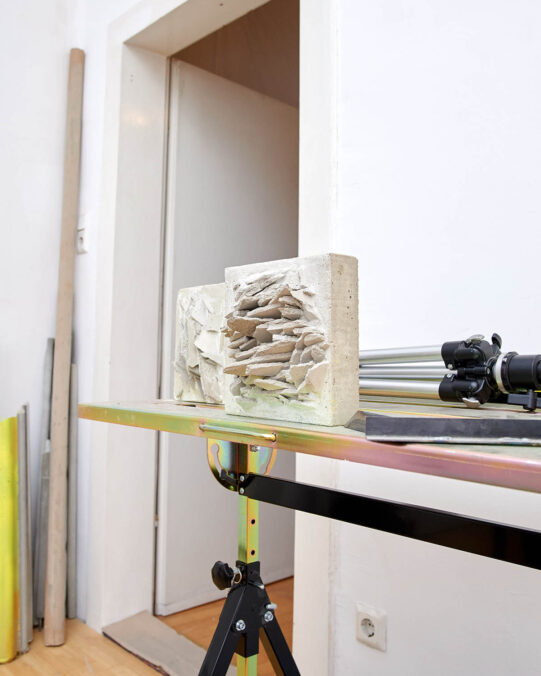
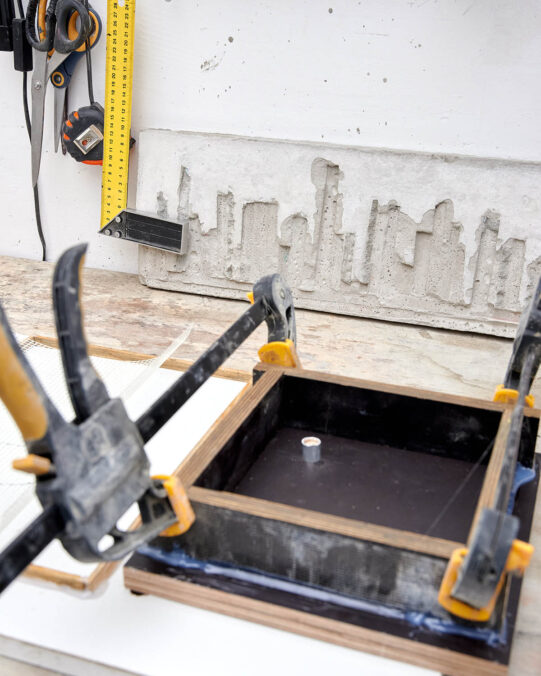
I’d say it’s about consciousness. I started to understand why things happened to me, why I made certain decisions. In my work, this consciousness helps me understand my emotional state. I explore weak points, I experiment, and I like working with concrete, which I sometimes pair with paint.
My process is very physical, very hands-on. Sometimes gentle, sometimes brutal.
So you started with photography and digital media, and then moved into painting and sculpture. How did your early experiences influence your current practice?
All of it is a learning process. Each medium teaches you something: how to see, how to handle materials, how to approach creation. I like working across media because I get bored easily. I respect artists who stick to one method for years, but that’s not me. I need exploration—it keeps my practice free.
Tell me about your exhibition at gezwanzig gallery in Innsbruck.
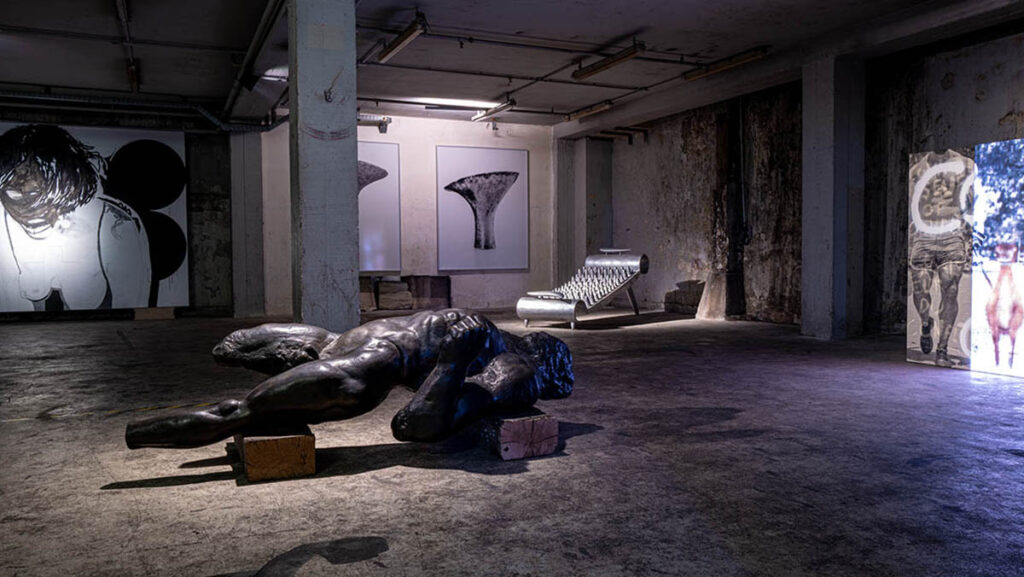
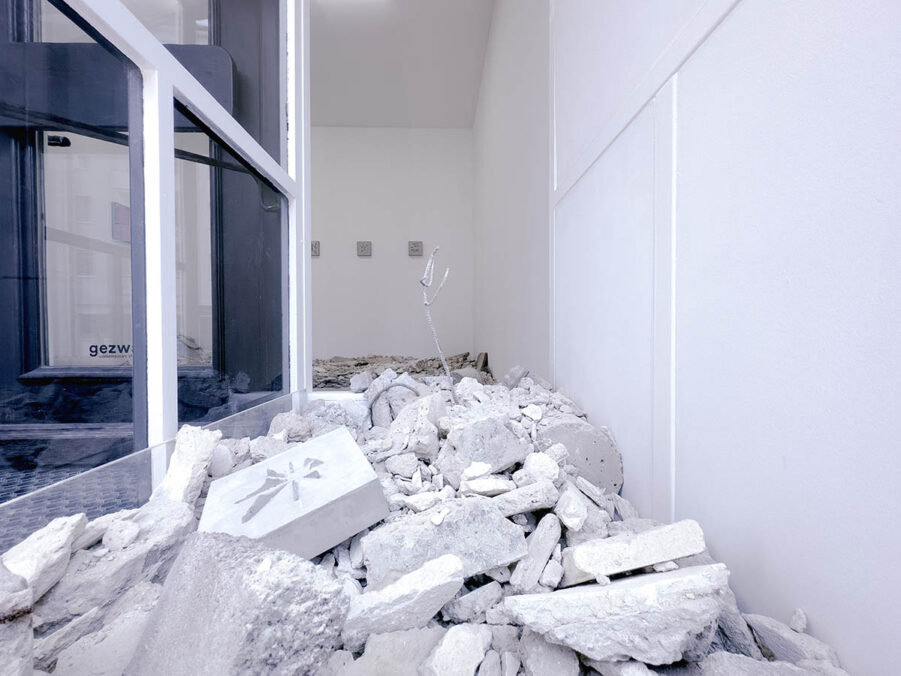
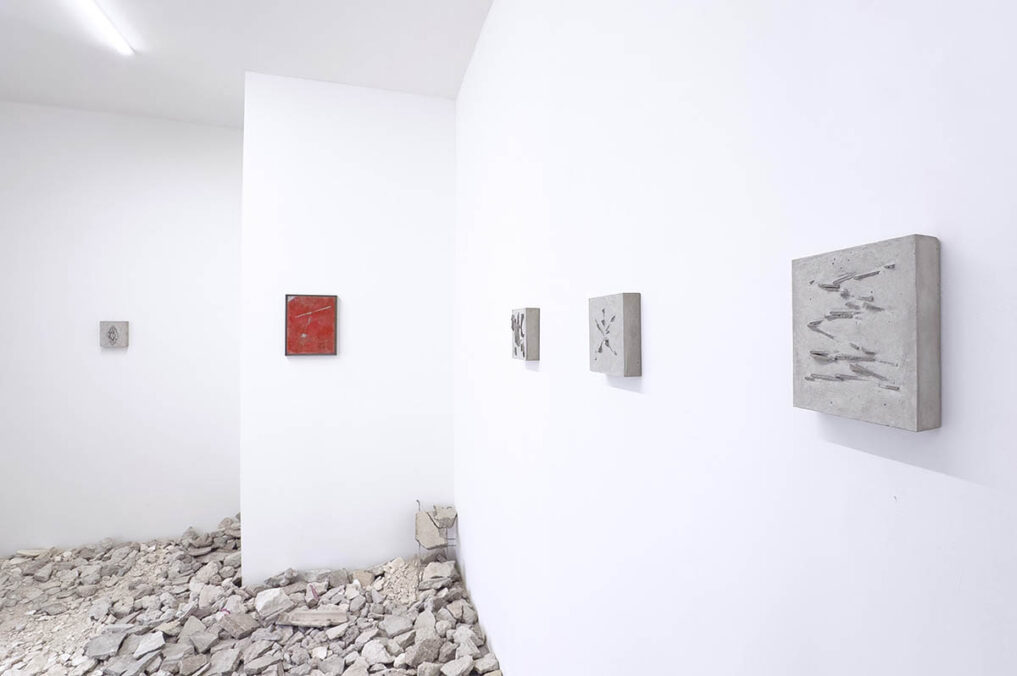
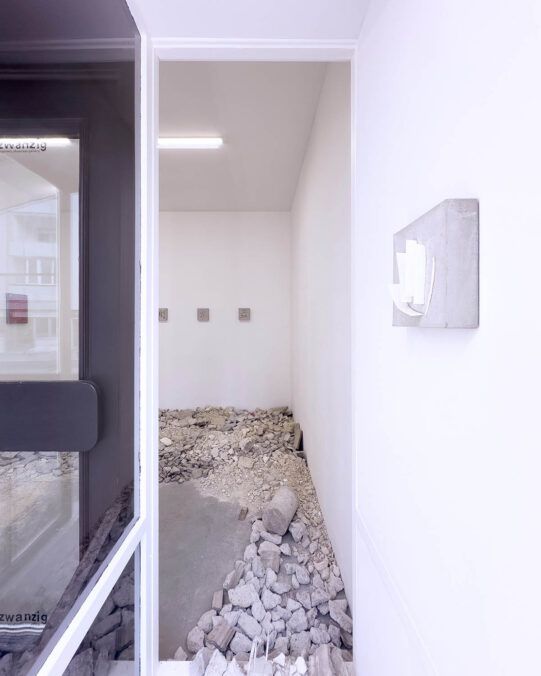
My exhibition at gezwanzig gallery in Innsbruck is titled we stumble through messages, a phrase I borrowed from Charles Bowden’s book Blue Desert. I filled the exhibition space with rubble, creating a landscape that revolves around a series of works titled Barrikaden — small concrete blocks, metaphorical bodies wounded by shards of their own substance, serving as symbols of memory, resilience, and identity. Visitors are invited to move among the rubble, engaging both physically and conceptually with the work.
we stumble through messages is less about conveying a fixed meaning and more about offering a space for reflection. The fragments become a kind of visual language, speaking of what remains, what is lost, and what endures — inviting the audience to consider their own connections to memory, history, and the landscapes, both internal and external, that shape who we are.

Early on, your work included the human body and sculptural motifs, and later shifted to more silent forms. Can you describe that evolution?
It wasn’t easy. When I was younger, I experimented a lot with the human figure. I was inspired by Cindy Sherman and performance art, like Marina Abramović and Carolee Schneemann. Eventually, I became fascinated by minimalism and abstract forms.
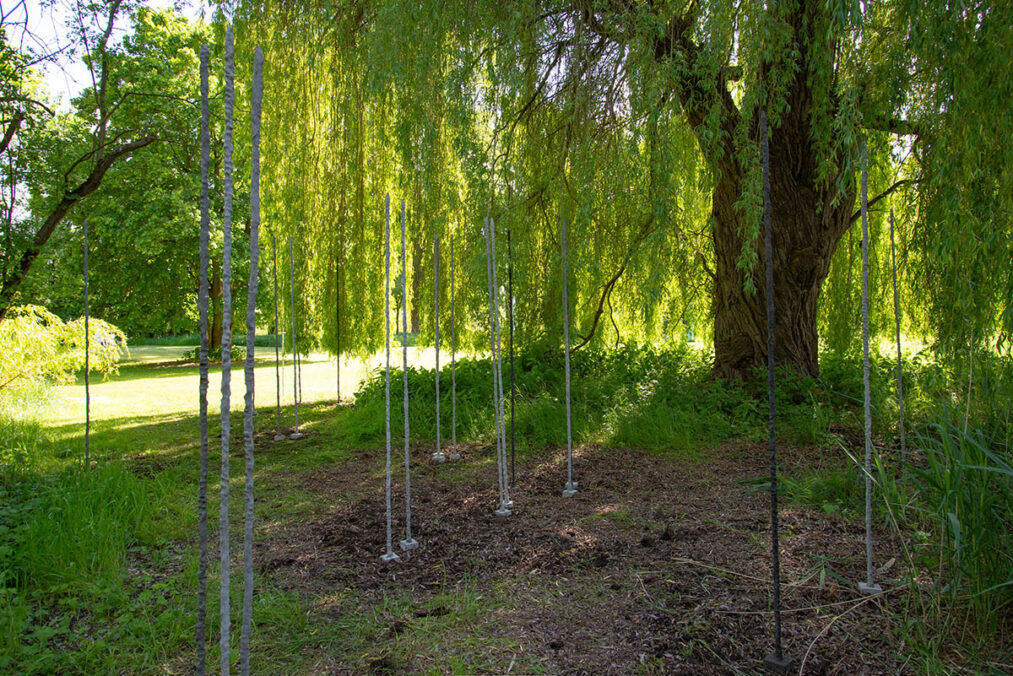
The „Desert Plants“ sculptures, for example, emerge quite literally from my hands. The columns take shape through the repeated imprint of my hand, once again exploring questions of identity and resilience. These themes become most apparent when the sculptures are placed in a natural environment, where their forms engage with nature, and nature, in turn, leaves its marks and traces upon them.

Where can people see this work?
Right now, the „Desert Plants“ series is on display in the Sculpture Park at Schlossgut Schwante. It’s beautiful there — the sculptures are arranged under a willow tree, and the natural setting really amplifies the work’s sense of identity and presence. Special thanks go to Jan Gustav Fiedler, who recommended my work for the Sculpture Park. He was also the first to exhibit „Desert Plants“ in a natural environment, back in 2020, during the exhibition at Hortus Conclusus, Schloss25.

When did you start working with concrete?
Around 2017. It started practically, I had a studio with the tools, and concrete allowed me to physically engage with the material. My first attempts were chaotic, but gradually I learned to cast, smooth, and shape it. Concrete is heavy, messy, challenging for the health as well, but that’s part of why I love it. The physicality connects me directly to the work.
Is there a central message in your work?
I wouldn’t say there’s a single, fixed message. For me, art is a form of communication, a way of expressing what can’t always be put into words. Everything I put into a piece reflects who I am, my emotions, my experiences, my states of mind. Sometimes I don’t even fully realize it consciously, and yet it’s there, embedded in the work. The process itself, whether I’m working with concrete, painting, or any other medium, is part of that translation. Each gesture, mark, or imprint carries traces of thought, feeling, and memory, and the work becomes a space where all of that can exist together.
I see it less as delivering a message and more as creating a space for reflection and connection, where viewers can sense and respond to the life and process within the work.
You also work with painting. How does the process differ for you compared to sculpture?
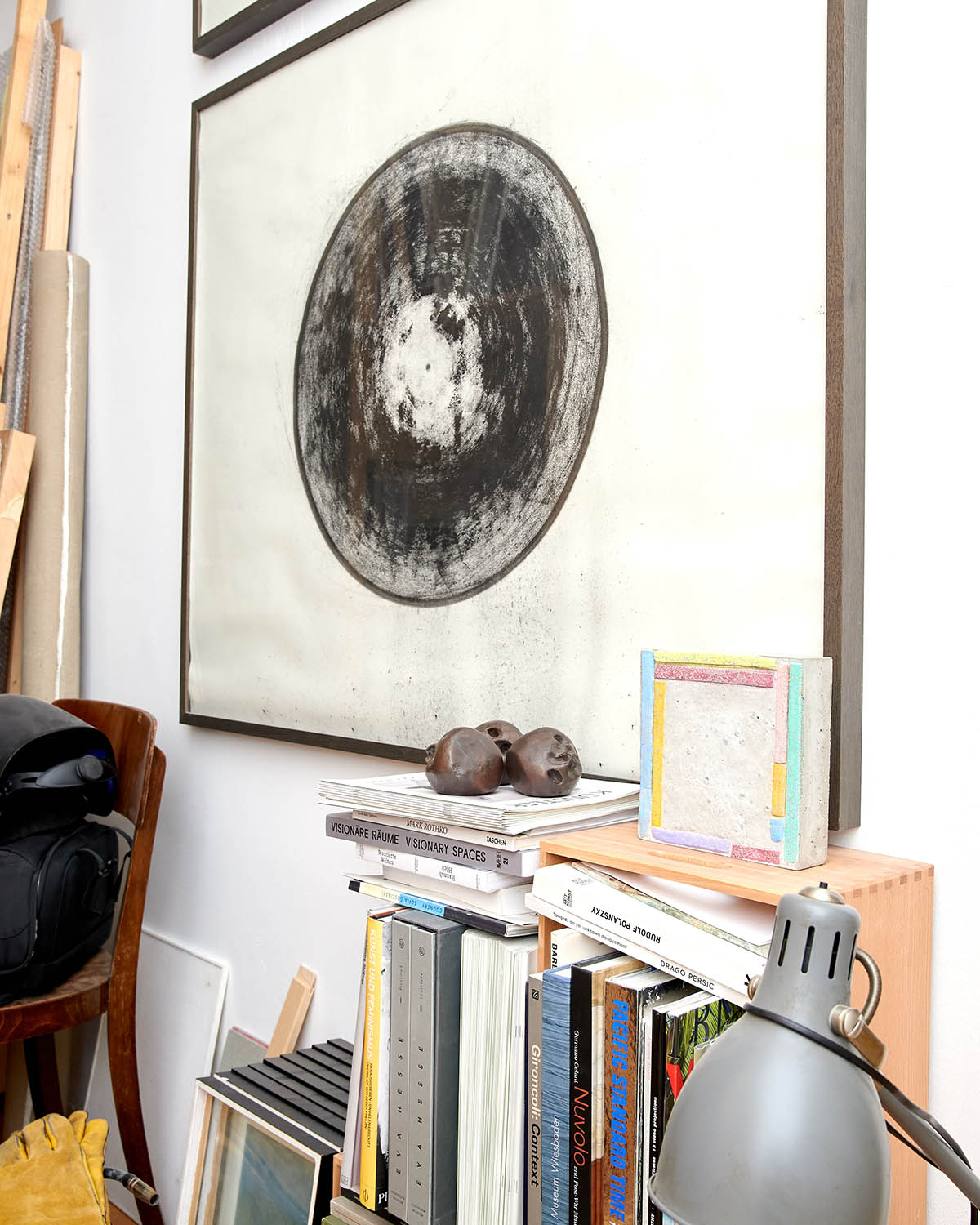
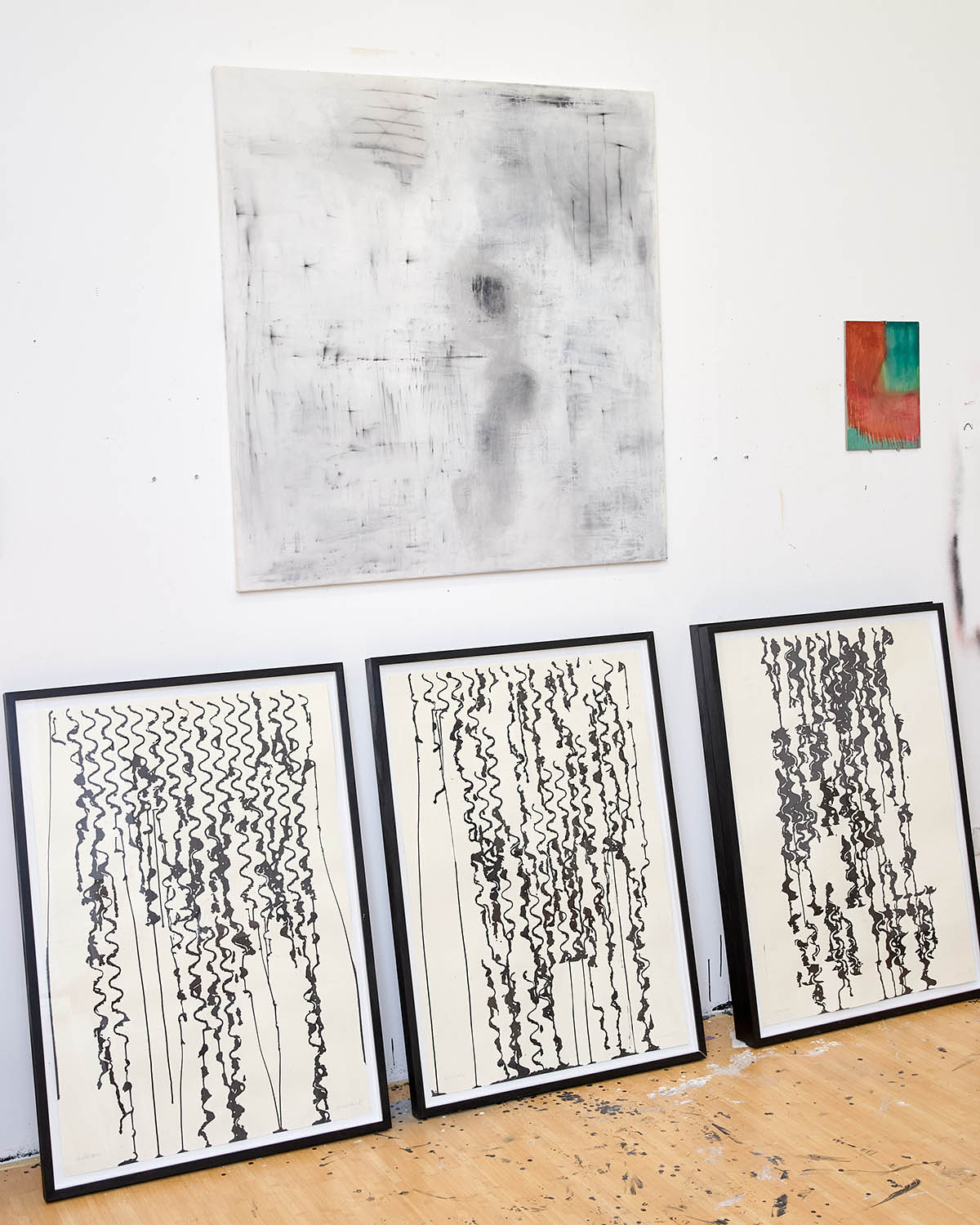
Working with concrete, drawing, and eventually painting came naturally to me, recalling colorful chalk drawings on pavements and graffiti. Before the COVID-19 pandemic, I would have never thought of myself as a painter — sculpture had always been my main focus. But during lockdown, a period of personal struggle that led to stagnation in my process, I had to find a medium I could approach without all the preparation that sculpture requires. Painting gave me a sense of freedom; it allowed me to immerse myself in color and expression. Now I enjoy balancing the two — the deliberate, process-driven nature of sculpture and the immediacy of painting.
Current exhibition in Innsbruck:
Solo exhibition: Sofia Goscinski – we stumble through messages
Duration: Until 14. November 2025
Opening times: by appointment and Friday, 11 AM – 6 PM
Venue: gezwanzig showroom | Leopoldstraße 41, 6020 Innsbruck, Austria
In her solo exhibition in Innsbruck, Sofia Goscinski presents the series Barrikaden for the first time as an installation in space. The works step out of their internally conceived context and become tangible in the space – their materiality, presence, and spatial impact are immediately perceptible to visitors. Rubble forms the floor of the installation. Visitors move across a field of debris, each step stirring up dust. From the remnants of what was once a stable structure, a fragile landscape has emerged.
Address and contact:
gezwanzig gallery
Gumpendorfer Straße 20, 1060 Vienna, Austria
www.gezwanzig.com
www.instagram.com/gezwanzig/
Sofia Goscinski – www.sofiagoscinski.org, www.instagram.com/sofiagoscinski/
Sofia Goscinski is an Austrian female artist born in Vienna (AT) in 1979. Sofia Goscinski’s artistic practice revolves around the triad of anxiety, creativity, and existence. Her work evolves from questions of identity and belonging, rooting and tracing.