For the first time, the exhibition highlights Frank Gehry’s close connections with artists–including members of the Cool School. More than 150 works bring together now-renowned figures of the American postwar avant-garde and open up a fresh perspective on the interplay between art and Gehry’s early architectural projects. Works from the Schürmann Collection complement this overview of historical artistic approaches from the U.S. West Coast and extend it into the present.
With Mindset Los Angeles, Marta Herford presents, for the first time, an exhibition project that understands art and architecture as shared spaces of thought and experience. The point of departure is Frank Gehry’s close relationship with the art scene of the American West Coast a nd its influence on his architectural thinking. Marta Herford’s entire exhibition space is devoted to the wide-ranging project Mindset Los Angeles: while Frank Gehry and the Cool School illuminates the shared origins and networks in L.A., as well as the architect’s ties to artists of his time, selected works from the Schürmann Collection broaden the perspective to include later artistic developments and contemporary concerns.
Frank Gehry and the Cool School
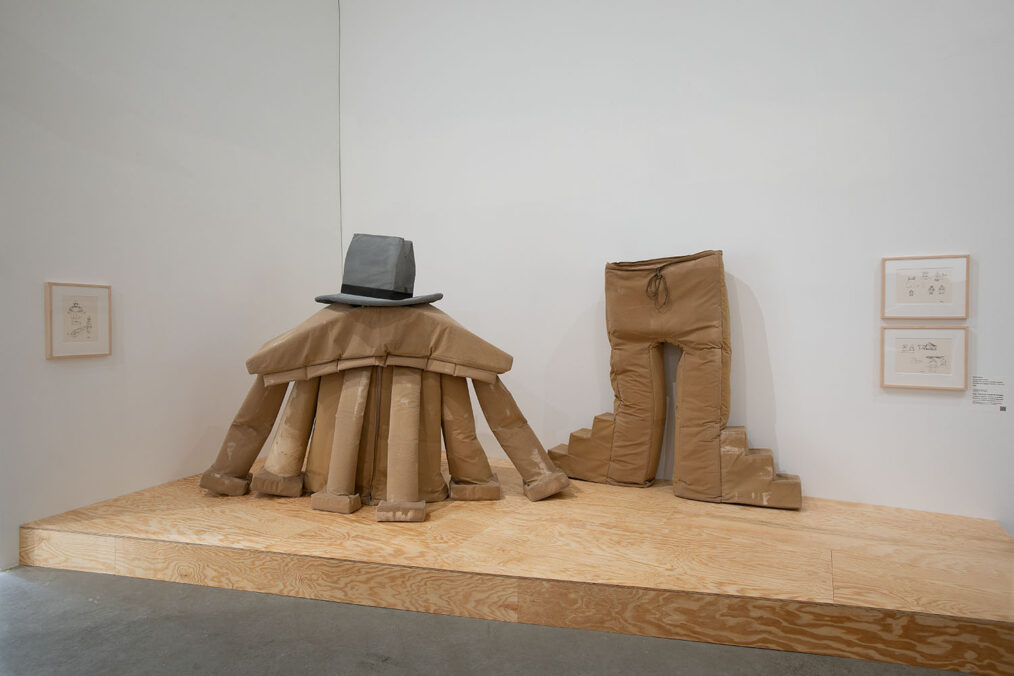
In the late 1950s, the legendary Ferus Gallery laid the groundwork for a vibrant new avant-garde scene in Los Angeles. A loose circle of artists—primarily from L.A. and San Francisco—formed around the gallery run by Walter Hopps and Ed Kienholz. Inspired by the rebellious Beat Generation, this network became a hotbed of artistic experimentation. Many of the artists involved are now prominent names in recent art history, including key figures in American postwar art such as Larry Bell, Wallace Berman, Craig Kauffman, Edward Kienholz, and Ed Ruscha. In the 1960s, the art critic and Artforum editor Philip Leider grouped this loose artistic community under the term Cool School. The name refers not only to their artistic independence, but also to a mode of self-presentation marked by considerable self-confidence and a macho brand of cool.1
Gehry, who described the connection between art and architecture as part of his DNA from his student days onward, became part of this dynamic art scene. His exchanges with the artists had a lasting impact on his understanding of architecture. Looking back, he described the openness of the scene as crucial to his own development: “The thinking, the stuff people were talking about and doing (in the Californian art scene) … led to my own language.”
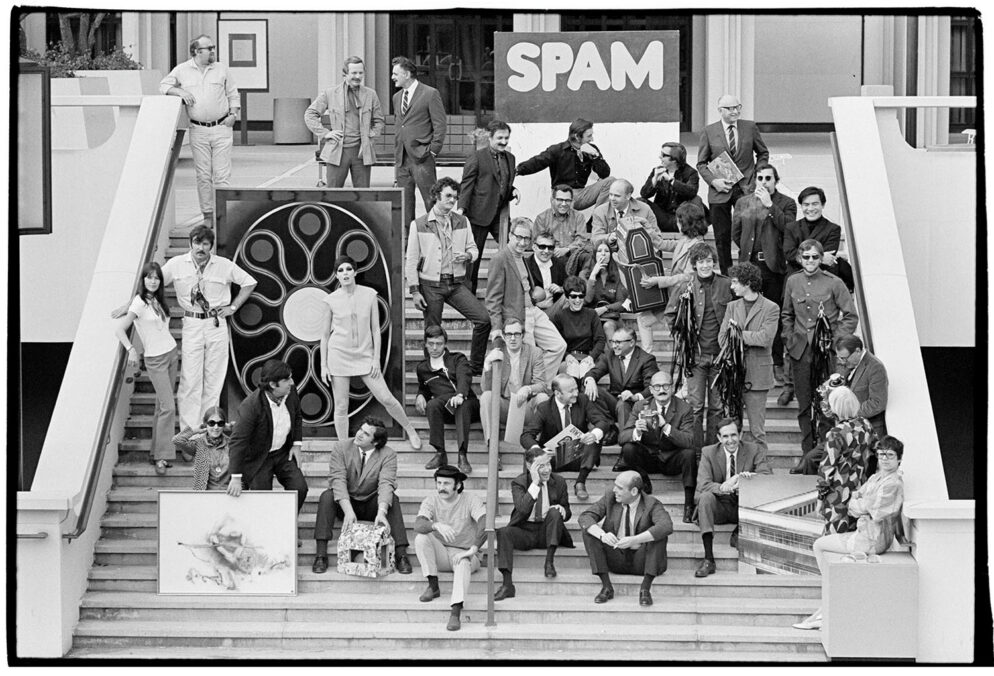
Gehry shared with these artists a spirit of experimentation, an openness to everyday materials, an engagement with new technologies, and an interest in surface, space, light, and perception. While the established and commercially successful art scene of Abstract Expressionism on the East Coast set out clear rules, Los Angeles was becoming a creative melting pot. Here, in the shadow of Hollywood—shaped by bustling boulevards, the urban infrastructure of multilane freeways, the booming automotive and aviation industries, an omnipresent advertising industry, and, not least, the extraordinary light of the Pacific Coast—artistic processes were able to unfold with a remarkable sense of freedom. The studios and workspaces that were still affordable at the time also contributed to this atmosphere.
Material, Light, and Perception
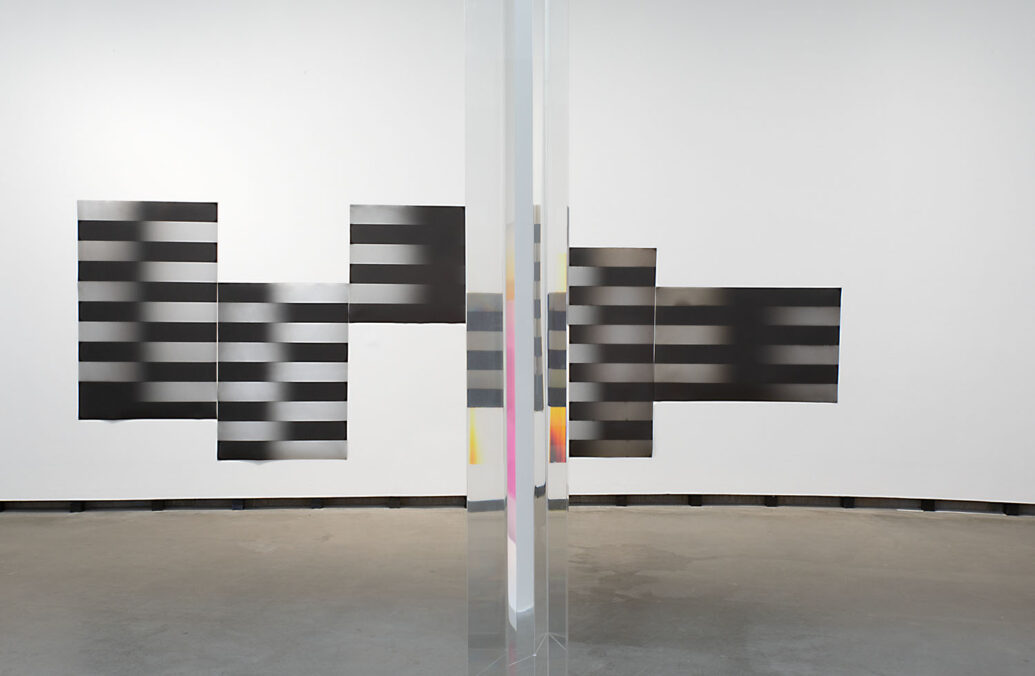
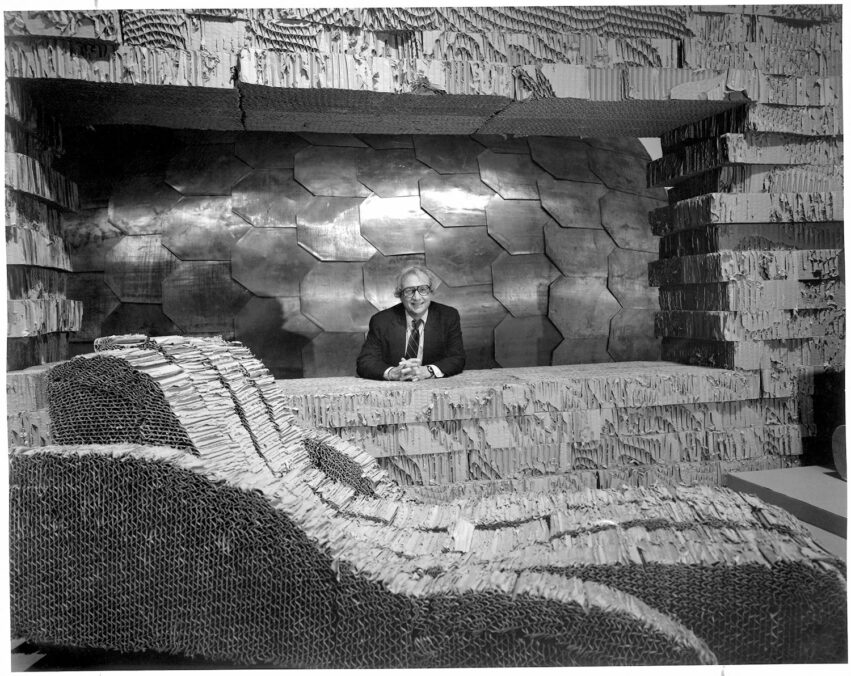
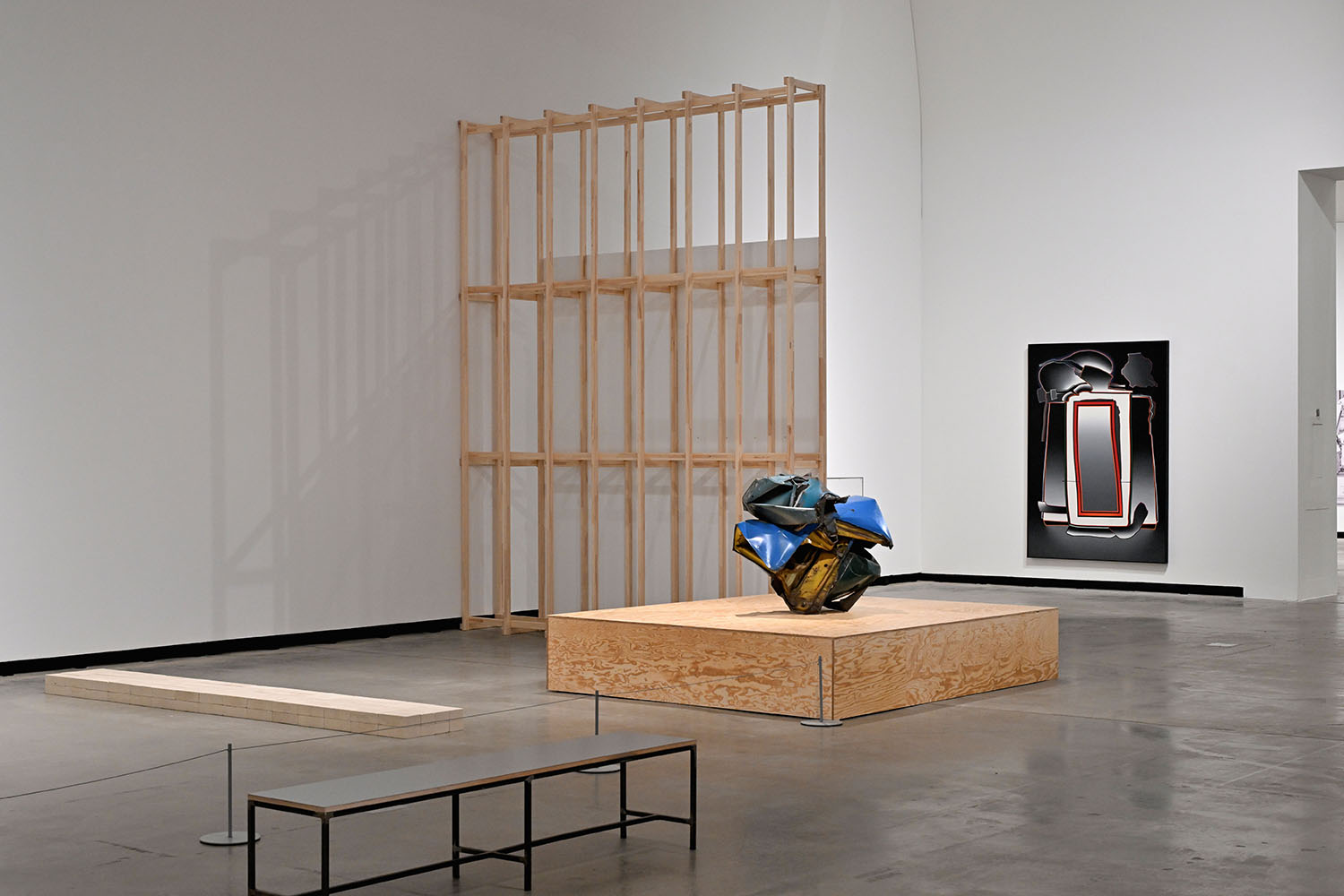
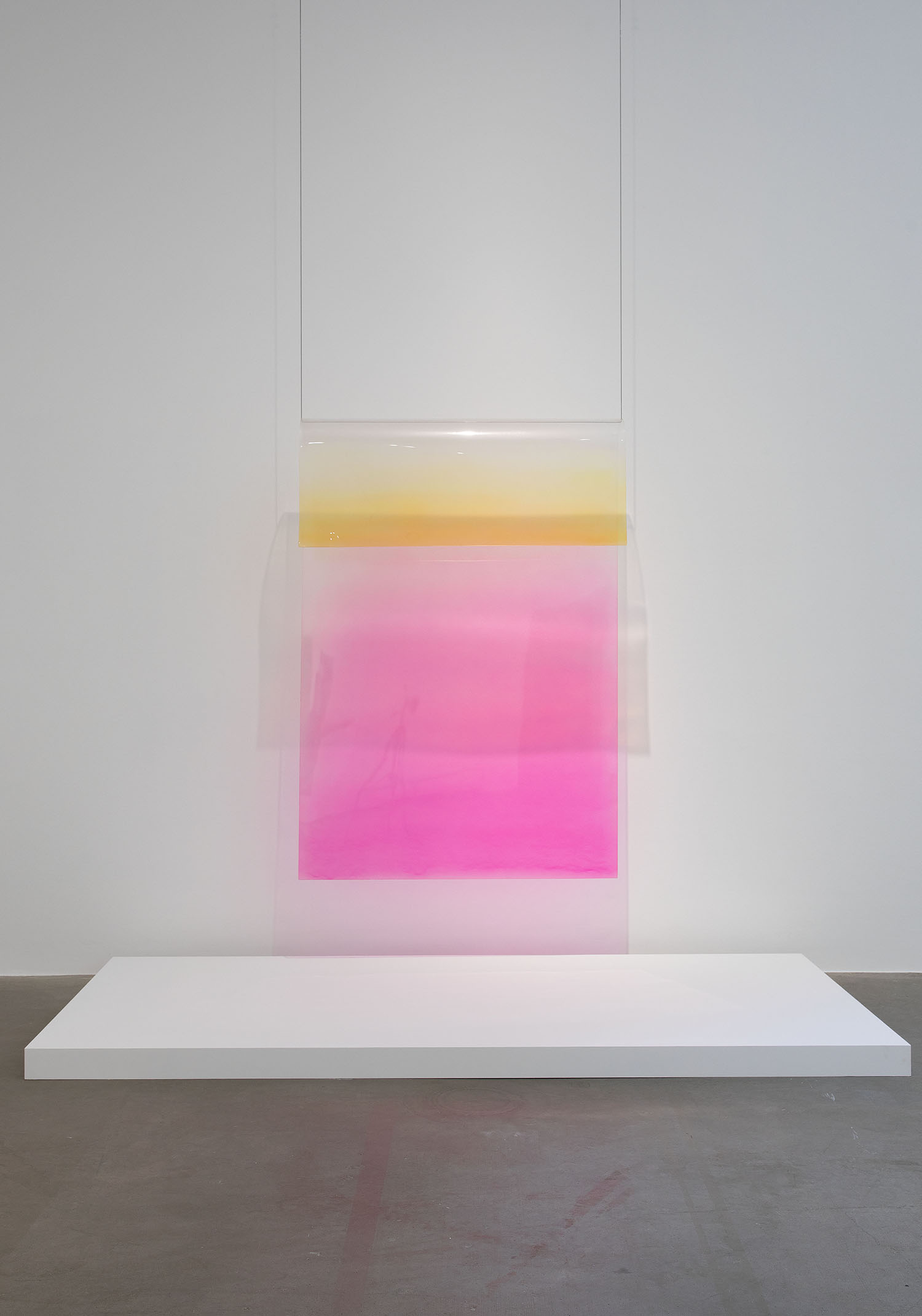
Out of this atmosphere, the artists began experimenting with technical processes and industrial materials. The object itself was no longer the sole focus; instead, attention shifted to the experience of space, light, and perception. This gave rise to the Light and Space and Finish Fetish movements, which—because of the West Coast’s distinctive cultural and technological conditions—would later be grouped together under the term L.A. Look. At the same time, Los Angeles was also a magnet for artists from the East Coast. The Gemini printmaking, paper, and editions workshop, built by Gehry, attracted numerous artists. Gehry was fascinated by the artistic developments emerging from New York: the approaches of Minimal Art and Robert Rauschenberg’s assemblages, which were taking shape in parallel with his own cardboard furniture. “ This was the time when Rauschenberg and Johns were making art with junk. Donald Judd was making art with galvanized steel, and Carl Andre was putting bricks along the floor. Intellectually I connected with them, and not only because the minimalism fit my liberal tendencies. Despite its matter-of-factness, accessibility, and unpretentiousness, it was high art. It was obviously beautiful, and people were responding to it.”2
Between Architecture and Exhibition
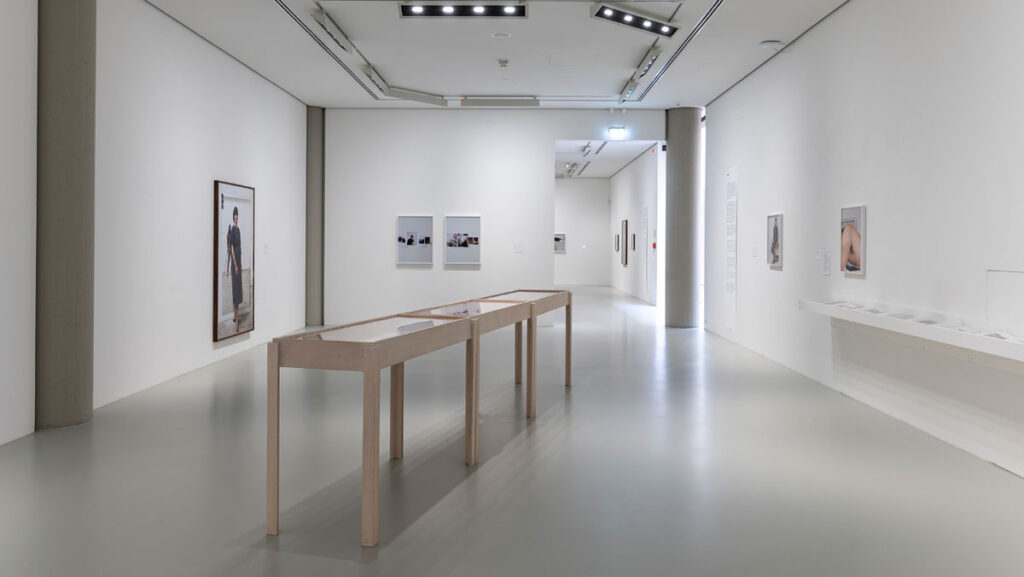
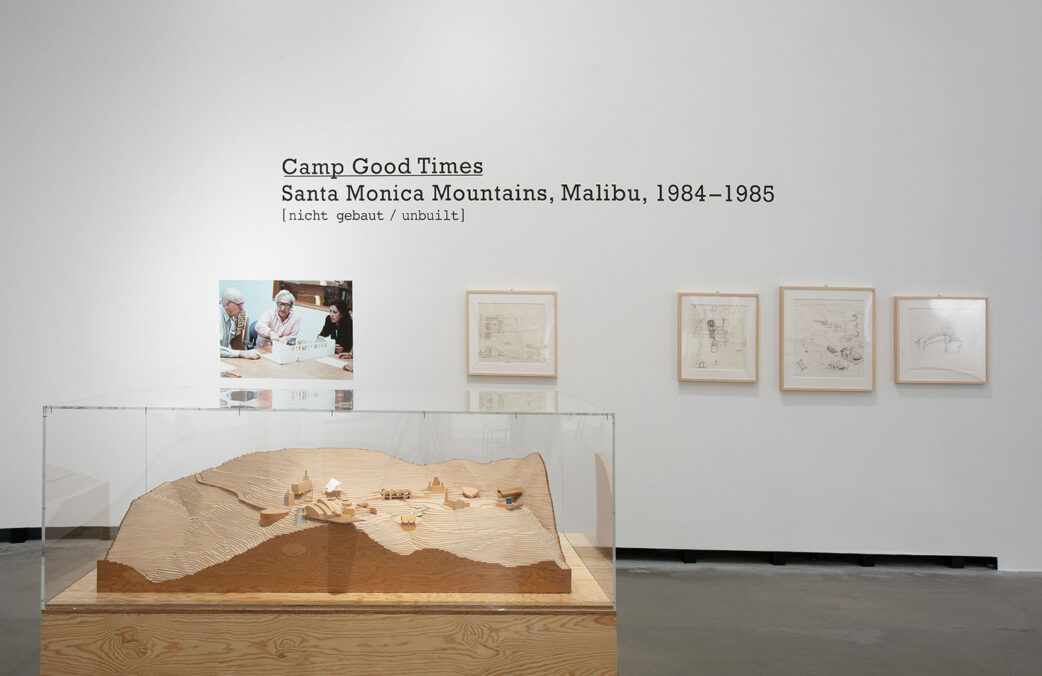
This creative environment forms the starting point for the exhibition. With Mindset Los Angeles – Frank Gehry and the Cool School (June 27, 2026 – January 10, 2027), Marta Herford—Germany’s most recent architectural sculpture designed by Frank Gehry —also presents an exhibition about friendships. On view are approximately 150 works of the American postwar avant-garde, brought together for the exhibition from numerous European museums, estates, and galleries, along with selected early design drawings and models by Frank Gehry from the Getty Research Institute and the Gehry Partners archive in Los Angeles. The exhibits reveal formal parallels and thematic affinities between architecture and the visual arts in a direct and compelling way, bringing shared lines of thought and development to light.
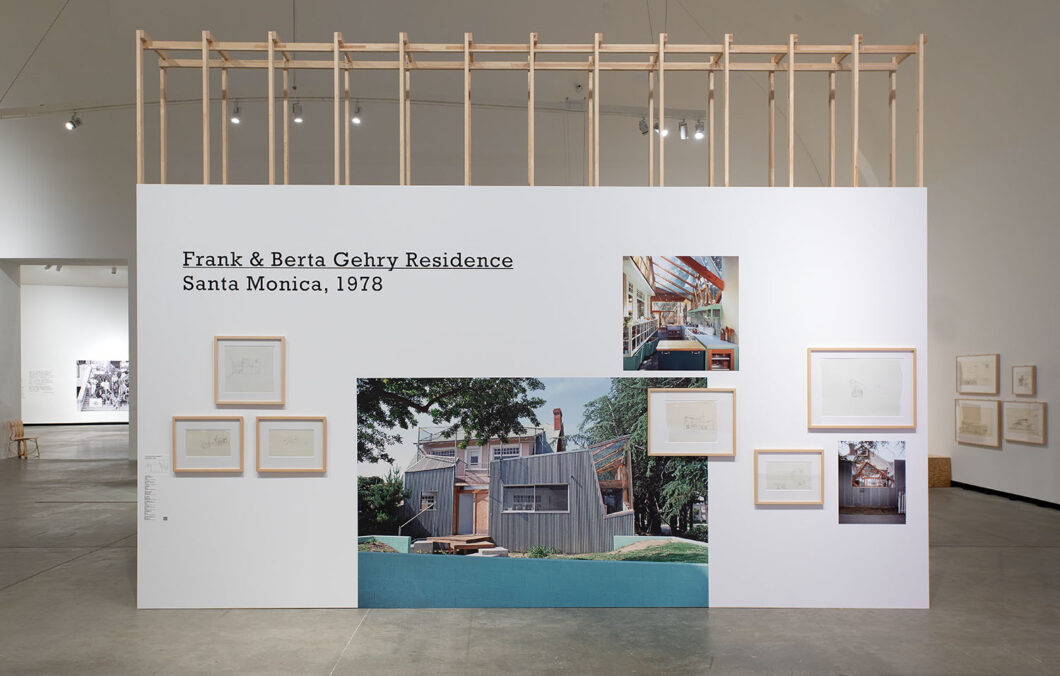
A total of seven of Gehry’s projects are represented in the exhibition, including his own home. The Gehry Residence, itself a sculptural structure and a vivid demonstration of Gehry’s experimental approach to design, functions as a radical application of assemblage. An existing, simple building in the Dutch Colonial style was expanded and reorganized with structures made of wood, metal, and glass. In this way, the building evolved into an open system rather than a self-contained object. “My own house couldn’t be built anywhere but California. It was experimenting with wood and glass and materials that were used here.”3 “There was an amazing energy in the city, an openness and a sense that new things were happening.”4
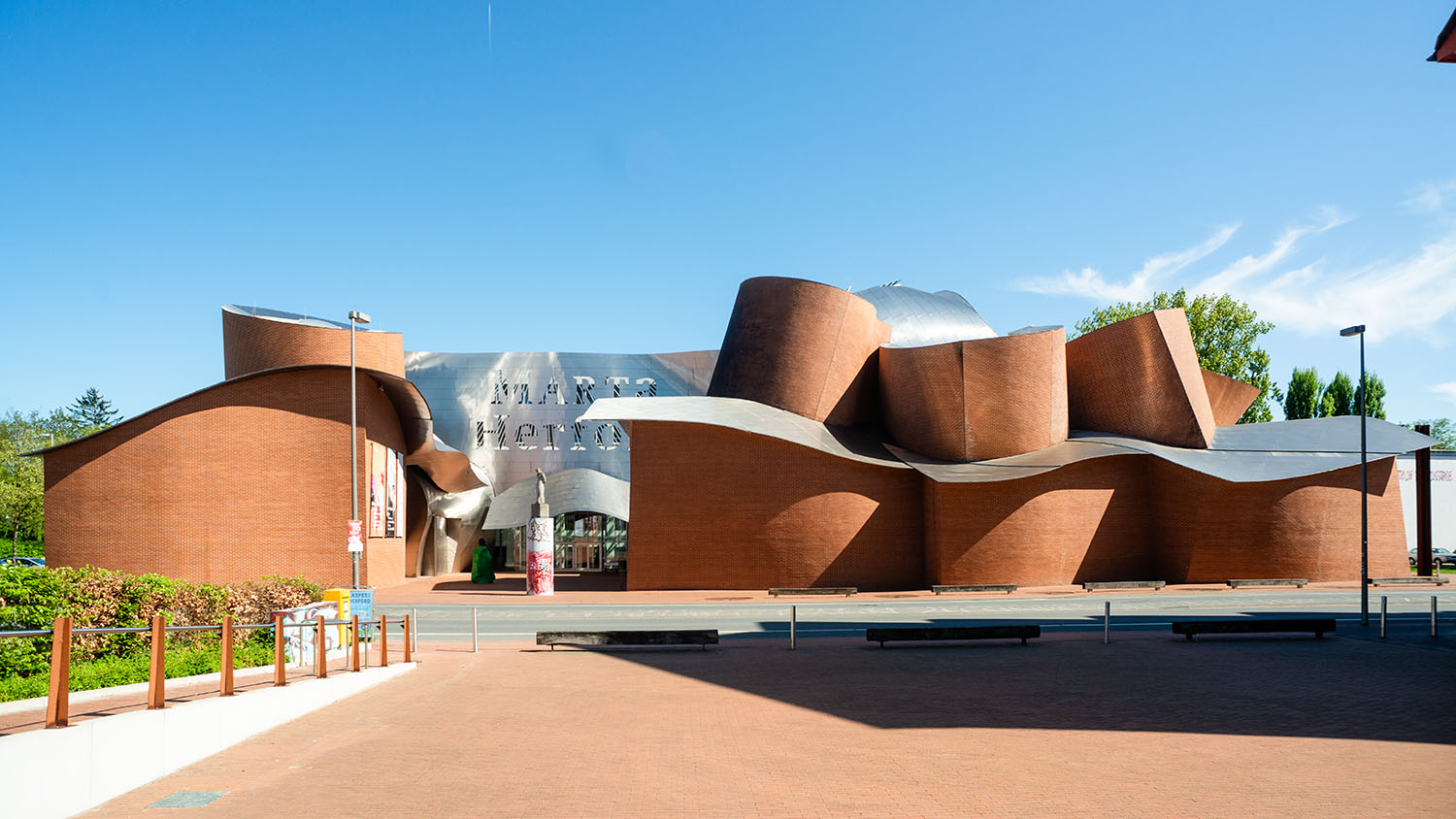
Marta Herford, which opened in 2005, is also presented as part of this series. Closely related to the Gehry Residence and following the principles of assemblage, this museum of contemporary art, with its focus on design and architecture, wraps around an older building that Frank Gehry extensively expanded. Marta Herford is one of the few museum buildings Gehry realized and stands alongside internationally significant architectural projects in his oeuvre, such as the Guggenheim Museum Bilbao. With its organic forms, tilted and curving walls, brick cladding, undulating stainless-steel roof, and wood paneling, Marta Herford takes up key elements of Gehry’s approach and itself becomes an expression of his artistic vision.
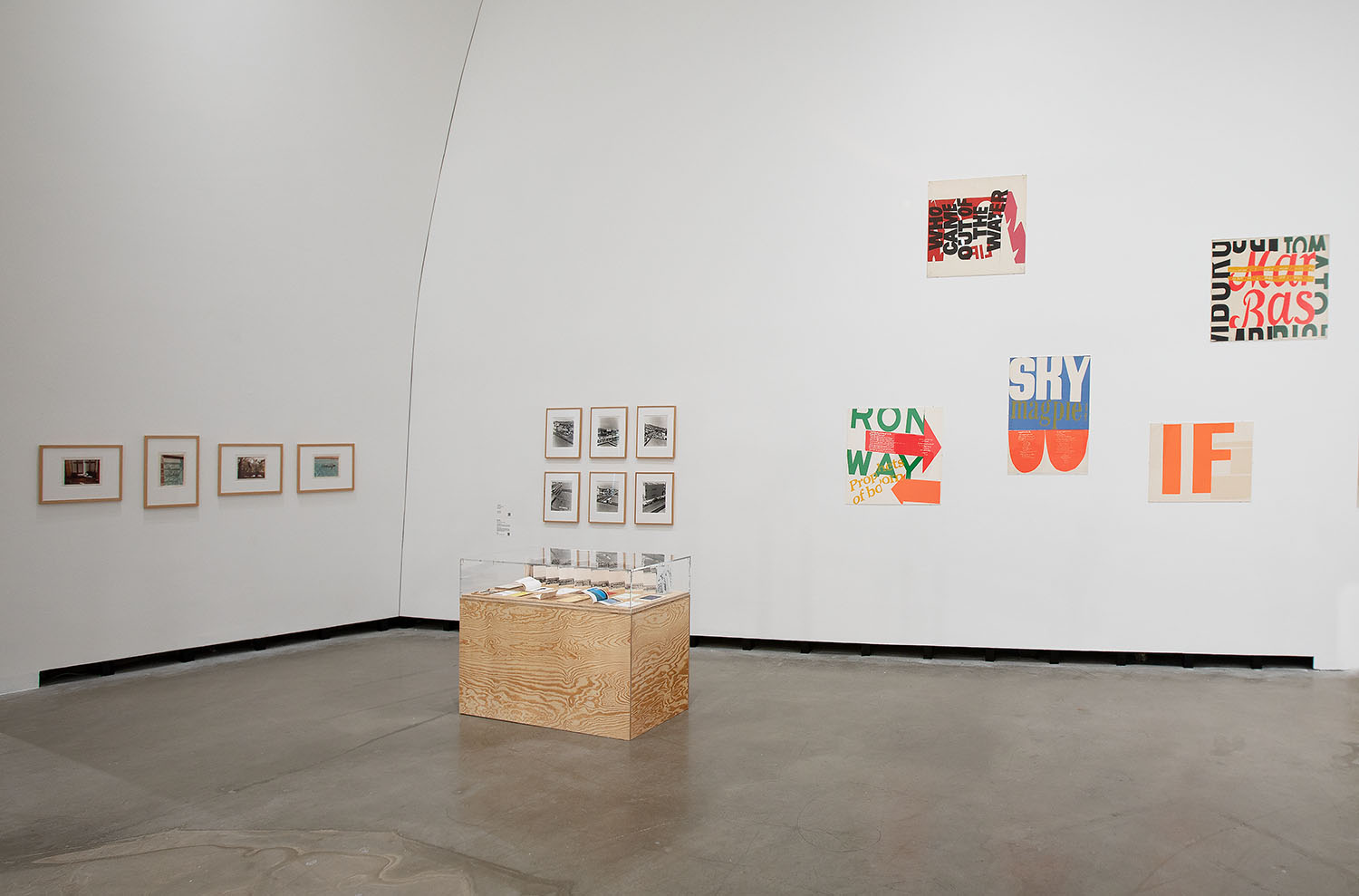
Important loans from the collection of Gaby and Wilhelm Schürmann, who have been collecting West Coast art since the 1980s, have allowed the exhibition to be expanded with key figures from 1970s Los Angeles. In the Lippold Gallery, in the context of Mindset Los Angeles, the exhibition presents exclusively works from the Schürmann Collection that build on the artistic approaches developed in Los Angeles and demonstrate their influence on later generations.
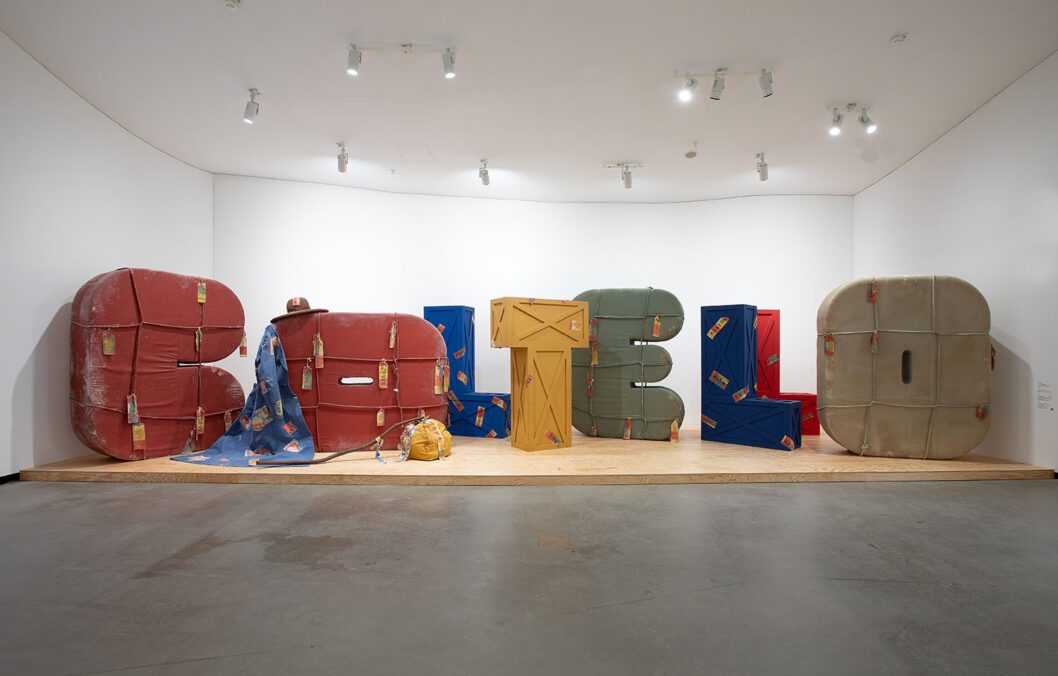
At the center is Jason Rhoades’s expansive installation The Great Sea Battles of Wilhelm Schürmann (1994–95). Themes such as social fractures, tensions, and contradictory images—often in the context of U.S. consumer culture—define the conceptual framework for works by artists including Edgar Arceneaux, Sam Durant, and Aura Rosenberg.
The exhibition project is accompanied by a wide-ranging public program that brings the atmosphere of Los Angeles in the 1960s and 1970s to life beyond the exhibition spaces. Every Sunday, a free, curated film program invites visitors to immerse themselves in the cultural and social atmosphere of that era. Interviews with eyewitnesses and experts offer firsthand insights. As part of the popular City and Vision series, organized in collaboration with the Association of German Architects, Ostwestfalen-Lippe Region, exclusive talks on the themes of the exhibitions will be held for the first time. Lectures, curator-led tours, and a wide range of educational programs for all age groups round out the program and offer further opportunities to deepen visitors’ engagement with the exhibition.
Exhibition: Mindset Los Angeles – Frank Gehry and the Cool School
Exhibition duration: 27.6.2026–10.1.2027
Artists (Gehry Galleries): John Altoon, Carl Andre, John Baldessari, Larry Bell, Billy Al Bengston, Wallace Berman, John Chamberlain, Judy Chicago, Meg Cranston / John Baldessari, Ronald Davis, Frank Gehry, David Hockney, Robert Irwin, Donald Judd, Craig Kauffman, Corita Kent, Edward Kienholz, Ed Moses, Claes Oldenburg / Coosje van Bruggen, Ken Price, Robert Rauschenberg, Deborah Remington, Ed Ruscha, Richard Serra, Pae White
Artists (Lippold Gallery): Edgar Arceneaux, Sam Durant, Sean Duffy Rosenberg, Richard Hawkins, Jason Rhoades, Aura Rosenberg
A catalog in German and English, edited by Marta Herford, will be published at the end of August to accompany the exhibition. Spanning 192 pages, the publication brings together essays by Hunter Drohojowska-Philp, Sylvia Lavin, and Ann Kristin Kreisel, as well as two interviews: one with Larry Bell by Marcus Herse and another with Wilhelm Schürmann by Kathleen Rahn. It includes a foreword by the director of Marta Herford, more than 200 illustrations, historical documents, and original quotations by Frank Gehry.
Address and contact:
Marta Herford Museum for Art, Architecture, Design
Goebenstraße 2–10, 32052 Herford, Germany
www.marta-herford.de
- Ken D. Allen, Lucy Bradnock, and Lisa Turvey, “For People Who Know the Difference: Pop Art and the 1960s: A Definition,” in Pacific Standard Time: Art in Los Angeles 1945–1980, exhibition catalog, Martin Gropius Bau, Berlin, 2011, 125. ↩︎
- Barbara Isenberg, “Frank Gehry,” in State of the Arts: California Artists Talk about Their Work (New York: William Morrow/HarperCollins, 2000), 49. ↩︎
- Isenberg, “Frank Gehry,” 51. ↩︎
- Isenberg, “Frank Gehry,” 49 . ↩︎