How did the selection of artists come about for this concept, and how did the exhibition develop before the project began?
There are so many artists we could choose for an exhibition on wall painting. But you have to find the ones who together create a great mixture. Work in Progress is a group exhibition, even if the artists or the works are not present at the same time. They appear one after another, yet we see them as a group. We worked, as one often does, with a long list and a short list. We ultimately decided on five artists for an exhibition lasting roughly five months, with each artist receiving four weeks to realize their wall painting at Kunsthalle. The five we chose, for us, represented a great mixture of painting styles and very different practices.
Can you tell us more about the diversity of approaches, how different kinds of input can inhabit the same medium- wall painting in the same room conditions, yet produce completely different results?
There’s abstract painting, there’s figurative painting, there’s what you might call a traditional painter’s approach, and then there’s a more drawing-based approach. Artists come from very different international backgrounds: Federico Herrero, for example, is from Costa Rica. And then there’s Rosilene Luduvico, who is originally from Brazil but lives here, has studied here at the Art Academy in Düsseldorf, and is deeply embedded in the local art scene. So we have a beautiful mixture of people coming from all kinds of backgrounds and countries. There is also a balance of gender, as well as different age groups.
And how did each artist approach the space itself?
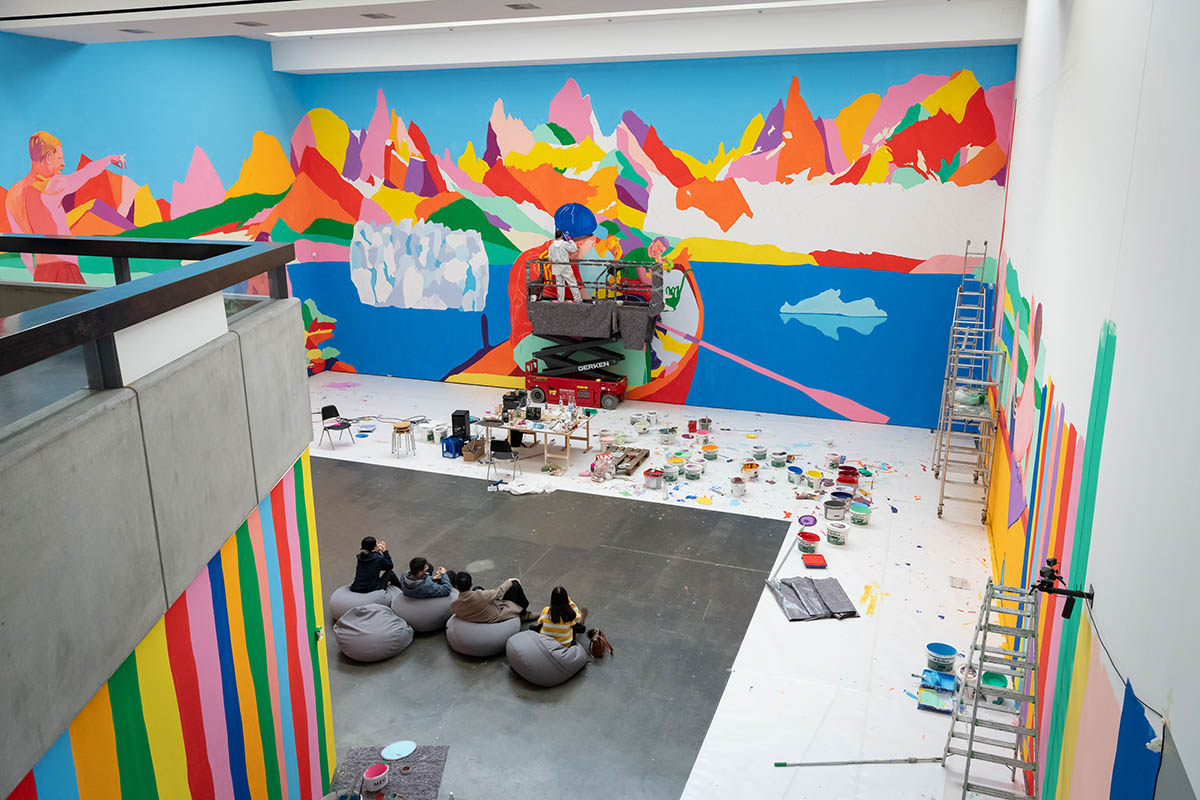
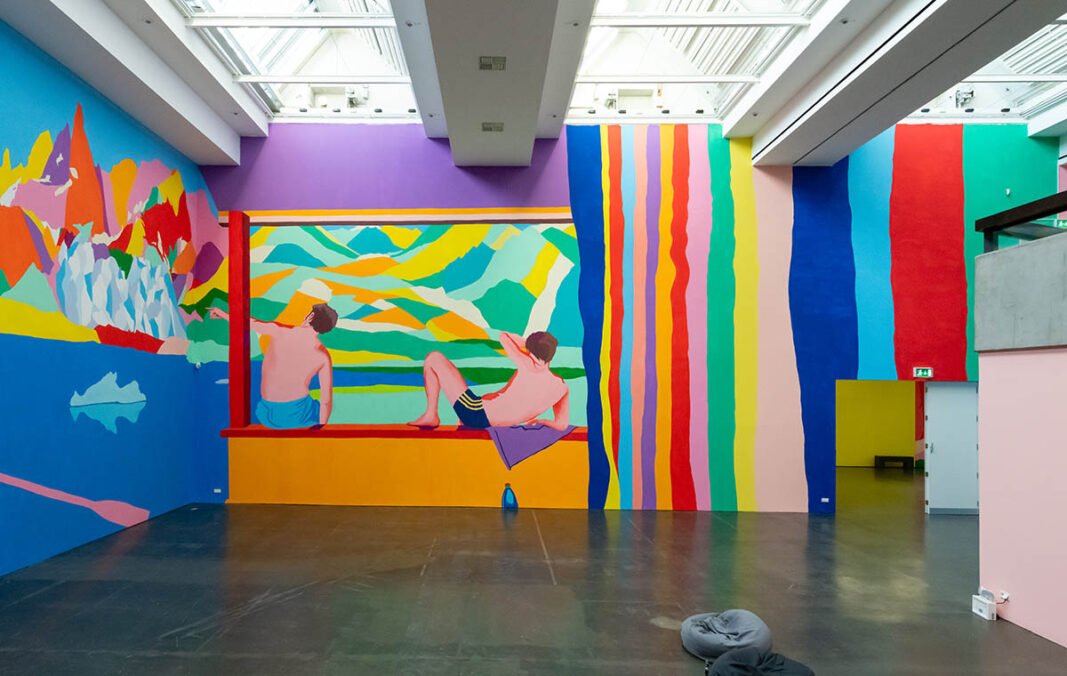
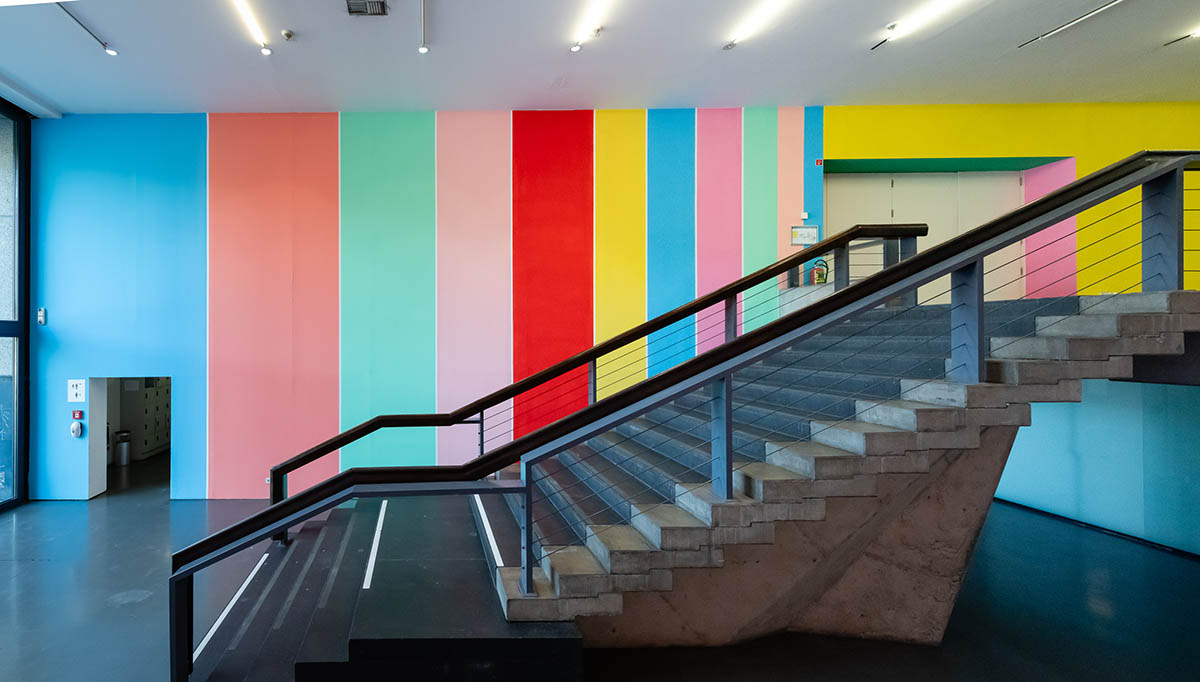
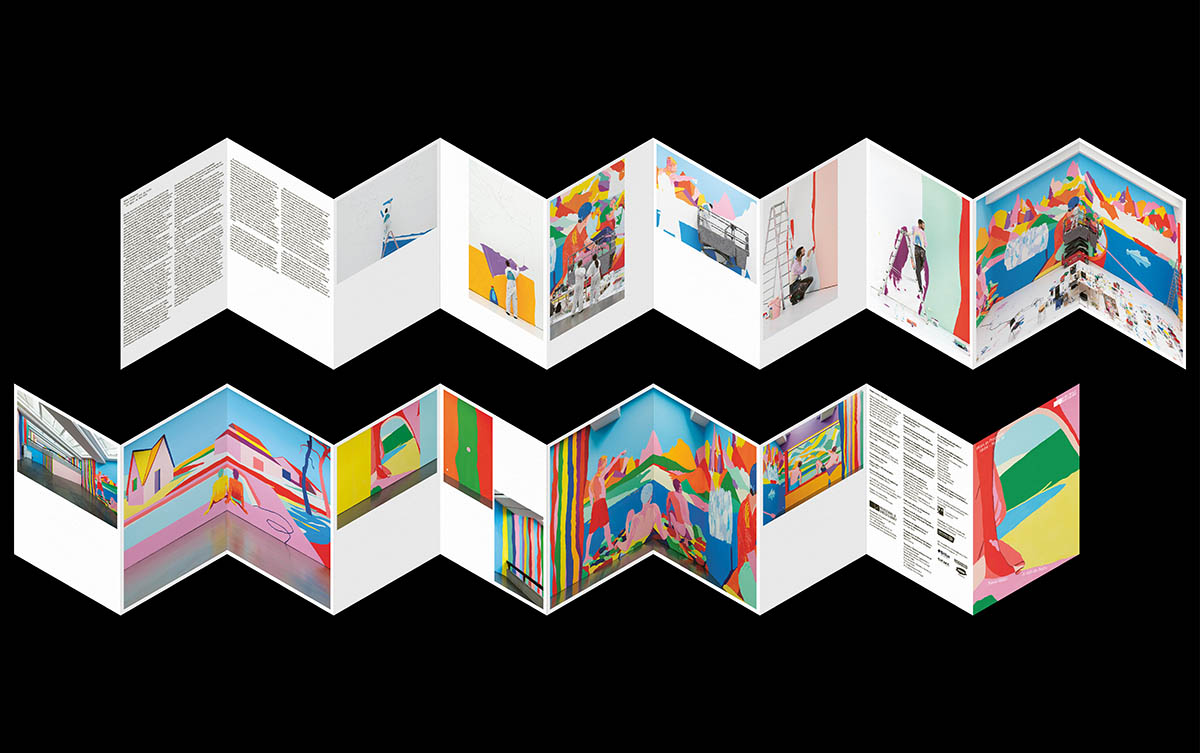
They all had a different way of working with the room, but the same starting conditions. We invited each artist on the same basis: they could paint all of the walls of the Kunsthalle, which amounts to roughly 1,300 square meters of wall surface: a truly enormous amount. Some had been in the space many times before; others came having only seen plans and photos, and worked quite spontaneously. Given the same foundation, they each did something entirely different with it. Take the first artist, for example: Navot Miller. He came and decided how to approach the Kunsthalle while he was actually standing in the space for the first time. He brought photographs from a recent trip he had taken with a group of friends through South America, and worked from those images on site, projecting travel photographs onto the walls and tracing the outlines before colouring them in. He eventually conceived of the two connected rooms as different parts of a single stage, separate acts, connected by curtains. The large main room became one stage; the adjacent balcony room another
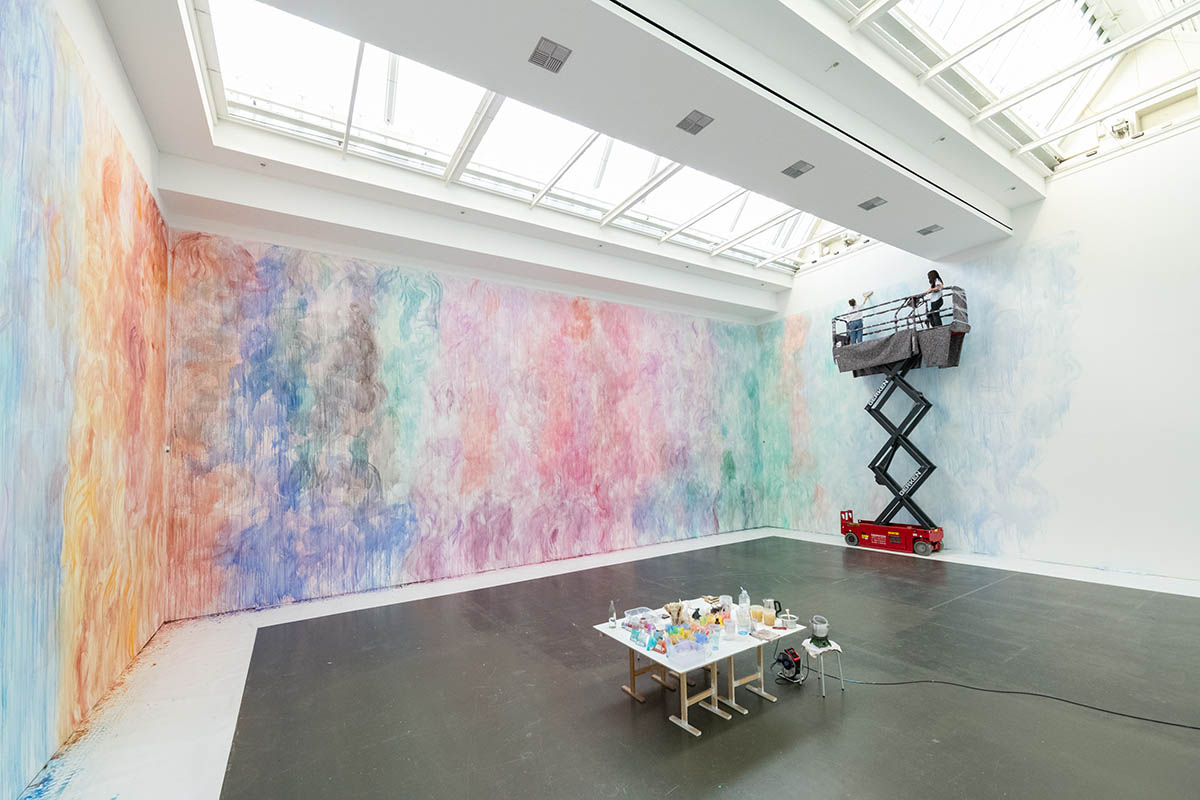
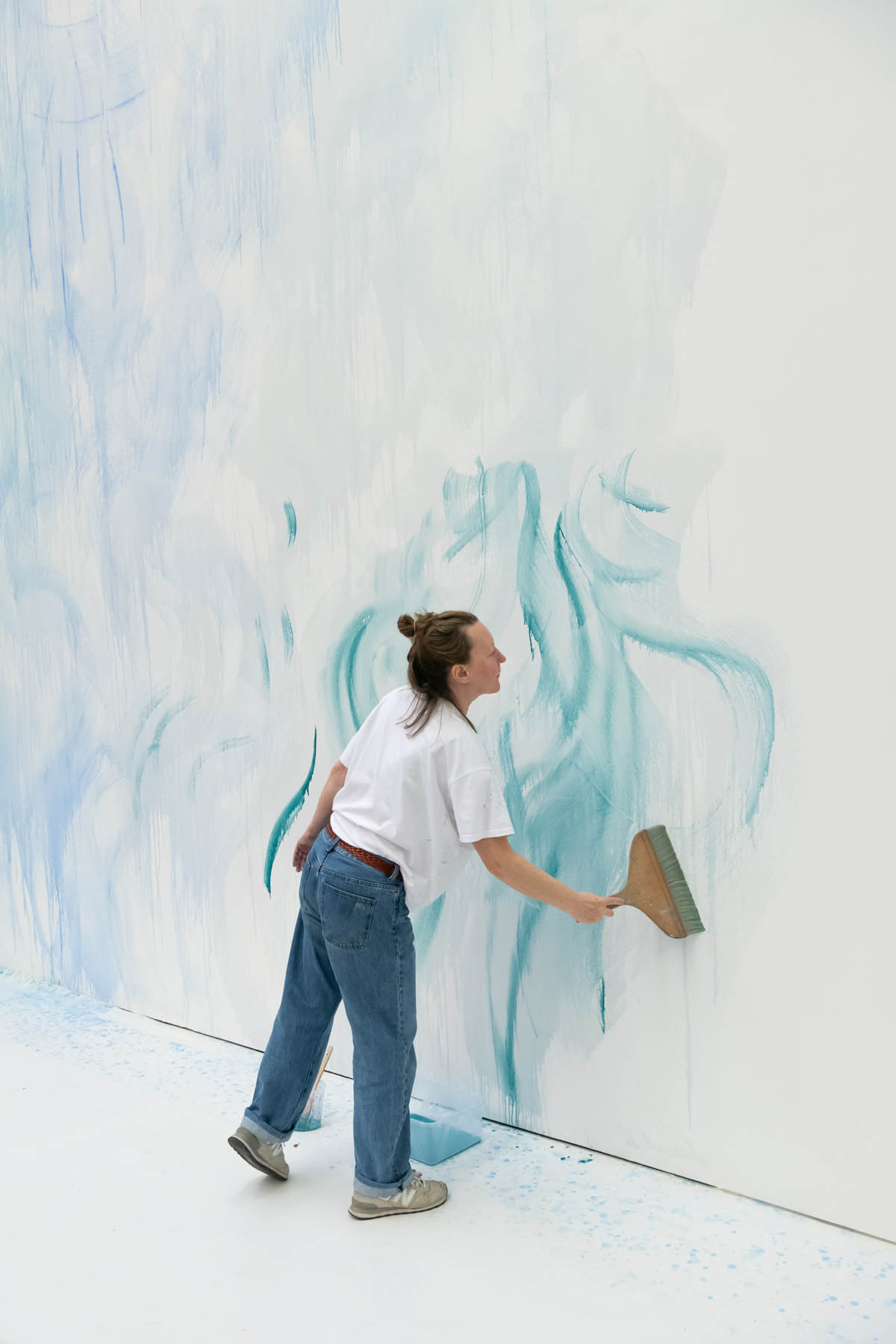
Rosilene Luduvico came second; she worked in a completely different way. She was the only one not using standard wall paint; instead, she worked with pigments and rabbit glue, the old-school technique, mixed with a lot of water so the paint becomes very thin and translucent. She used an enormous Japanese brush, moving through the room in long, sweeping gestures. It looks completely spontaneous when you watch her, but she had actually planned the whole room out in advance. She wanted it to feel like wind moving through the space, starting slowly, building, becoming a kind of thunderstorm in the large room, and then fading away again. Every day had its plan. The spontaneity was an illusion, a very beautiful one.
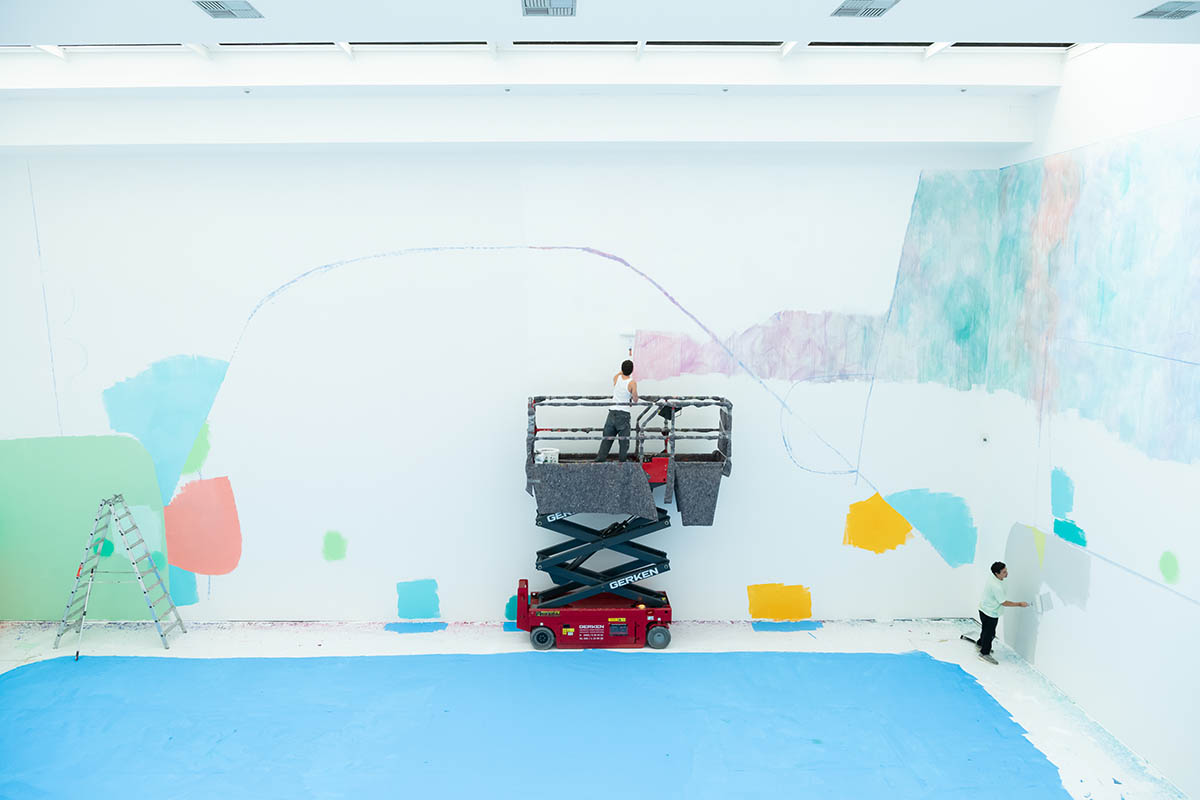
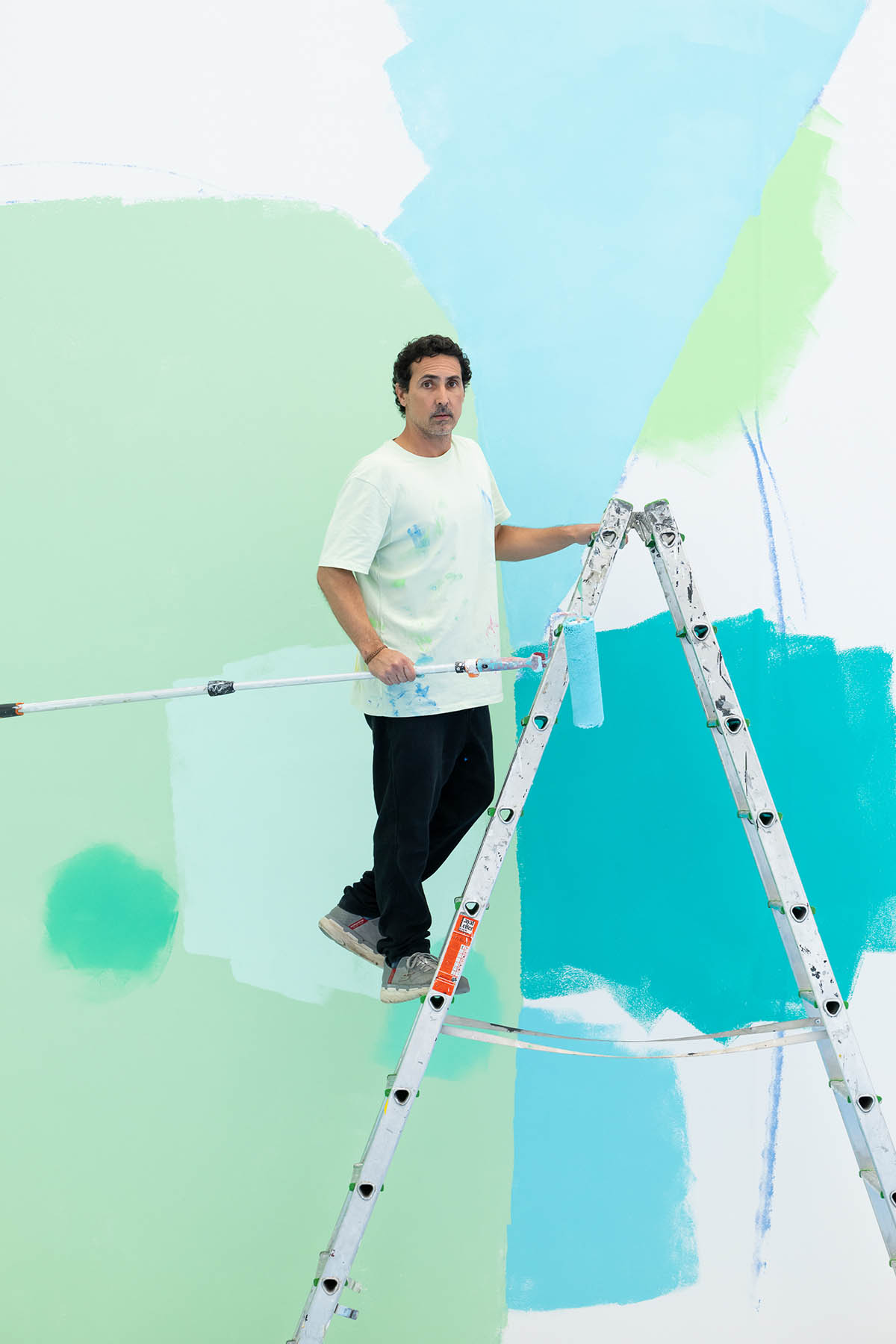
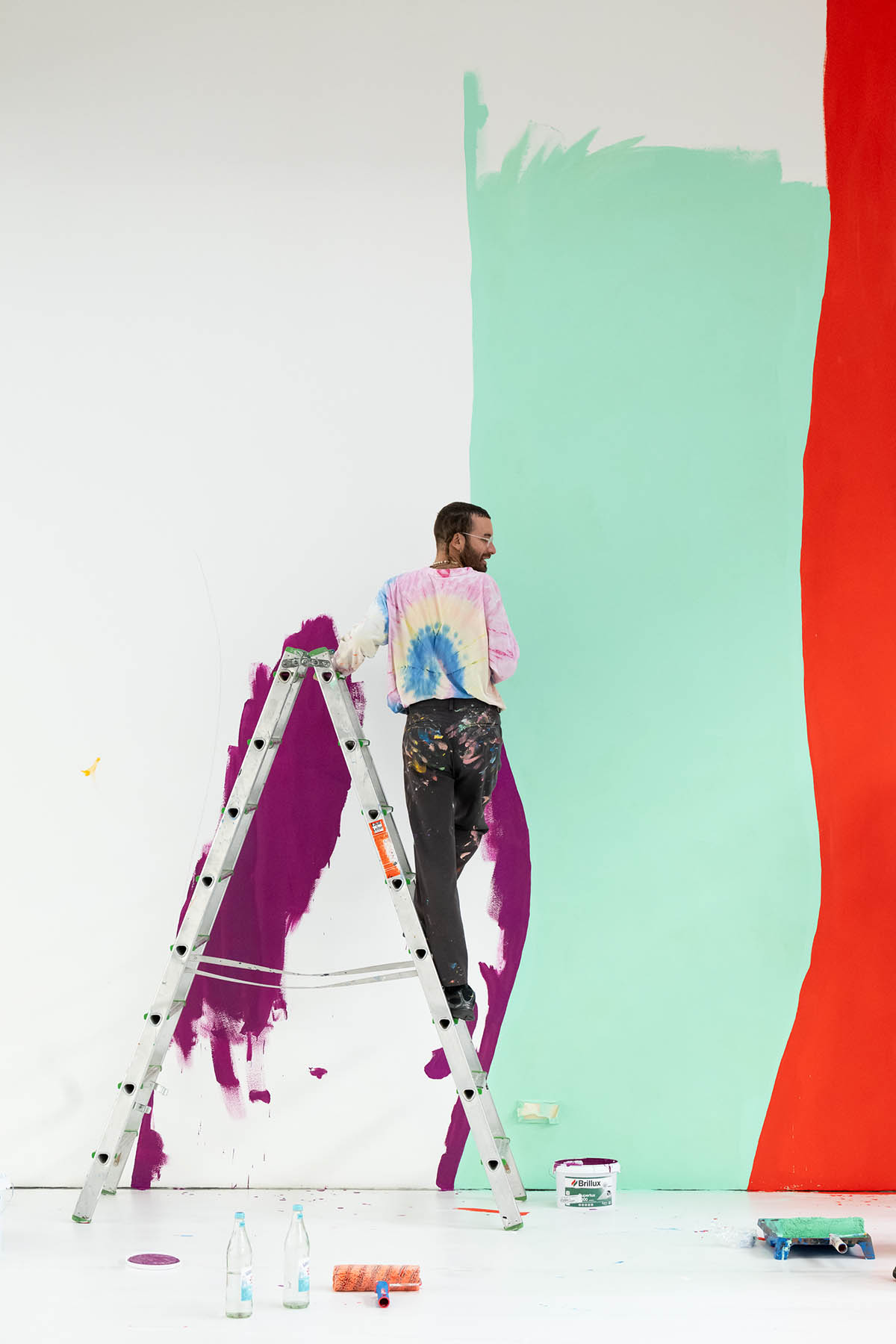
And then Federico Herrero, who is painting at the moment and will be here until the 5th of July, is again entirely different. He works on several spots simultaneously, not linearly. He moves from one corner to a wall to another area, and everything comes together at once. He’s constantly reacting: to the room, to the colours, to the light. He’ll try a pink in one place, see how it sits with the grey or the green nearby, and then perhaps paint over it again because it doesn’t work in that particular light. For him, it’s really a response to the space and to the conditions: the weather, the quality of light at different moments of the day.
What happens between artist sequences? Is the work painted over completely?
We communicated it very clearly from the very first invitation: each artist has four weeks, 28 days, to realise their wall painting. And from day one, visitors are watching them work, because the process is live. Kunsthalle is only closed on Mondays, those are the days the artists have alone, but Tuesday to Sunday, 11 AM to 6 PM, the doors are open, and people are watching them paint. That’s the condition. The other condition is that after those 28 days, everything gets painted white, and the next artist begins.
We thought some artists might not want that, but all five of them said yes immediately, enthusiastically. For every one of them, it was the largest wall painting they had ever done, though all of them had experience with wall painting, which was important. With a space this size, we couldn’t take the risk of someone who had never done it before.
The visitors have been wonderfully respectful. Occasionally, someone will approach with a question, mostly out of genuine curiosity. And everyone was completely at ease with the work being temporary. Rosilene Luduvico was particularly beautiful about it. She said: “ Everything I do is temporary, my life is temporary, everything in nature is temporary, the wind, the weather, the sun.“ So she was at peace with it, even moved by it. And the others were too.
The practice of Stefan Marx seems very different from others, with more language text and concept-based. The result must be different yet again.
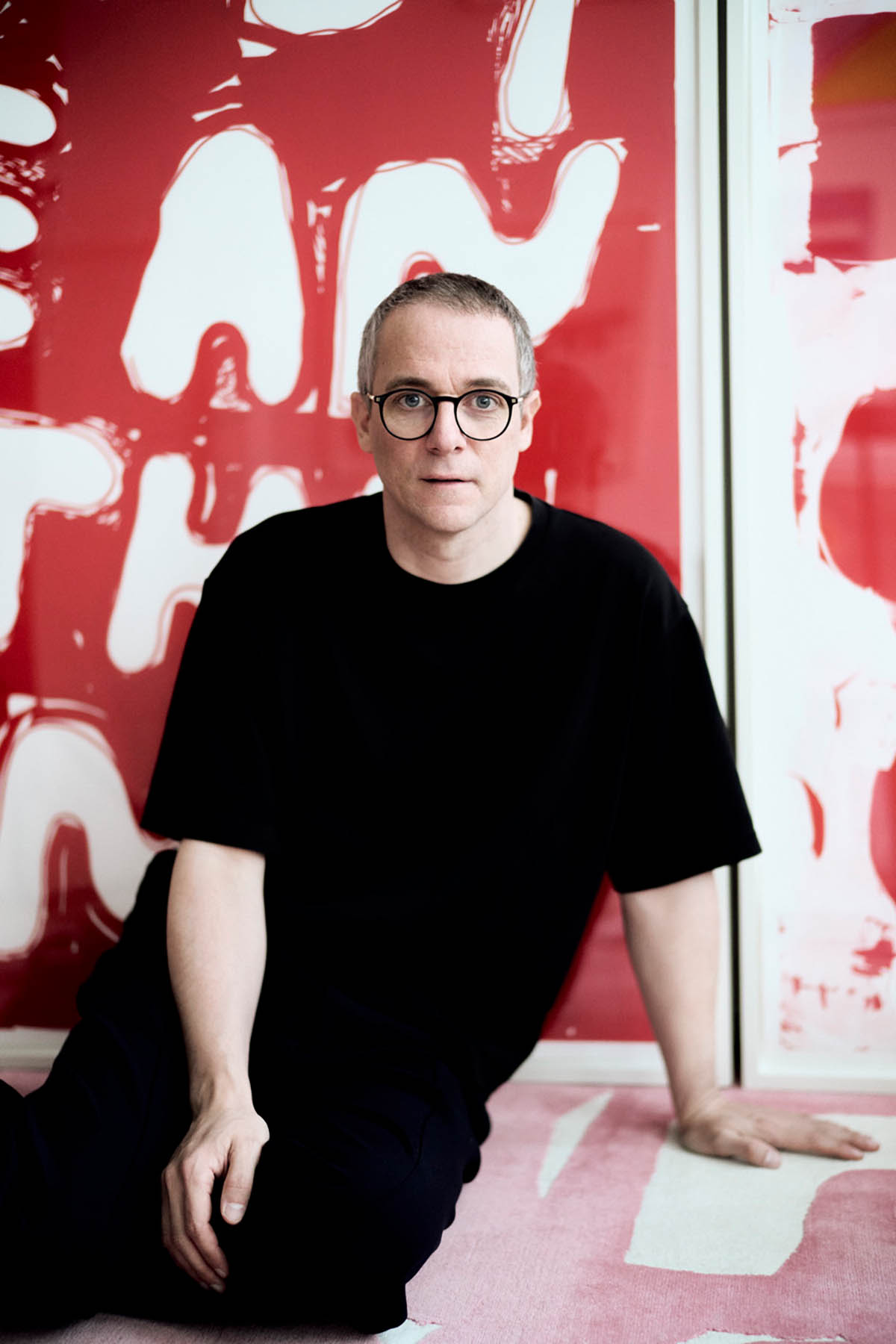
Yes, Marx has a complete plan for every single wall, mapped out in the computer program. He’s creating a collage drawn from his notebooks of the last 20 years. We already know what each wall will look like. So it’s a fascinating contrast: after Herrero moving around the room, reacting, testing colours, painting things over, Stefan will arrive and execute something entirely premeditated. Both completely valid and completely different.
I wanted to ask about the temporal dimension of the work. We’re talking about wall painting, which historically has been monumental and made to “survive” time. In this case, it’s the opposite: brief, documented, then gone. How do you understand that tension?
Kunsthalle Düsseldorf was supposed to be renovated, starting this summer, for three years. Our last exhibition closed on February 2nd, and we were prepared to move out. We had planned an interim programme, travelling around the city, doing cooperations with other institutions. And then at the end of January, the city told us: the renovation is postponed to 2029.
So we had to rethink the entire year, essentially from scratch. No budget, because all the budget had been allocated to the outside programme. No capacity in the team, because nobody had been planning for this. And normally an exhibition takes about a year to organize: the loans, the insurance, the logistics of filling over a thousand square metres. That’s just not possible in two months. We asked ourselves: what can we do quickly, without needing to close for long, and without the usual infrastructure? And that question led us back to something we had already been thinking about — we had originally planned a wall painting project as a kind of farewell to the building before the renovation. Just one week, people were invited to paint on the walls, nothing on this scale.
This February shifted our thinking. For the first time, Kunsthalle was genuinely empty, not the usual between-exhibitions kind of empty, where there’s still scaffolding and art coming in and out. Truly empty. So we opened it, free of charge, just to let people see the empty rooms. And the response was remarkable, so many people came, including a photographer who drove six hours just to document the brutalist architecture. It made us realise how much people are drawn to the space itself, the building, the rooms.
From there, we thought: wall painting can be organised in two months. There are no loans, no insurance in the traditional sense, no transfers. We asked the five artists, and all five said yes immediately, which was wonderful. Luckily, we found a sponsor for the wall paint itself, because, as I said, there was very little budget left.
Has anything like this been done before, at Kunsthalle or elsewhere?
It’s important to note: this is an institutional reaction to circumstances. We found ourselves in an impossible situation and responded with an experiment. This is a big chapter in the institution’s history. That’s also very much who we are: Kunsthalle sees itself as a place for what is happening now in art, and as a place for experiment. And this really is an experiment. Some of the artists told us roughly what they wanted to do, but how it would actually look in the end, we genuinely didn’t know. We still don’t, fully. And that’s just so much fun. There’s something beautiful about going in every day, talking with the artists, asking what they need, more colours, different brushes. Federico just decided spontaneously to incorporate the floor as well, so we got something to protect it, and now he’s painting the floor too. There’s always something unplanned happening. Normally, with an exhibition, you know what it will look like 90% of the way through the planning process. This one is truly: let’s see what happens.
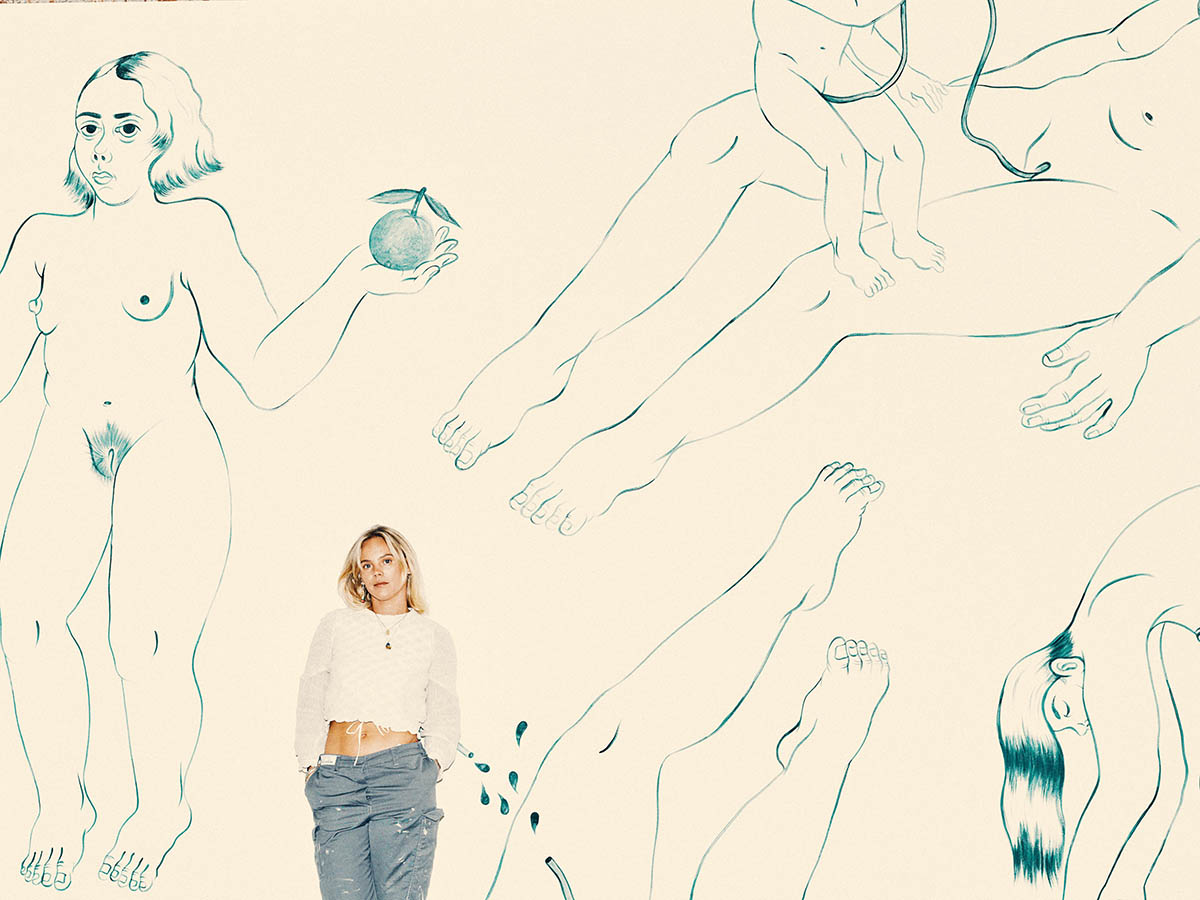
The last artist in the programme is Joëlle Dubois. Her work has this very fresh way of depicting bodies, across genders and sexualities, with almost an illustrative or fashion quality to it. What are you expecting from her?
She’s still developing her plan. What we do know is that it will be more outline-based than her canvas work. On canvas, her paintings are beautifully, richly coloured, but given the scale of the rooms, it will likely shift toward drawing, linear, and more outline. But I’m genuinely excited. I find her work so fresh, and it feels very necessary right now.
And the public dimension of it, people watching artists work in real time it is an important turn in the program of the Kunsthalle Duesseldorf. Do you think that the experience you gain as an institution will be inspiring your future projects?
It’s honestly been one of the most rewarding parts. There’s a real demystifying quality to it. As we work in an institution, we visit artists in their studios, and we know what that world looks like. But most visitors have never been inside an artist’s studio. Coming to Kunsthalle right now feels exactly like that: paint everywhere, brushes, the process unfolding in front of you. With Luduvico, there was the whole setup with the pigments and the rabbit glue; the fact that rabbit glue is actually made from rabbits genuinely moved some people. So that alone is quite the conversation starter.
This kind of contact between visitors and artists is something we’ve been working towards for a while: through our “Between Books” Art Book Fair, for example, where visitors can talk directly to the artists making the books. Work in Progress project is really the fullest expression of that so far, and it will absolutely shape how we think about future programming.
Group Exhibition Series: Work in Progress
Exhibition duration: April 10- August 30, 2026
Opening hours: Tuesday- Sunday 11 AM- 6 PM, Holidays 11 AM–6 PM, Monday: Closed
Artist Participating and Times:
10 April – 10 May: Navot Miller (born 1991, ISR)
11 May – 7 June: Rosilene Luduvico (born 1969, BRA)
8 June – 5 July: Federico Herrero (born 1978, CRI)
6 July – 2 August: Stefan Marx (born 1979, DE)
3 August – 30 August: Joëlle Dubois (born 1990, BE)
Address and contact:
Kunsthalle Düsseldorf
Grabbeplatz 4
40213 Düsseldorf, Germany
www.kunsthalle-duesseldorf.de
Upcoming events such as guided tours and workshops can be found here: www.kunsthalle-duesseldorf.de/ausstellungen/work_in_progress/