


Curated by Maximilian Lehner, the exhibition combines three artists with sculptural installation, video, and sound to explore what defines institutional life. As a letter to the artists, the exhibition text asks them for reactions to the administrative creature that haunts possibly every office space and other spaces connected to work and administration.
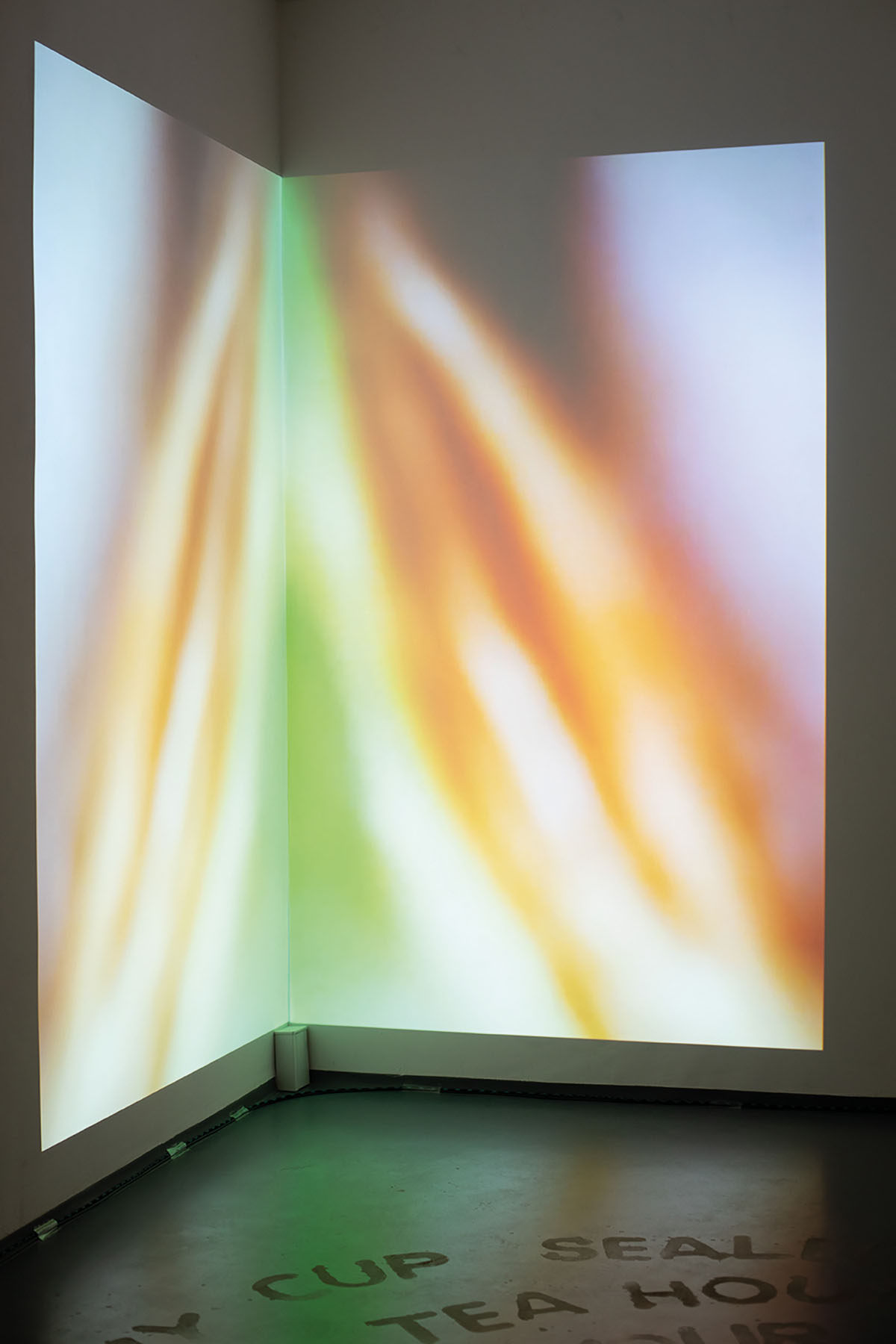
Saffi Adler’s get in loser (2-channel video installation, 2025) starts with the surface—literally. Using macro footage of Mean Girls captured from an screen, Adler zooms in until the film dissolves into colored noise, interspersed with moments of recognizability: a blink of Regina George’s eye, the corner of her suburban mansion, a flicker of facial expression. Named after one of the film’s iconic lines, the work speculates on the aesthetic codes and group dynamics that outlive adolescence and reappear in professional settings—soft power, cliques, coded language, unspoken hierarchies. By focusing on a genre often dismissed as superficial, Adler asks what kinds of visual and cultural training shape future administrators, lawyers, consultants—the people who populate the bureaucratic machine. Played on mirrored screens set into a corner of the room, the work directs the viewer’s gaze inward, into the space of influence that often precedes the office itself.
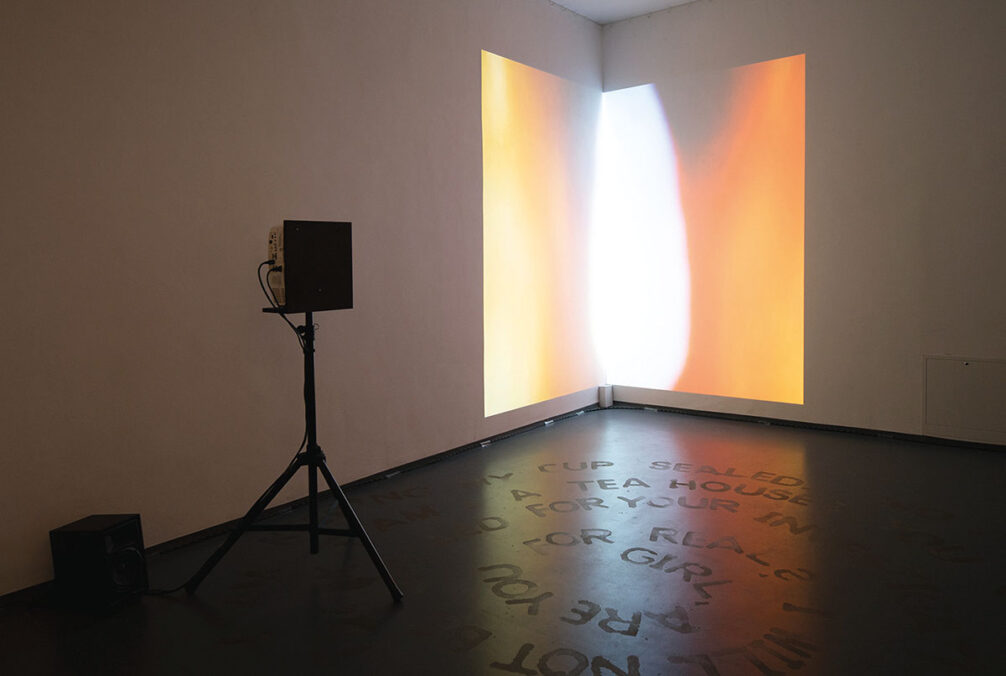
Maja Bojanić’s Intruder (installation with sound and tea stains, 2025) unfolds in whispers. A voice recounts the observations of a janitor, moving through the routines of cleaning while sensing something larger at play—a hidden rhythm behind the institution’s operations. On the floor, letters formed from spilled tea spiral out like a quietly coded message. The stains suggest informal communication: the remnants of gossip (or ‘tea spilling’), miscommunication, or accidental revelations that accumulate between surfaces. Bojanić’s work, similarly to other of her works which ‘listen through infrastructure,’ reflects on how those who maintain institutional space like cleaners or caretakers are often closest to its unspoken logics.
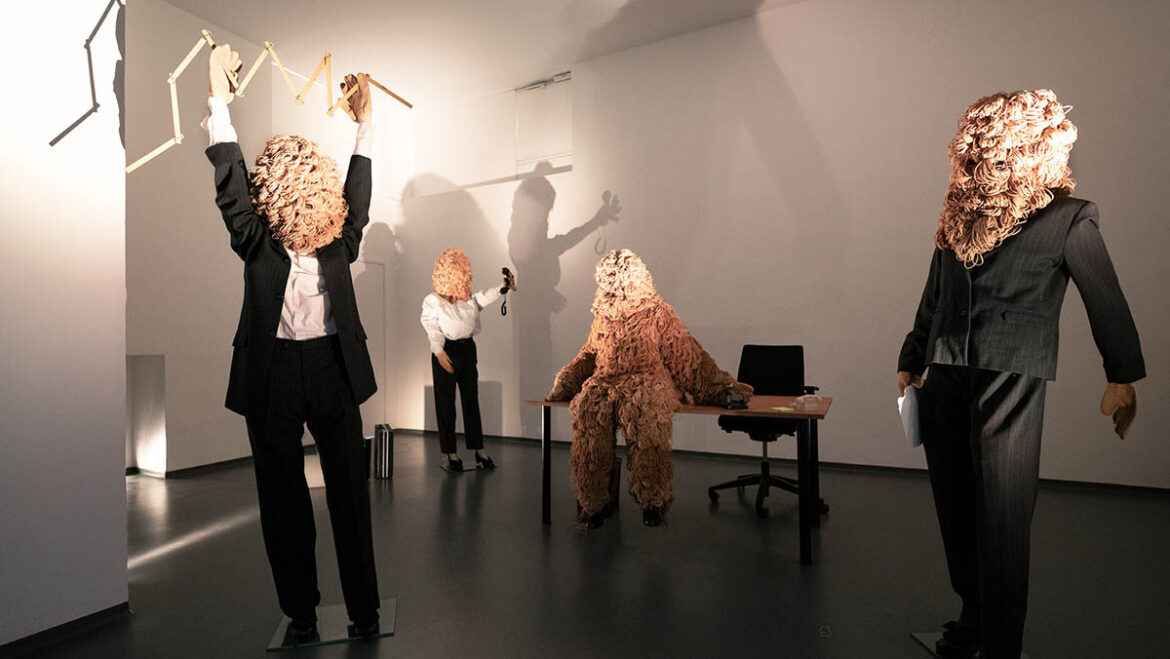
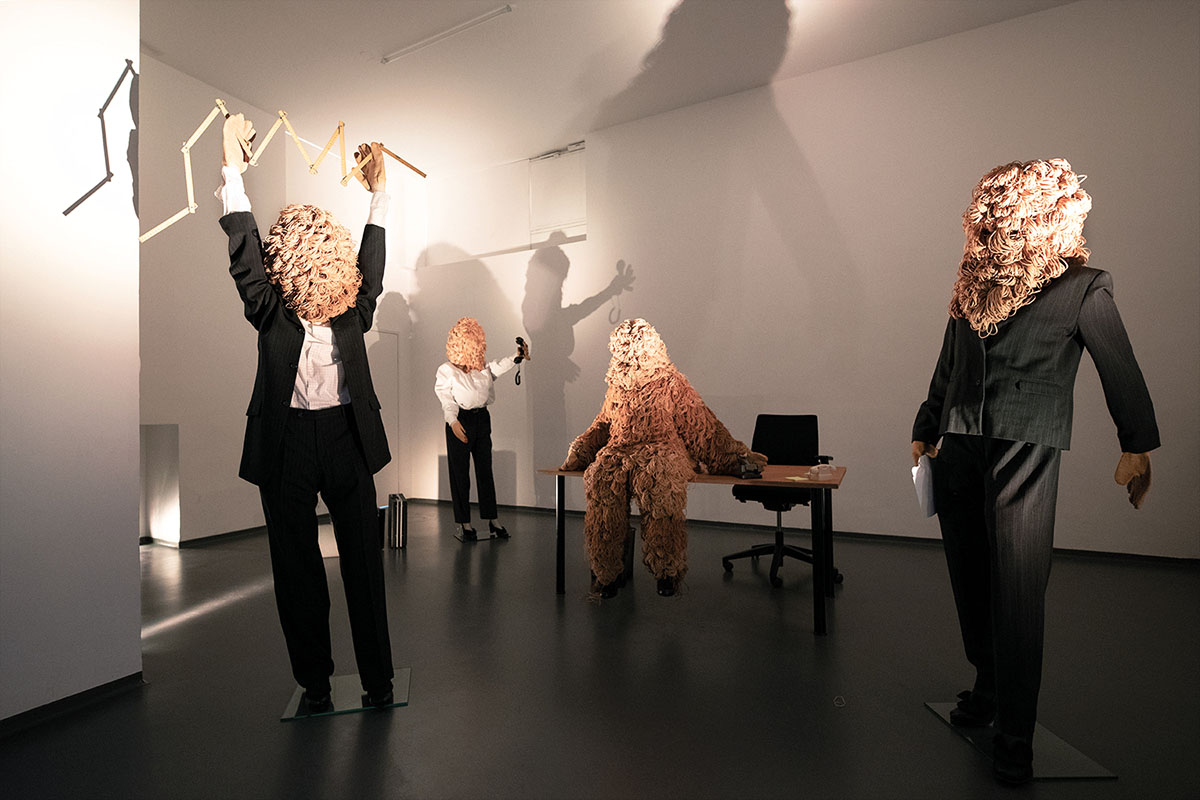
Mette Sterre’s Hummelman (installation with body suits and sound, 2012–25), an updated version of her 2012 work, animates the figure of the office monster itself. At its center sits a desk, inhabited by a body suit made entirely of rubber bands. From a distance, the surface looks furry—up close, it reveals the elastic ligaments of institutional life. The body slumps, types invisibly, hovers between machine and creature. Also performed as live work, here Hummelman exists as a sculptural installation that evokes the strange, repetitive motions of office labor, especially among the three rubberband-faced employees: typing, waiting, pretending to work. Sterre’s grotesque, puppet-like figure lingers, a reminder of what happens when structure overtakes agency, most notably since the most immobile of them all is the boss-monster itself.
Office Monster is conceived as a question on how to think about different urgent questions in contemporary art—as well as in society and politics. Instead of directly addressing global problems, the exhibition asks for their source in administrative practices and beaurocratic structures everyone is stuck in. The Office Monster haunts us all. It causes trouble and we need to speak about it, rather than mourning all its effects.
[…] Have you ever heard of the office monster?
It’s said to be a strange creature that haunts administrative spaces – obsessed with formalities, decision-making processes, and the supposed logic behind them. It spreads boredom like spores, controlling things in mysterious ways, or perhaps not understanding anything at all.
I thought this might be something fun (or terrible) to explore. […]
Exhibition: Office Monster curated by Maximilian Lehner
Artists: Saffi Adler, Maja Bojanic, and Mette Sterre
Exhibition duration: 14–28 May 2025
Address and contact:
bb15 – Space for contemporary art
Hafnerstraße 4, 4020 Linz
www.bb15.at
The exhibition is supported by Slowenisches Kulturinformationszentrum SKICA, Vienna and in part made possible through financial support by Mondriaan Funds.