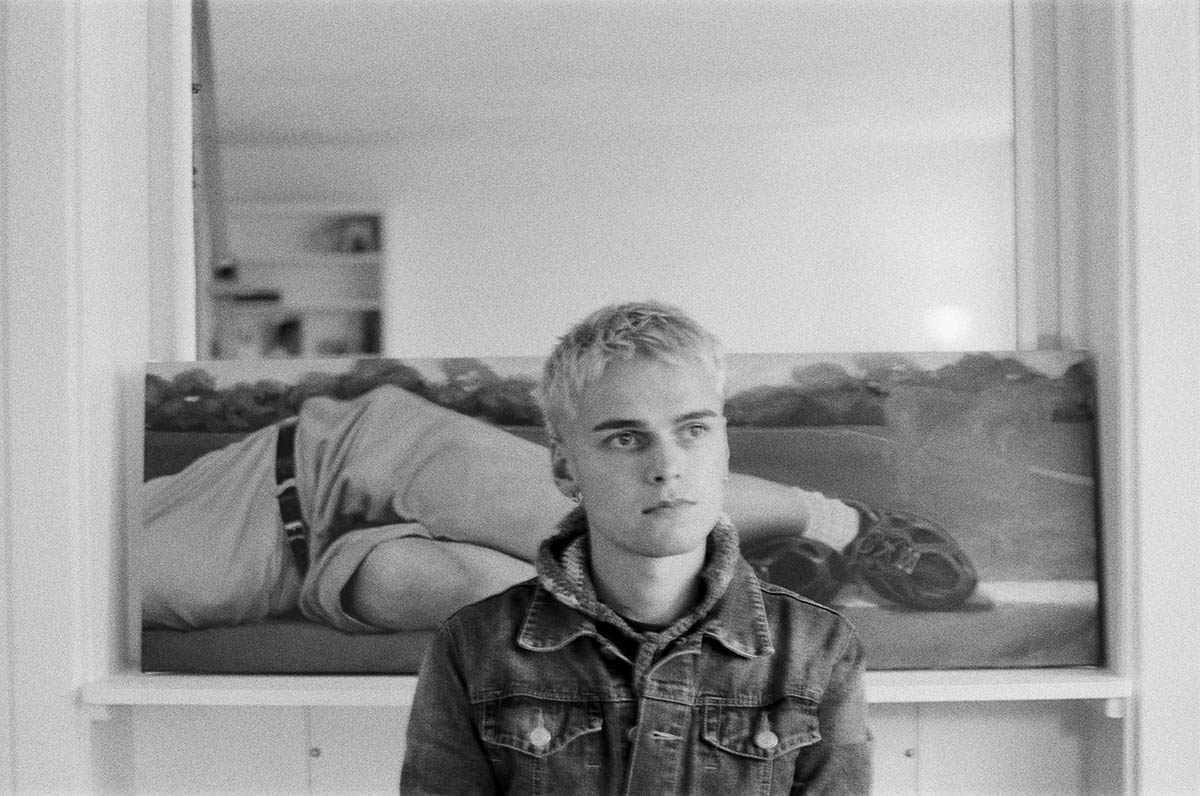
How he transfers his soft sculptures into oil paintings, the connections between animal and human, shame and religion in his practice, and his wishes for 2026; in a talk with London-based artist Conor Quinn.
You grew up in a Catholic environment. How has this background influenced your artistic language?
Going to church as a child, I was surrounded by iconography. The dedication to detail and beauty in the art felt like its own form of worship; a paintbrush, for example, could be used as a tool to show devotion. I believe this worship can exist outside of religion, and I hope that in my work, it is always embodied.
Religion appears almost atmospheric in your work. What interests you about the tensions between faith, control, and intimacy?
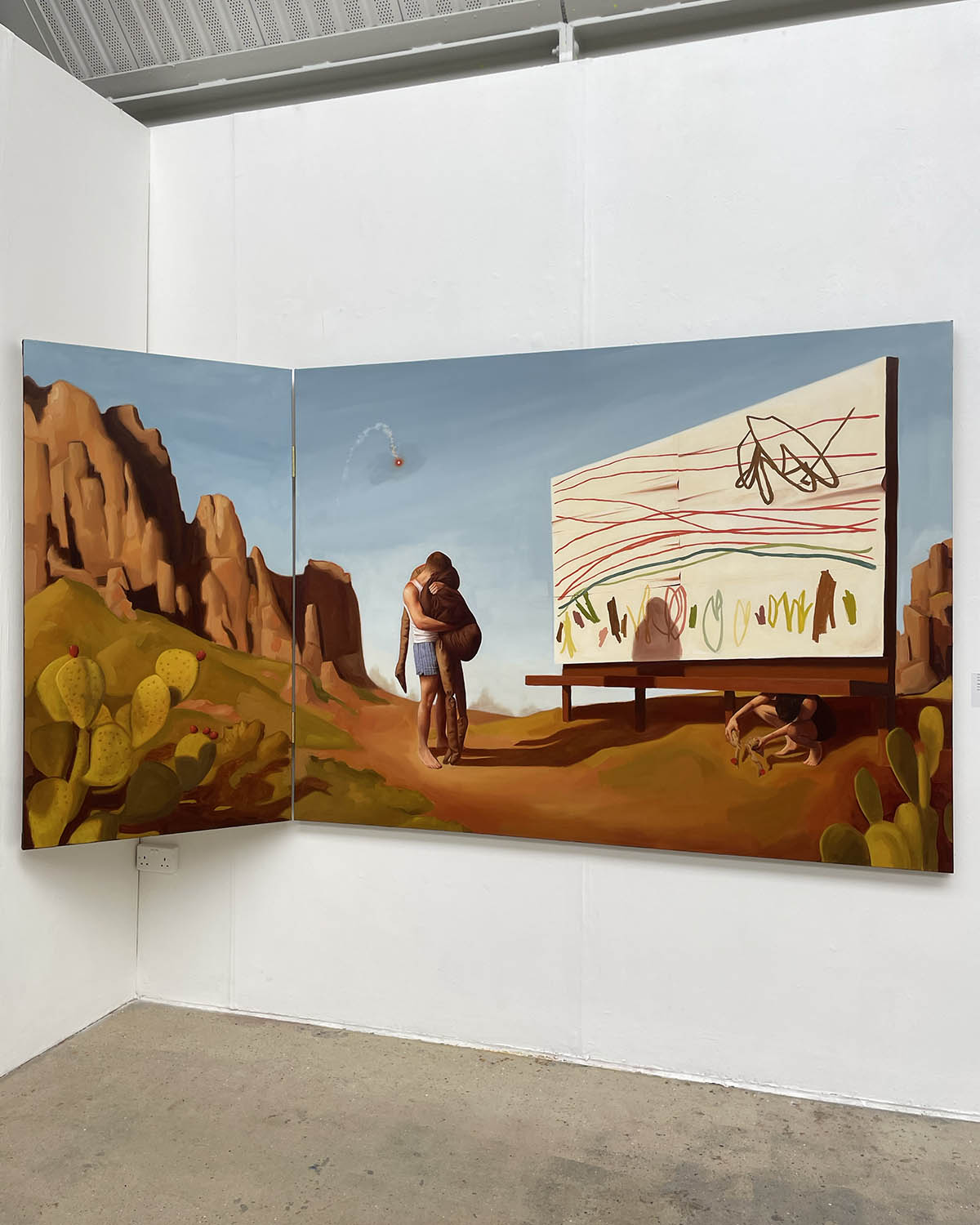
There is so much underlying context to religious art outside of the dogmatic, and in using familiar visual attributes, I can suggest an entire foundation for my work to sit. Suddenly, the characters in my paintings exist in a world of discipline, shame, devotion, faith, etc., and these characters’ qualities can either align or contrast with this. For example, queer intimacy when set to a religious background becomes something more than just love or sex; it now has additional connotations of secrecy or longing, perhaps.
Shame played a central role in your work earlier. How has your contact with shame changed in the last few years?
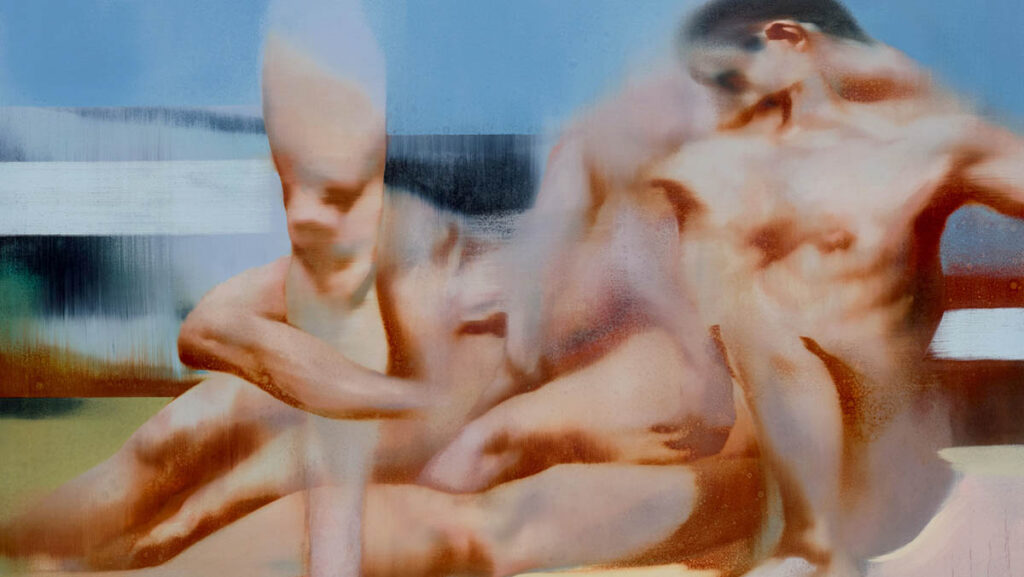
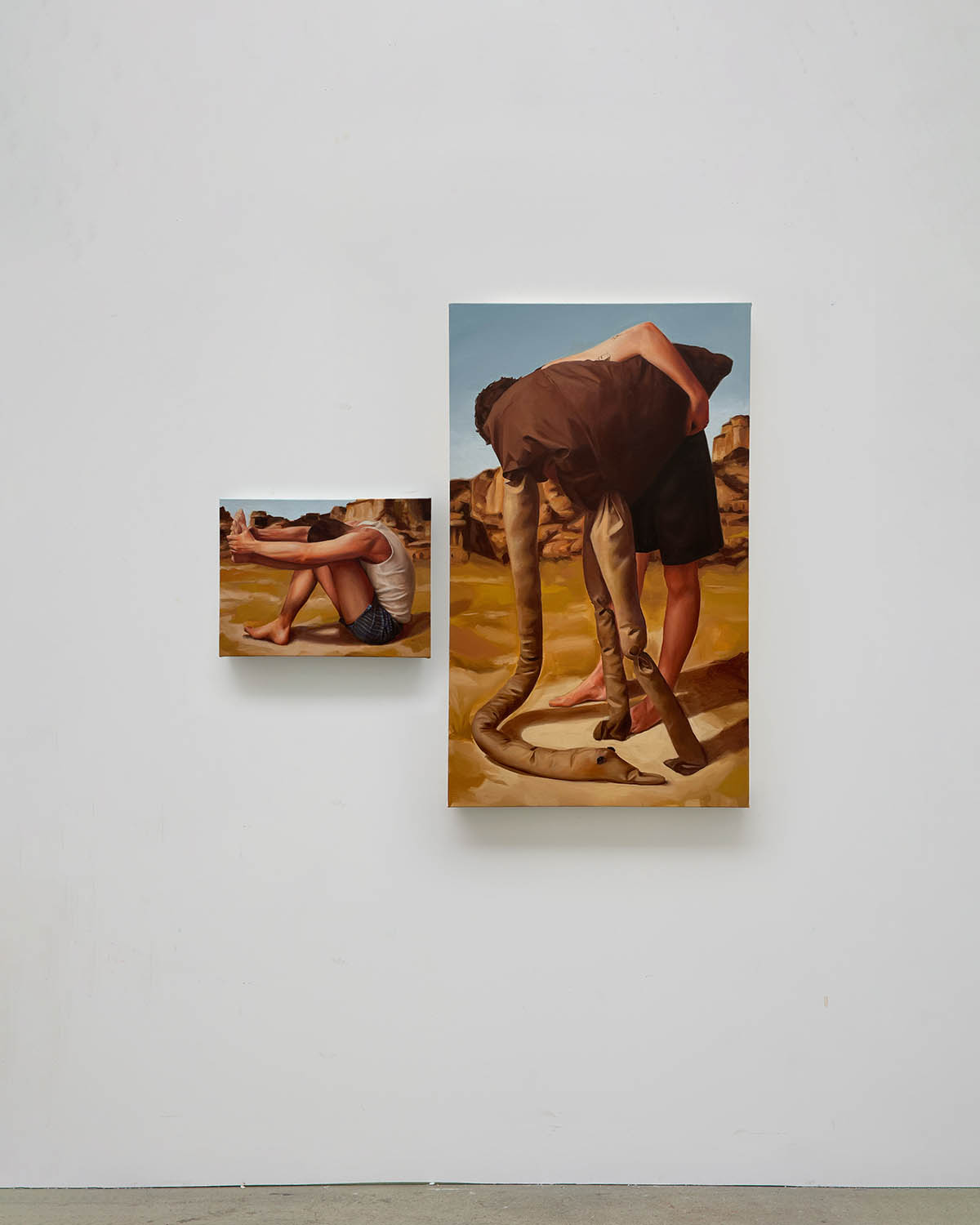
Perhaps I’ve pushed it from focus and allowed other themes to shine; however, as long as I am painting, shame will always be a fundamental part of my work. I’ve found myself leaving shame behind in some places and finding new shame in others, and all the while, this burden is carried by my puppets. At first, the genderless nature of my hand-sewn creatures acted as a barrier between my sexuality and those who see my paintings. Now I might use faceless puppets to hide emotion or limbless puppets to strip autonomy. As the puppeteer, I have full control over the balance of blame and responsibility, and thus my art acts as the perfect outlet for shame, whether or not I choose to own it.
Your painting often begins with soft sculpture. Where do the boundaries between sculpture and painting blur the strongest for you?
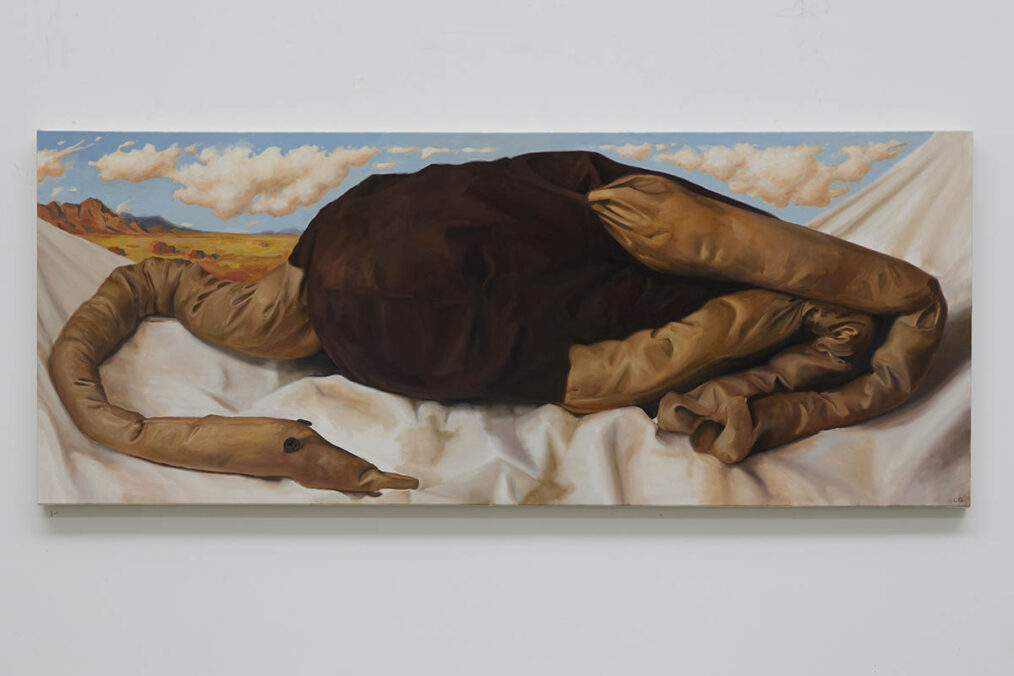
The soft sculpture acts as an important part of the physical process as well as the subject matter. There’s something very human to me in the tactile nature of sewing and stuffing, and often my sculptures and I mirror one another, be that limp, pinched, stretched or tangled. Similarly, I find the act of stretching my canvas to be an extension of my sculpting; the taut cotton over its stretcher bars holds so much tension as if it were close to breaking free from its form. Even the quiet paintings sit on a surface of stress.
Could you tell me more about the series „Ostrich // Red Rainbow”?
This series was created as a means to express my feelings towards my autonomy in adulthood. I used the ostrich to stand in for me: a self-aware puppet in need of a puppeteer. Without being controlled, the puppet would lie lifeless, never making decisions and therefore never regretting them either. The series became a fantasy where I held no accountability.
The ostrich functions as an alter ego for you. Why this animal in particular?
Often in my paintings, I have used birds, quite randomly, to physicalise categoric themes, like jealousy or pride, for example. This series of work was the first where I had used a puppet to replace me; I wanted to use a creature that felt multi-faceted, and in deciding to continue down the bird route, I chose an ostrich: confident, fearful, anxious, camp, clumsy, etc. This meant I could approach my paintings as a mirror every day; however, I was feeling.
What topics are you currently most interested in?
Recently, I’ve been interested in comic books. There’s something very camp about storytelling in this format, and a point where something is so serious that it becomes humorous; the drama in a comic book hits that point perfectly for me. I’d be intrigued to know where the balance between painting and comics can sit in order to best carry my ideas, and this is something I hope to explore in my next series.
What are your wishes for 2026?
This year, I have two solo exhibitions with my debut in June. I feel this will be a perfect opportunity to exhibit who I am and the individual thought process, which is often unapparent in group shows. I’m also hoping to delve a little further back into my animation background and incorporate it into my painting and sculpture
Conor Quinn – www.conorquinnart.com, www.instagram.com/conorquinn36/
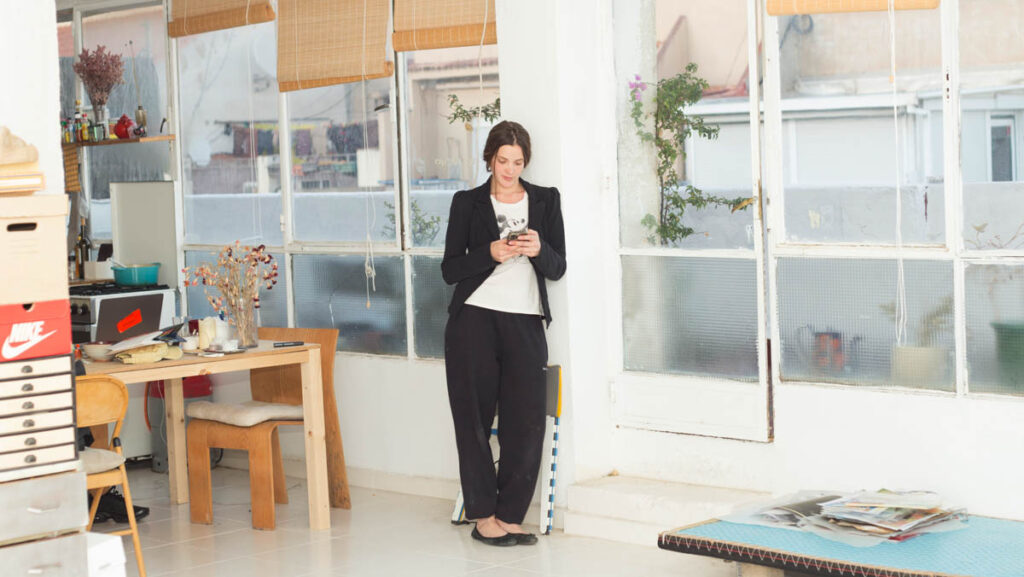
Conor Quinn (b.1998) is a London-based painter and soft-sculptor with a background in stop-motion animation. He studied at the Royal Drawing School and has recently acquired a Master’s in painting from the Royal College of Art.