Comics are very much in the public conversation right now. Have you thought about why that is, and what about similar movements in art history?
Comics have always been a medium for conveying things, content that, on the one hand, can entertain, but on the other hand, takes up social themes that would otherwise be difficult to communicate. Presenting those themes in a way that people can actually absorb them is, I think, one of the fundamental characteristics of the comic medium. It’s perhaps a little like with graffiti; at some point, they step forward and break through to the masses and communicate the message clearly.
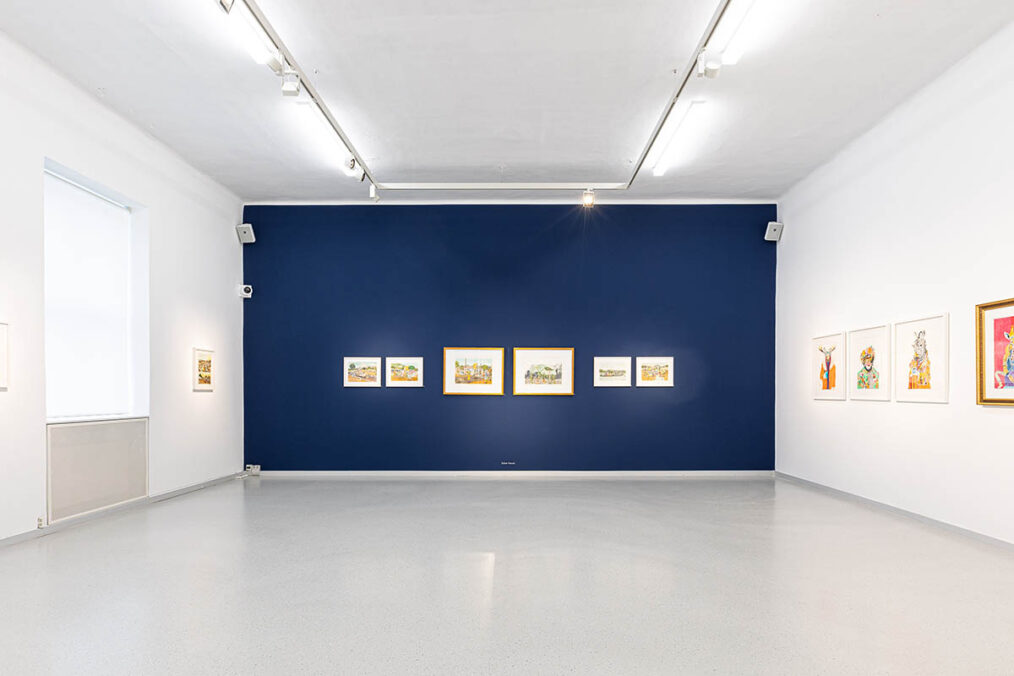
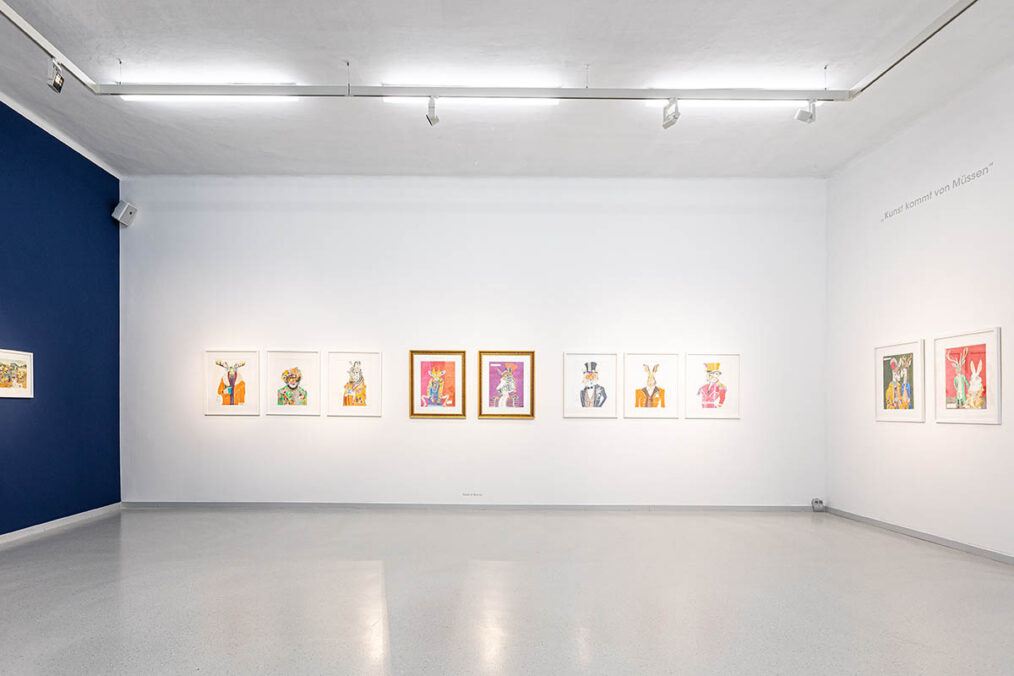
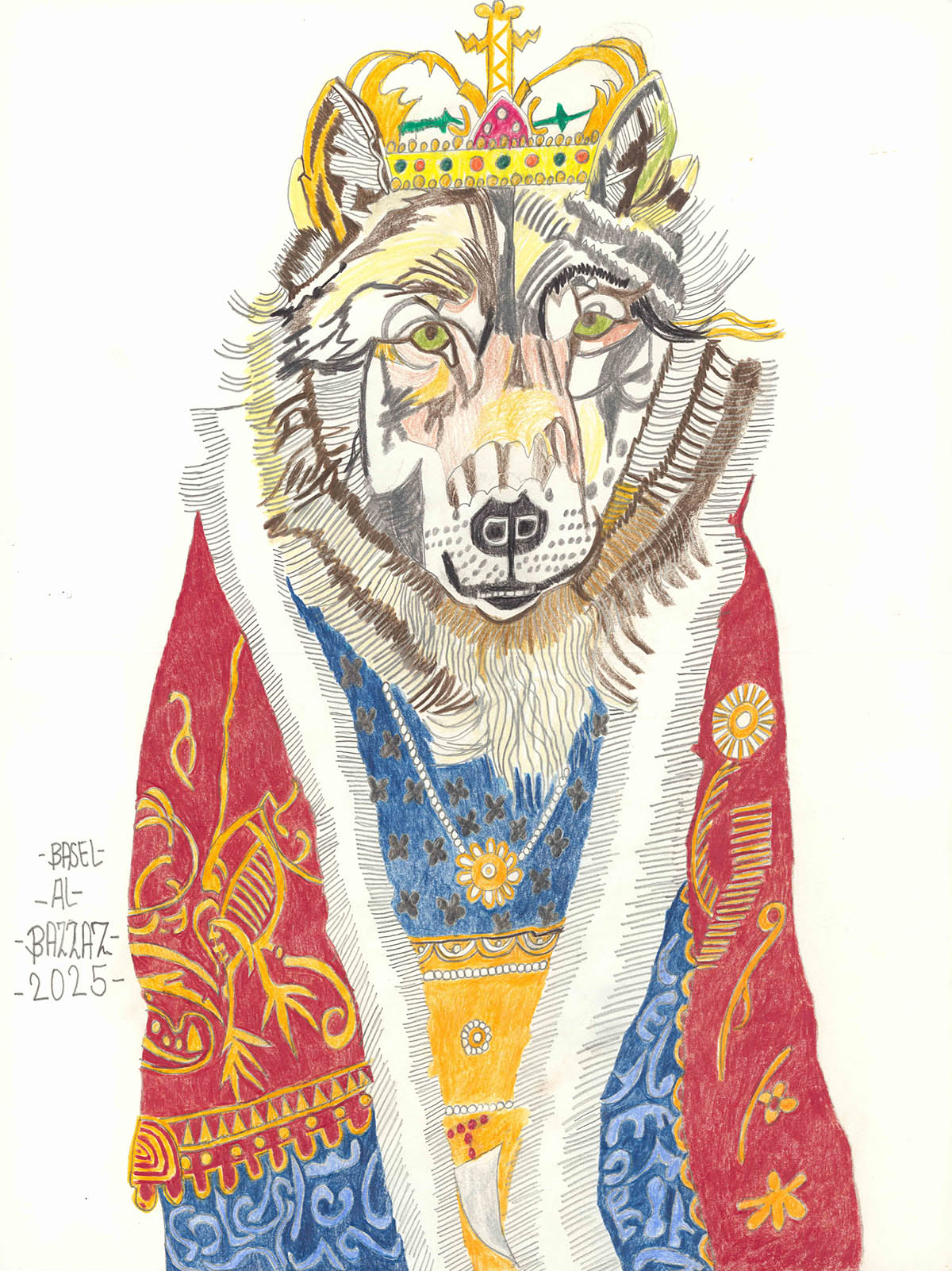
I can answer through the works on view in the „COMICS brut“ as well. I see similar visual languages between the four positions we are presenting in the exhibition. Let’s take, for example, the relation between Didier Kassaï and Basel Al-Bazzaz. Didier Kassaï lives in Bangui, in Central Africa, one of the world’s poorest and most dangerous regions. He dresses his animals and places them in various situations within the region’s socio-political landscape. Basel Al-Bazzaz does something very similar. He was born in Baghdad and now lives and works in Vienna, but for entirely different reasons, he dressed animals in his drawings to satirize the characteristics of the people. Fox looks different from the gazelle or the lion, yet the lion still conveys a very majestic status. Didier Kassaï does the same: his animals represent specific social classes. And that is where I see the collective unconscious at work, across the world. It is fascinating to see the universal language taking over.
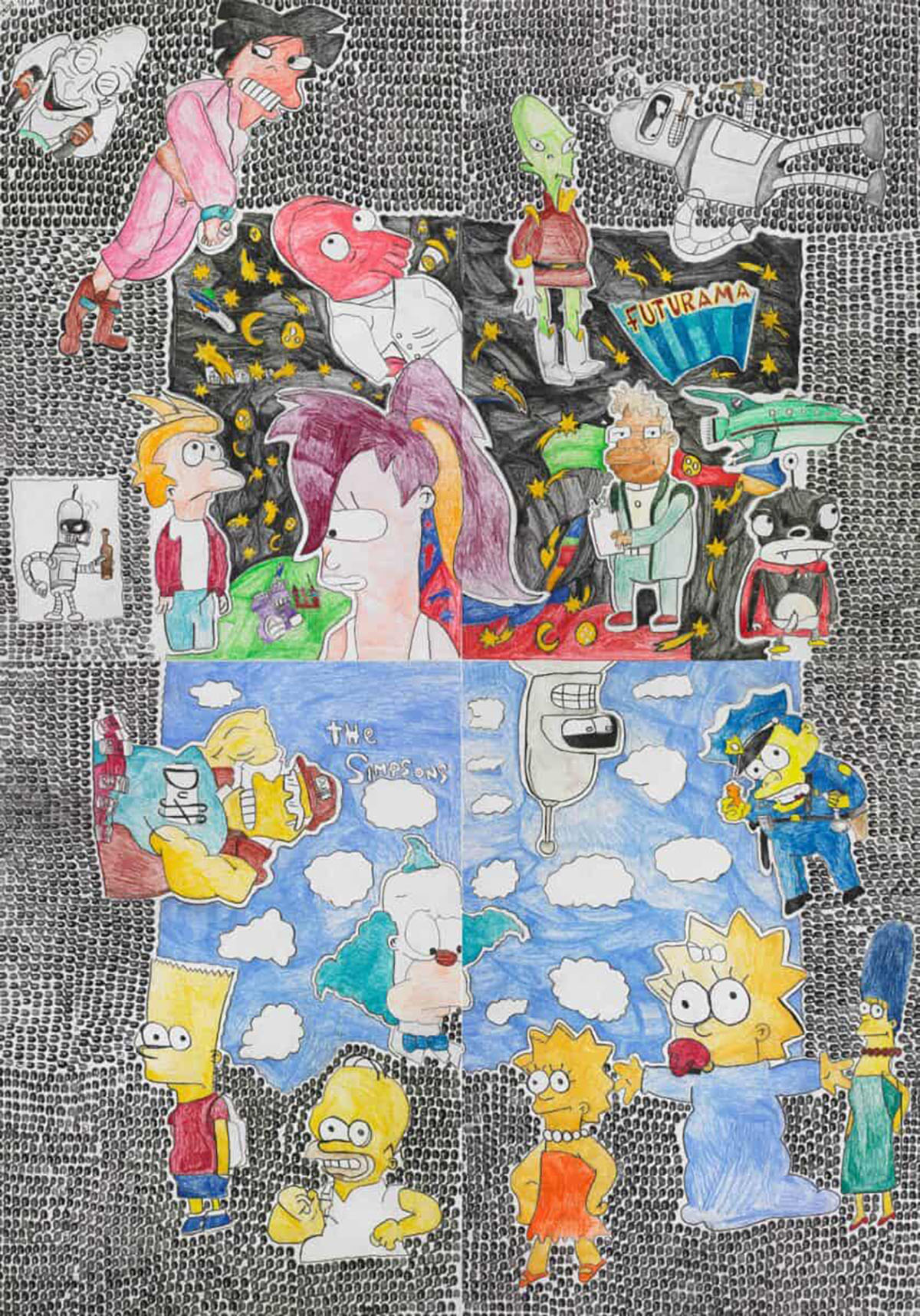
The starting point for the exhibition was a work by Manuel Griebler. Can you tell us how that idea developed into the final selection of positions?
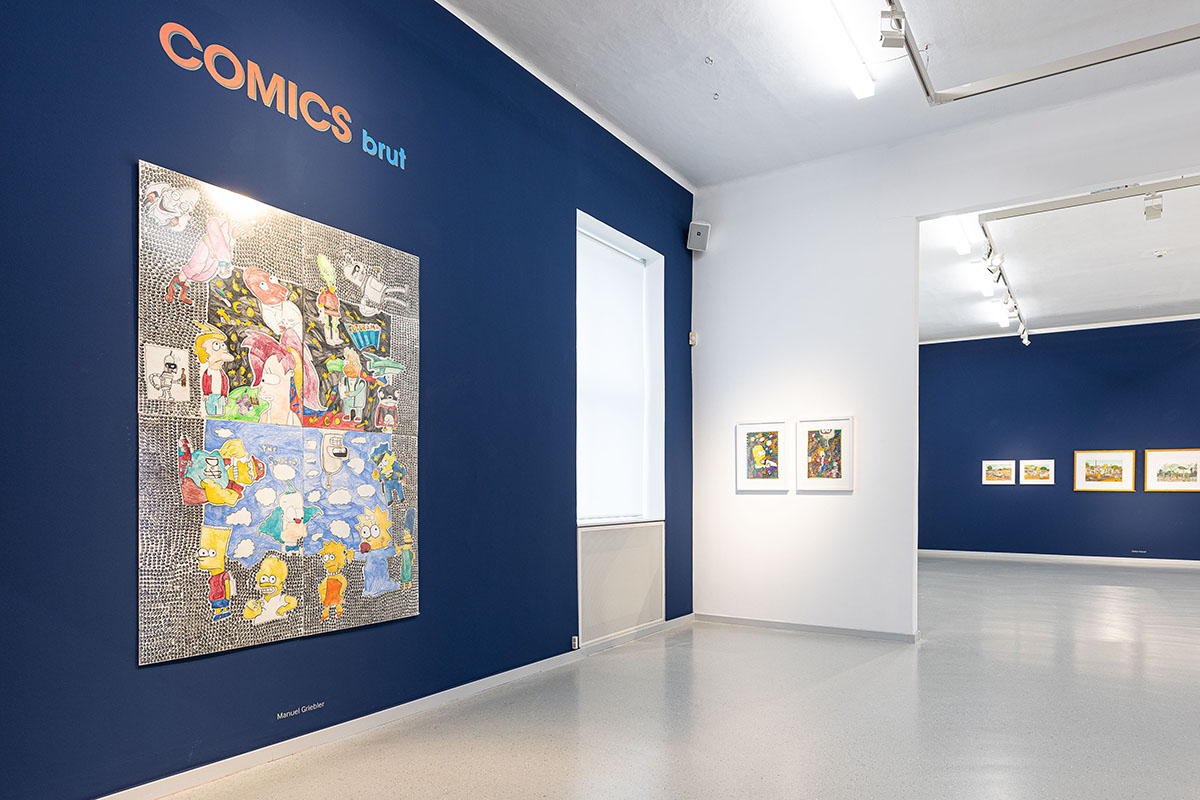
Artists who work in the studio or in the Haus-der-Kuenstler-Gugging always bring their works to the gallery, since we are responsible for archiving and registration. Manuel Griebler came in with four large, fully drawn boards and said the works belong together, that they form a unit. He laid them out and presented them with great pride. What we then saw were The Simpsons and Futurama, or rather, his interpretation of them. He told me he used to watch those shows with a friend when he was a teenager. He didn’t have an easy upbringing, and this was a safe place for him, the fantasy of films and cartoons. Furthermore, he would pick out the matching sneakers to follow the trends and be part of the crowd. He also presented me, back then, with works in different formats and techniques, since it was a beautiful range on the same topic, I immediately thought we should make an exhibition out of it!
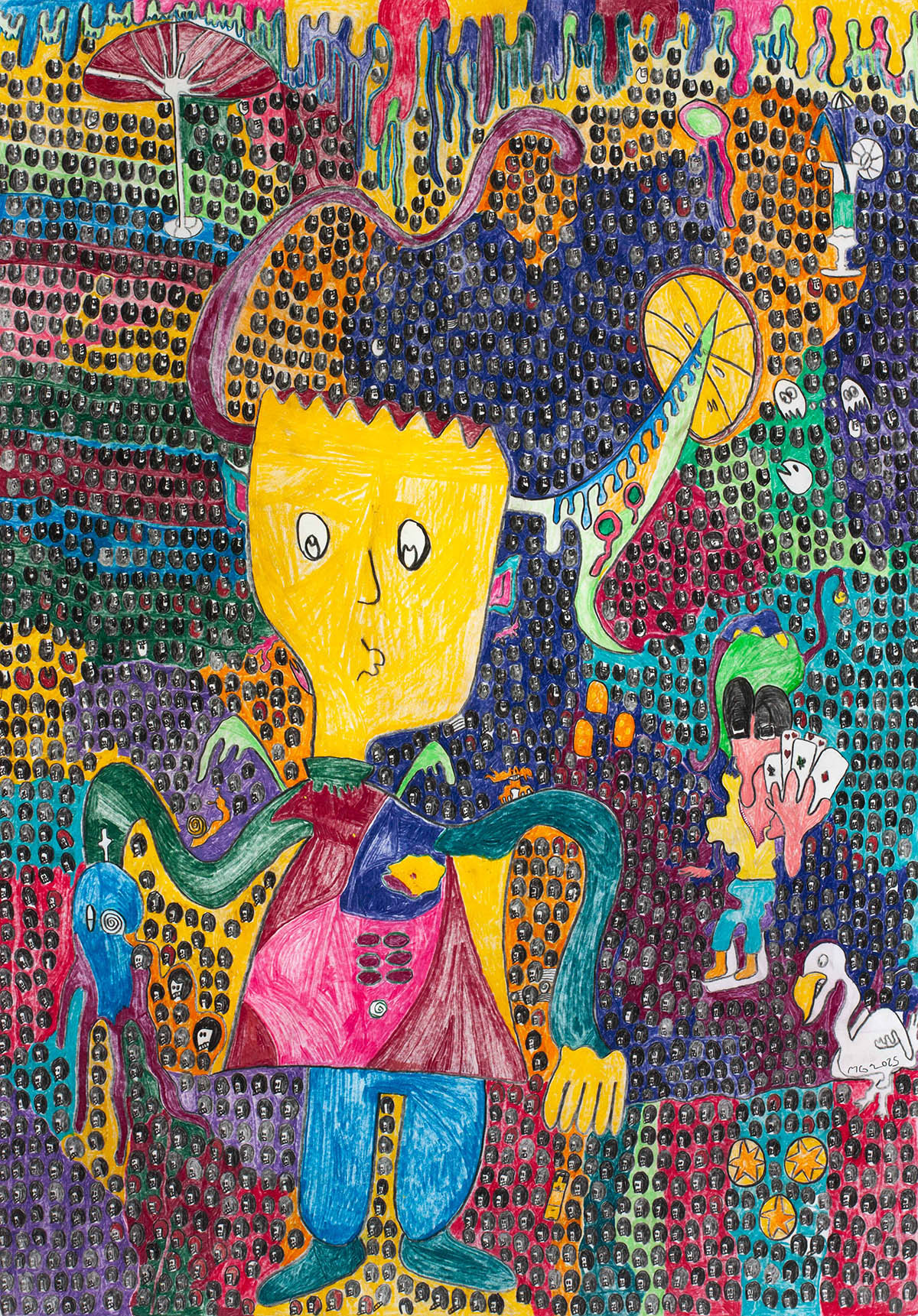
There is a strong element of repetition in Manuel Griebler‚s works. How does his process look while working, and how does it all come together?
What he always does first is just the shapes: the heads. That’s why some of them have no face at all, and others do. He decides it intuitively as he goes; it’s part of the working process. Starting with the heads, then the faces. What you see a great deal of in his work are the hairstyles he liked as a teenager. Some of them have noses sticking out, almost like Pinocchio, and others don’t. And into that landscape, the various themes are inserted, pirate ships at one point, then other comic characters, from Bugs Bunny onwards, and all sorts of things. It’s almost a self-portrait, but rendered through the heroes of the comic world he so deeply admires and enjoys. He takes inspiration from the shapes and ways of nature.
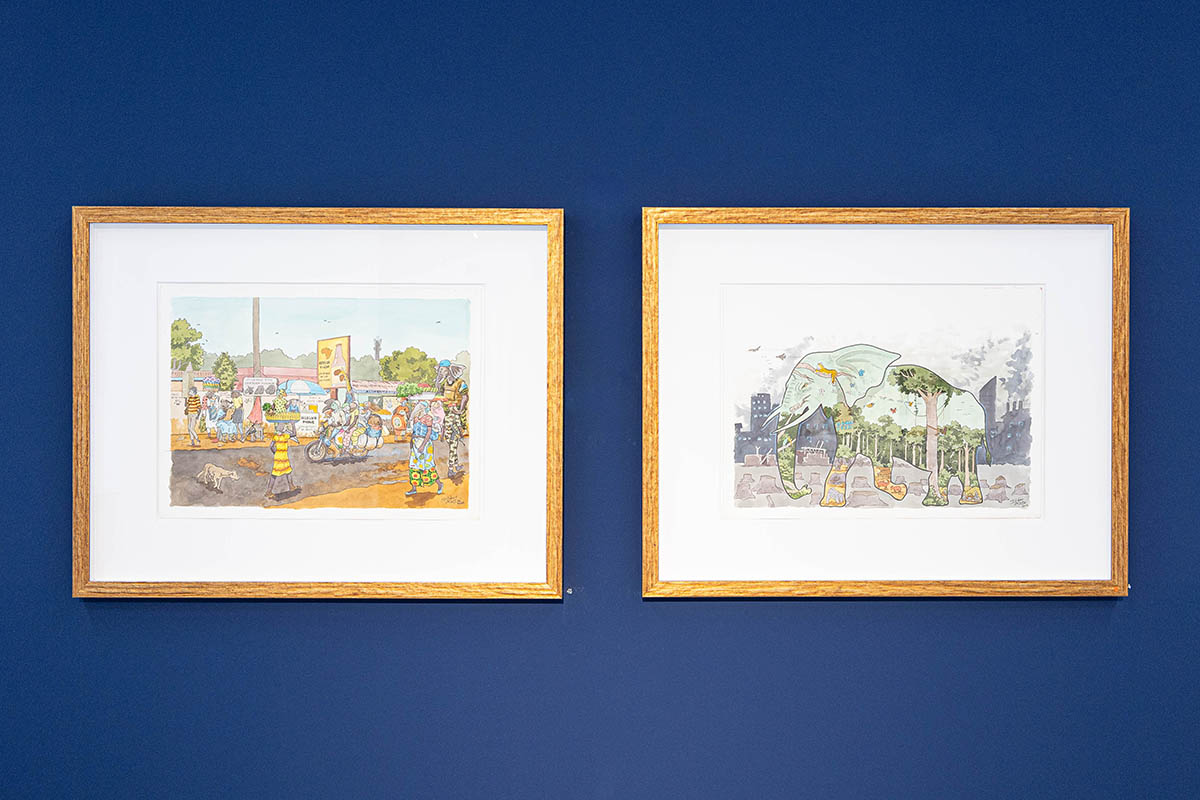
In the exhibition, there are works by Didier Kassaï documenting what is happening in the Central African Republic. To understand his images more deeply, one definitely needs a certain knowledge of the context, how he lives, and what surrounds him.
It is essential to say that he has made a conscious decision to stay in Central Africa, to encourage other artists and creatives to stay as well, not to leave. I had been searching for an opportunity to show his work for two years, because I have been following and admiring it for some time. His works are wonderful, but also difficult, partly because of the conflict in the region, the sandstorms, all of it. He documents everyday life there and the adventures of the place. He is based in Bangui, even if the situation there is far from easy; half the time, when he goes anywhere, he is stopped by soldiers. It is genuinely difficult. Then things get confiscated. There is a great deal of malaria down there. He was ill regularly. It happened that his studio burned down at one point as well. The working conditions we take for granted in Europe, like having Wi-Fi access, don’t exist there. If he has pencils, if he has quiet conditions, if he has a place to work that is safe, that already means something for him, and beautiful works come out of it.
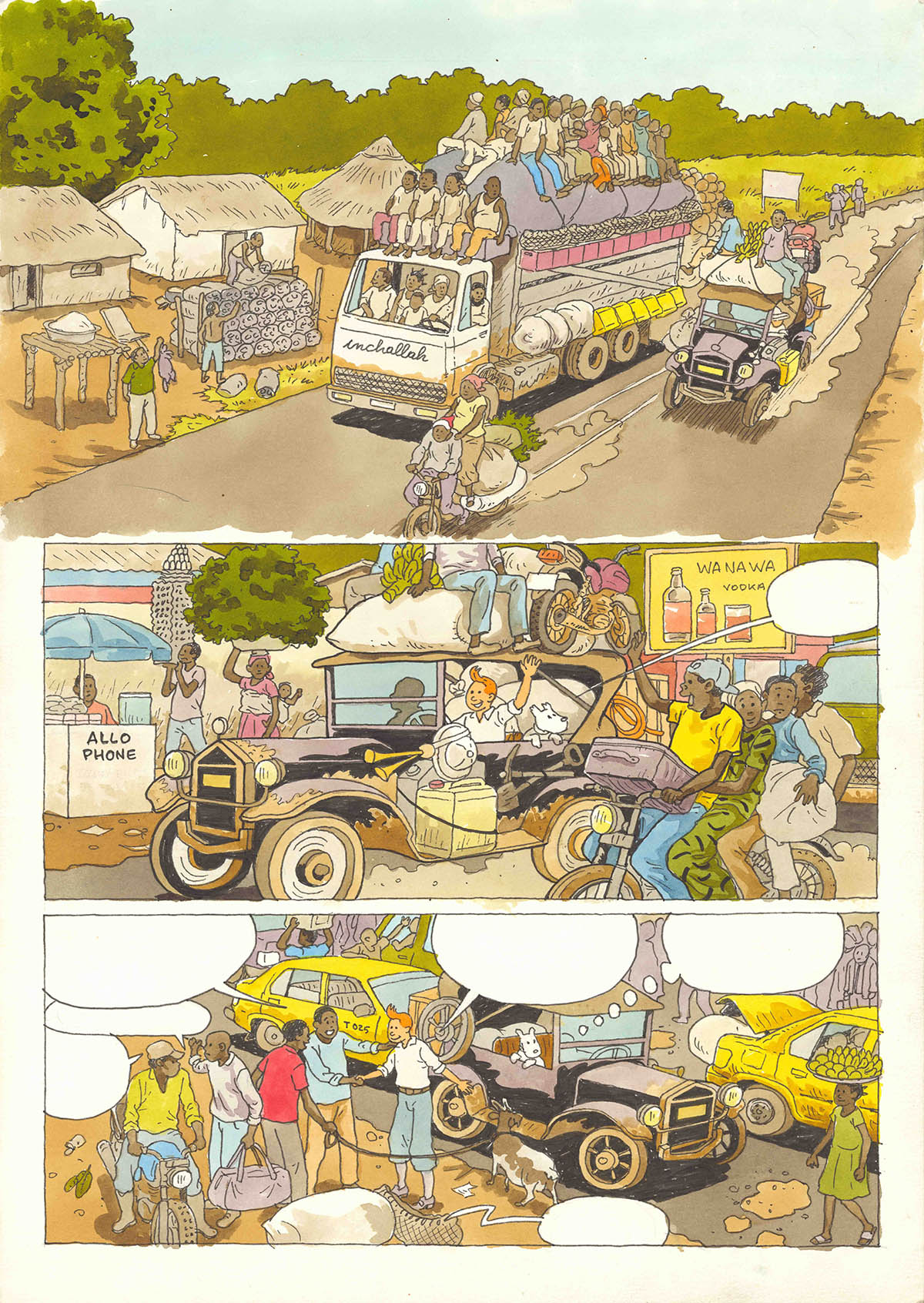
He has already exhibited in America, France, and Switzerland, and now, for the first time, in Austria. He had a residency in Europe and was there in person, but he didn’t stay because he said He really wanted to improve things there in Bangui. Didier Kassaï travels extensively throughout the region, observing and documenting the country. For us as Central Europeans, I think his work is very important — it should remind us how privileged we are to live in Europe.
Works like these should also show how many strong personalities exist in the world, and how much we ourselves lack, and how differently life can unfold elsewhere. I don’t think any of us can truly imagine it if we haven’t experienced it ourselves. And yet people are that strong, and still produce art.
Let’s focus on Basel Al-Bazzaz. His approach to the portraits is fascinating. He was born in Baghdad and now lives in Vienna. Can you tell us more?
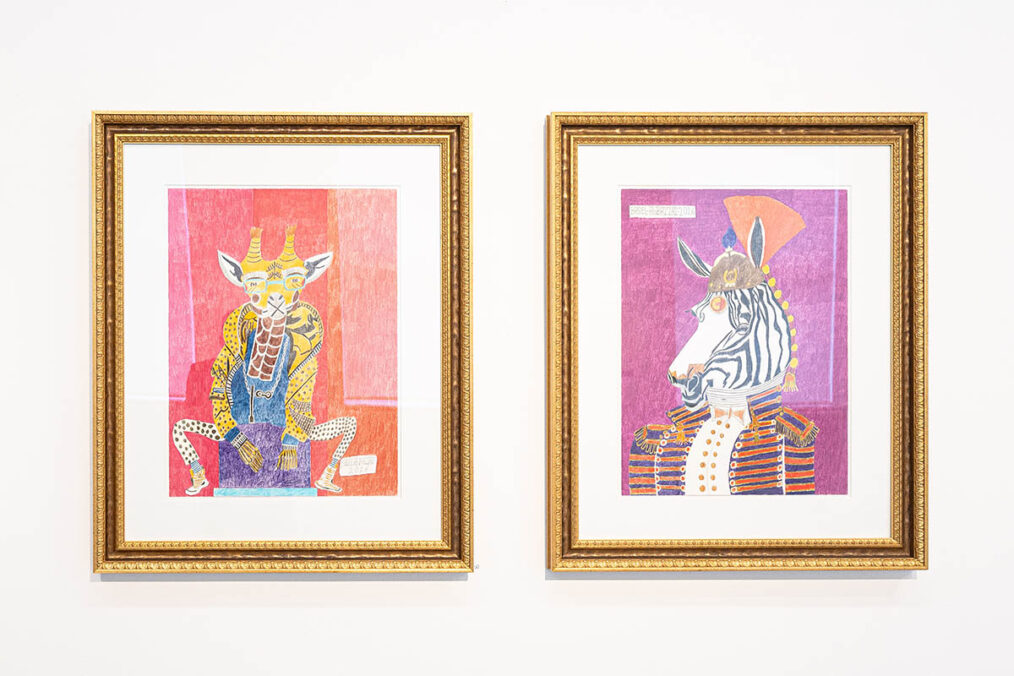
Yes, he first came to attention, particularly through his supervisor, for his incredibly detailed drawings of animals. At first, it was just the animals themselves: precise. Then flowers were added, and so on. When people asked him what he was drawing, he would say it was his private world of imagination. Last autumn, when he sent me photos from his new series with his colleagues, in which he had dressed up the animals, I asked him about it. He said, ‚It looks nicer this way.
What comes through so powerfully is his understanding of which clothing belongs to which animal. The lion has something majestic: dress accordingly. The donkey is more modest. The fox is impeccably sophisticated. The characteristics that society attributes to these animals are expressed through their clothing. And then there’s the incredibly cool monkey, or the giraffe with the drum, or the chimpanzee sitting there with a hippie wreath.
It’s genuinely fascinating how he reads people, and translates that into drawings of the animals. It is a parallel between the worlds and the distribution of power depicted in a very humorous way.
The Oriental influence coming from his childhood times is always present in his work; you see it in his flower paintings, too. He loves abundance. And if you look closely at the animals, at the lion, for instance, the details in the clothing, the mane, the individual strands, it is worked with incredible precision and real love. Genuinely colorful, and that is characteristic of his work overall.
I find Hannes Lehner’s connection to Star Trek interesting; his fictional heroines seem to carry a certain nostalgic calm. How do you read his work?
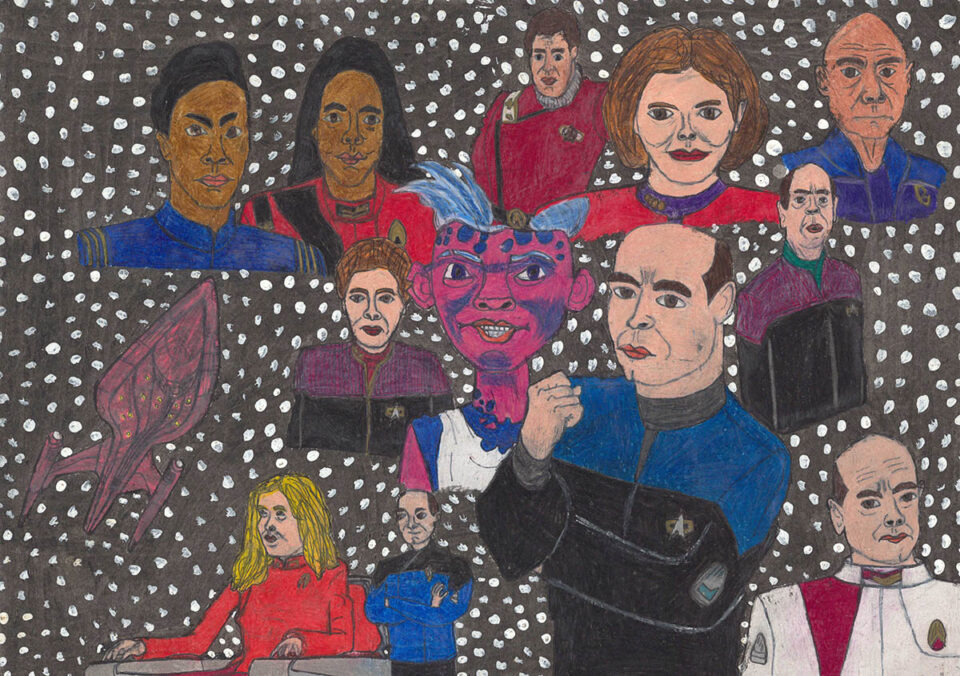
I was genuinely surprised when I encountered it. I knew Lehner from his depictions of houses and cars, those kinds of things. When I visited him in his studio, he said he had something very special to show me. He had documented the entire Star Trek series from beginning to end and written accompanying notes to it. There is actually a small publication he designed around it. But what mattered most to him was portraying the characters, all of them, and he did it with real commitment. It turned out to be a whole series. The universe, for him, is always dark, with white points, the planets, the stars rendered with a kind of opaque paint. But first he draws, and then paints around that. The UFOs are drawn with pencil and colored pencil; he is a true technology enthusiast. He knows everything about every car.
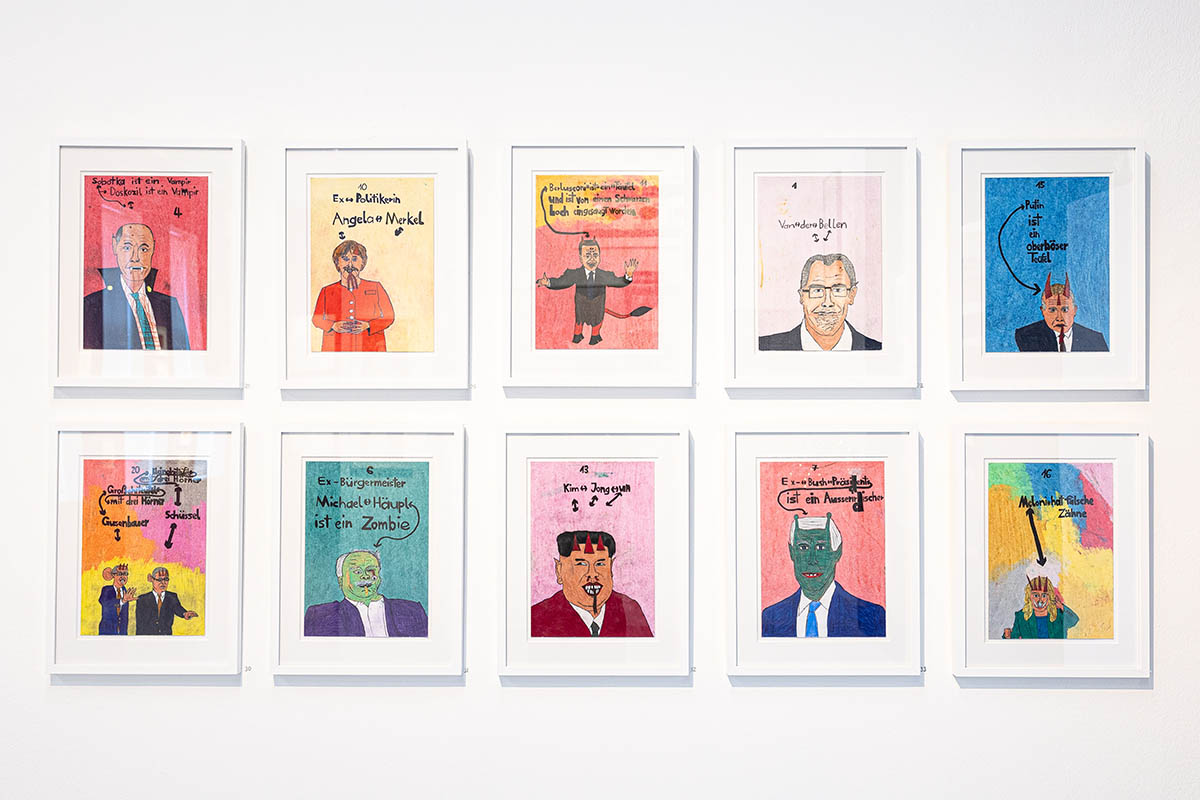
And then there is his politician series, in which he has portrayed politicians and added little captions or comments. Some of them are hilarious. When he came to the opening and saw that we had actually displayed them, he said: none of that is right, none of that is right — no, no, I only did that for fun. He never imagined anyone would show them. But we have had very good responses to those, too, because that directness, his direct access to people, comes straight through onto the paper.
How did you relate to the different scales of the works presented within the exhibition?
There is a range of sizes; you are right. Didier Kassaï works in a classic comic format. With Manuel Griebler, the large four-part work is very much the exception, but he said he needed the space to express everything he wanted to, and he was right. They all work on paper or slightly heavier cardstock for larger formats.
I find something genuinely beautiful in that consistency visible in their works. Raw is perhaps the right word: their approach is simple, unmediated.
And all of them are self-taught. We need to mention that in Central Africa, there is no art school where you can study formally. They all chose paper as their medium because it allows them to express themselves so freely. With Kassaï, it becomes more complex: the watercolors are genuinely a demanding technique. Something like canvas wouldn’t have worked. It was only when everything was complete that I realized what unites all the works: clearly, that they are all on paper, and that the scale, however varied, is always considered.
What would you say is the common ground that all positions share?
Next to the thematic connections and the comic characteristics of all the works we see in the exhibition, the color palettes and intensely detailed works. The common ground is, in fact, the reduction to basic materials: paper in specific sizes, colored pencils. Even Manuel Griebler’s large work is divided into four parts, which remain manageable. With work by Lehner Hannes, it is that standard comic format, or double that at most. And what unites them, I have to say honestly, is the self-taught approach, a universal visual language. Then there is the influence of comics, but then also with Hannes Lehner’s caricatures of politicians, it becomes slightly political. That is true for other artists as well, but it is presented in a way that you can somehow easily take it in.
Group exhibition: COMICS brut with works by Manuel Griebler, Hannes Lehner, Didier Kassaï, and Basel Al-Bazzaz, curated by Nina Katschnig
Exhibition duration: June 3 to September 13, 2026
Address and contact:
galerie gugging
Am Campus 2
3400 Maria Gugging, Klosterneuburg
www.galeriegugging.com
Manuel Griebler (1991, Kirchdorf, Austria). Gugging artist, lives, and works at the House of Artists, Maria Gugging | Hannes Lehner (1986, Vienna, Austria). Lives and works in Vienna, active at the Werkstätten Im Werd | Didier Kassaï (1974, Sibut, Central African Republic). Lives and works in Bangui | Basel Al-Bazzaz (1973, Baghdad, Iraq). Lives and works in a socio-therapeutic print workshop in Vienna-Mauer.