The ideological project of the Soviet era was a totalizing pedagogical environment that sought to penetrate the interiority of the citizen itself. In „May the Sun Always Shine,“ I conduct an inquiry into this historical apparatus, deconstructing the visual syntax through which a state sought to bind the individual into a singular, unwavering collective whole. I treat these artifacts as the raw, unrefined material of a social experiment that transformed political ambition into the very fabric of everyday life.
To speak of the socialist project is to acknowledge the transformation of the human subject into a relational organism: a cell within a larger, deliberate composition. By shifting our perspective toward these remnants: the playgrounds, the badges, the monumental mosaics, we observe how a state-sponsored optimism was built into concrete and steel. The goal was a total synchronization of the psyche with the demands of the state, a process wherein play itself became a form of productive rehearsal for a highly technological future. In this sense, the exhibition asks not whether this project succeeded or failed, but rather how it shaped the very ground upon which we now stand and how it continues to exist across our present moment.
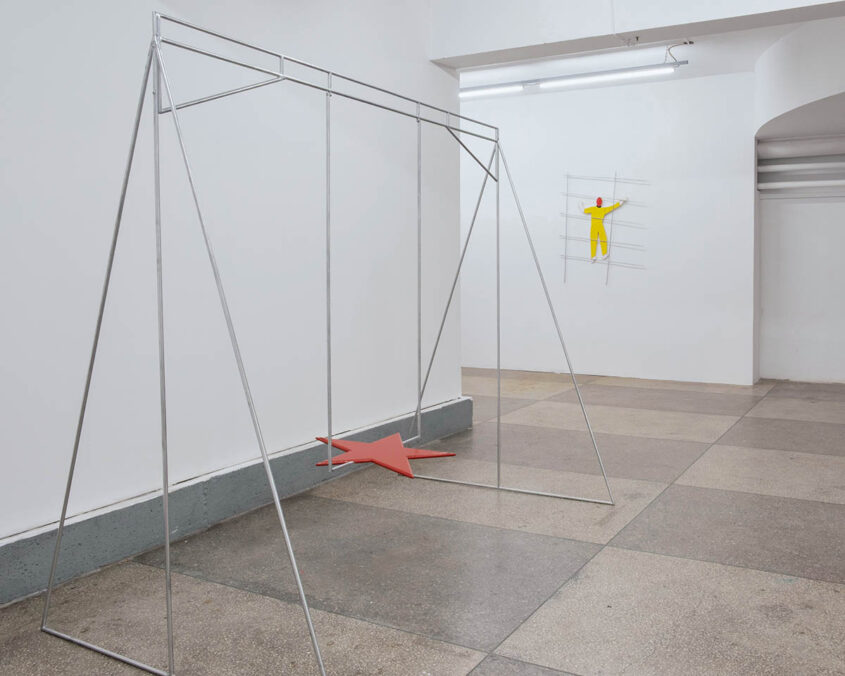
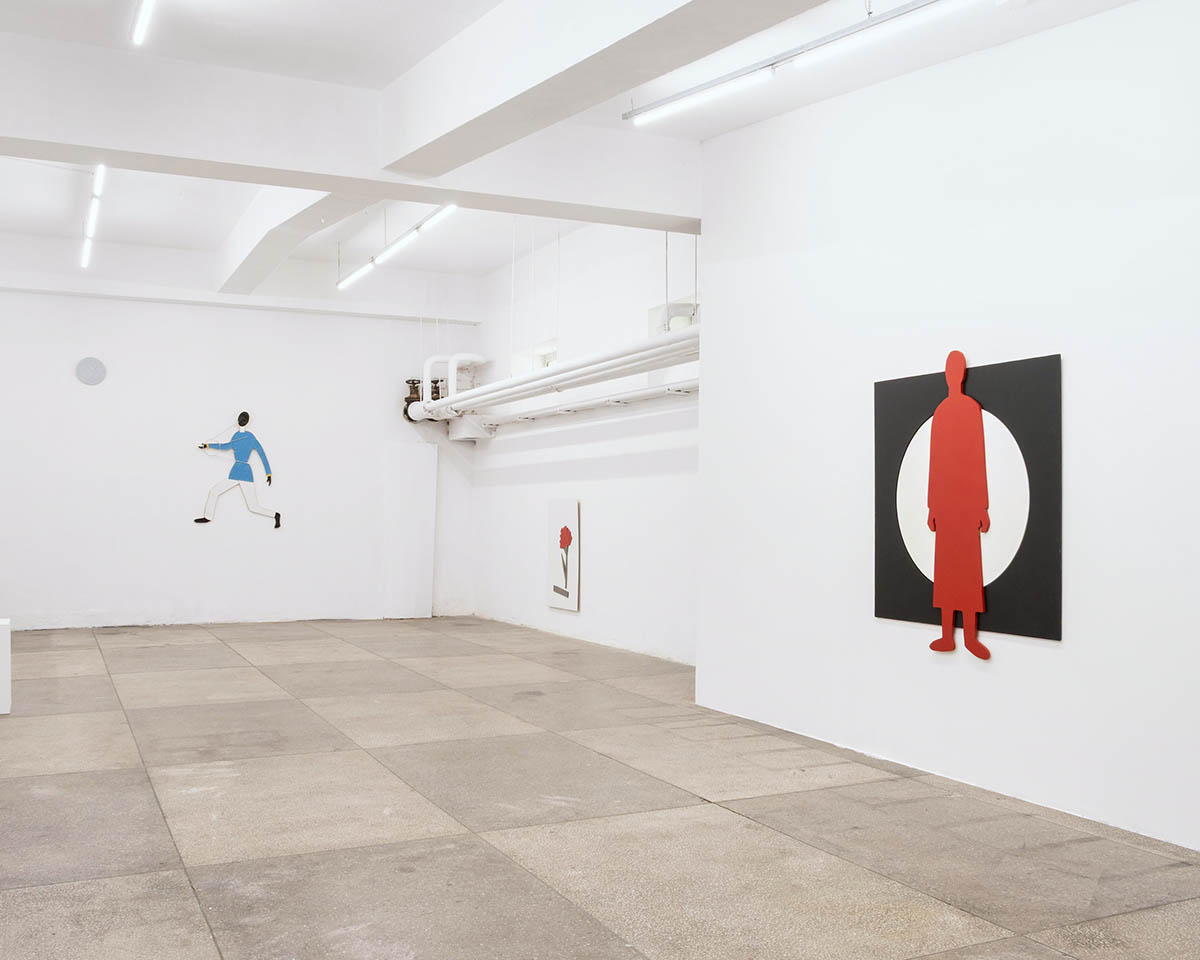
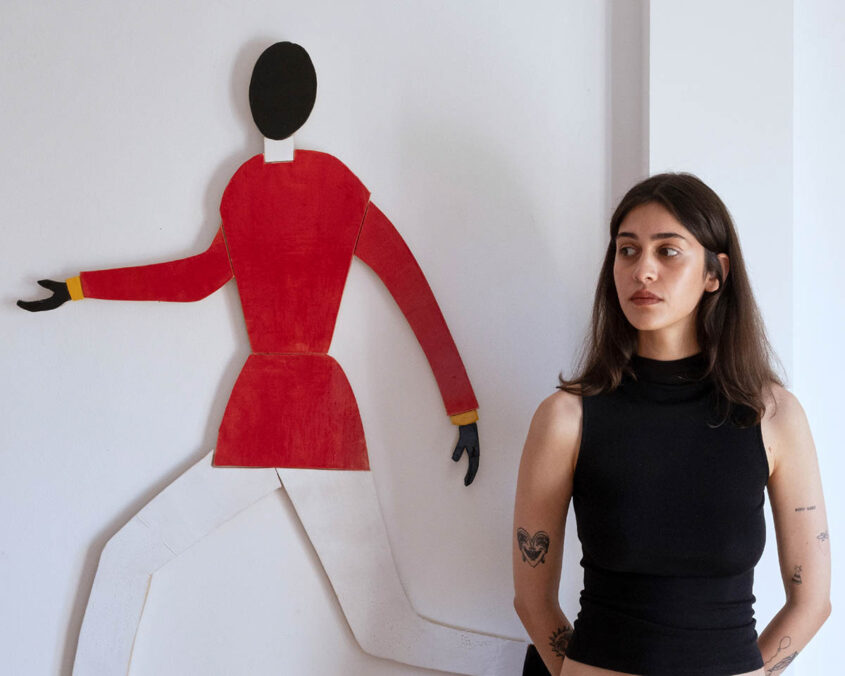
The exhibition forces a re-evaluation of the heroes produced by this machine, figures who were meant to live as the archetypal models for the „New Soviet Man“. These were functional symbols, designed to be internalized by the citizen as aspirational mirrors of their own potential.
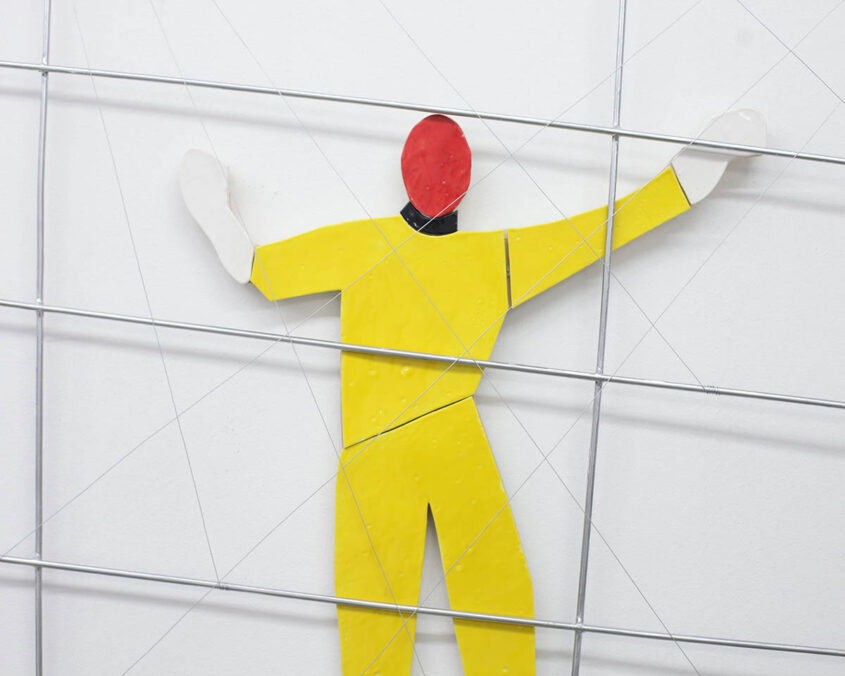
This piece interrogates the Leninist dictum that socialism is the synthesis of Soviet power and total electrification. The electrician emerges here both as a laborer and an image of progress, capturing the transition from a darkened, traditional past to a luminous, industrial dawn. He stands at the threshold, his hands poised to channel the very current of history itself. By isolating this figure, sourced from the pages of children’s literature, in glazed ceramics and metal, I analyze the state’s technical promises. It is a study of how this mastery taught the individual the gravity of a state-defined destiny that transformed an act of connecting wires into a participation in the construction of a new world.
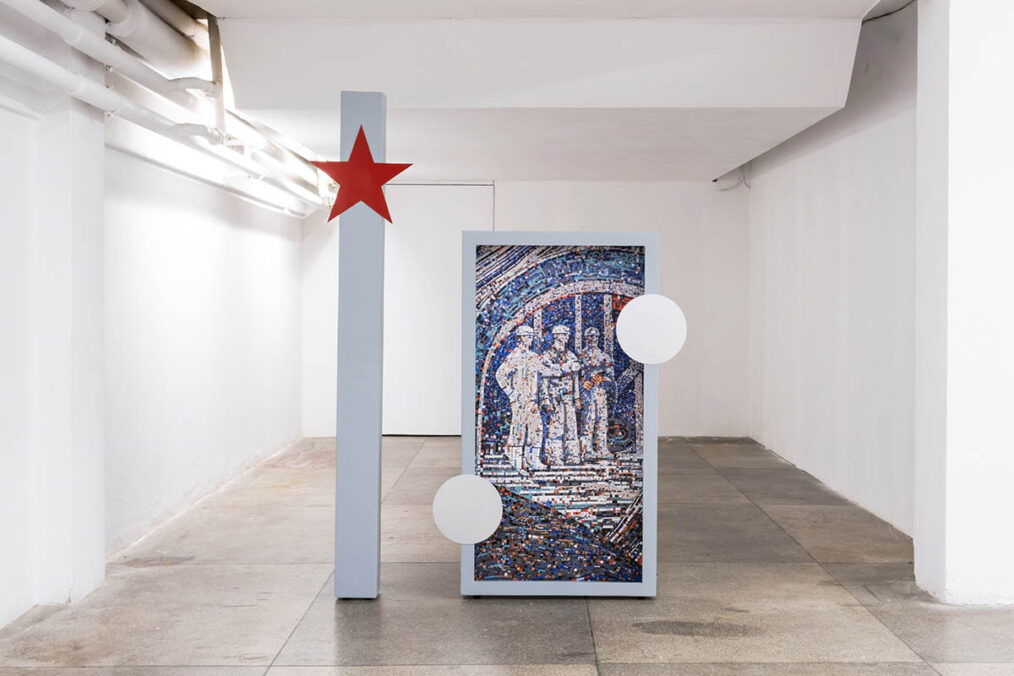
“Heroes of Labour” confronts the iconographic legacy of the miner, a figure whose presence in Romanian mining towns was essential to the national imagination. Drawing from the monumental mosaic in Vulcan, this work looks into the transition of the laborer from a bourgeois individualist to a pillar of the common good. The miner, with his pickaxe and helmet, becomes a terrestrial explorer, a hero whose toil beneath the earth mirrors the revolutionary struggle above it. Here, the photographic extraction and transposition shows that public art was a constant, unavoidable reference point for the collective consciousness. It is an investigation into the durability of these heroic images, which were designed to mold the personality of the individual with the requirements of the state. Yet within this durability, we find something unexpectedly human: the miners’ gaze, captured from the mosaics, seems to look beyond his own epoch, as if aware of his own eventual transformation from living ideal.
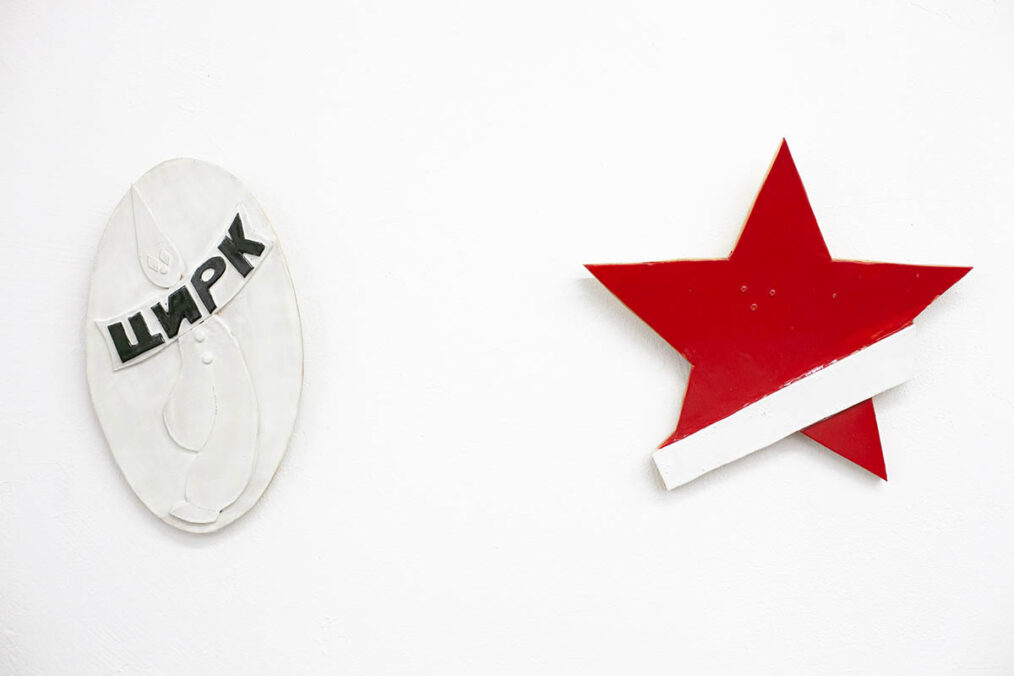
As we engage with the remnants of these cosmic communist aspirations, we must recognize that the failure of the utopian project did not necessarily strip its material forms of their power. We are currently witnessing a period of unlikely limbo, where the futuristic structures of the past remain embedded in our landscape, awaiting a new context, a new interpretation. They stand as monuments to a future that never arrived, suspended between the certainty of their creation and the ambiguity of their present existence.
„May the Sun Always Shine“ operates as an archaeological site of this aspiration. I am not interested in a passive historical account, but in the dialectical tension between the original intent of these forms and their current, post-ideological existence. Just as the playground was once a site for the standardization of social futures, it now invites a different kind of exploration, one that recognizes the human necessity for interaction and collective meaning.
The title of the project pulls its meaning from the iconic Soviet children’s song, which turned a simple drawing into a central promise of state optimism. This refrain reflects the era’s ambition to lock time into a permanent „always“, where the state worked to ensure the light of its progress would never fade. It links the innocence of a child’s wish directly to the massive infrastructure designed to guarantee that dream, mirroring the fragile human desire for continuity. In this sense, the exhibition itself becomes a kind of prayer for an understanding of what it meant to believe in the permanence of the Sun and what it means now to stand in its afterglow, searching for our own light on the horizon.
Exhibition: Andreea Ilie – May the Sun Always Shine
Exhibition duration: 25 June – 31 August 2026
Venue: MNȚRplusC, basement of the National Museum of the Romanian Peasant, Șoseaua Pavel D. Kiseleff 3, Bucharest, Romania | www.instagram.com/mntrplusc/
Andreea Ilie – www.instagram.com/andreeailiee
Andreea Ilie (b. 2001, Romania) is a visual artist whose practice explores the relationship between architecture and the human psyche. Her work investigates the essence of social buildings and communal spaces, emphasizing their role in shaping the modern individual. By understanding societal structures not as isolated forms, but as reflections of prevailing economic conditions and social relations, she seeks to reveal the true purpose of these environments and highlight the importance of collective experiences in contemporary life.
Through an interdisciplinary approach that incorporates photography and sculpture, Ilie recontextualizes architectural structures and artifacts, transforming them from remnants of the past into autonomous objects. Her practice deconstructs the tension between form and function, treating historical remains as laboratory samples that analyze interrupted social experiments. By examining how built environments, particularly those influenced by socialist theories, function as instruments of ideological cohesion, she aims to foster unity and meaning in shared environments, countering the sense of alienation often found in modern life. Ultimately, her work interrogates how societies shape their future through the built environment, inviting a reflection on the intersections of architecture, memory and power.