

The Format ”Immediate Matters” already existed as a part of Klima Biennale Wien, but in a slightly different form. Back then, several independent spaces in Vienna participated, and there was an open call before to decide on participation. Tell us about the concept you initiated and curated this year, and how you selected the spaces that are taking part.
Klima Biennale Wien Team actually invited me last year, at the beginning of the summer, to curate the second edition of „Immediate Matters“ program. It was crucial to me that the participating spaces would receive a bit more support to realize their shows, because previously the budget was really minimal. I also wanted the freedom to invite the spaces myself, rather than go through an open call as it happened during the previous edition. These conditions were met, thanks to my colleague Dorothea Trappel, working at the Klima Biennale. In a city like Vienna, where there are more then hundred independent art spaces, selecting just ten through an open call can be tricky. I think inviting them directly makes the process more transparent.
I wrote a short, polyphonic text as a kind of introduction, and with this text I invited ten spaces, the text includes expanded quotes from different thinkers and artists, voices through which to reflect on the topic of this year’s edition of Klima Biennale Wien “Unspeakable Worlds”. Not “words,” but “worlds” that we live in. I found that title very interesting, but also a bit problematic. When you use “unspeakable” in relation to nature or the environment, it risks implying that nature is impenetrable, something beyond human understanding. My curatorial and teaching practice often deals with language: its forms, hierarchies, and its role in power structures. Language defines us as humans, but it also functions historically as a colonial tool, a means to dispossess territories, bodies, and identities. So, with this project, entitled „Speak We Must We Must Speak,“ I invite to collectively reclaim language, to explore what it means today to speak again about everything, including what was once considered unspeakable.
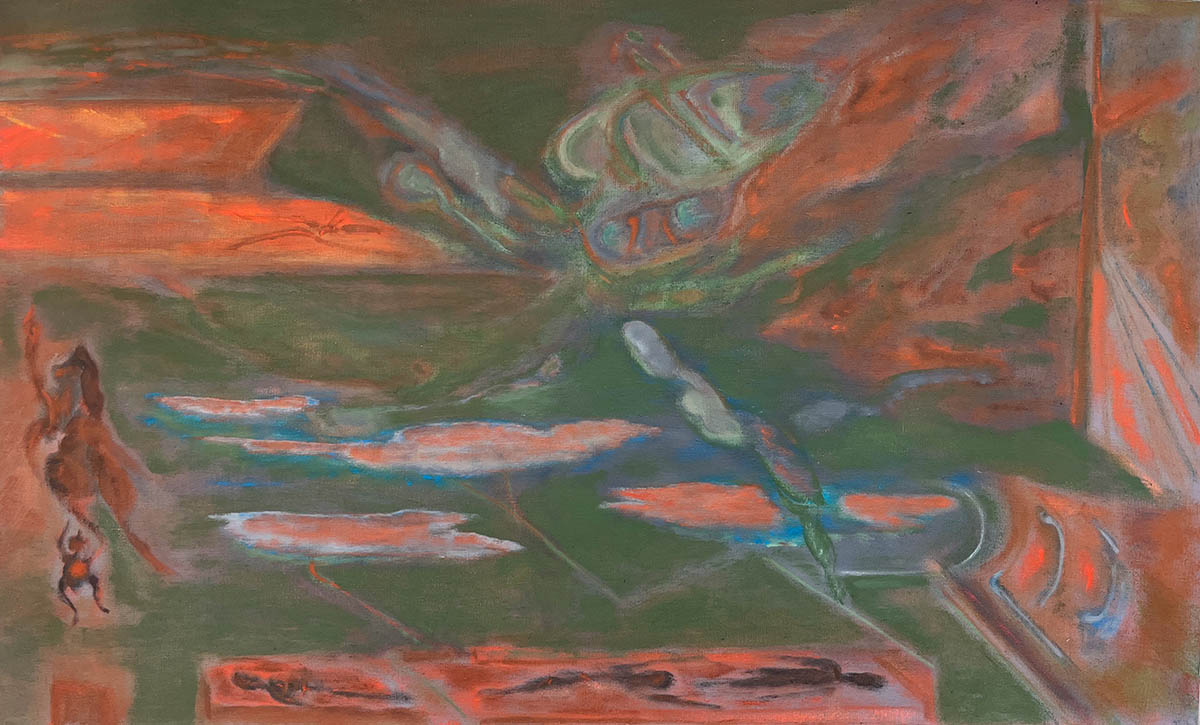
For me, the question was also: what does it mean today to choose different ways of speaking about environmental issues? Not a scientific language, not a bureaucratic language, but to think of some other form of language.
How can we bring back what ecofeminists have called an emotional, sensitive language, and through that maybe address differences in another way? Let us speak again about everything; and let us find other ways of speaking that may have been forgotten in the Western, colonial history of language. Let us find other ways to articulate language, not only human language. Let’s acknowledge more-than-human languages, acknowledge artistic languages, and acknowledge forms of relating to the world through knowledge systems that have been silenced, such as Indigenous knowledge.
When we say “language,” most of the people would think of words on paper, or the words we are saying to each other now. But, as you said, language in a broader sense can also be artistic or visual. How do you think this broad idea of language will translate into the exhibitions? Do you imagine them somehow “speaking together” toward something? Is there a chain that connects them? Did you give them full freedom to direct their programs?
It was very clear from the beginning that I would invite the spaces with this text, and by accepting to be part, they were in a way agreeing to relate to the text as well. From that moment on, I trusted them. I did not want to orient or control their programs in any way. They are the curators of their shows, fully. Depending on my relationship with each space and its way of working, some involved me more, some less. One could, of course, try to artificially trace a red thread through all of them, or impose one. Sharing this text and the many quotes it is made of was enough for me. From the moment the words and thoughts of so many are shared, they begin working in the readers, even unconsciously. What I wanted was not to force a common message, but to let something happen.
We are, as one says in French, traversed by language. Language works through us all the time. I think this is exactly what happens here. For me, there is a line running through the project, less in terms of strategy and more in terms of a shared quality: how to use different forms of language to shrink this ontological distance that humans have been taught to perceive between themselves and “nature,” or between themselves and more-than-human beings.
What I wanted was a polyphony and a polyvocality. This was important in the framework of the Klima Biennale Wien, which addresses the climate crisis. I also mention in the text that even the term “climate crisis” is limited; it does not fully name the multi-layered devastation that is ongoing.It is not only about the environment as such, but also about the working environments we create. This part of the biennale needed to be decentralized, really embedded in an existing ecology of spaces and relationships in Vienna, rather than in a single central exhibition.
In that sense, decentralization is also a way of working on the ecology of relationships. Often, when we speak about climate, the focus is “we must be more respectful towards nature,” as if there is always this human–nature divide. But it already begins among humans: how we work with each other, how we speak to each other.
“Think we must” seems as relevant as it was in 1938 when proposed by Virginia Woolf in an essay-long response to the question: “How, in your opinion, are we to prevent war?” How does the “freedom” of making such decisions for this part of the program relate to the title and to your references? I understood the title as a reference to Donna Jeanne Haraway and Virginia Woolf, and you actually use both: Woolf’s “Think we must” and Haraway’s echo of that phrase “Think we must; we must think!” It even feels like Woolf’s text is particularly important for you.
They are both, actually, very important. What matters to me is as much what both texts say and speak – in the sense of what they implicitly say – as the transgenerational chain between them: a feminist writer like Woolf, and a (post)feminist thinker like Haraway, who embraces and expands her words. Virginia Woolf wrote her essay in 1938; its title was essentially a question about how to prevent war. Of course, it did not prevent war – there have been wars everywhere since – but the question remains crucial and deeply political today. When Haraway takes up the phrase “think we must, we must think,” she does so in the context of “Staying with the Trouble: Making Kin in the Chthulucene”, where she is, among others, concerned with finding new stories that undo binaries between human and nature, subject and object, and so on. It is about finding new stories, but also perhaps a new grammar.
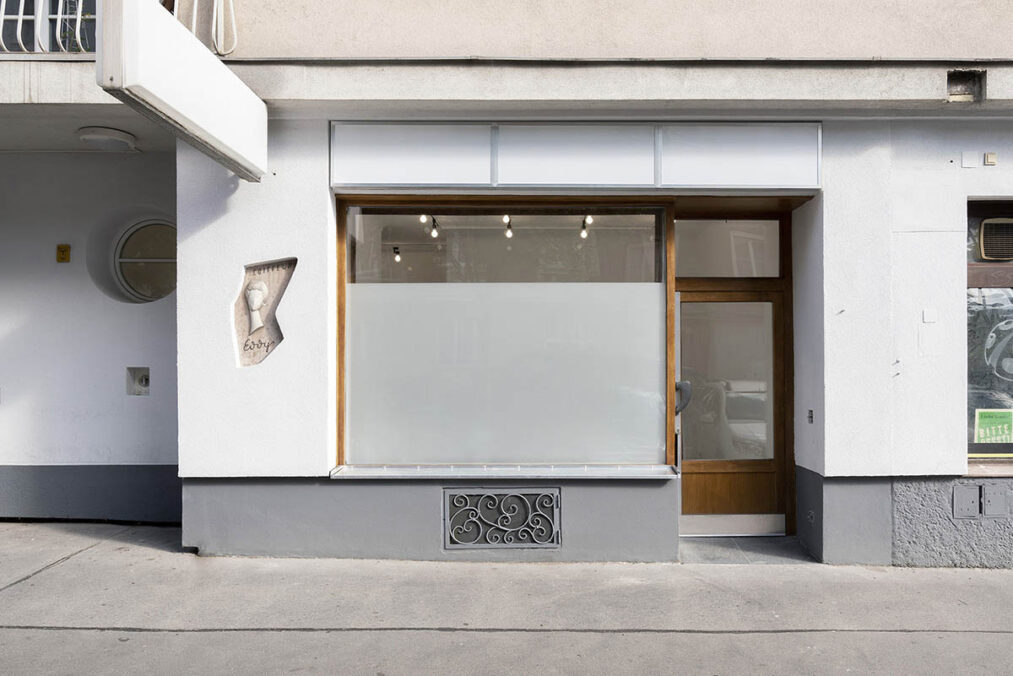
In French, you have two different words. “La langue” for the “tongue,” the mother tongue, something embodied that runs through you and, in a way, autonomizes itself, with or without your conscious will. “Le langage” that would translate more like “language” is an apparatus or infrastructure that allows people to connect or disconnect, shaped and instrumentalized by ideologies and power structures over time. Both dimensions are important for the exhibition. The “tongue” links back to Haraway and the need for embodied storytelling: narratives that articulate a relationship to the world in a situated way, that refuse fixed positions, and that do not simply reinstall the binaries we discussed.
The “must” that runs through this whole chain of reactions from Woolf, Haraway, and now you. It can be read as an urge or better urgency. How would you describe it?
The urge to take responsibility. But also the urge to acknowledge that human responsibility is not one, single thing. There are different kinds of responsibilities within the human species, which is, of course, tied to the history of colonialism and its afterlives today.
What are the concrete examples from the program? What urge do you feel is being worked through in the exhibitions we are going to see?
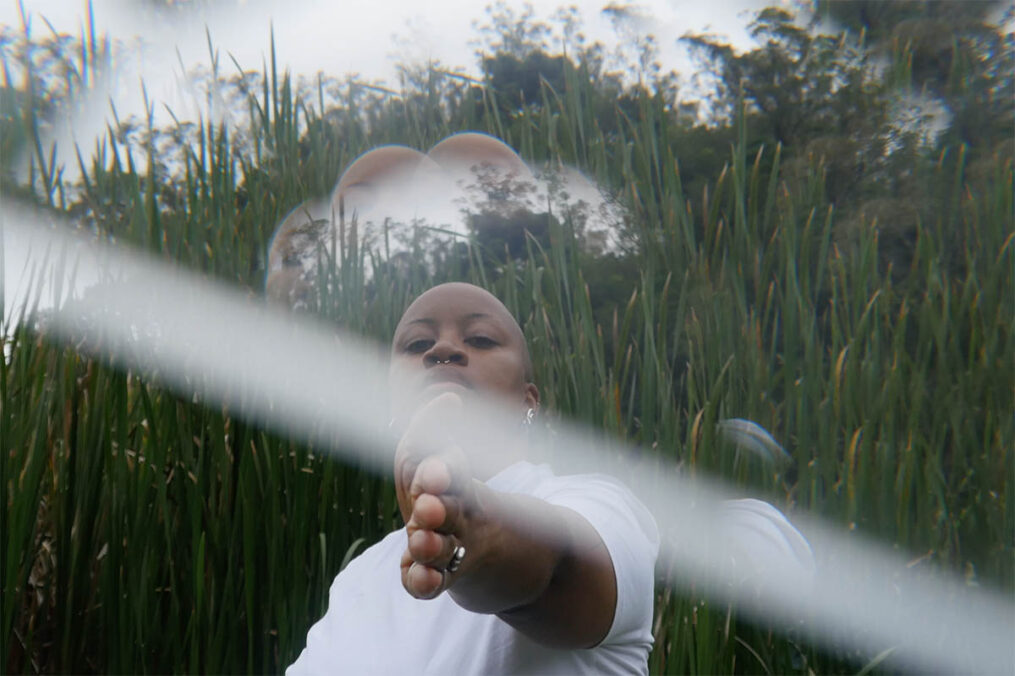
This comes up, for example, in one of the exhibitions at ENTRE, artist Soñ Gweha developing a site-specific, sonic and audio-poetic installation focusing on a snail, a species called Achatina (“Kôô,” as Cameroon’s Bassa people call it). This snail is often described as one of the most dangerous and invasive in the world. When you talk about a species as “invasive,” whether plant or animal, you reproduce a problematic ideological divide between what is seen as rooted, belonging to a place and therefore granted the right to stay, and what is seen as foreign or alien, brought in, often by humans themselves, through colonial trade and movements. This is one of the tensions addressed in the exhibition “Kôô: Libations for Grief” curated by Guilherme Maggessi, Rafal Morusiewicz, and Marilyn Volkman.
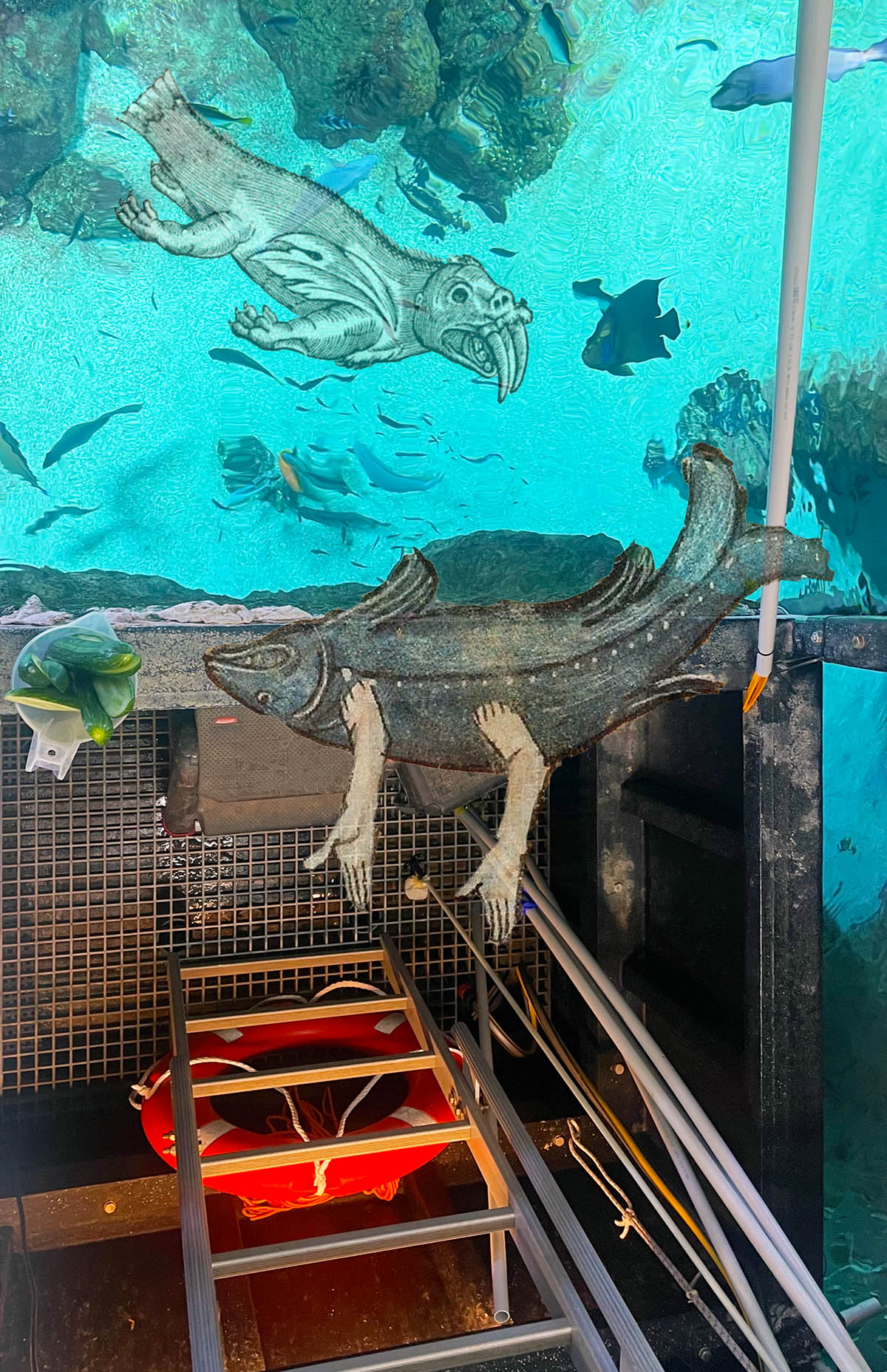
Another exhibition, curated by Carmen Hines and Lisa Jäger at WAF, is titled “Fishy Business: Hydromorphologies and Wetware,” featuring artists Nikolaus Eckhard, Christina Gruber, and Elena Rocabert. WAF has long been engaged with questions of more-than-human life, animality, and so on. If the exhibition at ENTRE leans maybe more strongly into a decolonial angle (using this broad term just for clarity) while speaking through a more-than-human being, this one at WAF focuses more on post-human and more-than-human aspects – and the need to weave human and more-than-human expressions. At the core of the show are aquatic prostheses: biological, technological, but also philosophical, applied to fish, to humans, in a materialist and in a metaphorical way. The question is: how can these hybridization processes help us rethink our relationship to the environment? How can they help us imagine thinking and speaking as something decentralized? Another urge is to acknowledge already existing forms of language and communication in more-than-human species and to ask how we might reconnect with them. What would it mean to “become” a plant or a fish, even just imaginatively? What would that do to our human sense of self?
The exhibition will be accompanied by a rich program, including, among others, an early-bird canoe ride. For the whole duration of Klima Biennale Wien, each morning at 7 AM, the artist Nikolaus Eckhard and the canoe Mae Young will be waiting at the Danube next to the Peace Pagoda Vienna to welcome people for a joint ride, and examinations of the waters, stones, and animals.
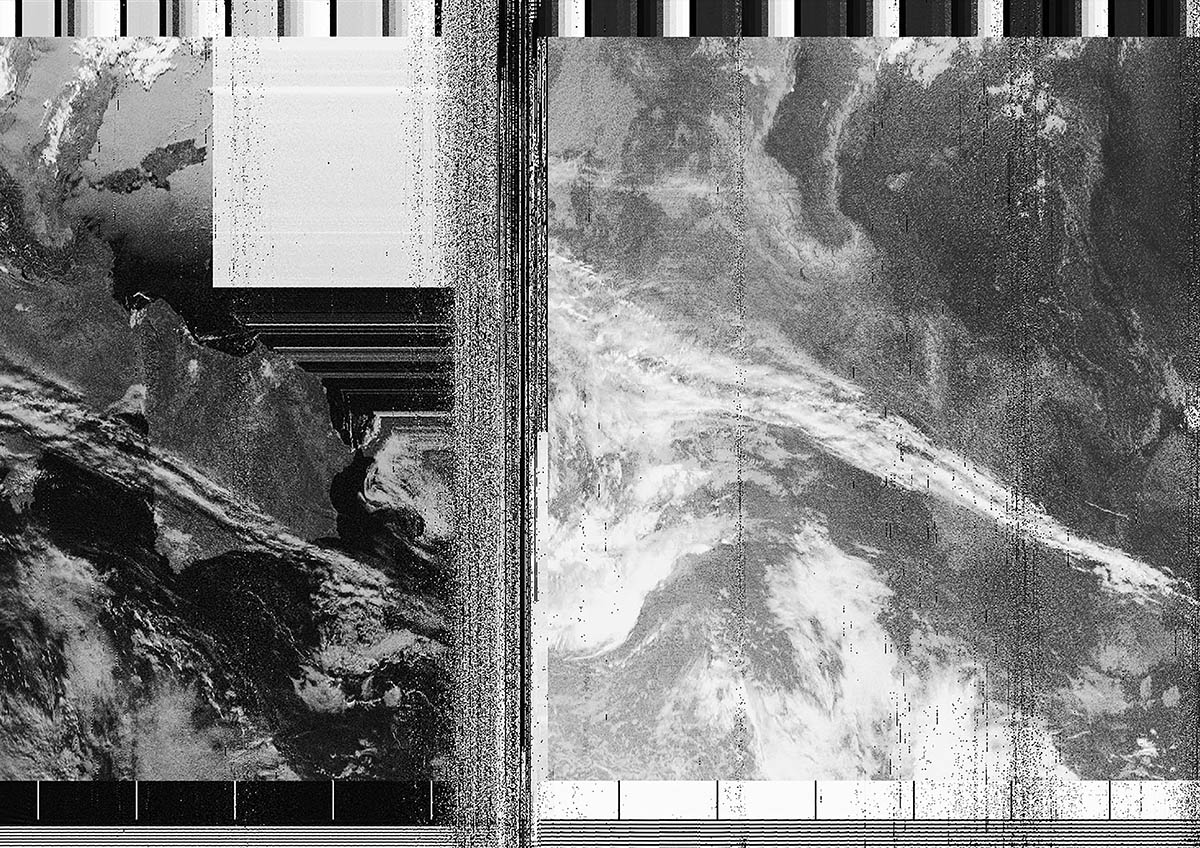
At Echo Correspondence space, curator Juni-Nyusta Ruckendorfer decided to work with artist featuring the artist Sophie Dyer from the collective open weather, a feminist, technology-oriented research collective founded by designer and researcher Sophie Dyer in the UK, together with Sasha Engelmann. About five years ago, they decided to work with something they knew would soon come to an end: analogue weather satellites. They use this existing, but already outdated, technological infrastructure to ask: what do “space” and “outer space” mean – in a time of expanded geo-localization and overall capture? What does it mean to map meteorological phenomena? What does it mean when a specific infrastructure becomes the main channel through which information circulates: location data, atmospheric data, and signals moving from Earth to sky and back again? And then, what would it mean if such infrastructures were no longer privatized or controlled exclusively by big states, but functioned on a different, collaborative layer? This is another way in which the exhibition addresses the urge to rethink responsibility, technology, and our modes of relating to the world.
open weather decided to go to Schafberg, to move out of the city and set up a satellite ground station there during the Biennale. We will observe together from this temporary ground station. In September 2025, the president of the US administration shut down the last remaining analogue weather satellite service, so there is also the dimension of remnants from the past. This is important in the exhibition too: being haunted by languages, by embodied languages, or by specific devices that “speak” in a very different way. In this case, language takes the form of information and signal. The project is about working with this haunting, not letting these things completely vanish.
How important were the visions and general concepts of these ten independent spaces themselves in your selection? Their ongoing interests, the way they work; did this play a central role?
Spaces that had already taken part in the first edition were not re-invited. Also, it was important for me to invite different generations of spaces: some that have existed for a long time, keystones in the Vienna landscape, and some that are more recent and maybe more experimental. I invited spaces from which I know that they try, in spite of precarious conditions, to work ethically with the artists and with their collaborators. This is based either on direct experience or, sometimes, on gossip. This is serious: gossip is light talk, but it is also a form of language – reclaimed by feminists – that says a lot about a milieu and takes care of it. It is a way of sharing knowledge about how people – among other things – actually work together.
Because there would be guided tours, it was also necessary to have a certain spread across the city. A multidisciplinary approach was also very important. eindorf is strongly rooted in performing arts. Artist Linda Samaraweerowa, for instance, is very interesting to me because she has developed somatic practices, a more spiritual way of reconnecting through the many languages of the body. Ateindorf, they decided to focus on “Crisis of Sensitivity,” which is the title of their exhibition. Next to Linda Samaraweerowa, the artists Guadalupe Aldrete and Daniel Zimmermann – who are all three curators of the show – will feature their work alongside Masoumeh Jalalieh’s artistic practice. They are transforming the whole space into a kind of resonant echo chamber in which different artistic practices are interconnected. I find it exciting that this brings in a genealogy coming from performance. What I admire about eindorf is that the space supports the performing arts scene on different levels. They feature artists’ work, they offer artists their space as a studio, and they host short residencies, sometimes for free, sometimes for a small fee. This invisible labor is crucial.
The independent art scene makes Vienna a very rich and interesting place – in terms of art and in terms of structures. Without these spaces, the city would miss a lot, because (big) institutions do not do this kind of work.
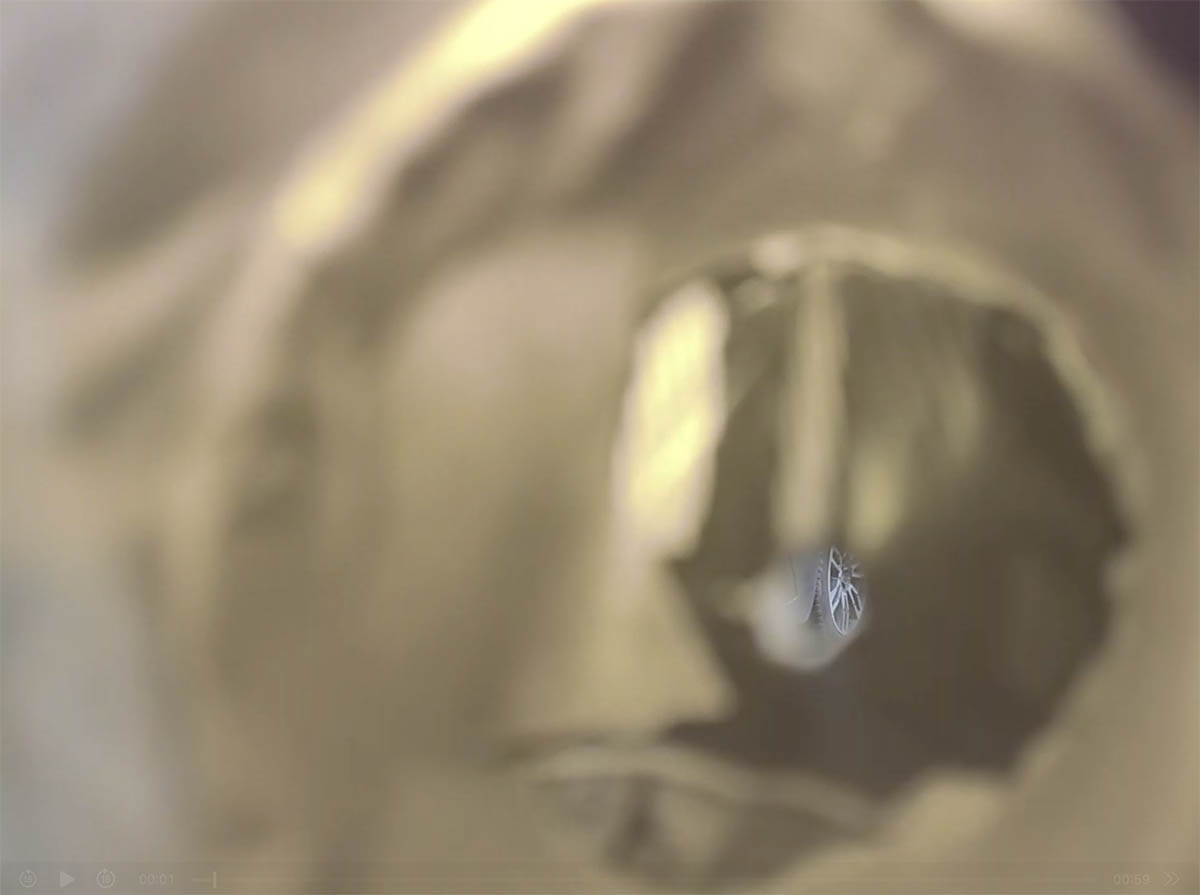
At Kunstverein Kevin, a new generation of directors, with Gina Merz and Michał Leszuk, was coming in. I didn’t know what they would do, but I was very interested in what they had done before, and I felt it was important to welcome people who arrived, and their new energy. They decided to work with Copenhagen-based artist Asta Lynge and present her work in a solo exhibition format. The motifs and objects she works with are already charged with many layers of meaning, through their modes of production and circulation, but also through the mainstream techno-cultural context from which they are convoked. To transform them into artworks, the artist carries out operations of subtraction, accumulation, exhaustion, or hollowing out—both material and semiotic.
With Laurenz Space, I find it very interesting how they respond to the physical space in their program through the years, and they came up with this exhibition about flowers. Flowers are also fascinating when you think about language. Tell us more about it.
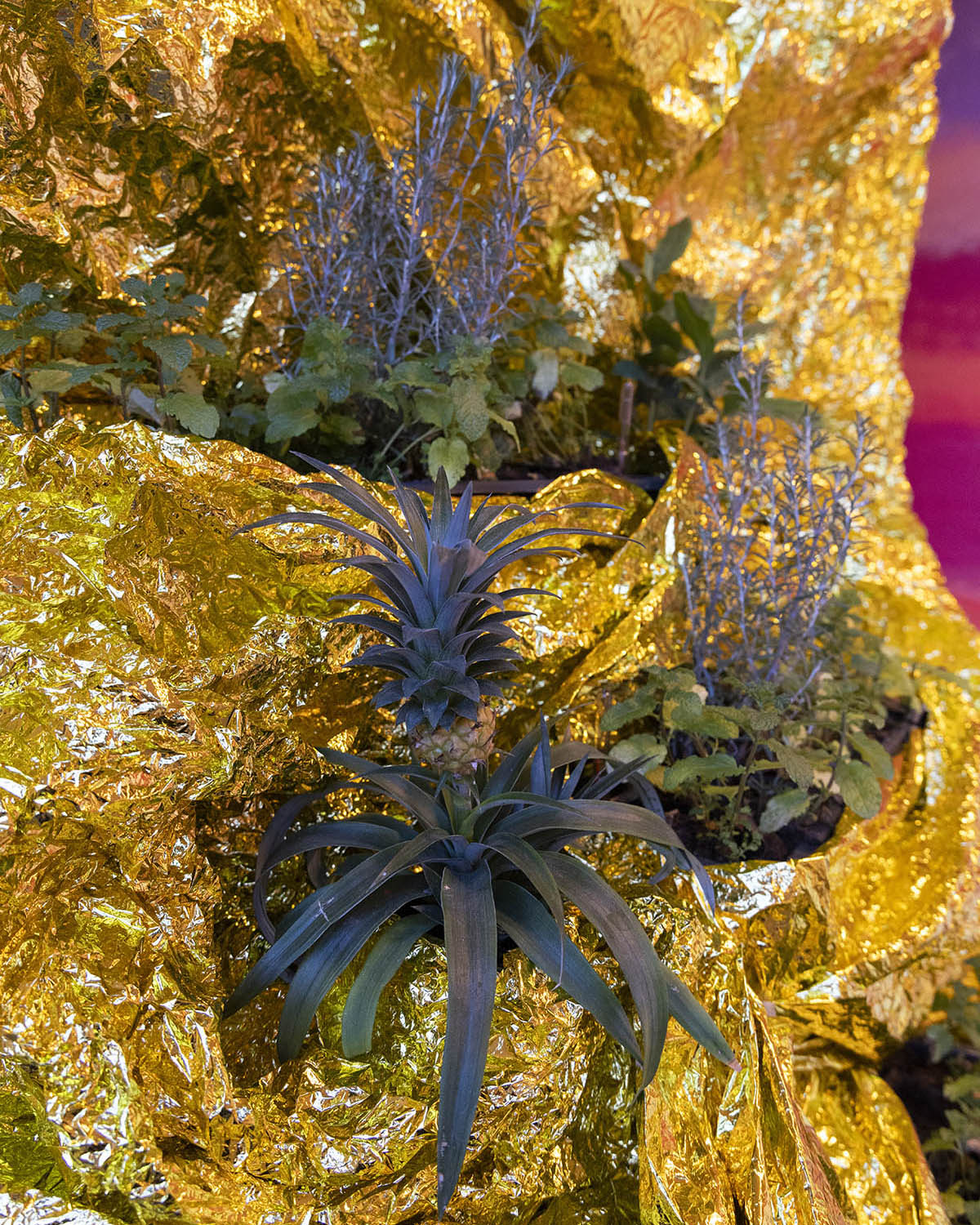
“flowers” is a group exhibition featuring works by Daniel Fonatti, Katharina Hoglinger, Maureen Kägi, Minne Kersten, Lucia Elena Pruša, Magali Reus, Jennifer Tee, and Anna Zemánková, as well as loaned works from the collection and archive of the University of Applied Arts Vienna. The exhibition is curated by the funders of the spaces, Monica Georgieva and Aaron Amar Bhamra.
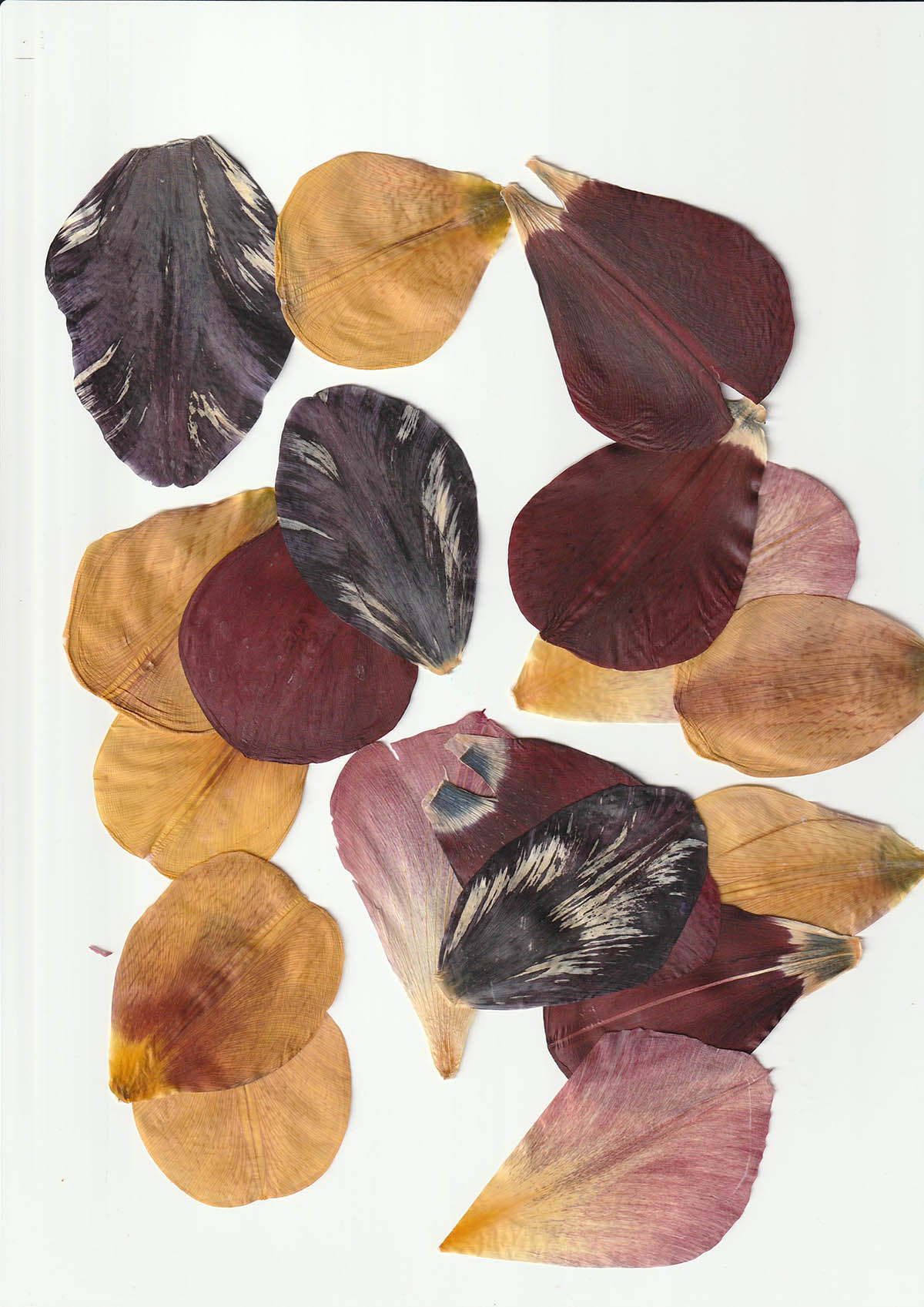
There has been a lot happening around flowers in the last few years, also in “bigger” biennales and other contexts—but it remains an important topic, especially in queer-feminist reclaimings of the symbolism of flowers, and of the hidden “language of flowers.” Flowers have been used as coded communication, and this has been both an instrument of norming behavior and, at the same time, a tool that could be twisted to mean something else.
Bruno Mokross, the founder ofPech, decided to work with the artist Johanna Charlotte Trede in a solo exhibition. Her work focuses on often overlooked and unnoticed details and relationships between things – objects, matter, infrastructures, bodies – in urban space. She finds materials she later exhibits on her walks outdoors, construction sites on the internet, or in texts. What is neglected, left alone, or – temporarily – abandoned interests her not only as a metaphor of late-capitalist society – but also almost as materialist poems of the ruins yet to come, that have the potential to affectively charge a situation, to magnetize it. Or at least this is the way I read her work.
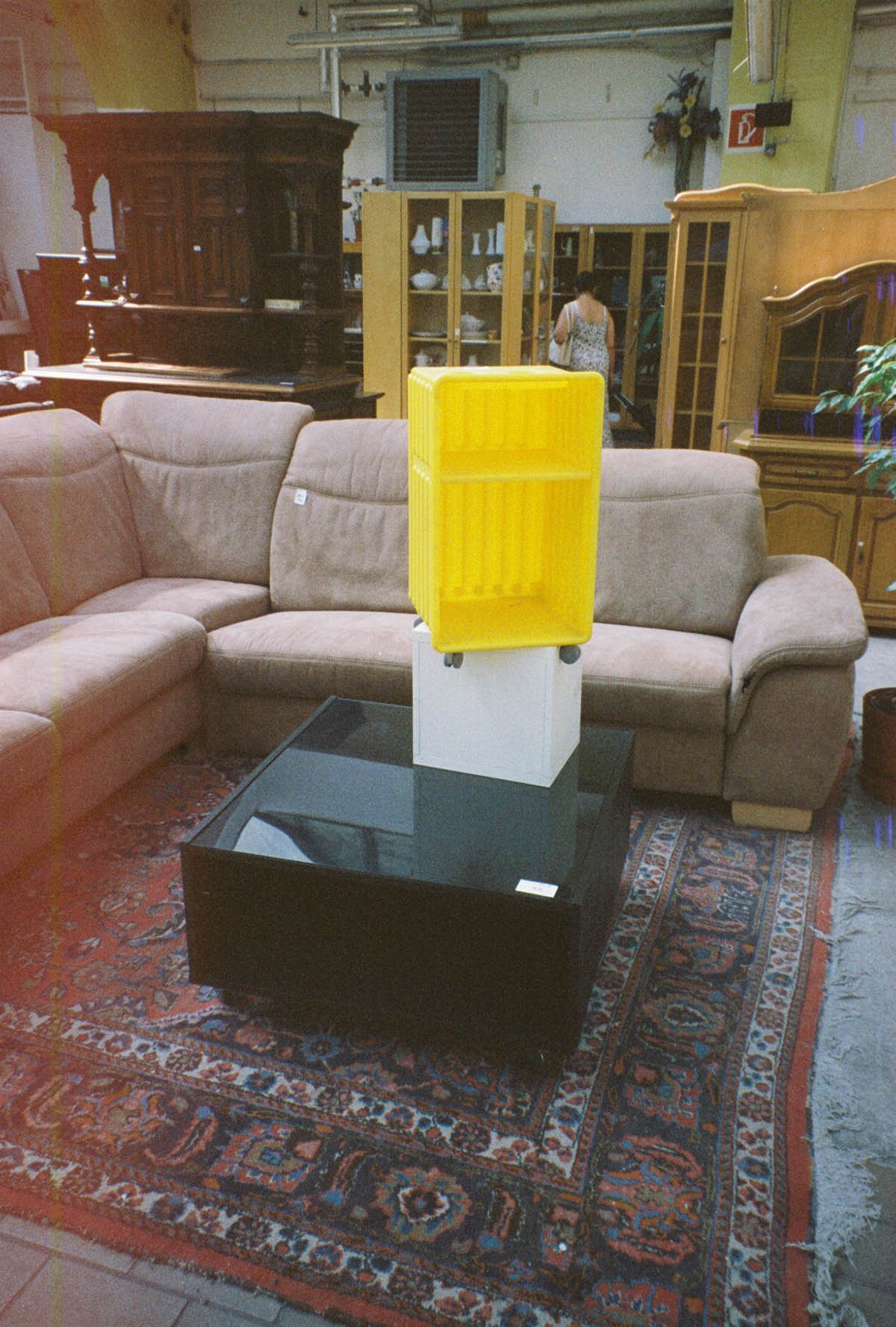
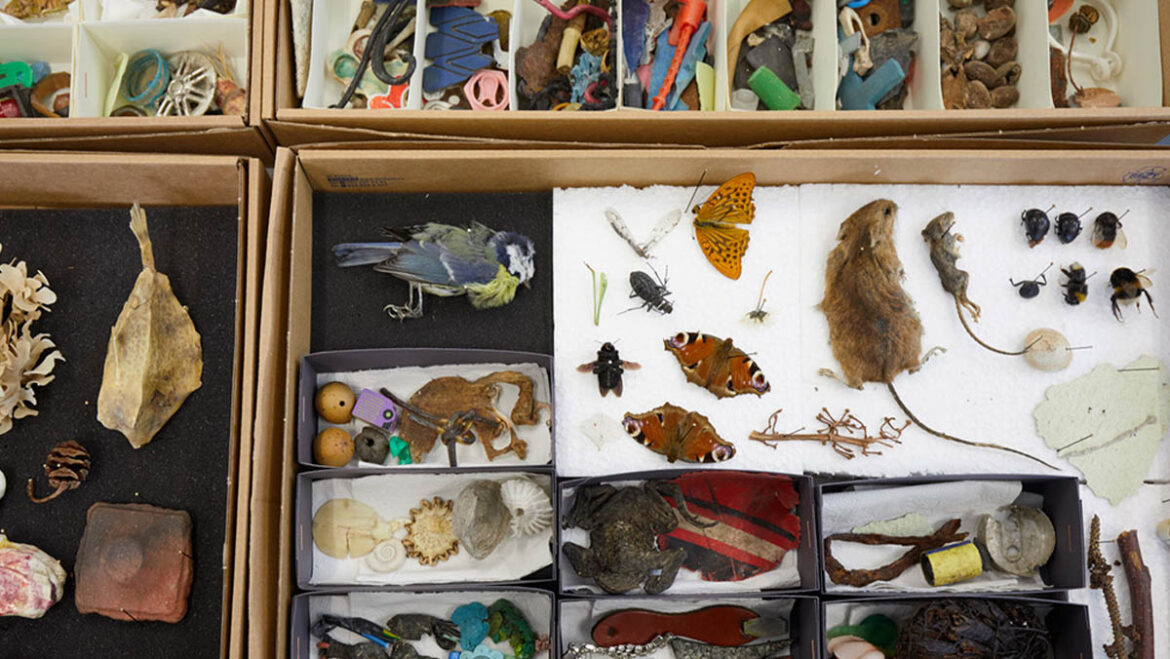
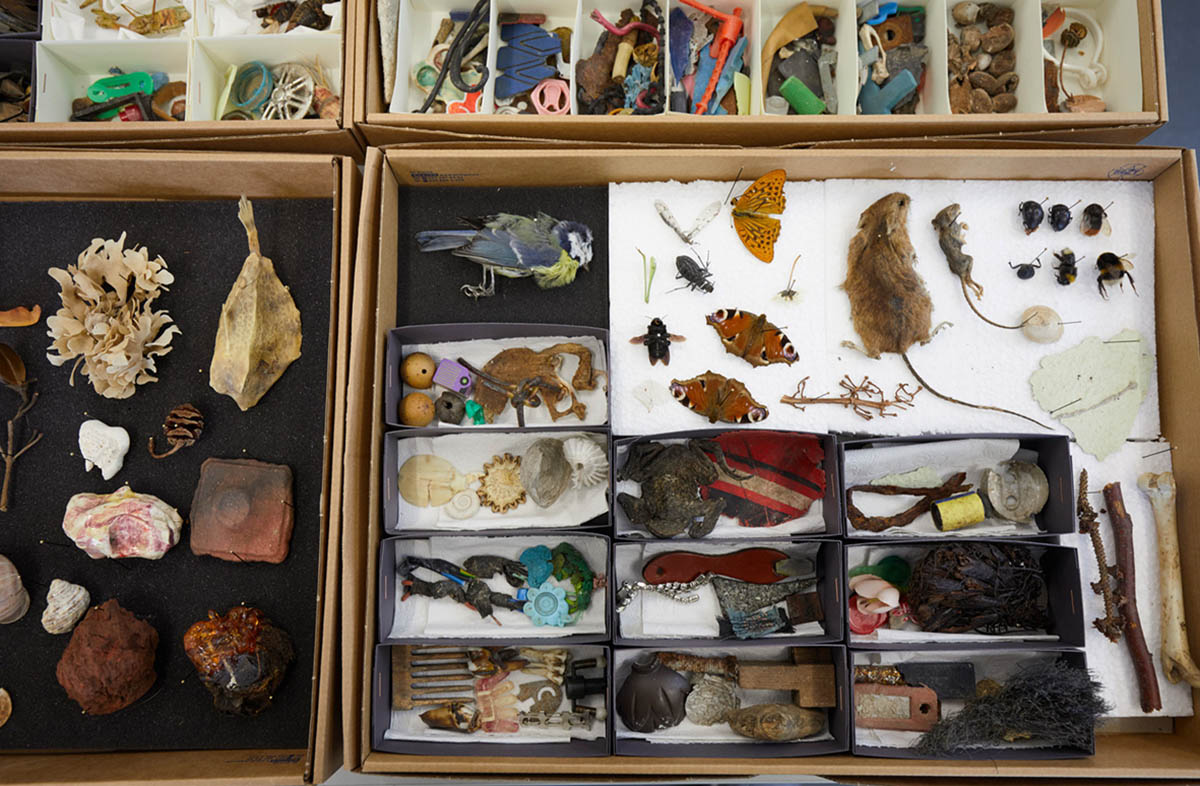
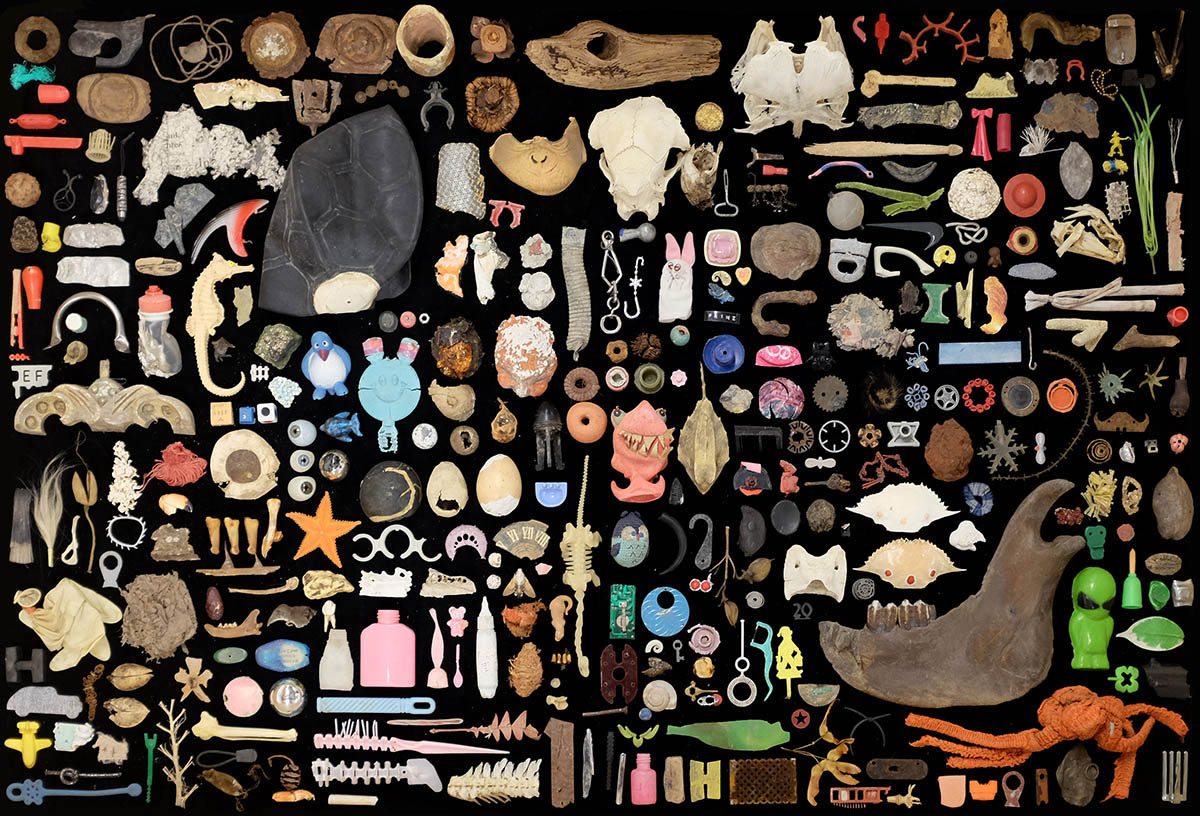
Nearby is the space SIZE MATTERS. Curated by Dariusz Kowalski and Sasha Pirker, a solo exhibition by artist Edith Payer will take place. She has built up over the years a kind of “fundus” of objects and materials that she has collected from the street for many reasons. When she is invited to do a show, she develops a presentation system based on hidden rules. If you pay attention, you can maybe reconstruct these rules, or discover your own. The artist arranges the objects in ways that raise questions about the society in which we live – consumerist, object-fetishist, and amnesiac at once.
We have, on the one hand, landfills and depots and, on the other, museums: two nervous centers where objects are accumulated: those that are discarded and those that are canonized. We live in a society that is constantly producing and discarding, and we also maintain a hierarchy of knowledge in which conceptual, written, immaterial thought stands at the top. Objects are often only foregrounded when words are missing. What if it were the other way around? These are some questions raised by this show.
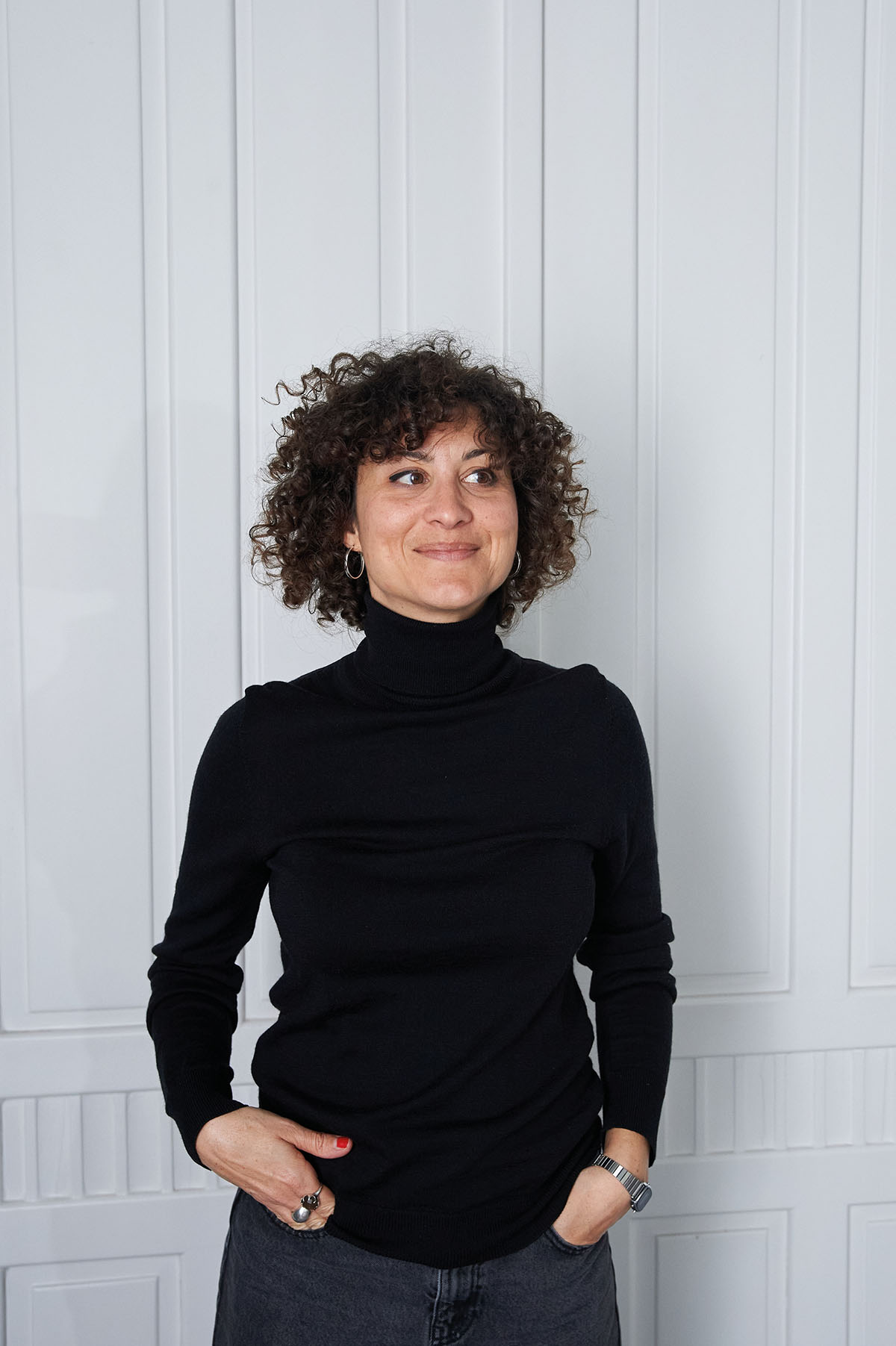
Schleuse in the fourth district is presenting the artist Vera Palme, who is a painter, realizing mostly but not only, abstract paintings, sometimes featuring text fragments. In this case, it was their decision not to have any text, following their exhibition, and I respected their policy and their way of dealing with things. Her artistic practice addresses the complex referentiality of painting as a medium – beyond what a specific painting refers to – and investigates how this never-ending multi-layering operates, materially, affectively, and socially, in the moment of reception. They contain layers and layers of references, so many that they tip over into abstraction. It becomes almost like an illustration of the failure of over-conceptualization. As a viewer, you end up reconnecting with what you actually see – instead of looking at what you don’t see. I find this contrast very interesting, also as a critique of art production and of the attention economy.
On the other side of the city, there is again the solo exhibition, this time by artist Ádám Ulbert, in new jörg, curated by Axel Koschier and Stefan Reiterer. Ulbert’s sculptural and painting practice is inhabited by an almost existential drive to look for and reactivate (ancient) ways to relate to earth beyond Western objectification and extraction – and which he found in art history, science fiction literature as well as in writings in ecology. His works serve both as repositories of ghostly memories and as channels for speculative more-than-human futures.
Klima Biennale Wien 2026
Immediate Matters. An exhibition programme in ten of Vienna’s independent art spaces.
Duration: 14 April – 10 May 2026
In the context of this year’s Klima Biennale Wien, Immediate Matters. Speak We Must We Must Speak is a program comprising ten exhibitions hosted by independent spaces in Vienna. Find more program highlights and details about Klima Biennale Wien here: www.biennale.wien
Anne Faucheret is an independent curator, writer, and university lecturer for contemporary art. She currently holds a position as Senior Scientist at the University of Applied Arts Vienna in the department Artistic Strategies.
Immediate Matters: An exhibition program in ten independent art spaces in Vienna. Under the title „Speak We Must We Must Speak,“ the ecological crisis is the central focus of artistic exploration. The climate crisis is a crisis of perception, sensitivity, relationality, and language. In the exhibitions, speaking does not represent the classification and domination of the world, but rather the reclaiming of complexity, the confrontation with discomfort, the forging of alliances, and the understanding of ecology as a system of relationships. With and curated by Echo Correspondence, eindorf, ENTRE, Kunstverein Kevin, Laurenz, new jörg, Pech, Schleuse, SIZE MATTERS . Raum für Kunst & Film and WAF.
With the vision and innovative power of art, the Klima Biennale Wien spurs the paradigm shift toward a livable and sustainable future on our planet. The key tools to achieve this objective are, without doubt, participation, collaboration, and awareness. The Biennale will stake out viable responses to the climate crisis together with the people of Vienna. The Klima Biennale Wien faces the challenge of making the highly complex and acute issues of global change, the climate crisis, species extinction, and the impacts on the human-nature fabric visible and tangible for everyone: because we urgently need to find new ways of sharing knowledge and discussing strategies together!