Would you share with us about yourself? In your curatorial work, what are your main interests?
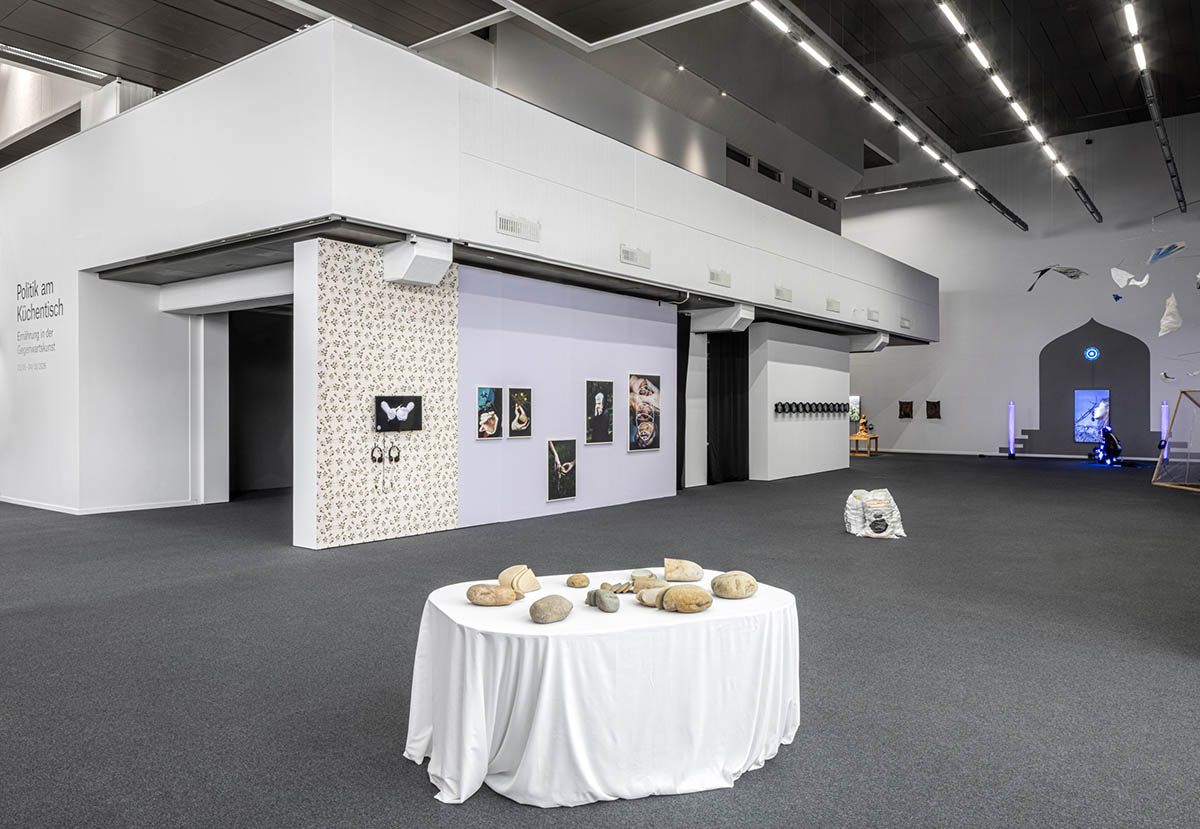
I’m genuinely interested in sociopolitical themes, particularly how we live together. The artistic interaction with these subjects is important in my curatorial work. I’ve worked at various institutions and have also realized independent projects. I am interested in art that’s accessible. So I like to explore what art is actually capable of, what potential it holds, and how to engage with it.
Politics at the Kitchentable. Nutrition in Contemporary Art evokes many thoughts. Tell us about the exhibition. How did you start it?
I have been working on artistic projects involving food, planning events where the food is created and consumed collectively. At the same time, I’ve also curated exhibitions on the relationship between bodies and microorganisms. Some of these various aspects I’ve observed or researched came together in this exhibition.
The exhibition focuses on how we are deeply connected through our nourishment.
Humans are heterotrophic, meaning we rely on others for sustenance, and in doing so, we are part of vast networks. Food seems so self-evident and natural. When you have access to it, you hardly pay attention to it. But currently we are struggling with major ecological, social, and political crises, and these, too, are repeatedly closely tied to food and nutrition and other people’s basic needs.
Eating is personal, and, at the same time, it connects us deeply with other living beings. It also has social and political implications that affect others. The title of the exhibition captures that certain tension between the political and the private. Society in the microcosm we’ve talked about—the kitchentable.
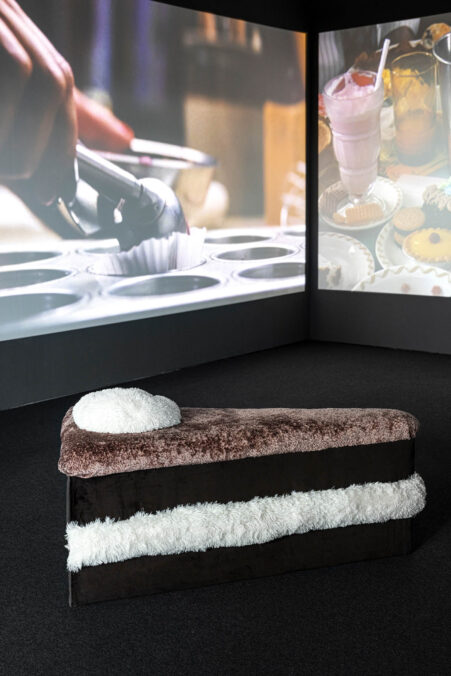
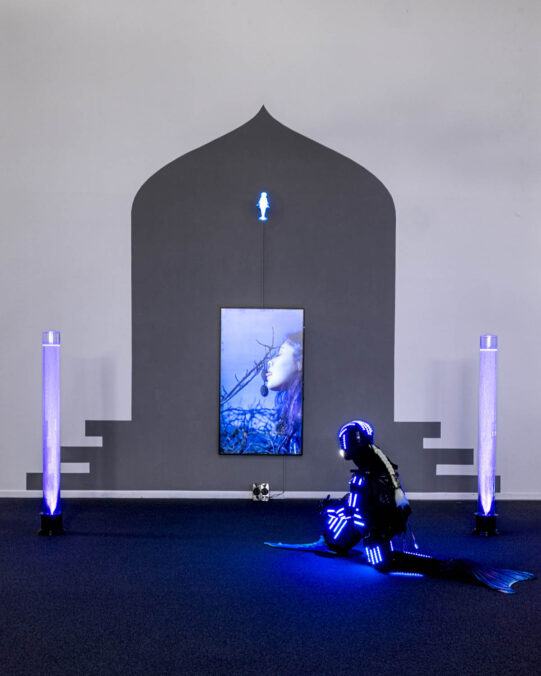
The kitchentable as a point of tension between the personal and the political: What was the curatorial challenge in making that truly tangible for visitors as they walked through the exhibition?
In fact, I thought for a long time and did a great deal of research on how to make the right selections in a way that conveys the narrative as it currently makes sense to me. Food is something one takes into their body, and then it points to broader aspects, including how we eat, where the food comes from, and how and where we buy it.
In contrast to political systems, these may sound like small everyday decisions, but they have an impact on both small and large scales. My aim in the exhibition was to juxtapose as many perspectives as possible while also weaving a common thread, without imposing just a single interpretation.
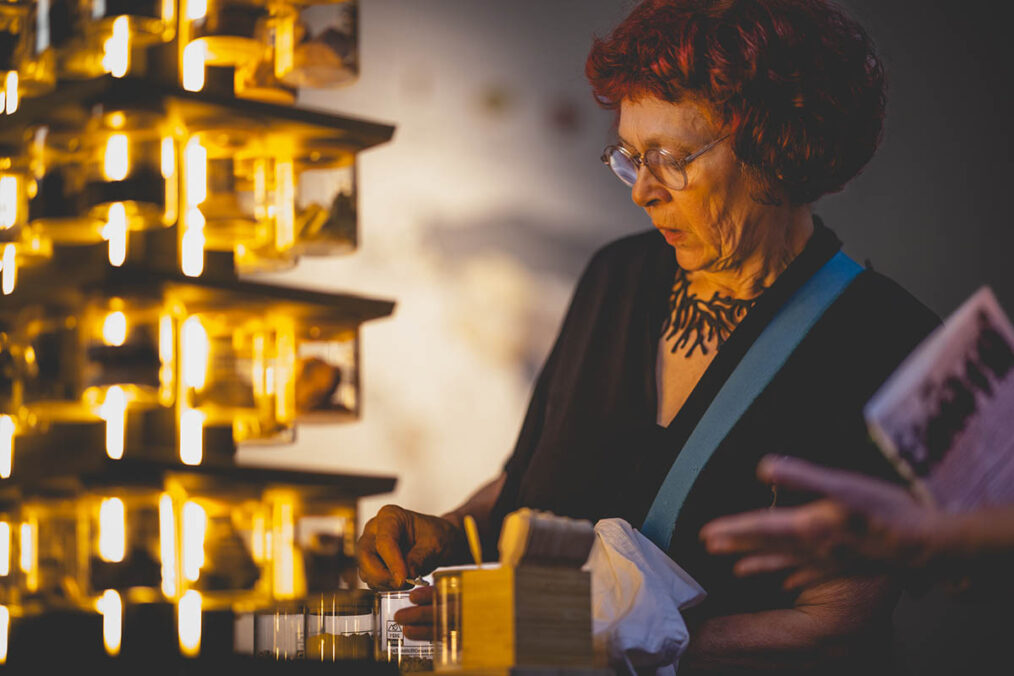
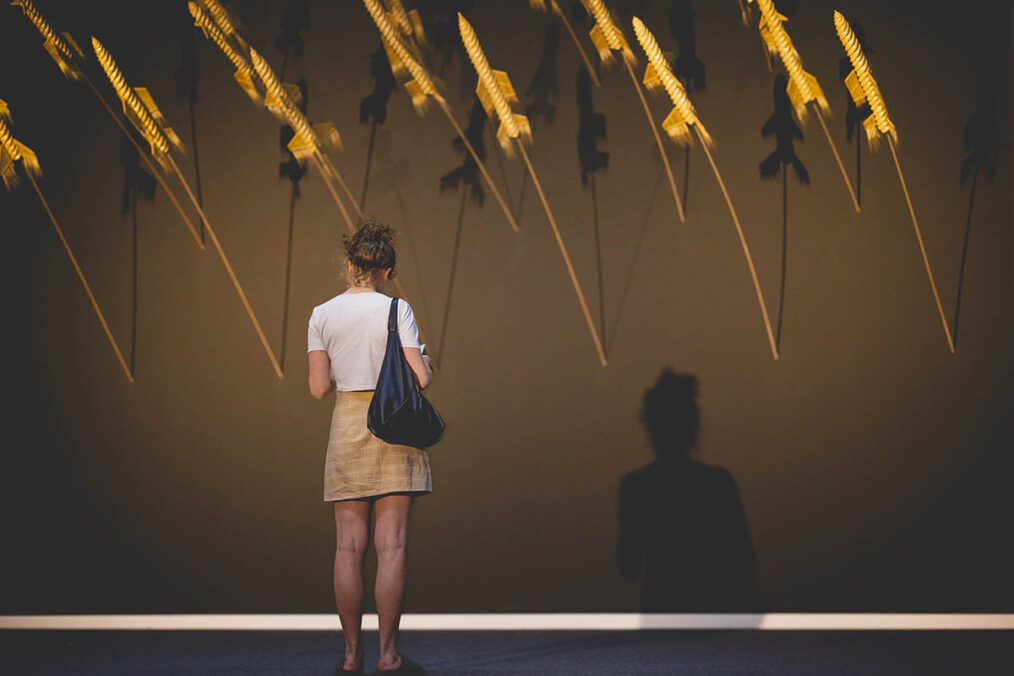
The exhibition features about twenty international artists and collectives from very diverse geographic and cultural contexts. Why was it important to you to approach the topic from a global perspective?
Food seems to be a global issue; much of what we eat is transported over long distances and involves a wide variety of people whom, of course, we largely don’t even know. I was not limiting myself to a Western European perspective, but including artists who approach the subject from other perspectives, based on their lived reality and the ecological and social environment in which they find themselves. I was looking for individual perspectives that would broaden the overall picture.
The exhibition text refers to the “Post-Anthropocene” as a current turning point. What exactly do you mean by this term, and why is food production, in particular, the key to making this transformation visible?
Our food system is part of how we connect, how we live, how we understand ourselves, and how things are produced. One aspect of all of this is CO₂ emissions from transportation routes and irrigation systems. The works in the exhibition address these aspects in various ways, starting with soil fertility and quality, which is declining due to drought and erosion, and how we treat food.
I think that, in light of the manifold ecological crises—for which our Western model of food production and consumption is one of the contributing factors and which are strongly Anthropocene-oriented, that is, focused on human well-being—we should broaden our perspective and stop automatically placing humans at the center of our thinking.
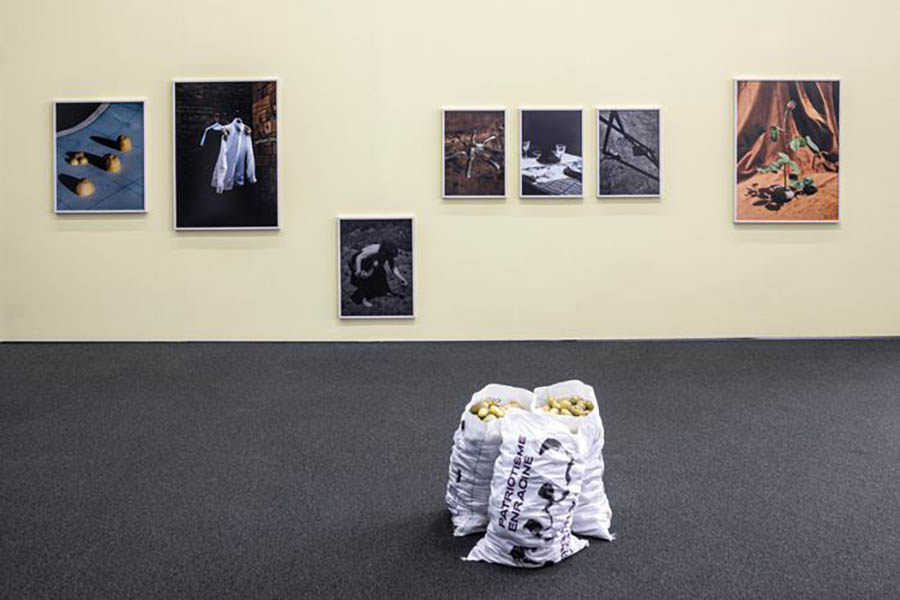
The fact that we derive our nourishment from and with others and depend for our sustenance on microorganisms that live within us is in itself something that calls into question, at least to some extent, this human exceptionalism.
At the same time, we are operating within political systems that subsidize certain processes. It’s a complicated issue that can’t really be broken down that simply. Art is, after all, always diverse; it’s never one-dimensional, but rather constantly points to a wide variety of paths for us to reflect on ourselves.
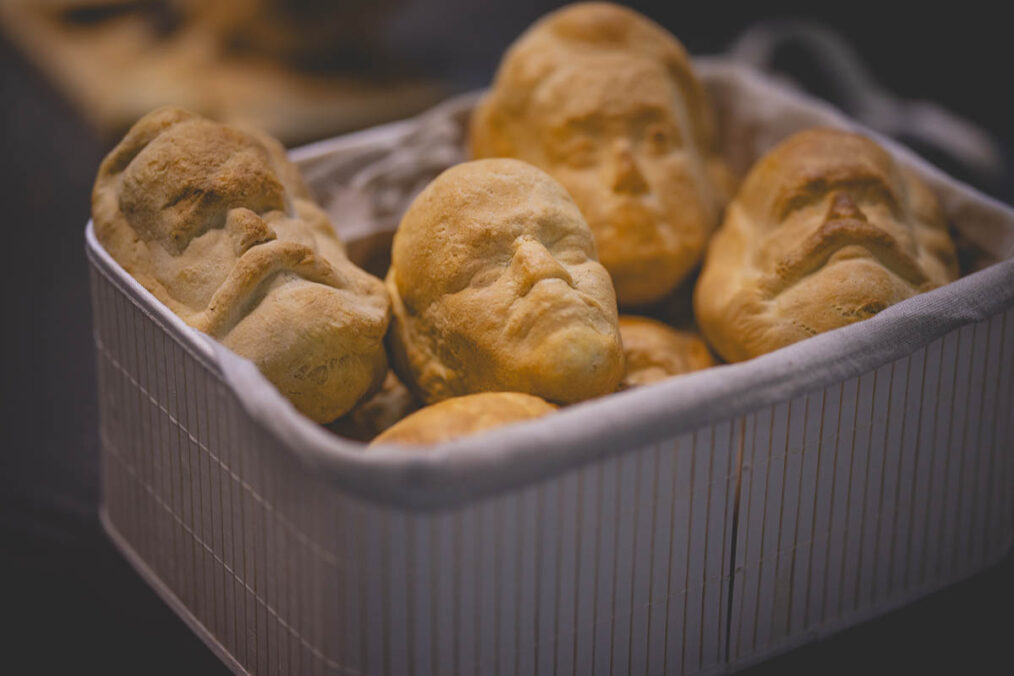
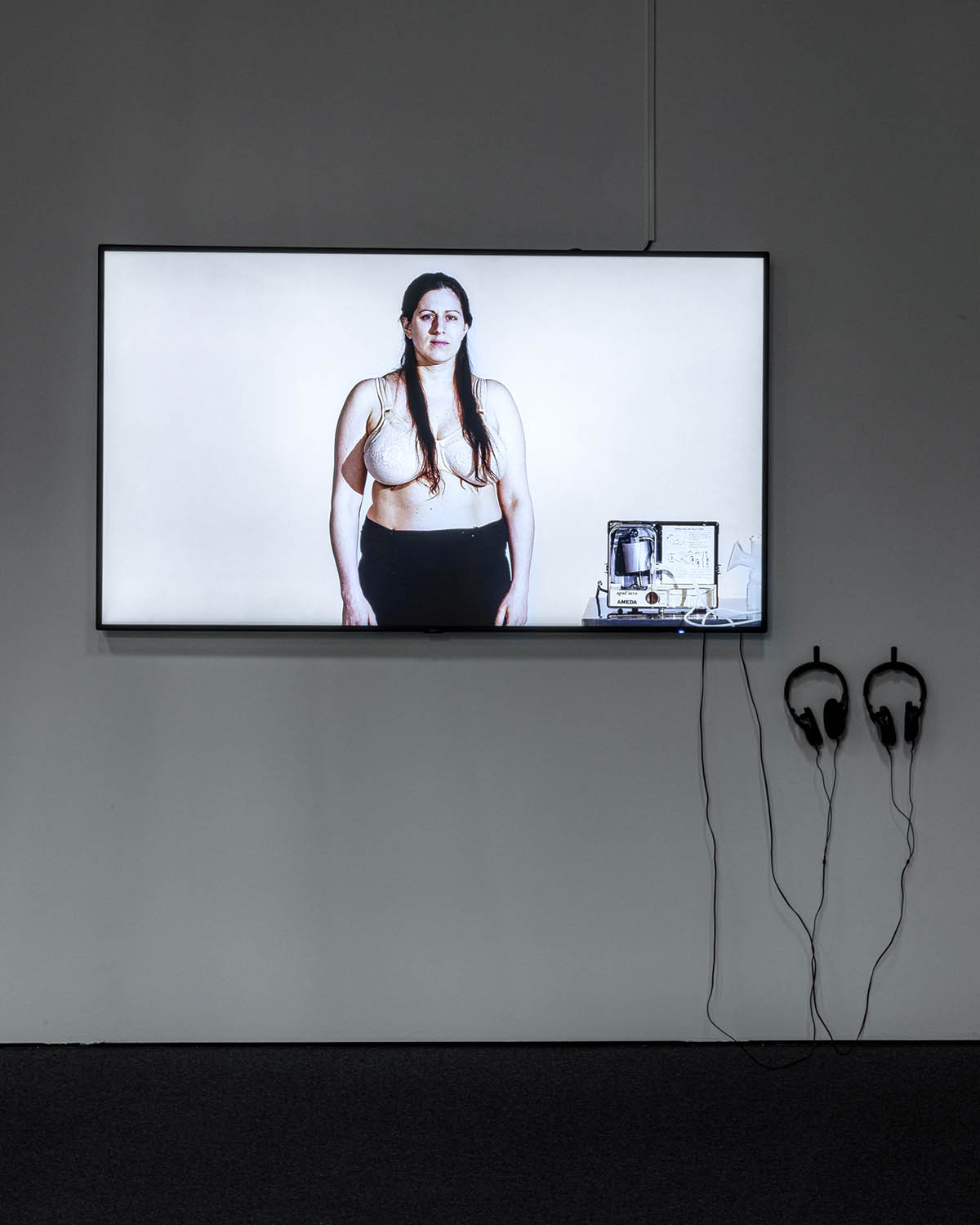
I see many of the ideas you’ve discussed reflected in Miriam Simun’s work, Making Human Cheese (2011). The heart of this work is the production and tasting of cheese made from human breast milk. I think it’s a great piece because it highlights our dependence on food. In this case, it dissolves that dependence and calls it into question. That’s why the work seems unsettling to some viewers. In what other ways can this work be interpreted?
Breast milk is a unique substance. Miriam Simun invited a nursing mother to participate in the process of transforming her breast milk into mozzarella cheese. This touches on a taboo, which can vary greatly from person to person. Turning breast milk, which often seems to be sacred, into a mundane food is something that crosses a line in Western society. Adults normally do not consume human bodily fluids, nor are they used to produce food themselves. So it does, in fact, raise various questions.
On the other hand, milk from animals such as cows and sheep is intended as food for their offspring, not for humans.
One can also consider the political implications: cows that are kept in certain conditions permanently to continue producing this milk, which, in part, involves hormonal interventions or the manipulation of the animals. The fact that we are accustomed to having this milk available raises questions. Simun highlights the value of what our bodies can produce to nourish us. And of course, this is something that shapes our diet—the fact that we depend on others for our nutrient intake, yet are also very accustomed to receiving large amounts while others are forced to give them up willingly. An imbalance that appears strongly.
How does Zhanna Kadyrova’s PALIANYTSIA (2022) relate to local foods and their symbolism, and how does it address survival and the reality of war in Ukraine?
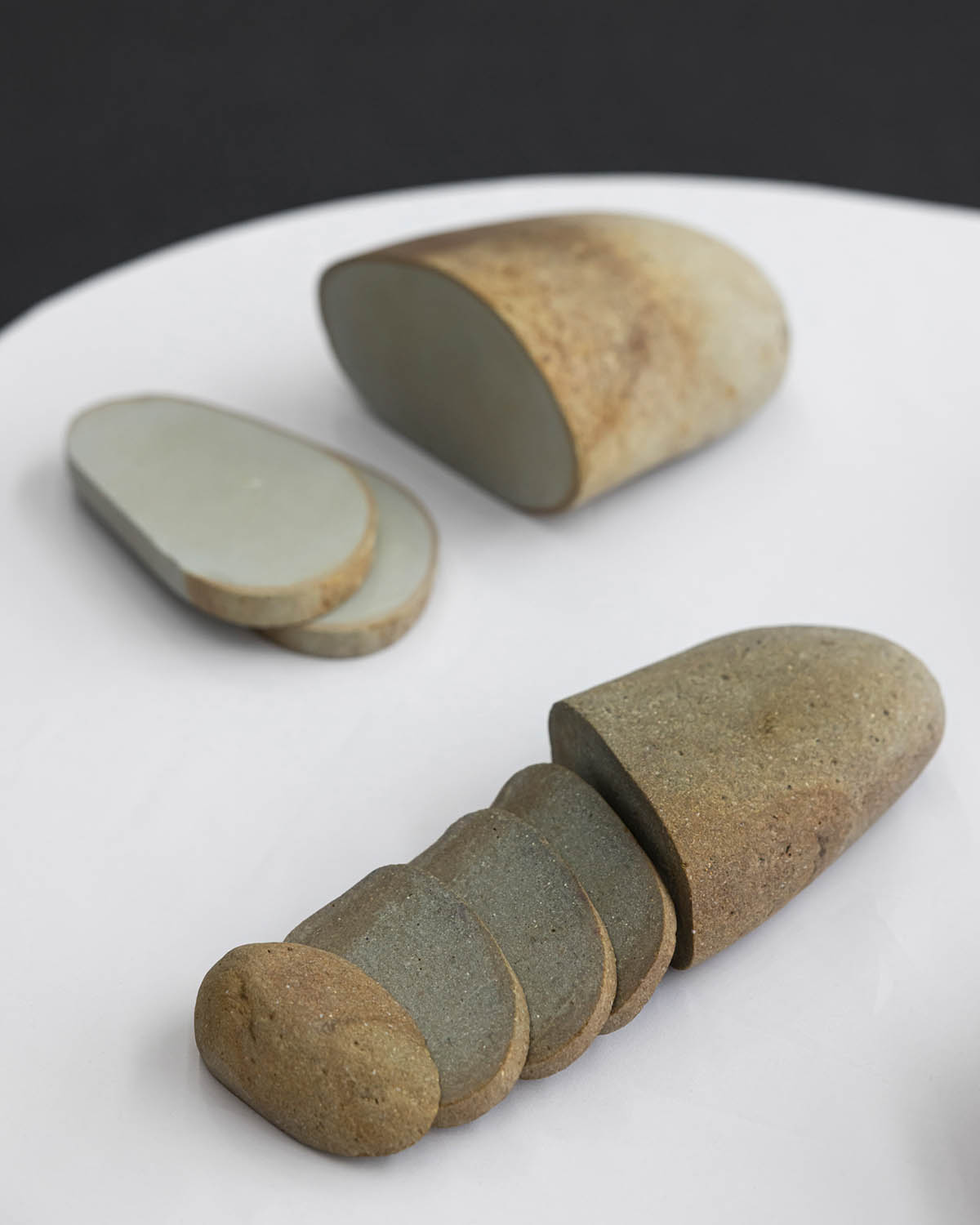
Kadyrov’s work was quite vital to me. What looks like bread in “Palianytsia” is actually stones from a river that she and her partner collected and carved in Ukraine. I keep observing the fascinated visitors who often ask, “Is that really stone? But it certainly looks like bread,” or vice versa. This is indeed a very aesthetic piece; it’s a work that many people would like to touch to grasp it haptically. There’s this impulse to examine it closely.
The loaves of bread are lying on a table, on a white linen tablecloth. The installation carries a very broad range of meanings, including a deeply tragic one, because it was created in response to Russia’s war against Ukraine. The work is titled Palianytsia in Ukrainian; it stands for a traditional Ukrainian bread. There are accounts that even before the war, many Russian scouts were traveling through Ukraine, posing as merchants or passing through, to reconnoiter the region. They could be recognized by the fact that they didn’t know the name of the bread at the bakery or didn’t know how to pronounce it. Palianytsia was a kind of code, an encrypted sign, or a reference.
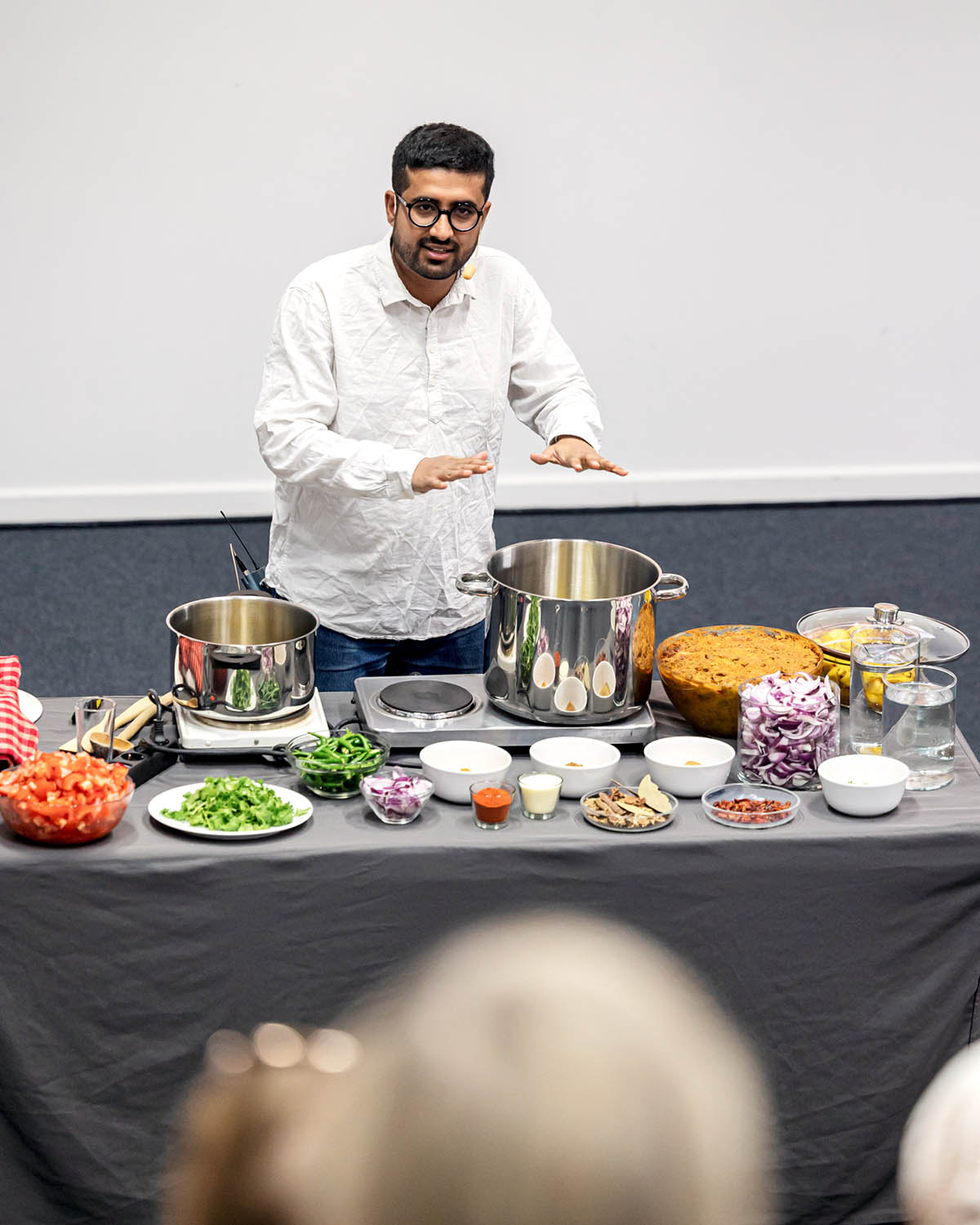
Performative formats also bring yet another unique aspect to the exhibition—such as Arijit Bhattacharyya’s lecture performance „How Political is (y)our Curry”, in which an anti-colonial perspective plays a central role. Can you tell us more about it?
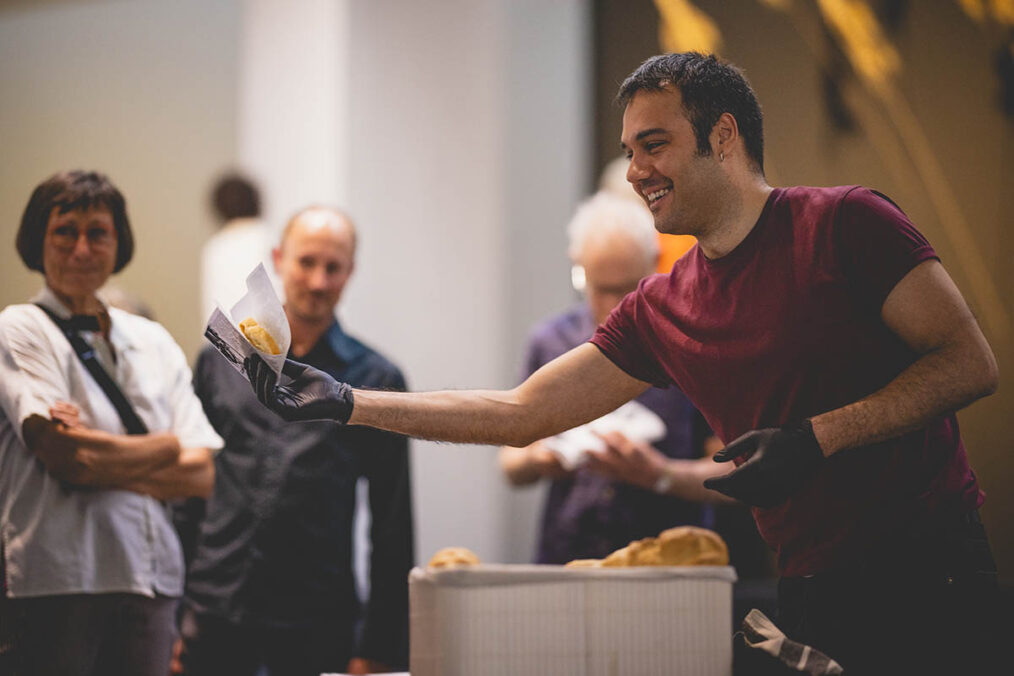
In the Lecture Performance, Arijit Bhattacharyya held a lecture with many images and cooked at the same time; at the end, everyone ate curry together. It was essential to me to include formats in this exhibition that stimulate thought while also fostering communal dining experiences. It is almost a kind of a cooking show, but beyond that, it has very political undertones. Furthermore, it is also a journey into India: about decolonial aspects of food. Spices and curry, in particular, are something very valuable that we may have lost sight of in everyday life. But the fact that we have access to so many spices from all over the world is a great gift of flavor.
Airijit’s performance spans a very broad scope, covering a long period of time, ranging from food to famines, peasant uprisings, and various aspects of how nutrition is shaped, particularly at a political level and in terms of policy-making; at last, it came down to shared conversation and the meal itself, and it shifted a great deal between different levels. The exhibition includes formats where people exchange ideas, ideally while eating.
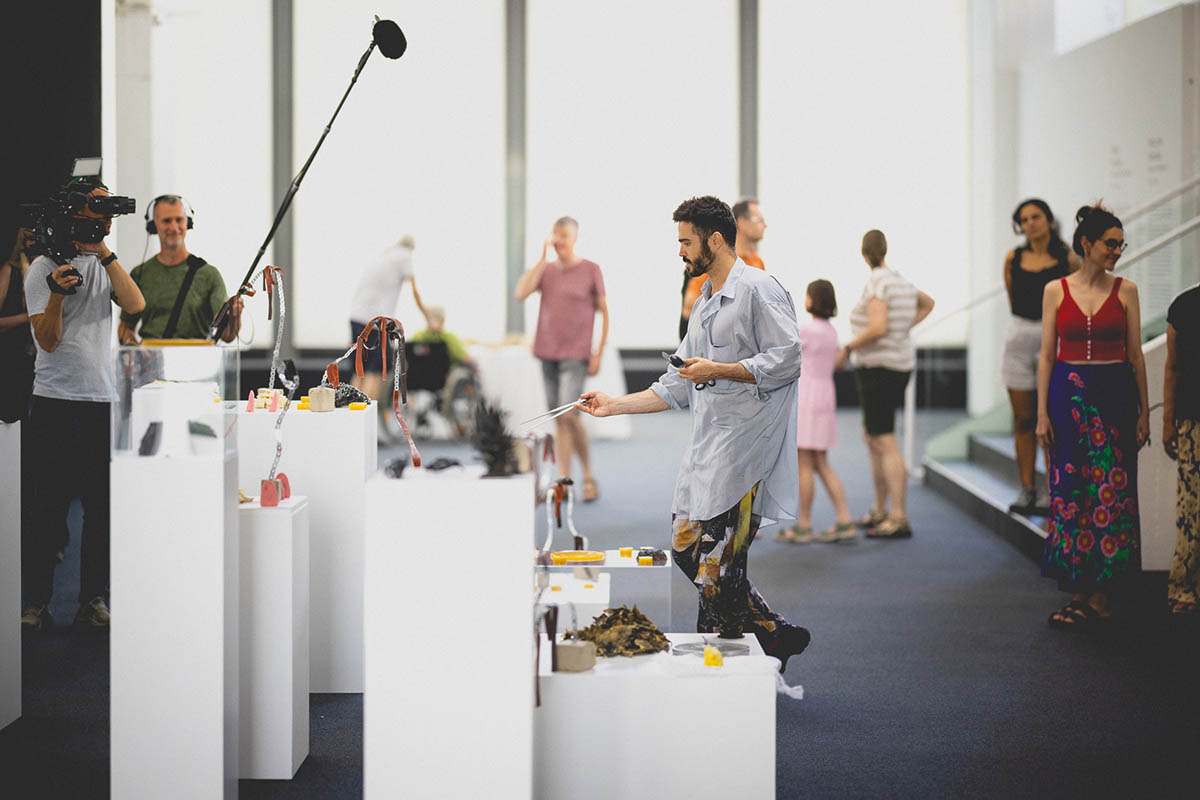
This ties into the shared aspect of social interaction and enjoyment: What role does the audience play in the exhibition? In Caique Tizzi’s work FOOD WEB, for example, art becomes edible, which further enhances engagement through interaction with the food. What remains, above all, is an experience, a feeling. Does this active participation lead to a deeper and more lasting reflection than mere observation?
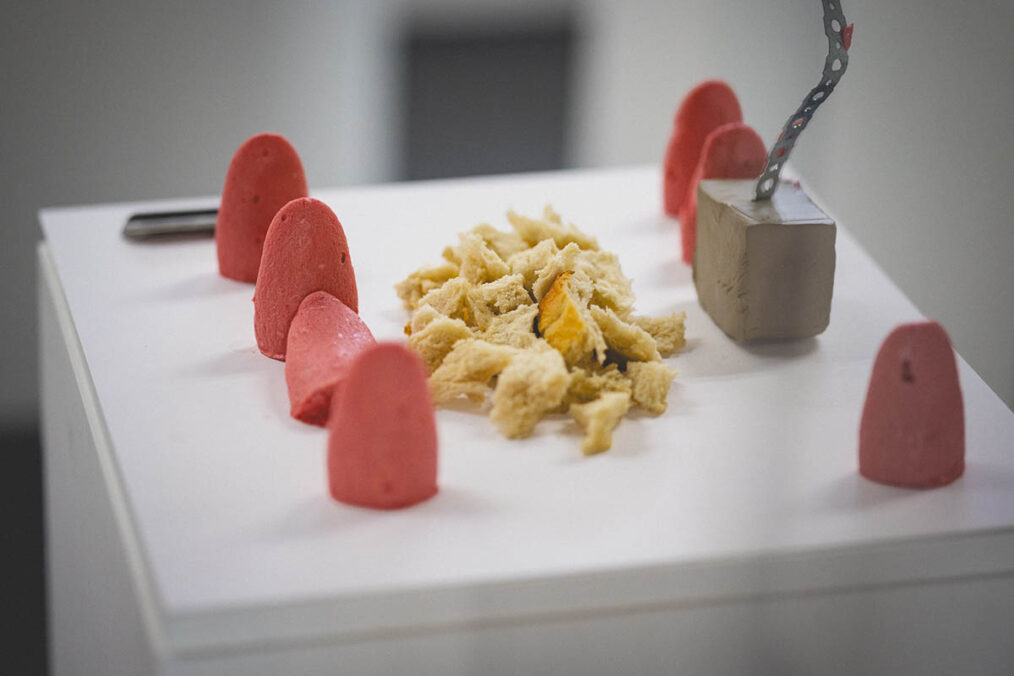
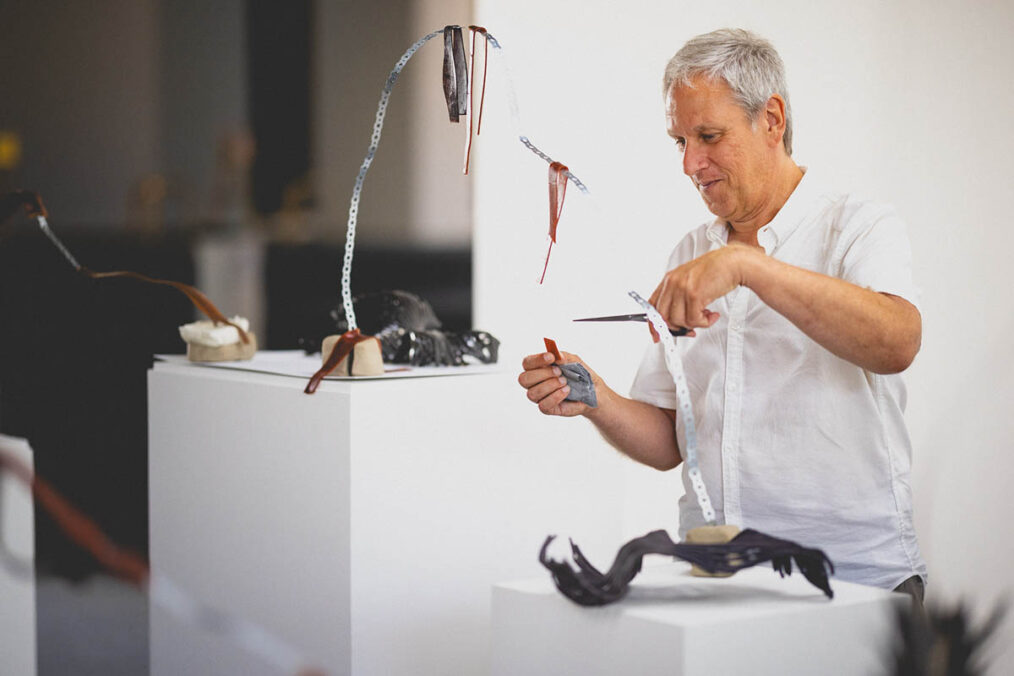
I invited Caique Tizzi to distribute work in the context of this show and was very happy that he also discussed this network of vegetables and fruits—the „food web“—and the connections and networks associated with it. However, there’s a multi-layered aspect to the networks through which fruits and vegetables are transported. For example, we’re familiar with orange nets, which are very light and portable; they embody this idea of transportation—that they’re being transported over long distances. But at the same time, these nets—these interconnections, all kinds of nets, but also a notion of „carrier bag“—have, in theory, a much broader scope of meaning. Together with Caique Tizzi, I was glad to kindly offer these networks to weave them myself, to try something out, to network on-site, and to engage in conversation and exchange with artists. I also wanted to network through food or while eating.
Caique Tizzi came up with a system in which you eat things in unusual ways you’re not used to, perhaps because they have a different color or, in some cases, a different texture. Foods you might be familiar with but that seem so foreign that it takes some effort to even try them. These shifts from the familiar to something that seems a bit strange might trigger more reflection afterwards than you might realize at first.
How significant a role does artistic freedom actually play in this process?
Many of the works in this exhibition are research-based. The artists have been engaging with their subject for a long time and have built up an enormous depth of knowledge around it. At the same time, of course, it is not merely about imparting knowledge. Rather, the artists transform various aspects of food and its production into aesthetic approaches that, in their artistic freedom, are always open to interpretation.
Artists‘ works arise from engaging with knowledge and from taking the liberty to explore different directions. Let’s discuss the exhibition design—nothing feels cluttered; there’s something intimate about it. Can you tell us more about your thoughts on the exhibition design?
I spent a lot of time thinking about how to unfold a narrative; after all, every exhibition has a focal point, and a narrative unfolds within the space. I’ve tried to create a multi-layered narrative that incorporates various media and a dialogue between the works so that every work has its space. Another point was the visitors and the space they needed to reflect and pause.
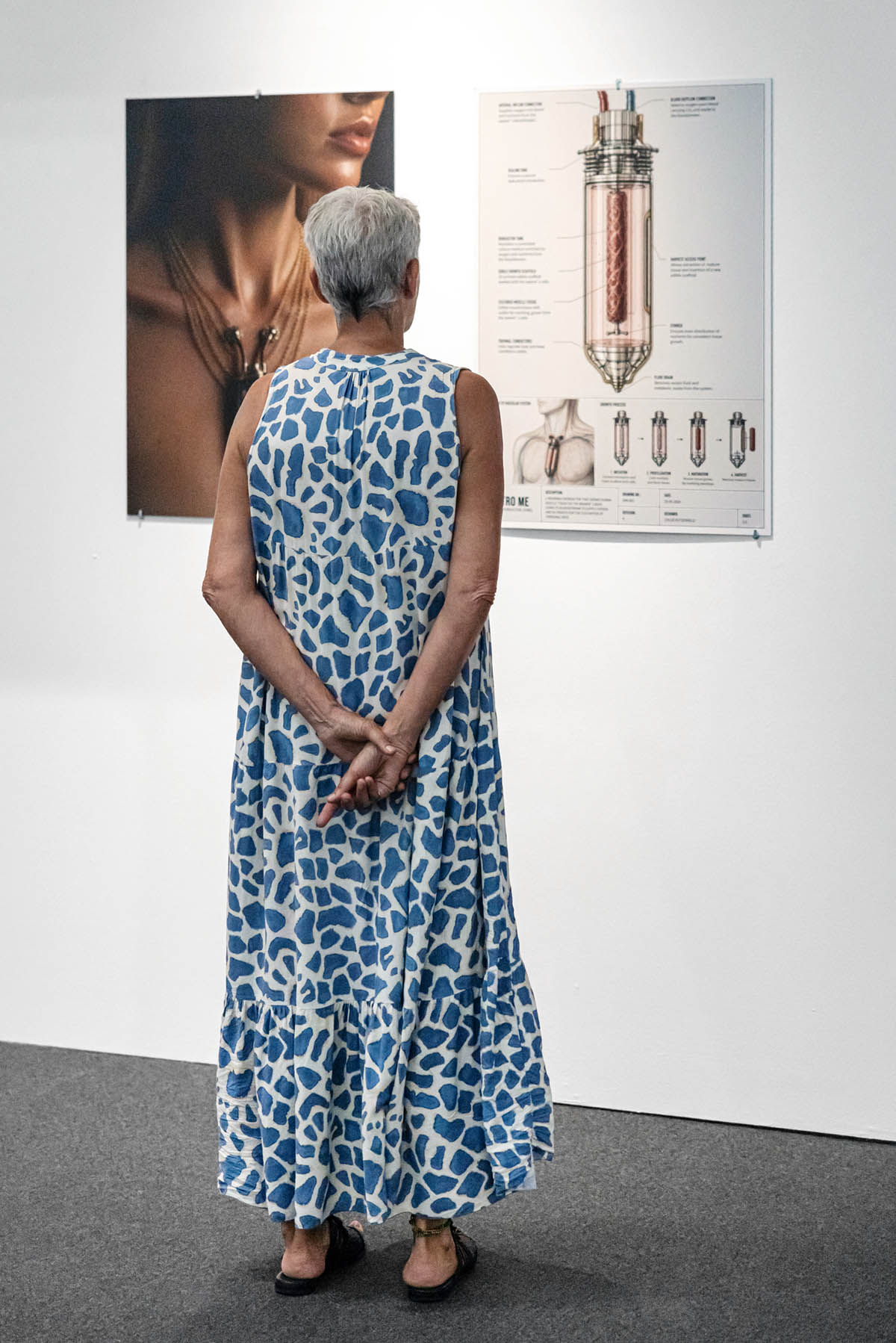
You offer guided tours on Sundays. Are there any other program events related to the exhibition?
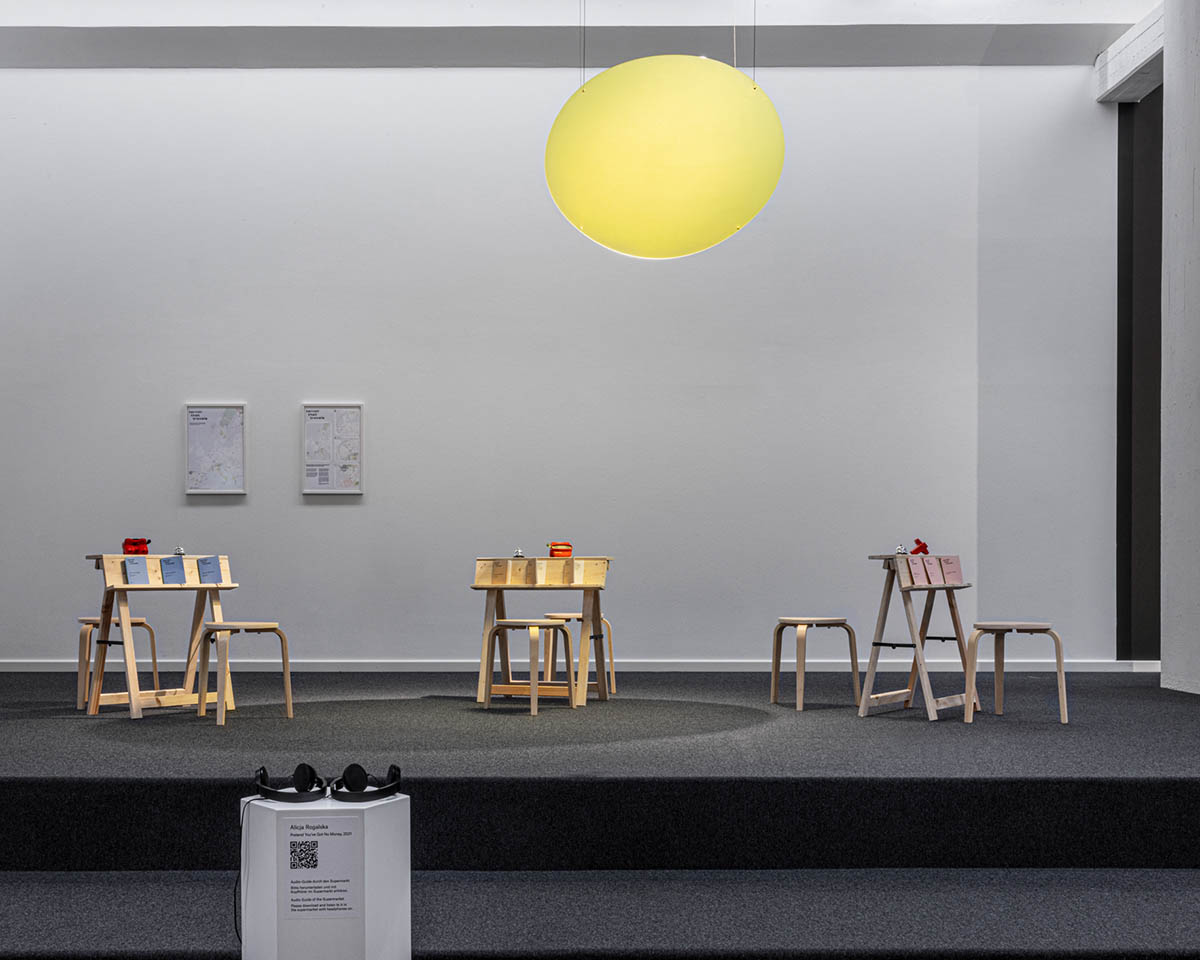
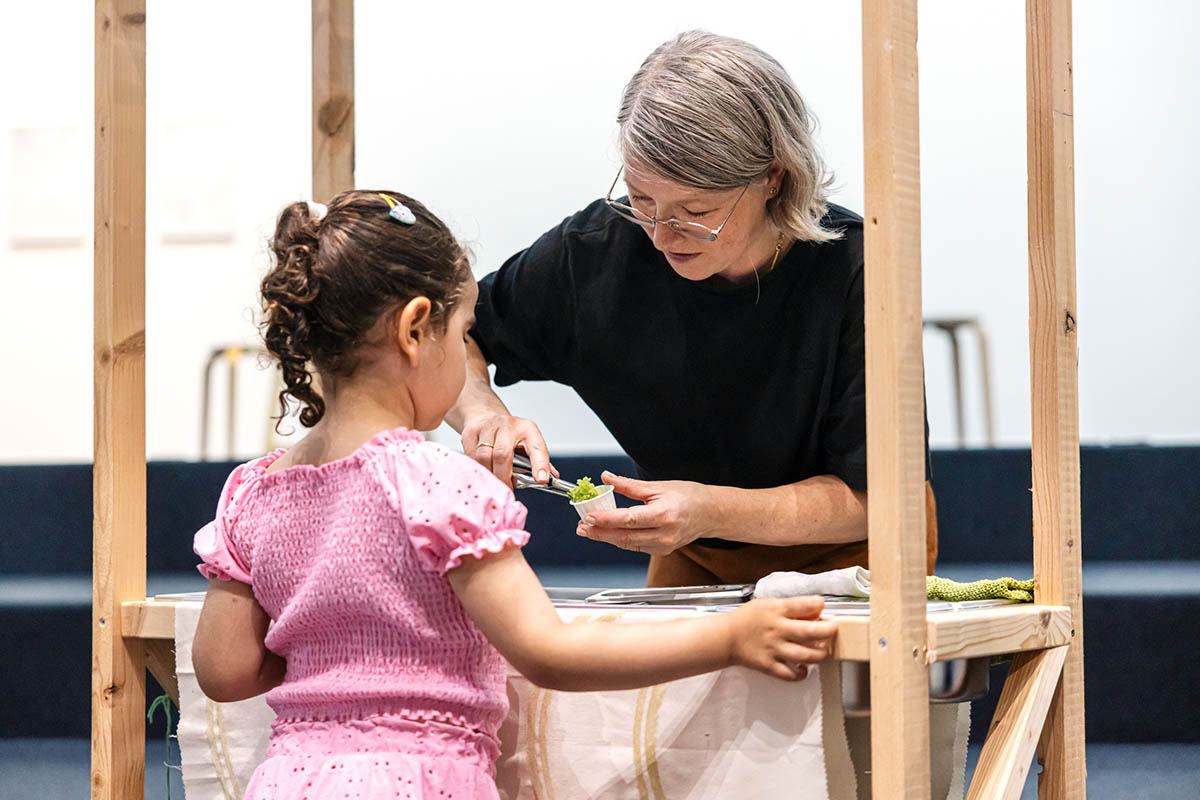
Yes, there are, and they work very well for this exhibition. For example, there was an edible event by Eva-Fiore Kovacovsky in which visitors could sample homemade sorbet made from wild plants—such as beech leaves—in summer in the exhibition. An artwork by Alicja Rogalska extends from the exhibition into the supermarket and can be experienced as an audio tour at any time during the supermarket’s hours of operation. I find these kinds of connections between art and everyday life—whether they involve food, buying groceries, choosing what to eat, or even eating together—to be important. But the show is also accompanied by a schedule of guided tours, extended evening opening hours, and after-work events. And. School programs, with courses you can book in connection with the exhibition. On Saturdays, there’s a program called Open Studio where children work freely on artistic projects, introducing the younger generation to the topic in a relatively playful way, for example.
Exhibition: Politics at the Kitchentable: Nutrition in Contemporary Art
Curator: Julia Katharina Thiemann
Participating Artists: Anca Benera & Arnold Estefán, Arijit Bhattacharyya, Baran Caginli, Center for Genomic Gastronomy, Cercle d’Art des Travailleurs de Plantation Congolaise, Juan Cortés, Disnovation.org, Patricia Domínguez, Zhanna Kadyrova, Bianca Kennedy, Dominique Koch, Eva-Fiore Kovacovsky, Mary Maggic, masharu, Deirdre O’Mahony, Ana Núñez Rodríguez, Alicja Rogalska, Chloé Rutzerveld, Miriam Simun, Caique Tizzi, Raul Walch.
Exhibition duration: May 23 – October 4, 2026
Address and contact:
Wilhelm-Hack-Museum
Berliner Str. 23, 67059 Ludwigshafen am Rhein
www.wilhelmhack.museum
View all upcoming events here.
Julia Katharina Thiemann studied German Literature and Sociology at the Leibniz Universität in Hannover and Art History at the Städelschule and the Goethe-Universität in Frankfurt a.M. She regularly writes texts about artists‘ works and essays on various topics.