How would you, as a curator, define “Heimat” through the lens of this exhibition? Which aspects of home and belonging does the exhibition revisit?
The term has become pluralized in meaning, and the concepts of home are personal, individual, and dynamic. The publication that accompanies the exhibition includes 55 statements by participating artists, all of which are multifaceted, but one tendency predominates: the deterritorialization of home. Against the backdrop of globalization and digitalization, as well as steadily rising migration numbers, many people living in the 21st century have become highly mobile and flexible, whether by choice or not.
The idea of “Heimat” as a fixed location linked to national identification still exists, but it is just one concept among many, and the exhibition investigates this broad spectrum. Tell Me Where Home Is is a question and issues a call to think about individual and forward-looking collective concepts of home.
The exhibition invites people to understand the trauma of forced displacement and to see diversity as part of building new communities, summed up in the idea „homes everywhere, for everyone.“ How can the exhibition make universal claims while still telling individual, personal stories of home?
The exhibition does not make universal claims. Instead, it launches questions through the lens of art. One central question is how people who don’t share the same histories, experiences, and cultures build communities. Thereby, societies that might feel like home, or at least welcoming—nations, societies of strangers.
How can we foster transcultural co-living, empathy and acceptance, and a culture of diversity that is considered enriching instead of threatening? We live in post-migratory societies that are characterized by a constant flow of people arriving, staying, leaving, and returning. We deal with change daily, so people don’t feel estranged in foreign places but also in their formerly familiar surroundings—whether this be a physical place or an immaterial notion of home. Homing processes have become the basis of our societies, and we all have to revisit them, whether we migrate or not.
Migration and constant social change shape the human sense of home on a deep, often subconscious level. How does the exhibition address this dimension in relation to emotion, family, and love?
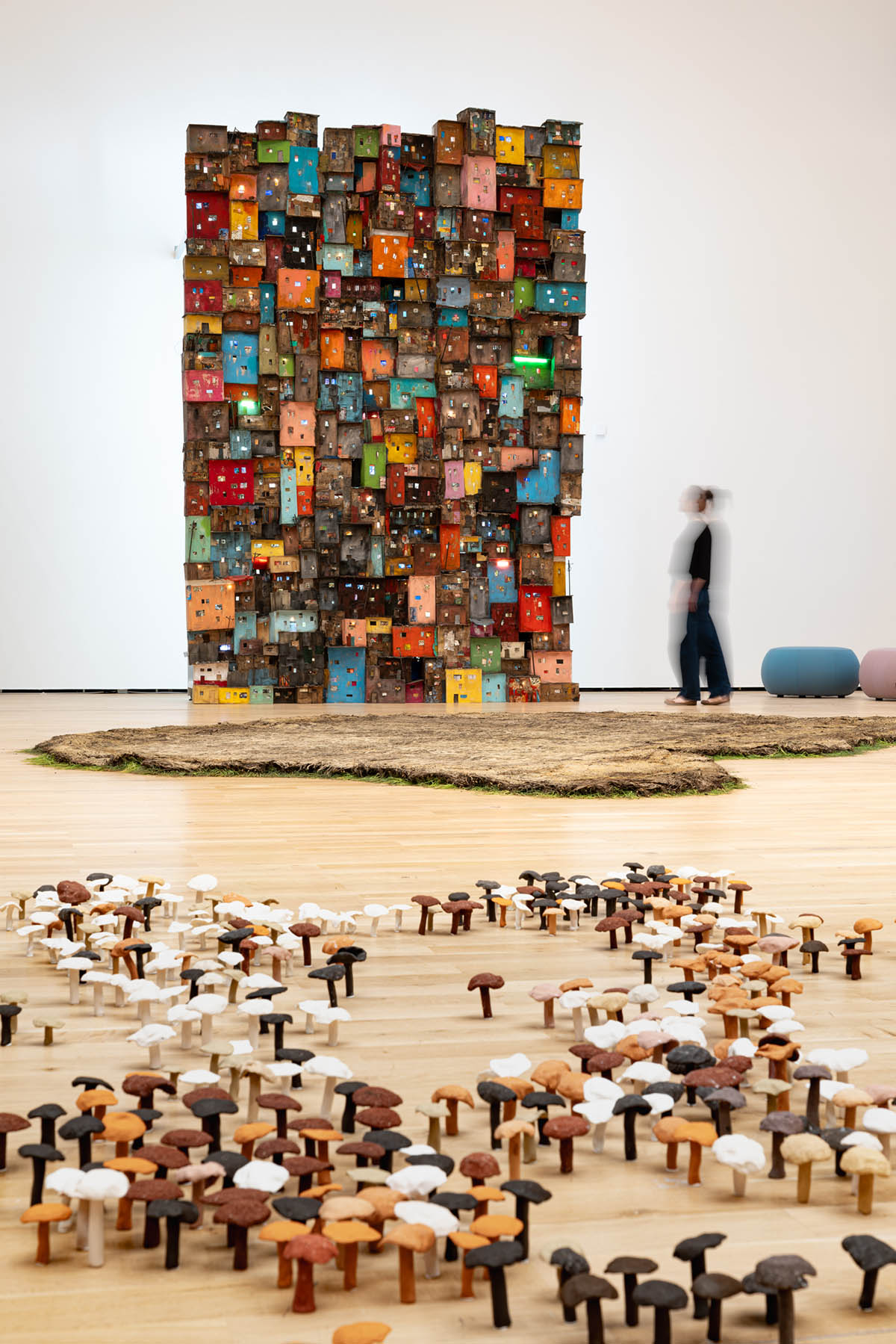
Family, friends, and communities are essential home ports that we address in several works in the exhibition. Tao Hui’s video work, Chilling Terror Sweeps the North (2024), follows the love story of a young woman who grew up in the beautiful yet rough, dry, and deserted landscape of Northern China. The man she falls in love with grew up in the humid, urban south of China; she migrates to live with him and fails to build a new sense of home. Pieter Hugo and Gauri Gill explore societal structures in South Africa and India by portraying people and their concepts of home within these societies. I think the core emotional theme you are addressing is the longing for belonging, and the exhibition has an entire chapter dedicated to these needs.
In the internet era, people can feel connected to anyone, anywhere, at any time; yet many also feel more distant than ever. How does the exhibition engage with this paradox?
The invention of the internet has had a major impact on our concepts of Heimat, because they have become portable. Social networks and media, gaming platforms, and avatars that live in a parallel universe can all serve as digital homes. Some people feel more comfortable in these; others fall victim to hate speech. If you are forced to migrate, the internet can help you keep in touch with the places, people, and homes you left behind. Yet, digital homes also challenge you with idealized or fake news, identities, etc.
You can easily feel lost in this digital jungle of uncertainties. Digital homes don’t keep you warm, don’t hug you, and don’t convey a feeling of belonging in your analog day-to-day surroundings.
Lu Yang’s video work is a part of this exhibition. An artist’s avatar is thrown into life on Planet Earth and reflects on how we spend our time on Earth and what we aim for. Lu Yang questions the meaning we ascribe to our lives.
Please give us examples of works that approach home, migration, and belonging poetically and more abstractly, rather than address these themes more directly. What distinguishes the two approaches?
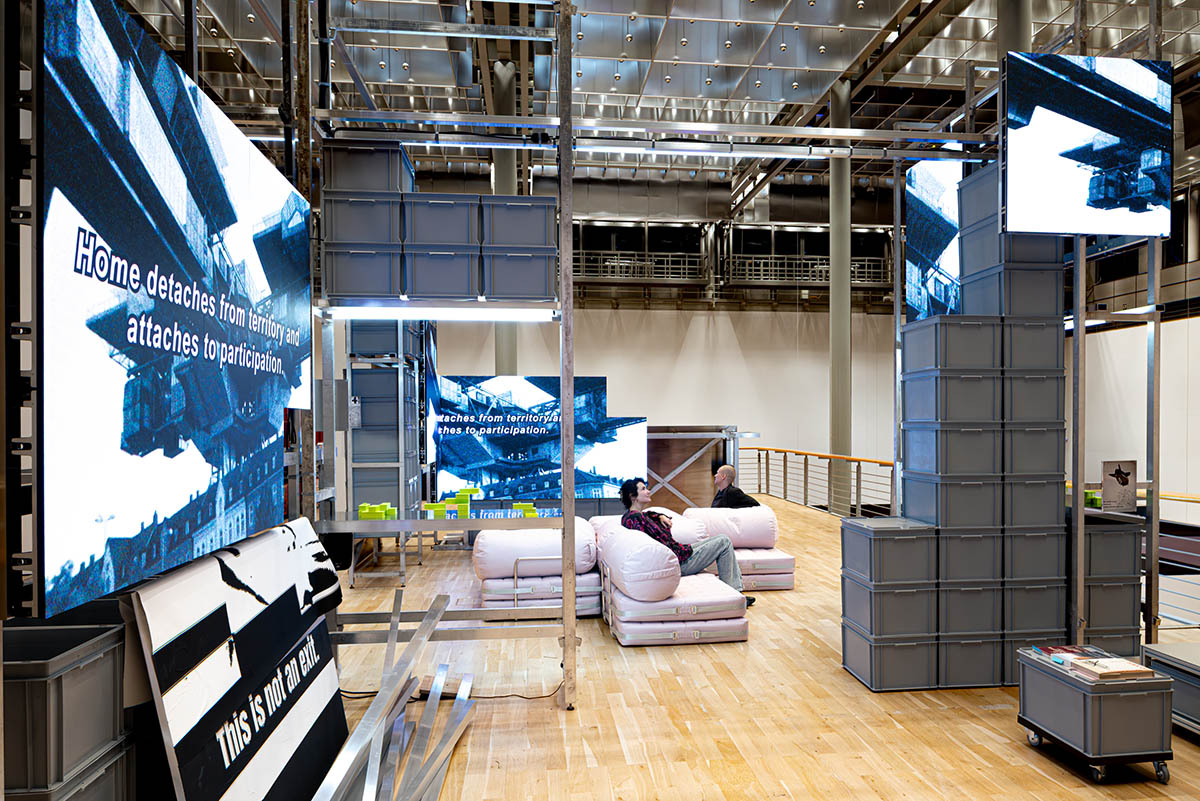
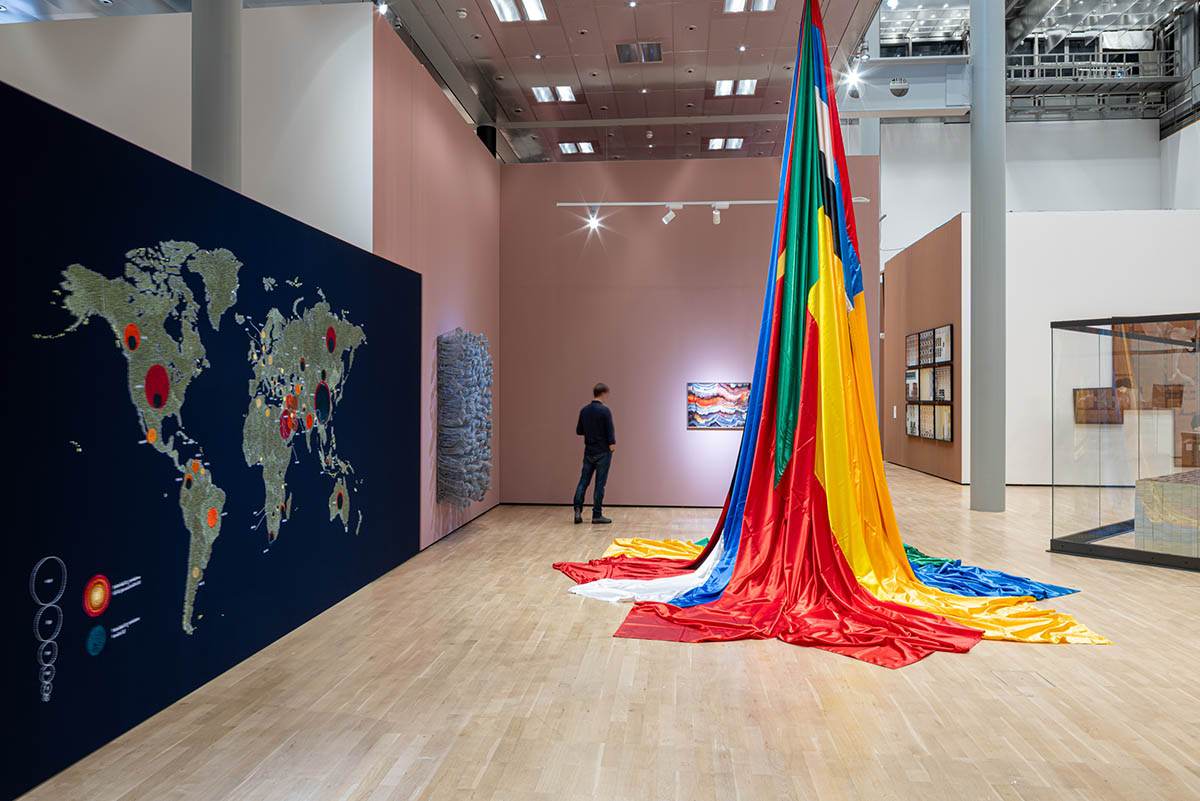
We have a selection of migration narratives in the exhibition that are narrated directly. Carlos Motta, for example, interviewed eleven people who fled their countries because of their sexual identity. They couldn’t live safely in their countries. They arrived in the Netherlands hoping for safety but experienced discrimination at the arrival institution. Halil Altındere refers directly to the civil war in Syria in his video work. Radenko Milak repaints a photograph from 2025 that was part of an article in The New York Times. It shows a hotel in Panama where international asylum seekers were imprisoned and kept in waiting after their entry into the US had been denied. In comparison, we exhibit a flag shaped by poetic words by Shilpa Gupta in the exhibition, which points out the fact that nature doesn’t know the geographic borders humans have constructed. Grit Richter painted an abstract painting with several pillars and calls it Home, an abstract family portrait that leaves room for interpretation.
How long did it take to prepare the exhibition Tell Me Where Home Is, which features approximately 160 works by international artists? Did you also work with the Kunstmuseum Wolfsburg Collection?
The idea of an exhibition dealing with Heimat was born ten years ago, when I saw decisive works at the Berlin Biennale. I started properly working on the idea three years ago. The exhibition consists of three works from the collection. Important to the exhibition concept is the MOU (Museum of Unbelongings) (2011-2018) by Mithu Sen. It’s a collection of 400 marginalized objects that finds a home in a round vitrine, free of hierarchies. It’s the idea of an inclusive society that does not yet exist. Its title includes key terms in migration debates: unbelonging, belonging, and longing. I also included the aforementioned photo series by Gauri Gill, as well as Pieter Hugo’s series Kin (2006–2013), which uses portraits and still lifes to reflect on post-apartheid South African society, where his children were born.
With many works come many media. I am guessing photography plays a major role; what other media can visitors expect to encounter in the exhibition?
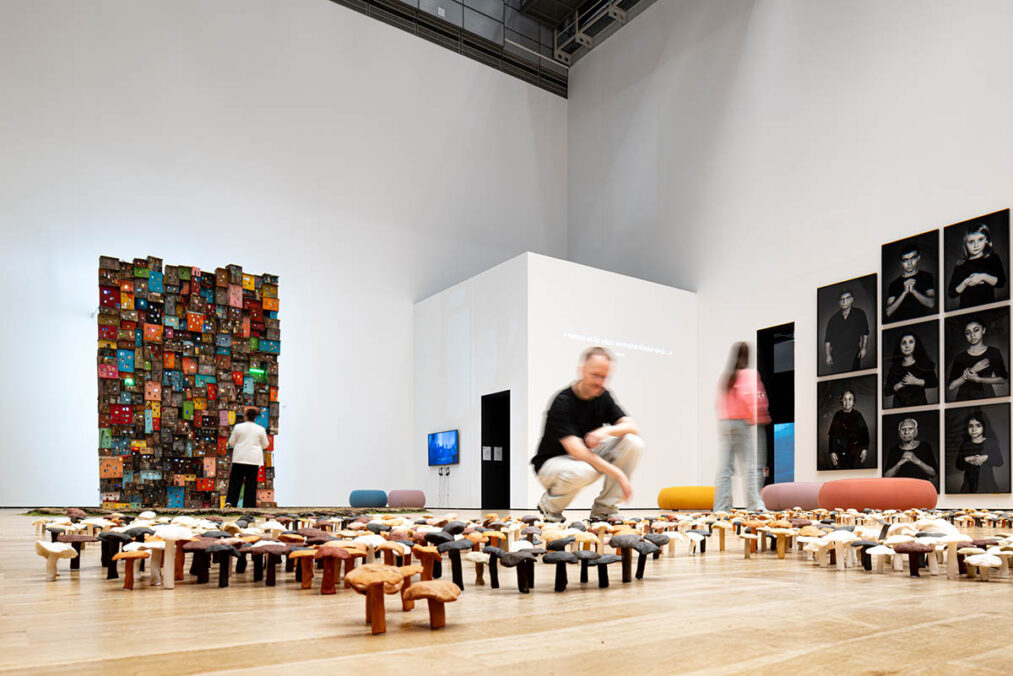
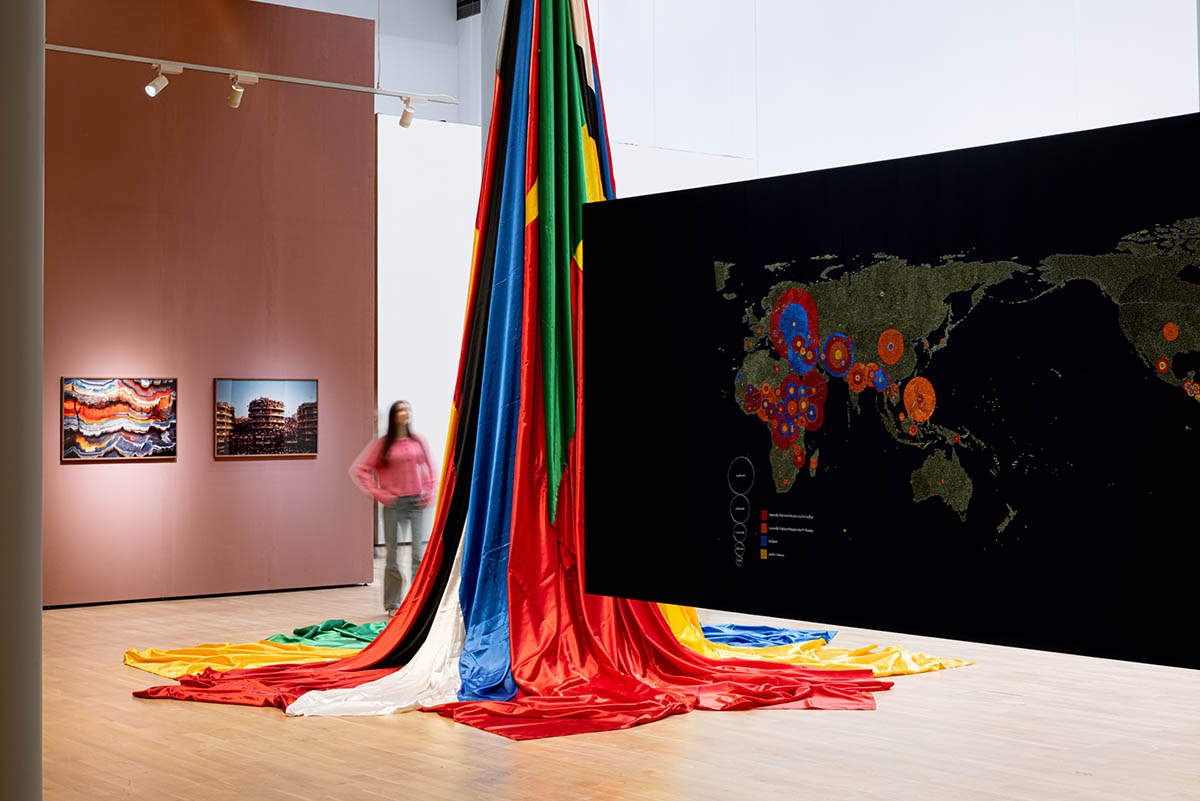
I think the media are quite balanced in the exhibition: photography and video works, but there are also paintings, drawings, sculptures, and large immersive installations.
Artists in the exhibition come from vastly different backgrounds, for instance, Šejla Kamerić, born in Bosnia and Herzegovina, and Gauri Gill, born in Chandigarh, India, among many others from across the globe. Despite this diversity, there seems to be a shared, collective understanding of what it means to feel at home. How important were international and cross-cultural perspectives in shaping the exhibition?
The exhibition explicitly examines concepts of home on a global scale in the 21st century. Considering the transnational biographies of many artists, they inhabit the world rather than countries, living in the spaces in between or considering themselves as contemporary world nomads. Many artists explore post-national concepts of home and identity in their works. There is common ground in the works, yet their concepts of home, or their home ports, remain individual.
Could you elaborate on what „glocal“ means in this context? How did the collaboration with the Department of International Urban Studies and Design at the University of Stuttgart and the Institute for Contemporary History and Urban Presentation in Wolfsburg inform the exhibition’s concept?
Being a white German curator, additional perspectives are of crucial importance when I conceive exhibitions that deal with global topics. At Kunstmuseum Wolfsburg, we therefore found international scientific advisory boards that accompany the development of such exhibitions. Dealing with concepts of home, it is also essential to integrate visible and, in this case, audible perspectives from locals into the exhibition.
Wolfsburg is an international city, and more than 44 percent of its inhabitants have a migration background. The Institute for Contemporary History and Urban Presentation in Wolfsburg has interviewed nine women who migrated to Wolfsburg from different parts of the world and who participated in the so-called neighborhood mothers program.
They asked them about their settlement process in Wolfsburg. Julia Zejn turned the personal stories and reactions into a graphic novel. The graphic novel accompanies the interviews in the exhibition. The Department of International Urban Studies and Design at the University of Stuttgart contributed an important global perspective, where a seminar titled Tell Me Where Home Is took place in the winter semester of 2025/2026. It is an international master’s study program with alumni from 38 countries. The professors and their students had an exhibition within the exhibition called In Transit, where multilocal and mobile concepts of home are interlinked with the stories of cities, people, and networks. This approach ensured the exhibition’s “glocal” integration from the perspectives of urban planning and urban design, which are important for transcultural coexistence in the city of the future.
A publication accompanies the exhibition. Which authors are featured, and which topics does it cover?
The publication extends beyond the exhibition and gathers even more artworks, interdisciplinary perspectives, and, to my delight, the above-mentioned 55 statements by participating artists on their definition of „Heimat”. There are contributions by Naika Foroutan (integration studies and social sciences), Alexander Kraus & Aleksandar Nedelkovski (migration narratives in Wolfsburg), Astrid Ley & Shaharin Annisa (international urbanism), Marsha Meskimmon (art history/planetary feminisms), Warsan Shire (poetry), Christiane Wiesenfeldt (music sciences), and myself. In addition, five German museums are engaged in a discussion about the role museums can or must play in the integration processes within our (post-)migrant societies.
Exhibition: Tell Me Where Home Is
Curator: Uta Ruhkamp | Curatorial Assistants: Linus Jantzen and Anne Rybka
Participating Artists: Bani Abidi, Nevin Aladağ, Halil Altındere, Kader Attia, Alkan Avcıoğlu, Yael Bartana, Birgit Brenner, Jenna Burchell, Ana Maria Caballero, Ishita Chakraborty, Tiffany Chung, Anna Ehrenstein, Alia Farid, Larissa Fassler, Gauri Gill, Patrick Goddard, Shilpa Gupta, Manaf Halbouni, Hannah Hallermann, Anawana Haloba, Jeppe Hein, Sky Hopinka, Pieter Hugo, Tao Hui, Courage Hunke, Nadira Husain, Evan Ifekoya, Alfredo Jaar, Hayv Kahraman, Šejla Kamerić, Bronwyn Katz, Kiluanji Kia Henda, Atiye Noreen Lax, Shannon T. Lewis, Christian Manss, Olaf Metzel, Cristina de Middel, Radenko Milak, Johnny Miller, Carlos Motta, Alex Müller, Hira Nabi, Marina Naprushkina, Shirin Neshat, Coco Olakunle, Grit Richter, Odur Ronald, Ritu Sarin & Tenzing Sonam, Titus Schade, Diana Scherer, Abeer Seikaly, Mithu Sen, Tracey Snelling, Inga Somdyala, Nasan Tur, Duncan Wylie, Lu Yang, Ciğdem Yüksel, Julia Zejn, 0001 (Kollektiv)
Exhibition duration: 19. 9. 2026 — 17. 1. 2027
Opening: 18 September 2026, at 7 pm
Address and contact:
Kunstmuseum Wolfsburg
Hollerplatz 1, 38440 Wolfsburg
www.kunstmuseum.de
View all upcoming events here.