

Paul Ege collected for decades out of personal conviction, long before there was a
foundation and later a museum. When you work with his collection today, what values and aims do you take over from him?
Paul Ege collected these works because they brought him joy. This is a wonderful, albeit deeply personal, reason for acquiring a work of art. However, opening the collection to the public and establishing a museum required a new perspective and a different set of skills. Today, the Paul Ege Art Collection (PEAC) is one of Europe’s most comprehensive collections of color painting, expanded since the 1970s to include works of Minimal Art and conceptual approaches. Paul Ege’s aim was never to showcase his own discerning taste in art, but to create a space where abstract art could be discussed, explored, developed, and experienced—a kind of sanctuary for abstract art.
With around 1,200 works, how do you decide what gets shown? Is there a part of the Paul Ege Art Collection you would like to bring out that you still haven’t had the possibility of?
That’s one of the most rewarding aspects of my job. By now, I am familiar with most of the works in the collection, yet they never cease to reveal something new. For each collection-based exhibition, we develop a different theme, making us look at the works from a fresh perspective. Even though we’re working with a collection with a very distinct focus, both the works themselves and the exhibition as a whole take on a different character each time. There are, of course, also works that we haven’t been able to exhibit yet because we lack information about them. Many of these works were acquired before the museum started operating professionally, and there is little documentation available. In such cases, we try to contact the artists or their families whenever possible to learn more about their works.
Courtesy of the artist. Photo: Bernhard Strauss
What is the practical side of caring for minimal and color-based works (works often have fragile surfaces, installation rules, and artist instructions)? What are some rules of preservation and ways of exhibition that cannot be broken, and what is the most underrated skill a curator needs?
Empathy is the most underrated skill a curator can have. I believe it takes empathy to immerse yourself in someone else’s cosmos, to understand their way of thinking. From my experience working with artists, this is what leads to the best exhibitions.
On the practical side, I’m not a conservator, but I’m fascinated by how materials have a life of their own. For example, we have a painting in which the artist applied oil paint in very thick layers. Even after 15 years, the paint still hasn’t dried completely. Another work was made using red wine as a pigment. Red wine reacts strongly to UV light and oxygen, so the color continues to change over time. Especially when dealing with such unusual materials, it is our job to determine which changes were actually intended by the artist and when the work has in fact been damaged. Other works such as murals from the collection have to be recreated from scratch for each exhibition. This requires very precise instructions, unless we’re fortunate enough that the artists are still around and able to recreate the works themselves. Our museum’s architecture is strongly influenced by the concept of the “White Cube,” which aims to present artworks with as little interference or distraction as possible. This also involves practical considerations, for example, uniform lighting throughout the exhibition spaces.
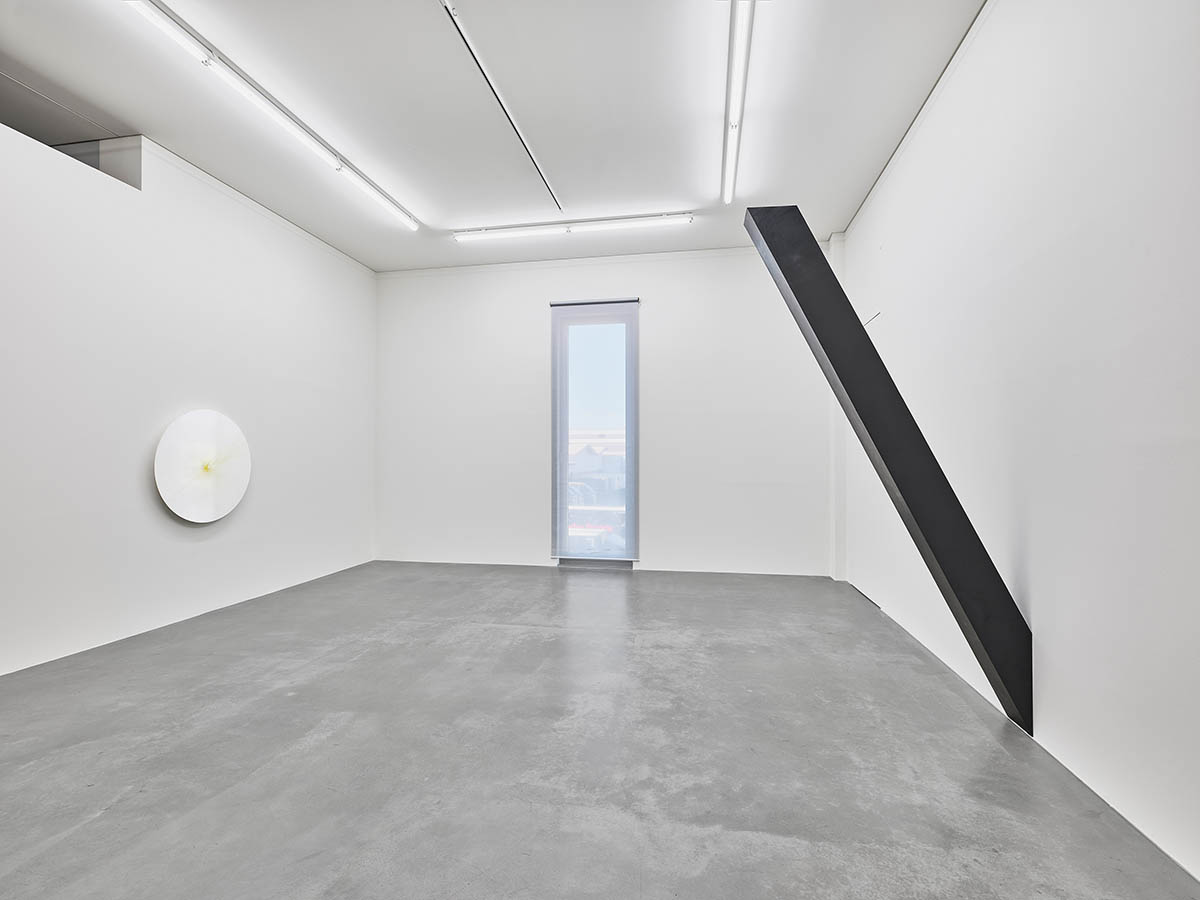
The collection keeps growing. Who decides about new procurement, and what do you look for in work today?
We have various reasons for acquiring a work of art. One of my priorities is to represent as broad a spectrum as possible of the work of artists who are already part of the collection. This means supporting artists over the long term and following the development of their practice.
We also try to acquire works from exhibitions conceived specifically for our museum or works that have been produced especially for these shows. Of course, there are also times when we would like to address gaps in our historical holdings. Unfortunately, as is the case for most museums, this is hardly feasible financially. Collecting retrospectively is expensive. To keep the collection dynamic, I’m also constantly looking for emerging artists who can offer new perspectives on the collection’s core themes. The decision-making process varies from case to case.
The museum is currently showing a solo exhibition of Michał Budny’s work. When did you first encounter his work, and what made you want to offer him a solo exhibition at PEAC? Why do you think this quiet, poetic approach matters in current art discourse?
Michał Budny’s work has been part of the collection since early 2010. I had known his work for a while before I met him in person.
When Michał Budny and I first met, the work and the person came together in a remarkably harmonious way. His keen powers of observation and his sensitivity to people and situations find material expression in works that are sometimes monumental in scale and quietly self-assured, developing an extraordinary presence in the exhibition space.
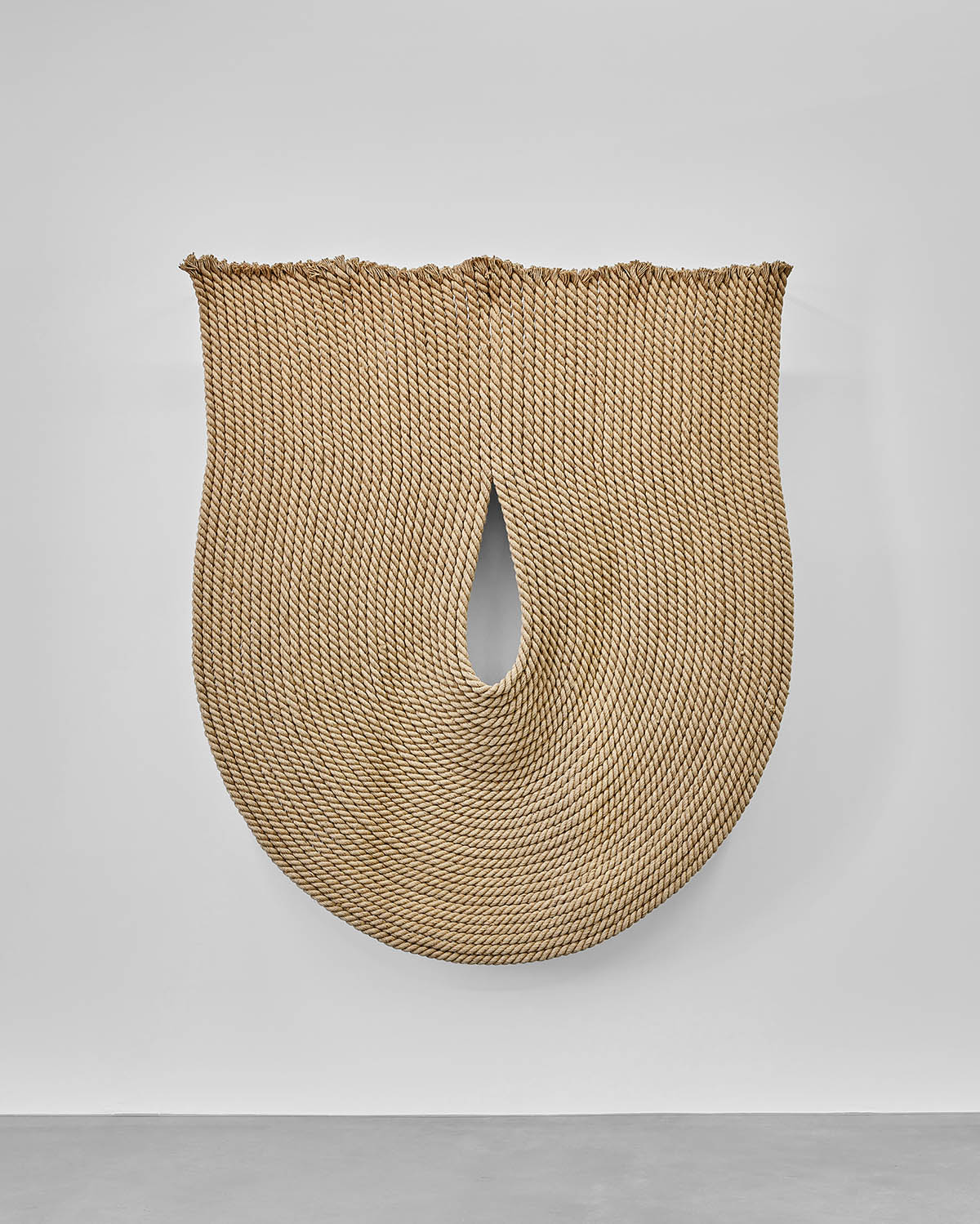
The objects are Michał Budny’s translations of familiar, everyday forms, situations, memories, and ideas. At first glance, they seem to reproduce something concrete. Yet, in the next moment, this impression is complicated or even withdrawn, not least through the choice of materials and the titles. At this point, a second layer emerges, inviting us to engage with the works in a deeply personal and subjective way.
The exhibition continues our program of presenting contemporary positions that enter into dialogue with historical works from the collection, particularly those associated with Minimal Art, Radical Painting, and Conceptual Art since the 1970s. In Budny’s case, the visual affinities with Minimal Art and Concrete Art are especially evident. However, these references are immediately disrupted by the materiality of the works. Instead of the sleek, industrial finish we might come to expect from Minimal Art, Budny’s works reveal traces of their making.
His works are often made from materials that change over time, fade, become brittle or porous, and accumulate signs of wear and tear—rubber, paper, cardboard, adhesive tape, and textiles. They are characterized by a highly reduced, often geometric visual language. Lines, circles, and rectangles are recurring elements. And yet—or perhaps precisely because of this restraint—they open up imaginary spaces that form a second layer over the physical presence of the works.
I think this is precisely why they matter: they give us space to breathe, to engage our imagination, and, in doing so, to unlock a multitude of possible realities. Personally, I find this very helpful at a time when it sometimes feels like there are so few possible outcomes.
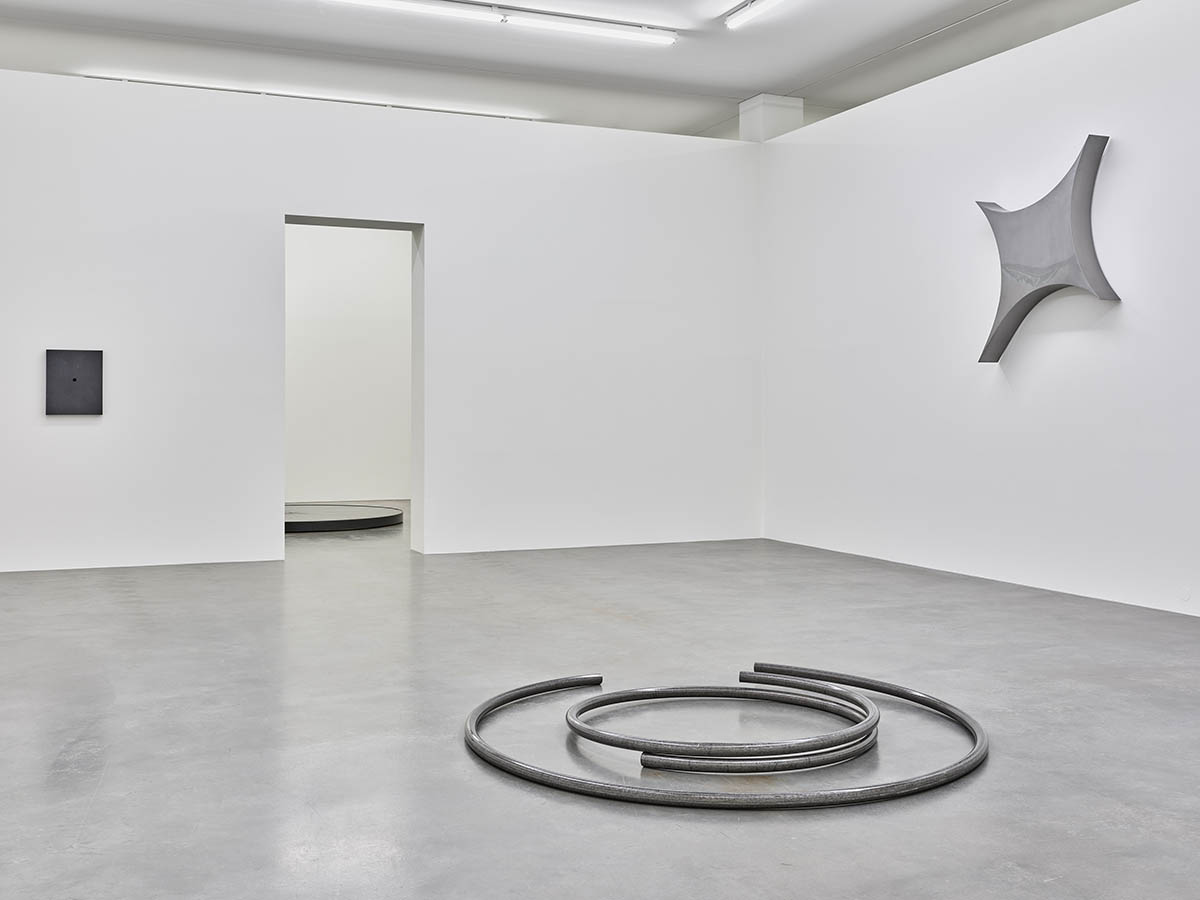
Michał Budny is already represented with several (more precisely six) works in the Paul Ege Art Collection; tell us about them? His solo exhibition, RANDZONE, is a midcareer retrospective featuring works from the past twenty years.
The works already in the collection are more closely tied to art-historical discourse around the image itself and what constitutes an image.
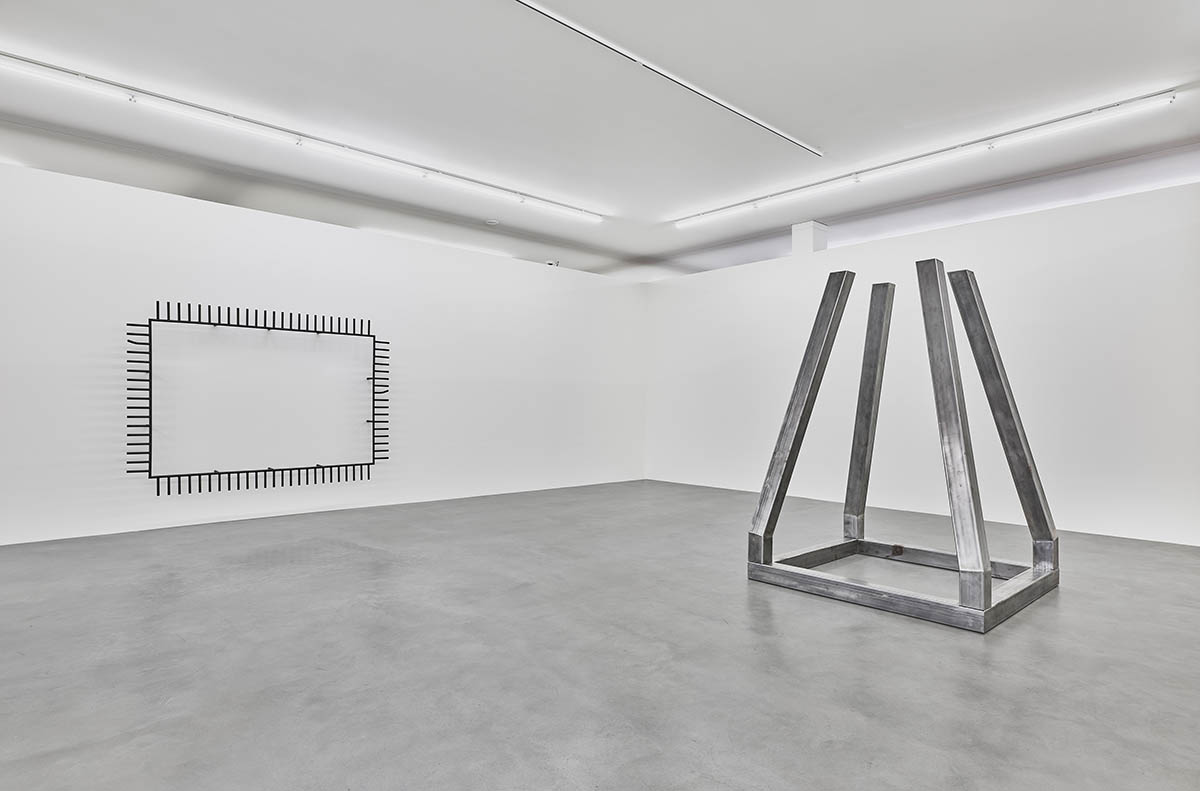
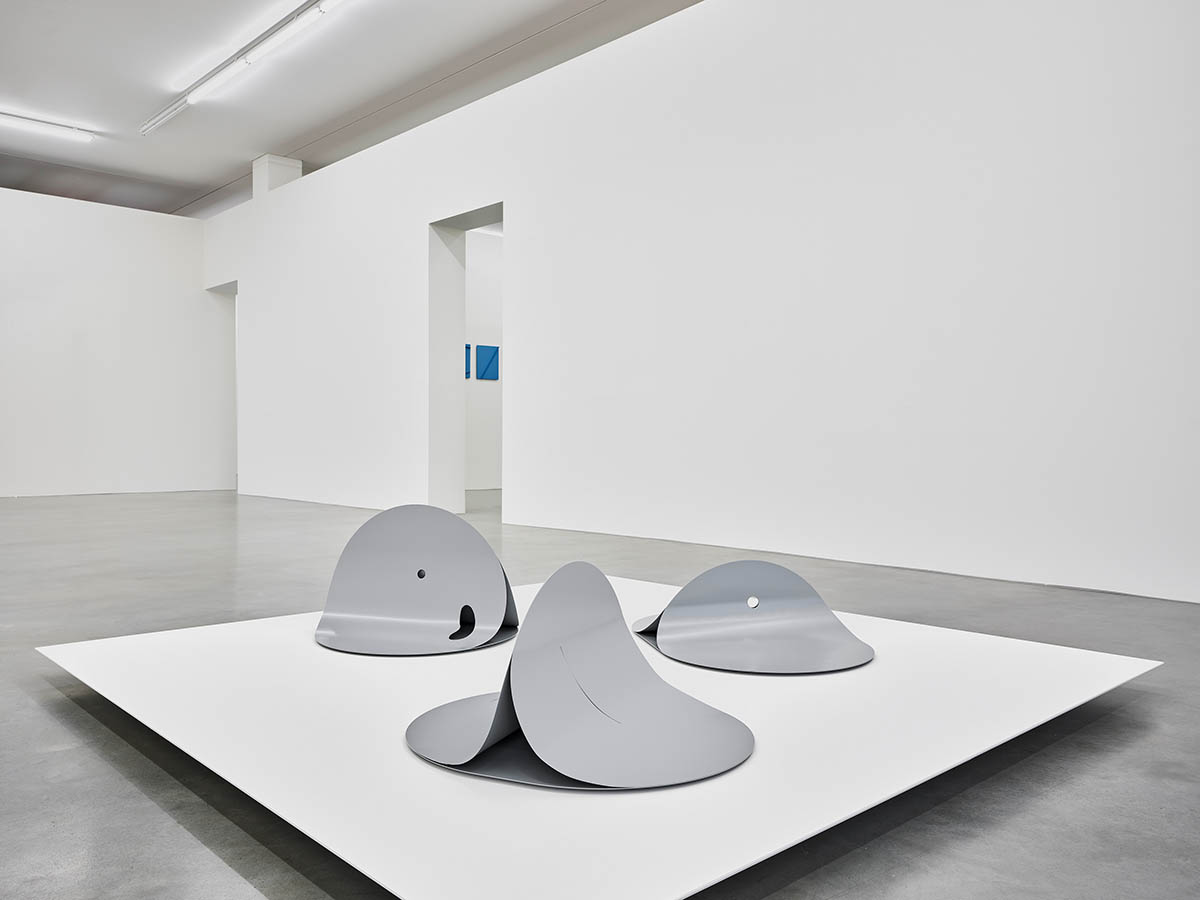
With this exhibition, we saw an opportunity to present a broader spectrum of Budny’s practice. We show around twenty-five works, including large-scale works made of steel, sculptures, objects, and also a video work.
Budny works with a very limited palette of black and white and materials such as steel, cardboard, and rubber, but the works carry his memories and personal experience. How do these hard, industrial materials produce narrative-driven poetic cosmologies?
The materials Budny uses carry an inherent ambiguity. For instance, he uses transparent adhesive tape in some works—the material creates a shiny, rather aloof surface. Over time, however, the shiny surface begins to yellow, and the work entirely changes. The material introduces an aspect of fragility and transience. Rubber introduces an element of smell to the work. The black surfaces are never entirely uniform, giving rise not to an impenetrable black, but rather to a spectrum of tones. Budny uses rubber as a kind of outer covering of shapes, inviting a comparison with skin.
The word “Randzone” (in English, “edge zone” or “margin”) speaks of boundaries between the visible and the invisible, connection and separation, and inside and outside. How did the title come about, and how is it translated into an exhibition?
RANDZONE felt like the right title for Michał and me because it evokes a geographical location. That is precisely what the exhibition is about: the moment when you find yourself standing slightly apart and have to decide whether to move closer or step away altogether.
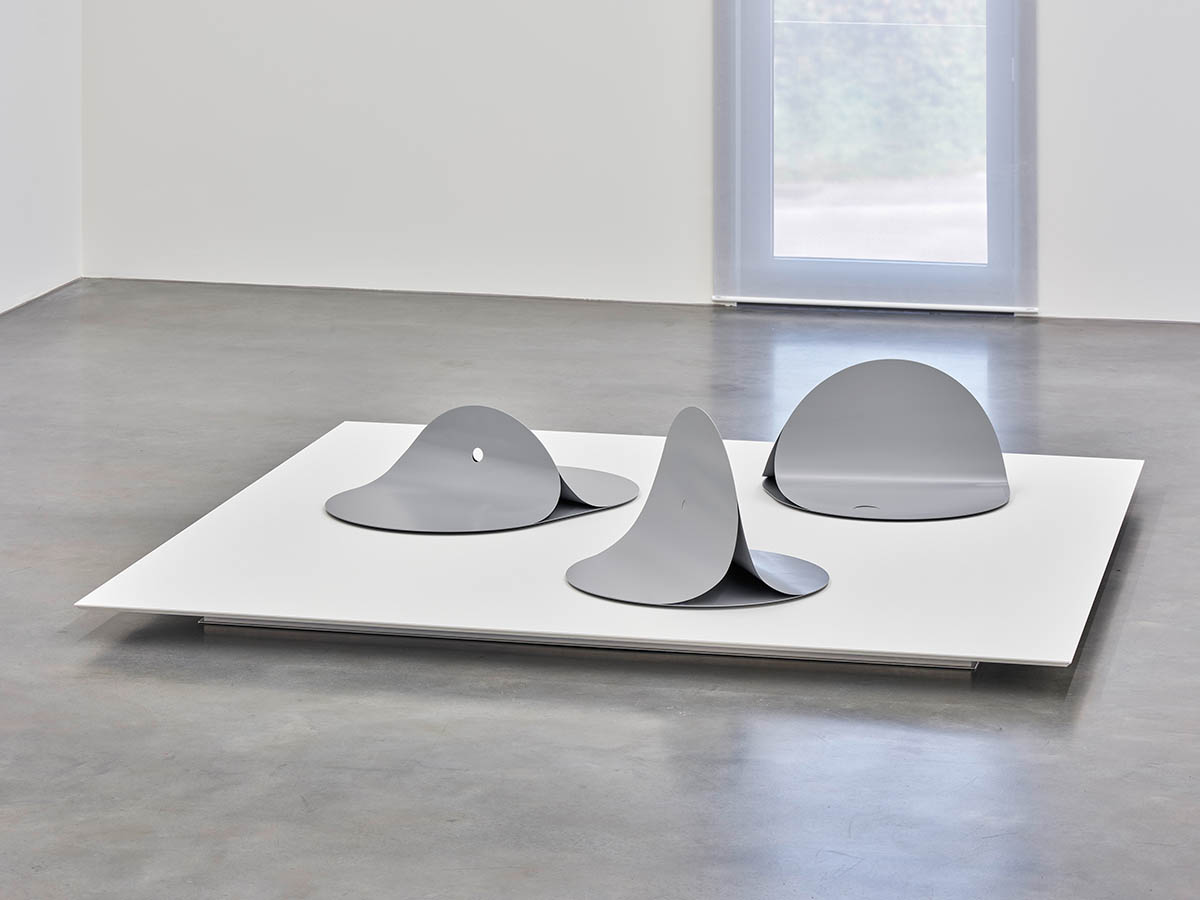
This resonates strongly with Budny’s work, playing with the physical and emotional distance or closeness between the work and the viewer. Materiality, scale, and spatial positioning all shape our relationship to the works we encounter in the exhibition spaces.
His solo exhibition is conceived as an inner landscape that visitors are invited to move through. None of the works hang on the wall in the conventional sense, using it as a surface for display. Instead, the works extend into the space as a whole, transforming the individual pieces into something closer to a spatial installation or an environment—one that invites visitors to wander through it and continually engages with them.
The museum offers guided tours through the exhibition and programs for schools. What can visitors hear or learn during these events that they couldn’t experience otherwise?
Michał Budny once described his works as haiku. This Japanese poetic form follows a strict formal structure: it must be very short, consisting of just three lines with a prescribed syllabic pattern, and without rhyme. Within these precise constraints, the words must be carefully chosen to open up spaces for your imagination. The program that we created for RANDZONE is focused on this aspect of Budny’s work—trying to find this space for imagination.
Exhibition: Michał Budny – RANDZONE
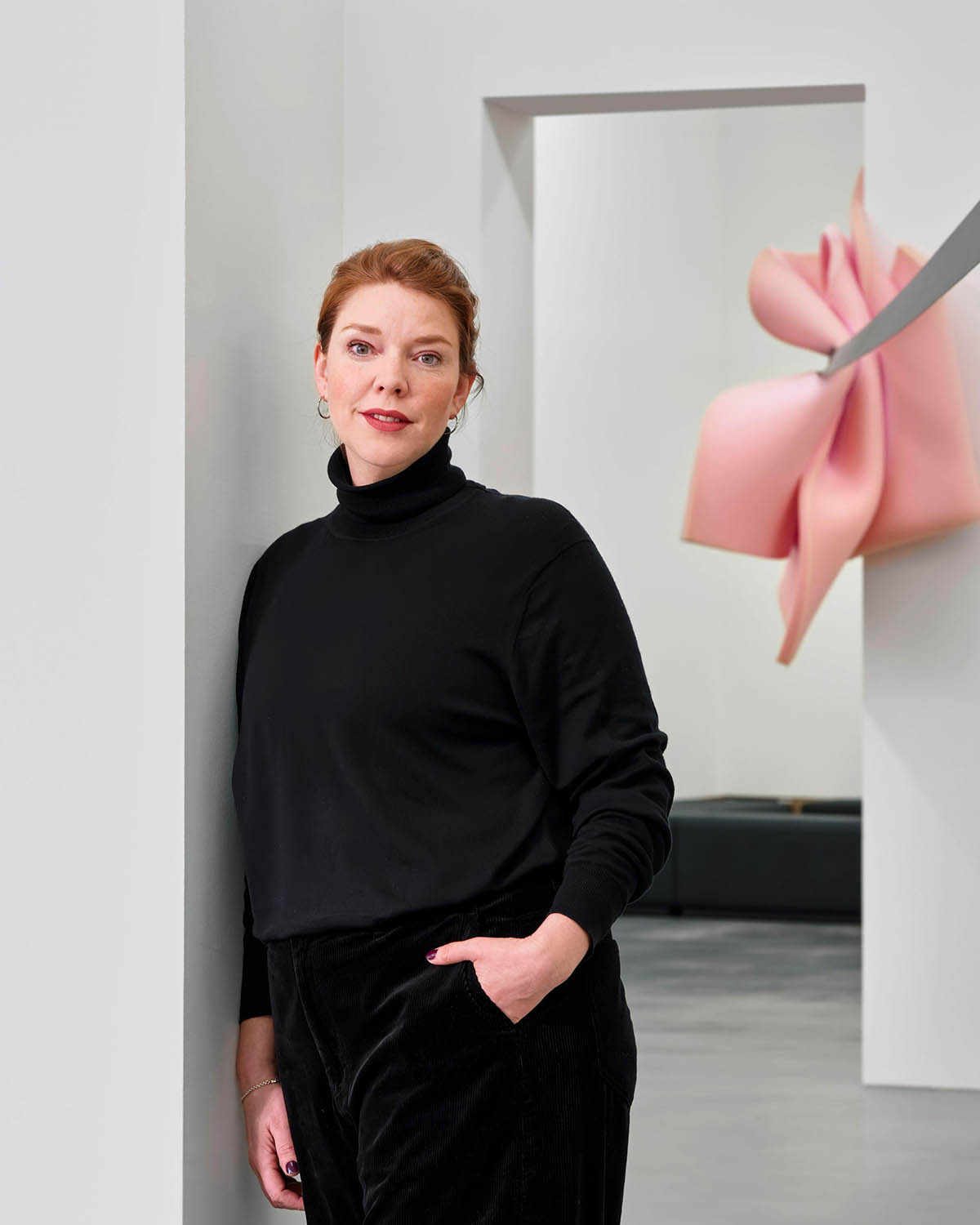
Curator: Lea Altner
Exhibition duration: 27 September 2026 – 14 February 2027
Opening hours: Tuesday–Saturday from 11 am to 5 pm;
Sundays and public holidays from 11 am to 5 pm
Address and contact:
PEAC Museum – Paul Ege Art Collection
Robert-Bunsen-Straße 5
79108 Freiburg im Breisgau-Nord
www.peac.digital
View all upcoming events here.
Lea Altner is a cultural researcher, curator, and director of the PEAC Museum. Her curatorial practice, art education, and writing explore transhistorical, transcultural, and interdisciplinary approaches.
The Paul Ege Art Collection is the culmination of a lifelong passion shared by Freiburg entrepreneur and art patron Paul Ege, who passed away in 2019, and his wife Helga. The Paul Ege Art Collection (PEAC) is now one of Europe’s most comprehensive collections of color painting, including additional works representing Minimalism and Conceptual Art. PEAC is committed to preserving the collection and making it accessible to all interested parties by presenting it in constantly changing contexts, thereby keeping it vibrant. The Paul Ege Art Collection has been housed and exhibited at the PEAC Museum since 2004. Originally driven by one person’s passion, it has evolved into a venue open to all over two decades. The museum is dedicated to fostering dialog between pioneers of art history and international representatives of contemporary (abstract) art. The PEAC team will continue to rise to the challenge of making the PEAC Museum a unique place for in-depth art appreciation, dynamic engagement, and curiosity, as well as a place of tranquility and relaxation. The vision is to create an experiential space where the interplay between artwork, space, and viewer plays a special role; the ability to perceive both oneself and the world is heightened.
