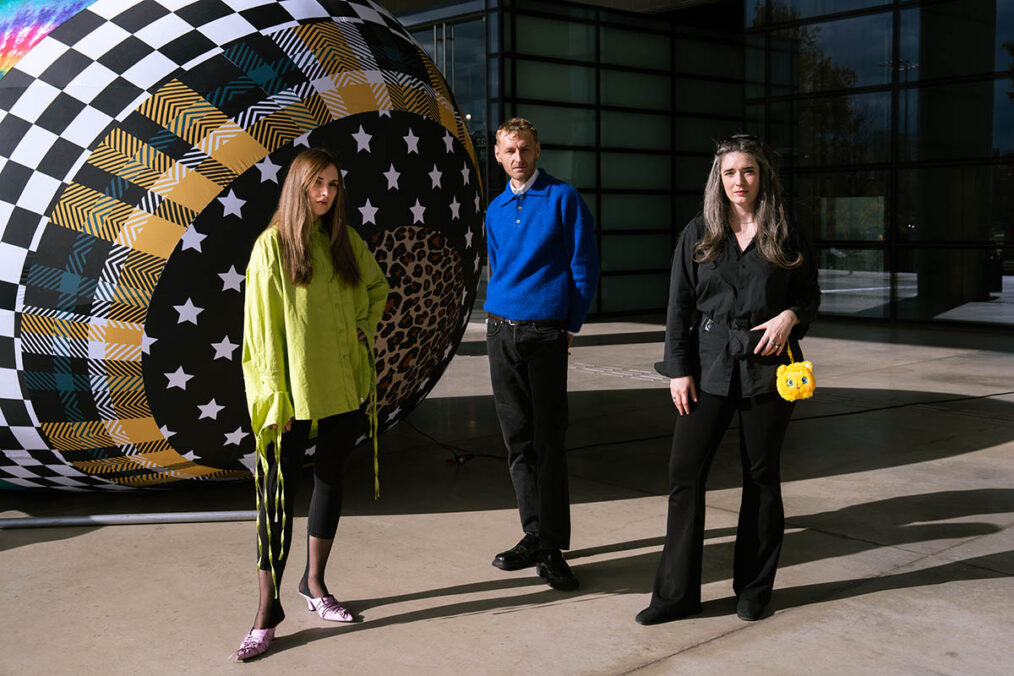
Zagreb-based curatorial collective KUĆĆA presented CUTE BUT PSYCHO, a one-day international program at the Museum of Contemporary Art Zagreb (MSU) on 31 October 2026. The event marked the penultimate chapter of KUĆĆA’s year-long program of the same name, dedicated to a simple question: what happens when the irresistible and sweet meet the disturbing and violent?
CUTE BUT PSYCHO began with the seductive surfaces of popular culture, internet imagery, fashion, digital technologies and public spectacle, only to examine the relations of power, vulnerability and control concealed beneath them.
Cute is disarming. It implies softness, harmlessness and passivity: something that exists to be looked at, desired, protected, possessed or subordinated. In this sense, cuteness offers an almost perfect image of consumerist logic. To be cute is to appear frictionless, to become a smooth, agreeable surface seemingly without agency of its own. Cute is not only an aesthetic category. Its associated characteristics are the fundamental force of the systems around us, a means of manipulation in a situation of power imbalance. Cute is embedded in artificial intelligence and the algorithmic architecture of social networks. In all those sycophantic and flattering machines, in shrinkbots, filter bubbles, and pinkwashing. It is always disturbing and dangerous because it is deeply intertwined with aggression, and thus with its own opposite. In short, cute is always psycho.
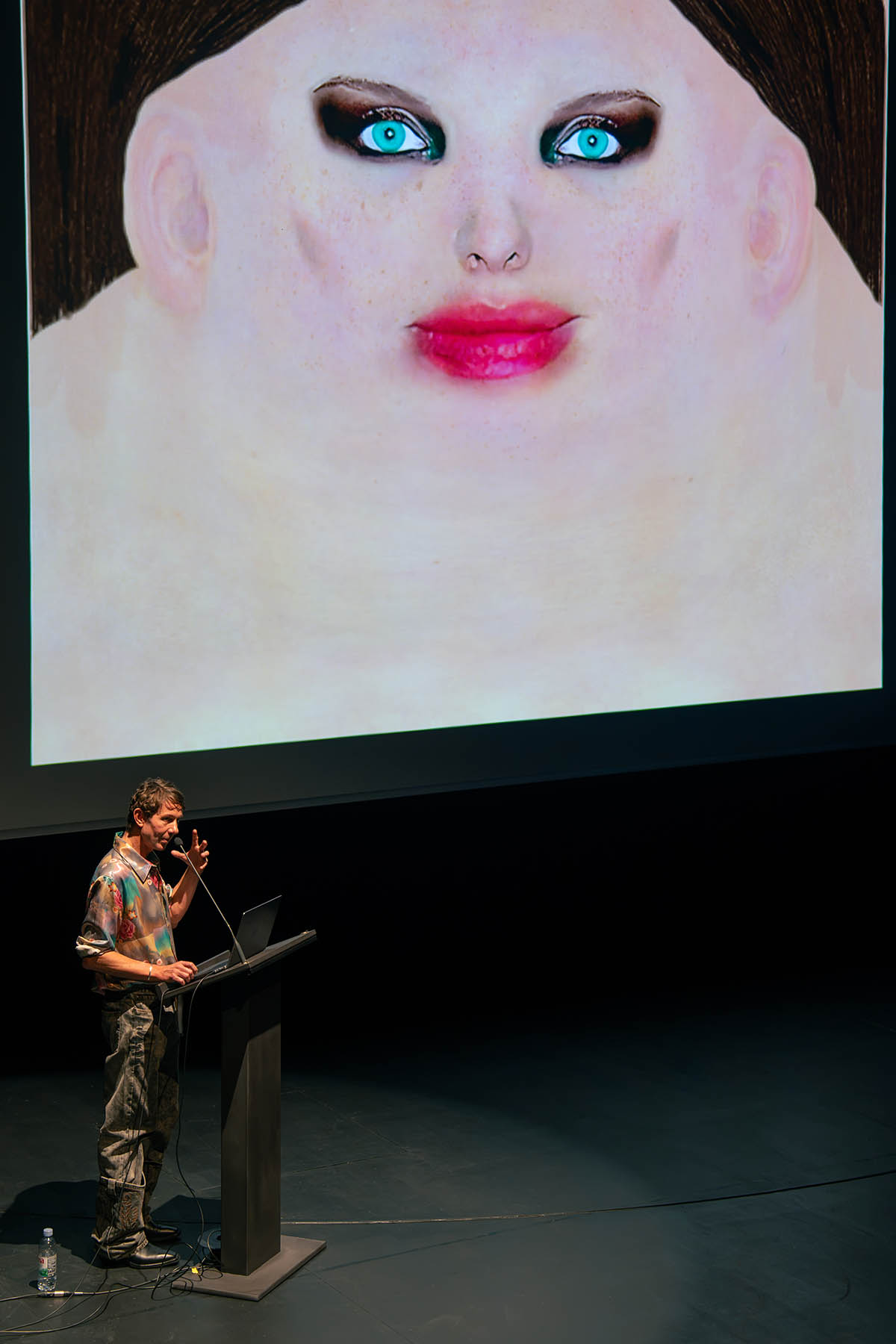
Bringing together Luigi Mangione, Ozempic, AI slop, and Dress to Impress into a trilogy narrated by Julia Fox’s avatar, Daniel Felstead and Jenn Leung presented „I’m So Janky“, which explores the cracks between the promise of a technologically automated future and its everyday reality. Through the notion of „jankspace“, the authors reflect on the mismatch between the human, vulnerable and organic body and an ever more complex digital environment. Felstead, whose work moves across fashion, technology and culture, and Leung, a researcher bridging neuroscience and computing, together develop a critical yet playful view of technologically mediated everyday life. Avoiding both utopian and dystopian visions of the future, „I’m So Janky“ speaks of our „disordered reality“, guided by Julia Fox, whom the authors describe as „a powerful cultural phenomenon that artificial intelligence could never have created“.
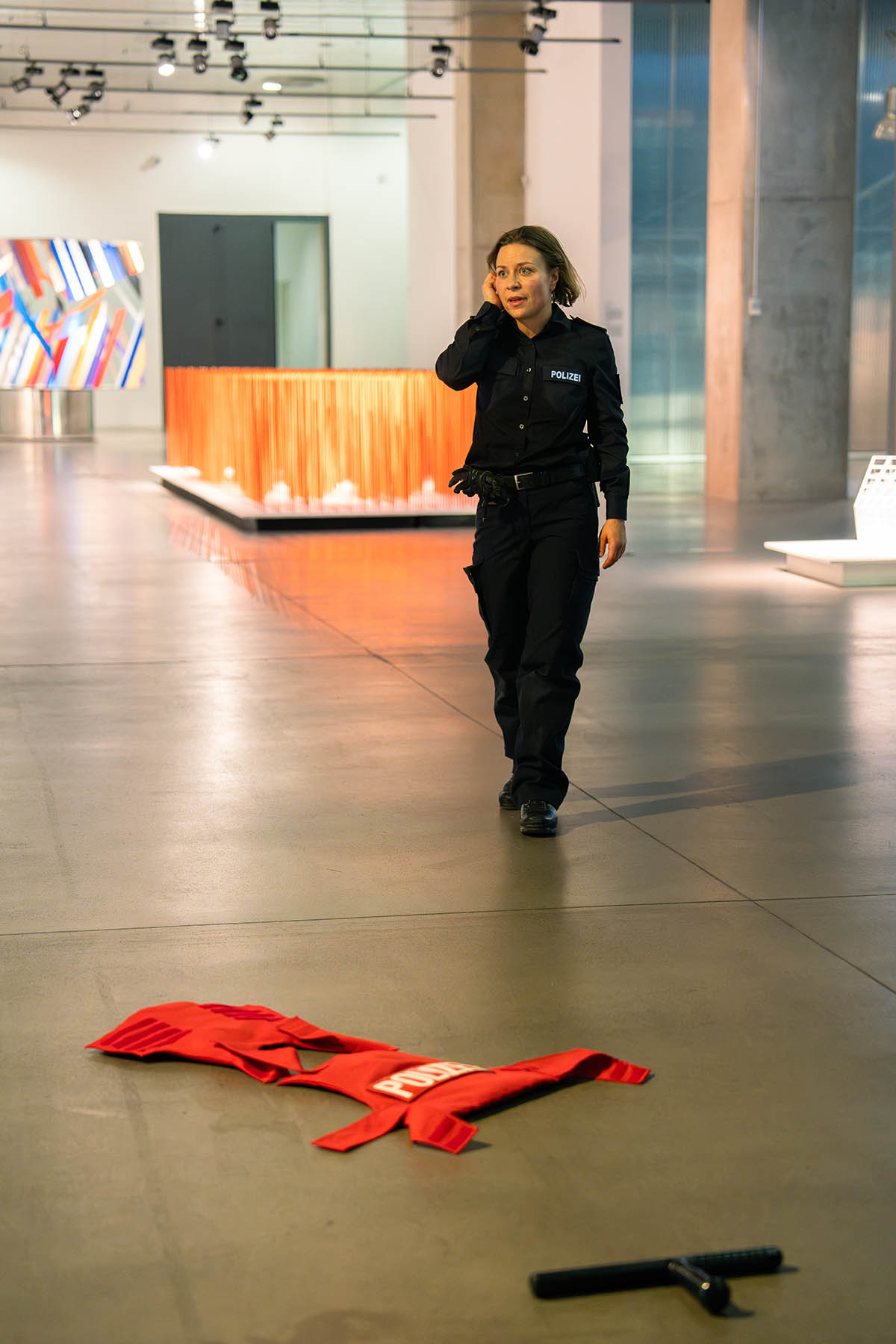
Performance “Ssassin’s Creed (Lady says Stop)” by Liina Magnea is a chaotic performance that constantly moves between absurdity, grotesque and vulnerability. The character of the policewoman is presented in a complete breakdown – in one moment we see her in a state of absolute and intimate concentration while playing the piano, while in the next she indulges in self-referential madness. The performance, in addition to exposing the fragility of institutional power and those who represent it, raises the question of new heroes who appear in moments when the social status begins to collapse. Magnea explores the circumstances in which individuals can lose themselves in the role of victim or develop a sense of messianism, talking about the institutionalized mechanisms of radicalization.
“IT GIRL” is a recent collaboration between Alex Quicho, a theorist whose practice develops novel ways of understanding life within technological systems, unfolding in multi-year cycles through critical writing, performative lectures, and moving image, and Raw2.2 (Hebe Wang), an artist working across moving image, performance, and sound in London, focusing on the relationship between affect and the digital through figuration and performance. IT GIRL presents the mind-body horror of pursuing beauty under conditions that demand constant self-improvement. Set between a white void and a dark hotel room, the film unfolds as hallucinatory voices instruct, persuade, and affirm the main character as she morphs into her idealised self—her digital twin.
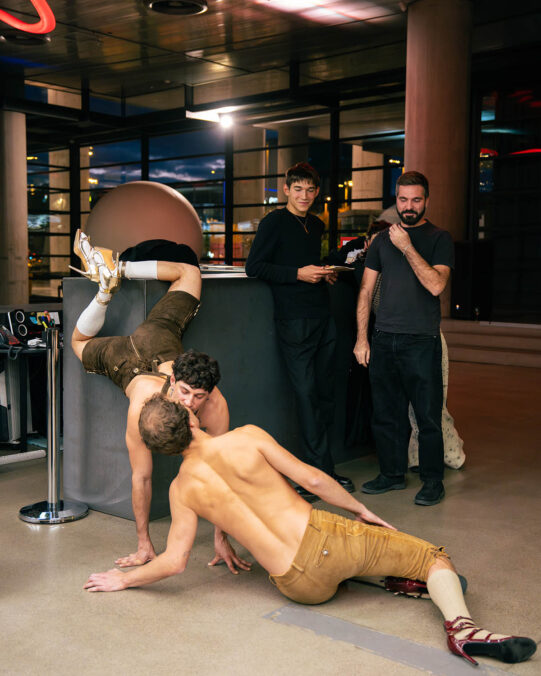
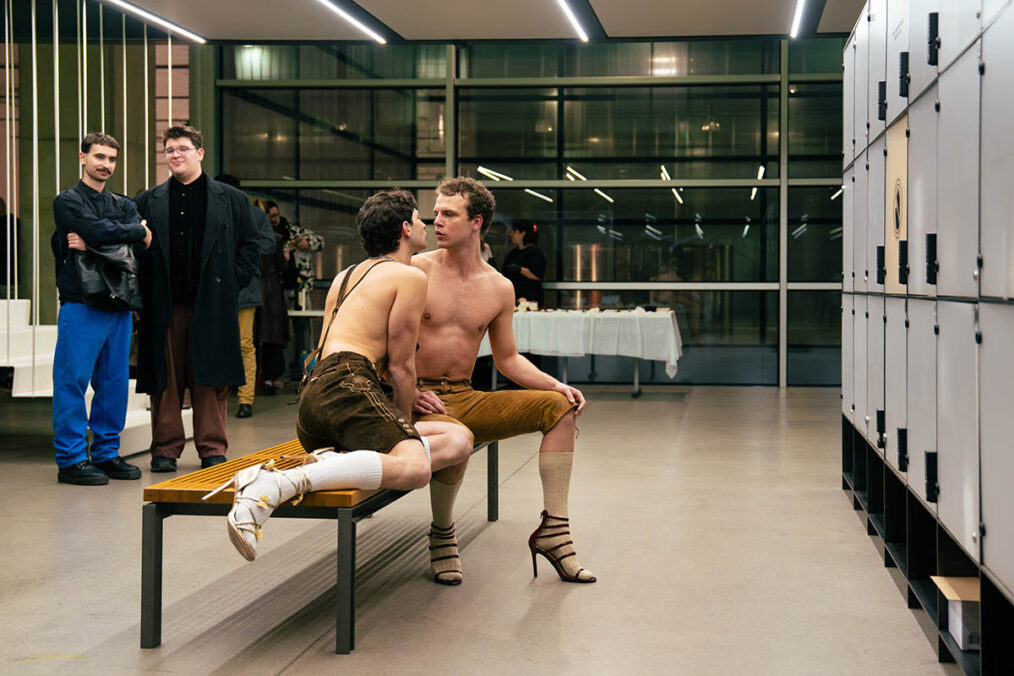
Performed with Paul Winkler, Vienna-based Luca Bonamore presented a durational performance “boys(friend).” Two performers, informed by the subjective experience of queer existence in public and semi-public space, move, to a live DJ set, through the audience and their surrounding environment in a sequence of mechanical kisses and acrobatic figures. Bonamore developed a performance that is mechanical and repetitive, yet despite these qualities, also unpredictable. The performers move freely through the museum space, fully appropriating its infrastructure and unfolding a performance with an indeterminate temporal and spatial dimension, thereby opening up the possibility for the performance to completely shed the museum framework and continue beyond it, questioning the processes of representational politics and their application in the context of institutional art.
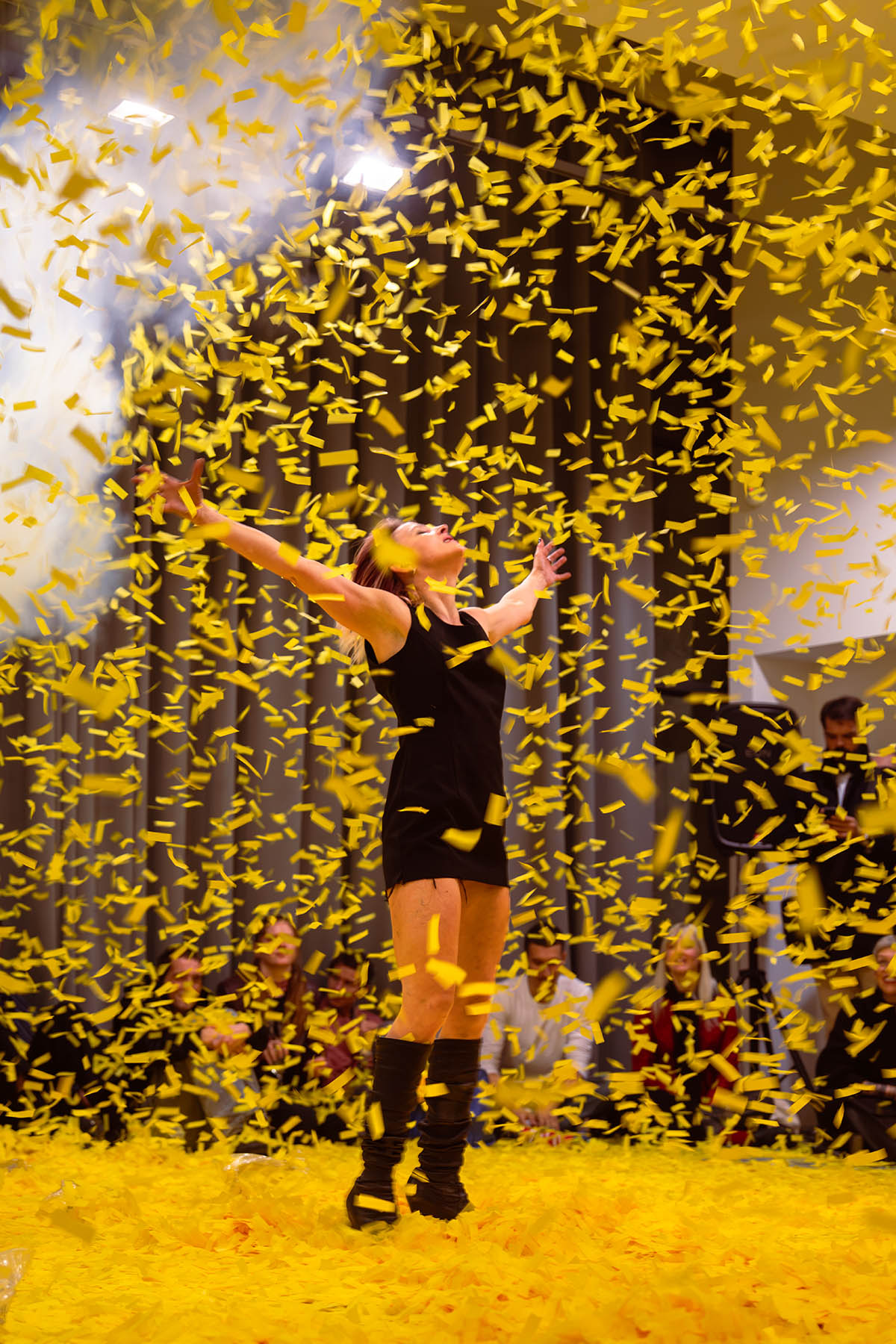
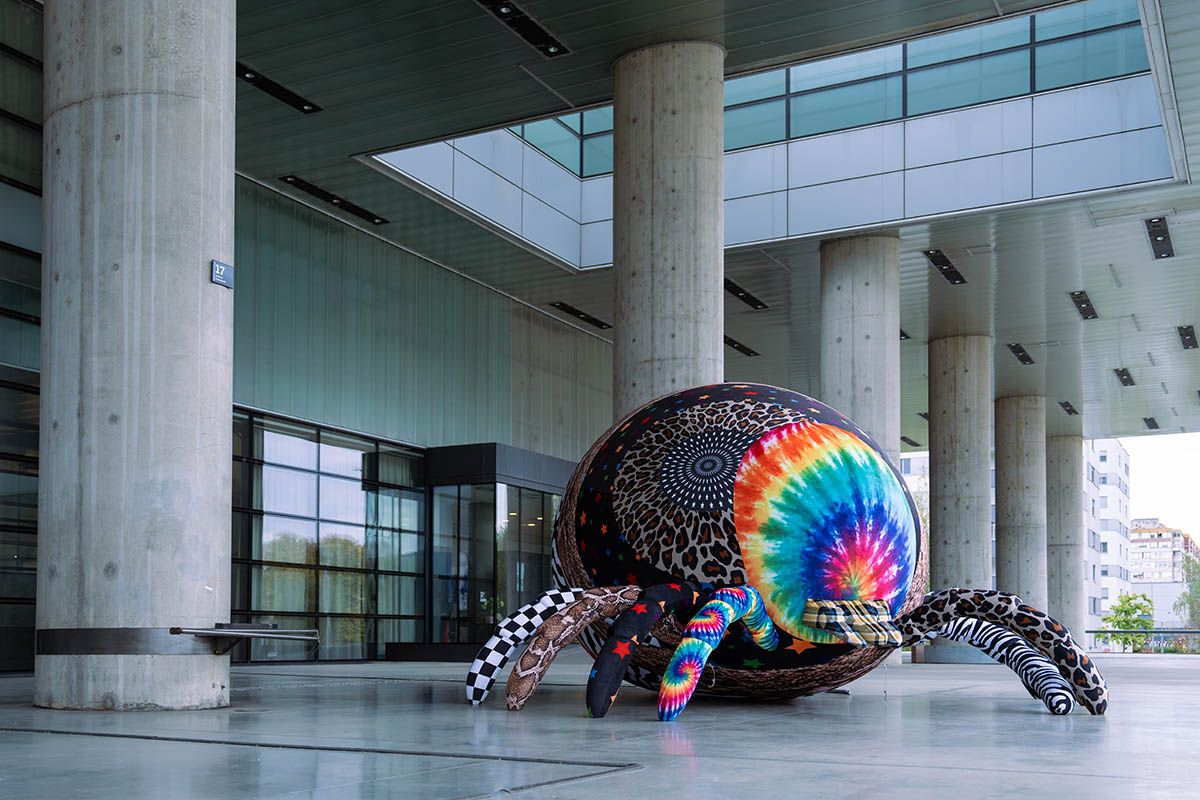
In front of the museum, Esben Weile Kjær presented “Thirst Trap,” a large-scale inflatable sculpture in the shape of a tick. Its oversized body and eight legs are covered in a patchwork of contrasting patterns, including tie-dye, animal prints, camouflage, checks, stars, and other familiar textile motifs. The soft, inflated form turns the tiny parasite into a monumental and highly visible presence. Ending the program was another work of the same artist. Performed by Camilla Lind and Johan Beck, “SUN!” is a 20-minute high-intensity performance with a soundtrack by Ydegirl, culminating in a massive explosion of yellow confetti fired from a stadium-scale confetti super blaster.
KUĆĆA: CUTE BUT PSYCHO
Museum of Contemporary Art, Zagreb (MSU)
October 31, 2026
KUĆĆA – www.kucca.hr, www.instagram.com/kuccccccca/
KUĆĆA is a curatorial collective and project space formed in 2021 as a platform for experimenting with alternative ways of producing knowledge and new modes of feeling, thinking, and being. It is a collaborative space for artists, curators, theoreticians and other individuals and organizations who work in fields of process-based, experimental and investigative artistic practices. KUĆĆA is occupied by curators Jurica Mlinarec, Klara Petrović, Luja Šimunović and other friends. KUĆĆA organizes residency, research, production and exhibition programs. They have also realized large-scale projects exploring how art and exhibition-making can use local landscapes to question familiar cultural ideas and ways of understanding the world, including the 36th Youth Salon (Zagreb, 2022), the 63rd Poreč Annale (Poreč, 2023), the 60th Zagreb Salon (Zagreb, 2025) and Media Mediterranea (Pula, 2026). In 2024, KUĆĆA launched the international project Identity Crisis Network connecting artists and curators to explore and challenge ideas of identity and subjectivity. KUĆĆA’s work has been presented in international magazines and publications such as KUNSTFORUM (DE), e-flux (US), SZUM magazyn (PL), Les Nouveaux Riches (AT) & ETC. magazine (SI).