


On the occasion of its 80th anniversary, the Künstler*innen Vereinigung Tirol is looking, with the annual curatorial concept Under Pressure in 2026, for exhibition projects that create connections and confront volatile stress factors and fields of tension along with their consequences. In doing so, the projects should capture the prevailing complexity of our contemporary reality, being open to new and alternative ideas and so making change conceivable.
Exhibition Venues
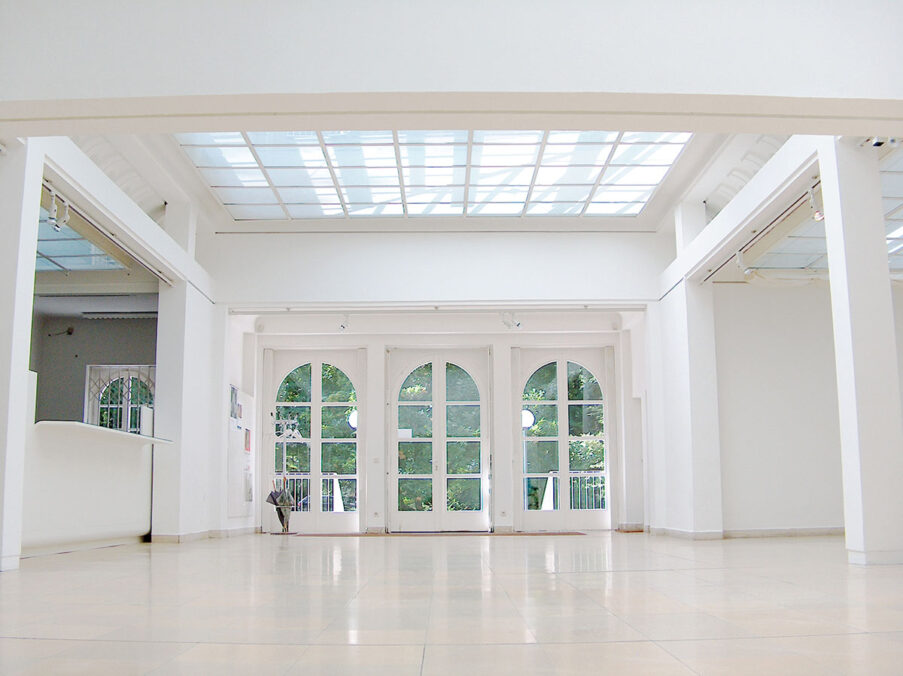
The Kunstpavillon is located a few minutes walk from Innsbruck city centre, in what is known as the “Kleine Hofgarten” [“Small Hofgarten”]. The building dates from 1842, when it was constructed as the summer residence of the state governor, and was adapted into a skylight gallery in 1950. The room measures approximately 175 m2.
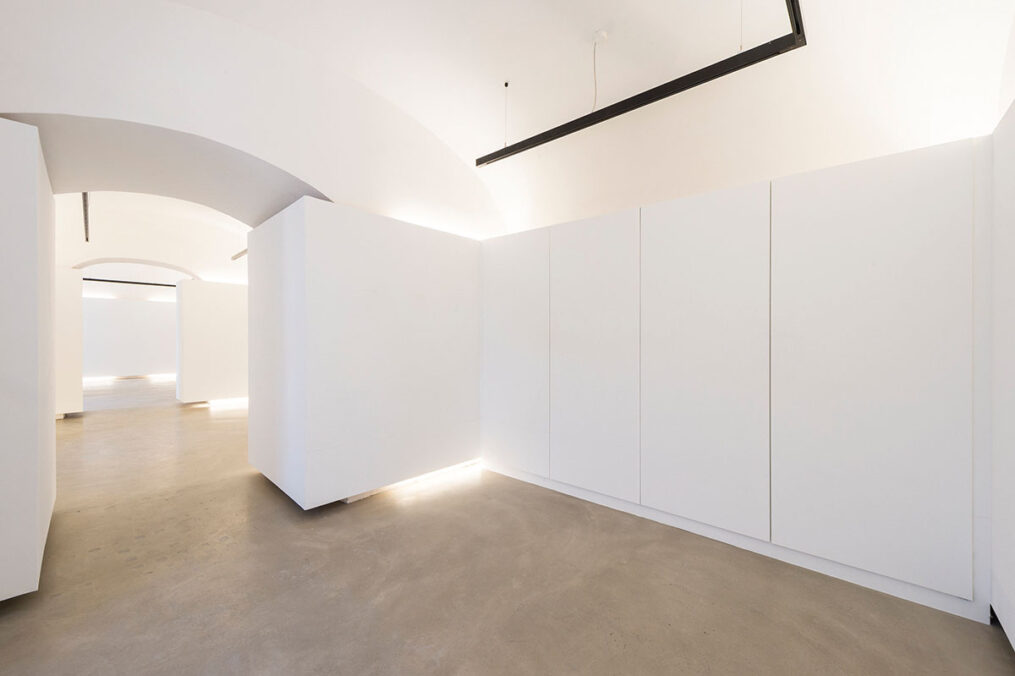
The Neue Galerie comprises 95 m2 of exhibition space and is located on the ground floor of the Hofburg at the entrance to Innsbruck’s historic Old Town district. The historic vaults were completely renovated in 2011. In contrast to the Kunstpavillon, these rooms can be darkened easily for projections.
Curatorial and Technical Production Support. Our curators and production team will help with the implementation of projects. This includes the production of the exhibition, printing materials, PR, exhibition booklets, texts, etc. The Künstler*innen Vereinigung Tirol reserves the right to realise its own outreach programmes tailored to each exhibition project.
Budget. The budget per submitted project amounts to a maximum of EUR 3,500 for the Kunstpavillon and EUR 3,000 for the Neue Galerie. This includes production costs incurred for the creation of new artistic works, display design and exhibition architecture, as well as the reconstruction of the space, and the costs for renting technical equipment, materials, travel, accommodation and transport. The following costs will be covered by the institution: Printing costs (flyers, posters, exhibition brochure, etc.); translation costs, set-up team, marketing, application & public relations, insurance, etc.
Submission deadline: 30.06.2025
Further information and frequently asked questions can be found on the website: https://www.kuveti.at/en/opencall2026/
The Institution. The Künstler*innen Vereinigung Tirol was founded in 1946 as a forum for contemporary art in Tyrol. In addition to representing the interests of visual artists, the Künstler*innen Vereinigung curates, organises and produces exhibition projects at the Kunstpavillon and Neue Galerie. The exhibition programme, which is largely based on an open, international call for submissions, encompasses all forms of contemporary art.
With these diverse agendas, the Künstler*innen Vereinigung Tirol promotes a diverse and valuable debate on art and society, international discourse and a high-quality exhibition programme. The jury will select up to three exhibitions from the submissions for the annual programme 2026. The exhibition period is from January 2026 to January 2027. The average duration of the exhibitions is 9-13 weeks.
Jury: Nele Kaczmarek (Director Kunstverein Nürnberg – Albrecht Dürer Gesellschaft), one representative of the board of the Künstler*innen Vereinigung Tirol. Bettina Siegele (Artistic and managing director of the Künstler*innen Vereinigung Tirol, Kunstpavillon and Neue Galerie)