Last year, the exhibition part of the Festival’s program was a group show at Kunsthalle Wien Karlsplatz and was a very atmospheric show. How would it be different this year in the space of FOTO ARSENAL WIEN?
FOTO ARSENAL is an interesting place, and its context immediately inspired me. It’s close to the Heeresgeschichtliches Museum (Museum of Military History), so there’s this strong connection to military history and, more broadly, to histories of conflict. The location brought a strong impression of how I started thinking about the festival this year.
The history of technology is, in many ways, a history of military innovation. Many of the key technologies we’re familiar with, the internet, radio, and telecommunications, emerged from military research or from attempts to gain a strategic advantage. Even things like 3D scanning or radar. So that dimension is always there in the background when we think about technology.
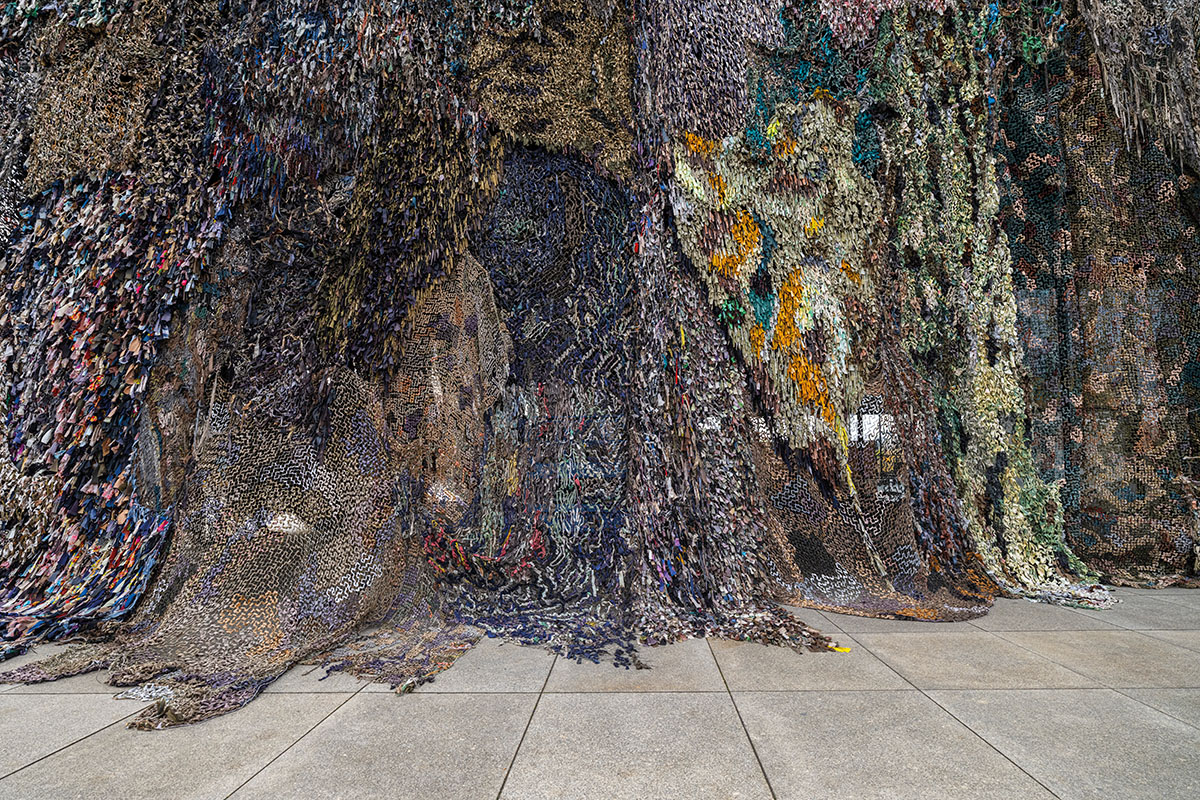
You might see something like an AI-generated cartoon character, but those are really just surface-level spin-offs of much deeper technological developments. That connection felt very natural for a festival focused on digital culture. So several elements in the program relate to this. For example, on the outside of the FOTO ARSENAL, we’re covering the building with camouflage netting by the artist Fabian Knecht. These nets are handwoven by Ukrainian civilians, using scraps of old clothing. It’s part of their effort to protect their communities, for example, from drone attacks.
What I find interesting, and quite provocative, is placing this kind of material in the context of a digital festival. It’s completely analog, tactile work, but it exists as a form of resistance against digitally powered, remote-controlled weapons. For me, it’s important, as in my previous curatorial work, to show the connection between the analog and the digital, between physical and digital space. They are deeply intertwined, and we shouldn’t pretend otherwise. Cultural projects need to keep communicating that, again and again, to give people a better sense of the texture and tactility of the digital. In this year’s edition, which is even more highlighted by asymmetries of power between those who control advanced digital technologies and those who have to resist them using very basic, material means. Military technology is fundamentally about producing power asymmetries, so resistance often becomes asymmetrical as well.
And what about inside the building?
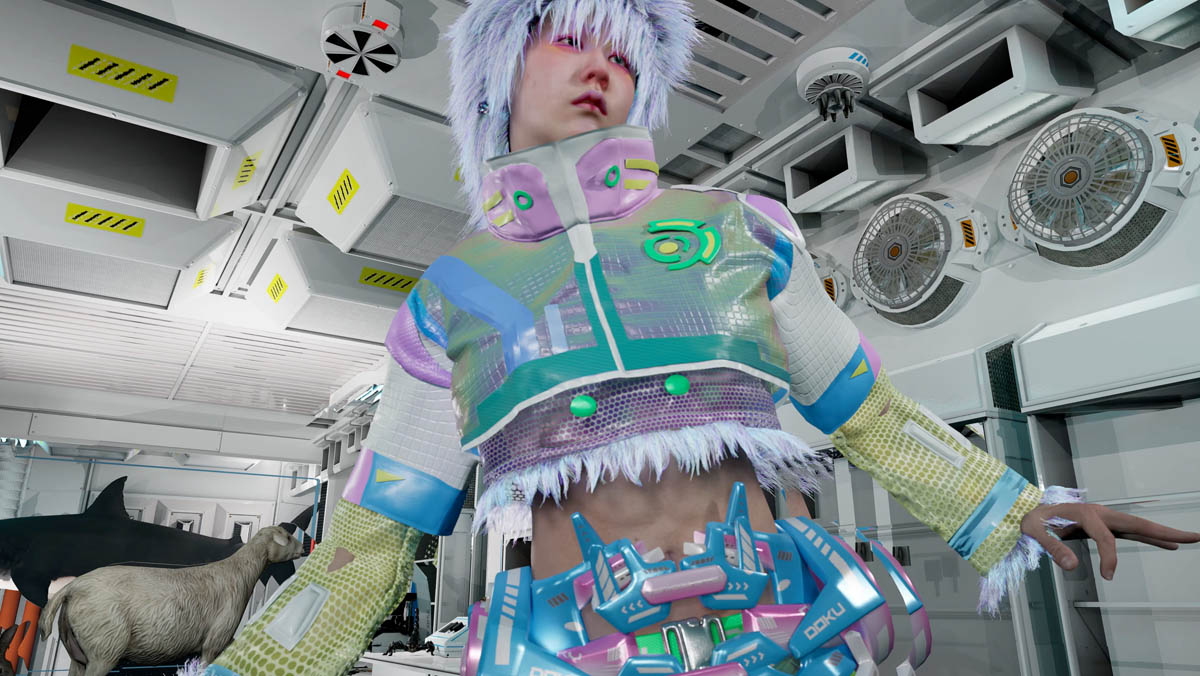
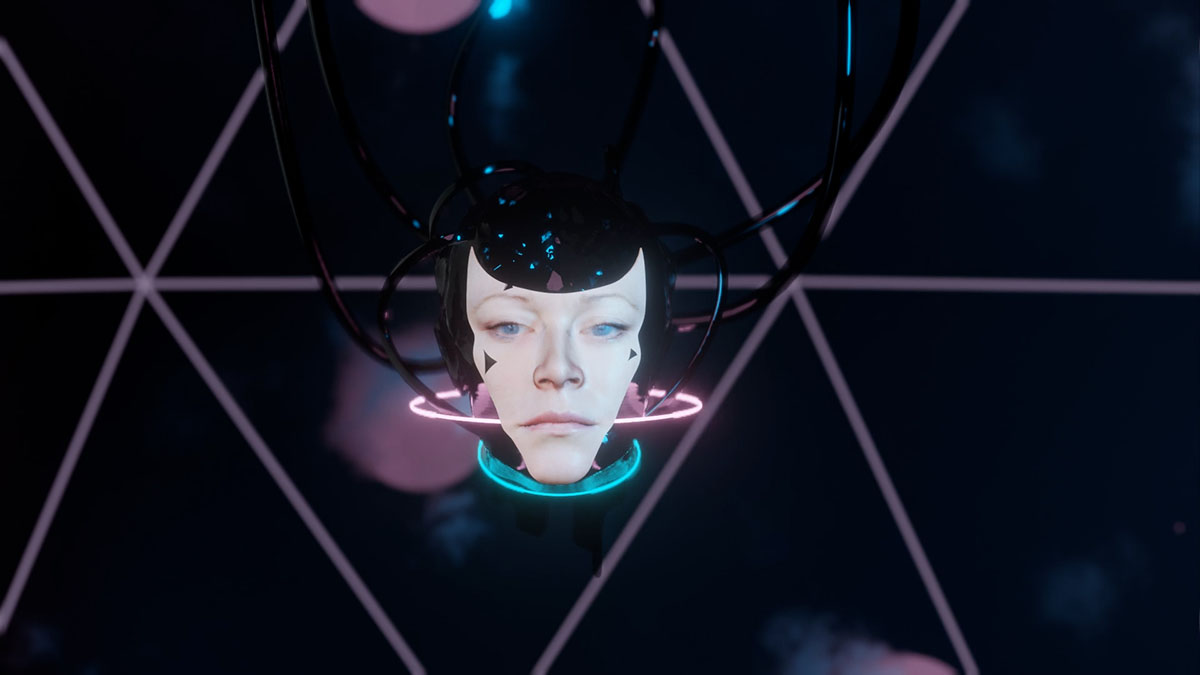
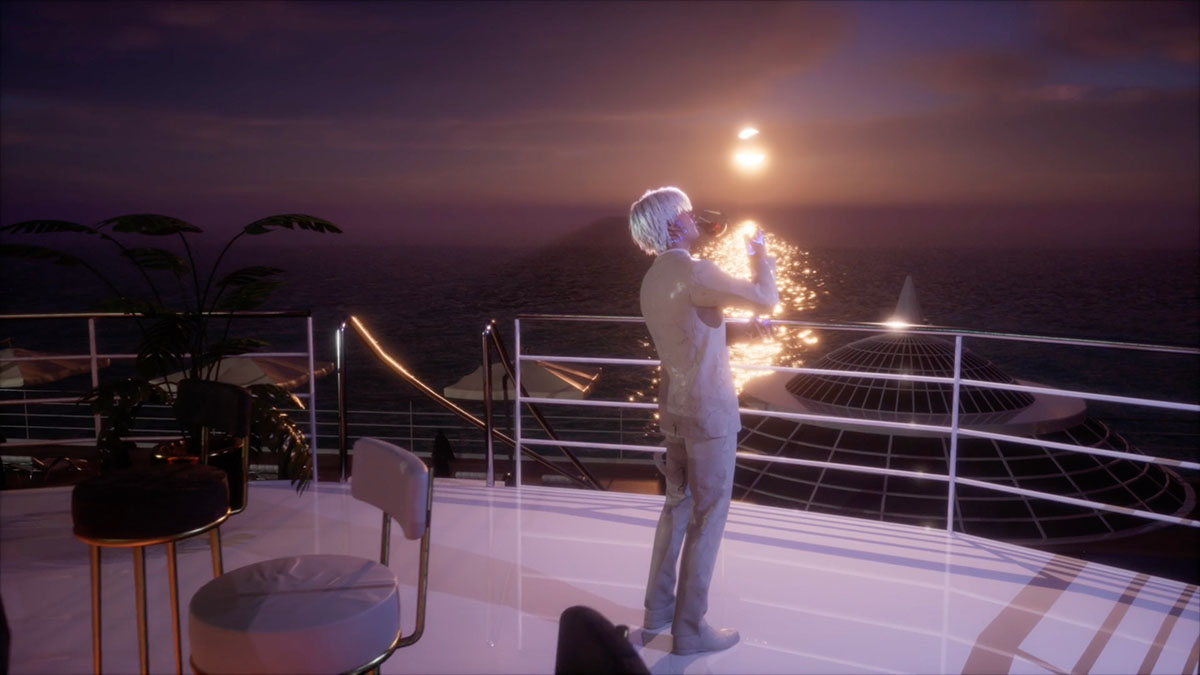
Inside, a trilogy of videos by the artist Lu Yang in a single-channel presentation. A large LED screen, with the three films shown sequentially. They are a Chinese artist whose work is deeply influenced by Buddhist philosophy and metaphysics. Buddhism has these fascinating ideas about the self: that it’s not fixed, but rather something shaped by material conditions, constantly shifting. In a way, that’s also a very “digital” way of thinking. The self becomes something fluid, contingent, almost like a system in flux.
In these videos, Lu Yang explores a character moving through different modes of existence across digital space, time, and identity. It becomes a kind of Buddhist-inflected allegory of a cyborg existence: moving across platforms, lives, and realities. Visually, the work is spectacular. The earlier videos are created using game engines, while the final one is fully AI-generated. Seeing them together as a trilogy (which hasn’t been done before) really highlights how quickly synthetic image production has evolved, even in just the last year. The shift from Unreal Engine visuals to AI-generated imagery is quite striking. Lu Yang is, I would say, one of the most important contemporary Chinese artists of her generation. Bringing this work to Austria feels significant.
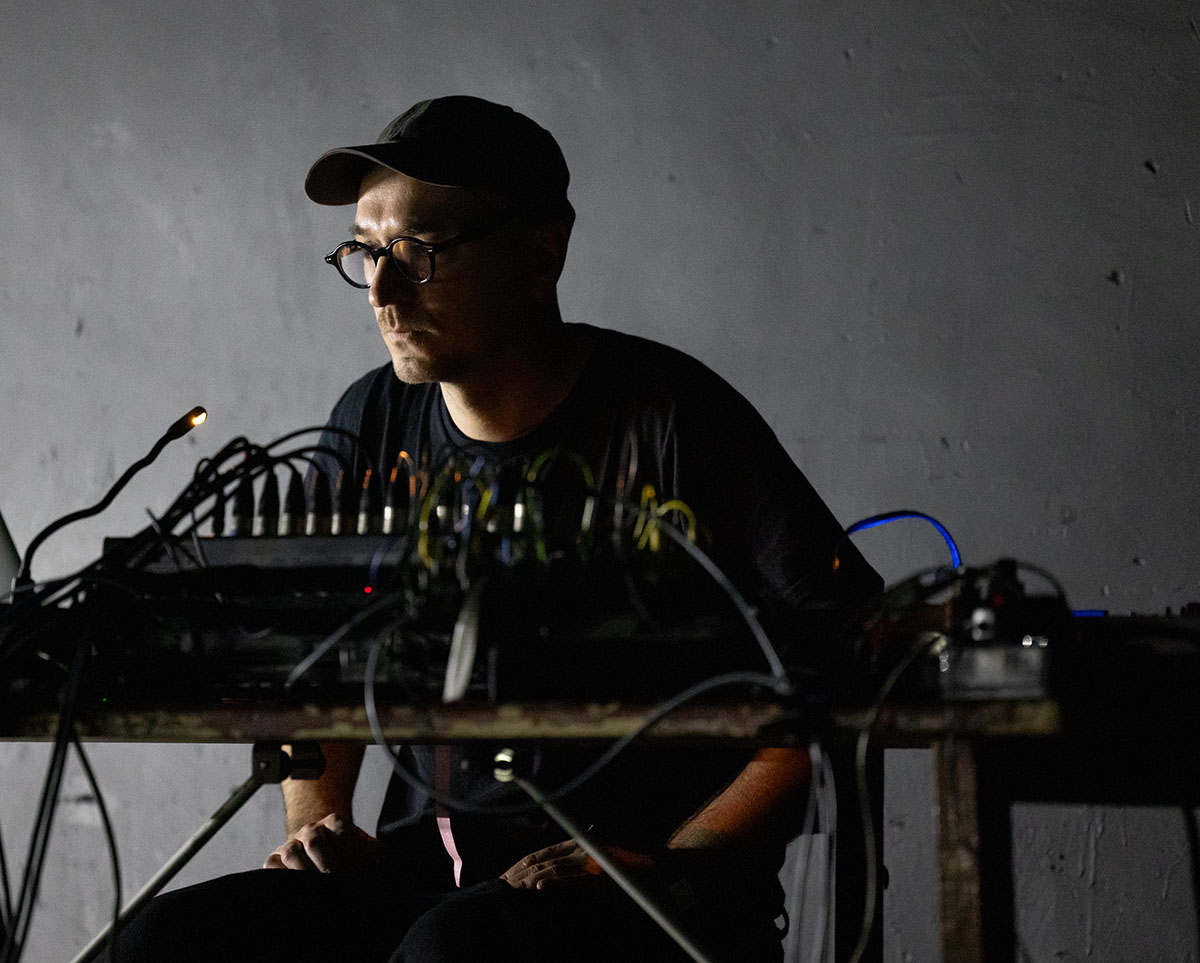
And then, opposite: in the hangar just outside. There is a very long hall, filled with tanks, at least ten or more, all lined up along both sides like a runway. When you’re in there, you feel dwarfed by them. You can almost smell them. They’ve been used; they come from different times, and different places, often from really horrific wars. And at the same time, you can read them as a kind of design history. You see how they evolve, constantly trying to protect the occupant but also to optimize for attack. It’s very unsettling. I commissioned the Austrian artist Peter Kutin to create a light and sound installation in that space. It will involve intense light and abstract sound. He’s trying to deconstruct the atmosphere of the hangar and think about sound in relation to war. There will also be a live performance on one of the days, so it exists both as an installation and as a concert.
I wondered about that, because in the text it mentions “highlighting” the silhouettes or shadows of the tanks, almost using them as a stage. How should we understand the perspective on the objects in the room, especially in a moral sense?
It’s clearly an anti-war piece. What’s striking about the hangar is that the tanks are silent; they’re parked there like museum objects. But that silence is deceptive. If you imagine even one of those machines turned on, the sound is completely inhuman. The sound of war is inhuman; it exists outside any kind of sensory comfort. There’s an entire sonic dimension to warfare that is brutal and overwhelming, and I think that’s something Kutin wants to explore. Through sound and composition, he’s trying to deconstruct that reality.
How about the title and topic of this year’s edition, “Alone or Together”?
Last year, we had a strong, almost thesis-like title: Model Collapse. It was quite assertive, almost like an essay. This time, I didn’t want such a closed, fixed statement. I wanted something more open: more like a question. That’s where the title for this year comes from. It starts from a simple observation.
It’s actually very difficult to be truly alone today. Even if you’re standing in an empty field, there’s probably a satellite above you. Your devices are listening. You’re still embedded in a network.
Do you see that as something positive or negative?
I think it brings many problems, but my intention isn’t to judge. It’s to highlight a condition: this is how things are. At the same time, the idea of being “together” is also complicated. Technologies promise connection, social networks, and constant communication, but people often feel more isolated. You can exist entirely within a filter bubble, entirely different from the person next to you. So we’re in this strange situation where neither solitude nor togetherness means what it used to. They collapse into each other.
That connects to something I wanted to ask. If the “signal”, whether radio, internet, or communication more broadly, has roots in military and political structures, how can it also be framed as something that connects people?
That’s a big question. And in this edition of the festival, there is no vision of inviting a singular answer. The program, the speakers, and the artworks all offer different perspectives. Some might suggest we are alone, others that we are together, and others that it’s a hybrid condition. So rather than presenting a fixed diagnosis, I’m creating a space for multiple voices.
That makes sense. Is there someone you’d especially recommend listening to in the part of the lecture program?
I’m very excited about Sarah Bezan. She’s an American academic based in Ireland, working in the field of extinction studies, which is still a relatively new and developing field. Traditionally, extinction studies might have focused on things like dinosaurs. But now, as we move deeper into ecological crisis… So, you know, when we talk about extinction, we usually think about these large-scale events, the disappearance of species, the so-called “great extinction” narratives. But today, many species are actually disappearing in real time. There is a lot to explore in extinction studies. However, what’s interesting about Sarah Bezan’s work is that she moves beyond that. She asks: how do we relate to the past, to the dead human or non-human in the digital age? Because now, with digital technologies, we can, in some sense “bring things back.” One obvious example is genetics: using advanced computational tools to try to revive extinct species, like the woolly mammoth, or to create hybrid life forms in the lab. So there’s this speculative, and sometimes very real, possibility of reanimation.
But there’s also another dimension: digital archives. If you have enough data: images, videos, and recordings, you can train AI systems to generate simulations of people who have died. There was a case reported in The Guardian where a Chinese funeral home offered exactly this: you provide data of a deceased loved one, and they create a generative AI version of that person that you can interact with. So then the question becomes: what does death even mean under these conditions?
Do you think this connects to this broader obsession with longevity, which has always been part of humanity?
I think it also connects to the festival’s theme, because it complicates the idea of being alone or together. You would assume that when someone dies, they are no longer present: that the separation is absolute. But now, even our relationship to the dead becomes blurred. In some sense, we remain „together“ with them through data, simulations, and archives. It’s an extreme example of the broader condition I’m describing. That’s why I’m very interested in Bezan’s work: she moves across prehistory, animal life, and human practices. I think her perspective will be fascinating. Another project I want to mention is an online commission by an Icelandic artist who goes by the name Animal Internet. He’s created this strange, surreal browser-based artwork. It functions almost like a game. You take on the role of something like a system administrator, or maybe an internet service agent for animals. You start receiving spam emails, and the more you click, the stranger things become. It spirals into this kind of absurd, almost Kafkaesque situation. It’s playful work, a bit chaotic, and very funny. Not all the perspectives have to be dark.
The program is followed by many workshops, developed together with partner institutions and different communities. The idea is that the festival isn’t just about people talking to an audience but creating interactive ways to engage with the themes. They’re open to a broad public: from school students and younger participants to professionals and specialists. We also have a Club night AWAY FROM KEYBOARD 2 in collaboration with Wiener Festwochen across two floors of the floating Badeschiff. That range is important. That’s what a festival should do.
Vienna Digital Cultures 2026
21–24 May at FOTO ARSENAL WIEN
You can find the information and the full program here: www.viennadigitalcultures.at
Vienna Digital Cultures is an art, performance, and discourse platform that has been exploring the cultural impact of digital technologies since 2025. At its core is an annual festival that brings together international artists, experts, and communities to reflect on the present moment shaped by digital transformation. This is complemented by an annual exhibition and an ongoing web presence, which provides a space for artistic, curatorial, and academic contributions. Vienna Digital Cultures is organised on a rotating basis each year by FOTO ARSENAL WIEN and Kunsthalle Wien.