Rooted in direct, bodily experience, the work invites viewers in without requiring prior knowledge, unfolding through attention, movement, and encounter. While painting remains at the core of his practice, he also thinks carefully about the spatial conditions in which the work is experienced, allowing those perceptual questions to extend beyond the object itself.
Your work shifts between painting, sculpture, and installation. Where do you place the boundary between image and object?
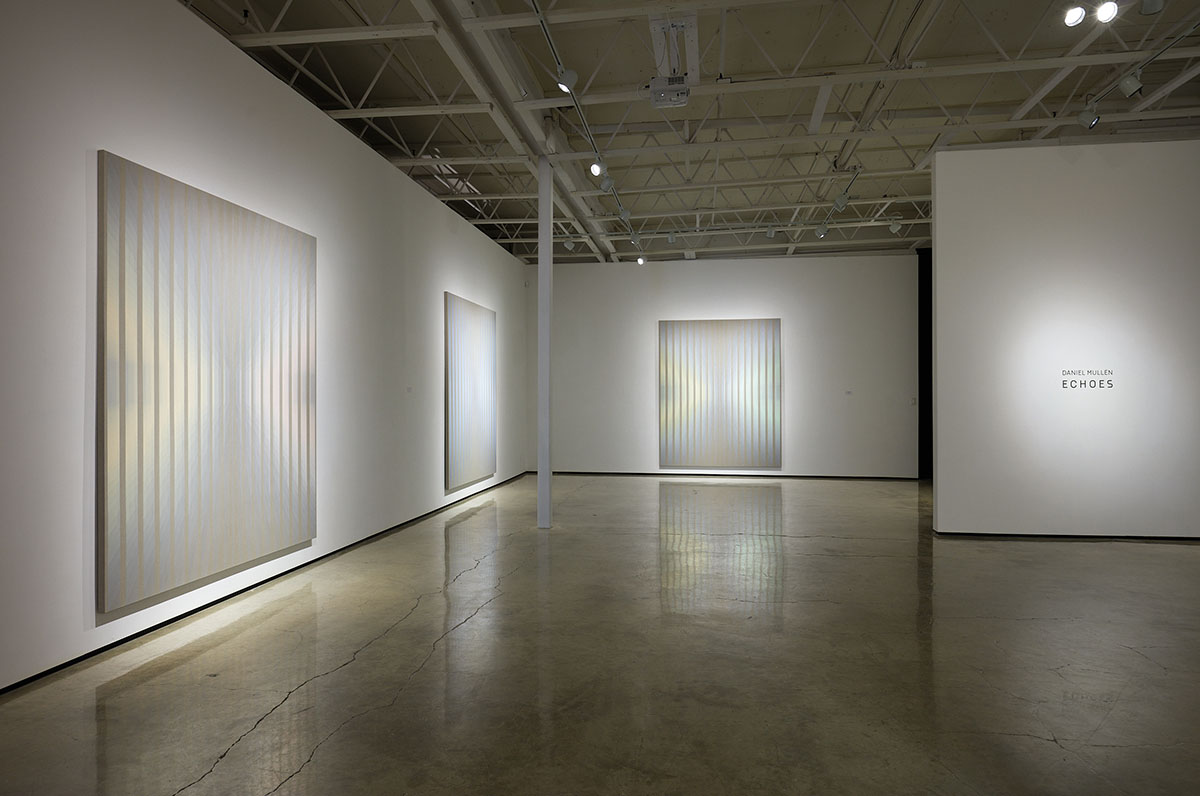
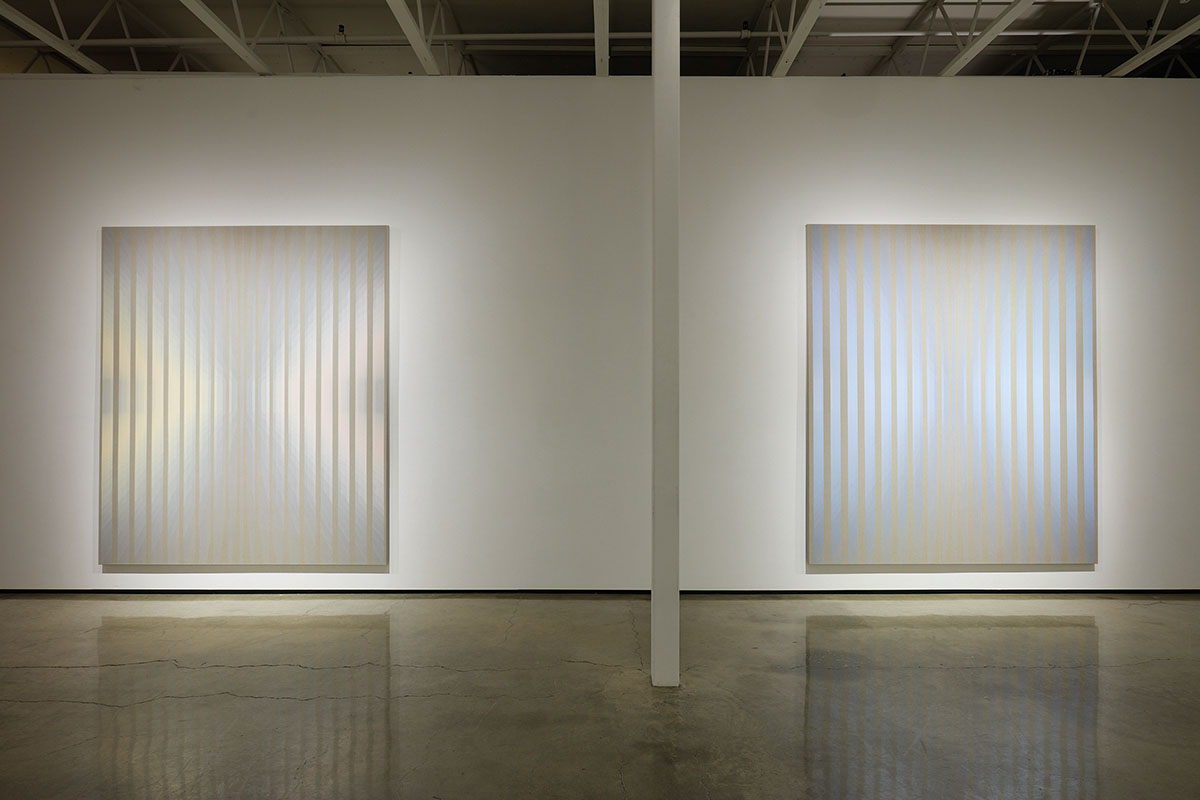
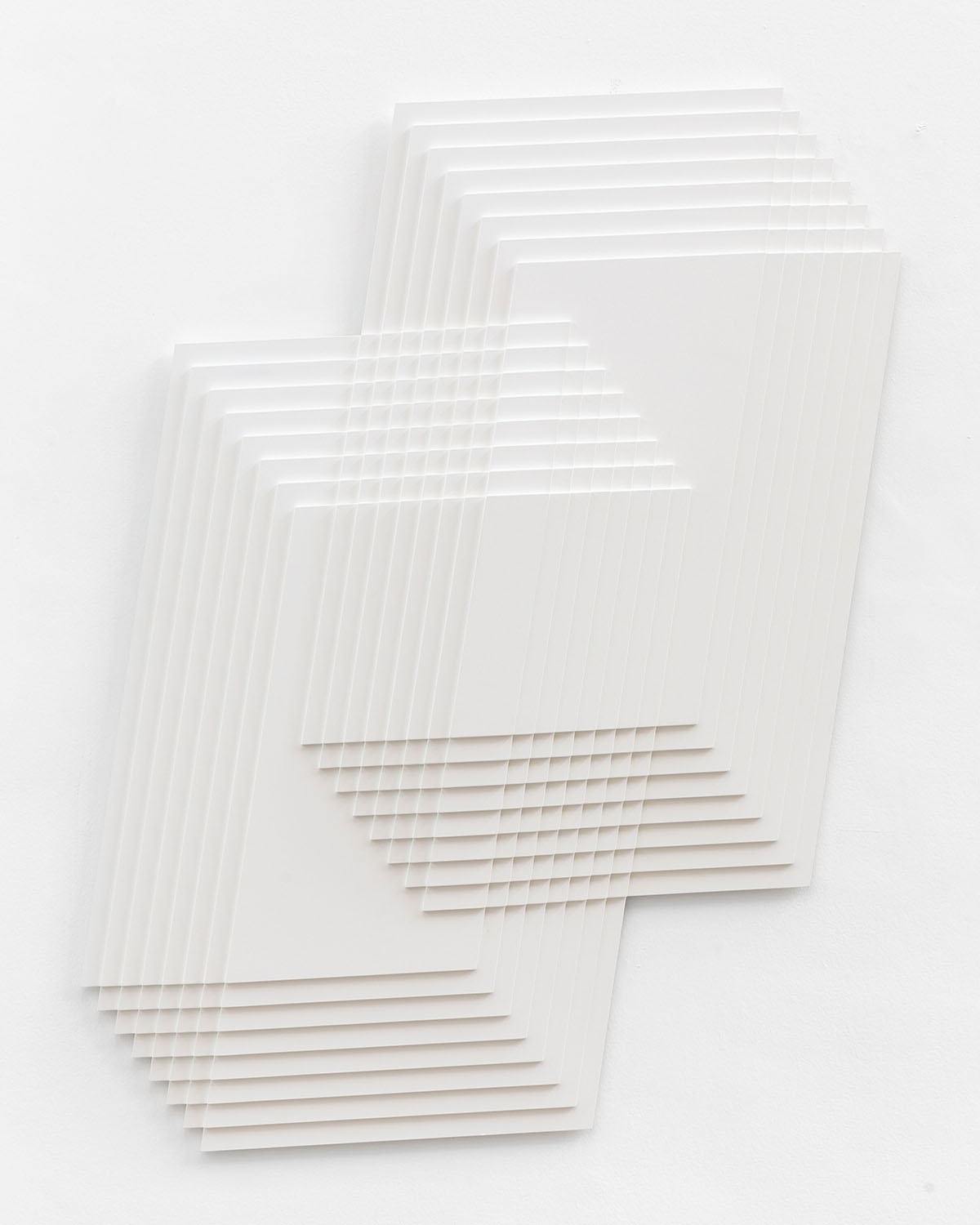
The physical boundary of the work is not necessarily its perceptual boundary. The way I calibrate the space allows the work to extend beyond its own edge into the viewer’s experience. I often produce work with a specific space in mind, so that relationship begins in the making of the work, not only in how it is later presented. For me, the body and perception are central, so light, scale, placement, and the character of the space all shape how the work comes into view. Ideally, those spatial conditions do not announce themselves. I calibrate the environment closely enough that attention can settle without resistance, allowing perception to shift before the viewer becomes fully aware. In that sense, the image is not given all at once, but emerges gradually through the viewer’s movement in space.
Are there visual or conceptual rules that you deliberately break to create “visual instability”?
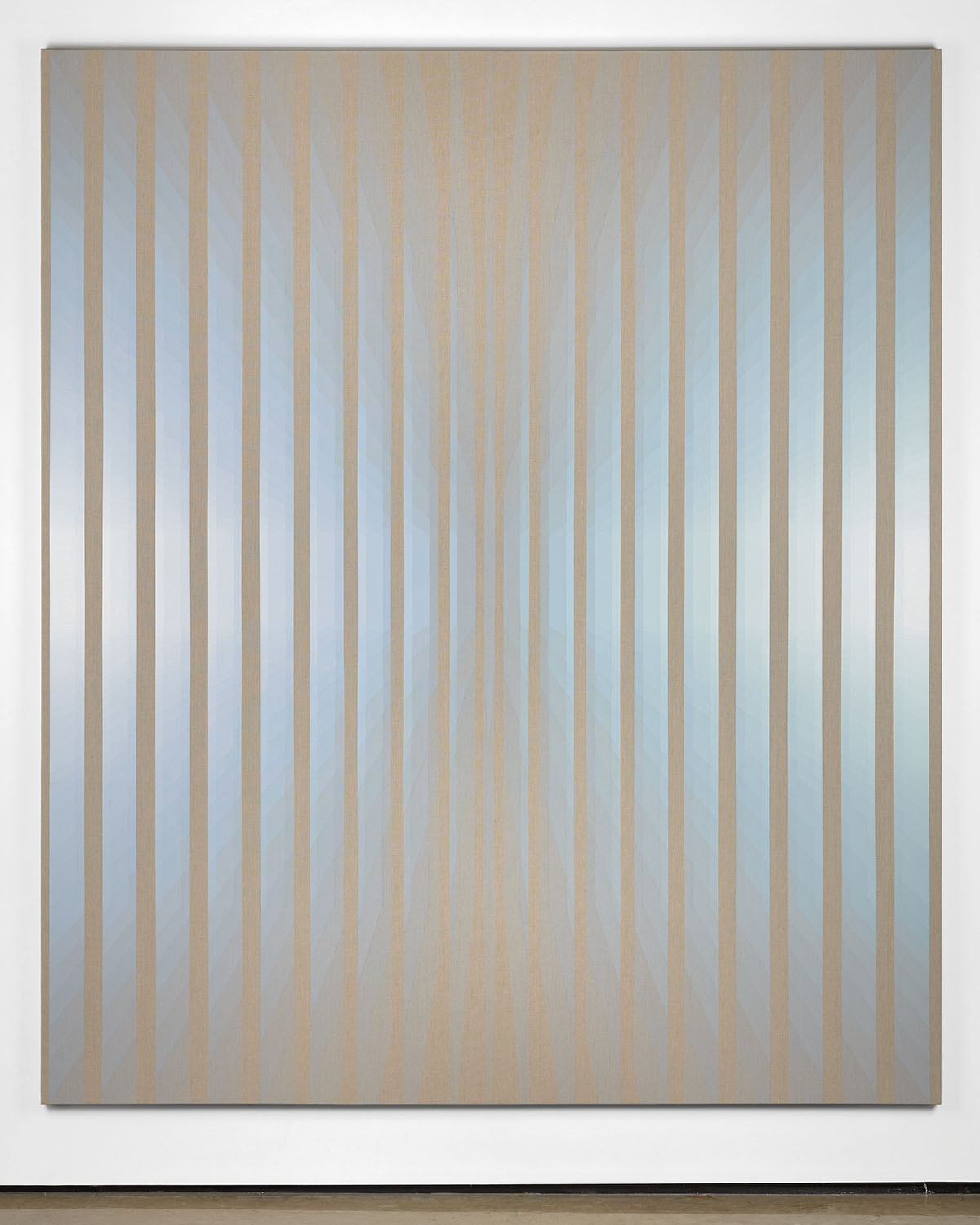
The more precise I am with the conditions of the work, the more fragility can be built into it, allowing it to remain open and never fully settle. In my current body of work, what interests me is keeping the conditions across the works very close, so that small differences become more perceptible. I might work with a single composition and shift the chromatic conditions, and those shifts can completely alter the feeling and perceptual energy of a work. The closer the works are to one another, the more those subtle differences begin to matter, creating a question for the viewer: What is changing from one work to the next? Repetition becomes a way of slowing down the act of looking, allowing difference to emerge relationally and giving each work its own distinct presence.
What criterion do you use to select your color palettes? Do they follow a mathematical or an emotional logic?
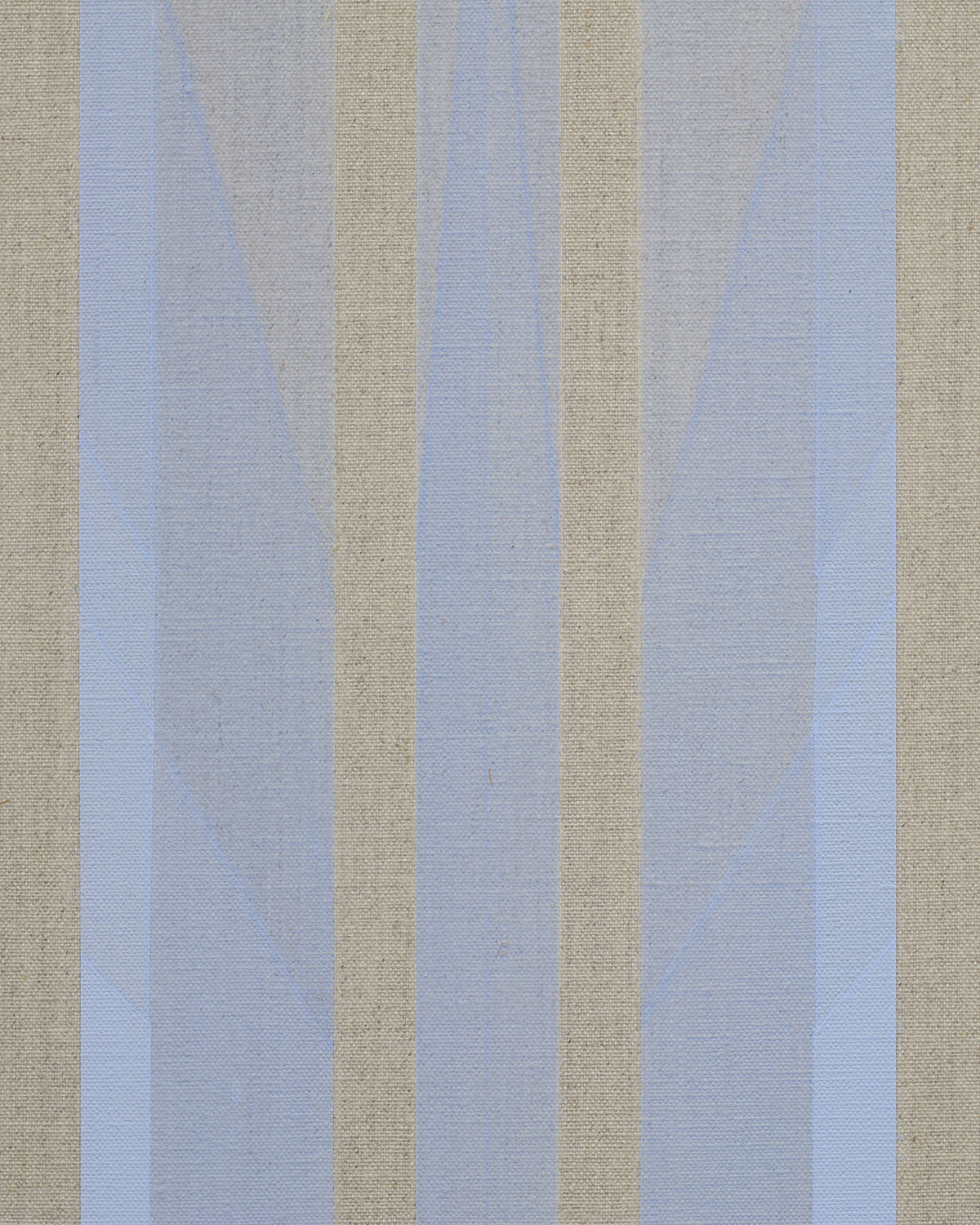
In my current work, colour is less about fixed identity and more about temperature relationships, push and pull. Earlier works were more chroma-forward, whereas now colour has become subtler and less definable. Because linen is the material basis of the work, the pigment choices are calibrated in relation to it. The paintings are built slowly through many thin layers, and for most of that process, the linen remains very active, so colour is never simply laid on top as a fixed statement. What matters is how colour interacts with the linen, how it sustains oscillation, and how it avoids separating too abruptly from the material ground. There is always a tension around density: how to build enough presence and atmosphere into the painting without losing the openness that the linen holds. At the edges in particular, the colour tends to sit tonally just below the linen and remains very transparent, so that it stays integrated into the surface rather than detaching from it. In that sense, I am not really looking for a palette with a strong colour identity. I am looking for a way to hold atmosphere, light, and spatial tension so that the colour remains transitional and inherently unstable.
How much chaos do you allow yourself?
I would not really describe my process in terms of chaos, because that suggests a kind of disorder that simplifies the work and invites it to be read too quickly. What matters more to me is that the work holds a certain instability and fragility, but on a slower and subtler level. The process is controlled, but it is not fixed. I often think about the reservoir of paint as a kind of living system: it is constantly being adjusted in relation to what the work is doing, and each decision affects the next. So even within a tightly calibrated process, there is still a responsive and evolving element. I am not interested in making work that simply confirms what we already know, but in opening the work up to a deeper reading. I often think of the work as a kind of epilogue, as if what one sees is a residue of something that has happened beyond the canvas. That gives it an inherently unstable and not entirely graspable quality. That feels much closer to how I want the work to operate now than thinking in terms of chaos.
When perceptual experience itself becomes the material, what role does the classical idea of the artwork as a finished object still play?
For me, the question is not only where the work exists, but what the work actually is. The material form matters, of course, but I do not think the work is fully contained there. We all move through the world with filtering systems that shape how we perceive and relate, and those filters are less fixed than we might think. I intend to create the conditions for those questions to arise, and to meet the viewer in that space. In that sense, the work happens in the encounter between the viewer and the physical form, in the moment when those filters begin to shift, and perception opens. The work becomes a meeting: something relational, unstable, and slightly different for everyone who experiences it. So while the artwork may exist materially as a finished form, the work itself happens in that exchange.
What does your studio look like? Do you like to welcome visitors, or do you prefer to have the studio to yourself?
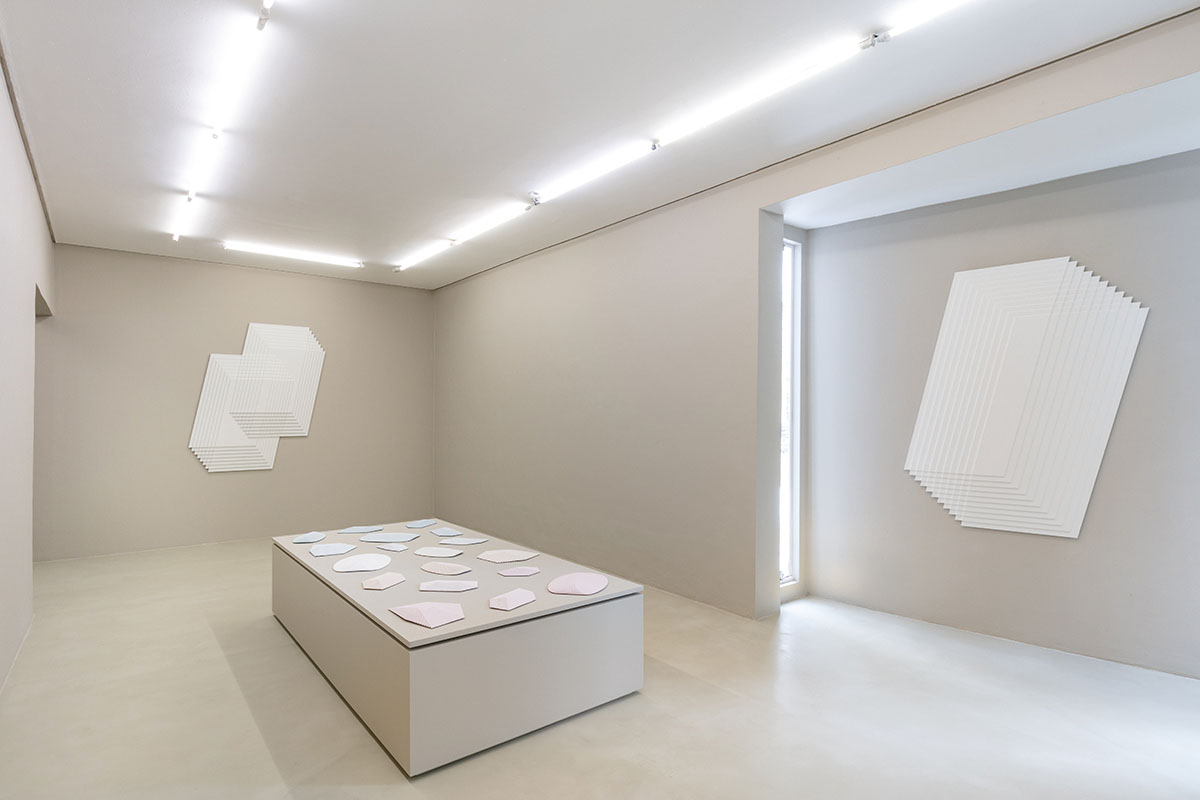
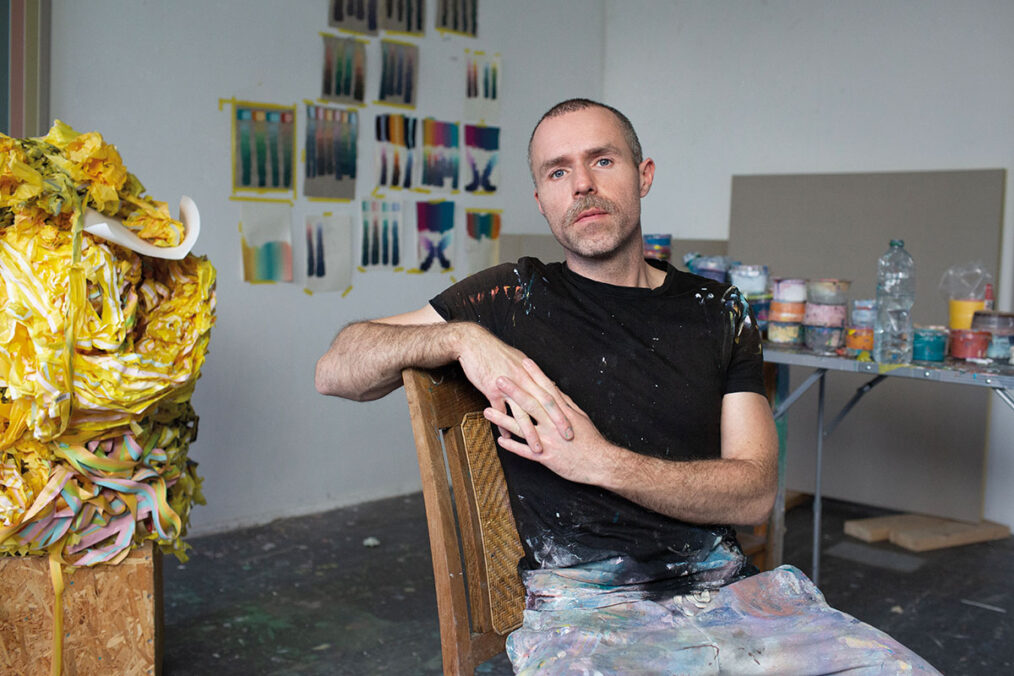
The studio tends to reflect where I am in my process. As I focus more intensely on the work, the space around it often becomes more disorganised, and once a work is resolved, I usually need to reorganise the studio to begin again from a clearer place. Because the work requires a certain level of precision, I usually produce far more than ever leaves the studio, and some works stay with me while others are destroyed. This process does need a certain level of solitude, but conversations are also really important to me. I often speak with my assistant, and I also invite colleagues into the studio to talk through the work more deeply, because so much of the work only becomes legible in relation to a viewer, and that is not something I can determine alone. So I do like welcoming people into the studio, especially when it allows them to encounter the work in person and speak about it there.
What happens in the work that you yourself do not quite understand?
Over the last year, there has been a real shift in the work, and part of that has come from reading more about psychology, consciousness, and perception. Painting has always carried this idea of being a kind of window, a place where perception can shift. Earlier works of mine often leaned more towards a graphic and chromatic readability, whereas the newer work has become more pared back, more subtle, and slower to reveal itself. That has been intentional. In a way, I have wanted to reduce my own understanding of the work, or at least loosen my ability to grasp it too quickly. I still want to understand and control the conditions, but what those conditions lead to is hopefully something not fully graspable. As the work has become more unstable and less fixed, it has started to occupy a more ambiguous space, where its effects exceed the conditions that produced it. For me, that is central to the work, and where its power lies.
Where can people see your work? What do you have planned for 2026?
The work needs to be encountered in person, because so much of it depends on scale, light, movement, and the viewer’s physical relation to it. In 2026, the main focus has been my solo exhibition, Echoes at Paul Kyle Gallery in Vancouver, which I developed over the course of a year and which is on view now. I also have a group exhibition opening next month in Antwerp. I tend to work over longer periods, because the process is very intentional and the conditions of the work need time to develop. That is especially true of the newer work. Alongside the exhibitions, I also produced a book in collaboration with Zipper Galeria in São Paulo, Transfigurations, which brings together 43 works on paper and was conceived very much as an object in its own right. Beyond that, I am continuing to develop new projects, although I prefer to let them take shape before saying too much about them.
Daniel Mullen – www.danielmullen.info, www.instagram.com/daniel.j.mullen/