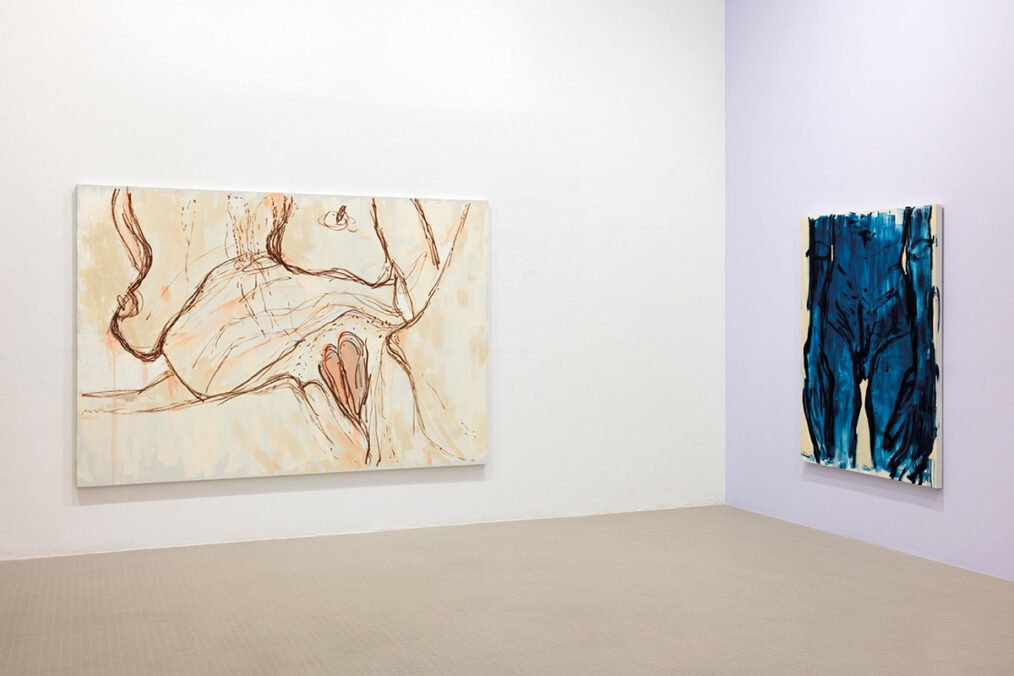
While trauma is often sublimated through silence and breath in Gabrielle Goliath’s most famous video and sound productions, the body assumes an unprecedented pictorial incarnation in this new series of works. Hosted by the Raffaella Cortese gallery, the exhibition Bearing is articulated across the three Milanese spaces on via Stradella. The polysemic verb to bear, which in the title embodies the meanings of carrying, and supporting, reveals an existential condition that the artist intends to subvert through the dissident force of portraiture and eroticism. Using oils, watercolours, and pastels, the artist highlights the corporeal dimension of the subjects, marking a significant new direction in her artistic practice.
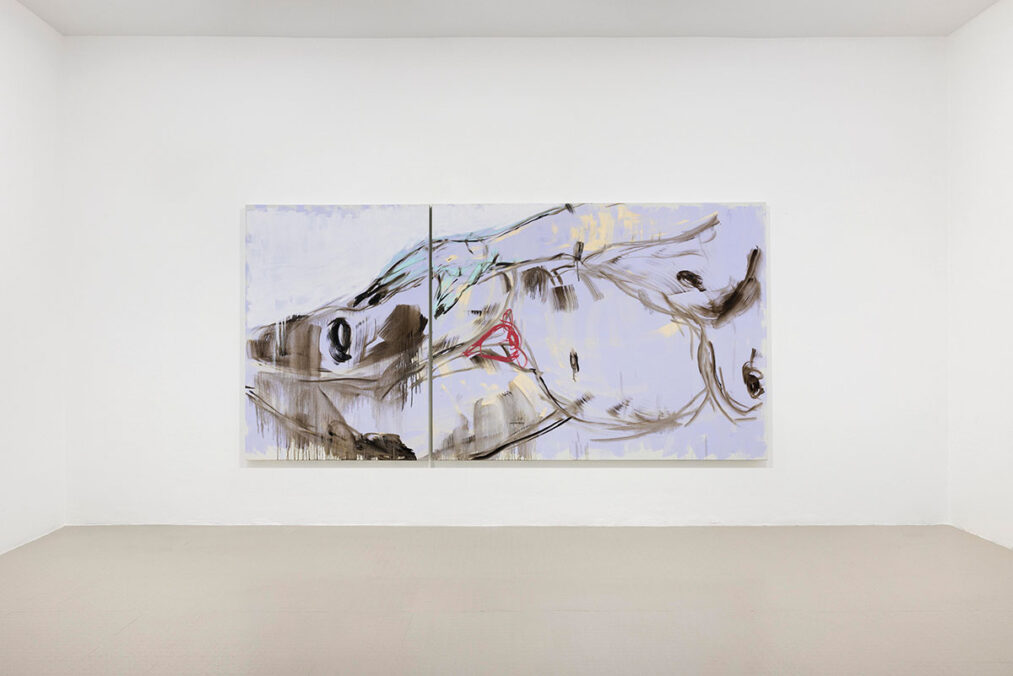
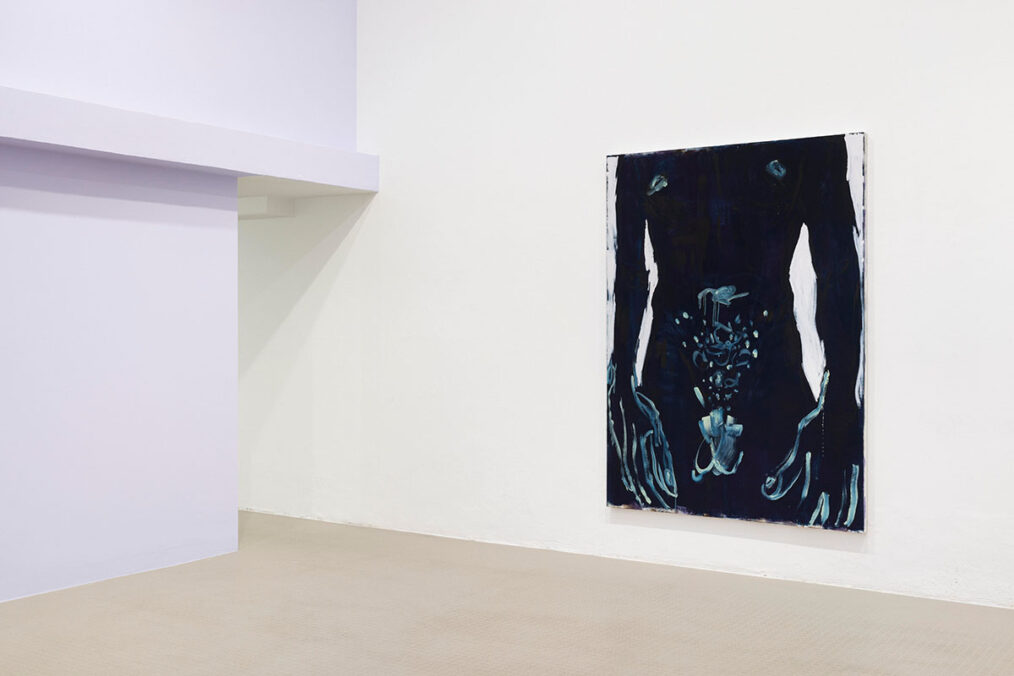
At the centre of Goliath’s reflection is what she defines as «the impossibility of black femme representation», a consequence of an intentional social clouding that relegates the subjects to the shadows. The artist reacts to this erasure by using painting to restore the body’s erotic and dissident force. By depriving the figures of faces and specific connotations, Goliath transcends individual specificity: the work allows a personal plane to coexist with a collective one, transforming the body into a territory of political reclamation.
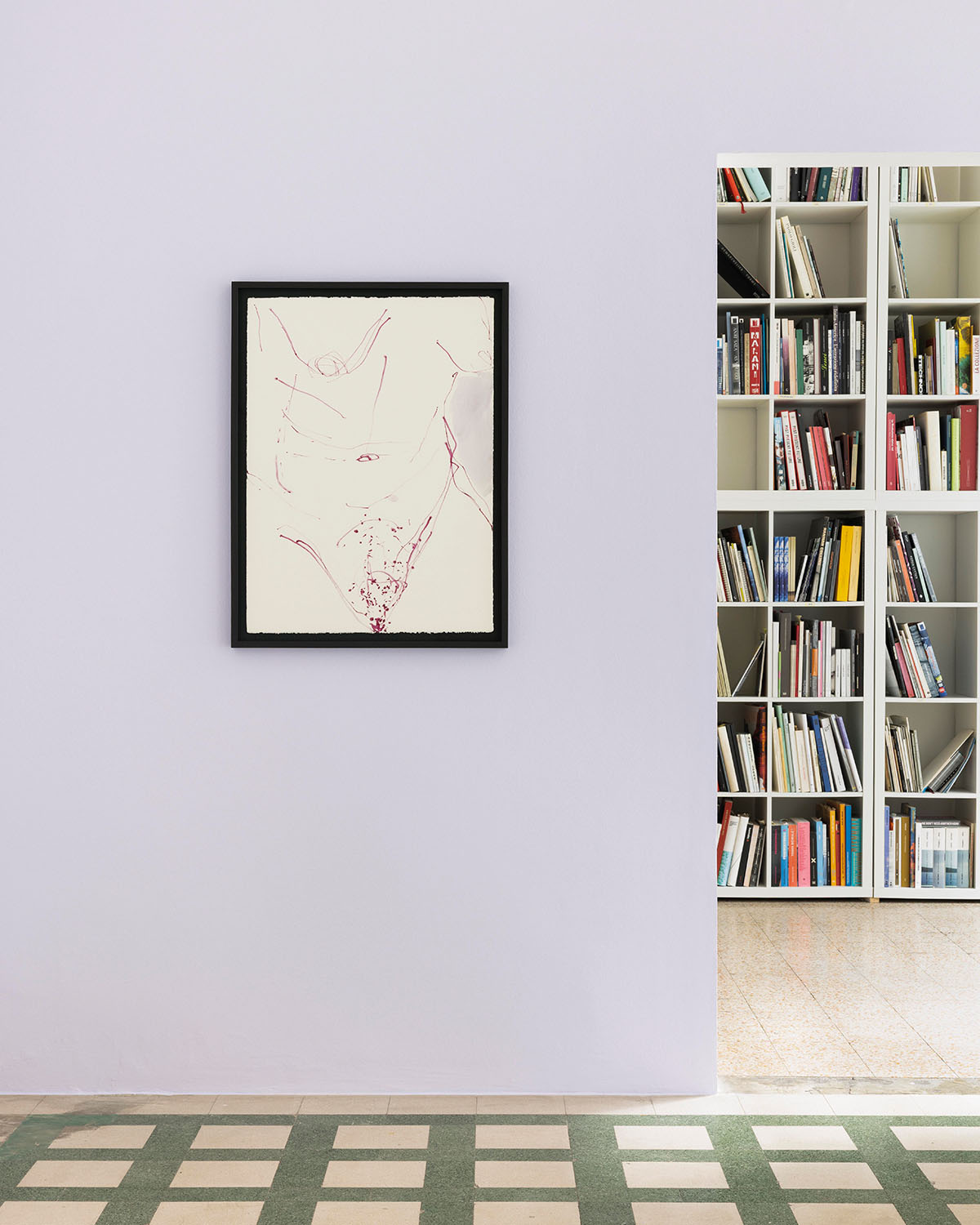
The explicit exposure of the genitalia serves as the point of origin of this reaffirmation; visually emphasized by dense brushstrokes and sanguine hues, it becomes the fulcrum of a vulnerability that, when proudly exhibited, is transformed into power. Goliath’s portraits do not depict explicit autoerotic acts; rather, they are imbued with an intense individual awareness. Here, eroticism is an act of internal perception, an expression of an intimate relationship with the self, and a private pleasure through which the subject perceives its own fullness.
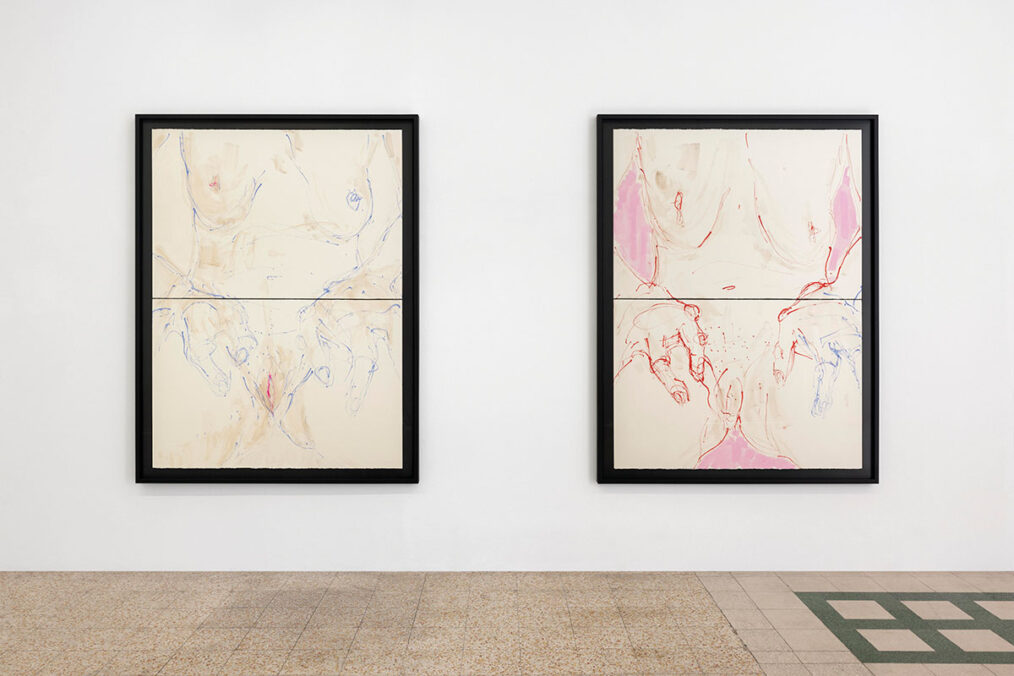
The only exceptions among the subjects, yet still central to the same representational inquiry, are the works exhibited at via Stradella 4. Here, a face in watercolour appears alongside two mirrored images of a pregnant woman, the latter serving as a reclamation of reproductive freedom. The decision to articulate the exhibition across the gallery’s three distinct locations forces the visitor to exit, re-enter, and metabolize the intimacy of the works in the urban context; this fragmentation reflects the pursuit of freedom as a non-linear process.
The Milanese exhibition also serves as a prelude to the video installation Elegy (2015 – ongoing). Despite the project’s exclusion from the South African Pavilion at the Venice Biennale, it will be presented independently in the Church of Sant’Antonin on May 4th. While the works in via Stradella claim the body’s presence through painting, Goliath’s practice in Venice will return to the media of breath and ritual song, reaffirming the urgency of giving voice to every black, femme, and queer life violated and dehumanized, both in the past and today.
Exhibition: Gabrielle Goliath – Bearing
Exhibition duration: April 16th – September 3rd 2026
Address and contact:
Raffaella Cortese
Via Alessandro Stradella, 7, Milan, Italy 20129
www.raffaellacortese.com
Gabrielle Goliath – www.gabriellegoliath.com, www.instagram.com/gabriellegoliath
Gabrielle Goliath (b.1983) lives and works in Johannesburg, South Africa. Through the ritual, sonic and social encounters of her art practice, she attends (and tends) to histories and present-day conditions of differentially valued life, reaffirming ways in which black, brown, femme and queer practices of possibility perform the world differently. Each of her works convenes a coming-to – a tenuous community – collapsing the presumed remove and privileged subject position of representation (as white, male, heteronormative) and calling for meetings in and across difference, on terms of complicity, relation and love.