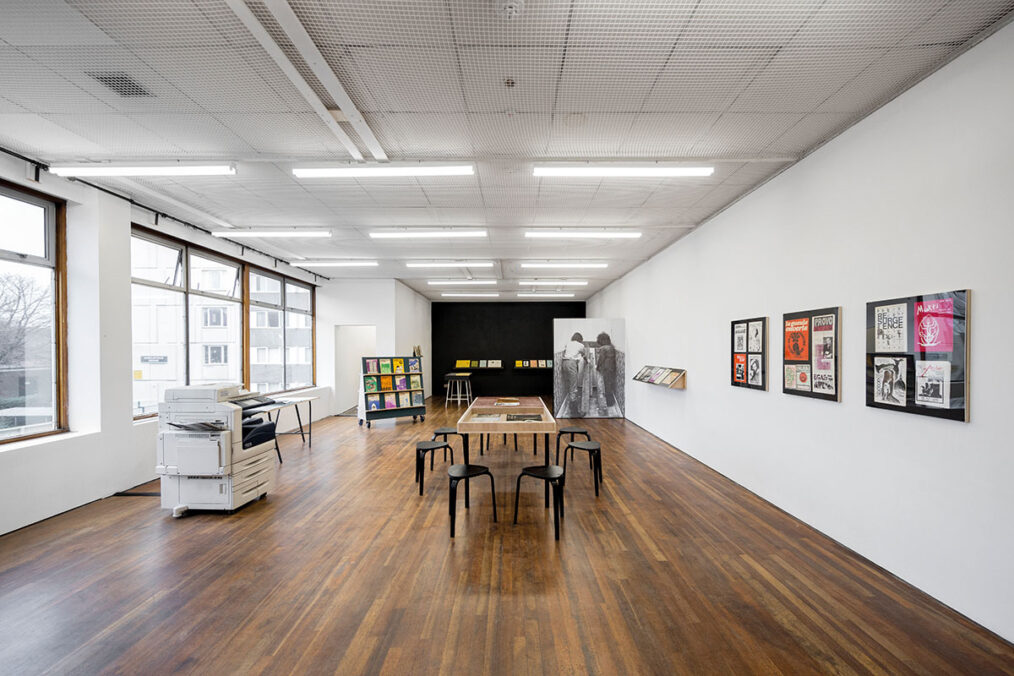
Most publications can be handled within the space, while rarer copies or items on loan are displayed behind vitrines. Organised into four thematic sections— ‘Communication’, ‘Organising’, ‘Community Action’, and ‘Arcadian Visions’—the display foregrounds dissenting practices and frames print culture as a site for alternative imaginaries and collective agency within community contexts. The exhibition is also a prehistory of The NewBridge Project and a blueprint for its evolving modes of working. Alternative Undercurrents forms part of For Solidarity, a project launched in 2019 in collaboration with the Solidarity Economy Association to support the development of a ‘network of grass-roots initiatives that are helping people to meet their material and social needs in ways that don’t harm people or the planet.1
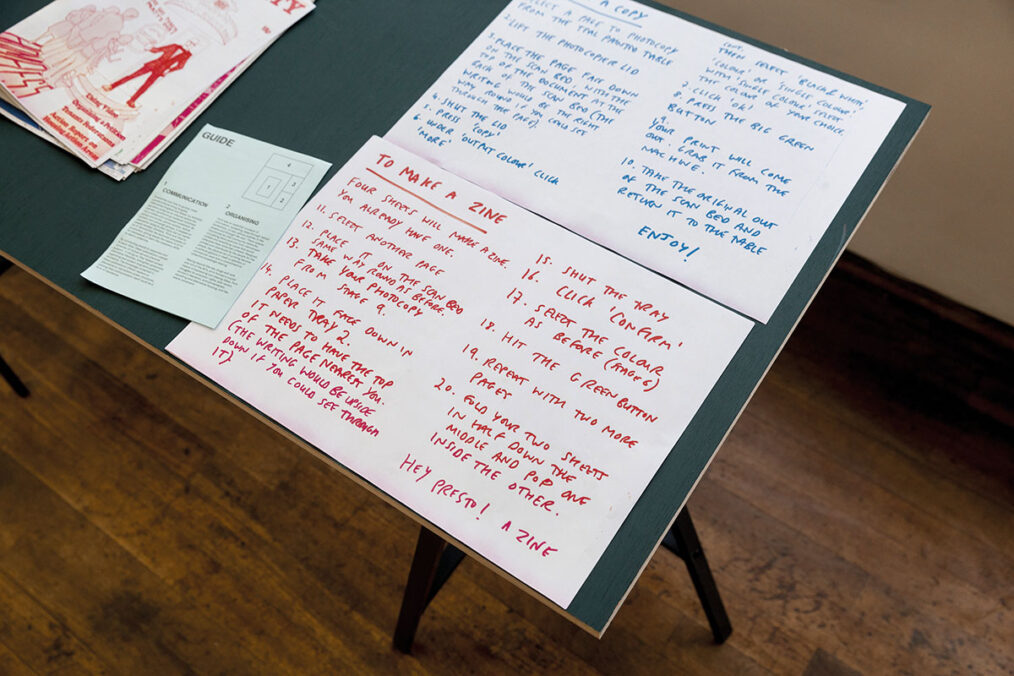
The first section includes directories like Index: Edinburgh’s Radical Directory (1973) and Blacklist: An Anti-Authoritarian Directory (1983). These list ‘communes, advice centres, radical printers and campaign groups’, alongside the manual Print: How You Can Do It Yourself (1986).2 Together, these materials show how communication happened ‘before search engines at our fingertips’. It was not easy, and I had not considered the labour involved in spreading the word. Enlarged and fixed to the wall by Greaves, two pages from Communes: Journal of the Commune Movement illustrate this. In it, members of a printing collective describe the arduous, time-consuming process of hand duplication, which left little time for other activities, ending with a plea for donations for an electric printer. In the room, visitors can use a printer to make their own zines by combining pages from the available models. You can print in different colours, following a set of handwritten instructions. I assumed it would be straightforward, but I made errors. Colours did not align, text became unreadable, and sometimes I reinserted the paper incorrectly, so both sides came out upside down. It was a humbling experience, especially after reading about manual reproduction in the 1970s.
In the next section, examples include the London-based anarchist newspaper Freedom, which has published continuously since 1886. Throughout its history, it has addressed issues such as violence against women, workers’ strikes, militarisation, and police repression. A 1981 issue on display reports on revolts by political and ‘so-called common law’ prisoners in Athens, Greece, against dire detention conditions and offers solidarity guidance to ‘comrades’. It also covers direct action against uranium mining in Australia and analyses the 1381 Peasants’ Revolt in England. Another example is the first issue of Here and Now, a Glasgow-born anarchist magazine that ran from 1985 to 1994. Its inaugural issue discussed the miners’ strike, social class, and Marxism, while later issues explored anti-fascism, labour conditions, community organising, and the gift economy. According to the exhibition guide, this section presents publications that ‘gave voice to more concrete local concerns’, including ‘struggles for prisoners’ rights, anti-racism, women’s liberation, squatting and alternative housing, environmental issues, and cultural and social activism.’
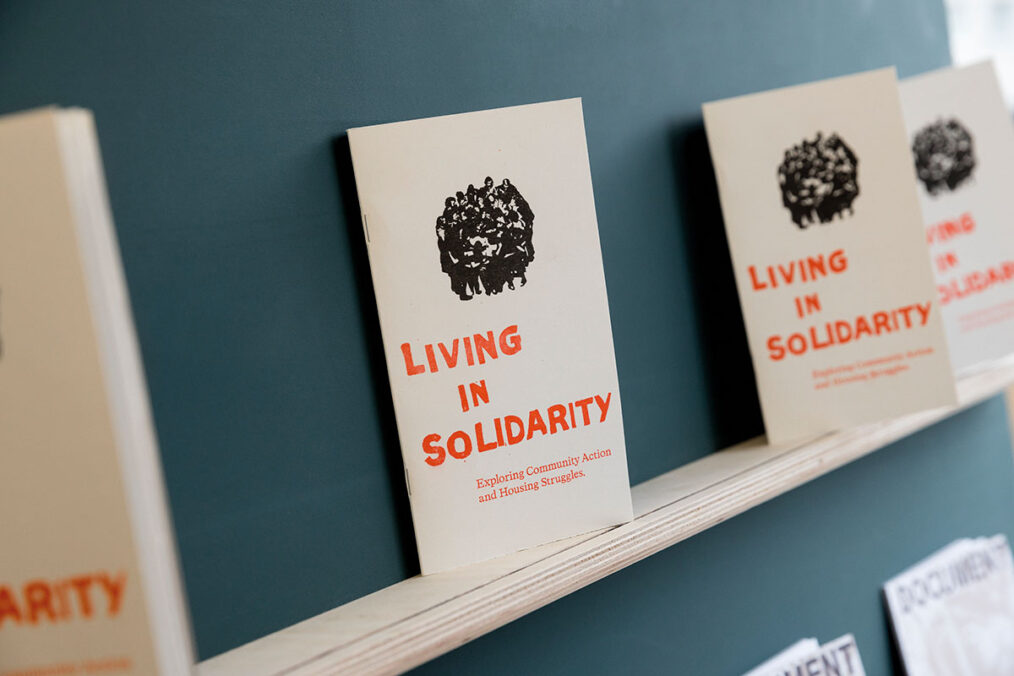
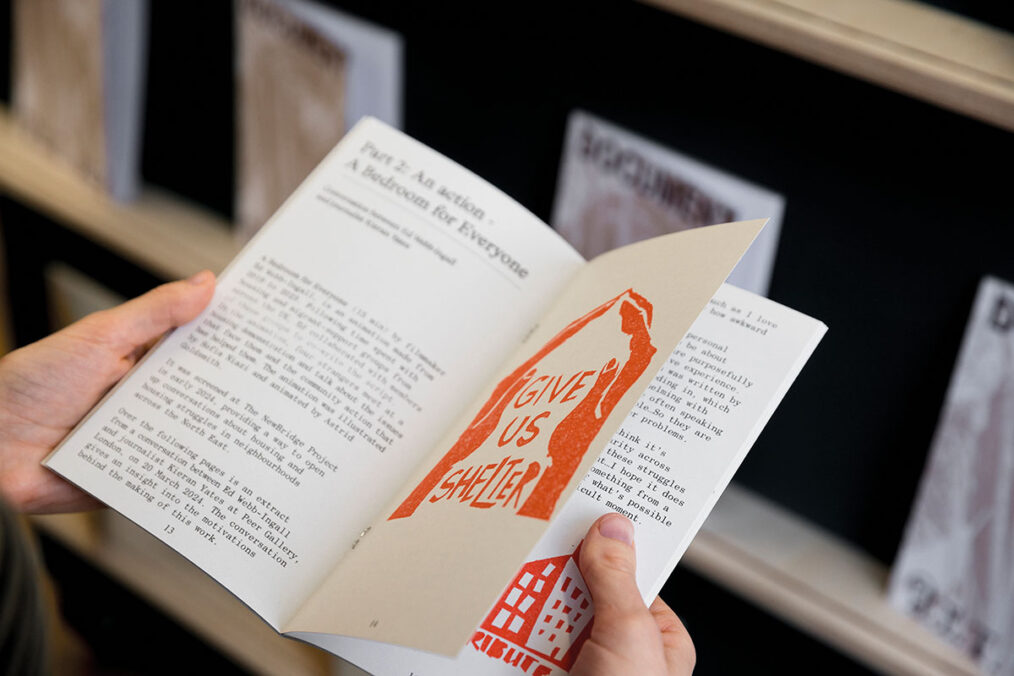
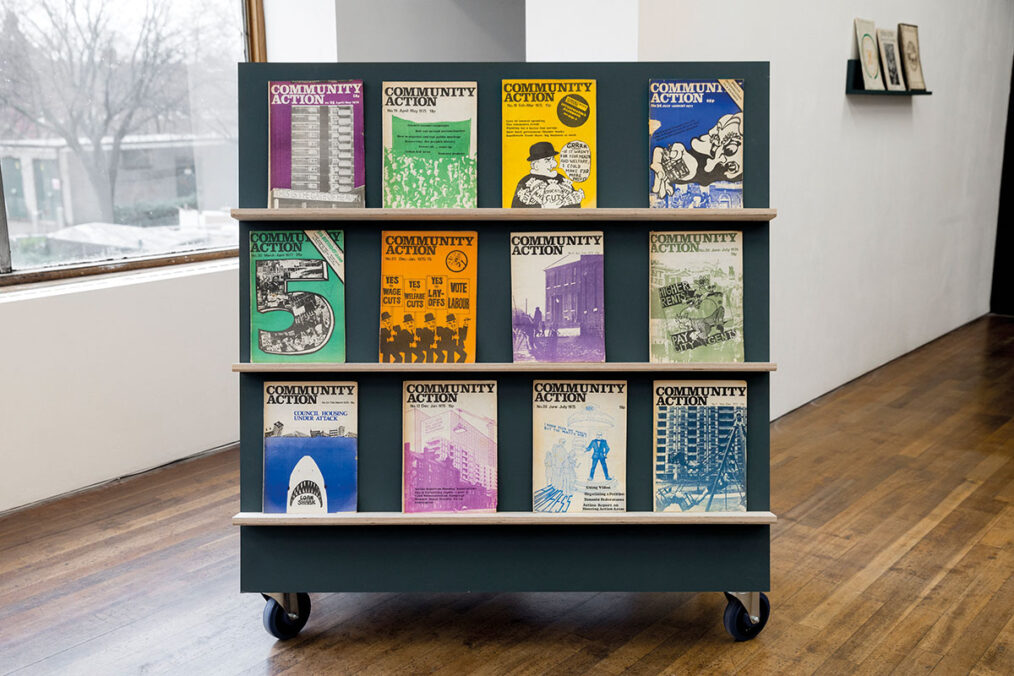
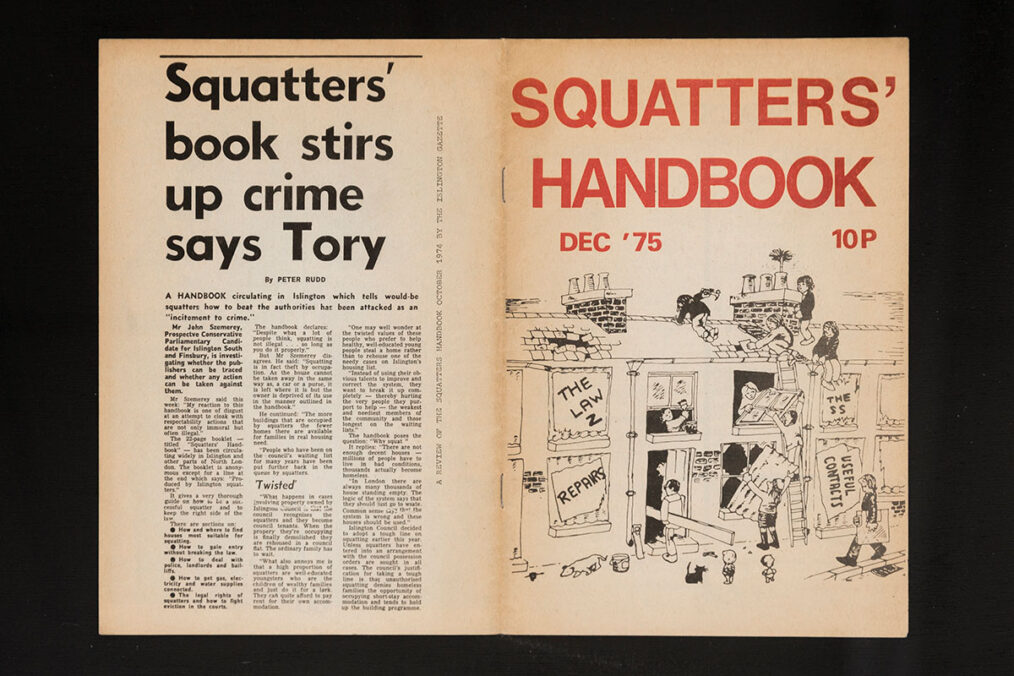
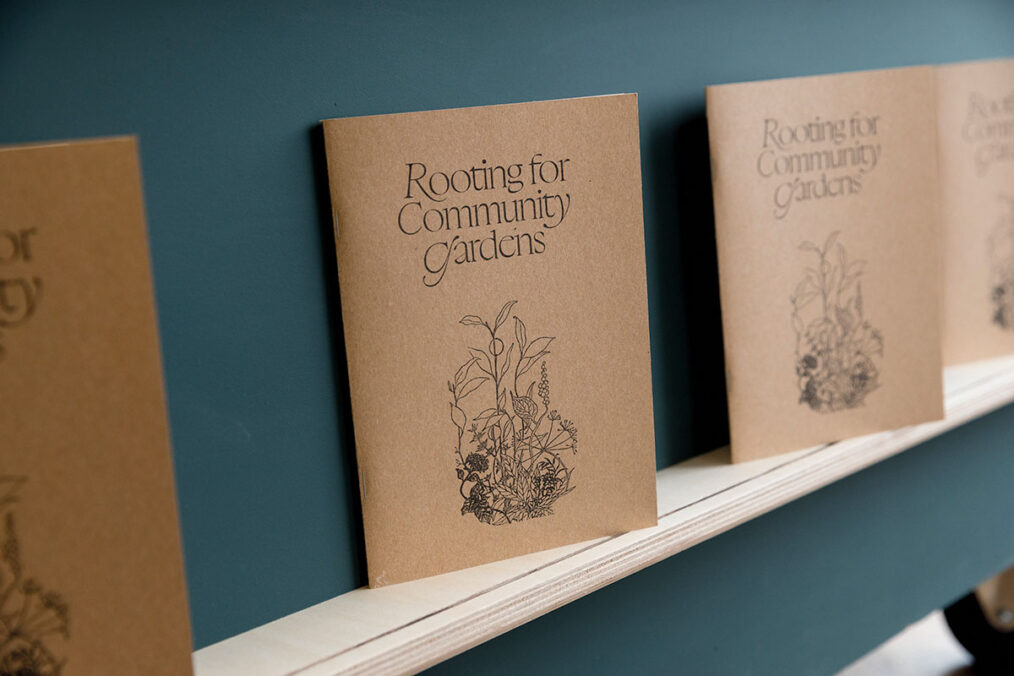
The third section focuses on print culture that grew out of tenants’ struggles in the UK during the 1970s. It highlights grassroots housing activism and the squatting movement, supported by groups such as the Advisory Service for Squatters (founded 1975) and publications such as The Squatters Handbook (1975) and Community Action (1972–1990). These helped to organise protests against poor housing and offered practical, legal advice to tenants, homeless families and individuals. Two publications produced as part of the project For Solidarity— Living in Solidarity: Exploring Community Action and Housing Struggles (2026) and Rooting for Community Gardens (2025)—are available to read alongside the archival material. Both booklets are the outcome of collaborative and sustained work; they are illustrated by NewBridge studio holder Jim Spendlove and designed by Greaves. Rooting for Community Gardens shares insights developed over two years of collective activity in community gardens in the North East of England. Living in Solidarity
documents, through illustrations, photographs, and text, a series of workshops held at The NewBridge Project from January to March 2024, compiling practical strategies for involvement in housing action. These publications extend the exhibition’s concerns into the present and situate NewBridge’s work within the broader set of practices on display.
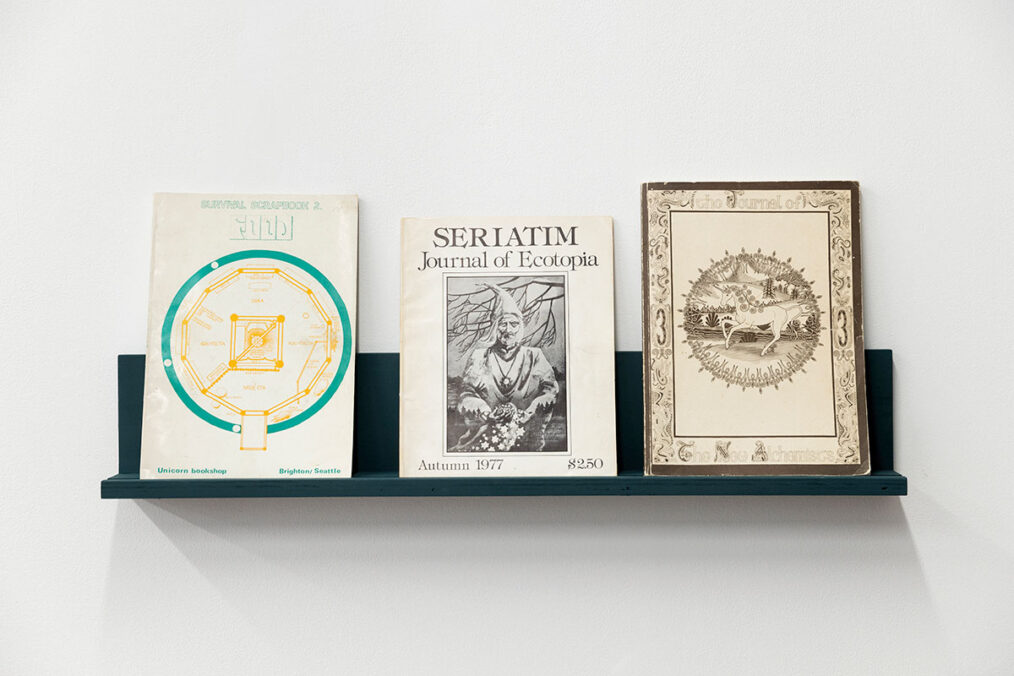
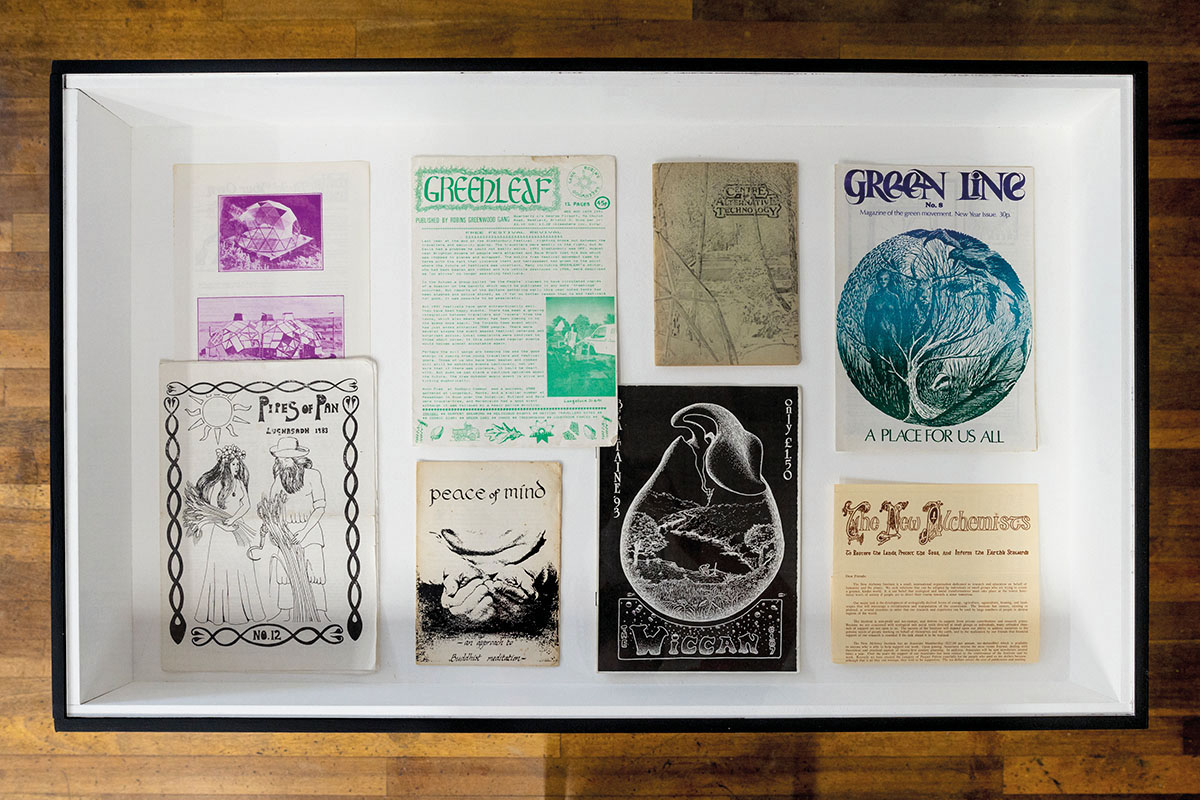
The fourth and final section, ‘Arcadian Visions’, departs from previous themes. For example, the cover of the twelfth issue of P.A.N. (Pipes of Pan / Pagans Against Nukes, 1983) features a couple reaping wheat under the sun in a stylised Arcadian landscape, while the 1976 edition of the Journal of the New Alchemists (1973–1981) displays an intricate circular drawing of a unicorn traversing verdant terrain. Images evoking earth wisdom, spirituality, and mysticism appear across the covers and pages of publications that linked the communes that made up the back-to-the-land movement of the late 1960s and 1970s.
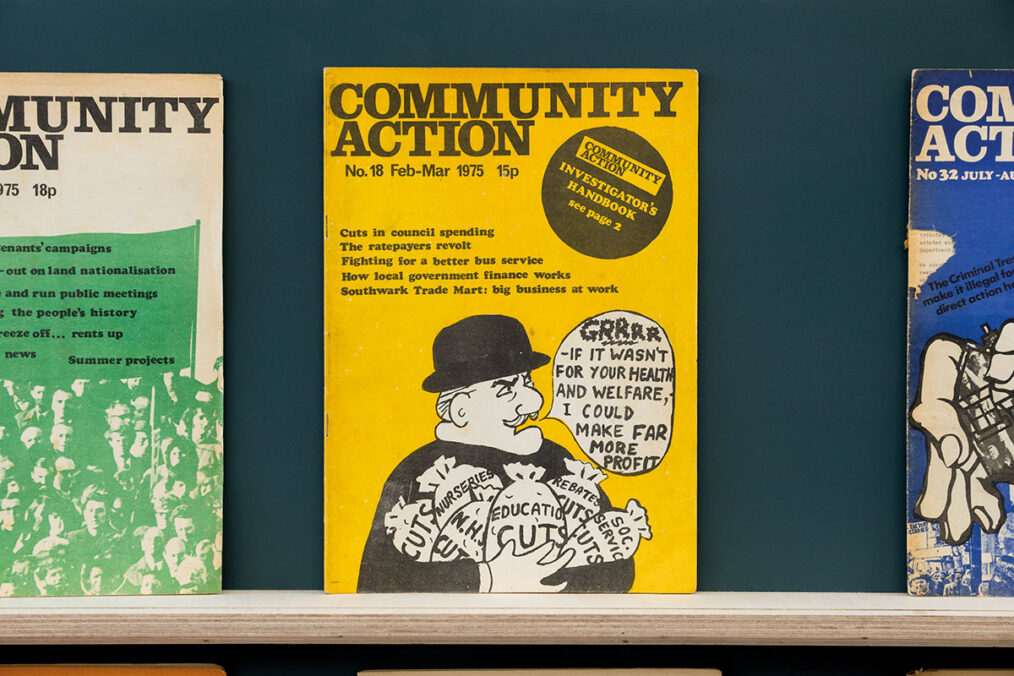
The content of these publications echoes their enchanting illustrations, much like the bold, recalcitrant visuals found in the ‘Community Action’ section. The first page of the P.A.N. issue notes the unfortunate election of Margaret Thatcher, but departs from conventional forms of political action, shifting into a discussion of a circle of magic as a means of distributing defiant energy, alongside astrology, and encouraging readers to explore Zen Buddhism and martial arts as ways to reconnect with the vital energy linking people and the earth. This is, so to speak, a curious direction, given the brutal dismantling of the welfare state that marked Thatcher’s tenure as a UK Prime Minister. This spiritual turn stands in sharp contrast to the eighteenth issue of Community Action (1975), whose yellow cover shows an irate figure clutching sacks of money stamped with ‘education cuts’, ‘NHS cuts’, and ‘nurseries cuts’, and shouting, ‘If it wasn’t for your health and welfare, I could make far more profit.’
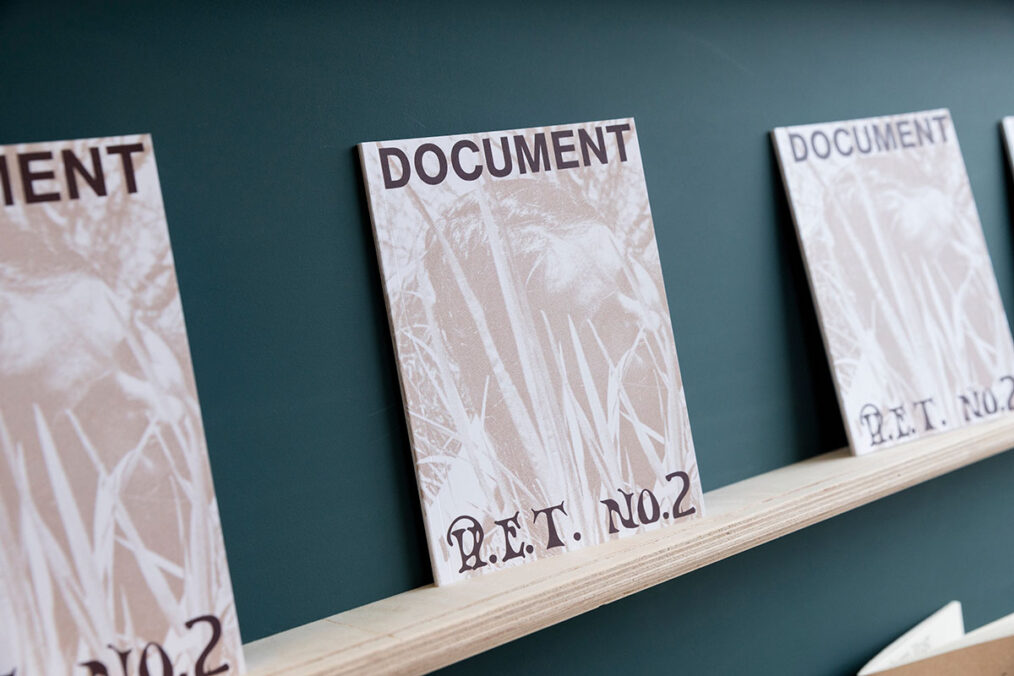
At this point, the diversity of the exhibition’s material becomes especially tangible and potentially disorienting. What, then, is the relationship between the back-to-the-land movement—which imagined and enacted alternative forms of social organisation as a kind of withdrawal—and the practices of direct action documented in the previous sections of the exhibition? The short exhibition guide, along with a new booklet beautifully designed by Greaves, offers a few pointers for situating these materials, providing some context for the circumstances, ideologies, and political positions that inform them.3 Much of the interpretive work, however, is left to the viewer.
As Greaves shared during our conversation, the intention behind Alternative Publishing lay elsewhere. It was to foreground ways of thinking, connecting, organising, and acting on issues that persist and have intensified. The deprivation of life’s basic necessities—such as the lack of comfortable, warm housing—remains a condition under capitalism. Misogyny, racism, and fascism persist. Environmental concerns raised by the back-to-the-land movement are now even more urgent. The relevance of the display is difficult to miss. Publications are presented on stands, their covers offering immediate glimpses into their contents. The most striking image comes from The Squatter’s Handbook (1975): enlarged to seven feet and mounted on the wall, it shows two men barricading a door. Lifted from the archive and placed in the gallery, the scene feels immediate, as if the action is unfolding in the present.
I left the exhibition thinking about the precarity of what might at times seem like a given. This felt especially pointed as my visit coincided with the decision by Wolfram Weimer, the Federal Government Commissioner for Culture and the Media in Germany, to remove three bookshops from the list for the German Bookshop Prize (Deutscher Buchhandlungspreis), citing unspecified ‘constitutional protection-relevant findings’. It was a reminder of how contingent—and politically exposed—the infrastructures that sustain independent publishing are.
Exhibition: For Solidarity x Document H.E.T. Alternative Publishing and Community Undercurrents
Exhibition duration: 7 March – 1 May 2026
Address and contact:
NewBridge Gallery
The Shieldfield Centre 4-8 Clarence Walk (via Stoddart Street)
Newcastle upon Tyne
www.thenewbridgeproject.com
- https://thenewbridgeproject.com/events/for-solidarity/ ↩︎
- Unless otherwise indicated, the quotations are taken from the exhibition guide. ↩︎
- Document H.E.T. No.2, designed by Niall Greaves (The NewBridge Project, 2026). ↩︎