“Speak We Must, We Must Speak“ might sound like an urge to engage with ecological devastation that paradoxically often leaves us with no words left. As for the preparation of the exhibition program “Immediate Matters,“ curator Anne Faucheret wrote a polyphonic text as an introduction, filled with quotes from different thinkers and artists, grounded in the essay “Think We Must“ (1938), written by Virginia Woolf, and its echo written by Donna Haraway, “Think We Must; We Must Think!“ (2016). Reflective and active at the same time, Anne Faucheret’s text was intended as a latter invitation to spaces through which she reflected on the topic of this year’s edition of Klima Biennale Wien, “Unspeakable Worlds.“ As the “answer” to the text invitation, ten independent spaces in Vienna curated ten shows that are in one way or another connected to this year’s topic.
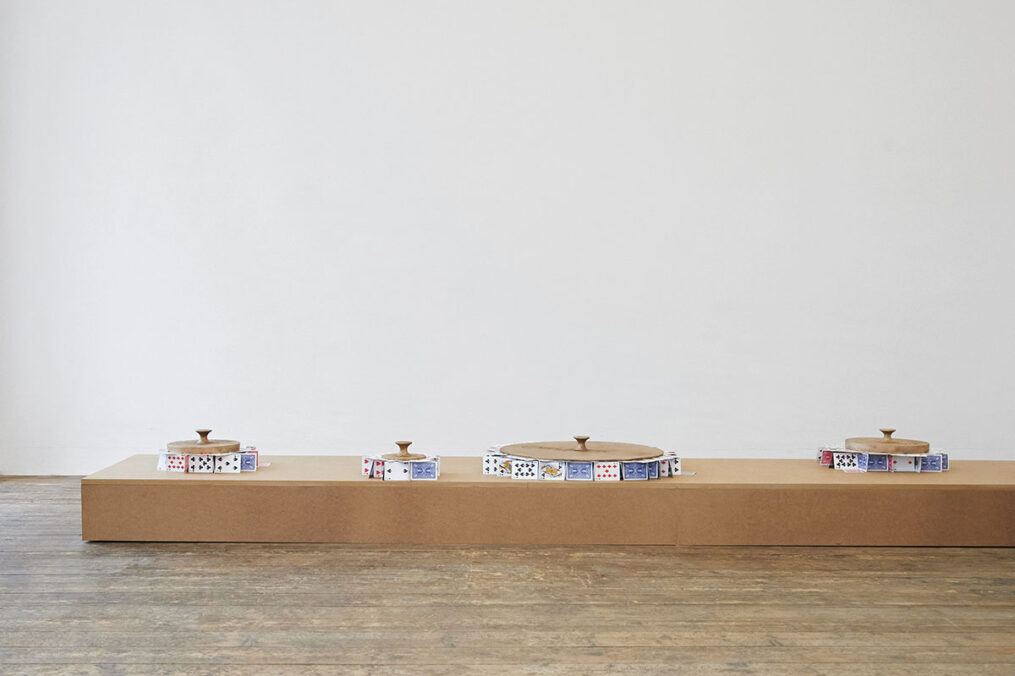
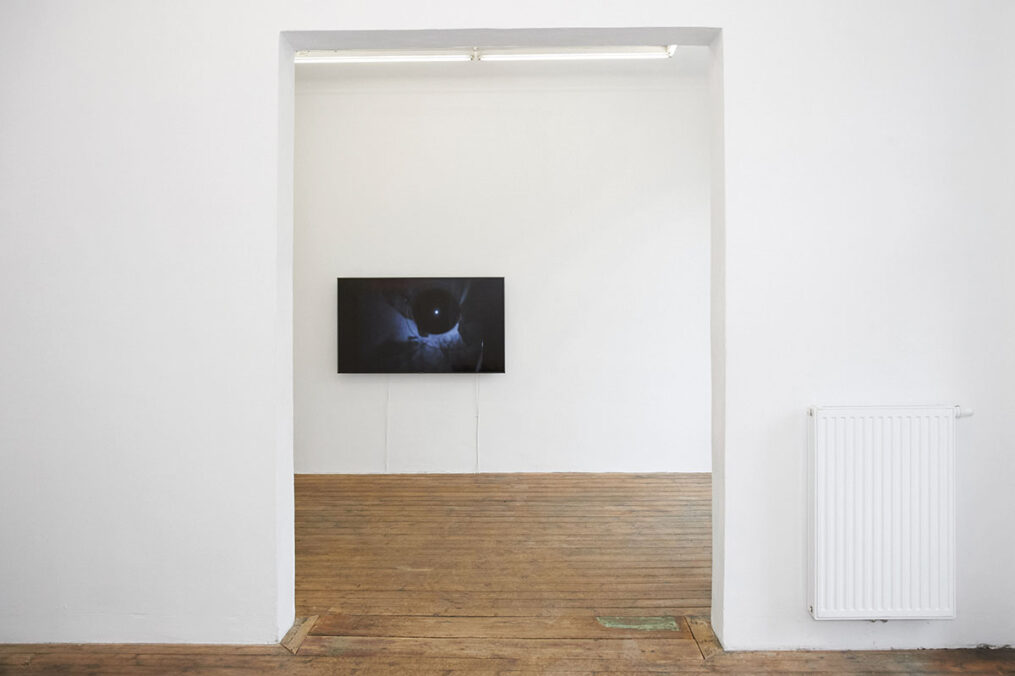
The Unspeakable finds the way out sometimes in the form of a drawing, this time more precisely a storyboard instead of a text to follow the exhibition “Chariot” in Kunstverein Kevin, by Copenhagen-based artist Asta Lynge. Based on the artist’s script, Daniel West draws a storyboard, spanning twelve pages, printed black and white. Does the informational sheet also become one of the works in the exhibition? The title “Chariot” in this context could refer not only to an ancient vehicle but also to a human body as a philosophical metaphor. The video on view, Animator (2026) in black and white and filmed from the perspective of the camera obscura. Camera obscura was made as an addition in the form of a tube with a camera attached to the car. The artist drove around for two days with it and microphones hidden in the body of the car that made intermittent sounds as if in movement. This collection of her rides resulted in this forty-two-minute-long video. In another room, the bronze-cast weights with handles are lying on fragile, featherweight houses of playing cards. Not focused on the game with cards, but on the notion of building a tower, a home, a balanced support structure, which ironically at the same time could break any minute. The complexity of the process of casting bronze, artist-made, was even more specific with the strict limitations and conceptual value she applied to the weights, such as the reference to the weight of the artist’s work from 2023, Trap ; the weights of the artist’s children at that very moment of production of the work; and the weight of the artist’s laptop, the machine she used to precisely plan the making of the weights themselves.
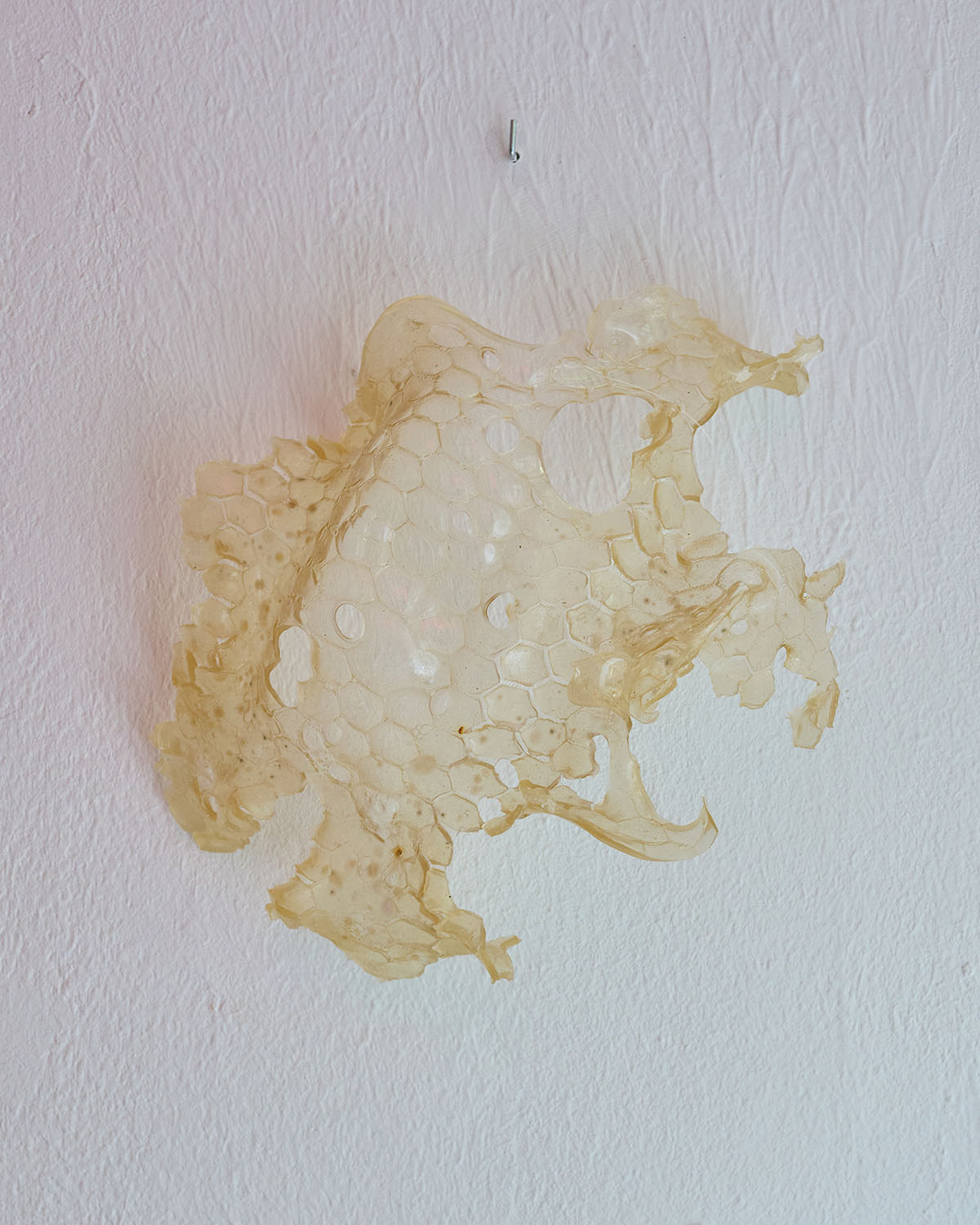
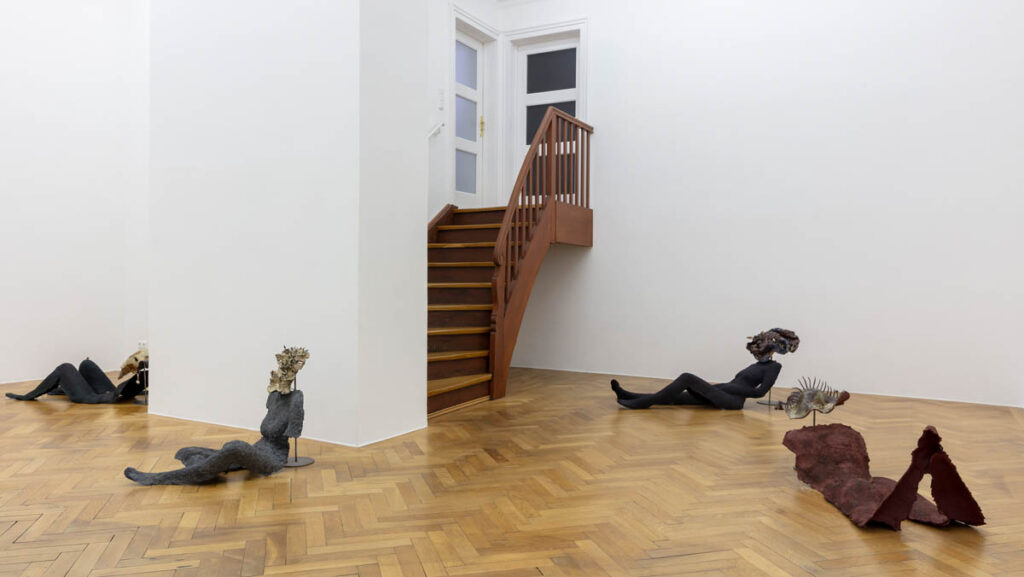
Technology, prosthetics in the animal world, and a focus on human relationships with the aquatic life in WAF, the art space situated in the building opposite side from Haus des Meeres (House of the Sea). The first room was bathed in red light, signaling the alarmed environment. Questionnaires and concerns, coloring books, and research papers lay on the table, a place for interaction with working material and small objects by Andreia Santana. On the walls are drawings by Agnes Quistionmark and light installations by Elena Rocabert.
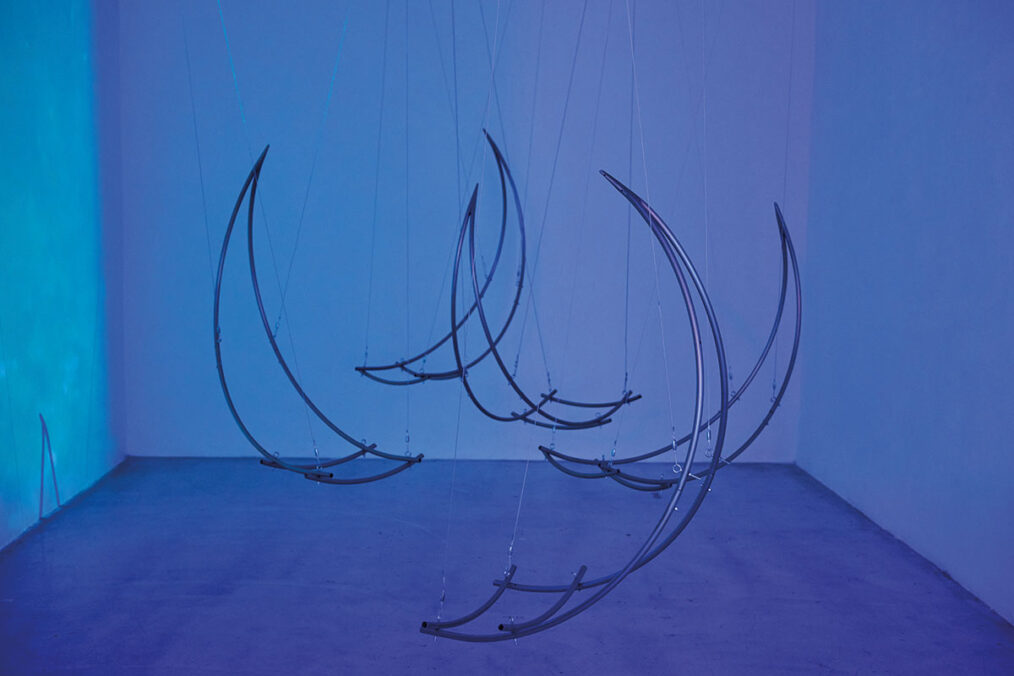
Curated by Carmen Lael Hines and Lisa Jaeger, the group exhibition “Fishy Business: Hydromorphologies and Wetware” culminates in the back room with the work Balance Dependency (2025) by Elena Rocabert, curved iron frames hanging as watching seats in front of the video projection Exiled in Domestic Life (2025) by Agnes Questionmark that shines all shades of blue. The exhibition offers the participatory performance/canoe ride happening every day on the Danube with the artist Nikolaus Eckhard.
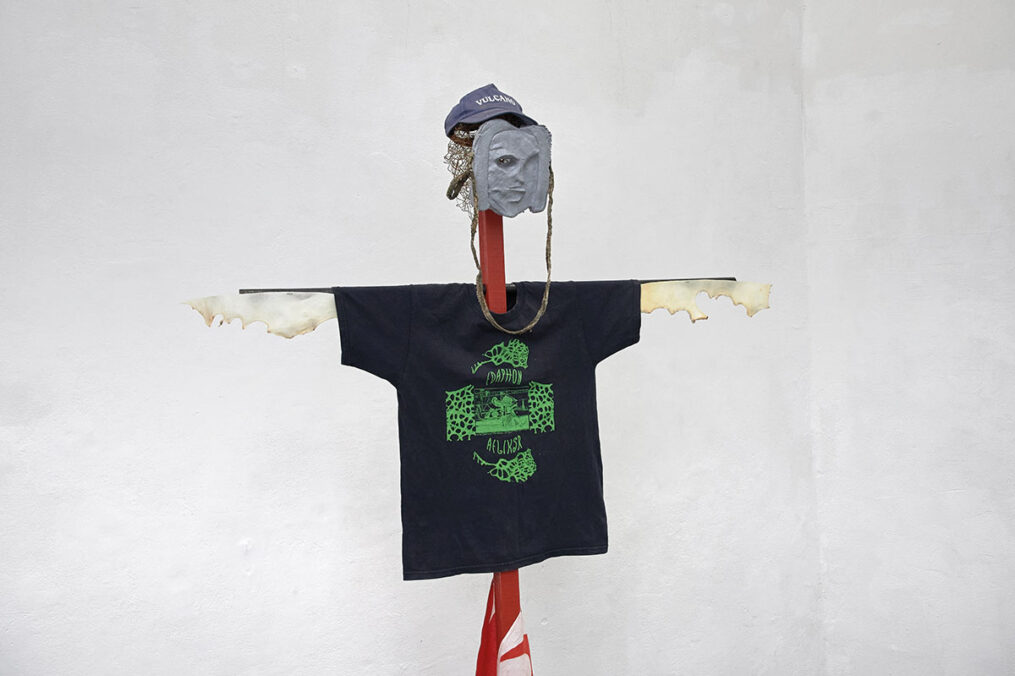
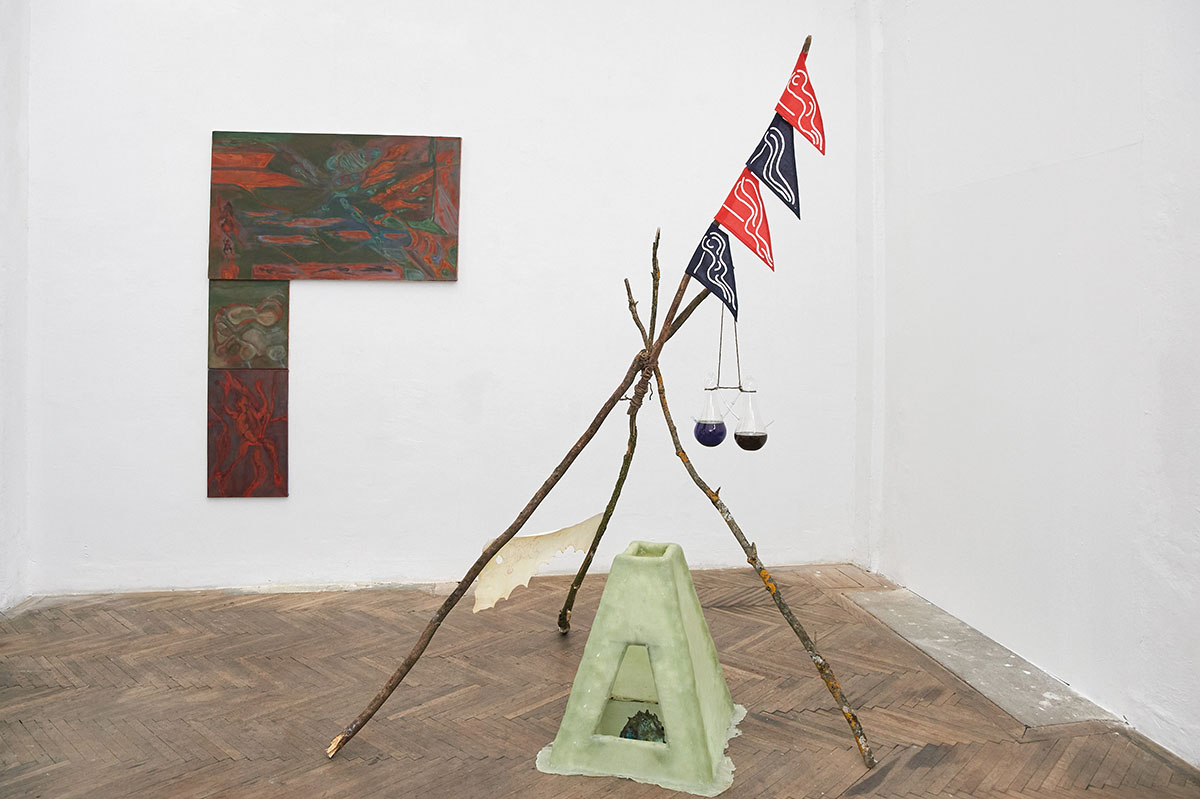
Not so far away from Donaukanal, the space- new jörg presents a solo exhibition by Ádám Ulbert, with his research-driven practice, strongly influenced by ecology and science fiction. The moment you enter, the Scarecrow figure stands before you, with the mask made out of bronze and the body made out of wood, aluminum, textile, and goatskin. Wearing a bootleg T-shirt with the title of the show. “EDAPHON (A ( ELIKSR).“ The body that means to scare, or in this case, is there to remind us of nature around it. Above the door is the neon sign Deciphering the Entrance to the Entrails (2026), and steps lead into another room. The bronze frog is hidden under a latex-covered cage, the laboratory bottles hanging from the structure that simulates a prehistoric fireplace, and the flags are high and dyed in the batik technique. The scene of landscape, in the future or even already now. As a contrast to the installations, on the walls, silent oil paintings of the world on fire.
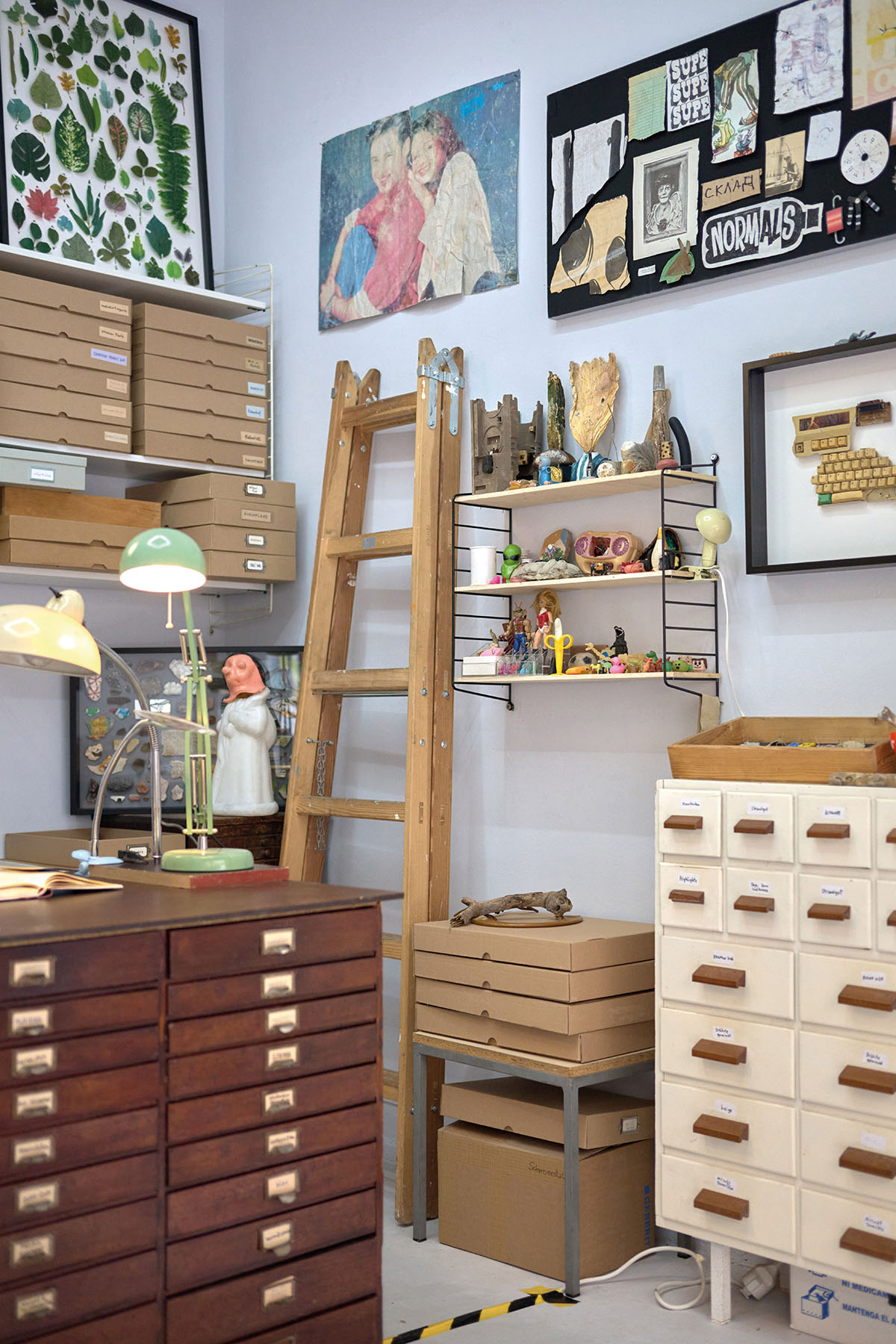
On the other side of the city, in SIZE MATTERS. Raum für Kunst & Film, works by artist Edith Payer in the solo exhibition “WAREN”. Modern archeology, hundreds of objects are on display; found and collected after being overlooked, and left behind by others—her personal collection of objects that she carefully places in categories and compositions. Payer questions the object’s value, whether it comes from nature or industry. Almost logically, Donna Haraway’s “Staying with the Trouble“ comes in to help to understand these works that stay to linger on the uncomfortable track in the world now.
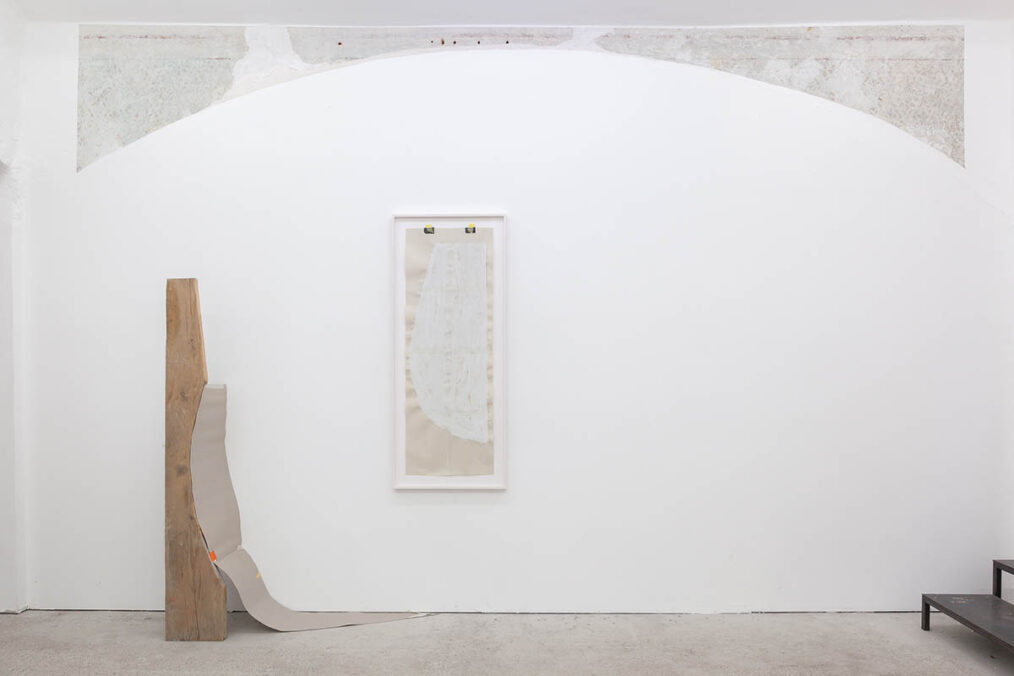
Photo: Flavio Palasciano. Courtesy of the Artist
Johanna Charlotte Trede focuses on the most overlooked and unnoticeable connections between things, their origin, and the nature of their details. In her solo exhibition in Pech, “Der Zeit den Hof machen,“ she made a drawing of a geometric shape composition that could also be a starting point of the exhibition. She fragments this composition and makes it alive again through materials (wood, paper, and wall paint), mostly found or gifted. The works and their placements unfold as a poem in the space inside and outside in the small backyard of Pech. The drawing of geometric shapes is multiplied and printed on the page behind the floor plan to be given to visitors, and may unfold as a wall work in their homes again.
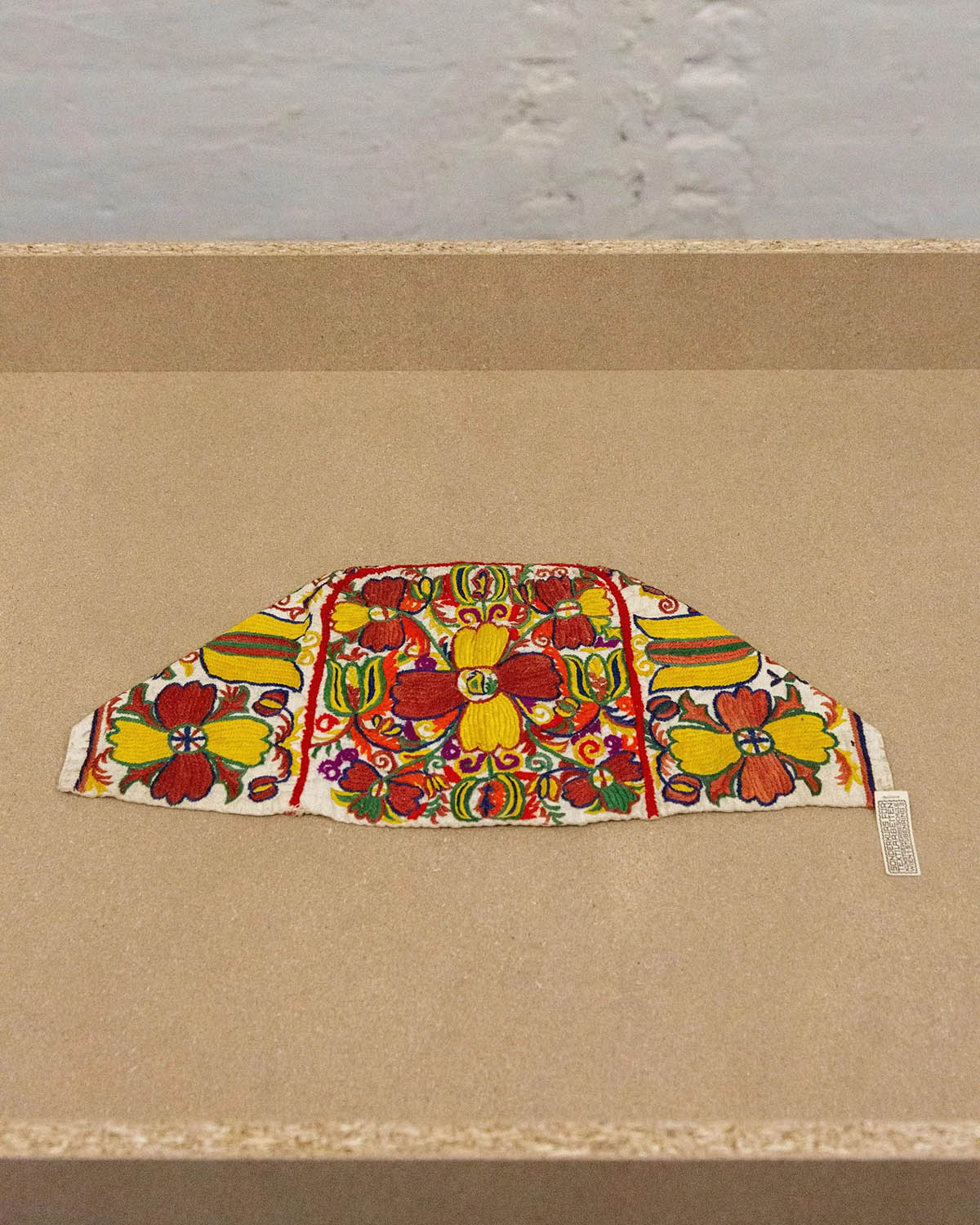
In the group exhibition „flowers“ at Laurenz, the motif of a flower appears across the work of eleven artists. In the center of the „bouquet,“ a museum-like vitrine presents leather gloves and textile samples with flower motifs by two unknown artists made at the end of the 19th and beginning of the 20th century. Next to them is the lithograph Mädchen mit Blumenschale (1919) by Margarete Hamerschlag (1902-1958), all from the Collection and Archive of the University of Applied Arts Vienna.
The program continues in independent spaces, Echo Correspondence, eindorf, ENTRE, and Schleuse until the 10th of May; in some cases, the exhibitions will be on view even longer.
Klima Biennale Wien 2026
Immediate Matters. An exhibition programme in ten of Vienna’s independent art spaces.
Duration: 14 April – 10 May 2026
Find more program highlights and details about Klima Biennale Wien here: www.biennale.wien