I’ll start with a question for Elza, and also a little bit about the location. In my research about Brunhilde Moll Stiftung, I read that there is a legend around the Foundation’s location in Drakeplatz 4. I read that Joseph Beuys was actually living there. Is this true?
Elza Czarnowski: Yes, the house was built in 1908 by a local sculptor, Albert Pehle. He built this house not only for himself, but also in order to rent it to other artists, so it had four atelier spaces when it was built. Then later on, many different artists lived and worked here. When the foundation took over, we did research into who had been living and working here before. We found more than 20 artists who had been active here over the years. Some of them were local artists who are known in the Rhine area and beyond. Then, in the 1960s, artist Joseph Beuys came with his wife and child in 1961. At first, they rented one room in the house and the garden, then later they took over another room, and then eventually they bought the whole house. After Beuys died in 1986, the house was sold to a private owner who lived and worked here as well, until 2024, when our founder acquired the house in order to make it our headquarters and continue with art production and discourse.
© Brunhilde Moll Stiftung, Photo: Egbert Trogemann
Danica, how are you connected to the Foundation? Was the exhibition ROME? ROME? ROME! proposed to the foundation, or did you get invited to collaborate?
Danica Dakić: Brunhilde Moll Stiftung invited us to do an exhibition together, after seeing the project we did over 3 years. There are several connections to the foundation from the Academy of Arts in Düsseldorf, and also my personal connection as an artist. I came to Düsseldorf in the first place because of Joseph Beuys. I came from Sarajevo, then part of Yugoslavia, in 1988. Beuys was already dead, but I somehow expected to find something of his energy, remnants of his way of teaching at the Kunstakademie Düsseldorf. In many ways, our class continues to engage with Beuys’s legacy. Before collaborating with the Brunhilde Moll Foundation, we also worked with Schloss Moyland, an institution dedicated to preserving and researching the legacy of Joseph Beuys.
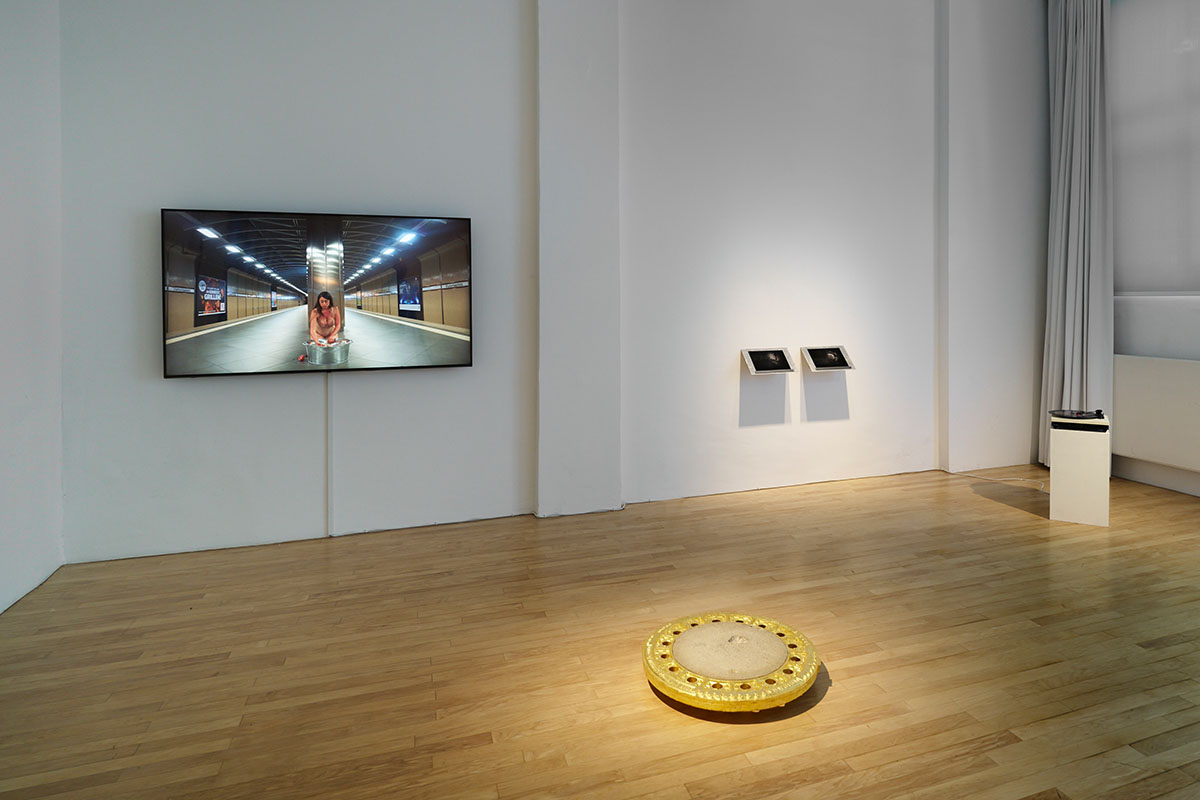
Photo: Egbert Trogemann
Heritage of Beuys is a very interesting and important base or context for this interview, especially since it contextualizes the performance program. How about the connection to Rome, as a real and imaginary city?
Danica: Several of the works were created specifically for the Foundation’s spaces, including performances by Naomi Xila-Xulis and Qingsong Meng that directly engaged with the house and its garden, as well as Maria Golowin’s intervention involving an existing sculpture of Jesus in the staircase.
One of the starting points for the project ROME. ROME? ROME! (2023-2026) was my transfer from the Bauhaus-Universität Weimar, where I directed the international Master’s programme Public Art and New Artistic Strategies from 2011 to 2022, to the Kunstakademie Düsseldorf in October 2022. At the same time, I moved to Rome as a fellow of the German Academy Rome Villa Massimo. This constellation inspired the idea of reflecting on the Kunstakademie’s „spiritual place of origin“ on the occasion of its 250th anniversary. In spring 2023, we travelled to Rome on a class excursion, turning the city into a temporary site of artistic production. While one group worked on site, another remained in Düsseldorf, approaching the Eternal City as an imaginary place shaped by cultural narratives and historical projections. Villa Massimo also became both a site and a source of inspiration for several works, including Naomi Xila-Xulis’s installation based on her seven-day camping performance
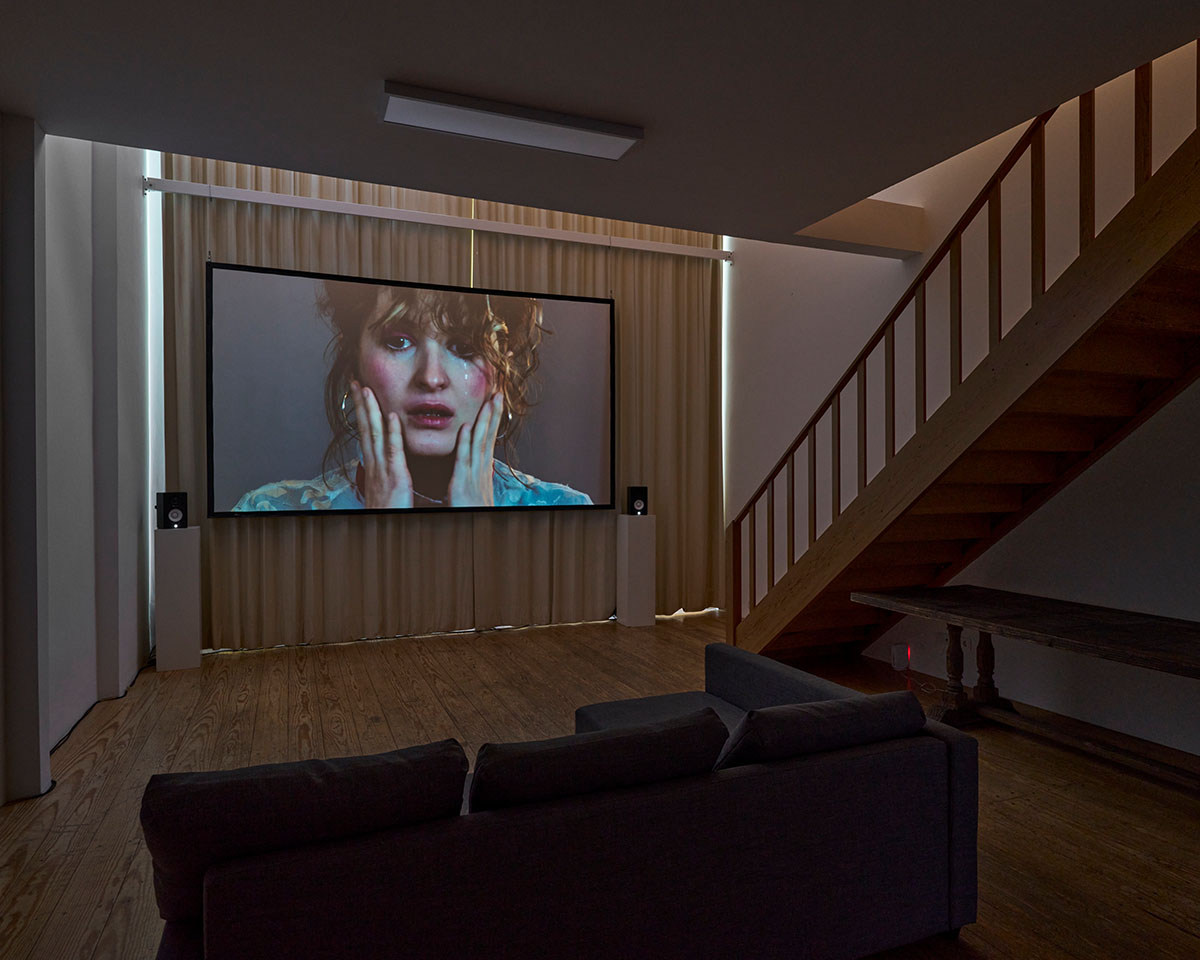
Photo: Egbert Trogemann
Elza, how do you see the importance of institutions like Villa Massimo in Rome and Brunhilde Moll Stiftung in support of the progress in art, in the past but also now?
Elza: It’s crucial. I guess it has always been, and it’s even more crucial now than ever, as many state-owned cultural funding streams are slowly being scaled down — less and less funding is available for the arts. We are quite a small player, with a small team. Of course, it is somewhat institutionalized due to the German bureaucracy within which we move. But in comparison to bigger houses that are more part of a political structure, I think we can work differently. I think it is important that we step forward and support the arts as a privately owned foundation. We can decide on our own, and that’s what we do, as long as we can. I think that was the case of institutions like Villa Massimo — it was founded by a wealthy merchant who wanted to do well for the arts, because he knew that the role of the arts in society is super important. And that’s what it still is.
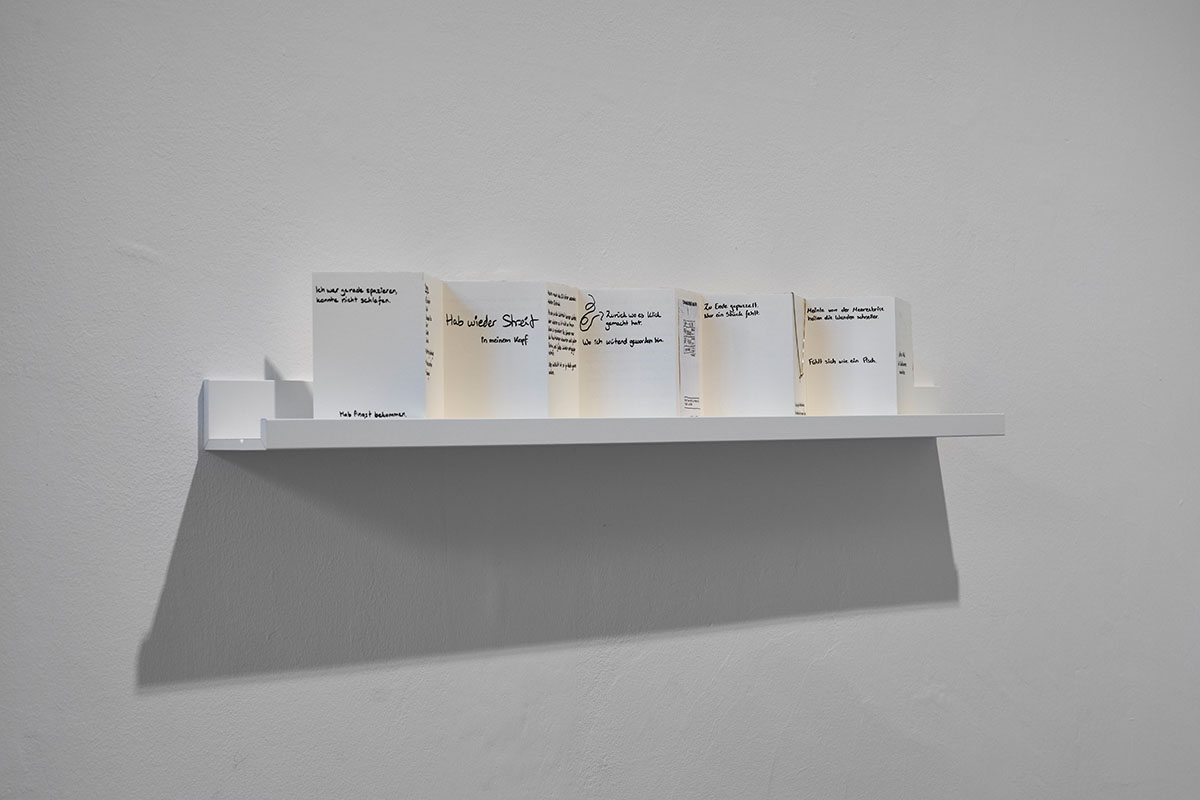
Photo: Egbert Trogemann
There is a whole process behind these three years of making and the whole journey that needed to happen for this exhibition to come to life. How about these time-consuming projects? Research-driven projects are always time-connected and time-dependent. Plus, there is obviously a big group of people with different ideas, practices, and backgrounds who were involved in this one project. Danica, how was your experience working on such a scale?
Danica: Research-based projects unfold over time, and ROME. ROME? ROME! was conceived as such a long-term process—an exhibition in motion. Over three years, the project evolved through different exhibition venues and contexts, with the Brunhilde Moll Foundation marking its final chapter. Working with Elza, the Foundation’s artistic director, was especially inspiring. The Foundation’s interest in (artistic) research, exploration, and experimentation resonated strongly with the project and shaped several of the works. Many of them reflect the idea of the journey—not only as physical travel, but also as journeys of the mind and through time and history. Miriam Bornewasser’s expansive installation beneath the roof of the house, for example, invites visitors on an imagined journey to Rome. Julia Priss’s installation explores the history of the Colosseum and the language of power through a collaboration with musicians, creating a journey through time in sound. Lucas Aal’s photo installation was also developed through an artistic research process.
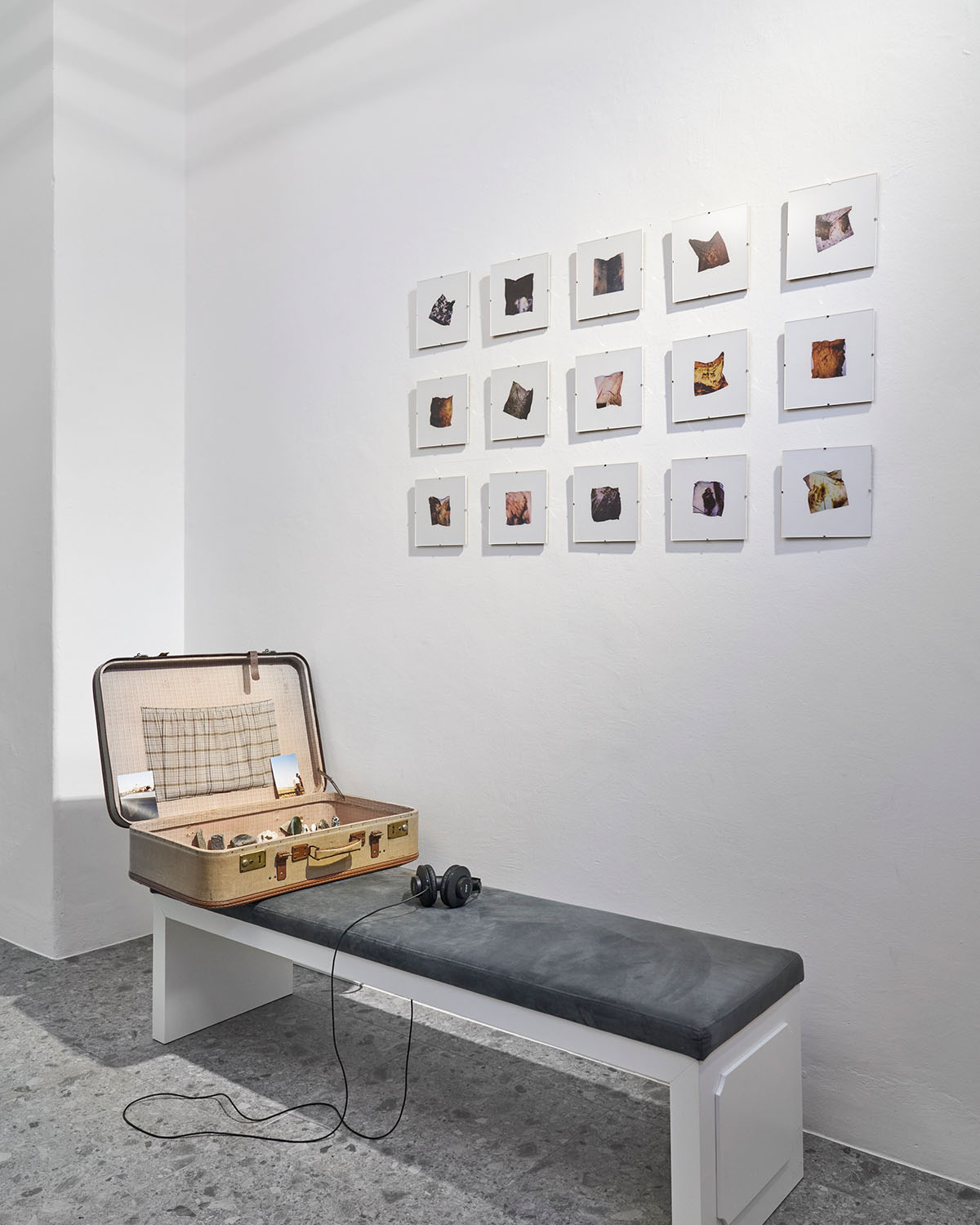
Elza: Aal is working with disabled people, also on an organizational level. So he wanted to turn around the relation of inclusion and exclusion. He got to know a woman who can only see about 2% — so most of what she perceives is light and dark, but sometimes when light comes in from a certain direction onto a certain spot, she can see things almost clearly, but still missing colors. She explained to Aal what she sees in those moments and described it clearly. They talked for months, and he tried to adapt what she had explained to him to his concept of photography, to how he could modify his camera to show viewers, who can see far more than that 2%, exactly what she had told him. He made a modification to his camera and took two photographs that were printed. Later he embossed them with Braille characters, placing quotes from that woman describing what she was seeing.
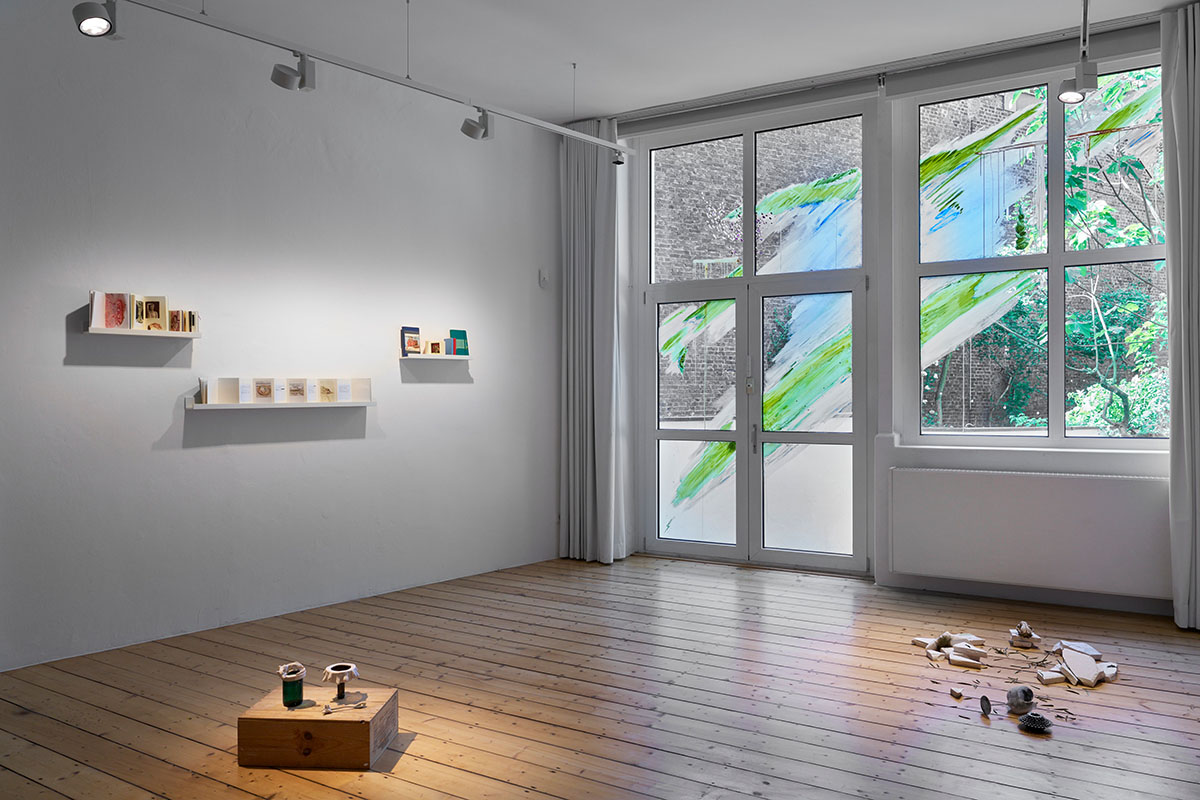
Photo: Egbert Trogemann
Making this exhibition, we’ve always tried to connect to a kind of physical or imaginary travel. This is a very interesting example to talk about traveling, or a journey. Is it physical or imaginary? It is like remembering things, telling things to another person who then tries to visualize them in their artistic way. And it is a subtle and calm process.
How important is it to give projects space and time to grow and to develop ideas? We are living in a society where everything must be done in a second, but isn’t it true that everything needs time and space? And how important is it that people understand that things are growing slowly and need to develop?
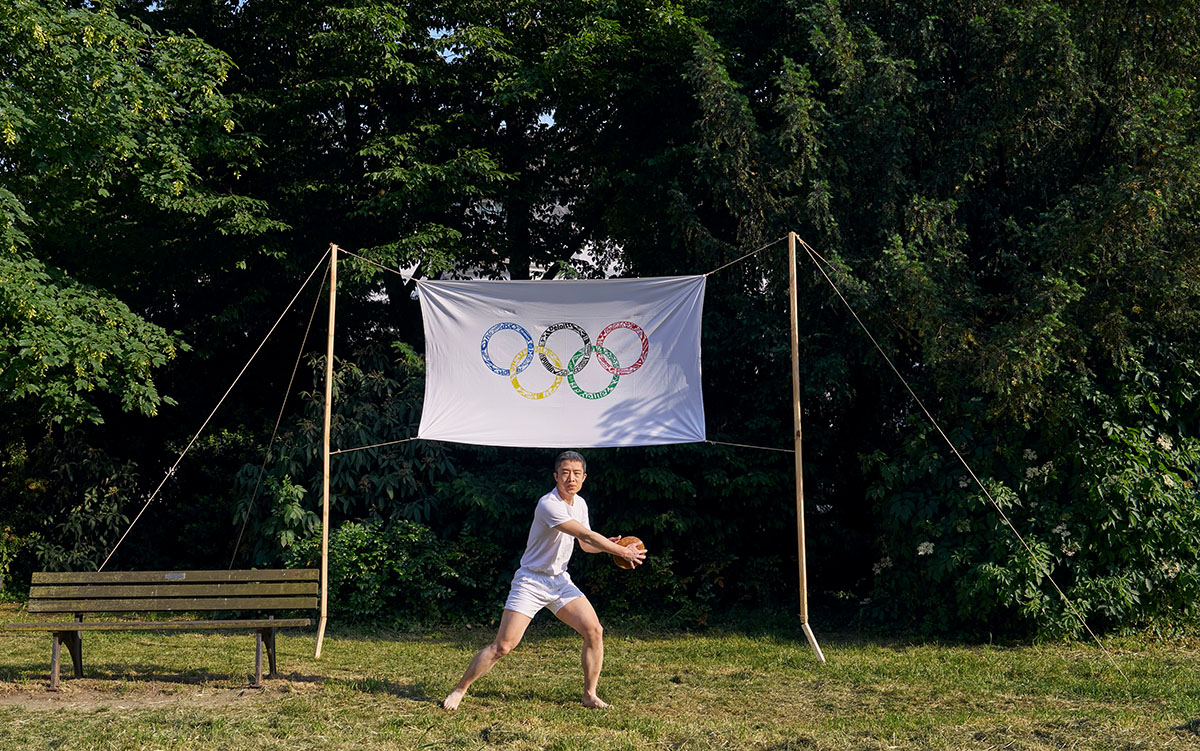
Elza: There are two kinds of works: ones that were made specifically for this space and for this era of the project, and then there are works that have been there conceptually from an early stage, but have developed and moved on. This is an interesting perspective on artistic research, but also on personal development, because works always look and function differently when you place them somewhere new. We sensitively tried to make that possible, to make it not feel like a typical traveling exhibition where you just set it up and it’s always the same. That wouldn’t have worked. Some of the works that had been shown on a projection or on a screen, for example, were changed together with the artist, figuring out how to show them differently.
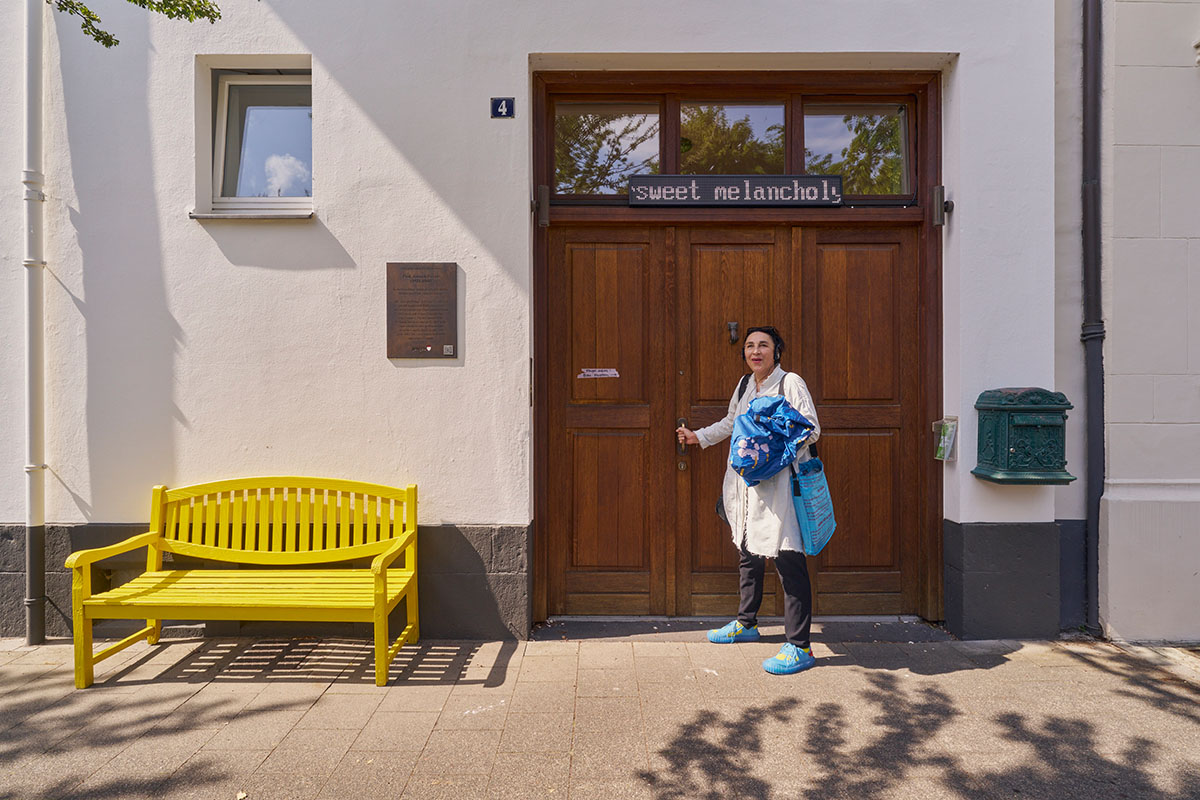
There’s A Tender Yearning, a work by Shannon Sinclair: the artist prompted an AI agent to produce poetic phrases addressing longings and wanderlust. As early as 2023, Sinclair used AI-generated poetry to question the relationship between humans and machines. Since then, the work’s form of presentation has been further developed on multiple occasions. Initially, she had many phrases. It was a several-minute loop in the form of a projection earlier. And then for our exhibition, she adapted the work to be shown on an LED scrolling sign. She had to modify the work, of course: first, there’s only one typeface you can use, and you cannot switch to a better-fitting kind of writing. The sign also has its limits in terms of the maximum number of characters. So she shortened the text, chose a few sentences that were most important to her in this specific exhibition. And we put it on top of the front door so it’s outside the building, and it is like the first step into the exhibition, but also communicating outward, to the street, a part of what the exhibition is. So that’s one example of how a work could go through this whole process, already developed in 2023, but not being obsolete, and also not being shown in the same way as it was shown the first time.
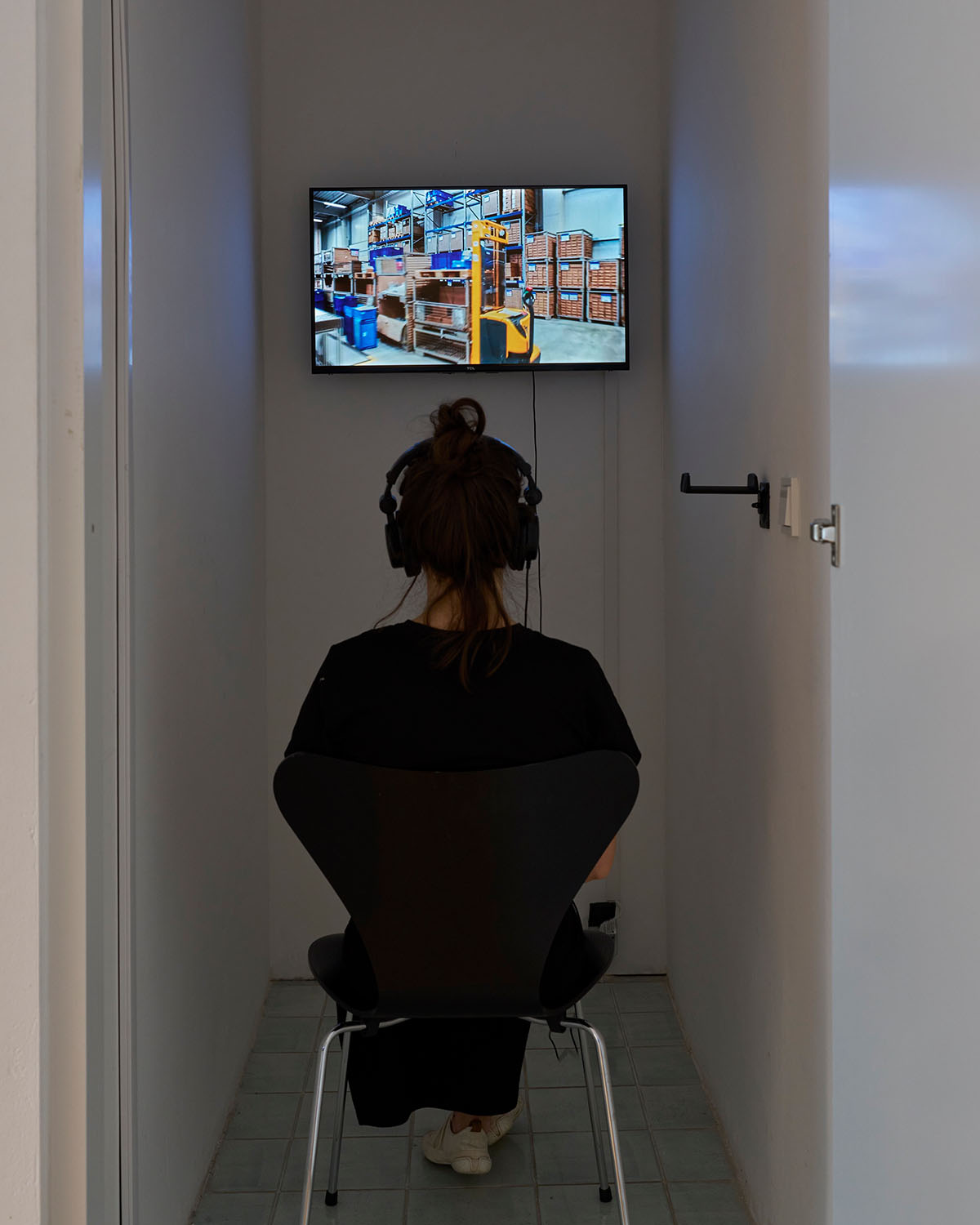
Photo: Egbert Trogemann
And what could be interesting, actually, is the way you save digital works against the passage of time, because there are now so many different ways of saving artwork, and every year or half a year, there is a different projector, a different screen, a different format. It’s going fast compared to the beginnings of, let’s say, the first thirty years of video production.
Danica: With time-based media, questions of presentation and preservation are always important. While I try to define the display format of each of my works as precisely as possible, future technologies will inevitably change the way they can be shown. As a film and video class, we are particularly interested in how time-based works relate to and shape exhibition space.
For this exhibition, we created a small cinema on the first floor presenting a programme of eight video works, while video installations and video performances were shown throughout the house, each with its own form of presentation. The mode of display is never merely technical—it is an integral part of the work itself.
© Brunhilde Moll Stiftung, Photo: Egbert Trogemann
When curating, did it become blurry between what is based on facts and what is based on, let’s say, speculative fiction? Do you have a feeling for what is what, and how do you navigate through it?
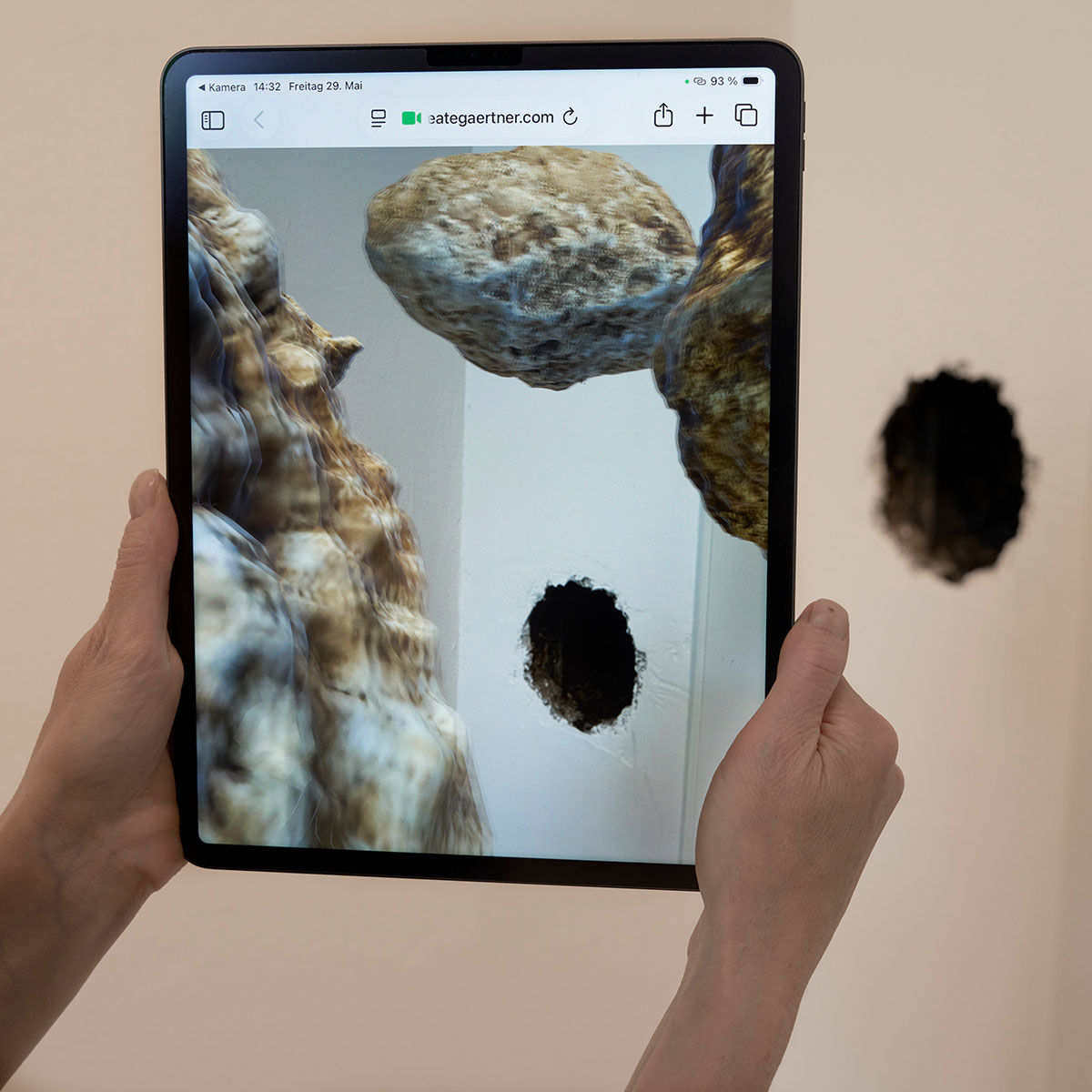
Danica: The exhibition is about real and imaginary places—and everything in between. Iezees Abu Hatab’s video performance, for example, transforms Düsseldorf’s Viktoriaplatz subway station into an imagined site through a ritual washing with pomegranate. The work creates an imagined journey between South and North, across different temporalities and cultural contexts.
Elza: What we had in mind was not about giving a clear answer to what is physical and what is imaginary, but rather about posing the question. And it’s interesting, even in the title from a reading perspective, it’s like Rome, it’s a fact, it is a question, and it’s a new perspective.
Rome isn’t just Rome; it’s not just a city. It’s an important cultural subject, a reference. For the cultural history in Germany, it’s especially significant, as it has to do with Goethe and the Italian Journey, and Villa Massimo. It’s all part of one line of constructing this idea of the eternal city as a metaphor, as well as a real place. And I think that was an important subject for the artists.
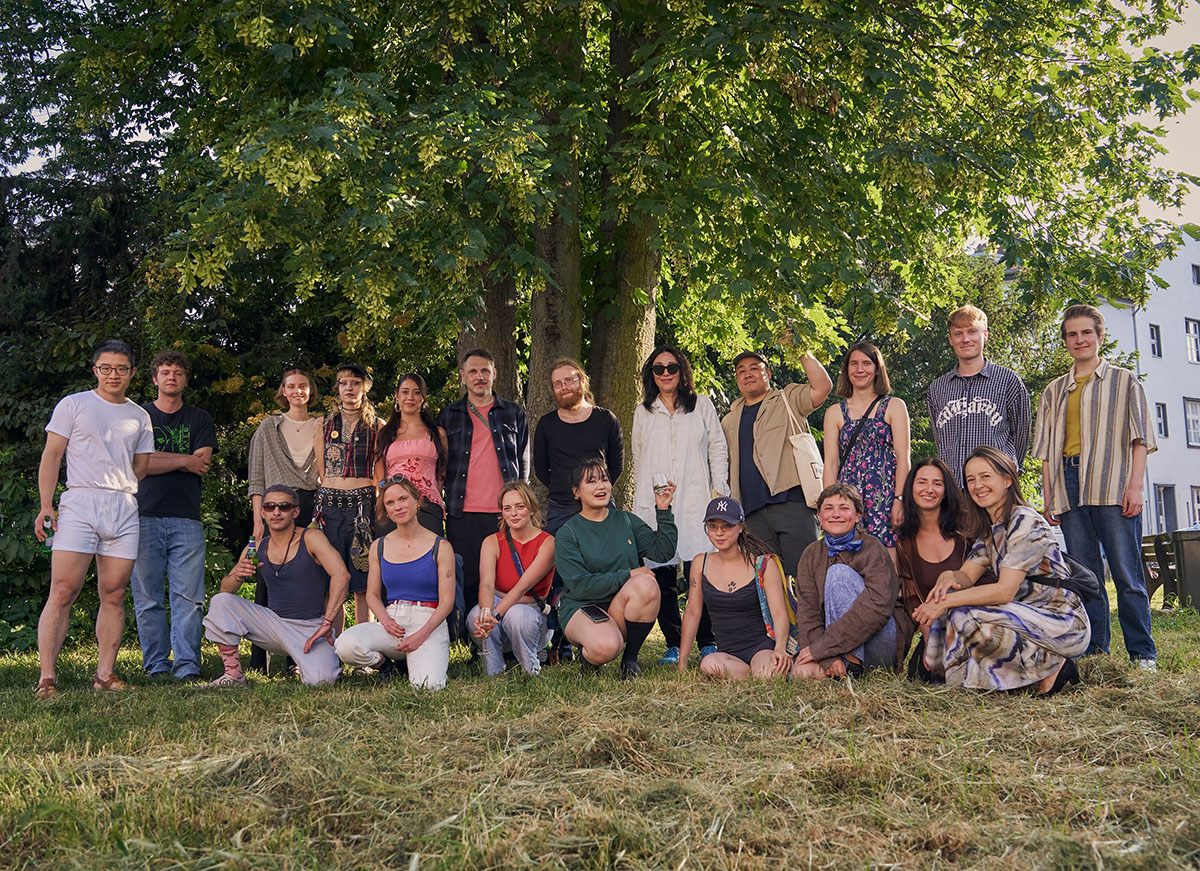
A publication is a nice finish for the whole project. How important is it to save it in a publication format?
Danica: I’m very happy that the publication has already been printed and will be presented at the finissage on 12 July. Translating the exhibition’s four chapters into a book creates the necessary distance to reflect on the project as a whole after three years. At the same time, many of the works have evolved throughout the project, while others were newly developed for the exhibition at the Brunhilde Moll Foundation. The publication also includes works that are not part of the final exhibition but remain essential to the overall project. I’m especially grateful that the publication was made possible through the generous support of the Brunhilde Moll Foundation and the Gesellschaft von Freunden und Förderern der Kunstakademie Düsseldorf.
Elza: For most of the participating artists, a publication is also actually important, at least in essence, for giving the work a lasting existence. It’s a kind of document that will continue to exist.
Group Exhibition: ROME. ROME? ROME! Class Dakić for Film and Video, Art Academy Düsseldorf,
Curated by: Elza Czarnowski and Danica Dakić
Exhibition duration: 31.05. – 12.07.2026
Artist (Students and Alumni of Class Dakić for Film and Video)
Lucas Aal, Iezees Abu Hatab, Angelina Askew, Miriam Bornewasser, Diana Derii, Ole Christian Dreihaupt, Michael Driesch, Paul Derichs, Beate Gärtner, Maria Golowin, Hu Xinyue, Lena Maria Hugger, Pius K., Jule Kupper, Haegang Lee, Nuah Lee, Lucien Liebecke, Qingsong Meng, Sophia Müller-Alheim, Hyejin Park, Sojeong Park, Kaya Pfaff, Julia Priss, Julia Reisinger, Zoé Marie Rossmannek, Insa Schülting, Shannon Sinclair, Jakob Stählin, Bela Stöttner, Qunyuan Wang, Naomi Xila-Xulis, Zahra Yacoub, You Xiangyun, Mio Zając, Yusif Zakhovy, Zazie
Opening times:
Sat, Sun, Tue 12 PM – 4 PM
Thu 2 PM – 6 PM
Address and contact:
Brunhilde Moll Stiftung
Drakeplatz 4 40545 Düsseldorf
www.brunhildemollstiftung.de