


“When autumn sets in, to possess a burrow like mine, and a roof over your head, is great good fortune for anyone getting on in years. (…) There I sleep the sweet sleep of tranquility, of satisfied desire, of achieved ambition; for I possess a house.”
— Franz Kafka, The Burrow (1931)
Over the last week, I was experiencing one of my periodic depressions and didn’t leave my house for three days. This Budapest studio is the first space I’ve ever owned and lived in entirely by myself. Who else to turn to in these times but the master of anxiety, Kafka. I re-read The Burrow, his unfinished and posthumously published novel, which is essentially an indulgently neurotic monologue by an unspecified creature obsessing over the details of the underground abode it has laboriously constructed, and which is slowly driving it into madness. Could not relate more.
I was reading this alongside Nancy Lupo’s Meow Meow Real Estate, a novel that serves as a prologue and imaginary for Several Chickens Later at Spike Island and her previous show at Nicoletta Fiorucci Foundation in London. Both are obsessive internal monologues projecting psychological landscapes onto external spaces, particularly the ‘house’ or home. Lupo’s Rachel Cusk-esque narrator is less paranoid and more glamorous — drifting through hotel rooms, airplanes and Airbnbs in art-world-nomad fashion rather than subterranean tunnels — but in both, architecture becomes difficult to separate from psyche. Based partly on Lupo’s difficulties finding an apartment in Berlin, Meow Meow Real Estate sits somewhere between diary, internal monologue and free-form poem, moving associatively through rooms, objects and relationships, with the comic sense that arranging the material environment correctly might make everything else organise itself too.
Several Chickens Later maps this psycho-architectural, oneiric landscape into exhibition form: a meditation on the house, or a space of one’s own, and the desire, joy and anxiety that accumulate around it. It’s also a delightful symphony of accidents, failures and fixings, appropriate for a sculptor working within a post-Minimalist language of temporality, low-fi aesthetics and non-precious materials.
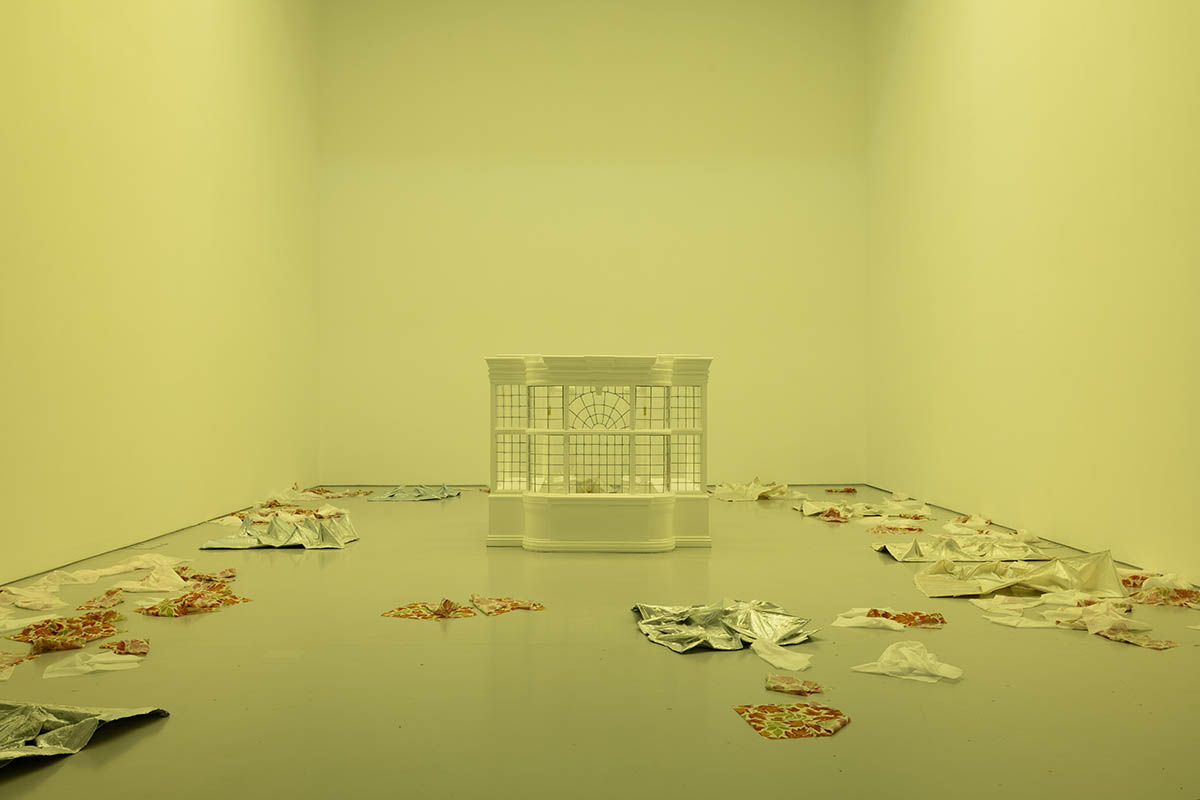
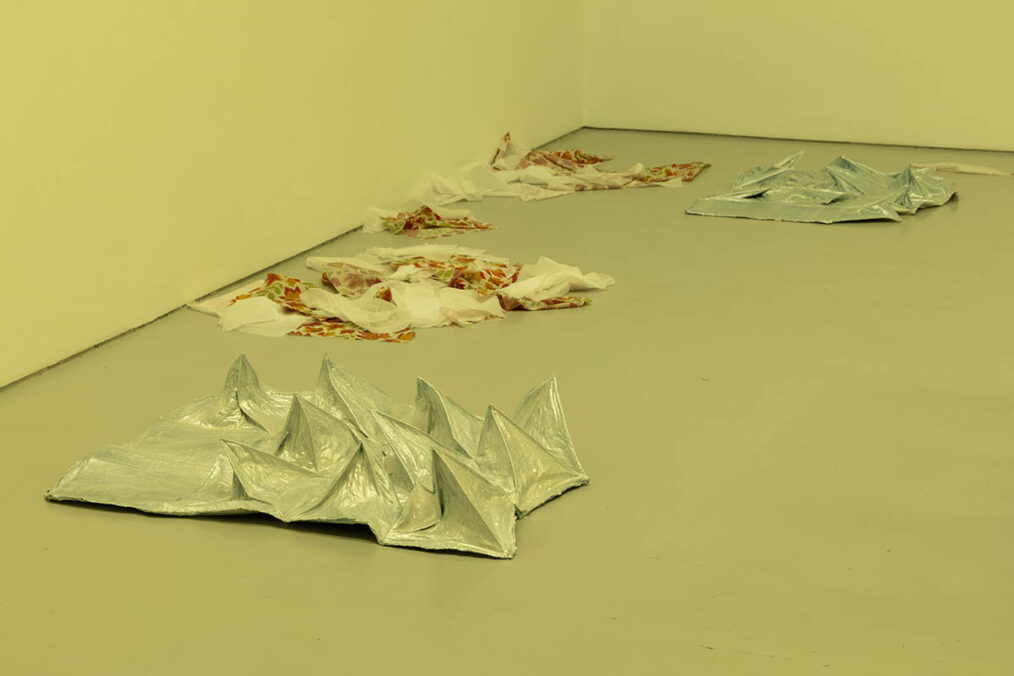
Across the gallery, autumn-leaf-printed napkins have been thrown into The fall leaves. The leaves falling (2026), their layers peeled apart and arranged into an apparently haphazard blanket. Lupo brought them from the US as an homage to a retro 1970s housewife aesthetic. They have a nostalgic quality, with a hint of the melancholy that lives in all mortal things: autumn in late summer carrying inevitable change. Some piles appear to be breathing, thanks to small motors underneath them, echoing the novel’s idea of “breathing in”, but not breathing out: holding onto anticipation, or hope, before the moment arrives.
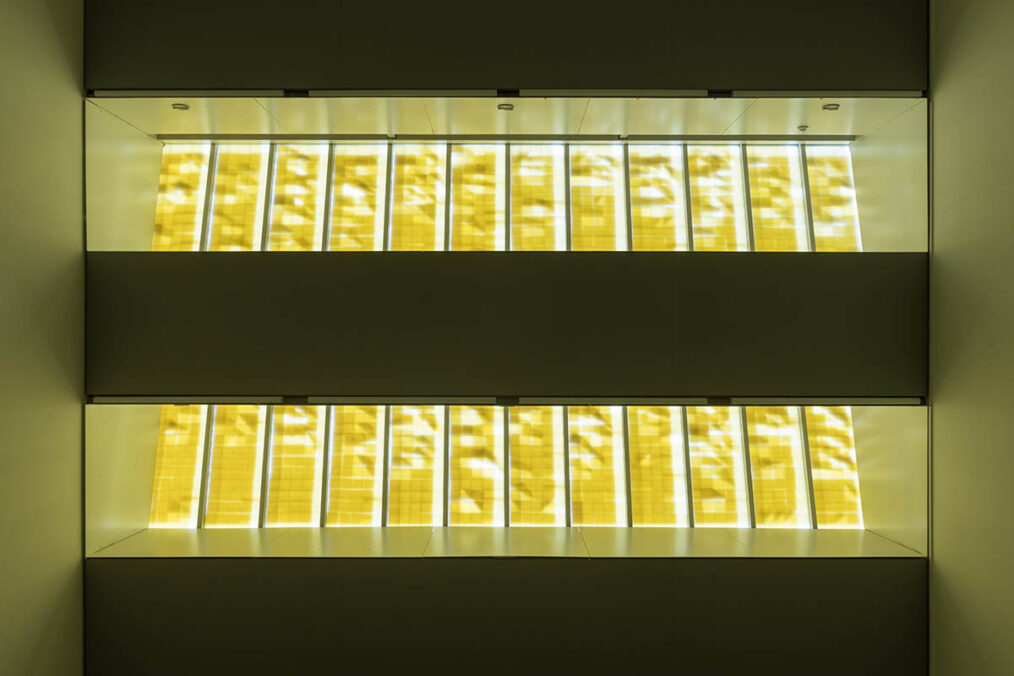
Yellow-tinted napkins were also installed across the glass ceiling in Hark (2026), bathing the gallery in a yellowish glow. Almost immediately, however, they were destroyed by the weather. The first failure, and an opening to external conditions: the fantasy of permanence proves porous almost straight away.
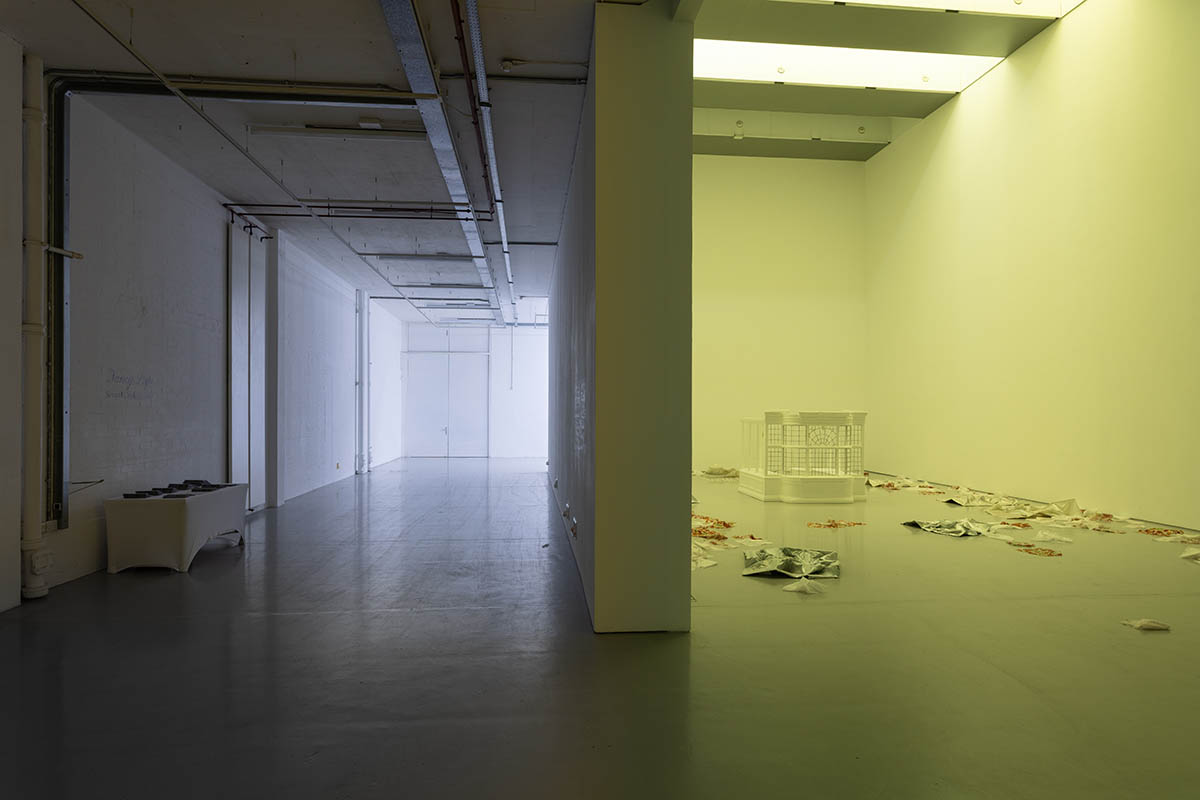
Interspersed among the napkins are twelve amorphous sculptural objects Lupo calls the “tellers”, wooden triangular forms built up with toilet paper, paper towels, pigment and glue. Layered and crumpled, with a luminescent silvery finish, they hover between animate and inanimate, body and abstraction. They seem like conduits for a line in the novel describing a mysterious ‘thing’: “A hunk of something compressed and folded under the weight of its own accumulating skin. It took form only in retrospect.” The napkins and tellers, together with lengths of white-painted spiral pasta threaded onto fishing line, make up The Mirage (2025–26), spreading low across the gallery floor. The pasta shapes recalled ornamental balusters in the Fiorucci residence, playfully recreated in DIY miniature, and emphasising a kind of childlike, playful register palpable within Lupo’s sculptural language. Many have broken over the exhibition, their fragments incorporated alongside intact strings according to Lupo’s instructions, anticipating failure from the outset.
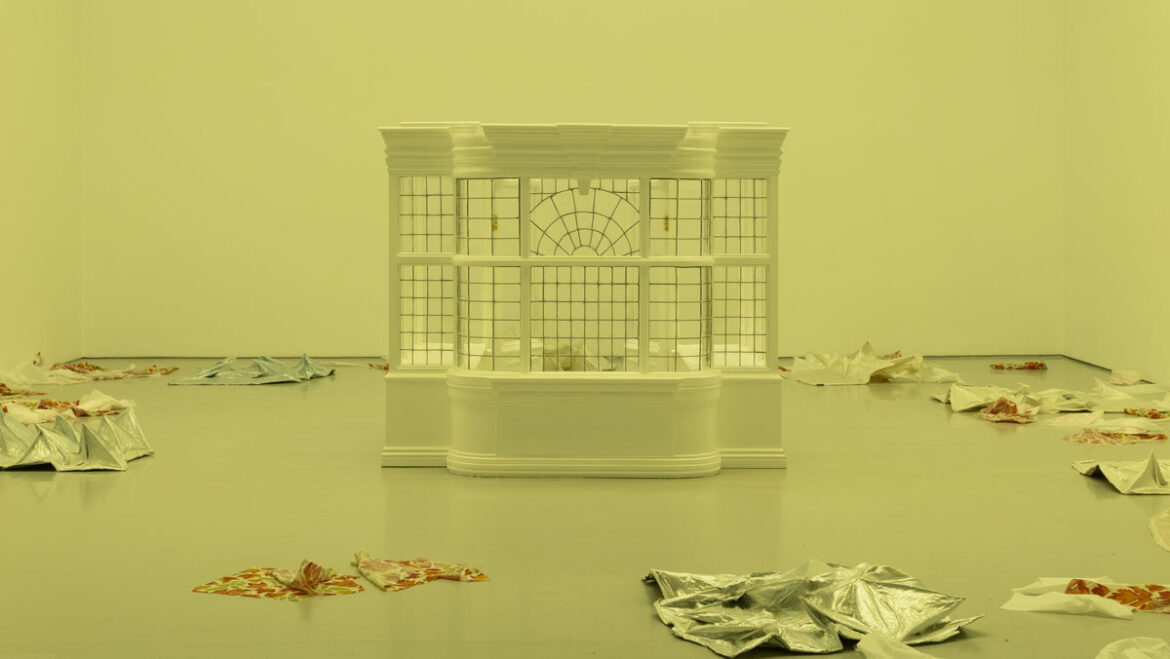
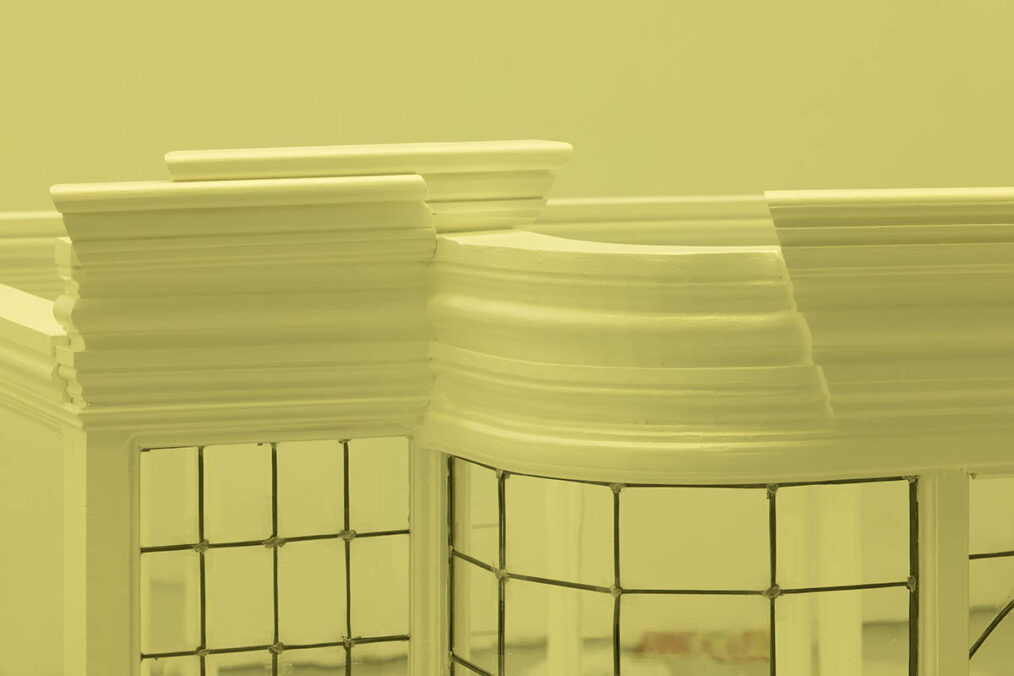
This miscellaneous blanket of objects orbits the show’s centrepiece, The Enclosure (2026), a freestanding, three-quarter-scale reconstruction of the Victorian bay window from the Chelsea residence housing the Nicoletta Fiorucci Foundation. The projecting structure becomes a small architectural shell with two facing benches inside. Lupo eventually made the Chelsea house itself the subject of her work, listing it for sale as her final exhibition there.
The scale of The Enclosure is deliberately awkward: too large to be a conventional miniature, but too small to accommodate an adult comfortably. It activates the logic Gaston Bachelard attributes to miniaturisation in The Poetics of Space (1957): reducing the world to dimensions that can be mentally grasped and, in some sense, possessed. Lupo reproduces a desired architecture at reduced scale; the viewer bends down to enter it, its proportions placing the adult body closer to childhood. During my visit, a young couple lay inside in an embrace, giggling as if in one of those forts we built from pillows and blankets as children. This arbitrary, open “enclosure” still provides safety, intimacy and refuge.
As curator Clémentine Proby explained, Lupo likes to replicate things she desires as a way of possessing them. The question runs through the novel too, where finally having an apartment still fails to produce the certainty imagined in advance. The making of The Enclosure almost comically reenacts this instability. It arrived in quite bad condition, leaving Lupo and the technical crew correcting its lead fixings, woodwork and windows. Some leadwork could not be repaired, so Lupo marked the damaged points with transparent tape crossed over each fixing. Failure becomes incorporated rather than erased; repair enters the work’s formal language.
Walking through Several Chickens Later feels accordingly like moving through a liminal daydream. There is an Alice in Wonderland effect to the shifted proportions and anthropomorphisation of familiar things, and something of a little-girl’s-princess dreamhouse in the ornamental prettiness and cinematic atmosphere. Lupo herself seems to embody, whether with complete sincerity or semi-ironically, this aspirational princess-persona. This aesthetic recalls in part the particular softness and dreamlike nostalgia of a Sofia Coppola film, where the fantasies of youth and girlhood are often shadowed by melancholy and something violent and ominous — a register the artist also plays with in her novel.
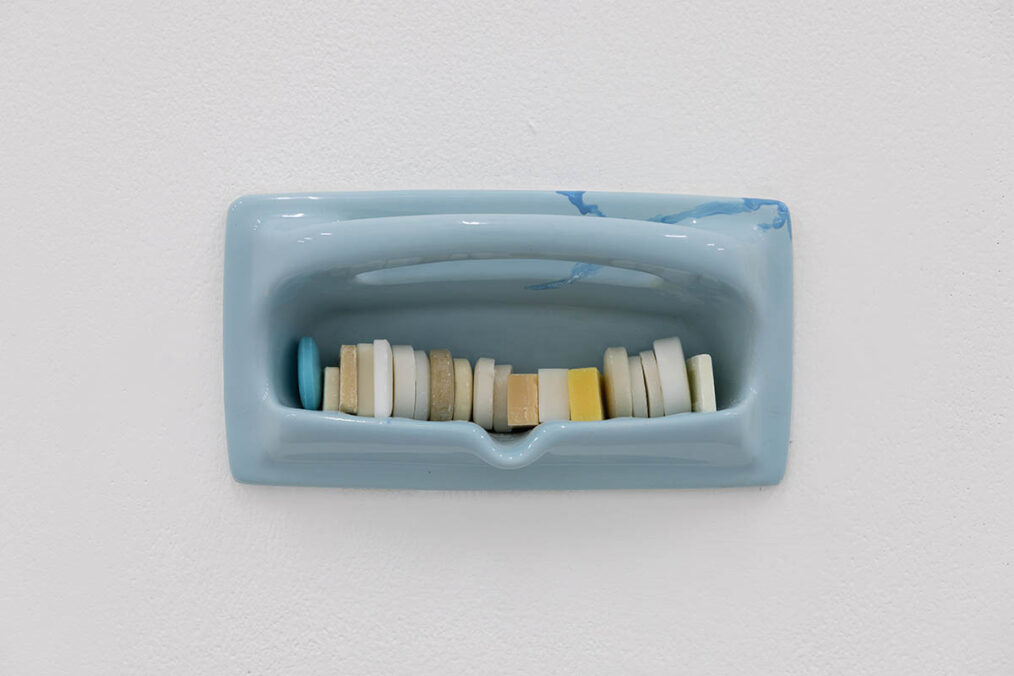
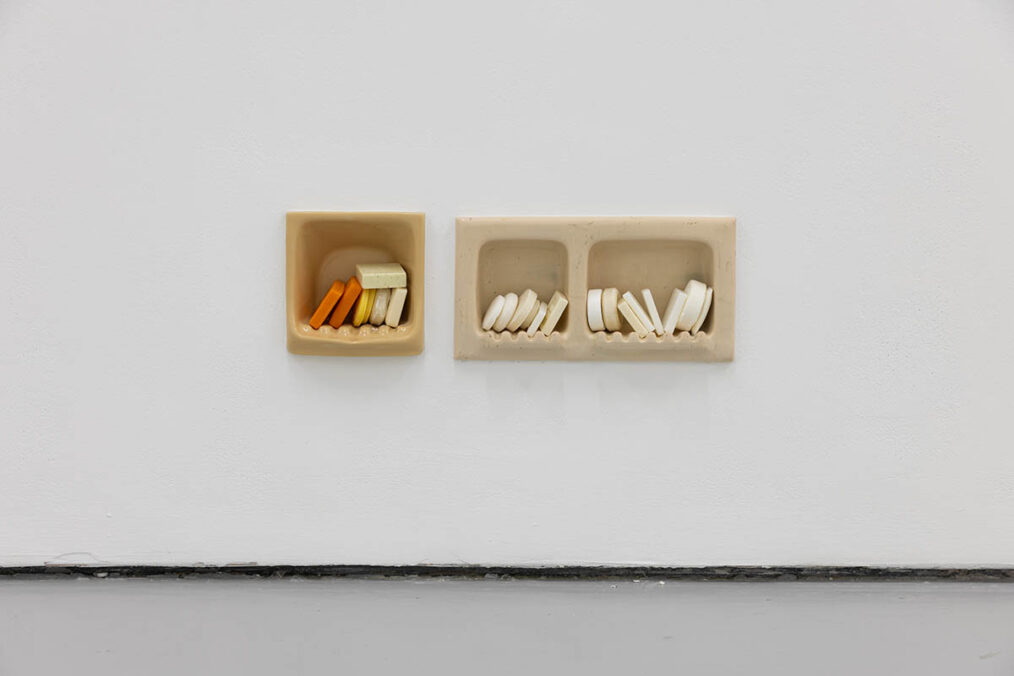
Leaving the main gallery, the lower corridor walls, just above the floor, are lined with pastel soap holders containing travel-sized soaps. Titled The Repository (2026), they feel like bodily footnotes, returning the exhibition to intimate experience: bathroom, shower, body. The installation was inspired by Lupo’s father, an avid collector of random objects, including wall-mounted soap holders.This work, too, wasn’t safe from accident. Some holders arrived broken, prompting Lupo to repair them with nail polish, a recurring medium in her practice. The crack and repair remain legible and, as in The Enclosure, folded into the work’s materiality. Visitors, mostly children, also kept stealing the little soaps. There is something wonderfully generous in this involuntary opening of a sculptural language concerned with enclosure and possession: the exhibition cannot prevent its objects from escaping – rhyming with the escapist tendencies of the novel’ protagonist.
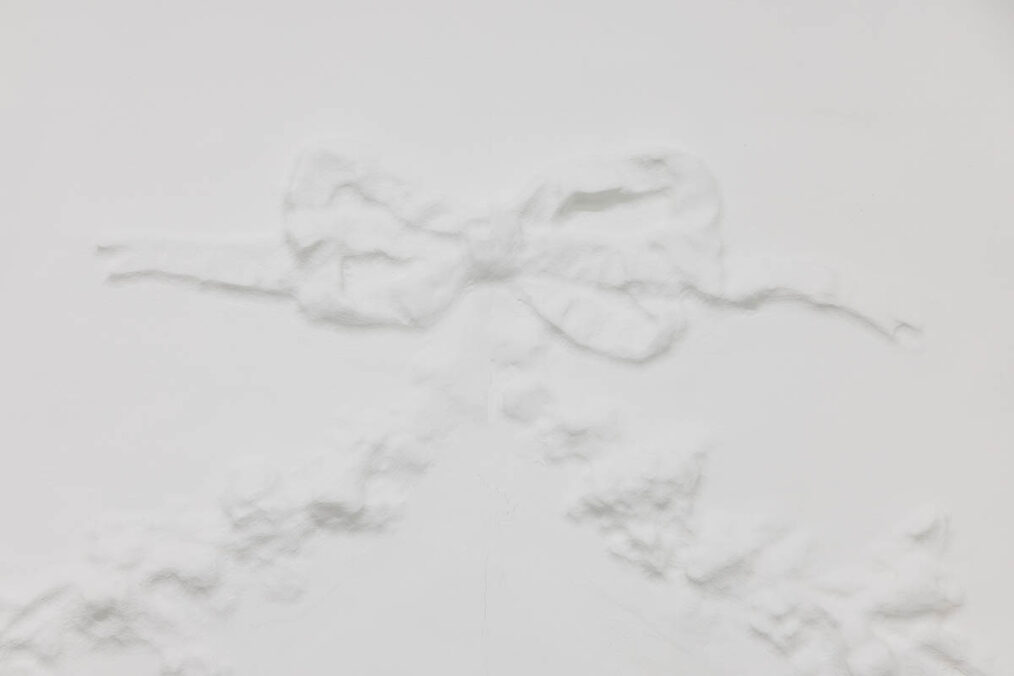
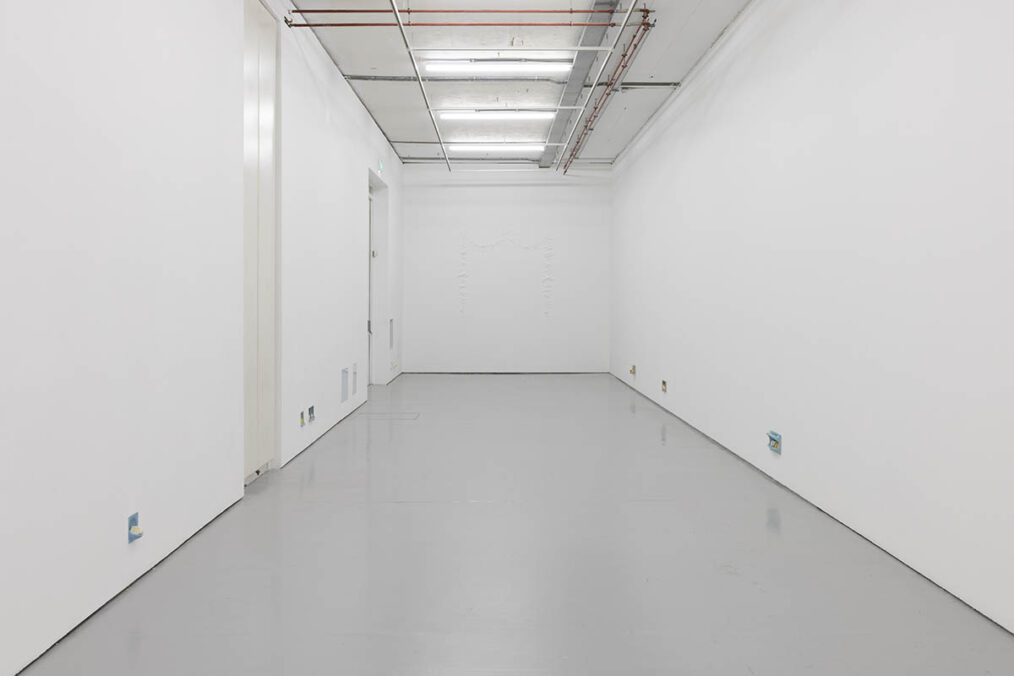
The final work is The Extra (2026), a the outlines of a white-painted ornamental door arch modelled on one at Raven Row gallery in London that Lupo found particularly beautiful. A ghostly portal leading nowhere, it hovers against the wall as a doorway without a door, framing some imagined space beyond. Alongside The Enclosure and The Mirage, The Extra crystallises Lupo’s devotion to fragmented afterimages as sculptural method. The novel imagines “a house or better two or three, as fancy and as extensive as possible”, but suggests that perhaps “any structure or space or maybe just the trimmings or skeleton will do.” Lupo likewise does not reproduce an entire fantasy architecture; the ‘house’ is diffused into fragments, props, atmosphere and feeling.
Throughout the exhibition, these domestic objects and skeletal architectures become repositories for the larger fantasy that stability, certainty, wealth, connection and safety might be realised through the space of a home. Here Kafka and Meow Meow Real Estate overlap most closely, both treating the home as an answer to the precarities outside it, a structure onto which the hope of being settled, protected or finally complete can be projected. Lupo calls it “the fantasy of being moored. The thicker the rope, the better.” Above all, the exhibition reveals how frail and phantomlike these fantasies, and the objects we attach them to, are. What I enjoyed most was how its failures and accidents mirror the imperfect relationship between desire and its subject, the eternal chasm between the two. To me, Several Chickens Later hovers within this exact space in-between, capturing the tragicomic poetry in us negotiating this gap, and the illusion of control we seek to exercise over it. It’s a phantasmagoria dedicated to the eternal effort to secure the object of one’s desire absolutely: the beautifully futile undertaking otherwise known as life.
Exhibition: Nancy Lupo – Several Chickens Later
Exhibition duration: 30 May – 6 September 2026
Address and contact:
Spike Island
133 Cumberland Road
Bristol BS1 6UX, United Kingdom
www.spikeisland.org.uk
Nancy Lupo – www.nancylupo.com, www.instagram.com/_nancy_lupa_/