

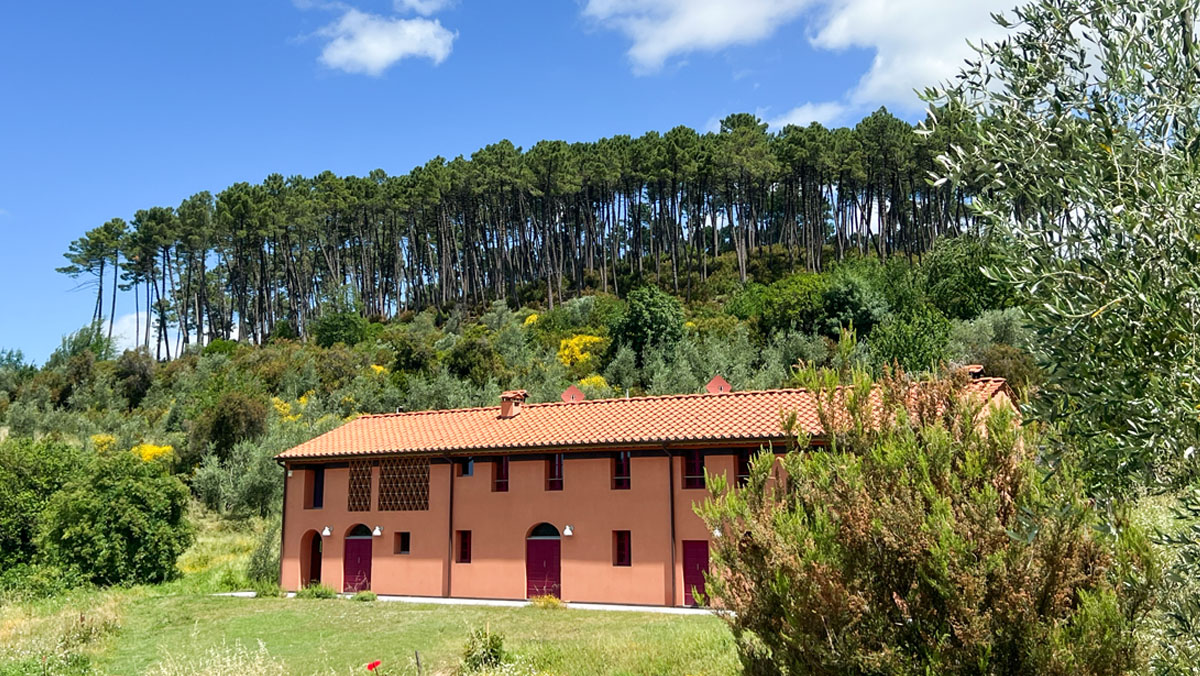
Hidden among the rolling hills of Vorno, just south of Lucca, where the last folds of Monte Pisano descend towards the Tyrrhenian coast, the 50-hectare estate occupies a landscape that has long been a place of passage. For centuries, these hills connected inland Tuscany with the sea, crossed by merchants, pilgrims and farming communities rather than grand tourists. Today, despite lying within easy reach of Lucca, Pisa and the Versilian coastline, the area retains a rare stillness. It has somehow escaped the polished mythology – and increasingly curated and plastic aesthetic – that defines so much of Tuscany. There are no orchestrated postcard vistas and little space for luxury resorts here. Instead, silence becomes part of the experience, broken only by birdsong, the rustle of cypress trees and the crunch of gravel beneath your feet.
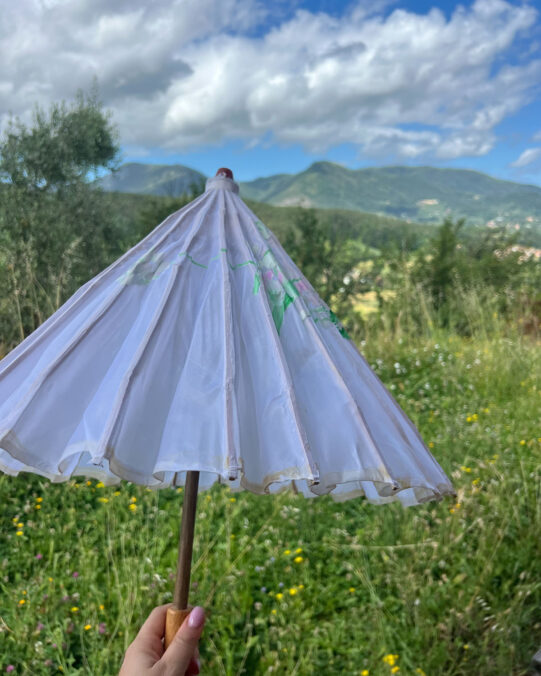
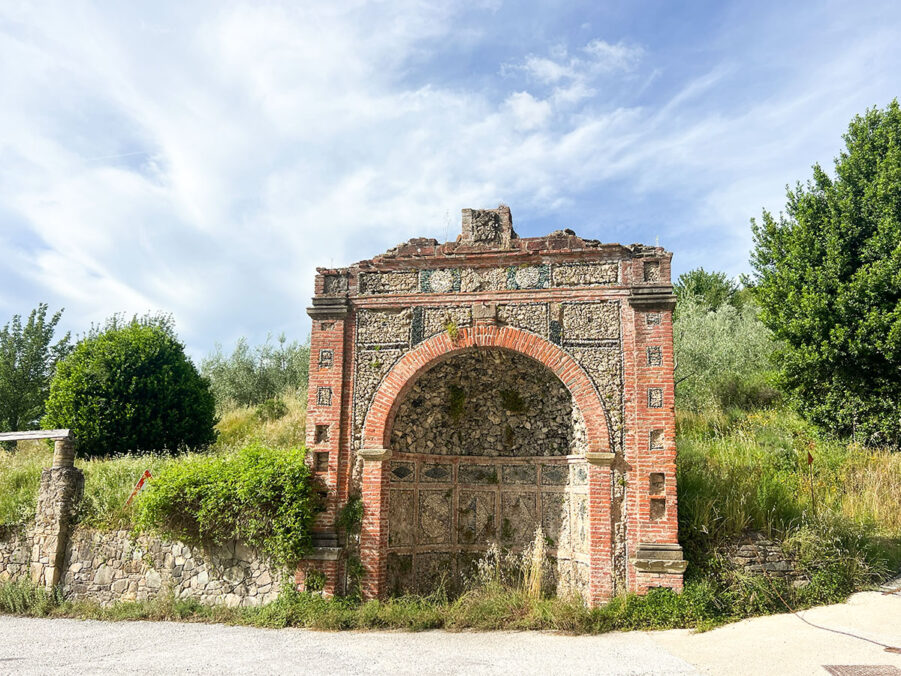
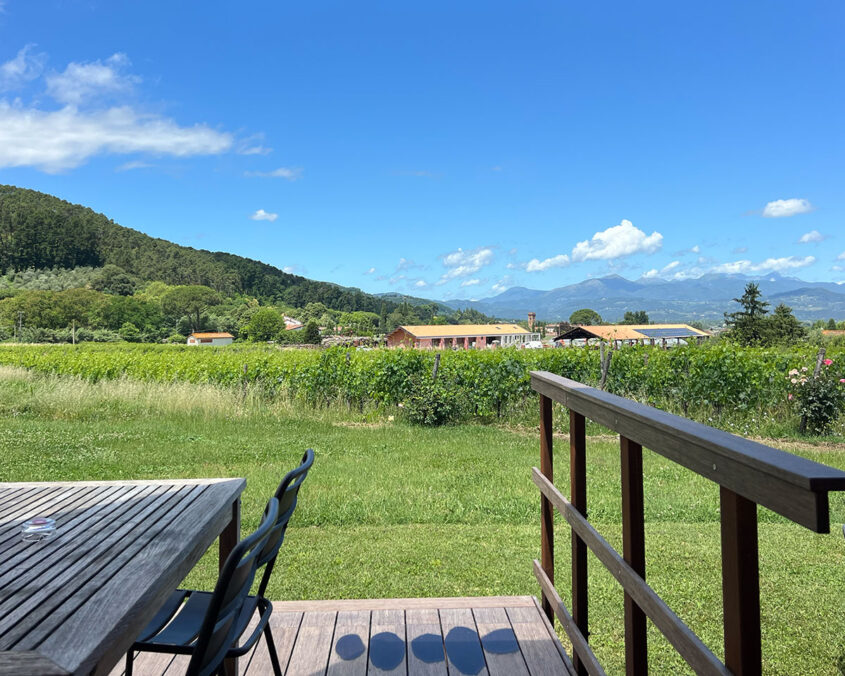
The estate of Tenuta dello Scompiglio itself tells a similar story. Once a self-sufficient agricultural property of vineyards, olive groves and orchards, it fell into abandonment before nature gradually reclaimed its buildings and fields. Rather than restoring it to an imagined past, artist and founder Cecilia Bertoni chose another path. I met her the day of my arrival, hands covered in mother yeast, back from helping in the kitchen and going somewhere else to the exhibition rooms or to check the ongoing dance trials. Over the past two decades, she has transformed the estate into one of Europe’s most singular cultural projects: an evolving ecosystem where agriculture, architecture, performance, gastronomy, environmental restoration and contemporary art exist not as separate disciplines but as parts of a single living organism.
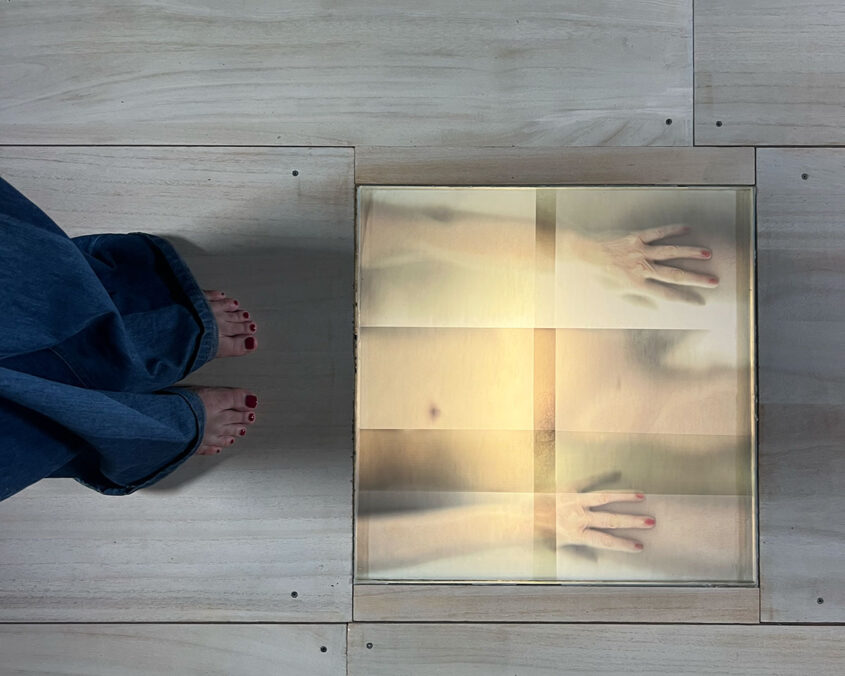
Artists are invited not simply to exhibit but to inhabit the landscape. Residencies unfold alongside working vineyards and vegetable gardens. Performances emerge from forests and abandoned farm buildings. Renewable energy, biodiversity and agriculture are treated with the same attention as artistic research. Even lunch and dinner become extensions of the project, another way of understanding the land through what it produces.
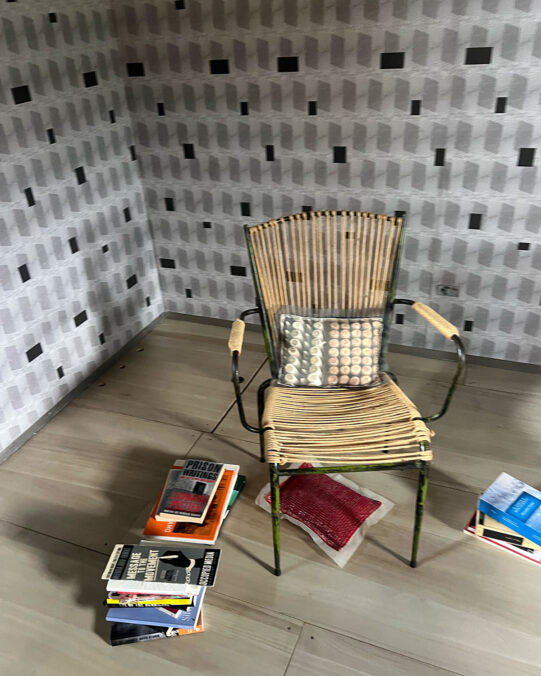
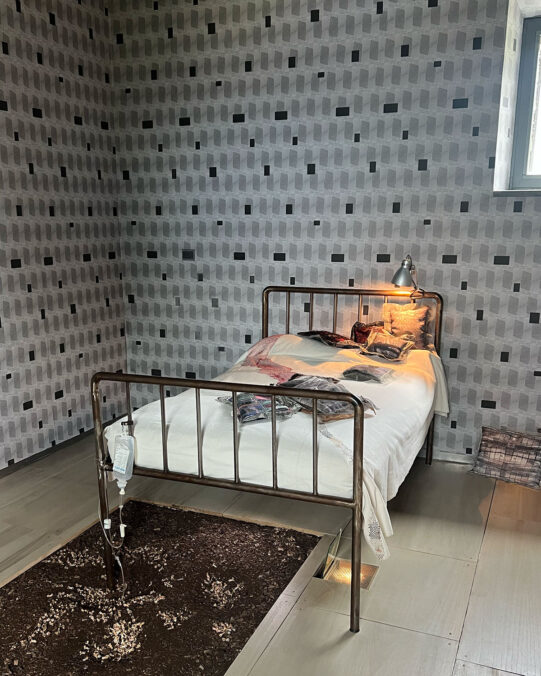
This philosophy reveals itself through an extraordinary constellation of spaces. There is the SPE (Performance and Exhibition Space), a striking contemporary volume designed for immersive exhibitions and performances. Elsewhere, visitors encounter intimate experimental rooms hidden throughout the estate, installations reached only after wandering through woods or cultivated fields. Each demands a slower rhythm of attention, encouraging visitors to exchange the pace of the museum for that of the landscape, sitting on embroidered beds and empty inhabited rooms to make their own.
One of the most evocative spaces is the estate’s small chapel. Rather than functioning as a neutral gallery, it retains the weight of its sacred history, allowing the architecture itself to become an active participant in the pavement work by Alfredo Pirri.
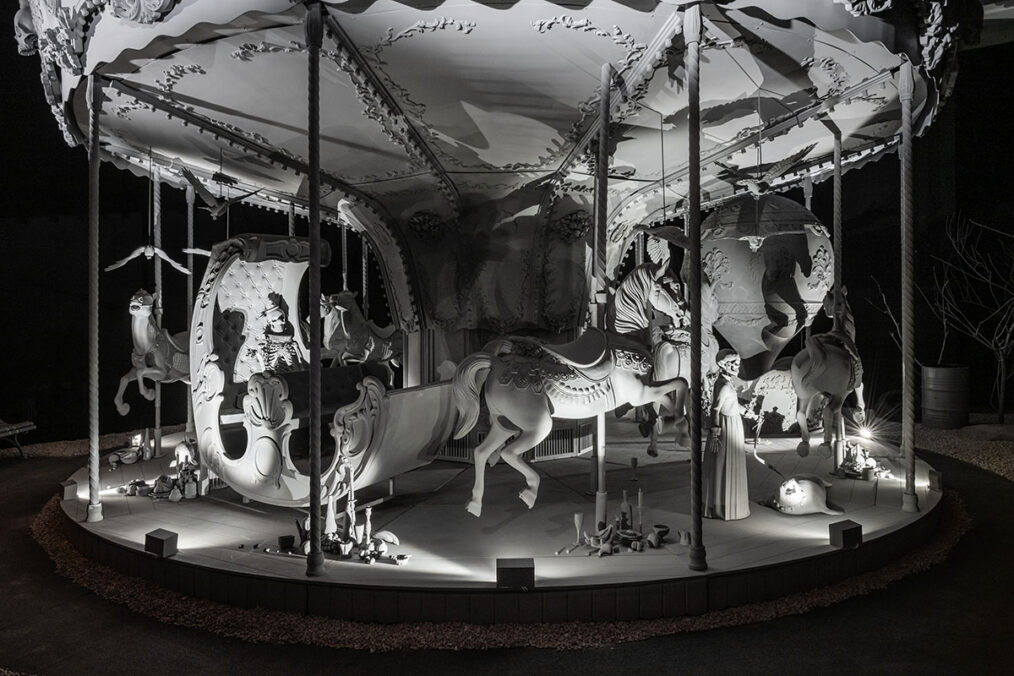
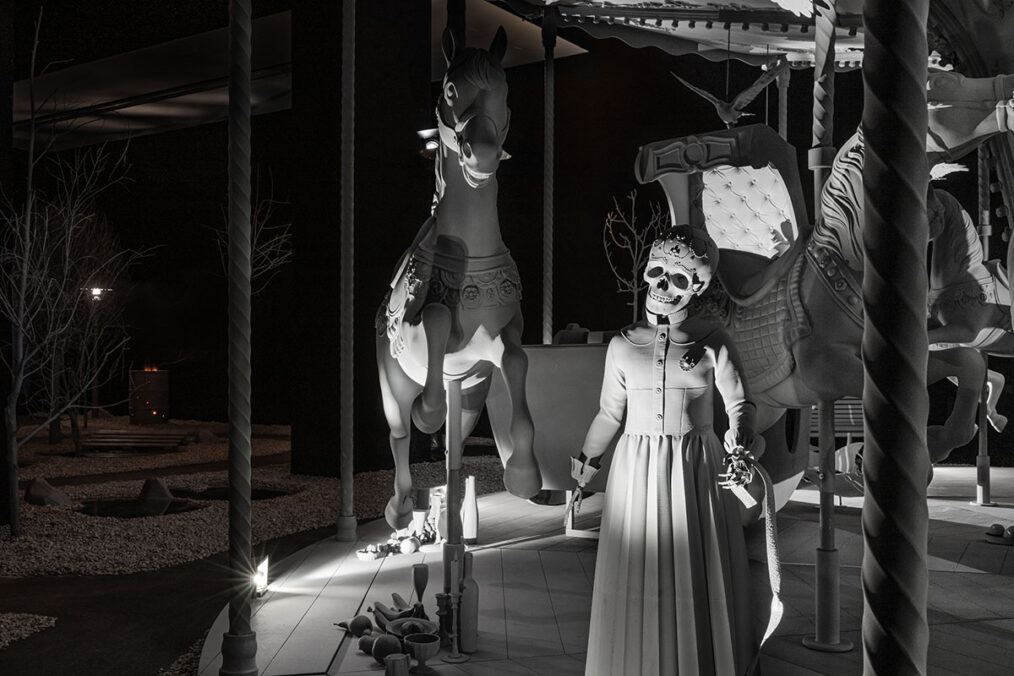
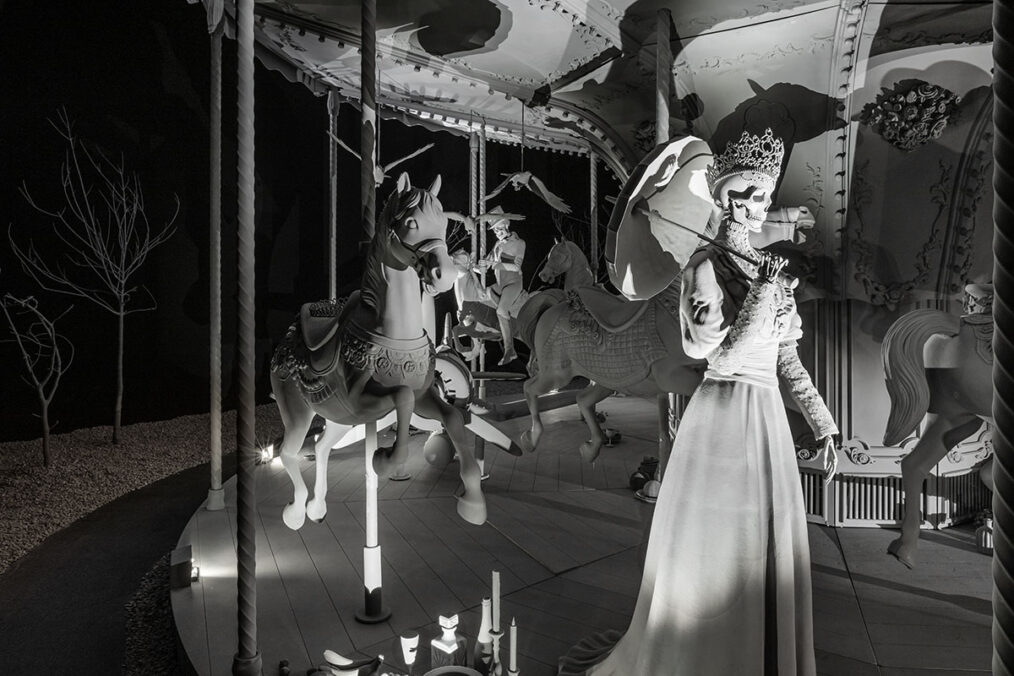
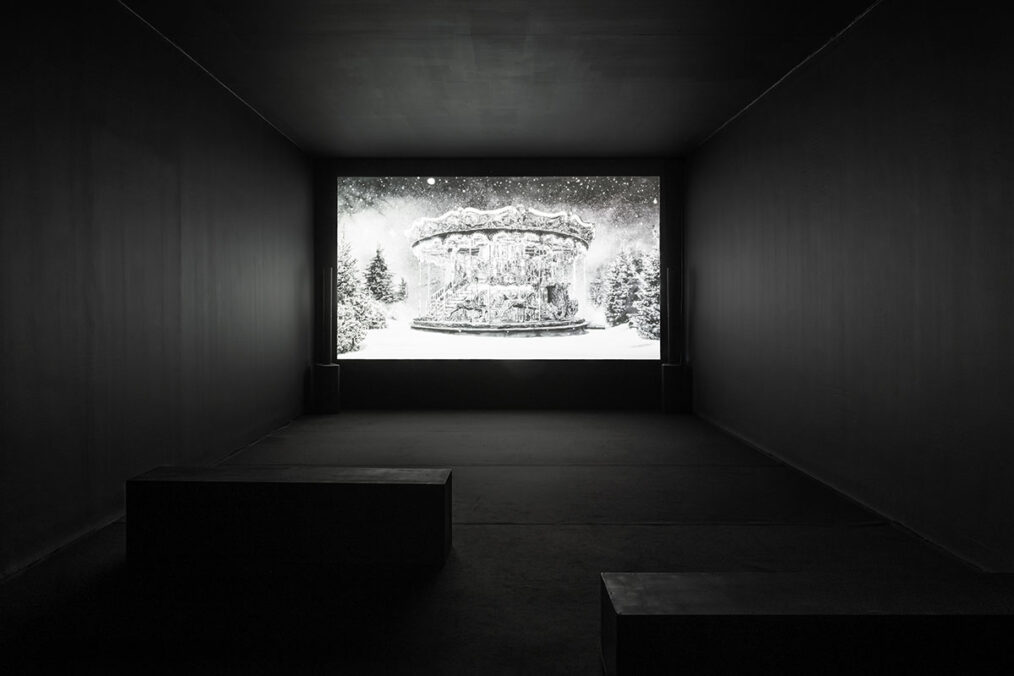
It was within this context, down the stairs of the main exhibition space, that I encountered Hans Op de Beeck’s Danse Macabre curated by Angel Moya Garcia. Internationally celebrated for his haunting monochromatic sculptures, installations and films, the Belgian artist has created a site-specific exhibition that feels uncannily at home at Tenuta dello Scompiglio. Danse Macabre unfolds as a dream suspended somewhere between theatre, sculpture and cinema. Bare trees rise from an eternal twilight. An abandoned carousel stands motionless. Figures appear frozen in silent contemplation while puddles reflect invisible light and smouldering fires suggest life lingering beneath the surface. Accompanied by the animated film Vanishing Point, the exhibition reflects upon mortality not through fear or spectacle, but through stillness. Death here is stripped of tragedy. Instead, it becomes gentle, another movement within the endless choreography of existence.
I discovered, and felt in love with all of this, thanks to the precious guidance of Angelica, a real-life angel who accompanied me throughout the estate with the generosity of someone sharing her home with me, even the office spaces! (all of them designed with a care for human and non-human nature that I rarely encountered in the Italian panorama). Rather than following a prescribed route, we wandered across vineyards, woodland and orchards, stopping occasionally to pick ripe cherries straight from the trees. Eating them under the Tuscan sun while looking across the hills towards the distant shimmer of the sea, our conversation drifted effortlessly between performance, biodiversity, vegan desserts and fireflies.
An artwork emerged unexpectedly from the forest. Small forgotten agricultural rooms became a performance space. Others hosted artists during residences. A small part of the woods hosts, every summer, a very special kids‘ summer camp. Every path revealed another layer of the estate’s identity, each one inviting not observation but participation.
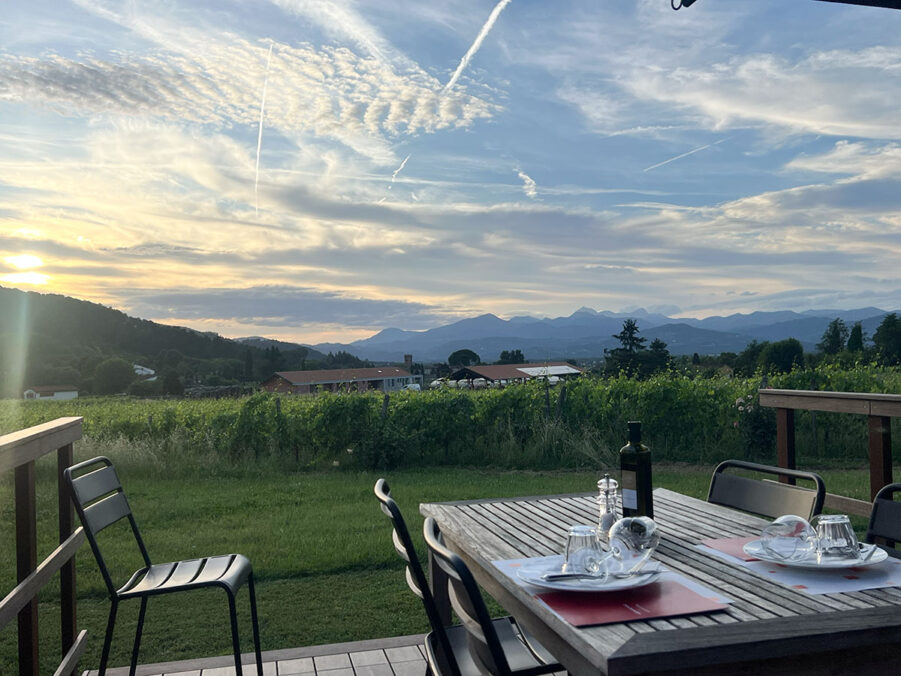
Dining alone beneath a canopy of stars became less a meal than the final act of the day. Around me, there was almost complete silence, interrupted only by the sounds of the countryside. The kitchen changes its menu daily according to the seasons and what the estate itself produces, offering a lighter, produce-driven menu at lunch and a more generous evening experience. A remarkably airy focaccia – without question among the finest I have ever eaten – was followed by perfectly roasted galletto and other delicacies, paired with elegant Lavandaia wines produced from the estate’s own vineyards.
Many places today try to combine art with gastronomy, or hospitality with culture. Here, those distinctions dissolve completely. The landscape produces the food. The food tells the story of the land. The land inspires the artists. The artists reshape the landscape through new ways of seeing. Architecture, performance, ecology, farming and cuisine become different expressions of the same philosophy.
It reminded me that death is not simply an ending but a form of generosity, a quiet surrender that allows orchards to bloom again, vineyards to mature, forests to reclaim abandoned buildings and forgotten places to become fertile once more.
Here, among these remarkably peaceful Tuscan hills, the sweetness of death reveals itself through the abundance of life, and I found a bit of peace and home away from home.
Exhibition: Hans Op de Beeck – Danse Macabre curated by Angel Moya Garcia
Exhibition duration: 11.4.2026 – 25.10.2026
Address and contact:
Tenuta Dello Scompiglio
Via di Vorno, 6755012 Vorno, Capannori (Lucca) / Italy
www.delloscompiglio.org