I’d like to start with the curatorial structure, because it’s quite a massive exhibition; more than twenty artists and not just a single curator, but a whole group. Maybe we can begin with the curators and the initial idea behind the project?
You are right, the curatorial constellation is actually rather unusual; it’s quite large. Originally, the exhibition was supposed to be curated by Jochen Becker alone, but that changed over time. GfZK Leipzig initially contacted us and asked whether we’d be interested in cooperating on an institutional level and developing the project together. Together, we successfully applied for funding. The exhibition first took place in Leipzig, and now it is coming to Dortmund.
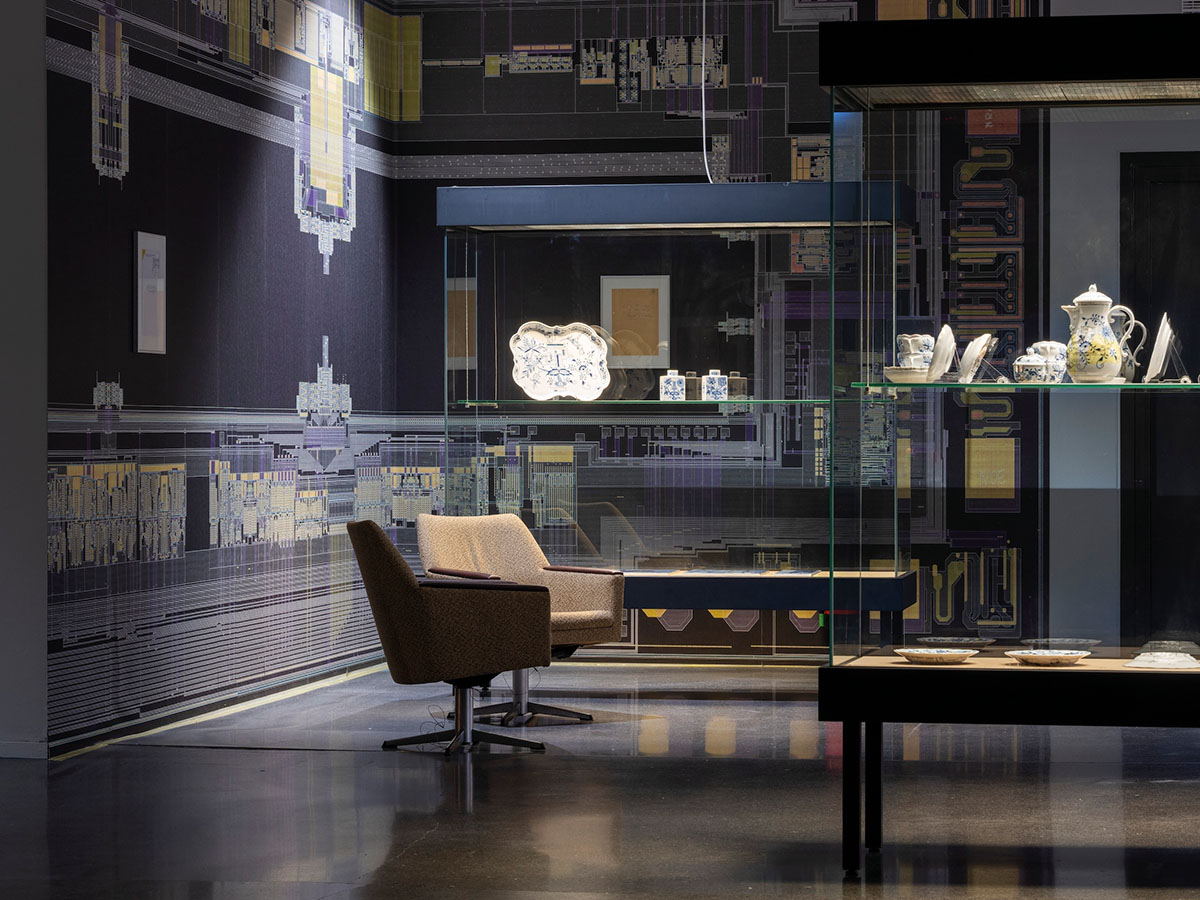
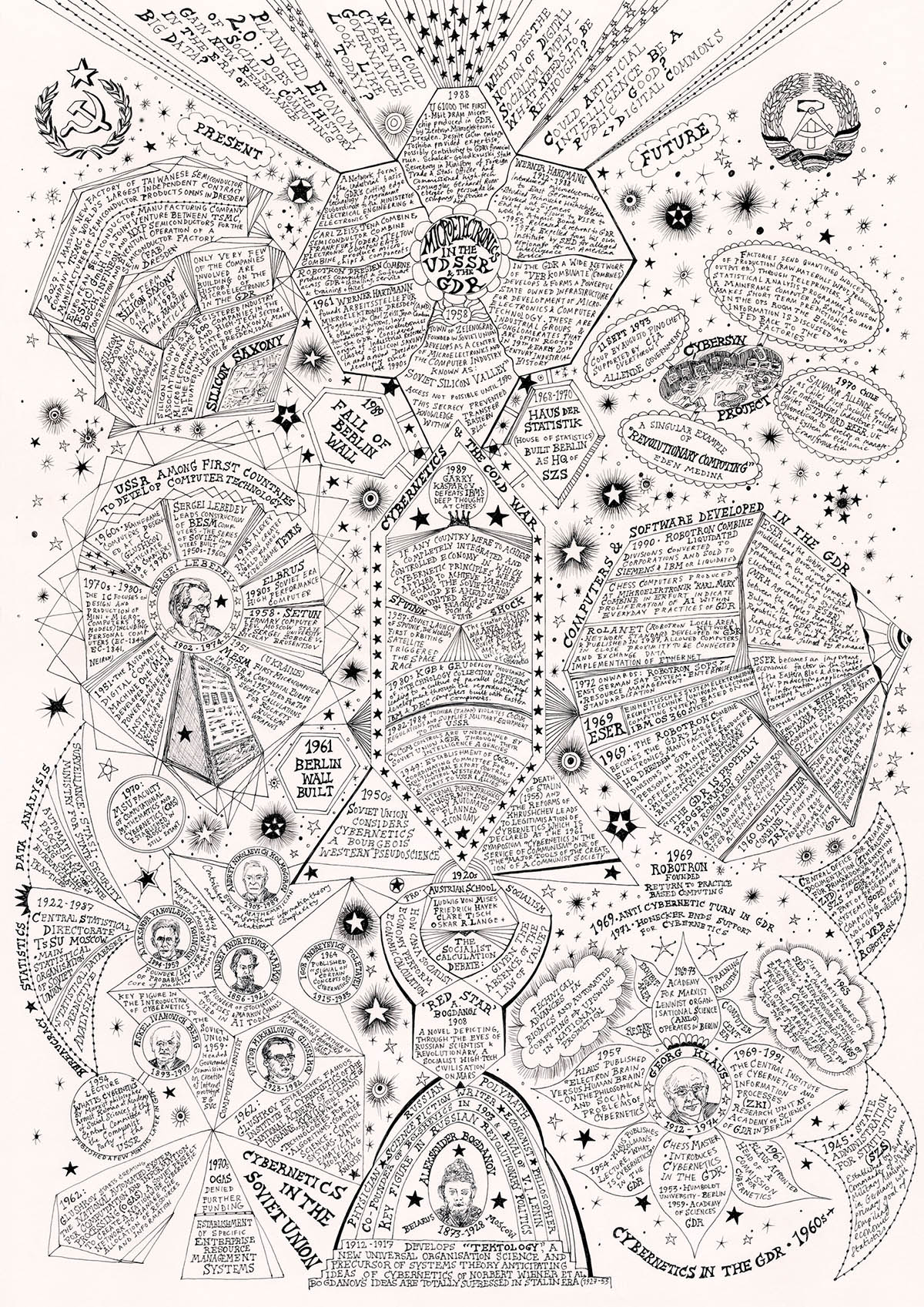
HMKV is located in western Germany, in the Ruhr, a region that used to be one of the most heavily industrialized regions in Western Europe. I thought that it could be a very interesting experiment to bring an exhibition here that deals with the industrial history of the GDR — something that is still not very well known in the West. One starting point was the brand Robotron and the fact that computers were produced in the GDR. There’s an entire field of what you might call “socialist computing,” extending way beyond the GDR – to the USSR and Chile. We have a newly commissioned work by Suzanne Treister that looks at this broader context — not just the GDR, but socialist computing as a larger historical and geopolitical phenomenon.
Was this work commissioned specifically for this exhibition?
Yes. Suzanne Treister developed this diagram especially for the show. If you read it closely, you can find the entire history of socialist computing in there. Beyond that, I am personally interested in asking whether there might be parallels between the end of heavy industry — or deindustrialization — in the GDR and in western regions – here, especially the Ruhr. Of course, the historical contexts are completely different, but perhaps the lived experiences of people were, in some ways, comparable.
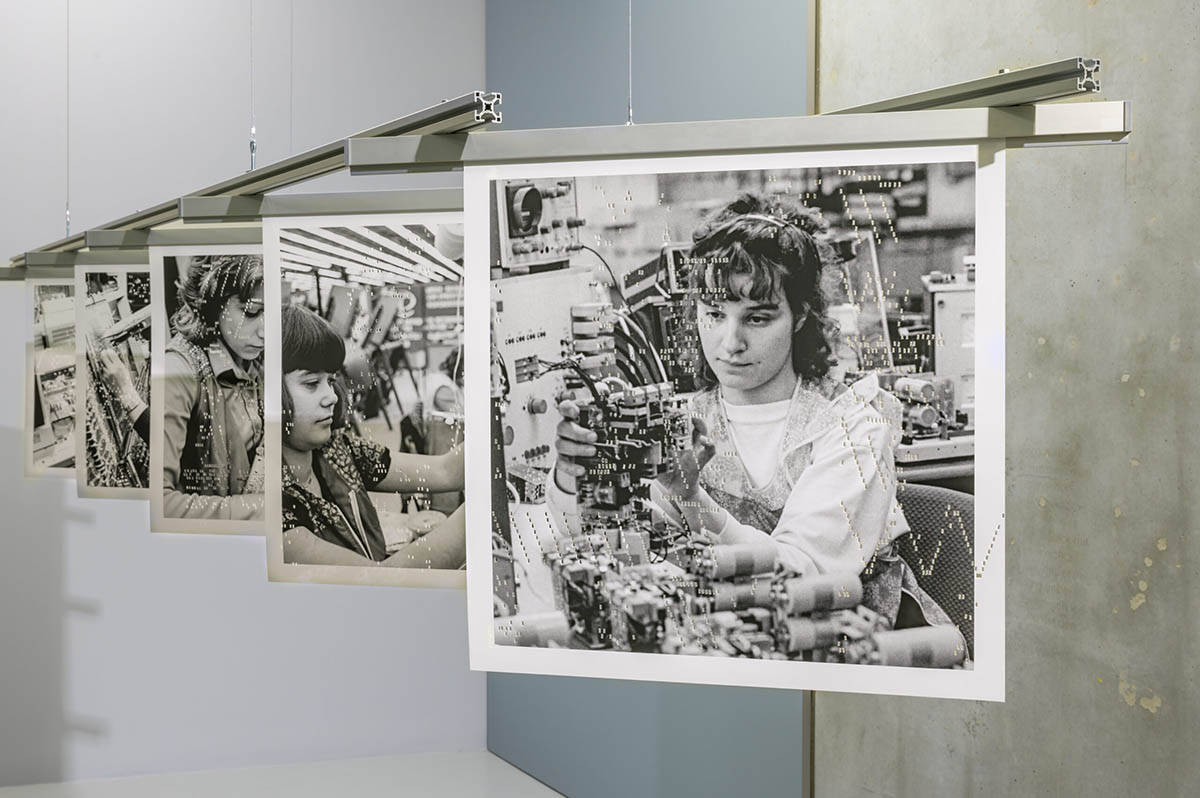
There’s one work in the exhibition that really shocked me when I first saw it — by Tina Bara, an artist from Leipzig who worked in the GDR. In those days, large state-run combines would invite artists to engage with workers — to observe them, draw them, document them. In 1988, Bara was invited to the Buna chemical plant in Schkopau as part of such a “plein air” program. “Plastics and elastics from Schkopau” – a well-known slogan in the GDR – were important materials also for the GDR’s computer industry. Tina Bara is a photographer, and she was initially supposed to take pictures of the participating artists. But when she arrived, she encountered a completely devastated industrial environment. She began documenting the ecological consequences instead. In her photographs, everything looks as if it’s covered in snow — thick white residue everywhere — and you even see small balls of mercury rolling across the ground.
Very quickly, officials realized what she was doing. They confiscated her camera, but she managed to smuggle out the negatives. For this exhibition, she transformed those photographs into a video for the first time. It’s incredibly powerful. It gives such a clear, immediate sense of what was happening. It feels absolutely real. And again, if you compare this to the Ruhr area in the West, there were ecological problems there as well — and there still are — but the focus was more on steel production and coal mining. The working conditions in the mines were extremely harsh; people essentially sacrificed their health. They were relatively well paid (in the end), but it came at a high personal cost.
More generally, how did the decision-making process unfold when it came to selecting the artists who would ultimately be part of the exhibition? Obviously, some of them were already connected to the historical context from the outset… Earlier, we spoke about artists who were directly active during the GDR period. But what about those who came later — different generations, different positions? Was there any balance?
The selection criteria were more about bringing together different generations and linking a historical topic to the present. Some artists produced work during the time of the German Democratic Republic itself, and others who were born there but didn’t really experience it consciously. Some of them engage with the legacy retrospectively.
For example, Nadja Buttendorf has a family connection to Robotron through her step-grandfather, Werner Hartmann (1912-1988), who is considered the founder of microelectronics in the GDR and headed the Molecular Electronics Research Center (AMD) in Dresden from 1961 to 1974. Independent of this exhibition, she began developing the “Robotron web-opera” series — a very contemporary, digital aesthetic that nevertheless looks back at the technological history of the GDR.
You mentioned the historical dimension of the exhibition. How do these knowledge-based works and narratives function within the show? Do they open up a broader understanding for a general audience, and how do they translate into the present?
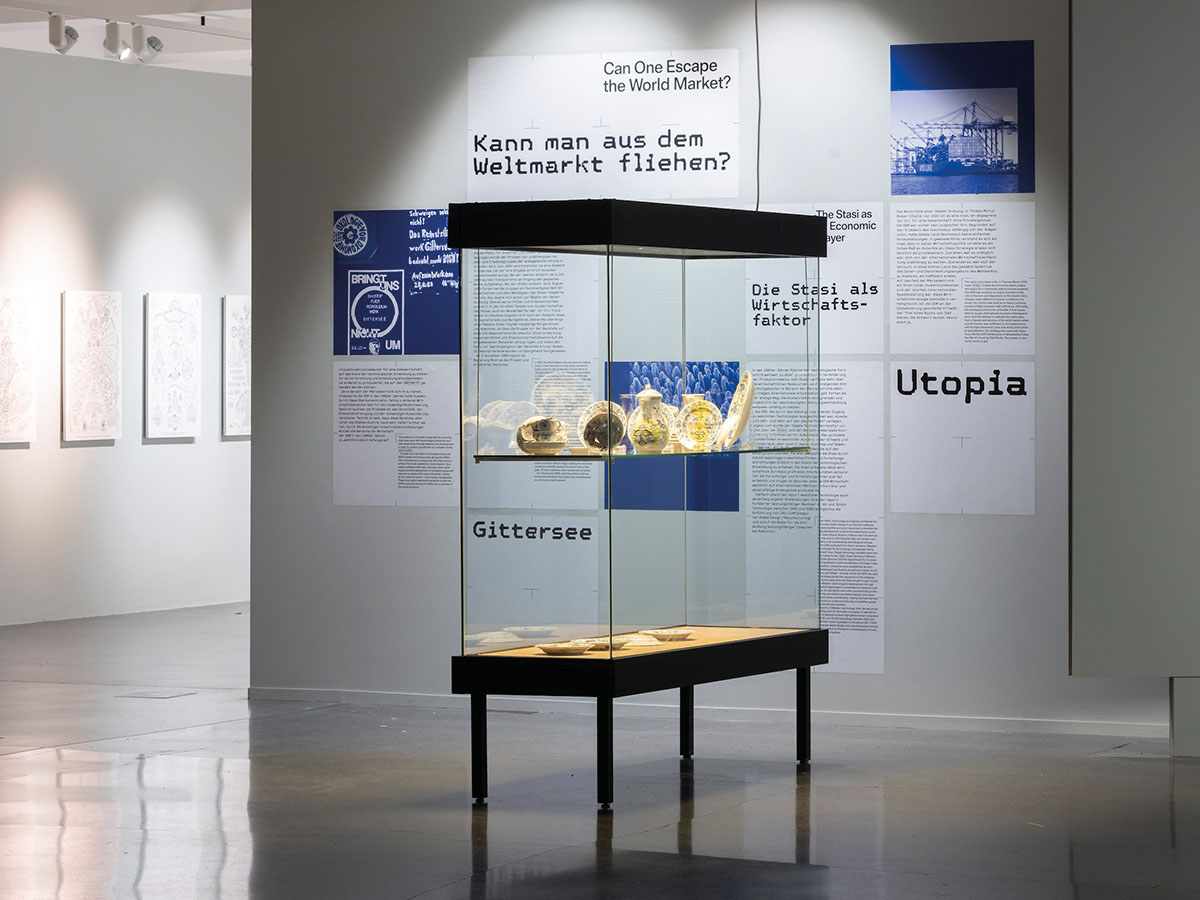
I think the exhibition has two main goals. First, it draws attention to the fact that there was a technological history in the GDR — that computers were developed and produced there. But the second goal is equally important: to show that technology can be conceived differently from how we usually understand it today.
It’s possible to imagine technological systems outside a purely capitalist framework. This is not about saying that it was better — not at all — but about recognizing that alternative models existed and that they do exist today. Technology as we know it today isn’t a natural law; it could function differently, and in some cases be oriented more toward collective or public benefit.
Of course, technology is already used for social good in many areas — healthcare, for example. But when we look at communication technologies, from early telegraph systems to today’s social media platforms, we also see how they can shape public opinion, influence behavior, and even operate as tools of propaganda. The exhibition invites visitors to reflect critically on these developments. I also read that there’s an essay integrated into the exhibition space — almost as a guiding thread. How did audiences respond to that in Leipzig? Do you think text works as a medium for engaging the general public?
We call it a “bild-text essay” because it combines text and images. It was written by Jan Wenzel, one of the editors of Spector Books in Leipzig, who is also publishing the exhibition book.
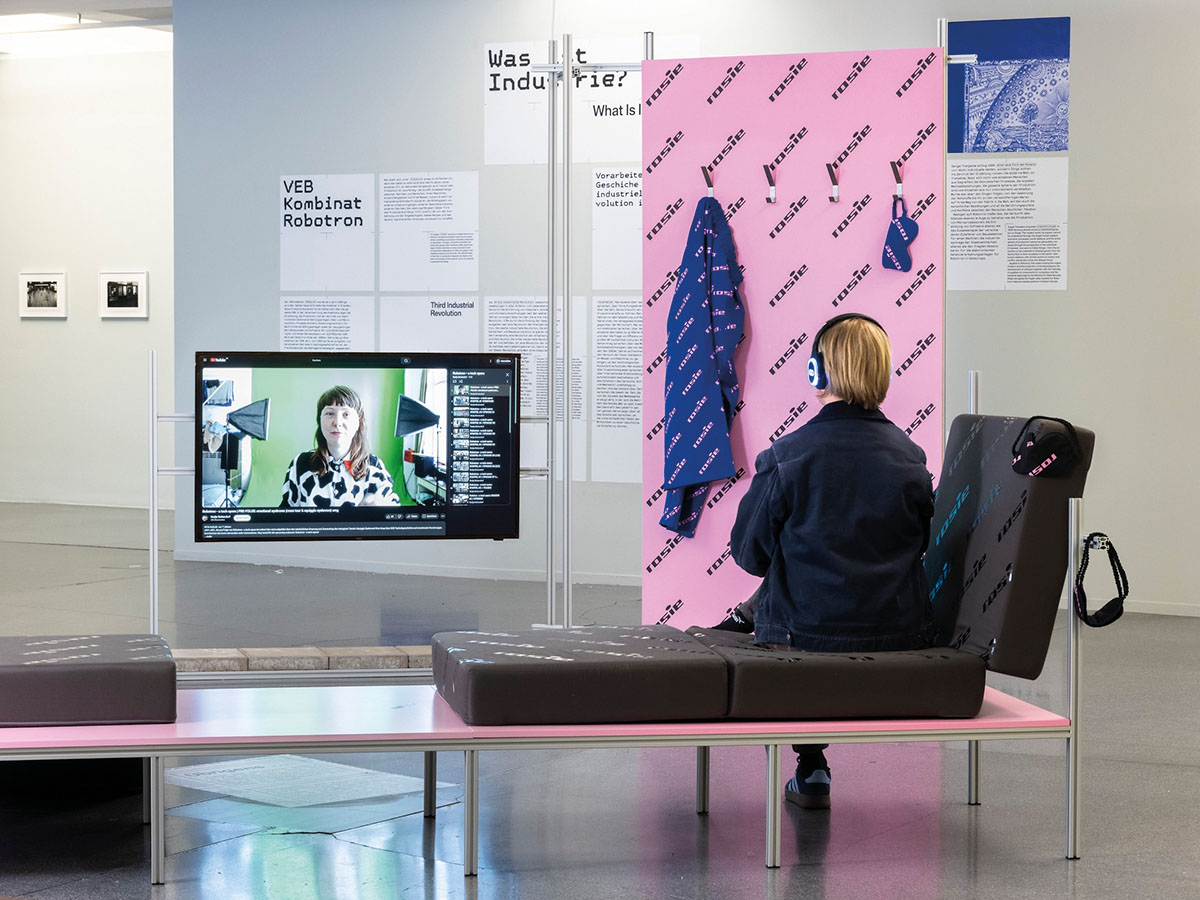
He was deeply involved in the project and has a very good knowledge of this history. The text provides contextualization — but without being didactic. It’s structured in short chapters: “What is industry?”, a section on the history of Robotron, and so on. None of the artworks can tell the full story on their own, so the essay offers a kind of glossary or lexicon. In Leipzig, it worked very well. It framed the exhibition without forcing a linear reading. Visitors could enter at any point, move from one chapter to another — it’s modular. And yes, this text also forms the backbone of the publication.
Will there be presentations around the book?
Yes. There will be a presentation in Leipzig at the end of February, and we’ve already invited Jan Wenzel to present the publication again in Dortmund toward the end of March, shortly after the exhibition opens there.
I noticed the subtitle changed between the Leipzig and Dortmund versions of the exhibition title. Why was that?
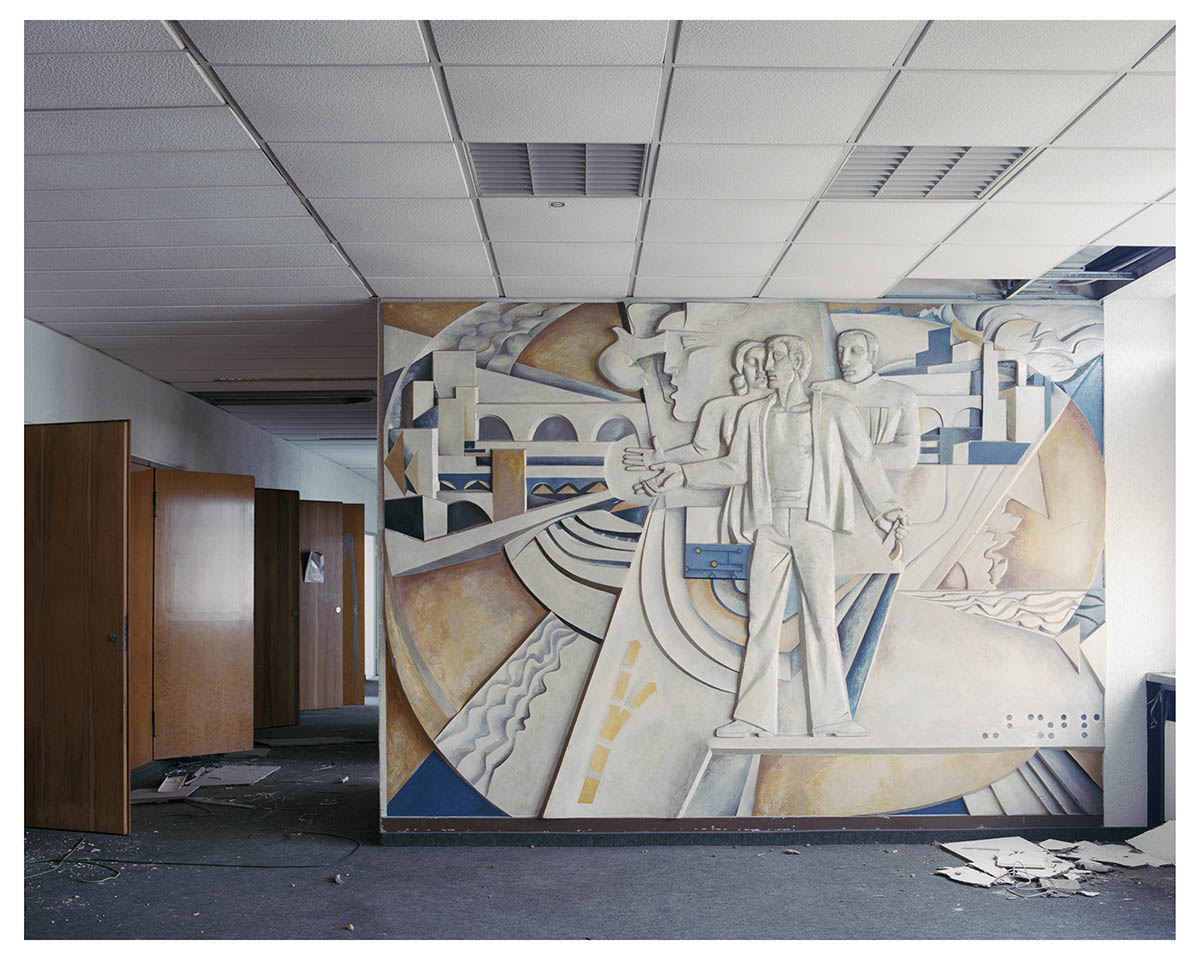
In Leipzig, the colleagues chose the subtitle “Code and Utopia.” It worked well there, but for Dortmund, I felt it wasn’t specific enough. From the beginning, I wanted a different subtitle, and I chose Working Class and Intelligentsia — a direct quotation from one of the key works in the exhibition by Werner Tübke. In the early 1970s, Tübke was commissioned by the Socialist Unity Party of Germany to create a monumental mural for the computer center at the University of Leipzig. The painting – entitled Working Class and Intelligentsia – depicts a wide range of people: academics working with computers, but also construction workers who built the facility. At its center is a Robotron 300 computer — the technological heart of the site.
The title reflects this coming together of two social groups: the working class and the intelligentsia. The original mural is almost 14 meters long. The building was later demolished, but the painting was preserved and reinstalled in a new auditorium. For the Dortmund exhibition, we’re borrowing the oil sketch for that mural from a collector in Leipzig. It’s still enormous — about five meters wide — and it has only rarely been shown. I’m incredibly happy we can present it because it anchors the exhibition historically and conceptually at the same time.
I must admit, I really enjoy telling people the title of the show here in the region — Robotron. Working Class and Intelligentsia. We’re in what’s often called the heart of social democracy, and for a long time, Dortmund was governed by Social Democrats. I love seeing people’s reactions when I mention the term “working class.” It immediately triggers associations. And in German, the word “Intelligenz” today is often linked to artificial intelligence. People assume the title refers to AI — which is understandable — but that’s not what the original historical reference meant. Still, it opens up interesting questions: where is the working class today? How do we define it now?
Exactly — that’s something we discuss a lot as well. The traditional class structures that shaped society decades ago don’t seem to function in the same way anymore. It’s often unclear who holds power, who accumulates wealth, and why. There’s this sense that inequality is growing, but not always in ways that are easy to trace. For us, that’s also why the title resonates — it invites a broader reflection on value, knowledge, and experience today. But coming back to the exhibition — since artificial intelligence came up: are there specific works in the show that directly engage with AI or its prehistory?
One key artist in the exhibition is Francis Hunger. A few years ago, I co-curated a major exhibition on artificial intelligence with him and Marie Lechner (House of Mirrors, 2022). His work often deals with the prehistory of AI — statistical thinking, computation, and early forms of data logic. In this exhibition, his piece is titled Statistical Hypnagogia. Hypnagogia refers to the mental state just before falling asleep, when images and associations start to drift. The work engages with statistics in the GDR — particularly around planned economies and five-year plans, where statistical data played a central role.
The video uses language drawn from bureaucratic and statistical systems. Words are repeated, distorted, layered. The result is almost hypnotic — you enter a mental state shaped by numbers, structures, and administrative logic. It also raises speculative questions: if advanced AI tools had existed within a planned economy, would outcomes have been different?
We can’t know, of course, but the thought experiment is fascinating. It feels like there’s also a speculative dimension in the exhibition more broadly — not just historical reconstruction.
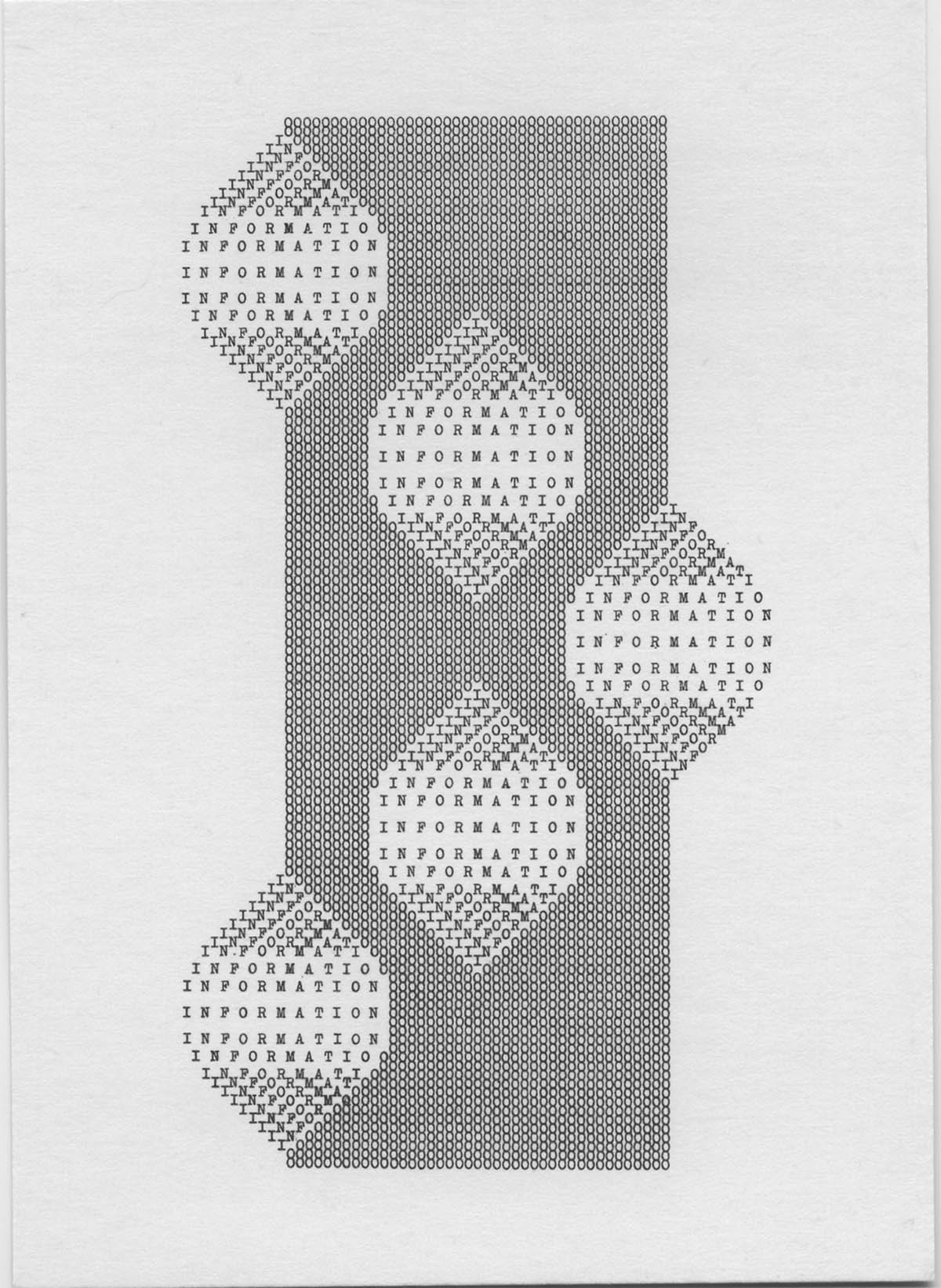
Yes, definitely. Take Ruth Wolf-Rehfeldt, for example. In the GDR, she worked with typewriter drawings and mail art, communicating across international networks. It was a form of artistic exchange that operated almost like an analogue precursor to digital communication — decentralized, coded, and distributed.
Many works in the exhibition are abstract or non-figurative. These kinds of aesthetics were not officially encouraged in the GDR, where figurative art was often preferred by the state. Abstraction could exist, especially in applied arts — for example, in architectural ornamentation or modular design — but it occupied a more ambiguous position. That tension is embodied by works like the monumental painting by Werner Tübke. His depiction of a computer center has a kind of Renaissance or even religious aura: a meticulously rendered machine bathed in light, surrounded by idealized human figures. It feels almost sacred — technology as a promise of collective progress. And then, in contrast, you have extremely minimal works — code-like, machine-oriented, stripped of emotion. That friction between expressive figuration and technical abstraction runs throughout the exhibition.
That contrast is striking, from almost spiritual depictions of technology to very system-based works. I’m also curious about your broader perspective: beyond this specific exhibition, what feels urgent in contemporary art right now? And how does this show connect to those larger concerns?
For me, the urgency lies in understanding how technology shapes society — and how society, in turn, shapes technology. Who controls it? Who benefits from it? And how can it be appropriated or reimagined for other purposes?
These questions run through many exhibitions we’ve done at HMKV. The AI exhibition a few years ago already explored them, but here they’re connected to a historical perspective — to the technological ambitions of the GDR and the cultural conditions surrounding them. I’m particularly interested in what happens when this exhibition is shown in Dortmund. It’s not only about transferring knowledge about Robotron or socialist computing. It’s also about helping audiences understand why abstract art, for example, could be politically sensitive in certain contexts — and why these histories still matter.
Personally, I’ve worked with the cultural history of the GDR and Eastern Europe for a long time, so these topics feel familiar to me. But when I first began working in western Germany more than twenty years ago, I was struck by how little interest there was in anything related to the East — how distant it felt culturally, despite reunification. That’s another reason this exhibition matters: it reconnects histories that are still often treated as separate, and it shows how deeply questions of technology, labor, and culture are intertwined — then and now.
You know, for many people in Eastern Europe, 1989 and the years after were an enormous rupture. A complete transformation of everyday life. When I look at my own family in western Germany, north of the Ruhr area, almost nothing has changed. They didn’t have to reinvent themselves. They didn’t wake up in a completely new political and economic system. So perhaps this exhibition can create a moment of reflection — where people realize that what they consider “normal” is historically specific. That stability isn’t universal. And that democratic systems, social structures, and cultural frameworks require active engagement. They’re not simply given.
Let’s close with a broader perspective. Since this is the first time we’re speaking with you in this format, could you introduce the HMKV Hartware MedienKunstVerein and its general vision?
Of course. This year, at the end of the Robotron exhibition, we’ll celebrate the 30th anniversary of HMKV. We jokingly call it the “Dirty Thirty.” Our program mainly consists of large-scale international thematic group exhibitions. The institution originally emerged from the field of what was called “media art.” For me, that term is very much rooted in the late 1980s and 1990s — it can sound a bit dated today. But there is still a distinct artistic scene that critically engages with digital technologies, looking beneath their surfaces rather than simply adopting them. And that field hasn’t fully dissolved into what we call visual art.
Our exhibitions usually combine a wide range of media: digital works, video, installation, sculpture, sometimes painting — often very unusual formats placed in dialogue with one another. For example, in 2007, I curated a major exhibition on reenactment as an artistic strategy, titled History Will Repeat Itself, co-produced with KW Institute for Contemporary Art. The show traveled from Dortmund to Berlin, then to Warsaw, Hong Kong, and beyond. Many of our projects have this international trajectory.
We also tend to work on topics before they become widely discussed. We’ve done large exhibitions on artificial intelligence, on reenactment, and in 2019, I curated The Alt-Right Complex, which examined digital extremism and online radicalization before the topic became central in mainstream discourse. Sometimes that position — being slightly ahead – can feel strange. You invest years researching a subject, and only later does it become widely recognized. But I think this is connected to how much we trust artists.
For me, artists function like early warning systems. They sense shifts, tensions, and emerging problems long before they become visible in politics or the media. At first their work can seem abstract, even strange — and then suddenly it becomes clear how accurate it was. I remember, for instance, an exhibition we organized around 2010 about the geopolitics of the Arctic, together with the Slovenian media artist Marko Peljhan. At the time, it felt like a niche subject. Today, it’s central to global political debates. Looking back, it’s almost uncanny.
That’s why I believe institutions like ours are important: they create space for artistic research, speculation, and critical reflection — not just reacting to the present but anticipating what might shape the future.
Exhibition: Robotron. Working Class and Intelligentsia
Curated by: Inke Arns, Sabine Weier, Jan Wenzel, Mathias Wittmann, Franciska Zólyom, Initiated by Jochen Becker
Artist: Karl-Heinz Adler, Tina Bara, Horst Bartnig, Nadja Buttendorf, Carlfriedrich Claus, Karl, Clauss Dietel, Georg Eckelt, Antye Guenther, Margret Hoppe, Francis Hunger, knowbotiq , Irma Markulin, Helga Paris, A. R. Penck, Ramona Schacht, Luca Bublik & Rita Große, Sandra Schäfer, Su Yu Hsin, Suzanne Treister, Werner Tübke, Marion Wenzel, Ruth Wolf-Rehfeldt
Duration of the exhibition: 14 March – 26 July 2026
Opening: 13 March 2026. 19-22h
Address and contact:
HMKV Hartware MedienKunstVerein
at the Dortmunder U, Level 3
Leonie-Reygers-Terrasse
44137 Dortmund, Germany
www.hmkv.de
Inke Arns, PhD, curator, since 2005 Artistic Director, and since 2017 Director of HMKV Hartware MedienKunstVerein in Dortmund, Germany. She has worked internationally as an independent curator, writer, and theorist specializing in media art, net cultures, and Eastern Europe since 1993.