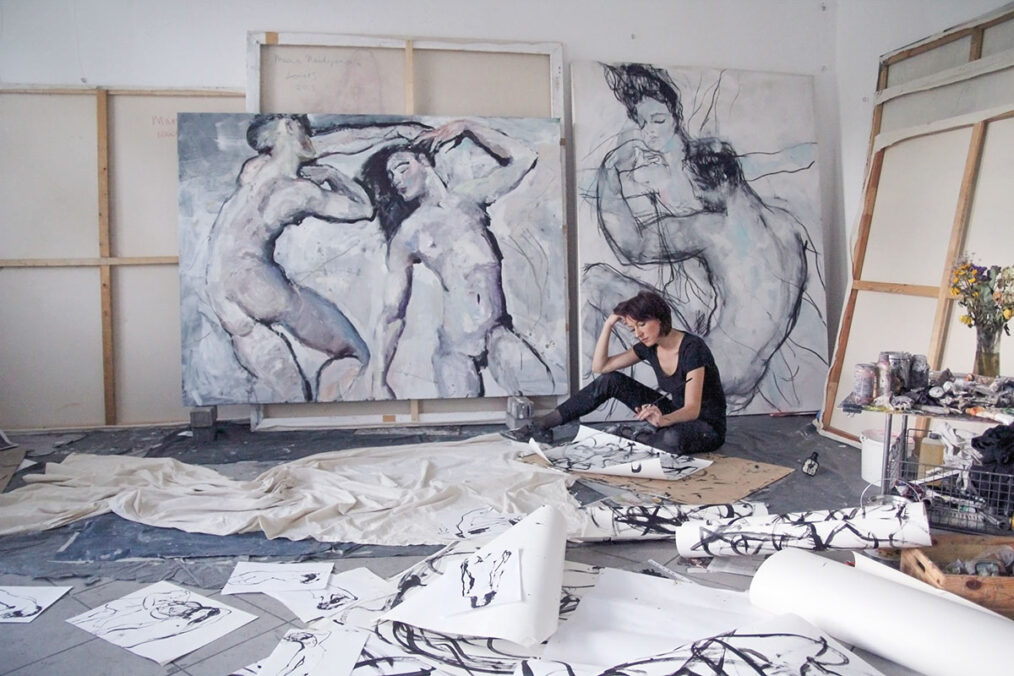
Maria Naidyonova is a Ukrainian-born, Berlin-based artist working in drawing, painting, and animation. Her style merges classical drawing techniques with contemporary aesthetics. Her main themes include human relationships, depictions of women, and urban senses.
How have your works evolved? Does drawing still play the same role for you as it did before?
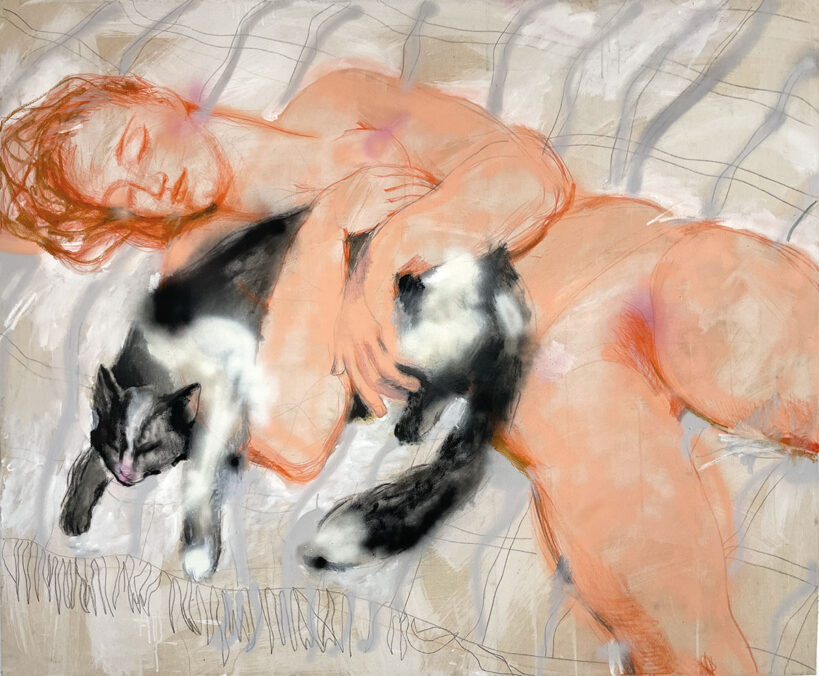
Drawing plays a fundamental role in my practice. At certain times, I have moved away from it in favour of colour, but recently the line has come to dominate once again. I may leave it in its pure form or enrich it with painterly accents, but it remains the basis of my work.
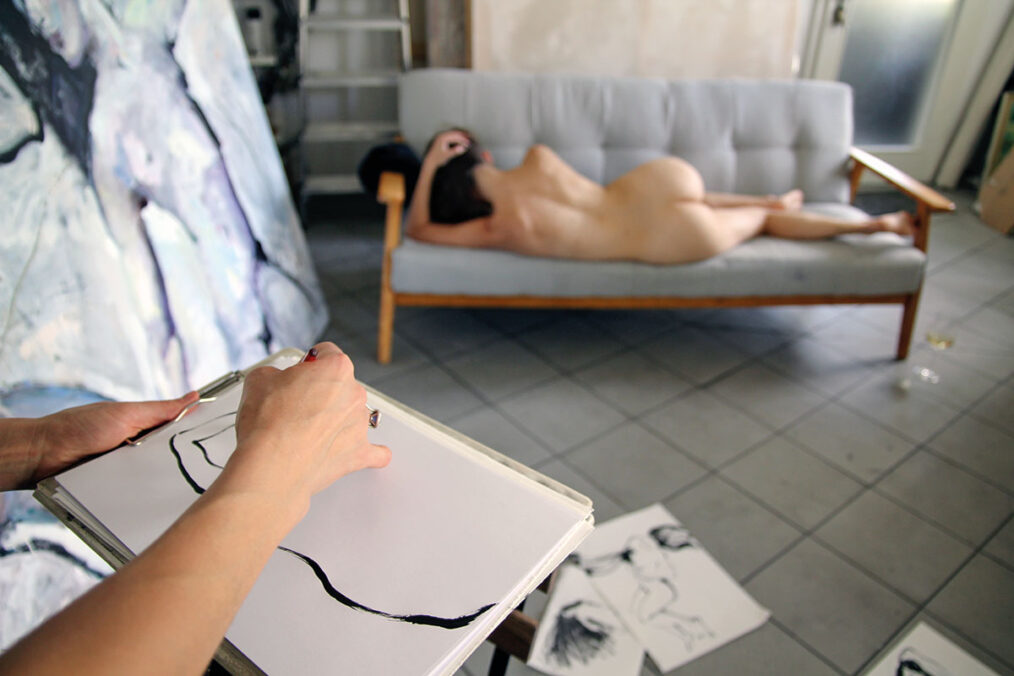
How does your work change through the presence of a model in the studio? How do you begin your pieces?
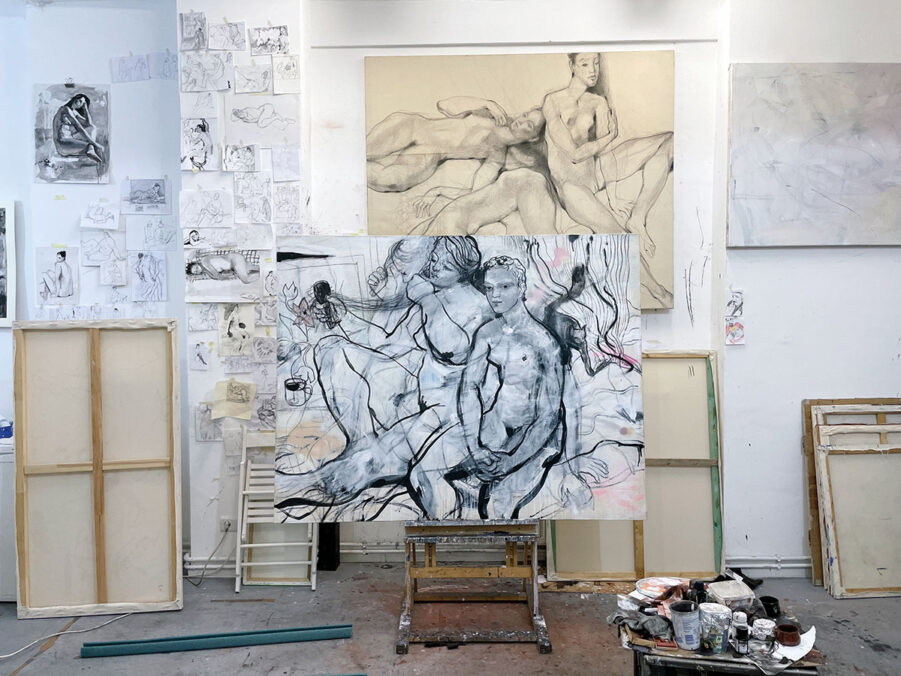
When a model is present in the studio, the work begins with conversation, a cup of coffee, or a glass of wine. The models are usually my friends. The posing process is completely relaxed; it is more about observing a person’s natural behaviour in a familiar setting. I collect impressions and work on the canvases later, improvising from the sketches.
You describe your work as constantly evolving. What fascinates you at the moment?
My recent trip to Rome made me rediscover the strong contrast between the “eternal city” and ultra-contemporary Berlin. At the moment, I’m particularly interested in how to work with this tension, between solid, stable forms and their abstraction, dissolution, and a certain openness within my practice.
Are there questions you find yourself returning to again and again?
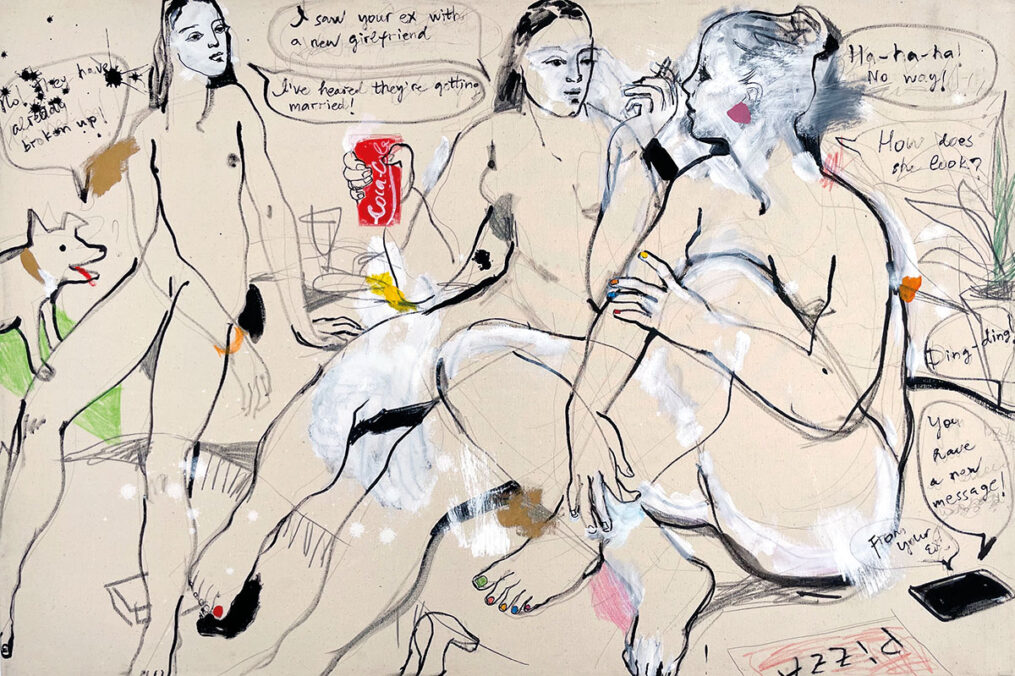
Yes, I often return to the image of the female figure. Sometimes it embodies inner strength and peace, and at other times changeability and elusiveness. I am constantly seeking new interpretations of this image.
What role do titles play in your process?
A significant one. Sometimes they emphasise the meaning of a painting, specifying, for example, the setting – “Lunchtime in Neukölln” – or expressing a particular state of mind – “Oblivion”. Even if I don’t have a specific title in mind, I try not to leave works “Untitled”; instead, I give them symbolic names that refer to the time they were created, such as “Thursday”, or link them to a particular series, such as “Berliners”.
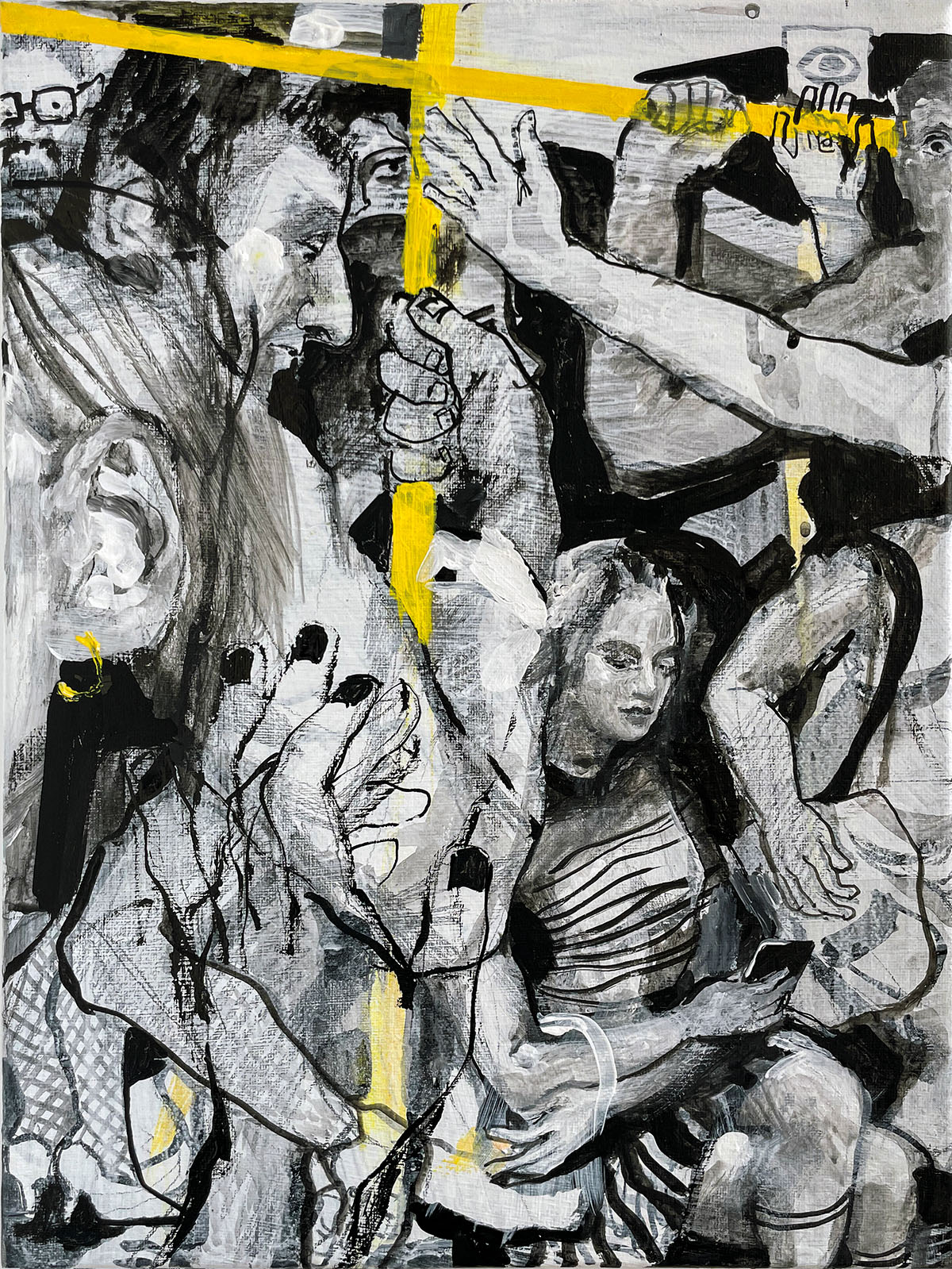
Can you tell me more about the series “Berliners”? Where do your motifs come from?
My motifs come directly from the streets. I find the diversity of this metropolis, its vibrant mix of cultures and personalities, particularly fascinating. Often, I encounter interesting scenes on my way to the gym or to the studio, or find myself observing passengers during a long metro ride. The city is full of inspiration; you just have to be attentive enough to catch it.
What do you still associate with Berlin? Do you feel at home there?
I moved here quite a long time ago to study at Weissensee, and since then, Berlin has become a second home to me. Here I have lived through different experiences and grown both as an artist and as a person. Now the city is an integral part of my story. For me, it is associated with freedom, hope, new opportunities, and the work I love.
How do you spend your time there?
My day is largely dictated by my daily work routine. When I first moved here, I visited many of the popular nightlife spots. But once my curiosity was satisfied, I lost interest in them. I would say that my way of “resetting” is travelling, leaving the city for a while.
What projects are you currently working on?
I am continuing to develop my series of drawings on paper, “Never-Ending Stories”, as well as work on large-format canvases from the “Lovers” series for my upcoming exhibition.
Maria Naidyonova – www.marianaidyonova.com, www.instagram.com/marianaidyonova/
Maria Naidyonova holds a bachelor’s degree in Book Graphics from the Kyiv Polytechnic Institute, a specialist degree in Painting from the Kyiv National Academy of Fine Arts and Architecture, and a master’s degree in Fine Art and Painting from the Weissensee Academy of Art in Berlin. Naidyonova’s work has been recognised through awards and shown at art fairs, exhibitions, and festivals across Germany, France, Greece, Austria, Italy, Ukraine, and the United States.