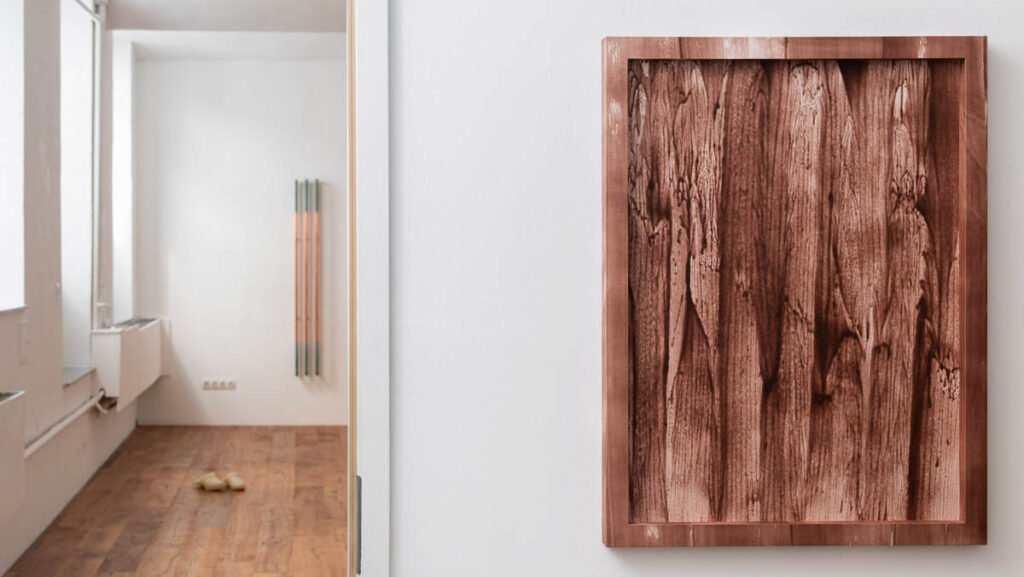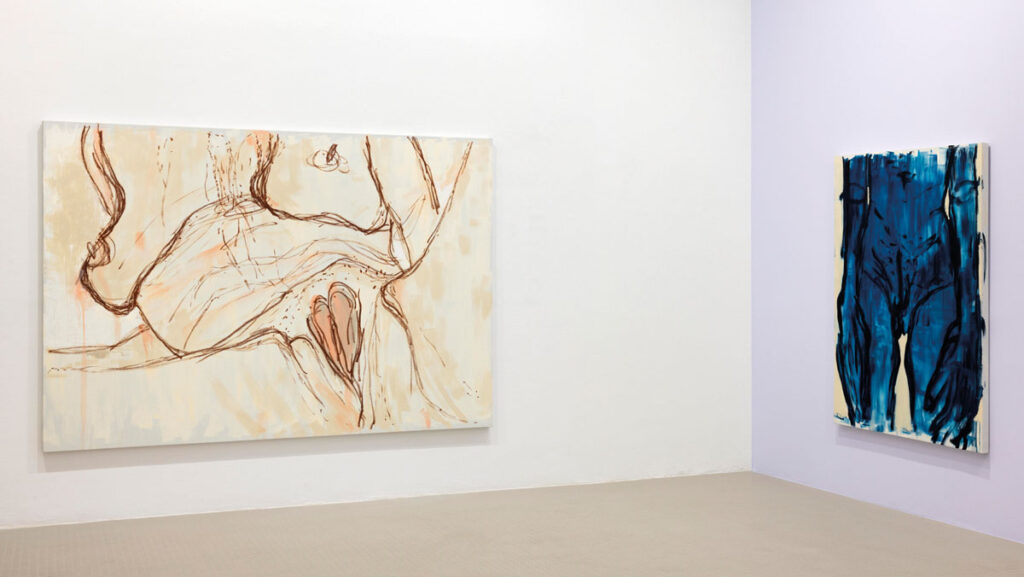
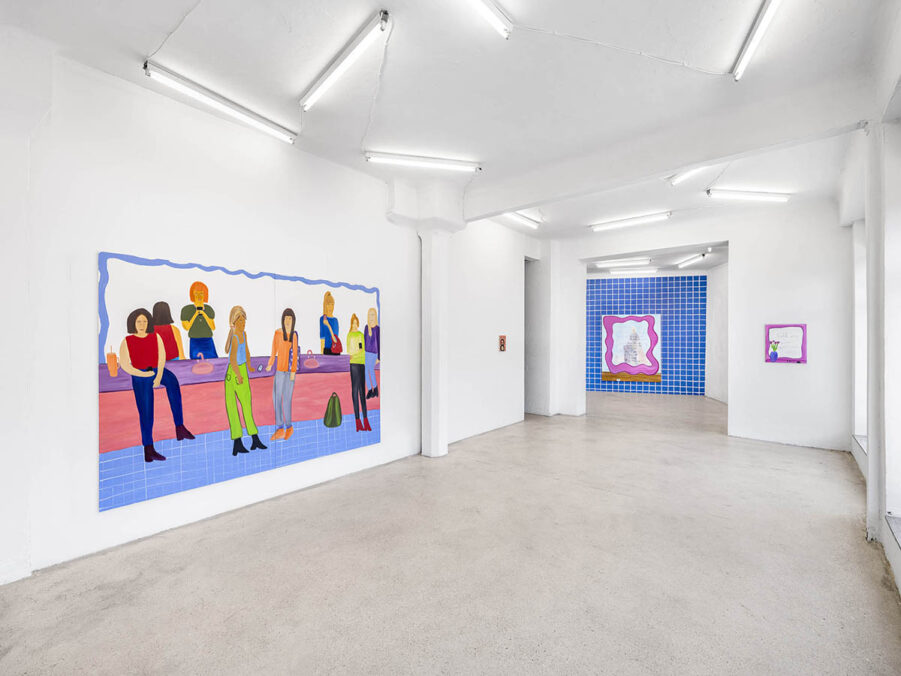
At times, they find themselves gazing not at their own faces but into those of a fluffy four-legged companion. Amid tiles, shower curtains, and face masks, the artist’s colorful and playful visual worlds unfold. Beneath their pop-infused surface, however, they encourage a deeper engagement with questions of identity, while drawing on contemporary trends of optimization and self-care culture.
The exhibition considers identity as an ongoing process, examining the traces we leave on surfaces, our bodies and spaces. Taking its cue from the concept of the “makeover”, which is deeply rooted in popular culture – particularly in films from the early 2000s such as The Princess Diaries, Clueless, and Mean Girls – the exhibition explores how visible transformation is often seen as a prerequisite for social recognition.
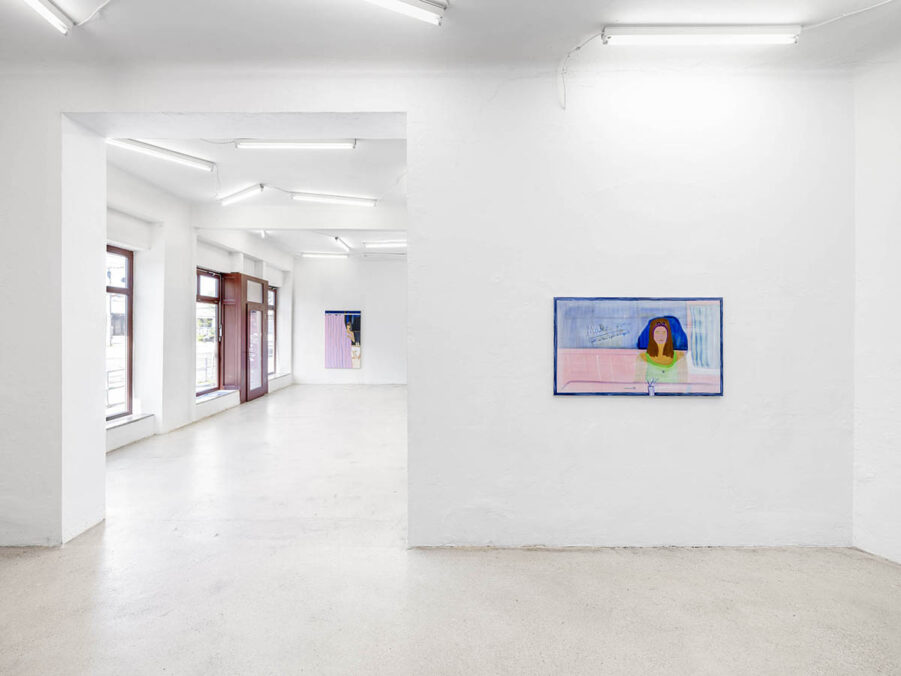
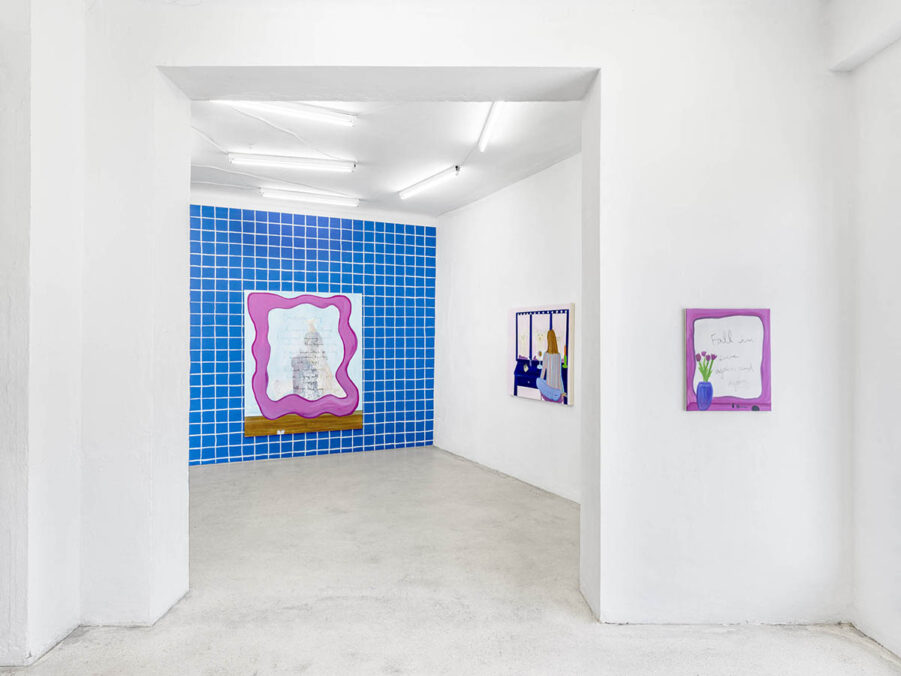
These cinematic narratives assert a clear division between a “before” and an “after,” linking outward change to empowerment, belonging, and visibility. Similar mechanisms can be observed today on social media, where makeover videos, makeup routines, and before-and-after formats – often labeled as “glow-ups” – circulate daily, perpetuating the girly aesthetics of the 2000s. Schulz is less concerned with moral critique than with the structural logic underlying these phenomena: the cultural expectation to continually reinvent oneself in order to remain connected. The makeover thus stands for self-optimization, performativity, and the constant revision of the self. It promises a fresh start, even as identity remains an ongoing process of negotiation.
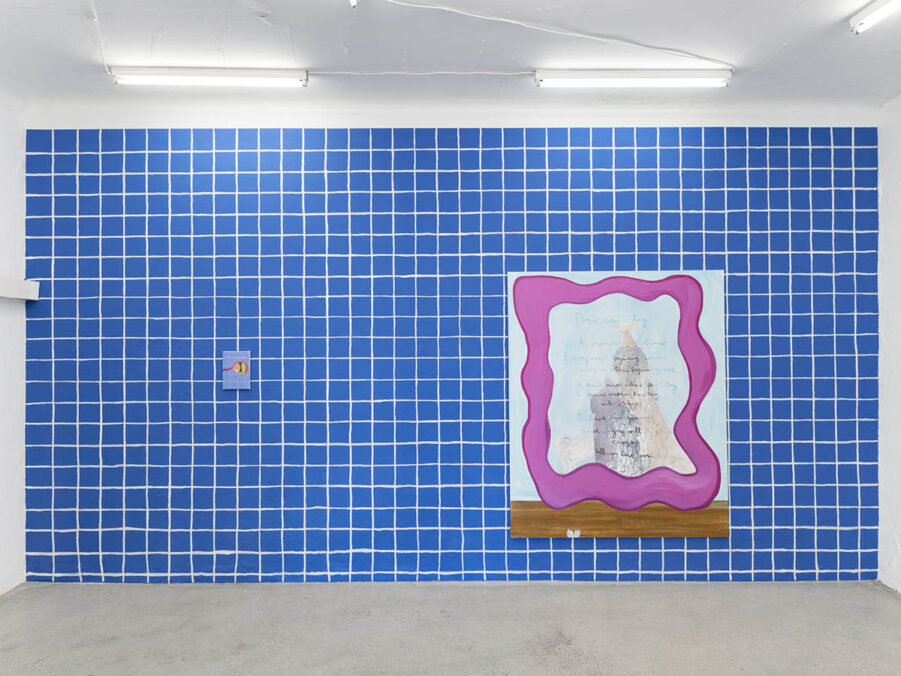
This ambivalence between departure and repetition also runs through Schulz’s painterly practice. Her works emerge through overpainting, correction, and layering. Earlier states do not fully disappear; rather, they remain inscribed within the image as traces. In this way, the supposed new beginning itself becomes a process of revision, rendering past and present simultaneously visible. While the paintings themselves are not bound to a singular temporality, certain elements point to the coexistence of different times: a flip phone or song lyrics by Shania Twain evoke millennial codes, while iPhones or the Stanley Cup anchor the works in the present.
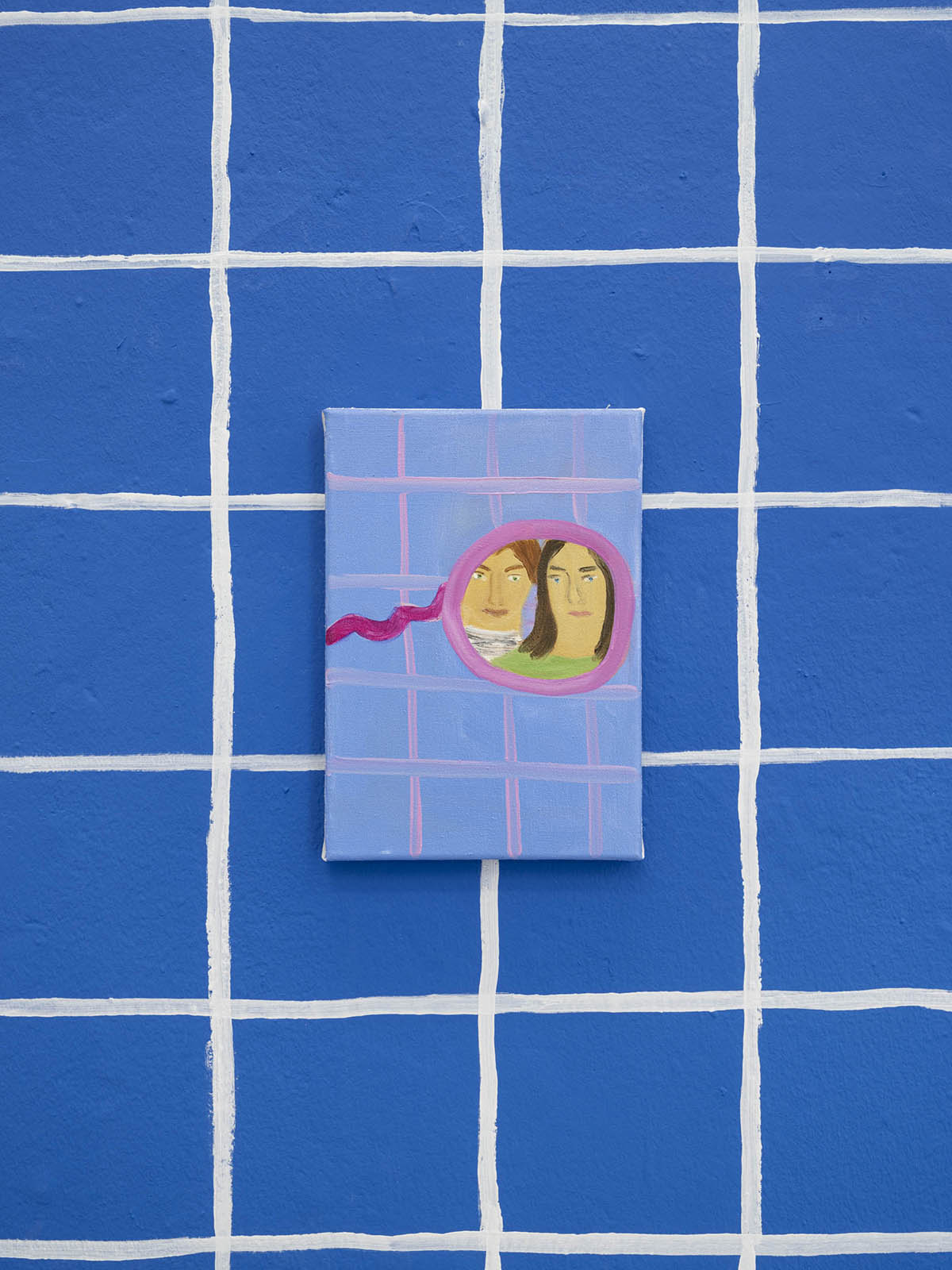
The protagonists in Schulz’s works find themselves on the threshold of the unknown. They appear contemplative and melancholic – much like the artist herself – yet remain capable of embracing this in-between state. Makeover (fall in love again and again) thus also reveals a romantic dimension, echoed in Everything Is Romantic by Charli XCX and referenced within the exhibition. Ultimately, Makeover redefines identity as an ongoing process rather than a fixed state, while also marking a new phase in Josefine Schulz’s painting. This new phase remains inseparably connected to her previous work.
Exhibition: Josefine Schulz – Makeover (fall in love again and again)
Exhibition duration: 24.04.— 09.05.2026
Venue: Kunstraum Ortloff, Jahnallee 73, 04177 Leipzig, Germany
Josefine Schulz – www.josefineschulz.com, www.instagram.com/josefine_schulz/