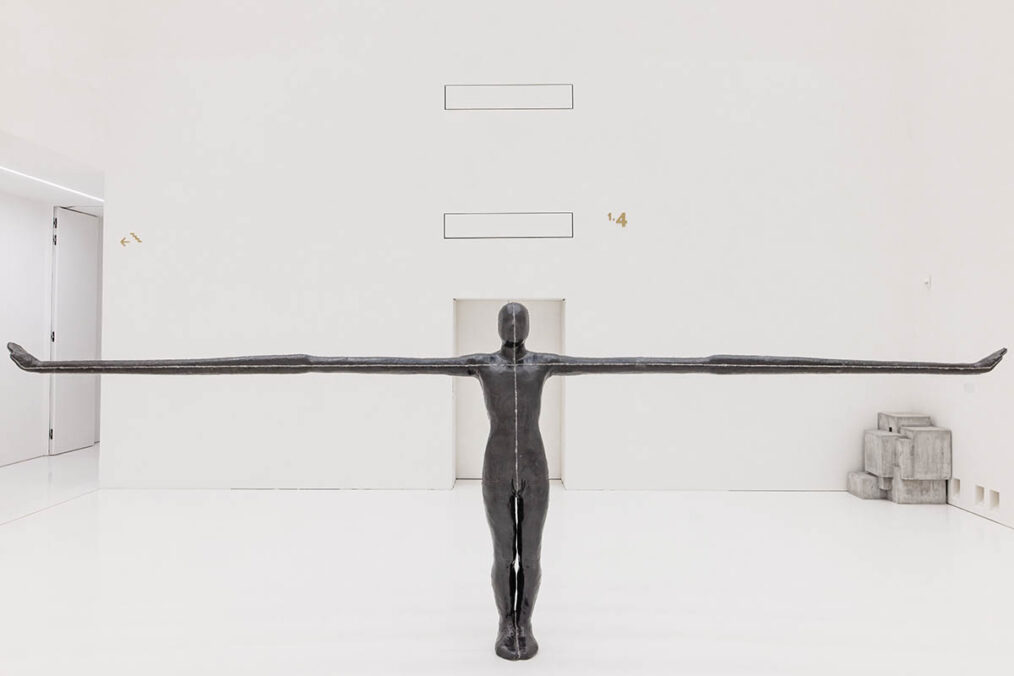
The exhibition charts Gormley’s ongoing evolution in materials and techniques, from traditional methods, such as casting, to experimental practices using digital scans to explore the body, compressing and extending its boundaries and core.
For over fifty years, Antony Gormley (born 1950) has been captivating British and international audiences alike with his sculptures, installations, and drawings. In addition to exhibitions at venues such as the Royal Academy of Arts in London, the Uffizi Galleries in Florence, and the Philadelphia Museum of Art, the British artist is also celebrated for his impactful works in public spaces, such as the monumental Angel of the North (1998) in Gateshead (northern England) and Exposure (2010) in Lelystad, the Netherlands. At the heart of his acclaimed oeuvre is the human being. Using both minimal and powerful forms and materials ranging from wood to lead, Gormley explores how the body relates to nature and space.
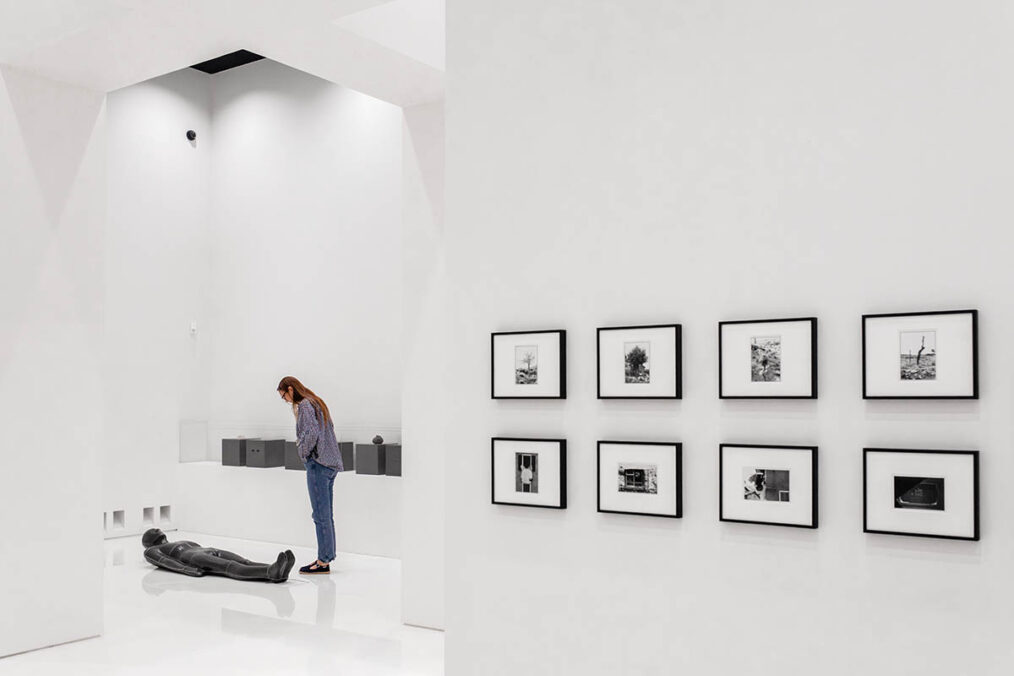
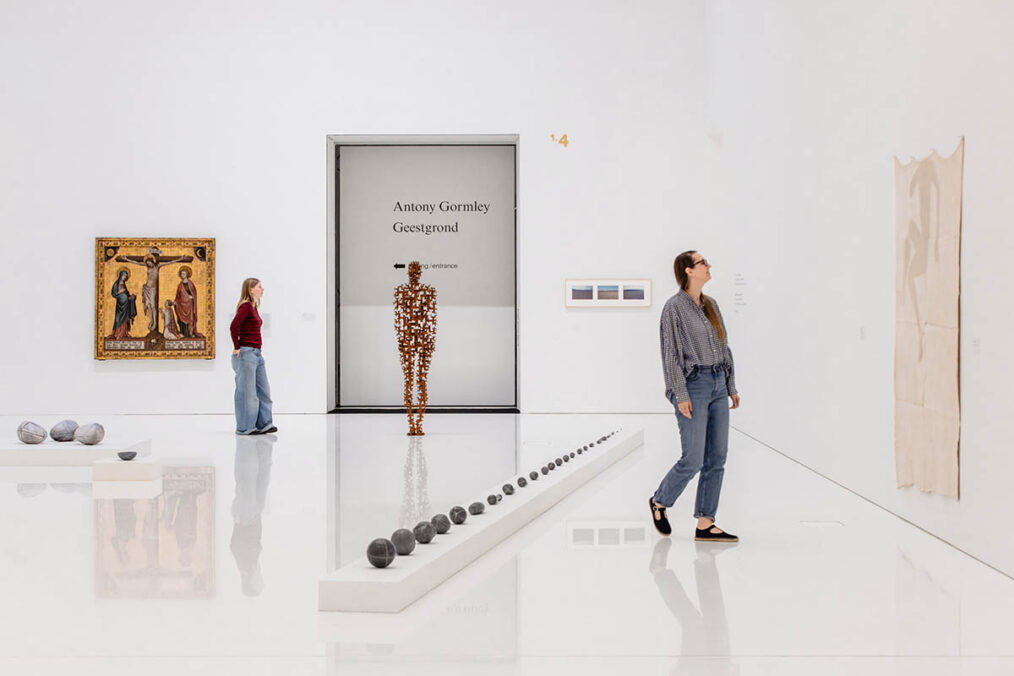
The body as a field of knowledge
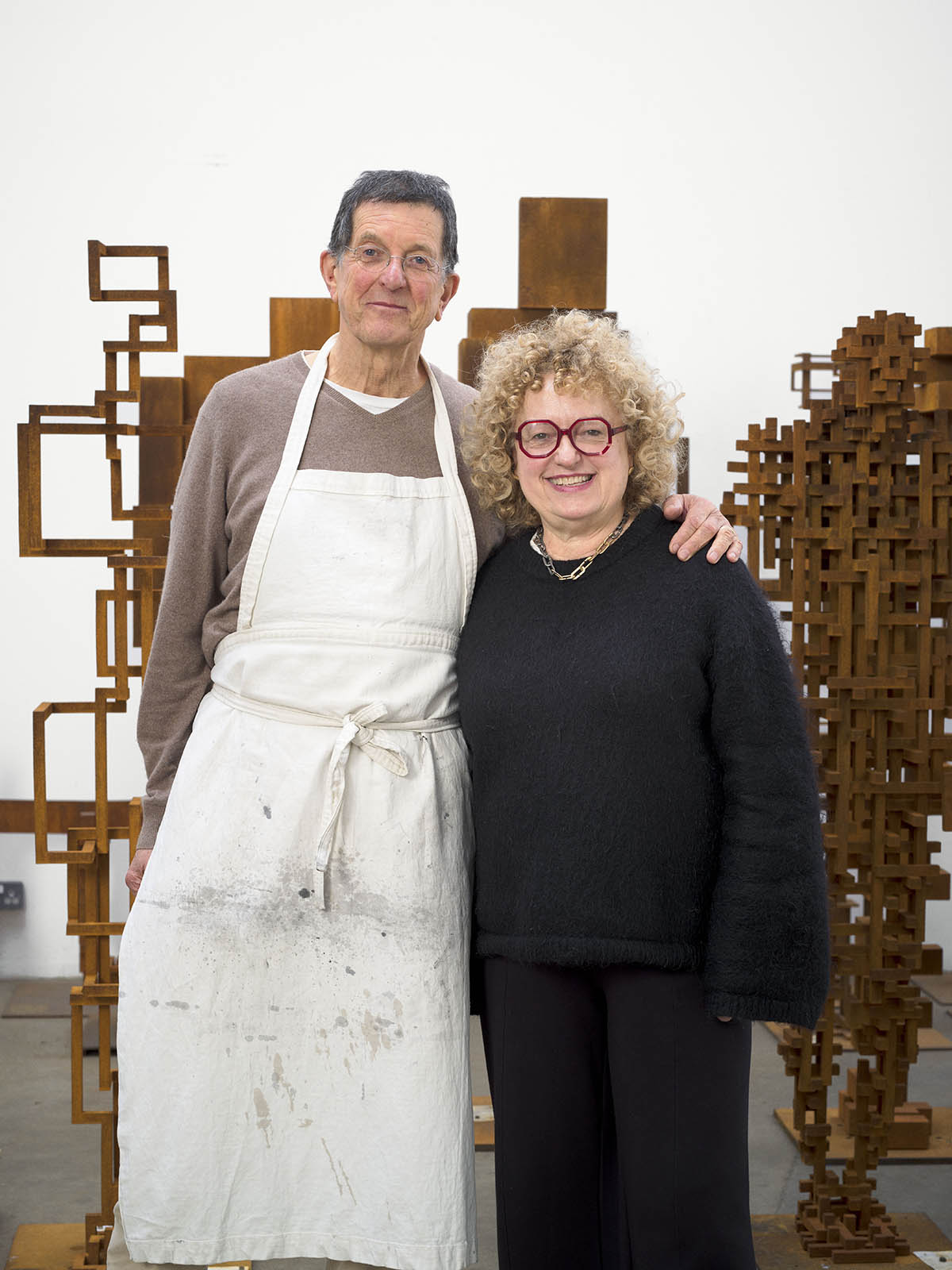
The exhibition reveals Gormley’s sustained contribution to both sculpture and our understanding of human presence in the world. His body of work expresses the ways in which knowledge is rooted in the body’s presence in specific places, revealing an ethical sense of relation with others and a symbiosis with the more-than-human world we inhabit. Gormley first showed his work in an international context at the Milan Triennale in Italy in 1980. Among other art forms of the 1960s and early 1970s, Italian Arte Povera influenced his early works in the late 1970s and early 1980s. He shared Arte Povera’s attention to materiality and alchemical transformation, as well as a commitment to rendering manifest attitudes through considering the body’s perception of space as part of the artwork. This shared sensibility motivated the collaboration with Carolyn Christov-Bakargiev, one of the leading experts in the field.
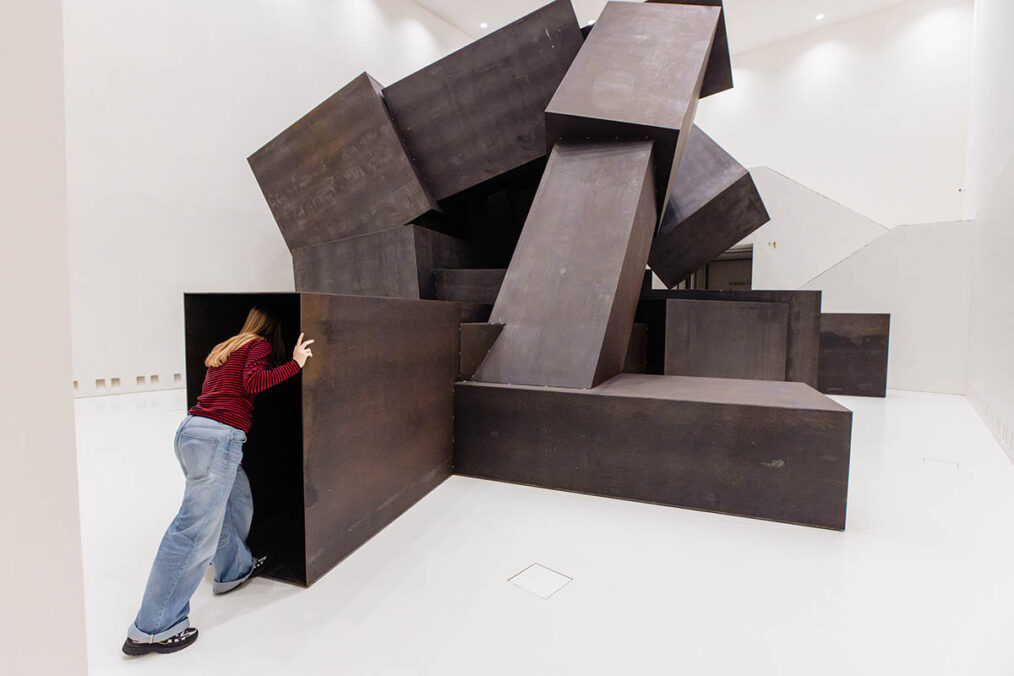
A dialogue between art, architecture, and the visitor
In Geestgrond, Gormley’s sculptures enter into dialogue with works from the museum’s rich historic collection, including a 14th-century Flemish Crucifixion, and Grey Seascape (1880) and Man of Sorrows (1891) by Belgian proto-expressionist painter James Ensor. Sculpture is explored through encounters ranging from a hieratic medieval polychrome Sedes sapientiae (the Madonna as the Seat of Wisdom) to Rodin’s Fallen Caryatid (1881-1882 / cast 1924) and a modernist welded iron mask by Julio González (1930–33). In addition, Gormley’s ‘Weave‘ works, including Brace (2023), Subject IV (2022), and Butt (2022), are choreographed as ghostly visitors within the historic spaces of the museum, animating areas beyond the dedicated exhibition galleries and inviting viewers to circulate through the building in a loop. Antony Gormley. Geestgrond does not begin at the door of a gallery, nor does it end within it. Instead, the exhibition reaches out across thresholds, into the streets of Antwerp, and along the nearby riverside. The museum becomes porous and permeable — an architecture of movement and resonance rather than enclosure. One ‘Domain’ sculpture gazes out over Antwerp from the museum parapet, standing alongside 19th-century sculptures, while another is positioned near the outdoor fountain by Cristina Iglesias in front of the museum, and another sculpture stands at the riverside.
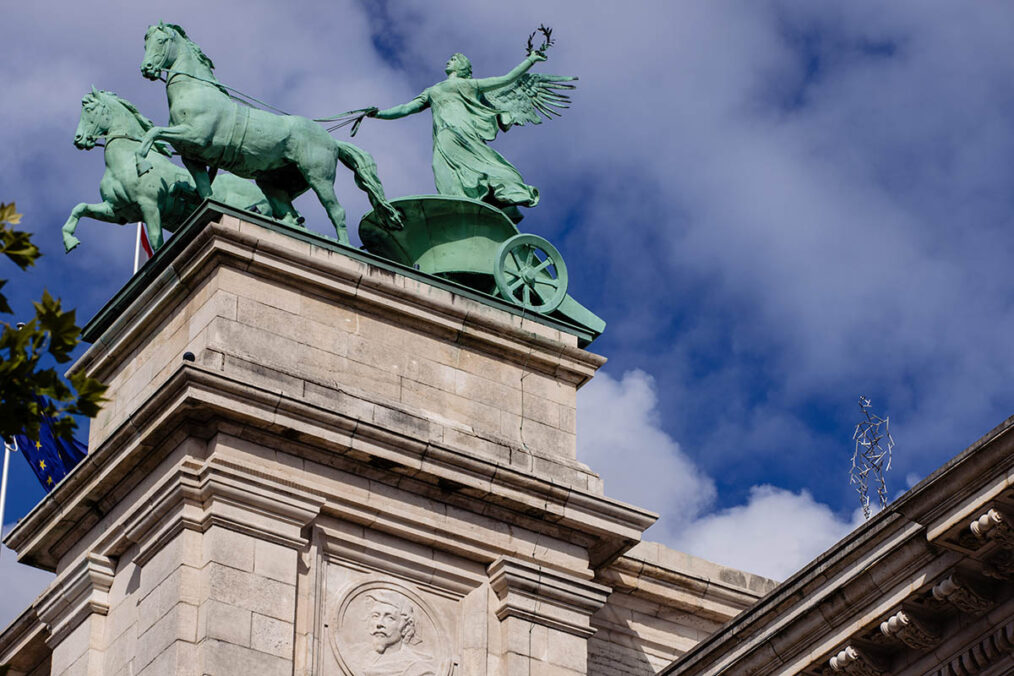
Between spirit and ground
The title Geestgrond refers to a raised terrain shaped by glacial movement during the Ice Age, but it also resonates beyond geology. In Dutch, geest means soul or spirit; grond means earth or ground. Together they form a word that holds tension: spirit that is grounded, ground that thinks, matter that remembers, mind that has weight. The title refuses the split between the spiritual and the material, the human and the planetary. Geestgrond is a deliberately resistant word whose meaning lies in tension rather than resolution. For Gormley’s work and for this exhibition, this double movement — between spirit and ground, body and field, weight and circulation — is fundamental. Early lead body case works press the human form into dense matter, asserting presence through mass and gravity. Later works, such as the ‘Domains’ and ‘Weaves’, become porous, diagrammatic, and probing, as if the body were dispersing into networks, vectors, and flows. Yet they never leave the ground. Geestgrond reveals the roots and continuing relevance of an artistic practice that asks an urgent question: what does it mean to be human in an age of algorithms and machine learning? In the recent ‘Brancher’ work, Attend (2025), premiering in this exhibition, dense, rusty iron tendrils reach out, elements that mark a return to a more weighted, rooted body, insistently connected to the earth.
A Choreography of Encounters
The exhibition is conceived as a loop activated by the movement of visitors. Entering through the 19th-century lobby, visitors encounter Gormley’s Lean (2023), propped against the grand staircase as if to buttress it. They then pass between Rodin’s Fallen Caryatid (1881-82 / cast 1924) and Gormley’s Small Stop (Lead) VII (2015), a literal embodiment of mass and gravity. From there, they step into the new Orbit Field III (2026), a vast installation of hoops that envelops the body and draws visitors into the work itself. Circling through the galleries, visitors exit through Cave (2019) and return once more to Orbit Field III, completing the loop. In the middle of the exhibition lies ‘The Heart’ section, a chamber installed as a Wunderkammer. Here, notebooks, models, photographs, prints, drawings, materials, annotated books, and even marginalia from an annotated school-era copy of Milton’s Paradise Lost reveal the backstage of artistic practice — not retrospective, but introspective, and concerned with origins. Gormley’s practice unfolds through a choreography of encounters. Works lean, echo, and witness one another across centuries, and look back at us in turn.
Exhibition: Antony Gormley – Geestgrond
Curated by: Carolyn Christov-Bakargiev
Exhibition duration: 23 May–20 September 2026
Address and contact:
Royal Museum of Fine Arts (KMSKA)
Leopold de Waelplaats 1, 2000 Antwerp
www.kmska.be