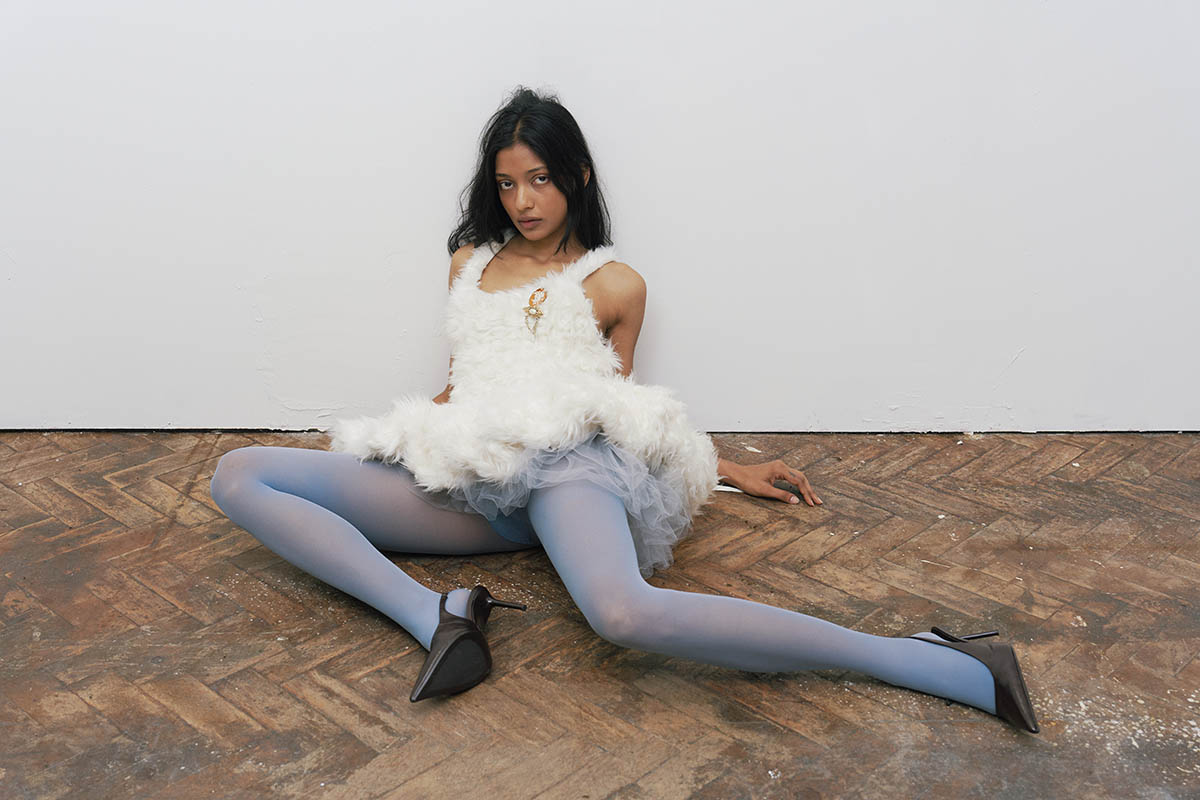
Peytie Sarfeh is a knitwear designer from California, based in London. Their work explores themes and questions of human nature through knitwear and a lens of storytelling and whimsy.
What fascinates you about knitwear?
Knitwear can be such a beautiful blend of the past and the future. Because it’s a traditional and long-established craft, knitwear includes many techniques and processes that will always stay useful, relevant, and timeless. What makes it unique is the potential that knitwear has for the future of fashion. It can be such a sculptural tool to shape and structure that would be a lot more difficult with a woven fabric, so I like to explore how much room there is to explore it. With both of these, I feel like I’m exploring in both directions – by looking further into the past to learn about and honour the origin of the craft and into the future to see where I can take knitting that it hasn’t gone before.
You started making clothes at 13, and by 15, you were already showing at New York Fashion Week on Project Runway Junior. Looking back at those beginnings today, what of that still lives in your work?
I haven’t thought about that before! Although my work has evolved aesthetically, my approach to design has stayed pretty similar. When I first started designing, I told myself it would be more of a hobby. I was a competitive surfer at that time, so I focused more on that as a career path. When I was cast on Project Runway Junior, I felt like I was just excited for a chance to sew and design and didn’t have many expectations of what would happen competition-wise. However, a very quick turning point was a moment I had in the first episode – I was making a dress very much within my comfort zone for the first challenge, when I looked up at the other designers and realised how much they were pushing themselves, and I felt vulnerable for leaving the very first round. Thankfully, I made it through – but after that, I activated and made sure I was doing everything I could to push myself and my designs. I would do market research on our days off and sketch in the evenings – and fully immerse myself in the environment. Through this, I opened myself up and unknowingly created a design process that’s rooted in curiosity and expansion. This process still holds to this day – I feel like every project I embark on is to explore territories and practices that I haven’t yet, and I credit this routine to how much I wanted to push myself during the Project Runway days.
In 2020, you moved from San Diego to London, two cities that couldn’t be more different. What do you love about San Diego, and what do you love about London?
Definitely very different environments – but I love both for different reasons. San Diego has felt more like a place of rest, recovery, and grounding to me – I feel so incredibly lucky to have grown up surrounded by so much nature, and my relationship with nature shapes so much of who I am. I feel like my favourite part of San Diego is no doubt the ocean. It was a big decision to leave a place so accessible to the ocean and surfing, but I know it’s always there, and it’s not going anywhere. San Diego was such an incredibly beautiful place to grow up, but it’s a much slower pace than somewhere like London. I moved because I knew I needed to be in a fashion hub to pursue this career, and there wasn’t enough movement where I was.
What I love most about London is the creative community. It’s so wonderful to be surrounded by so many creatives, and I feel like there are endless collaborations. For instance, I just had a pop-up exhibition for my latest collection titled ‚Oddling‘, and it was so organic to collaborate with friends to put the space together. I asked one of my great friends, Ellie Donovan, to install floral displays since she’s a florist, and another friend, Adeel Ashraf, to photograph the event. It’s moments like these that’s why I love London, because so many people value art and creation, and it’s so wonderful to be surrounded by that and to be in such a vibrant community.
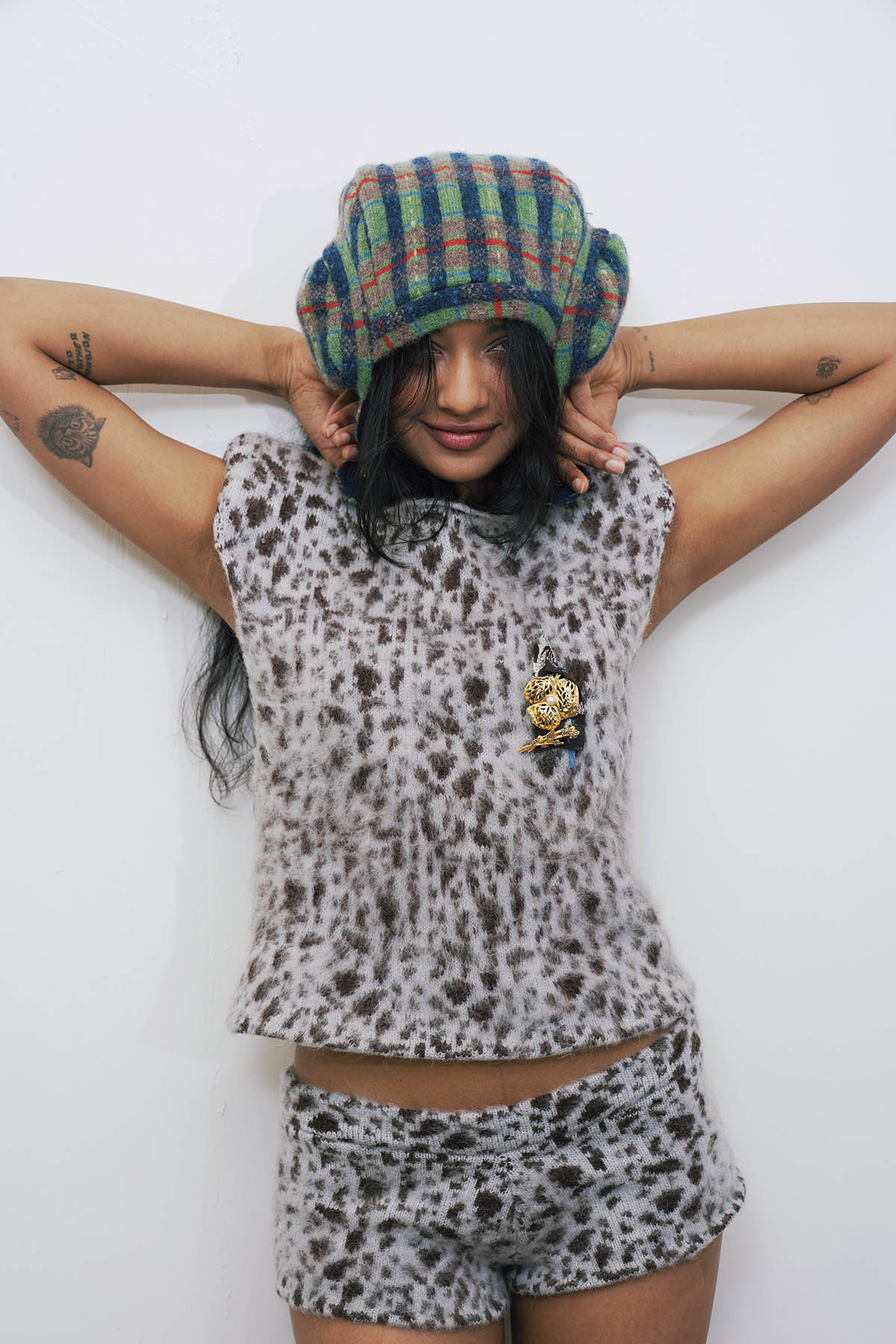
Where do you draw the line between a garment and an object?
It depends on the wearer. Clothing is such a powerful form of communication. Someone may own a simple shirt that would be ordinary to anyone else, but to them, it’s the piece that makes them feel most themselves, whether it be fit, style, or sentimental meaning. I don’t think a garment becomes an important object just based on the level of craftsmanship behind it – it depends on the wearer’s relationship to it and what that piece does for them.
What role do accessories play in your work?
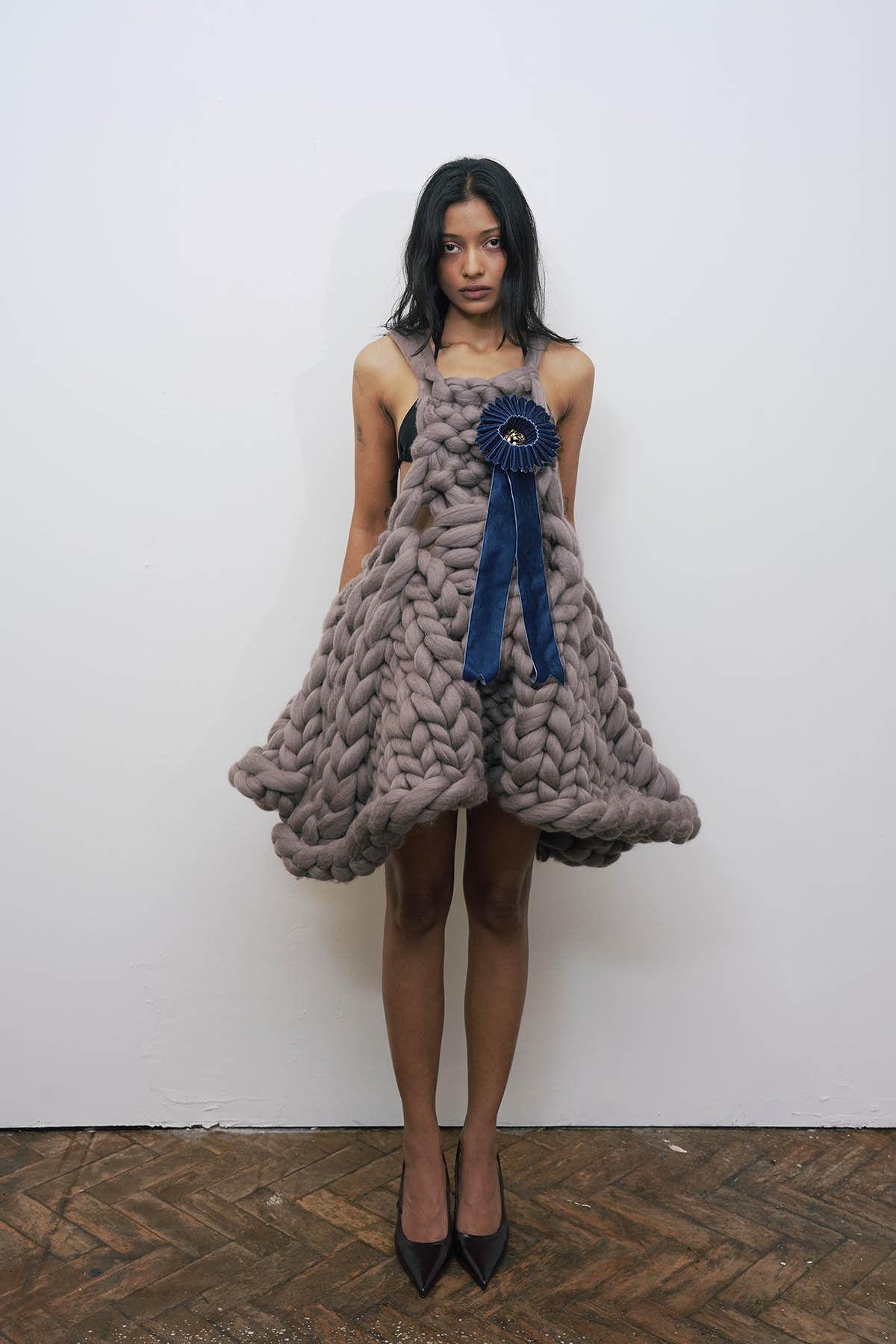
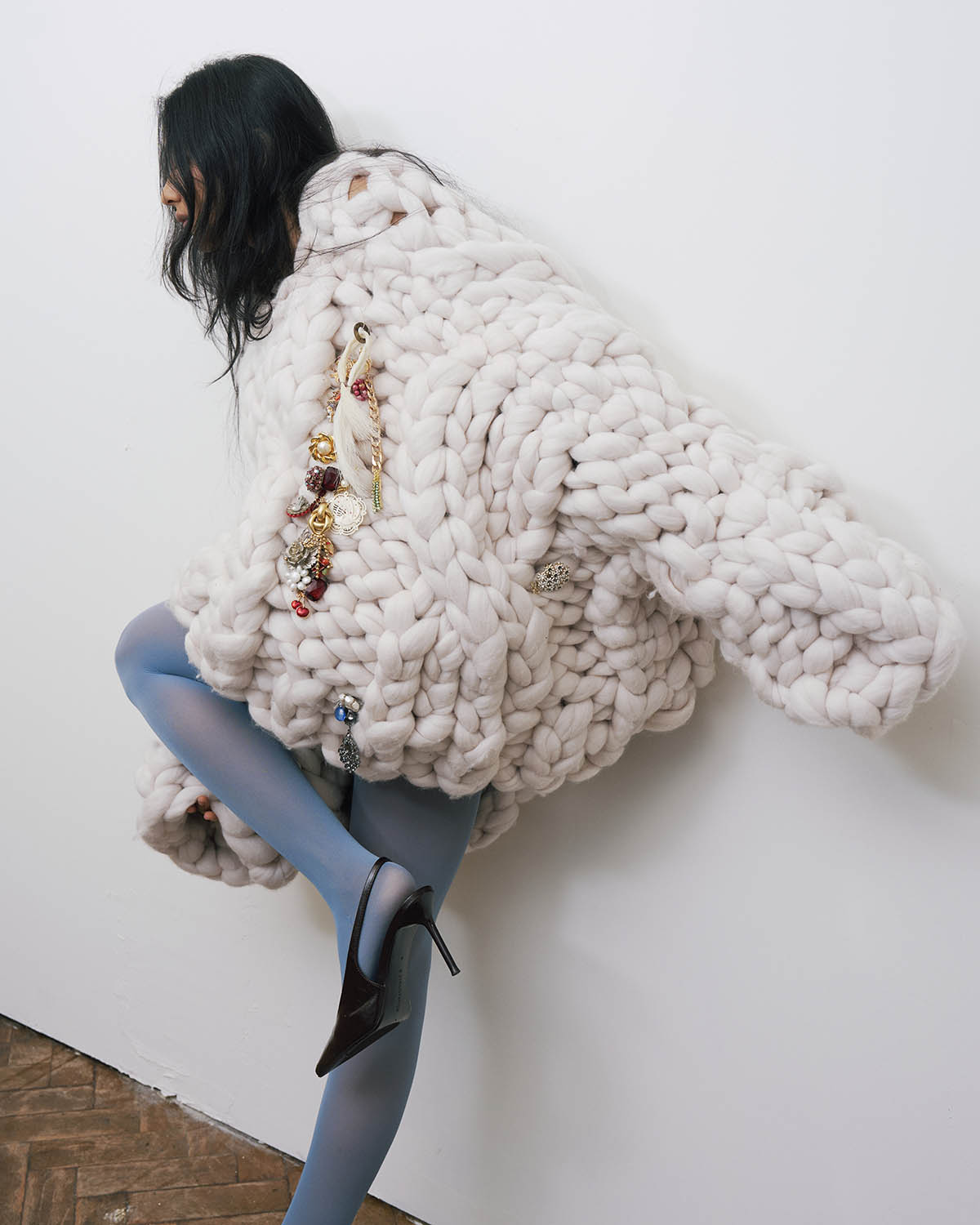
Accessories are something I’m starting to explore more, and I’m curious about them, as I’m beginning to see how much they can elevate a design when used well. In the past, they felt decentralised and more of an afterthought when styling a look, but lately I’ve been making things like brooches, hats, and ribbons, which have become quite central to the final look.
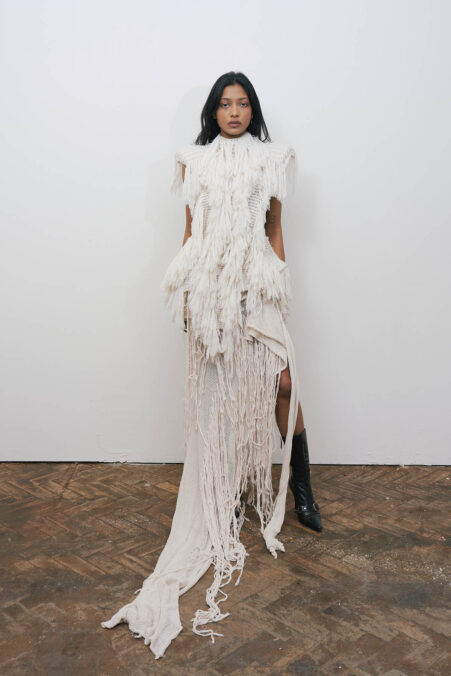
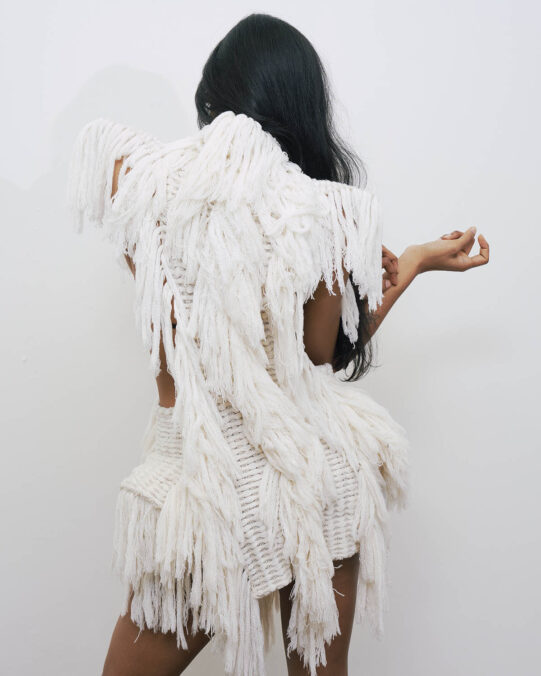
Can you tell me about the „Oddling“ collection?
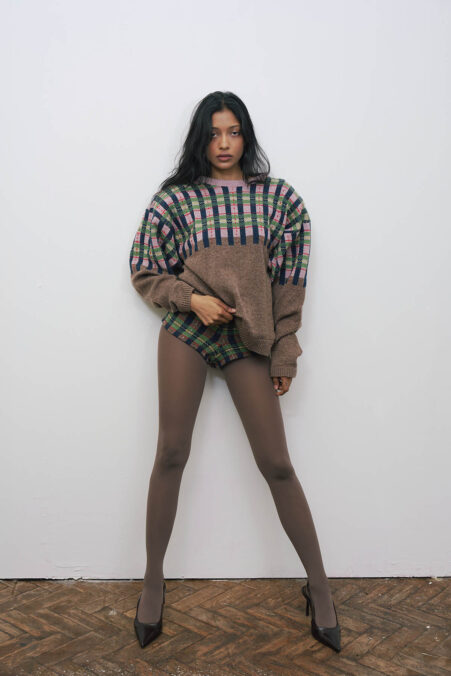
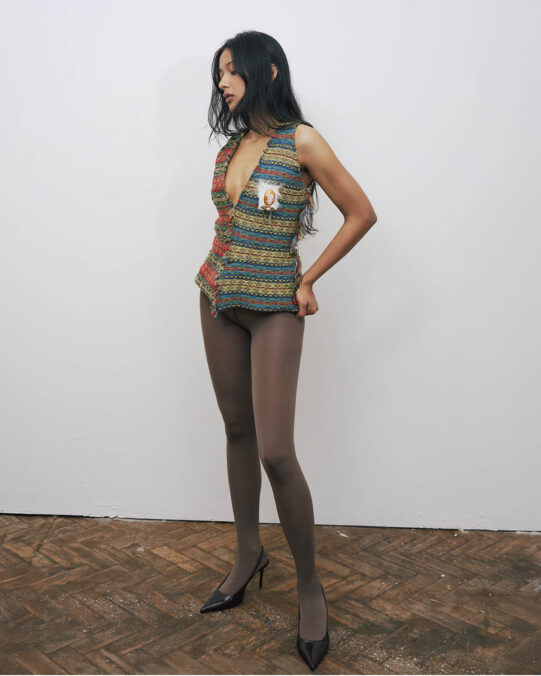
The „Oddling“ collection is my most recent collection, released in May 2026. I felt like my work has changed a lot since graduating from university, and I wanted to create and explore a collection that is representative of where my work is now. Most of my work explores themes and questions of human nature, and I feel like any imagery I’m drawn to always finds its way back to this as a foundation. For this collection in particular, most imagery and research I was drawn to were ’strange‘ creatures – animals that are deemed unpopular or weird-looking due to their physical features. I’d look at a lot of images of lanky greyhound dogs, exotic pigeons, speckled appaloosa horses, the skin on bats‘ wings, tufted fur on the heads of dogs, and many others. I also looked a bit at beasts from folklore, which is where some of my graphic knits came from. I looked at these creatures because I want to question why things are the way they are sometimes. Humans‘ ideas of cute, ugly, and beautiful are all completely made up – they don’t exist within the laws of nature. There’s no universal rule that makes a greyhound dog awkward-looking; that’s something that we have made up, and we all believe it. It’s fun to question these things because it helps me stay curious by questioning the ‚whys‘ of how we operate, and to be inspired by these ‚less-beautiful‘ animalistic features keeps things whimsical.
Aesop’s Fables inspired the KnitUp collection. What other influences, conscious or not, find their way into your designs?
As previously stated in my last answer, questions of human nature are what always seem to be the foundation of my work, whether I explore that through characters such as Aesop’s Fables, or nature itself, as in the “Oddling” collection. The idea I always want to communicate through this theme is that human nature isn’t human – it’s nature itself. So I like to share this idea by personifying playful characters that mimic human-like traits, or by trying to make the final garments look like something a non-human creature would wear. These are the ways I try to blur the boundaries we have set between humans and nature – by finding ways to mimic the more chaotic sides of nature and bringing that into how we dress and portray ourselves.
What does a typical workday look like for you?
That definitely depends on the day – my schedule can be a bit all over the place! I’d say typically it starts with me walking or biking to my studio in Vauxhall, usually stopping by Kennington Lane Cafe for a coffee. Depending on what needs to get done, which is usually a mix between laptop work and knitting, I kind of just put my headphones on and get in the zone until it’s time for me to walk back and make dinner.
How are you spending the summer? San Diego, London, or are you planning to travel through Europe as well?
It’s been a busy few months, so I’m definitely in need of a holiday soon! I’ll mostly be in London, but planning on going to San Diego for a week at some point during the summer to see family, and a European holiday with my girlfriend – still deciding where to go though
Peytie Sarfeh – www.peytiesarfeh.com, www.instagram.com/peytie_sarfeh/