The works in the exhibition On Nervous Grounds: Between Delusion and Reality are all coming from the museum’s collection, right?
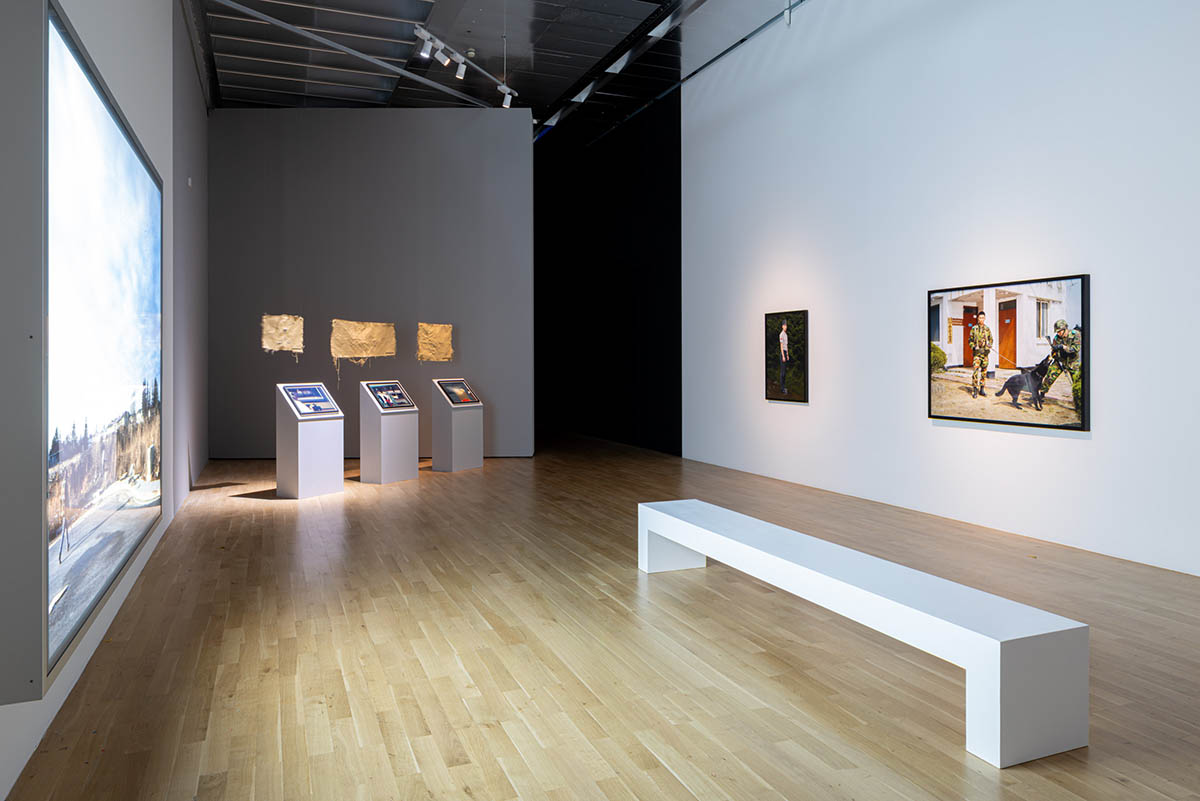
Yes, indeed, all the works in the exhibition come from the Museum Wolfsburg collection. Just as the collection itself began in the 1960s and extends into the present, this exhibition creates a dialogue spanning, in this case, from the 1970s to today. Thematically, the exhibition explores the abstract and diffuse feelings of uncertainty, instability, vulnerability, and inner restlessness. These are emotions that likely surround us every day in these challenging times, both individually and collectively as a society. For the exhibition, I have brought together works from the collection that explore this emotional experience by making ambivalent feelings visible, reflecting on them, or evoking emotion through their visual language, aesthetics, materiality, or narrative structure. A lot of the works also intentionally create space for emotional projection. Sometimes the artists have put themselves in uncertain and vulnerable situations.
What is the first thing we see when we enter the exhibition?
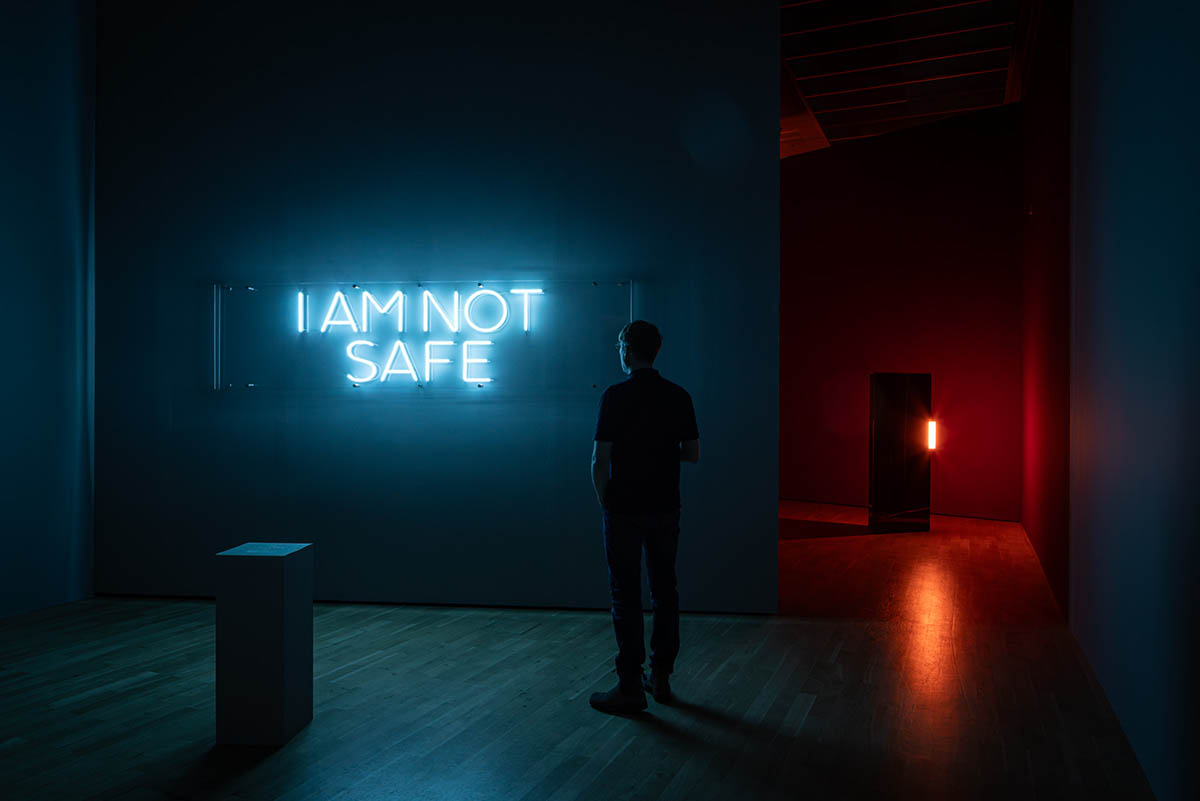
At the beginning, there’s a work by Ariel Reichman called I AM (NOT) SAFE. It’s an interactive light sculpture that directly poses the question, “Am I Safe?” to the audience. Visitors have the chance to vote yes or no via a QR code, and an LED sign spelling out “I AM (NOT) SAFE” lights up or fades the word “NOT” depending on how people respond. I think it’s a beautiful piece to open with, because it immediately invites visitors to observe themselves in the act of looking at the art. I think this work offers an interesting introduction to the exhibition, as it immediately reveals that the works on display do not focus on a single, fixed emotion. They always remain ambivalent and operate on the threshold between the self and the outside world, and the intimate and political sphere.
Could you give us some examples with particularly strong reflective potential?
The theme of security and insecurity plays a central role in the first part of the exhibition. Ariel Reichman’s work, for example, is followed by a small dialogue between two works that explore nocturnal situations in very different ways, focusing on the paranoia triggered or intensified by night and darkness. Jeff Wall’s work Passerby shows an everyday scene in a nighttime setting. You see a street corner and a man turning the corner, looking back over his shoulder. A little behind him, in semi-darkness, you see a second person walking in another direction. At first glance, as is often the case with Jeff Wall’s works, it’s really a banal, everyday scene. But it opens up the surface for many different readings. The image functions like a film scene that evokes a story whose plot demands to be told through us. This is no coincidence, but was intentionally designed by Jeff Wall on an aesthetic level by working with strong black-and-white effects that are typical for the film noir genre. Not least because of these cinematic effects we recognize, we begin to interpret this situation as shady. And suddenly, the supposedly everyday scene takes a disturbing turn because we interpret so much into it because of its dramaturgical device. Jeff Wall’s work is shown in a spatial dialogue with Kapwani Kiwanga’s work Glow #11, which also engages with the antagonism of safety and insecurity through a postcolonial lens.
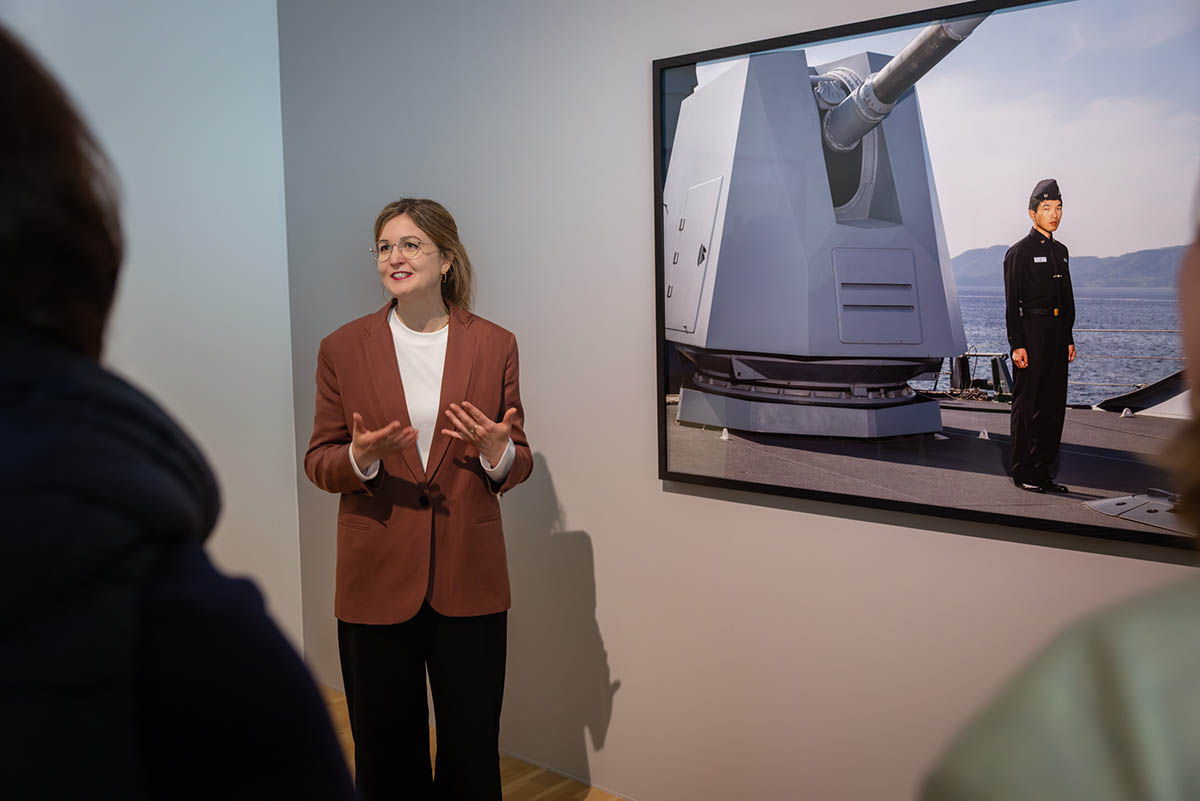
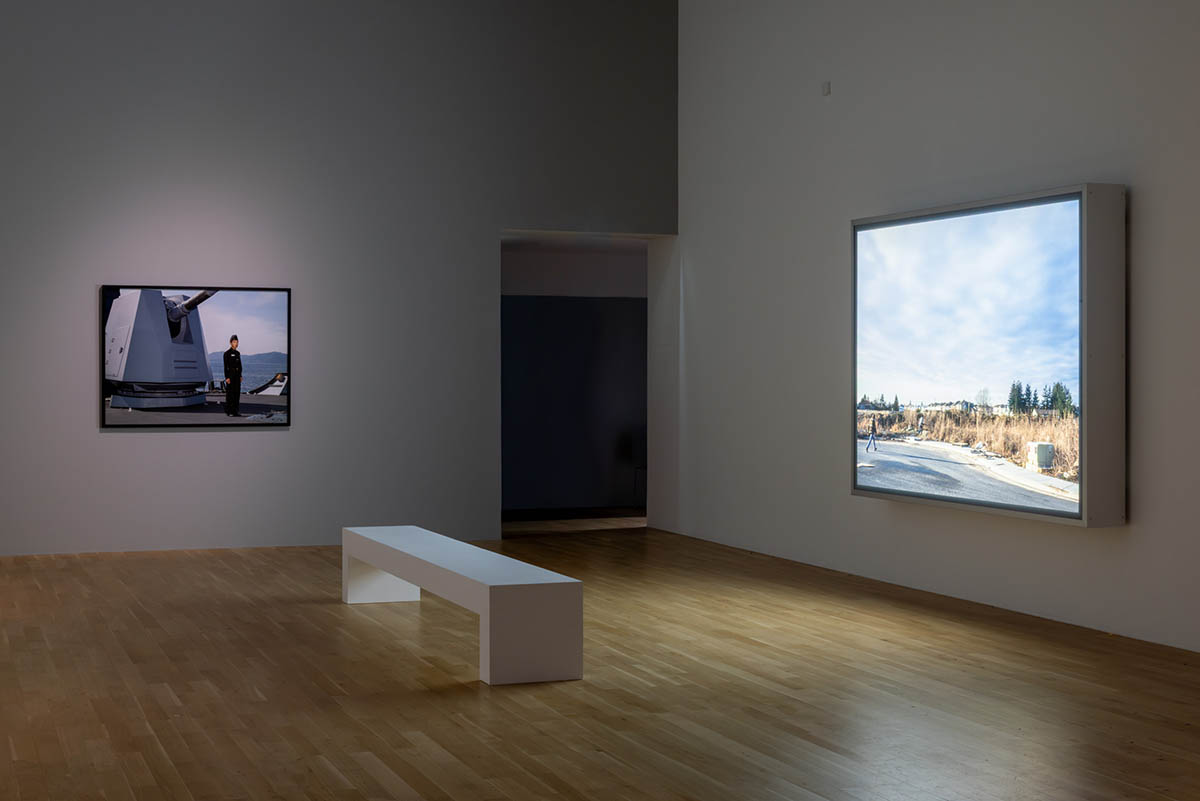
The next dialogue deals with the supposed creation of safety. There is a section where works stand facing each other, dealing very strongly with self-defense and with armed violence. A work by Olga Koumoundouros, an artist who conducted field research in Los Angeles, visiting shooting ranges in various neighborhoods across a wide range of social milieus to explore the motivations behind American gun culture. Then again, a work by Jeff Wall shows a hunting scene. These works are shown together in one room with works by Heinkuhn Oh, which deal more with militarization. Heinkuhn Oh is a South Korean photographer who shows very young soldiers, but he doesn’t show them the way typical military photography does. He doesn’t present an image of power and strength; instead, the soldiers he shows are vulnerable, emotional, and very human. So it’s not rank that becomes visible, but the person. The military is, in general, an emotionally interesting site, because on one hand it’s a place where emotions are institutionally cultivated, trained, and also suppressed.
Installation works carry this tension even further. Could you tell us a bit about the sculptural work, since that’s also a counterpoint to the 2D objects or photography? How much of the range of emotional extremes is actually present in the exhibition?
Well, maybe most fundamentally: the exhibition isn’t about seeking the extreme. All the works remain in a very ambivalent space, like Rebecca Horn’s installation High Moon. It’s an installation where two guns fire at each other. When two guns in the room are aimed at one another, a stream of red liquid is released from each gun and meets in the space between. The artist, Rebecca Horn, calls this moment a “kiss of death,” and in that phrase, really, everything of the ambivalence is already contained.
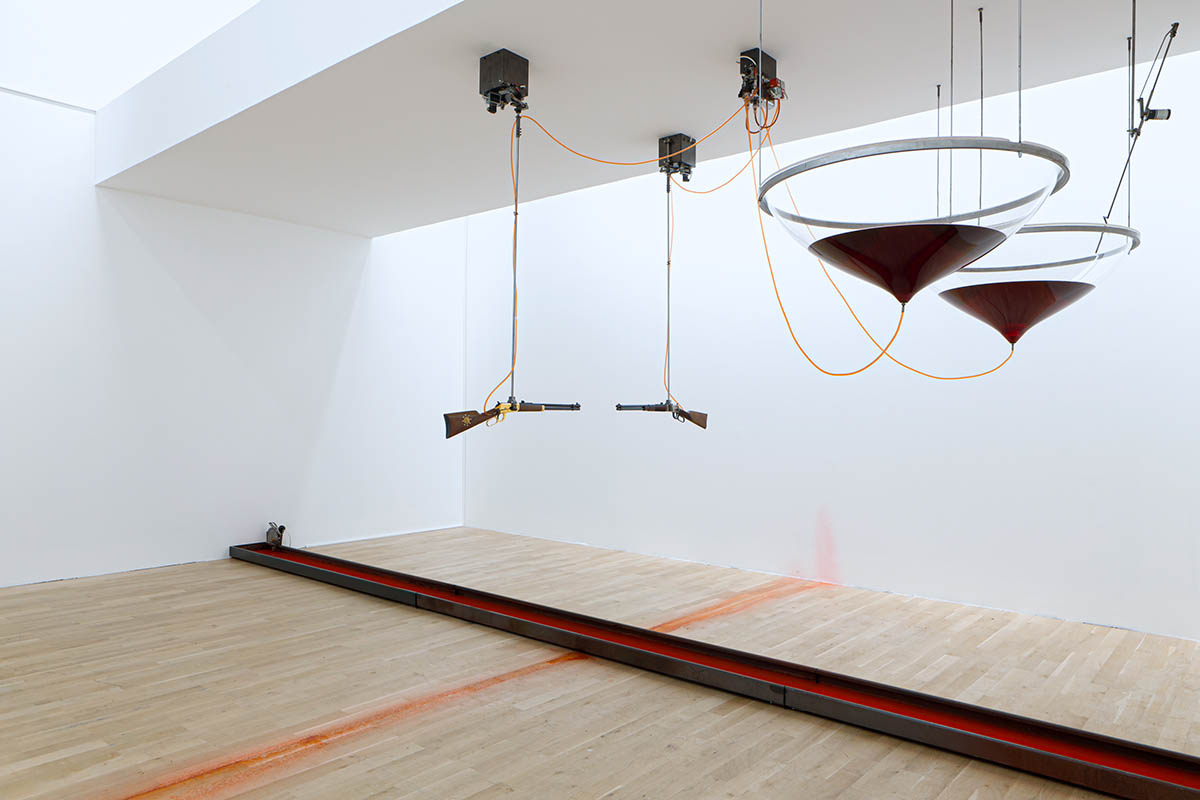
27.09.2026 at Kunstmuseum Wolfsburg, photo: Marek Kruszewski
On one hand, there is this act of violent annihilation, but also, briefly, something sensual: the moment of merging, of coming together. I think it really depends on the emotional state you yourself bring when approaching the exhibited works. They often carry a tendency toward the destructive, but always refer also to social aspects, societal and historical contexts.
My last question was more of a provocation; I like seeing how something gets explained within an institutional context, and I think it’s important that things aren’t too black-and-white, that there is much space in between. On Nervous Ground – between self and other, safe and unsafe, between reality and fiction. How is this place defined in the exhibition?
To make that threshold between delusion and reality more tangible, it’s best to return to Ariel Reichman’s work, I AM (NOT) SAFE. This work simply asks: are you safe, are you not safe, and it’s entirely a question of perspective. In the exhibition space, in that moment, you might already feel a certain sense of safety. But because the work expects you to actually commit to a yes or no, your own emotional state within the exhibition space becomes visible and public too. You start asking yourself: how is safety even to be understood in the first place? It’s not so clear anymore whether you’d answer yes or no, because you become aware of the relativity of the question itself. I think the work makes that threshold visible beautifully, and suddenly it’s no longer about an objective sense of safety; it becomes about emotional experience and reality. This work also bridges the gap to reality. Whenever the present overwhelms us, and things keep shifting and changing, we apparently return to our emotional sensibilities because we can no longer make progress with supposedly rational criteria—since even these criteria and values have become relative. Emotions can be reactions to reality, but they can also be a means and an outlet for dealing with reality. The exhibition title refers to this metaphorically.
There’s a quote by Eva Illouz that served as a kind of leitmotif for the exhibition. She says that emotions are always a dialogue we conduct with the world. Through emotions, we internalize the outer world and externalize our inner world, continuously, ongoingly. What’s the reasoning behind the reference? How does her thinking become visible in the exhibition?
Eva Illouz was one theoretical reference point, but so was, for example, Martha Nussbaum, who also works extensively on political emotions. What’s interesting is that the artists I selected, and the artworks themselves, obviously didn’t set out, per se, thinking about how emotions are structured, or how they can be deliberately triggered. But once you get a bit of a sense of that through reading, for example, by Aaron Ben-Ze’ev’s research about how emotions are structured, you start recognizing a lot of it as strategy within the artworks themselves.
Emotional states are shaped above all by cultural, political, and social factors; certain emotions can even be passed down from generation to generation. Emotions, as such, are never neutral or purely subjective; they can also be felt collectively. The artworks aren’t just bringing out something in individual viewers; they’re specifically constructed to evoke something collectively, in the audience as a whole.
The artist Mithu Sen deals with transgenerational trauma in her work and in her installation Phantom Pain, specifically her colonial past, which she herself never directly experienced, but her parents and grandparents did. And yet that colonial past still influences the current generation, and future generations too. Sylvain Couzinet-Jacques’s multichannel video work Rub Rosa also raises the question of how the past—in the form of a site burdened by the history of the Franco dictatorship—impacts the present of a younger generation.
Heinkuhn Oh’s photographs make it very tangible that emotions are also institutionally trained, as in a place like the military. By deliberately breaking away from that in his photography, he makes us aware again of the kind of expectations we place on certain institutional frameworks.
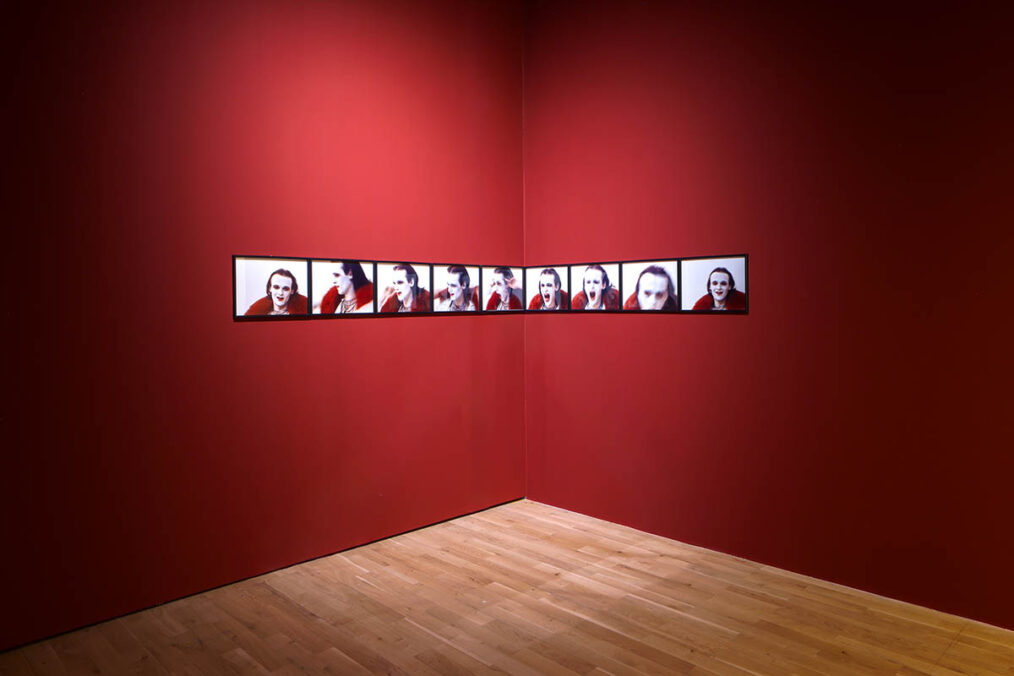
How emotional perception is linked to moral concepts is revealed in the works of Jürgen Klauke. Klauke is an artist who, in the 1970s, very early on, engaged with the theme of gender and the dissolution of binary concepts of gender; transforming himself in front of the camera into an androgynous figure. At the time, that was of course highly morally provocative, but through that gesture, through something almost destructive, he also broke apart certain norms. Although many works in the exhibition contain an element or gesture of destruction, Klauke’s example also shows that the destructive sometimes possesses a constructive or positive power of transformation.
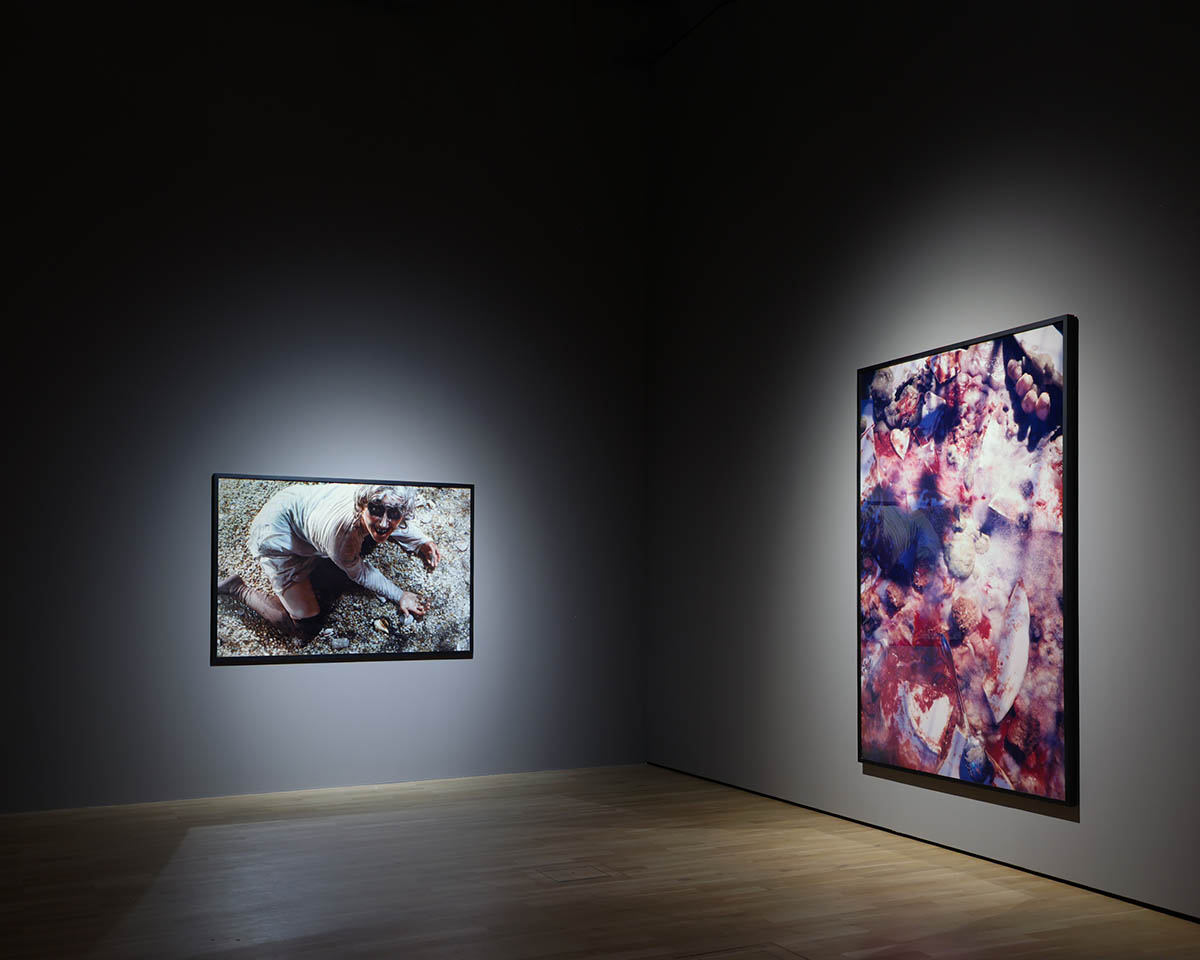
Emotions, moreover, do not relate solely to real-life situations; they naturally have a great deal to do with fiction and our own imagination as well. The photographs by Cindy Sherman in the show with work from the Disasters and Fairy Tales series calculate with our imagination and emotional projection in a highly conceptual way, much like the works by Jeff Wall cited at the beginning. One of her works plays very strongly with the liquefaction of the human body, which is also quite hysterisizing in effect, because the image also questions our own physical integrity.
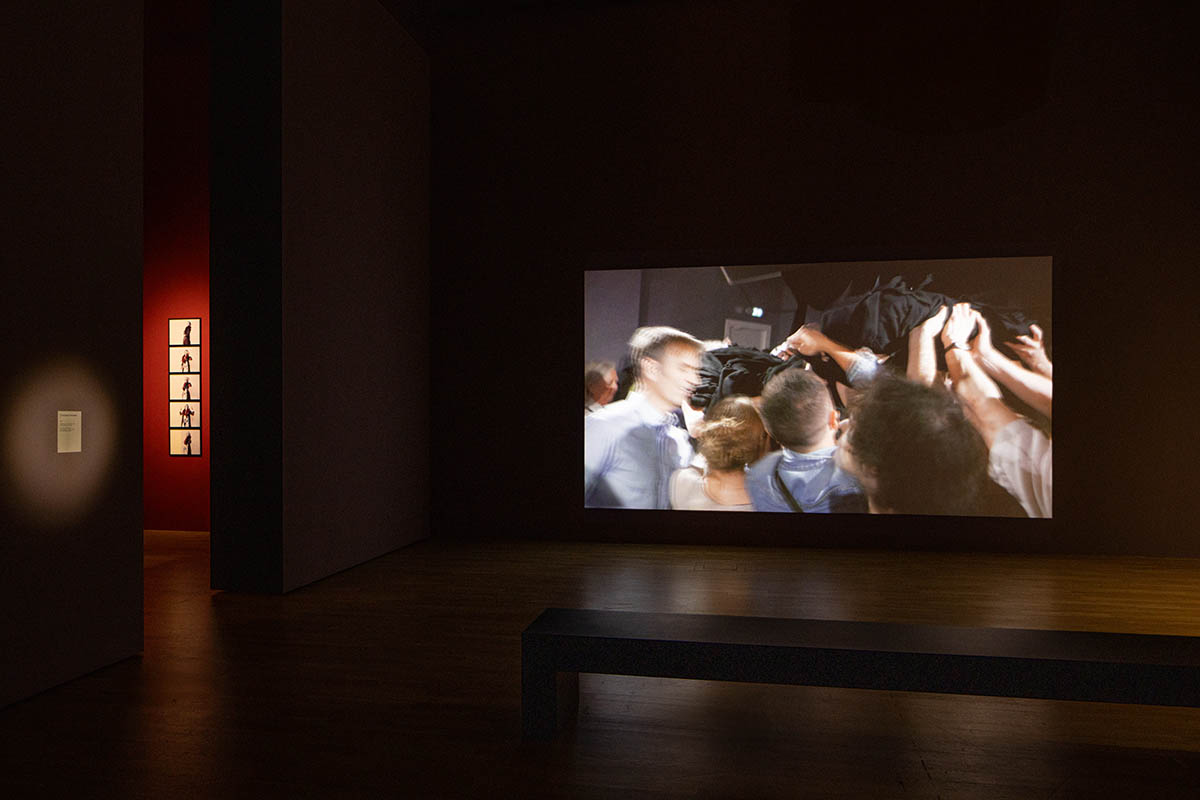
Many of the works in the exhibition seduce us emotionally with artistic strategies and aesthetics. But no one influences the audience as directly and immediately as performance artist Christian Falsnaes, as seen, for example, in his work I, which was created in 2024 in the context of the opening of his solo exhibition in Paris. He does this very cleverly: he gives the audience very direct, very imperative, at times almost authoritarian instructions, while also being very charming and very emotionally engaging. He knows how to turn individuals into a group within the performance, and he manages to pull that group deeper and deeper into the performance the longer it goes on. He moderates it in such a way that people move through very different emotional stages. Some moments feel almost ritualistic. Then there’s a sequence where everyone parties together. There are sequences where the group turns against the artist himself. And there’s a section where everyone comes together, and it all feels very peaceful.
On the one hand, Christian Falsnaes emphasizes how people can be manipulated through emotionalization, and on the other hand, he repeatedly uses his art to critically illustrate that even participatory group processes are governed by non-symmetrical power dynamics, thereby also deconstructing a naive notion of participation processes. However, his work is also an example of how artists like him consciously put themselves in situations that appear to be under their control at first glance, but which simultaneously make them vulnerable and surrender them to the audience.
Expression and self-reflection carry a lot of power in themselves, but there are also these more Foucauldian dimensions of experience that run through the works. What’s your understanding of power, in the context of the exhibition?
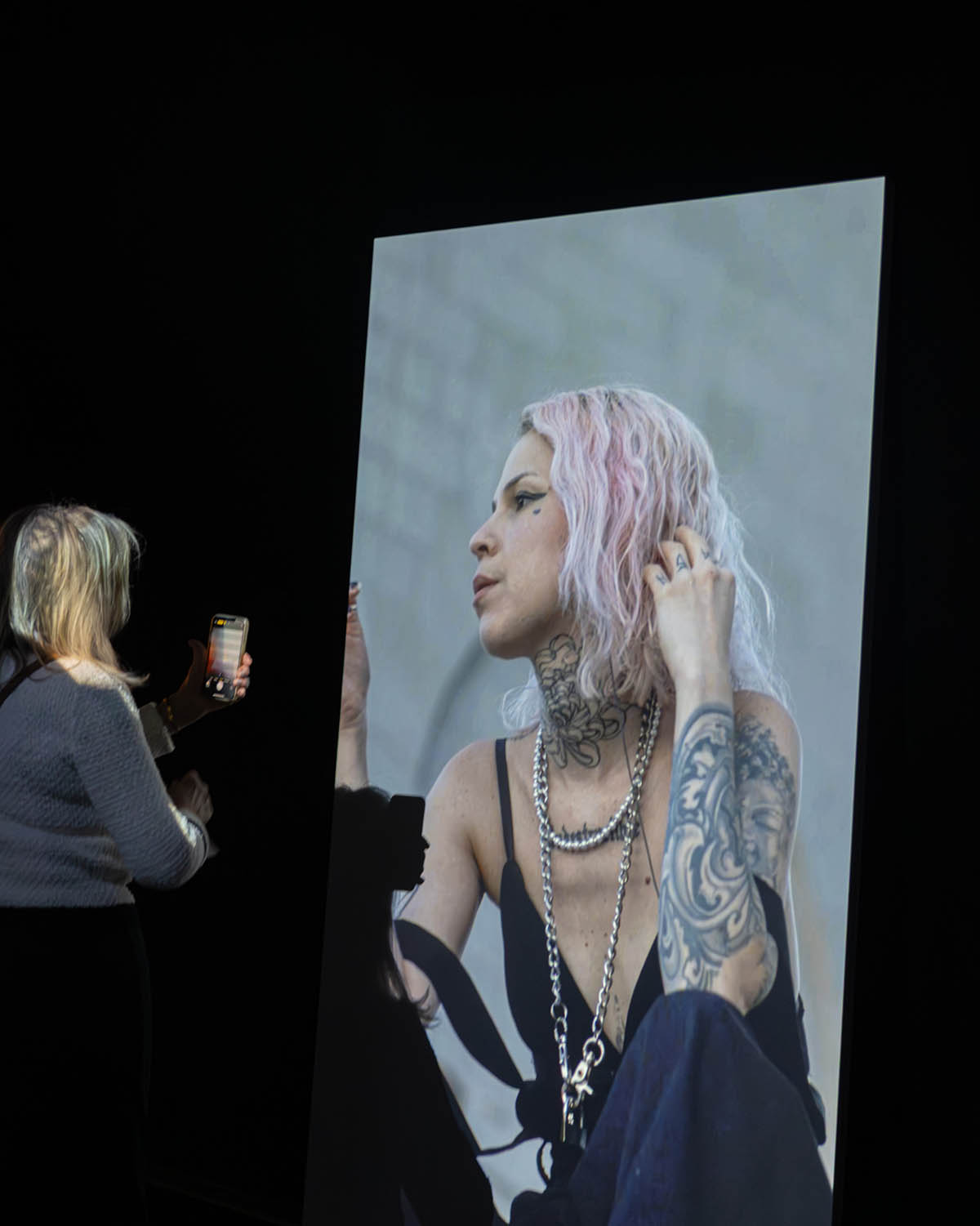
The show makes very consciously visible that emotional experience is always bound up with power structures, because so much of it is culturally, socially, and politically pre-coded. The artist Sylvain Couzinet-Jacques spent three years photographing young people at a triumphal arch in Madrid who were strongly affected by the economic crisis there, people who felt a sense of solidarity within the group, but who were, at the same time, quite isolated within that very group. The backdrop, the square where they met, is a triumphal arch in Madrid, a relic of dictatorship. The architectural dimension comes into play too, along with these historical conditions.
The exhibition has a great deal to do with politics, with social conditions, with cultural codes, like, for instance, gun culture in the US. With gender, with perspective, with conventions we know from film, from crime narratives. It’s about power structures.
From your position as the curator, how much did the museum’s architecture actually influence “the flow” of the works in the exhibition? We know how it often goes: an idea can work conceptually, but then it doesn’t quite work in the actual space. So how did these physical constraints affect the exhibition?
The museum architecture does dictate quite a lot already. I had the privilege of being able to build in some walls specifically for this exhibition. I tried angling the walls slightly to bring in architecturally a bit of that disorientation that feeling of shifting, of nervousness, of shifting ground, read metaphorically as well. That was important, to open up a kind of psychological space through the architecture itself.
I also work a lot with color in the space. Where it made sense, I tried to reinforce the artworks through the color scheme, but without over-shaping them too much. And especially toward the end of the exhibition, I wanted to underline the psychological intensity that builds up through the curatorial sequencing and the individual works themselves. And then there’s also the rhythm of the works. Some groupings are deliberately denser, where I felt the synergies between the works were particularly strong. But then certain installation-based works work in an auratic way. Highlighting the interplay of emptiness and fullness.
Exhibition: On Nervous Grounds. Between Delusion and Reality
Curator: Elena Engelbrechter
Curatorial Assistant: Linus Jantzen
Works by Christian Falsnaes, Kapwani Kiwanga, and Jürgen Klauke within the context of the collection for the first time. In the exhibition, the works enter into a thematic dialogue with those by Sylvain Couzinet-Jacques, Gilbert & George, Douglas Gordon, Rebecca Horn, Olga Koumoundouros, Maix Mayer, Heinkuhn Oh, Ariel Reichman, Mithu Sen, Cindy Sherman, Jeff Wall, and Jordan Wolfson.
Exhibition duration: May 9–September 27, 2026
Opening Hours:
Tuesday through Friday, 10 AM– 6 PM
Saturday, Sunday, and Holidays, 11 AM– 6 PM
Address and contact:
Kunstmuseum Wolfsburg
Hollerpl. 1, 38440 Wolfsburg
www.kunstmuseum.de