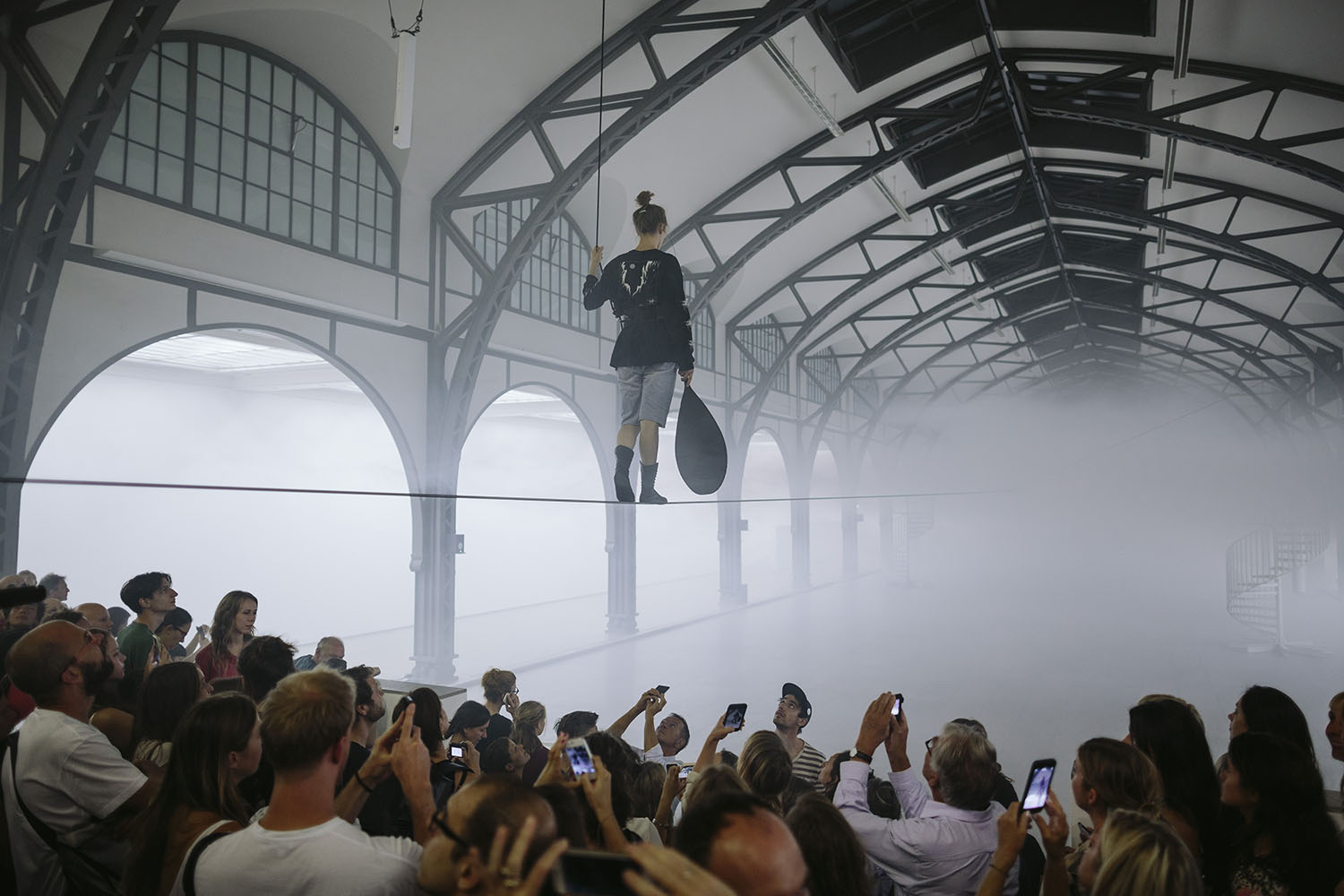
Several themes run through this year’s programme. Artists engage with the present and the future through the lens of history, looking in particular from Berlin towards Eastern Europe and beyond to explore shared histories, migration, relationships with neighbouring regions, and decolonial perspectives. Powerful political voices— from feminist resistance to ecological and geopolitical urgency— also run through an extensive programme of performance, sound, and theatre, including several eagerly anticipated premieres. The dialogue between established institutions, internationally renowned artists, and grassroots initiatives from Berlin’s independent art scene is more visible than ever. With the „Featured“ section, Berlin Art Week once again spotlights around thirty jury-selected special projects and independent art spaces.
Berlin, Local, Global: New Perspectives
Gropius Bau explores the history of migrant communities in Kreuzberg with „Kreuzberg: Kunst und Migration seit 1960“, featuring contributions by, among others, Mehmet Aksoy, Nuray Demir, and Pınar Öğrenci. Neuer Berliner Kunstverein (n.b.k.) and Schinkel Pavillon join forces for „Projections onto the East“, a collaborative exhibition project, while a new site-specific work by the Guerrilla Girls will be presented on the façade of n.b.k. At Hamburger Bahnhof, the „Hamburger Bahnhof Art Week Talks“ series presents „Art Spaces East“, a discussion on the role of museums in Germany’s eastern federal states. Meanwhile, ifa-Galerie Berlin presents lecture performances on the international role of art in the GDR.
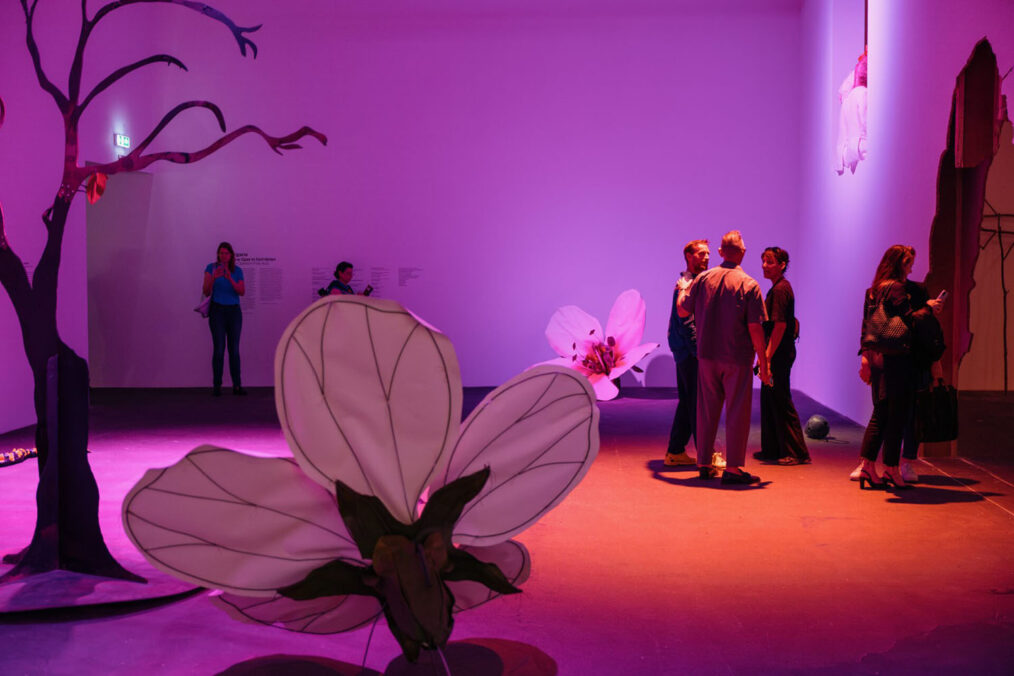
Further exhibitions explore the legacy of the GDR and the translocal experiences of Berlin’s diasporic communities. Stiftung Kunstforum Berliner Volksbank presents „Vietnam. Art. GDR. Reclaiming Solidarity“, Kvost— Kunstverein Ost (Featured section) shows „Izabella Gustowska: Home’s Shadows“, and nGbK— station urbaner kulturen examines architecture and the „serious“ strain of postmodernism in the GDR. At Akademie der Künste, „Metaxy: Between Destruction and Reconstruction“ reflects on the liminal social condition created by war and crisis.
The Bienal de São Paulo turns to questions of place and belonging: founded in 1951, it will be presented in Germany for the first time, with Haus der Kulturen der Welt hosting the Berlin edition, „Not All Travellers Walk Roads— Of Humanity as Practice“, featuring works by, among others, Forensic Architecture, Cevdet Erek, Leiko Ikemura, Emeka Ogboh, and Wolfgang Tillmans. At the same time, Savvy Contemporary presents „Vilanismo: Architectural Echotones— A Poetics of the Surrounds“, its own response to the 36th Bienal, creating a curatorial bridge between Berlin and São Paulo.
Performance, Theatre, and Sound
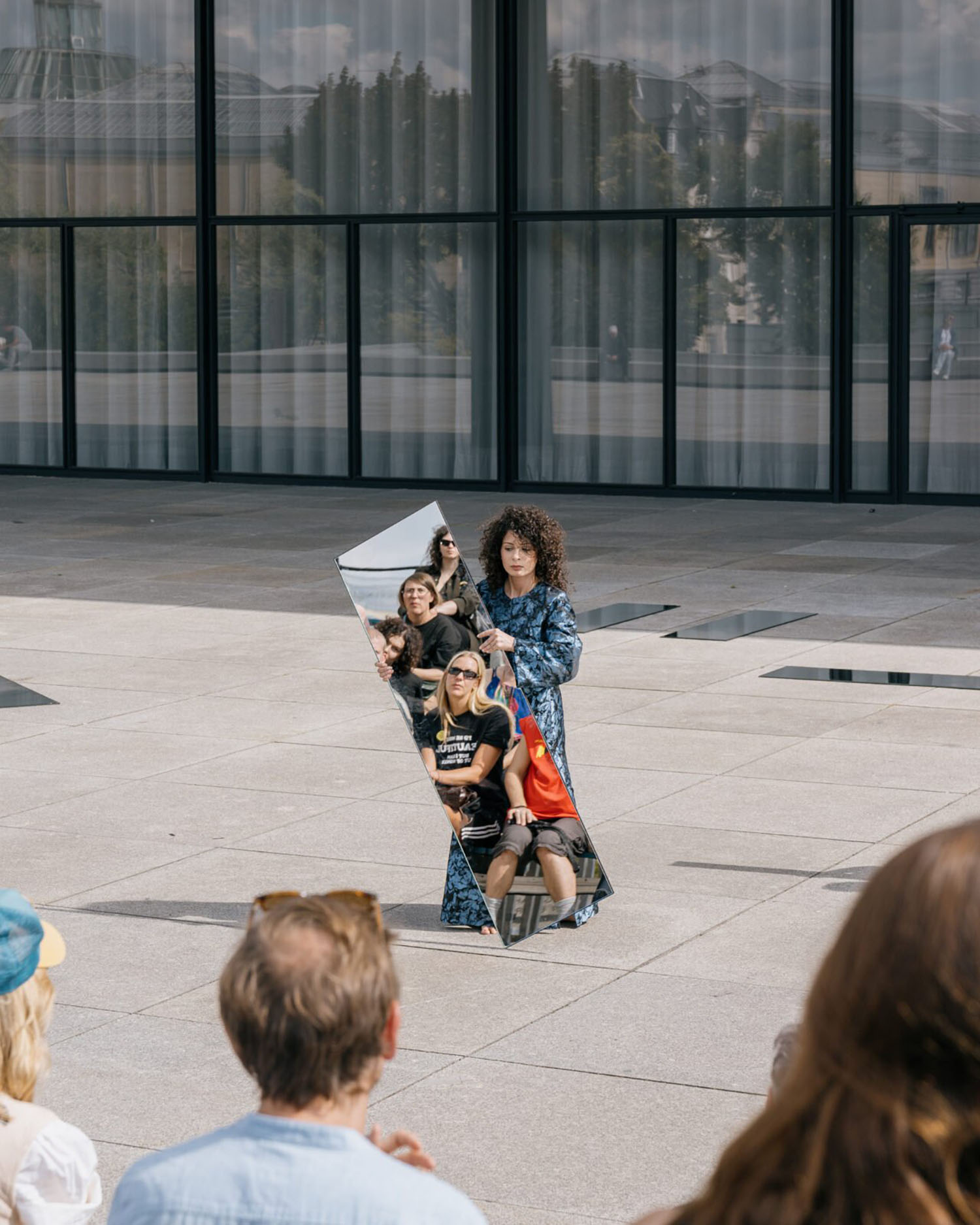
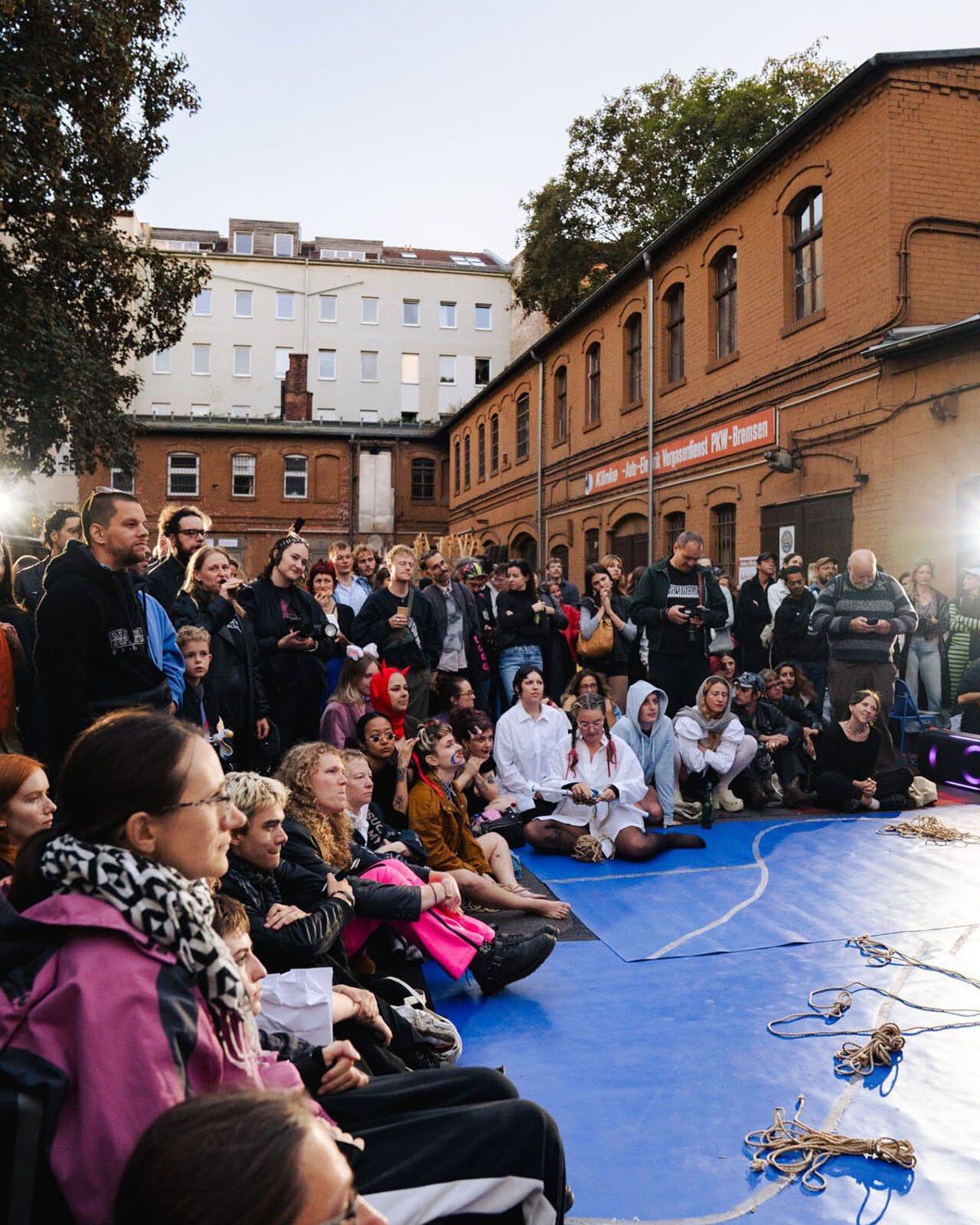
Performance has become one of the defining elements of Berlin Art Week. Neue Nationalgalerie presents the fifth edition of „Perform!“, featuring Trisha Brown’s „Walking on the Wall“ (1971) alongside a new presentation by Kiani del Valle. At the same time, the museum hosts the exhibition for the Preis der Nationalgalerie 2026, including Maurizio Cattelan’s „Night“. At KW Institute for Contemporary Art, Farahnaz Hatam and Colin Hacklander present the performance „Labour: Soft Thought“. On view at the residency space Between Bridges (Featured section), caner teker’s „b2b / nothing new“ brings together performances by Space Afrika, Rayne, Emil Ertl, and Martin Hansen. Georg Kolbe Museum hosts the performance festival „everybody“, expanding the exhibition’s exploration of body politics through a live programme. For one night only, during the „Featured Night“, Hotel Adlon Kempinski (Featured section) becomes the stage for Sunny Pudert’s „Ordinary Tales of City Madness“, transforming the space into a suite for readings and performance.
Berlin Art Week also brings a number of theatre premieres to the city. During the festival, Berliner Ensemble will stage a production in collaboration with Gemäldegalerie for the first time, transforming its galleries into a theatrical setting for the premiere of Ersan Mondtag and Nadim Samman’s „Alternde Meister“. At HAU Hebbel am Ufer, Sophia Süßmilch premieres „Something Terrible Will Happen: The Cannibal Woman“, while Theresa Reiwer presents „Internet Explorer“. At Gorki, a new wall on Platz der Märzrevolution will be activated for the first time as a public space for exhibitions and performances, marking the beginning of Çağla Ilk’s new artistic directorship.
Sound takes many forms across Berlin Art Week this year, reaching into every corner of the city: Hamburger Bahnhof— Nationalgalerie der Gegenwart presents the major retrospective „Ryuichi Sakamoto: seeing sound, hearing time“, dedicated to the pioneering Japanese composer. Reethaus (Featured section) invites visitors to experience „The Ear is the Eye of the Soul“, a listening experience curated by Hans Ulrich Obrist and Ben Vickers in collaboration with Soundwalk Collective, featuring contributions from Brian Eno, FKA twigs, Patti Smith, Kali Malone, and others. At Konzerthaus Berlin (Featured section), Leyla Yenirce joins Solomon Garçon for a performance weaving together spoken word, field recordings, noise, ambient, and techno into a powerful statement of feminist resistance. Community radio stations take over the airwaves as part of the Berlin Radio Play Festival (Featured section), including a special broadcast on Cashmere Radio. Sound performance also features prominently elsewhere: JJJJJerome Ellis brings together stuttering, voice, and Black musical traditions at Haus am Waldsee; Wadada Leo Smith performs in a shop window at MALA (Featured section); LAS Art Foundation presents a live sound work by Tati au Miel alongside a sound walk by Omsk Social Club; and PalaisPopulaire activates Nevin Aladağ’s sculpture „Public Resonator“ while simultaneously presenting „Moving Clouds“, the exhibition by Deutsche Bank’s „Artist of the Year“, 2026, Lucia Tallová.
Art Market
Berlin’s art market is once again as diverse as ever. During Gallery Night organised in cooperation with Gallery Weekend Berlin, around fifty Berlin galleries will open their doors with new exhibitions, including Wu Tsang at Isabella Bortolozzi, Kerstin Brätsch and Katharina Sieverding at Galerie Thomas Schulte, Jeremy Shaw at Galerie Neu, and David Horvitz, Alfredo Jaar, and Zhang Peili at Hua International.
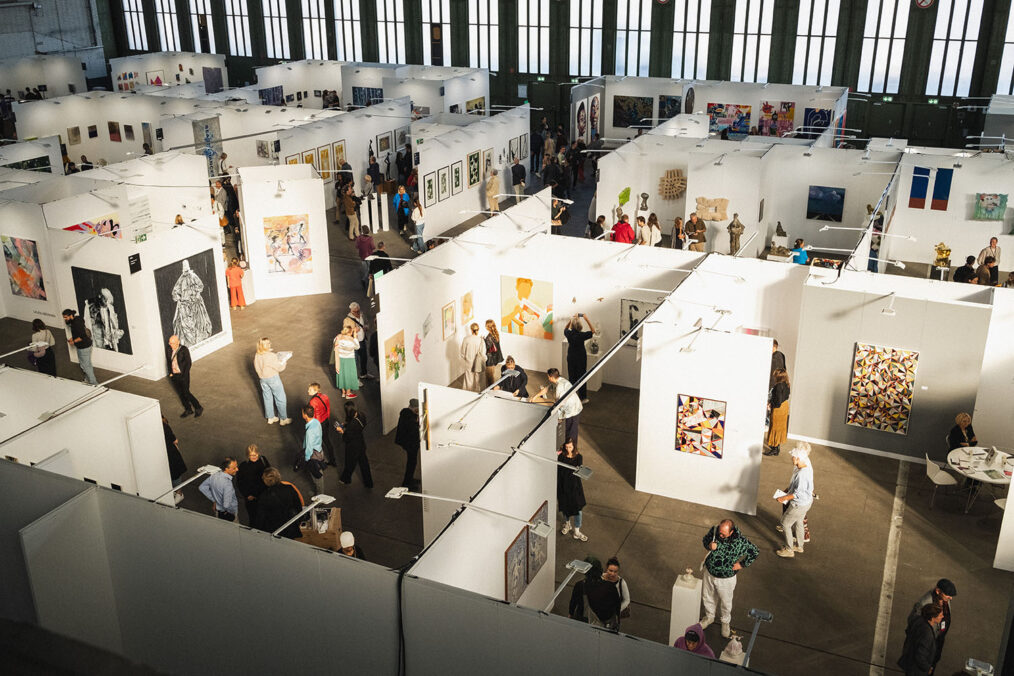
Positions Berlin Art Fair brings together more than ninety international galleries from around twenty countries in the hangars of the former Tempelhof Airport. This year, a special focus falls on galleries from Turkey. At Wilhelm Hallen in Reinickendorf, Berlin galleries and institutions present „Hallen 07“, a 9,000-square-metre group exhibition featuring participants including ChertLüdde, Esther Schipper, and Robert Grunenberg. The VBKI-Preis Berliner Galerien, presented during Berlin Art Week, recognises outstanding young Berlin galleries. This year’s shortlist includes galerie burster, Gallery Gudmundsdottir, and Super Super Markt.
Private Collections
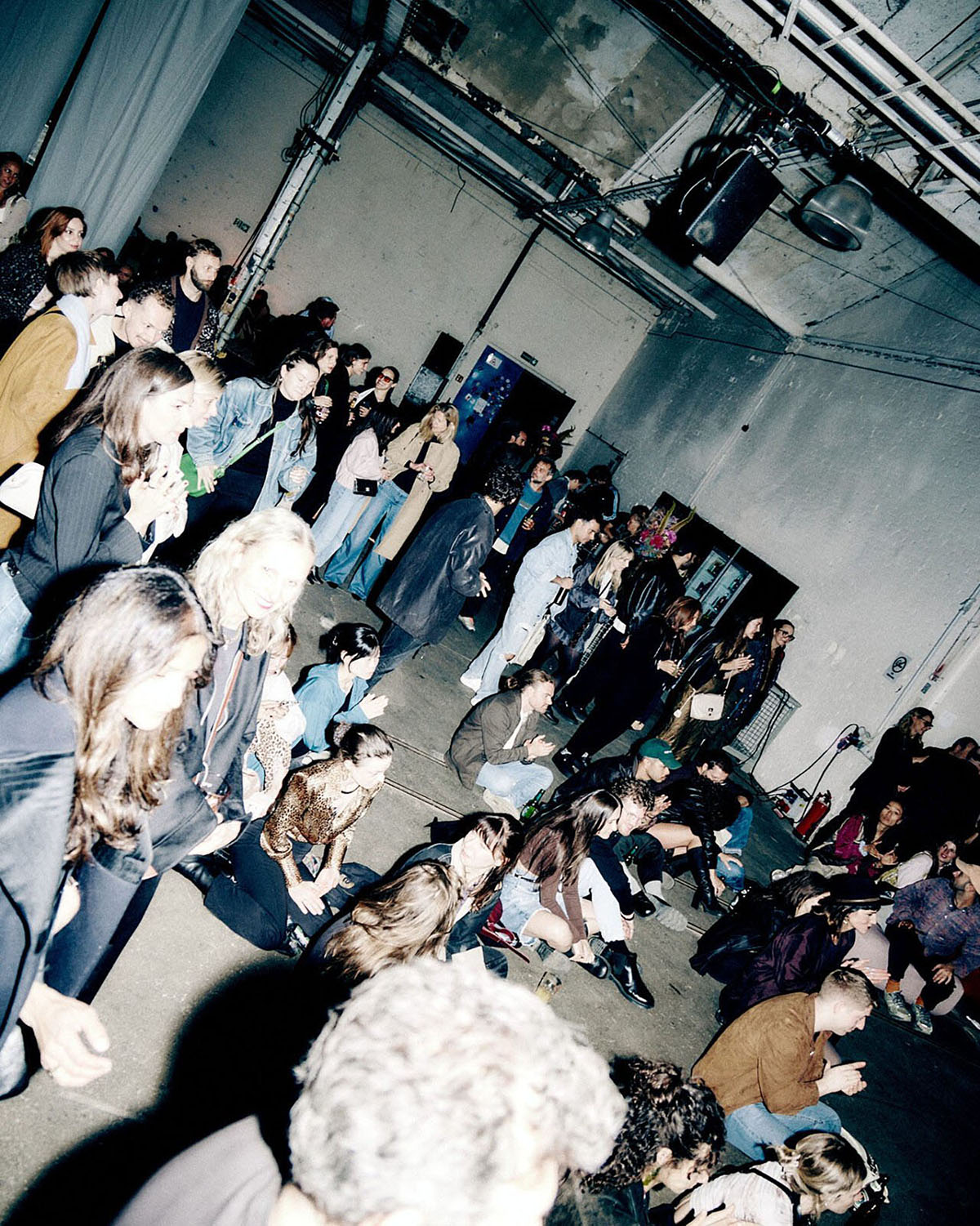
As part of the Open Houses, private collections open their doors with newly curated exhibitions and special opportunities to explore their holdings. Participating collections include the Boros Collection, Fluentum, Kienzle Art Foundation, the Miettinen Collection, Sammlung Hackelsberger, and Achim Freyer Kunsthaus. The Julia Stoschek Foundation marks the end of its Berlin chapter with a Closing Week programme. The „Meet the Artist“ series offers first-hand insights into artists’ work through conversations with collectors, including at Sammlung Ivo Wessel in the Taut-Haus am Engelbecken. Meanwhile, „Discovering Collections!“, a joint initiative by Berlin Art Week and Collection Night, gives registered visitors their first opportunity to explore five private collections that have never before been open to the public. For one day, haubrok foundation opens its doors with „Another Sunday Afternoon for Berlin Art Week“, featuring new exhibitions, open studios, and live events. Alongside the publication of the same name, „Hardcore. Die Ausstellung zum Buch“ presents works by artists including Karin Sander and Heimo Zobernig, while „HAR I“, featuring Seongwon Park, marks the first final exhibition of the Haubrok Artist Residency.
Further Highlights
Elsewhere, major awards, ambitious solo exhibitions, and thematic group shows offer further points of interest. Berlinische Galerie presents Jeewi Lee’s „Residual Memories“, the recipient of the Gasag Art Prize 2026. At Kindl— Centre for Contemporary Art, four exhibitions open simultaneously: Kira Freije’s „Between Sunlight“, Mischa Kuball’s „boiler house“, Thu-Van Tran’s „Write As Beasts Scream at Night“, and the artist duo Neozoon’s „together“. At C/O Berlin, Carrie Mae Weems presents the solo exhibition „The Heart of the Matter“, alongside „After Nature“, featuring works by Stelios Kallinikou and Susanne Kriemann as part of the Ulrike Crespo Photography Prize 26. Schering Stiftung presents „7 Summers“, the outcome of a collaborative artistic experiment by Diakron and Emil Rønn Andersen. Haus am Lützowplatz presents the group exhibition „On Landscape. Between Escapism and Disenchantment“, exploring landscape painting. nGbK presents „in touch— Goldrausch 2026“, featuring graduates of the women artists’ programme of the same name, accompanied by an extensive public programme.
More information about the programme: www.berlinartweek.de
Berlin Art Week is the largest collaborative initiative of Berlin’s contemporary art scene. From 9— 13 SEP, more than one hundred museums, galleries, project spaces, private collections, and an art fair open their doors to everyone who wants to discover, experience, and discuss contemporary art. Five days of exhibitions, performances, screenings, and talks across the city. Berlin Art Week is a project by Kulturprojekte Berlin. It is funded by the Senate Department for Economic Affairs, Energy and Public Enterprises and by the European Regional Development Fund (ERDF) through the Senate Department for Culture and Social Cohesion. The project is realised with the support of Berliner Volksbank eG.