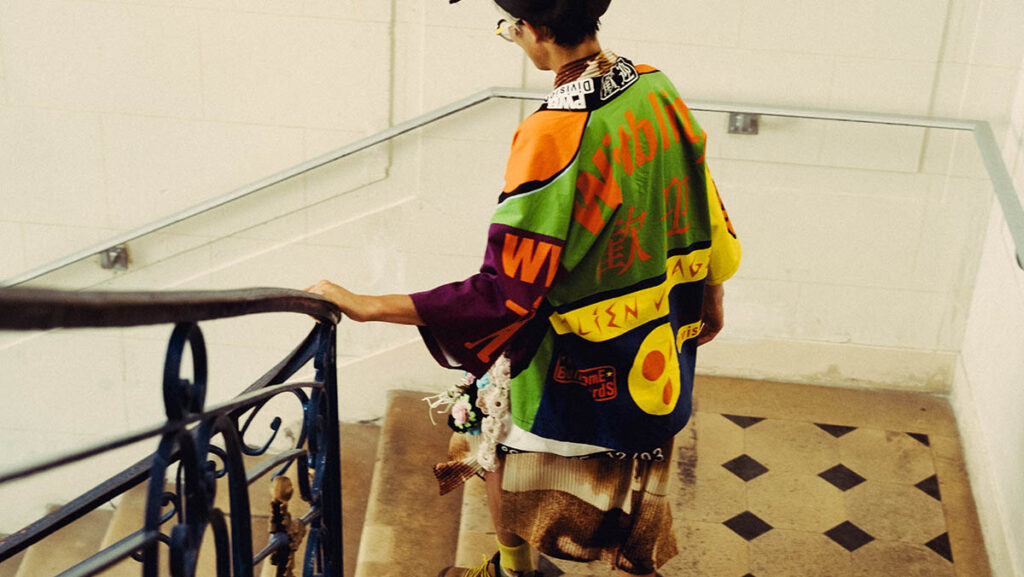
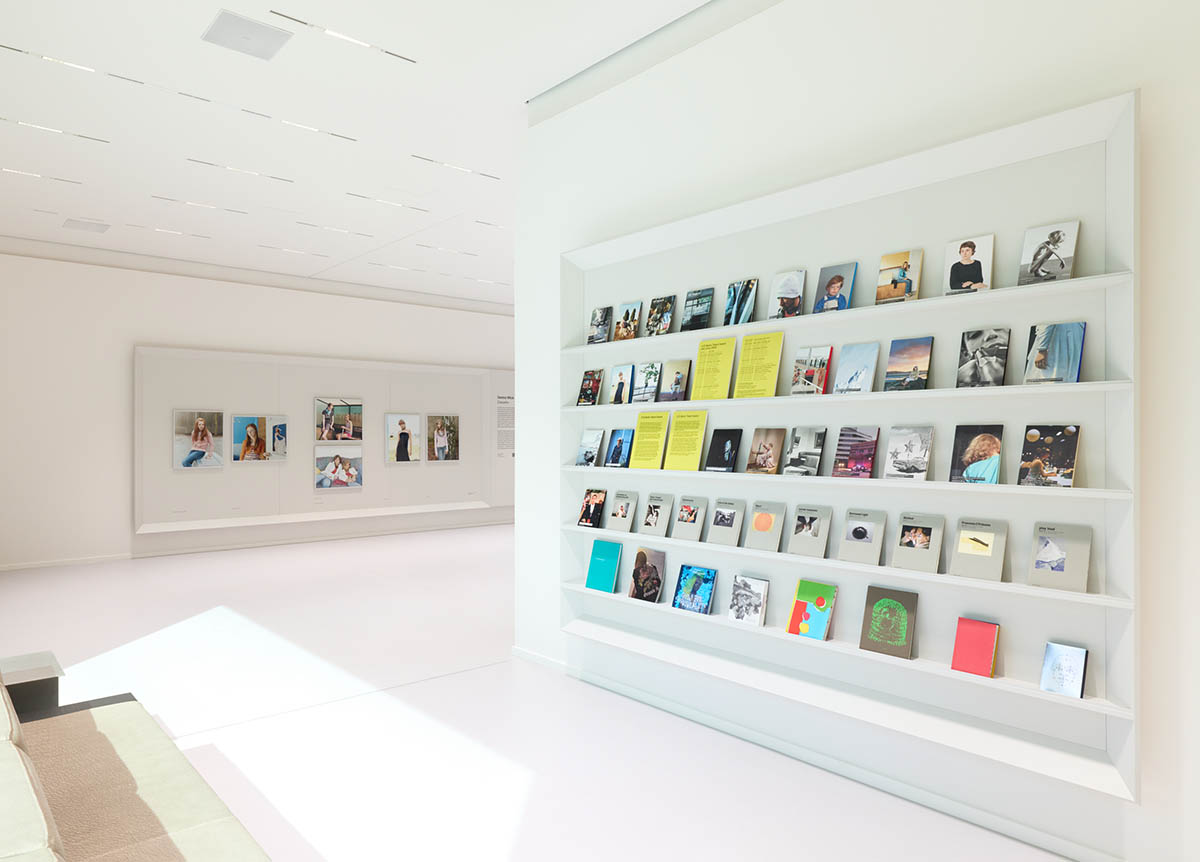
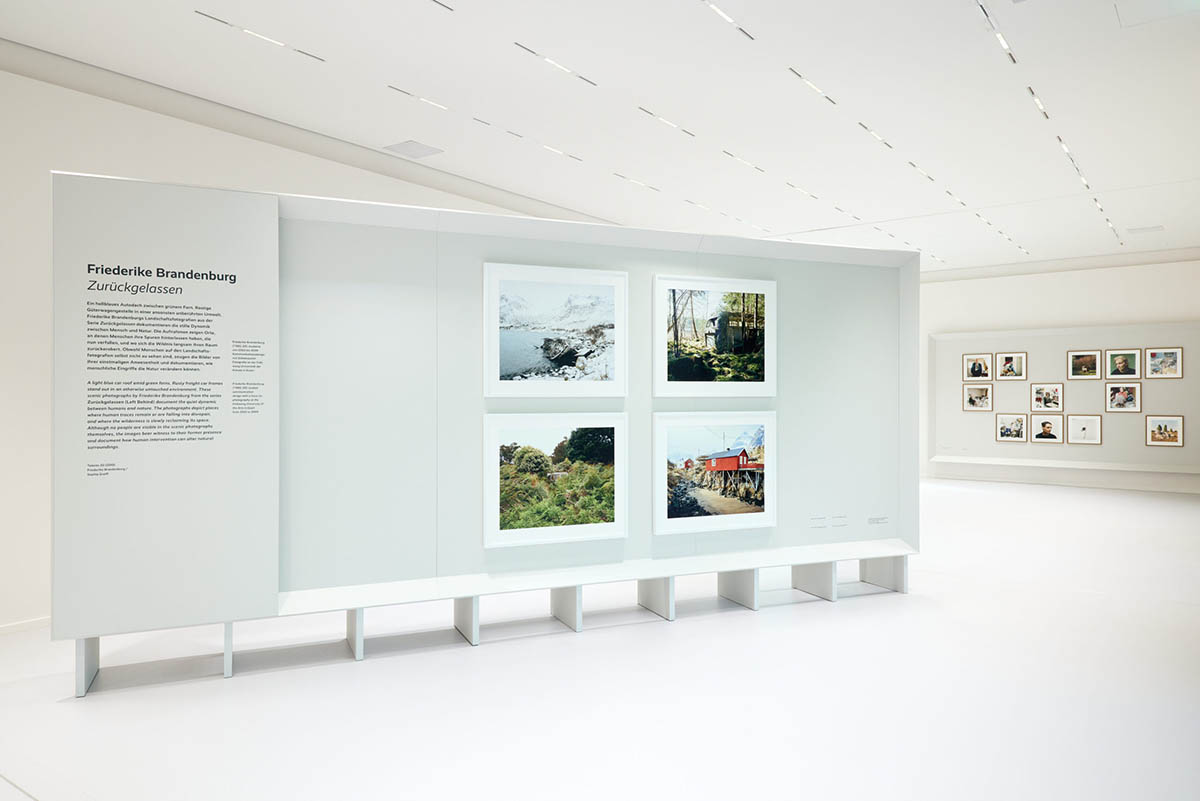
On view at the exhibition are photographic series ranging from an examination of documentary image forms and genres to the dissolution of the typical photographic image itself. The works retain installation-based, conceptual, and multimedia approaches. Documentary photography is presented not as a fixed genre but as a practice that is constantly evolving in response to technological and social conditions.
How did the partnership between C/O Berlin and the Alexander Tutsek-Stiftung come about, and to what extent did it influence the exhibition?
The C/O Berlin Talent Award was founded in 2006, has a long history, and is quite established. The Alexander Tutsek-Stiftung has been financing and closely accompanying this program for the last six years. Last year, the exhibition was held at C/O Berlin. We had always planned to move the exhibition to Munich to showcase it in a new context and make it accessible to a new audience.
The exhibition has been adapted for the new special arrangements and architecture at the Alexander Tutsek-Stiftung and is titled Photography in Flux. 20 Years C/O Berlin Talent Award. The title in this case clearly communicates the focus on photography and lens-based media, since the Alexander Tutsek-Stiftung has different focuses in its program and collection; that was an important move to make. The exhibition at the Alexander Tutsek-Stiftung in Munich will have an extension of the work by Karolina Wojtas. One room in the foundation offered a perfect opportunity to exhibit more of that particular project.
Nearly fifty publications of the C/O Berlin Talent Award throughout the years will be on view. In this context, the books will function like a physical timeline. The broad practices of the award winners are visible, but also the evolving process of the publication format. Visitors can see how many projects have won the prize over the years and grasp its scale.
Was it challenging for you to select the works and trace the thread connecting different photography works spanning the last two decades?
The prize itself, much like photography as a medium, was always in flux. It started with C/O Berlin’s curatorial team directly approaching artists and writers, inviting them to take part. Then it developed into a more formal jury process, then an application process, first by post, then digitally, and now it’s a fully open call-based process. Other curators had handled the Talent Award program at C/O Berlin before me. Thankfully, there have been around 50 publications since the very beginning of the Award, which have helped my process a lot. I went through all the images and texts; it took quite some time to review everything and find similarities across the projects.
What I did find, though, was a recurring focus on documentary questions: not only documentary photography as a genre necessarily, but questioning the notion of truth, appearance, and meaning construction. For the past five years, up to 2025, C/O Berlin had an overarching theme, “New Documentary Strategies,” running through the C/O Berlin Talent Award. Projects from 2020 to 2025 engaged with these questions quite directly. During my research, I then realized that the earlier projects raised the same questions in different ways. This is why the theme of questioning documentary became the red thread I built the exhibition around.
The fact that the prize has run for twenty years means there’s a kind of loose generational continuity, coming from different backgrounds, practices, and focuses. How did you position the works spatially, and how did that change for the presentation at the Alexander Tutsek-Stiftung in Munich?
The argument I wanted to make was about the state of being in flux in the context of photography, especially documentary photography. From early on, I was sure I would rather not show the works chronologically. As a result, you can see development from more two-dimensional, classic documentary work toward more expansive, expanded-media work, where the documentary image starts to lose its strictly two-dimensional form.
The exhibition starts with an introduction to what most people would perceive as the documentary image: the kind we know from magazines and traditional exhibitions. From there, it moves into questions of how we identify documentary work through its form and how it communicates: what is documentary reality, and how do different artists play with narrative or visual strategy around that idea.
At C/O Berlin, the exhibition had four chapters. I essentially combined the first two Berlin chapters into a single chapter for Munich titled Documentary Reality and the third and fourth Berlin chapters into a second chapter titled Expanded Visual Worlds. That also shaped the form of the exhibition, because it would have felt too fragmented to subdivide the lower floor of the foundation building further into subchapters. We chose to let the architecture guide the structure. The move from the lower to the upper floor presents the shift into a new chapter.
Give some more examples from the actual chapters: how the works represent the questions or segments you envisioned.
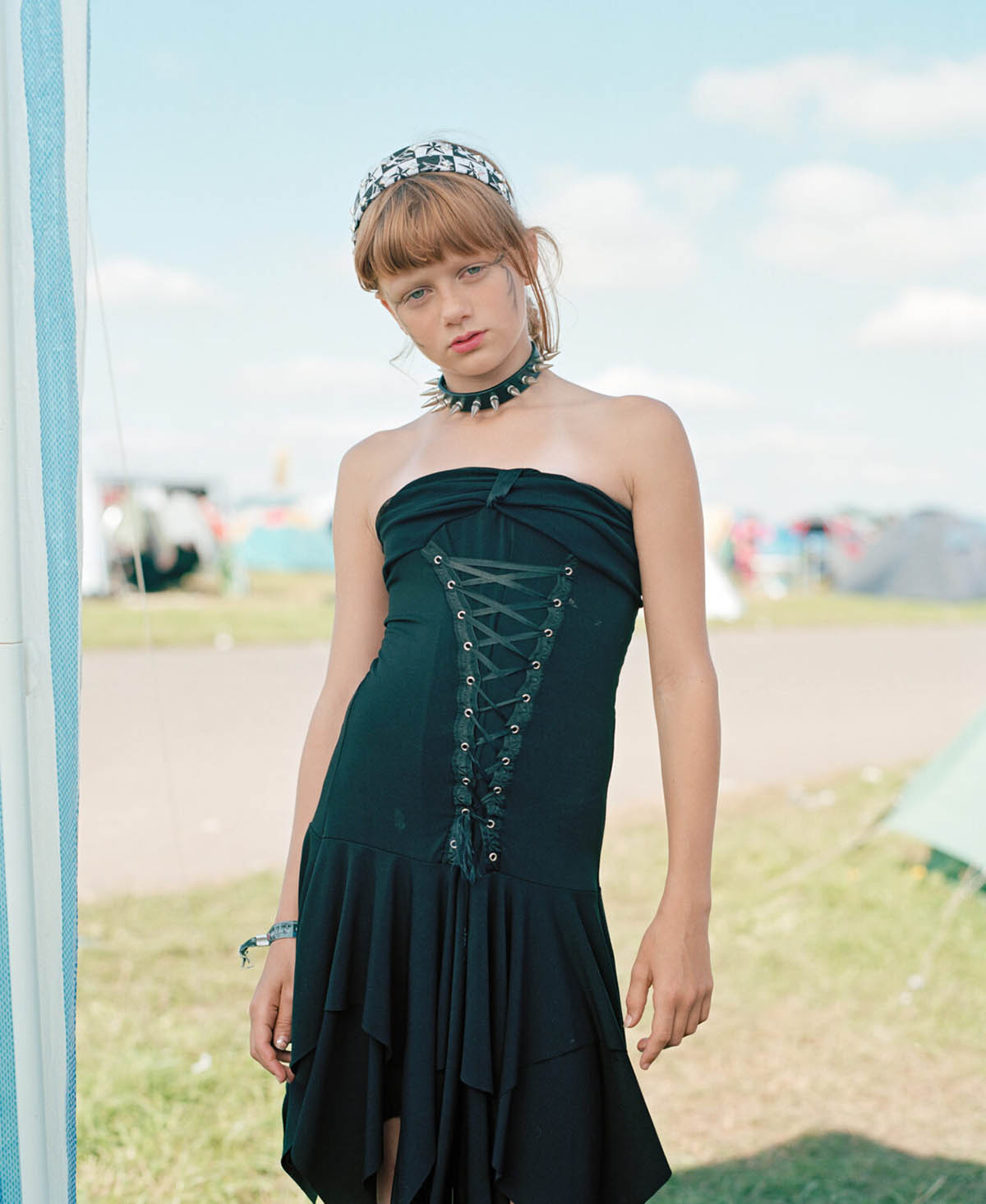
The exhibition opens by presenting a range of photographic genres that can all, in some way, be considered documentary. A landscape work by Friederike Brandenburg, a portrait series by Janina Wick—a series made up entirely of portraits of thirteen-year-old girls—and a piece by Sibylle Fendt dealing with people who have a pathological collecting disorder. These are entirely different genres, but they all have a documentary quality, and you can ask each of them the same kinds of questions: What exactly are they documenting, and in what way?
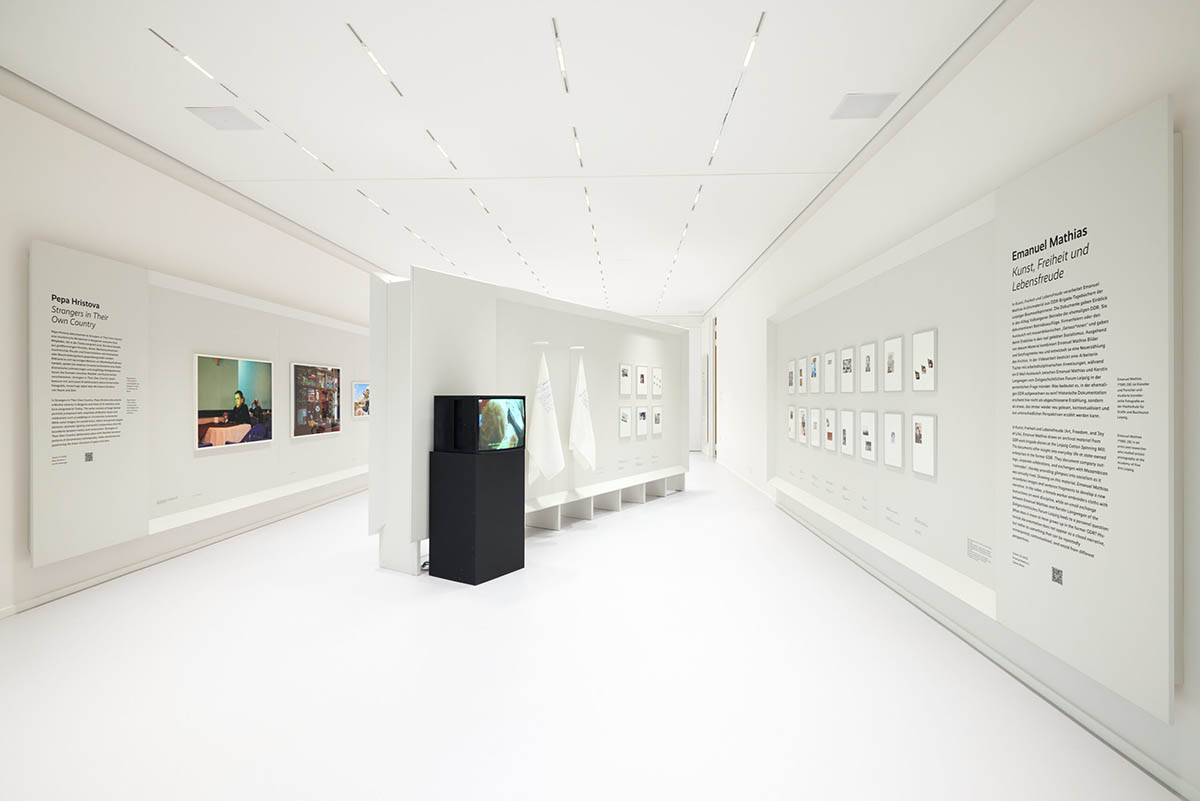
From there, the chapter expands into less linear, more fragmented approaches. Tobias Zielony documents in a much more fragmented way, showing scenes of young people hanging out on the outskirts of LA, but building more of an association out of these different motifs rather than a linear narrative. It’s really about the body of work as a whole rather than one image leading into the next. Then there are other works, for example, Florian van Roekel, that include staged elements, so you find yourself asking, Is this staged, or is it playing with the appearance of being staged? And there’s Emanuel Mathias, who works with archival material, which is interesting too, because documentary photography doesn’t always mean taking your own images; it can also mean re-narrating existing material. Karolina Wojtas, whose work speaks about harsh discipline and authority within the Polish school system. She works from her memory, staging images in a deliberately exaggerated way. There’s one image where a pen is glued to her hand, as if she’s being forced to keep writing. It’s a more associative body of work, playing with her memories but also involving her younger brother, who’s still in school.
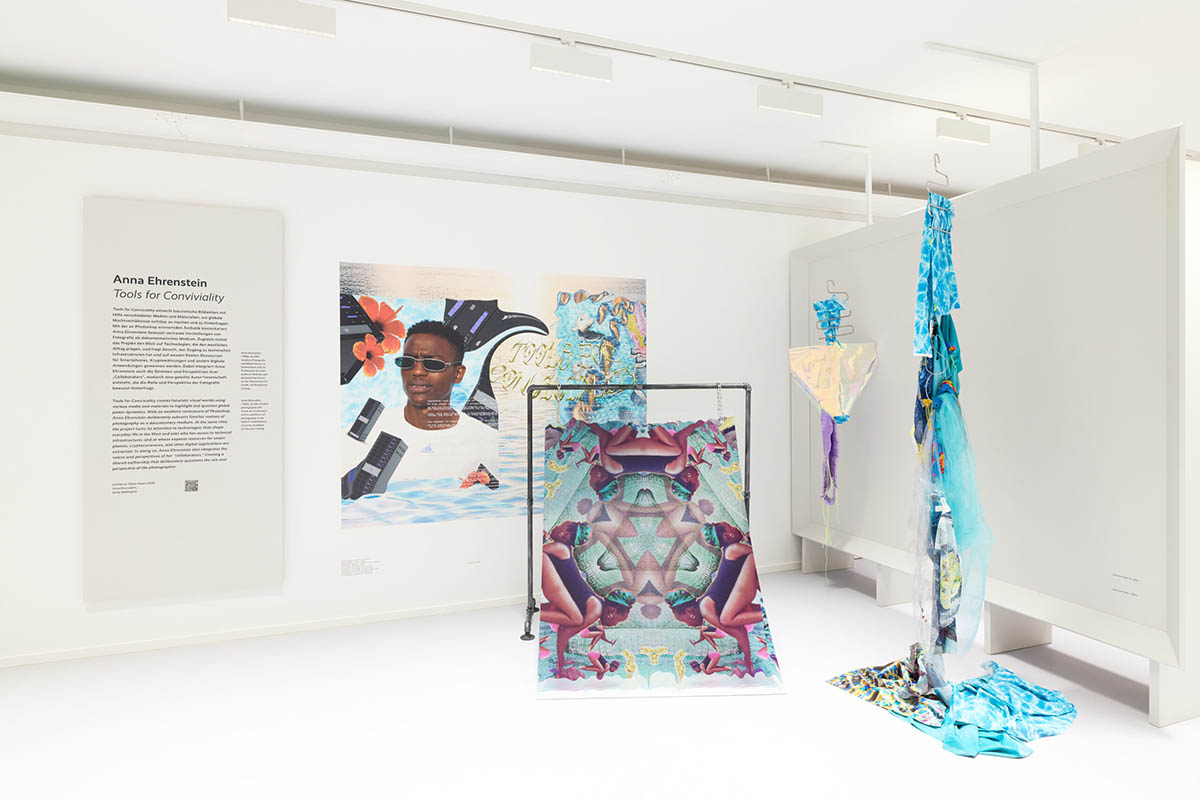
Slowly, things move toward different documentary media (three-dimensional or moving images) and a second chapter, Expanded Visual Worlds. There’s a work by Sylvain Couzinet-Jacques made entirely of moving image—actually the first work to win the C/O Berlin Talent Award using only moving image, in 2019. It is an impressive twelve-hour-long video capturing young people at the Victory Arch in Madrid. Then there’s Adji Dieye and Anna Ehrenstein—they translate the documentary image onto different materials. Adji Dieye works with the archival material from Senegal’s national archive onto silk, and Anna Ehrenstein works with diverse materials to build a visual world. These works aren’t about the single image anymore; they’re about building a whole new visual system.
Those works are more of an installative than photographic nature, one could say?
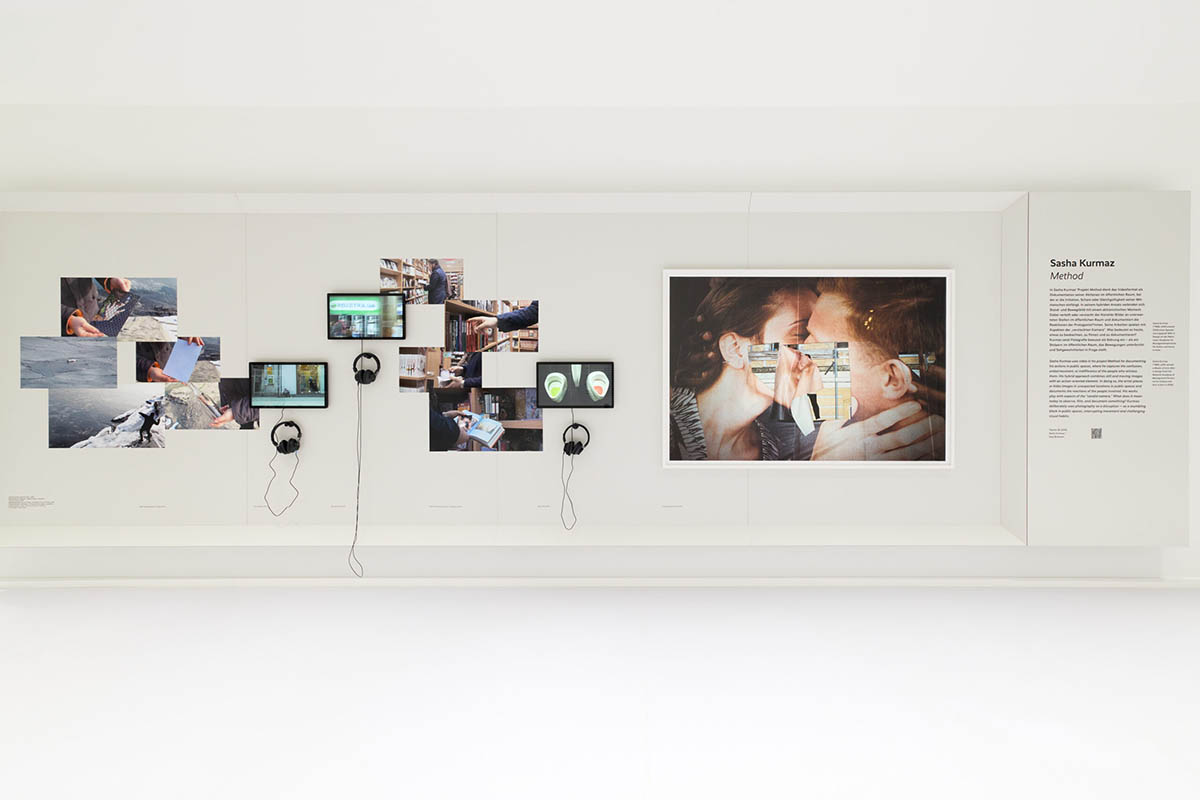
It’s about finding yourself within a visual world the artist has constructed. Sasha Kurmaz’s work combines disciplines—it starts with him secretly photographing people, then confronts them with the photographs and films their reaction. He is an artist working across media. What he does is performance art in a way; it’s video art, but it’s also rooted in photography. All combined into one work.
I find this work to be the most surprising in this chapter: a work by Willem Popelier from 2012; it’s about the algorithmic categorization of images—AI is using these mechanisms, and surely, these days, it can also categorize images itself. He used a large dataset of images of Obama from his weekly presidential addresses and categorized them himself: Obama with a tie, Obama against a skyscraper backdrop, Obama in his office. The artist was doing it by hand, what’s now often used by AI, and this work is already fourteen years old, positioned next to works that were made five years ago. And then there’s a piece by Ivonne Thein, also an older project from 2008; this series shows how digital image manipulation can deceive you. It deals with anorexia, specifically early internet forums where people with anorexia would communicate and share images. She manipulated these images to make the figures appear even thinner, fooling viewers. It’s interesting because we get fooled by images constantly these days, with AI-generated images, for instance. Today we’re learning to spot generated images. Back then, eyes were less trained, and the work carried a different weight.
Historically, you’d associate technical experimentation with left-leaning, liberal, even underground spaces. The artists are often among the first to sense or intuit where a technology or a societal shift is heading, long before it’s obvious. That’s been proven again and again. It’s strange, in a way, how today’s political landscape has learned fully to exploit that same capability for its purposes.
It’s fascinating that we’re constantly learning as images and their contexts evolve: how we consume them and how we adapt to them.
I contacted all the artists and writers involved, and asked them: Do you look at your own work differently today? Would you do anything differently now? Some said no, they wouldn’t change anything; others said yes, absolutely, they see it completely differently now. Which is interesting in itself—how time changes the way you look at your own work in connection to all the aspects that surround it and the time that has passed.
Will you be giving guided tours yourself as curator? Tell us a bit about the program planned after the opening.
A fairly big program is coming up. A lot of the artists are traveling to Munich and will be present for the opening. The Alexander Tutsek-Stiftung puts real effort into bringing in different audiences and adapting their program to the location, a business district in Munich. I will be doing curator-led tours.
In collaboration with DER GREIF Magazine, we are doing the talk. DER GREIF is a fairly major platform and our media partner for the C/O Berlin Talent Award. DER GREIF has its headquarters in Munich and is supported by the Alexander Tutsek-Stiftung. So, we thought it made sense to do something together, especially since the talk will be about awards in general, how they help start artists‘ careers, and what’s changed over the years with the C/O Berlin Talent Award specifically. The talk will give a behind-the-scenes view of the Talent Award. The talk is scheduled for the 14th of January, with Anna Ehrenstein, Tobias Zielony, and Katrin Bauer. Works by Anna Ehrenstein and Tobias Zielony are part of the exhibition, and Katrin Bauer won the prize in 2024 in the writer section. We’ll talk about how the award helped their careers.
Group Exhibition: Photography in Flux. 20 Years C/O Berlin Talent Award
Curated by: Veronika Epple (C/O Berlin) | Adaptation Munich: Julia Hürner-Mensing (Alexander Tutsek-Stiftung)
Featuring works by Friederike Brandenburg, Sylvain Couzinet-Jacques, Adji Dieye, Anna Ehrenstein, Sibylle Fendt, Pepa Hristova, Sasha Kurmaz, Emanuel Mathias, Willem Popelier, Florian van Roekel, Ivonne Thein, Janina Wick, Karolina Wojtas, and Tobias Zielony
Exhibition duration: October 16, 2026 – February 25, 2027
Opening: October 15, 2026, 6:00 PM
Extended hours during the opening weekend, October 16–18, 2026, 12:00 PM–6:00 PM daily.
Address and Contact:
Alexander Tutsek-Stiftung
Georg-Muche-Straße 4, 80807 Munich
Open: Sun–Thu and on holidays, 12:00 PM–6:00 PM; free admission
www.atstiftung.de
A diverse accompanying program complements the exhibition, featuring guided tours, breakfast clubs, lunch breaks, a talk, and curator-led tours. View all upcoming events here.
Veronika Epple is a curator at C/O Berlin. She oversees the C/O Berlin Talent Award, a prize designed to support emerging young photographers and authors. Previously, she worked as a freelance research assistant for the Evelyn Richter and Ursula Arnold Archive of the East German Savings Banks Foundation at the Museum of Fine Arts in Leipzig. As a doctoral candidate at Humboldt University of Berlin, she is conducting research on East German documentary photography and university networks in the former GDR. Veronika Epple receives support from the Alexander Tutsek-Stiftung as part of the “Young Curators” grant program. The program enables curators to conceive and implement exhibitions and, where appropriate, to produce an accompanying publication.
The Alexander Tutsek-Stiftung in Munich supports the arts and sciences. Founded in 2000 as a nonprofit foundation by entrepreneur Alexander Tutsek and scholar Dr. Eva-Maria Fahrner-Tutsek. Its vision is a vibrant world of art and science that drives social progress and contributes to successful human coexistence. Through its commitment to and funding of projects, the foundation focuses on neglected, overlooked, or unique and specialized areas in the arts and sciences. Since 2020, the Alexander Tutsek-Stiftung has made the C/O Berlin Talent Award possible through its substantial financial support and, since 2023, as part of the „Young Curators“ grant program, also supports Veronika Epple. The program enables curators to conceive and implement exhibitions.