Her style has evolved over the years: from symbolic forms to more abstract ones. In this interview, she talks about this journey and her current series.
How has your visual language evolved over the years, and what has remained constant?
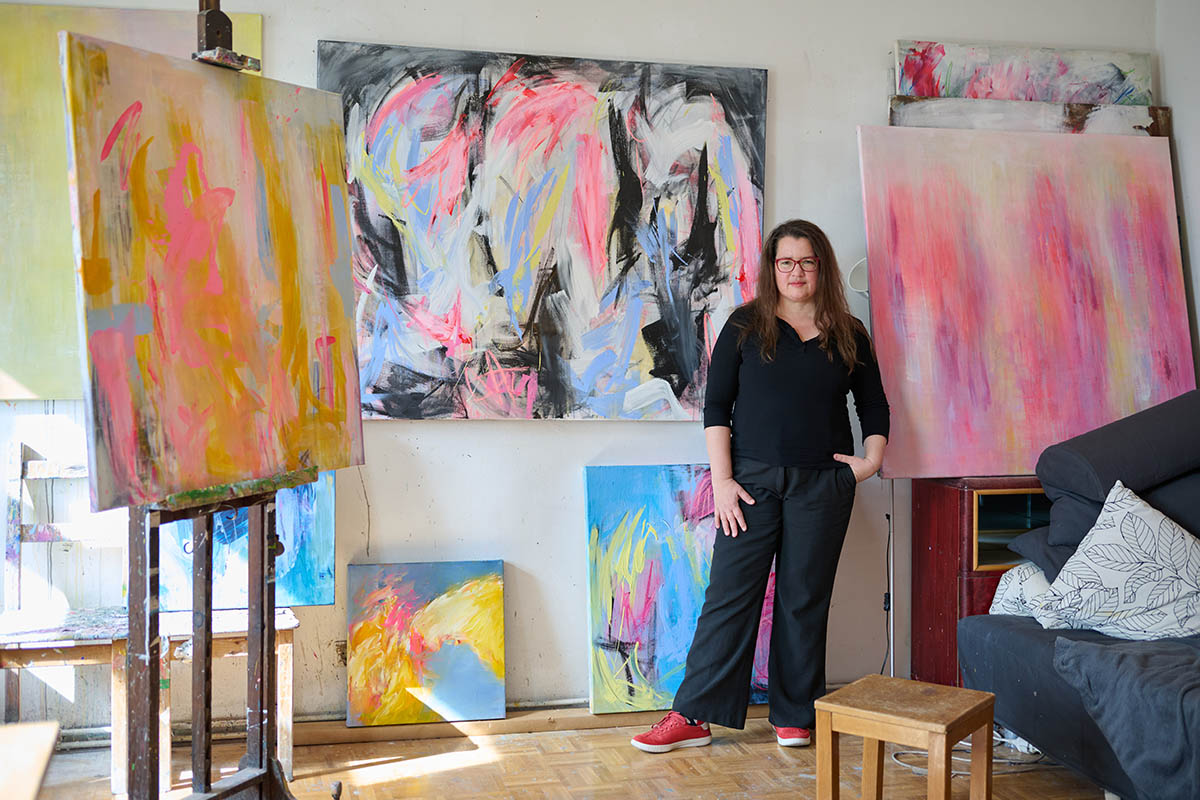
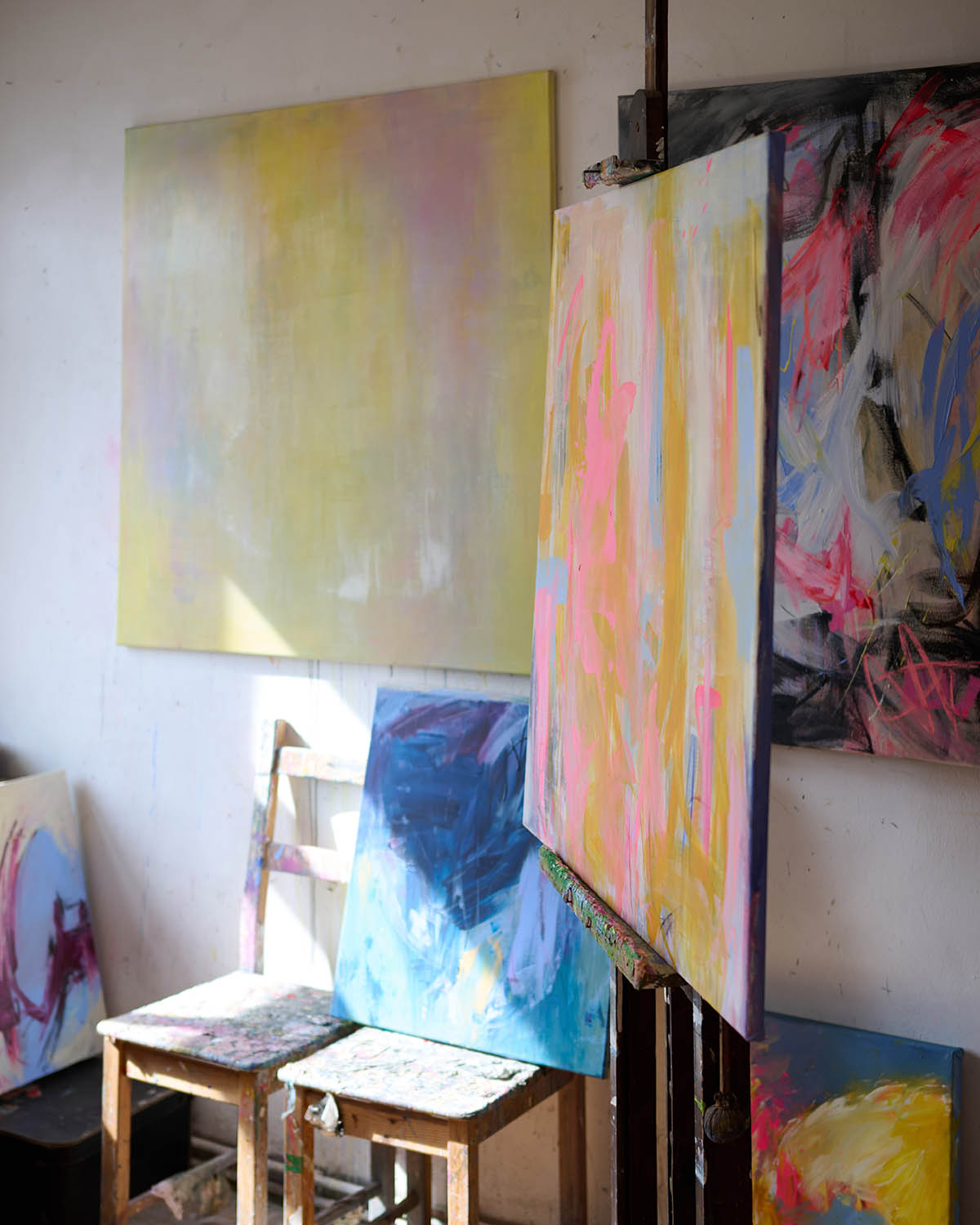
Over the years, my work developed into a coherent practice. After experimentation with forms, colors, and different brush movement techniques, I can continue working in this direction. I have landed on a strong painterly style. In the past, it was more symbolic, with calmer circular forms, many lines, and strokes. Then, for a while, it became more representational. Now I feel it is just the right amount of everything I can offer. I find the contrast with my older works very intriguing. The newest works feel to me like a continuation of the whole. I definitely have both sides within me—not always just the wild and powerful, but also the calm.
Would you say that this development is important? After all, new things have likely emerged.
Yes, I think so. There were times when I experimented a lot. You have to try different things and see what feels right. There are works I made years ago that I still like, but they don’t quite feel like me anymore.
You continue to develop and mature as a person over years, and I believe art matures along with you in the same way.
Recently, I’ve made a conscious effort to integrate my musical background into my work and to develop my visual language in that direction. It’s significant to me to establish this connection between music and painting and to show that music is actually always present in my work.
How would you describe the creative process behind your paintings? How do you work?
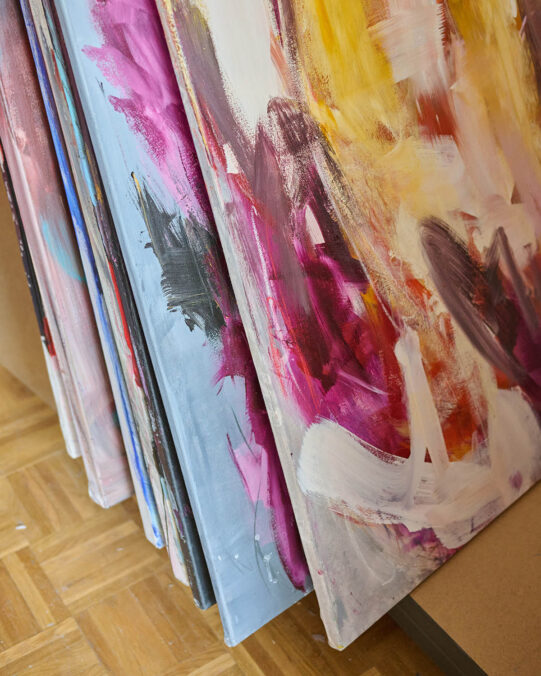
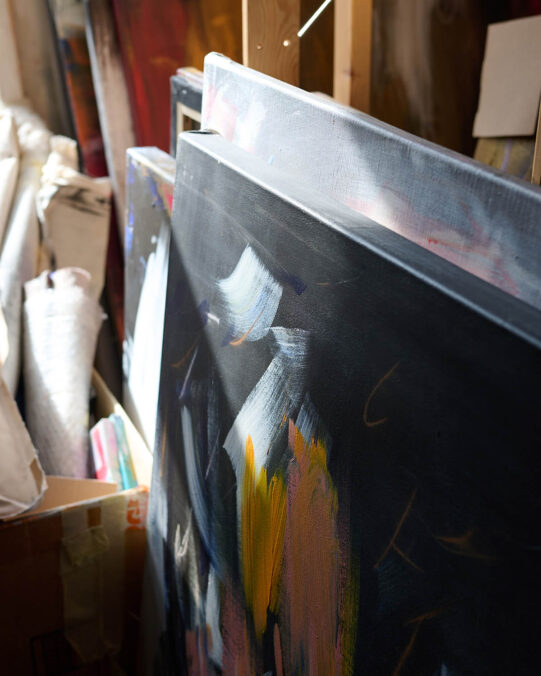
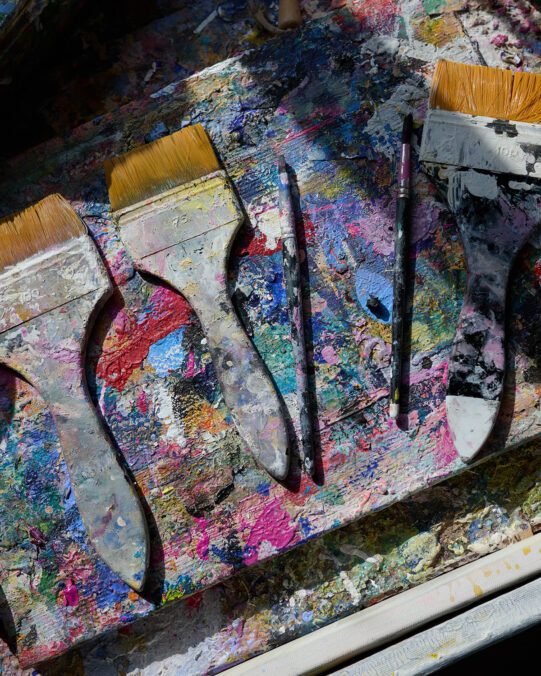
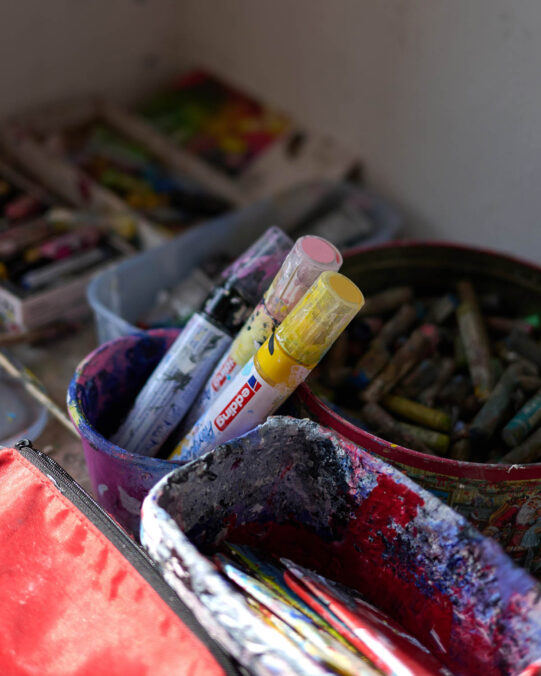
I usually spend around six hours in the studio. I usually paint several times a week. On the other days, I take care of everything related to my work. When I am painting, my process changes throughout the day; for example, in the morning, I begin very calmly. That’s my personal time for quiet and concentration. In the morning, I often start with the first layers and prime the backgrounds. For me, it’s a very calm process. I work on various canvases at the same time. There’s typically a moment during the day, in the afternoon—when I really get into the flow. That’s when it becomes much more expressive and intense, almost ecstatic times, where a lot happens.
The process is physically and mentally hard because you’re fully focused and under tension the whole time.
Do you listen to music while you work, too?
I frequently listen to the same music, over and over again; it just puts me in the right mood for work.
What do you actually enjoy most about being in the studio?
The studio is a place where I can find my footing and let myself unfold. I regularly come up with entirely new ideas there. In my studio, I let my thoughts flow freely whilst jotting them down as I paint. I try to stay fully in the here and now and concentrate on working with my hands.
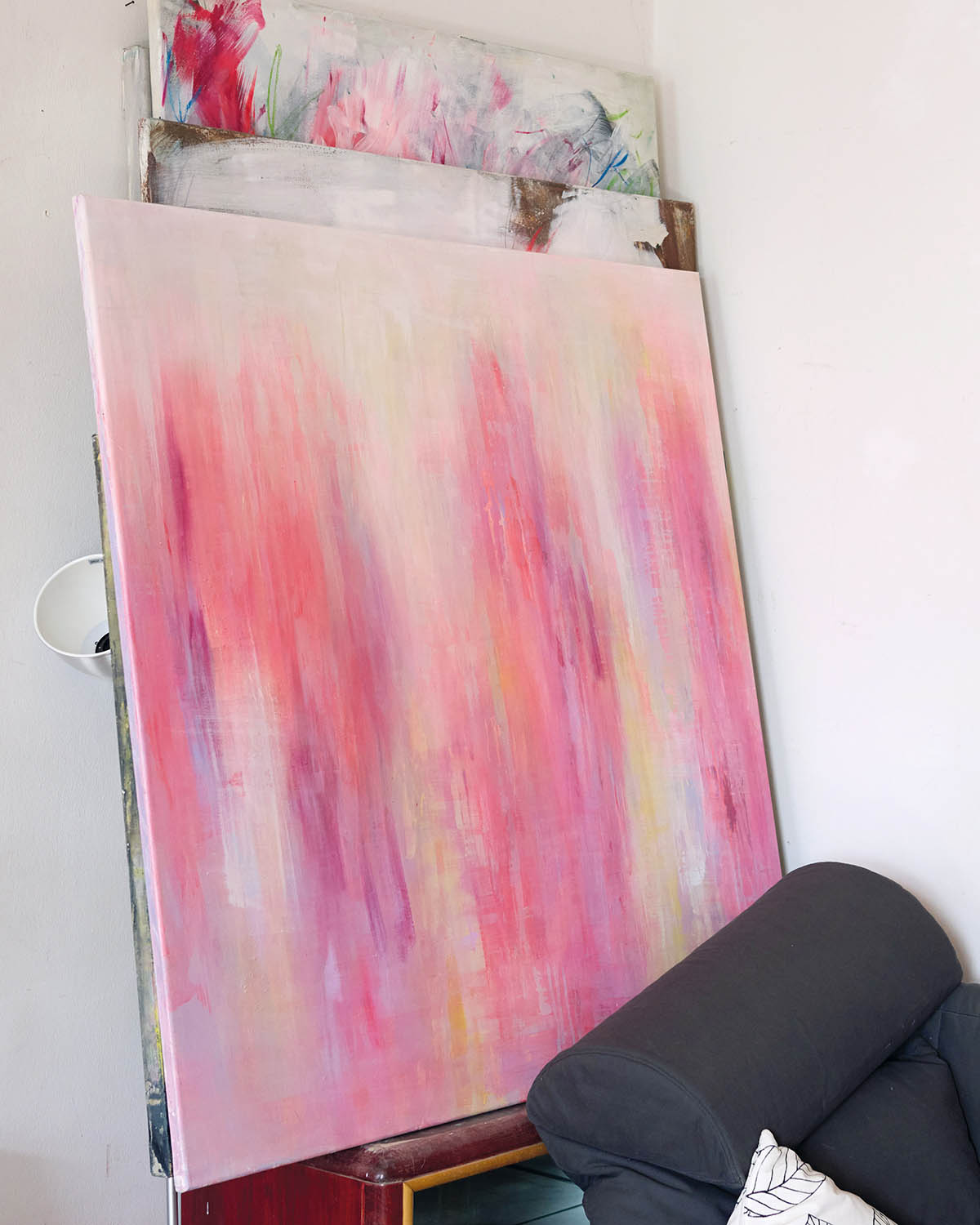
Alongside your previous series, you’ve now developed a new style. How did that come about?
These images were created at the beginning of the year, in January. I wanted to capture the special time when the year is just beginning. Silence is a state I’m always seeking, but one I find only with difficulty. The images are usually created in the morning. I find the contrast with my other works very intriguing. At the same time, it feels like a continuation of the whole. I have both sides within me: not always the wild and powerful one, but also the calm one.
Can you tell me more about the work ”Elysium”?
The series to which this painting belongs is actually called “Transcendence.” For this series, I created several works using this color palette of red, white, and brown. My main goal was to find peace again and immerse myself completely in the painting process and the creation of the work, to consciously experience the process and perceive it more intensely. The work evokes the transcendent state of ecstasy: stepping out of everyday consciousness and entering another plane of being. The title points to a longing for unity, for paradise.
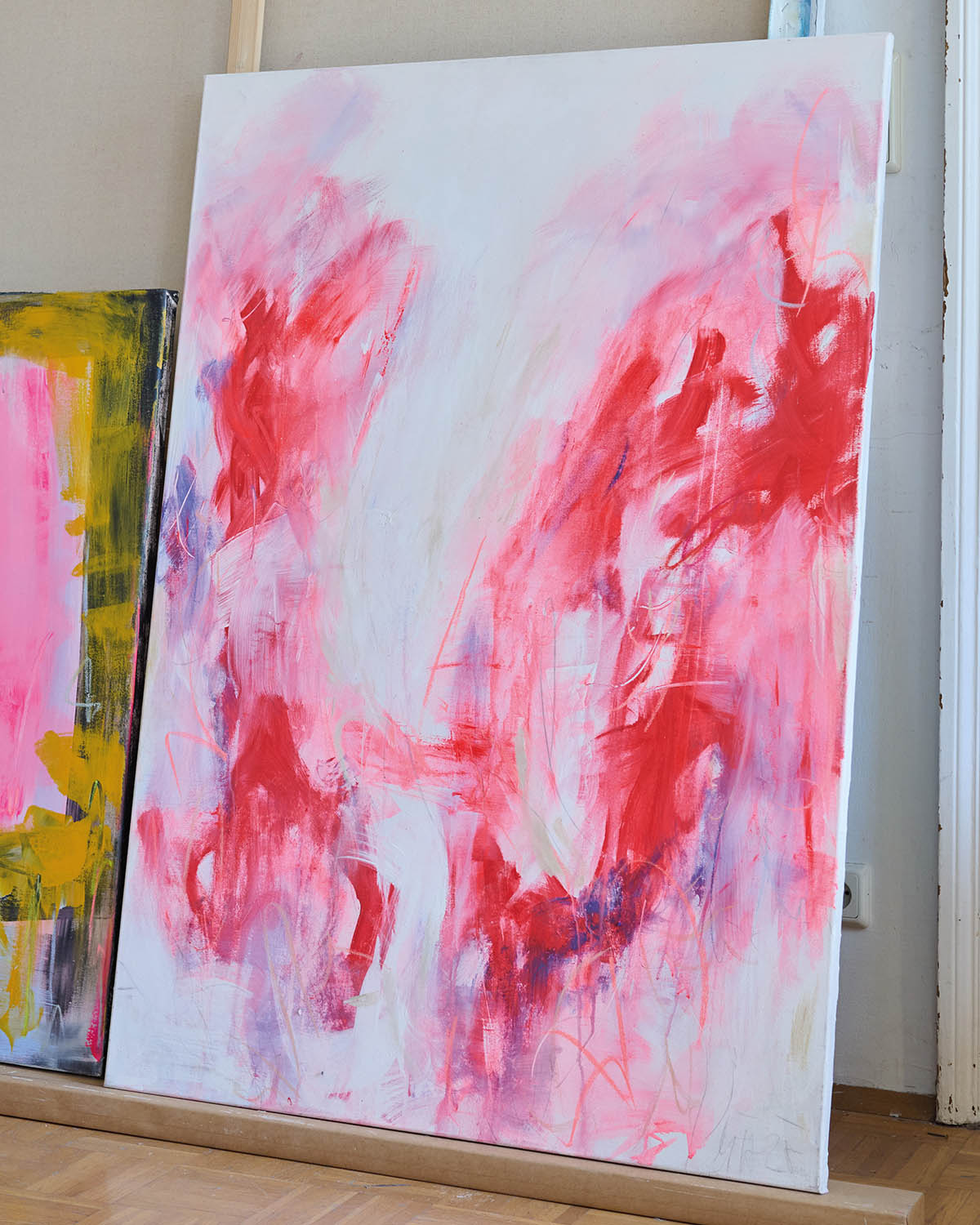
The “Zuversicht” (confidence) series from 2025, as you say, oscillates between melancholy and confidence. Can you tell me more about it?
In 2025, I was consuming too much media, I would say, and because of this overconsumption, I wanted to create and produce a work with a positive counterpoint. A positive state that exists simultaneously to my worries and concerns about what I hear happening around me. The titles of my works are so important to me; they allow me to express these contradictions between melancholy and confidence, and so on.
Do the seasons of the year play a role in your work?
Yes, in 2020, I created a seasonal cycle with four series of works. You can feel in those works how much the seasons can influence you, in this case me and my states and my ways of painting.
What’s your favorite season?
Spring. Every year spring brings new opportunities and a fresh start. It’s just wonderful to see nature come to life after a long winter.
Are certain feelings easier to translate into painting than others?
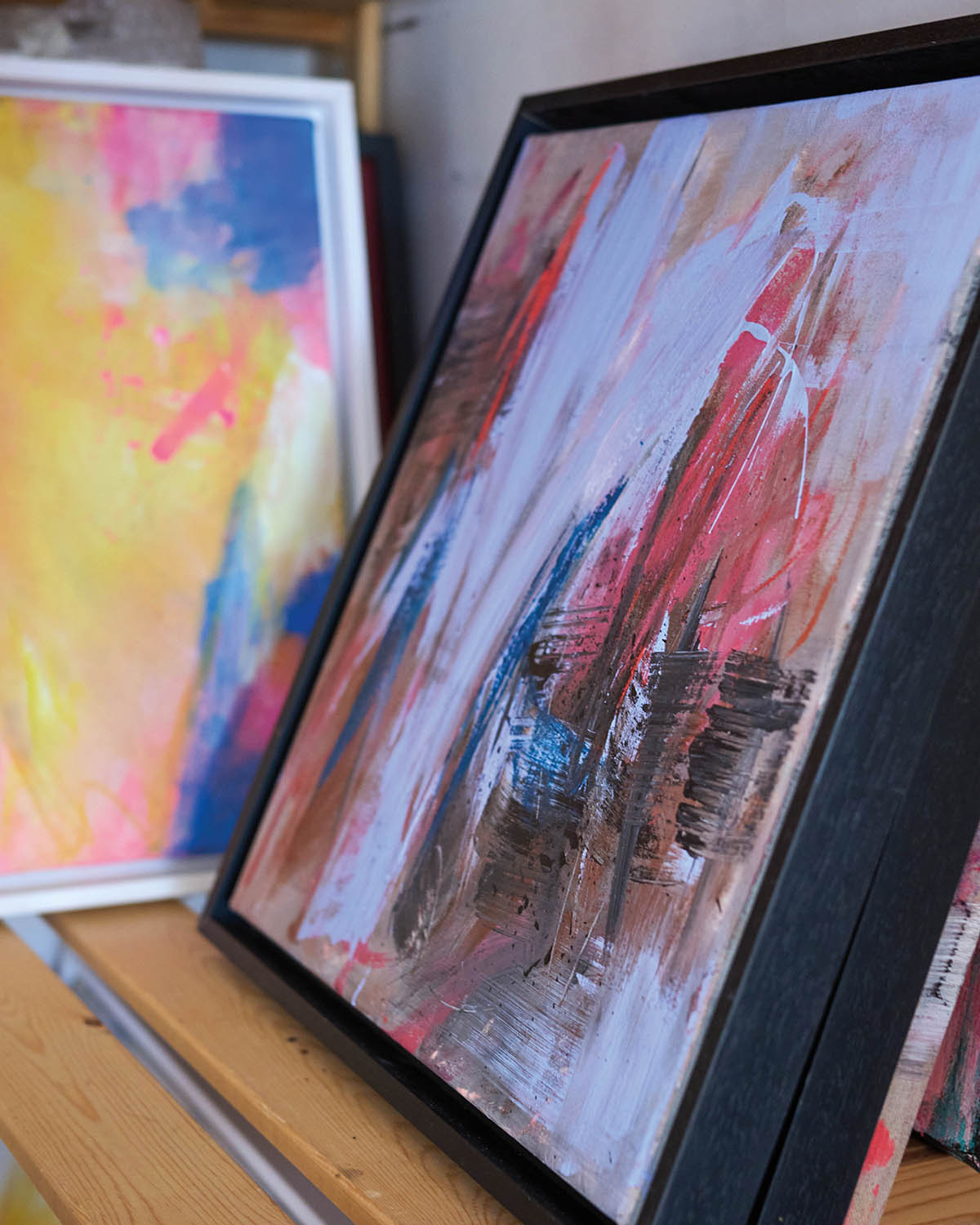
I never paint when I’m feeling down. For me, painting isn’t self-therapy. The paint should take on its own. At some point it can become very exhausting, but that is the thrill for me. Whenever I look at the painting in front of me and realize it’s not quite finished yet, I calm it down again, paint over areas, or add new accents. This is my play with the feelings inside the painting itself.
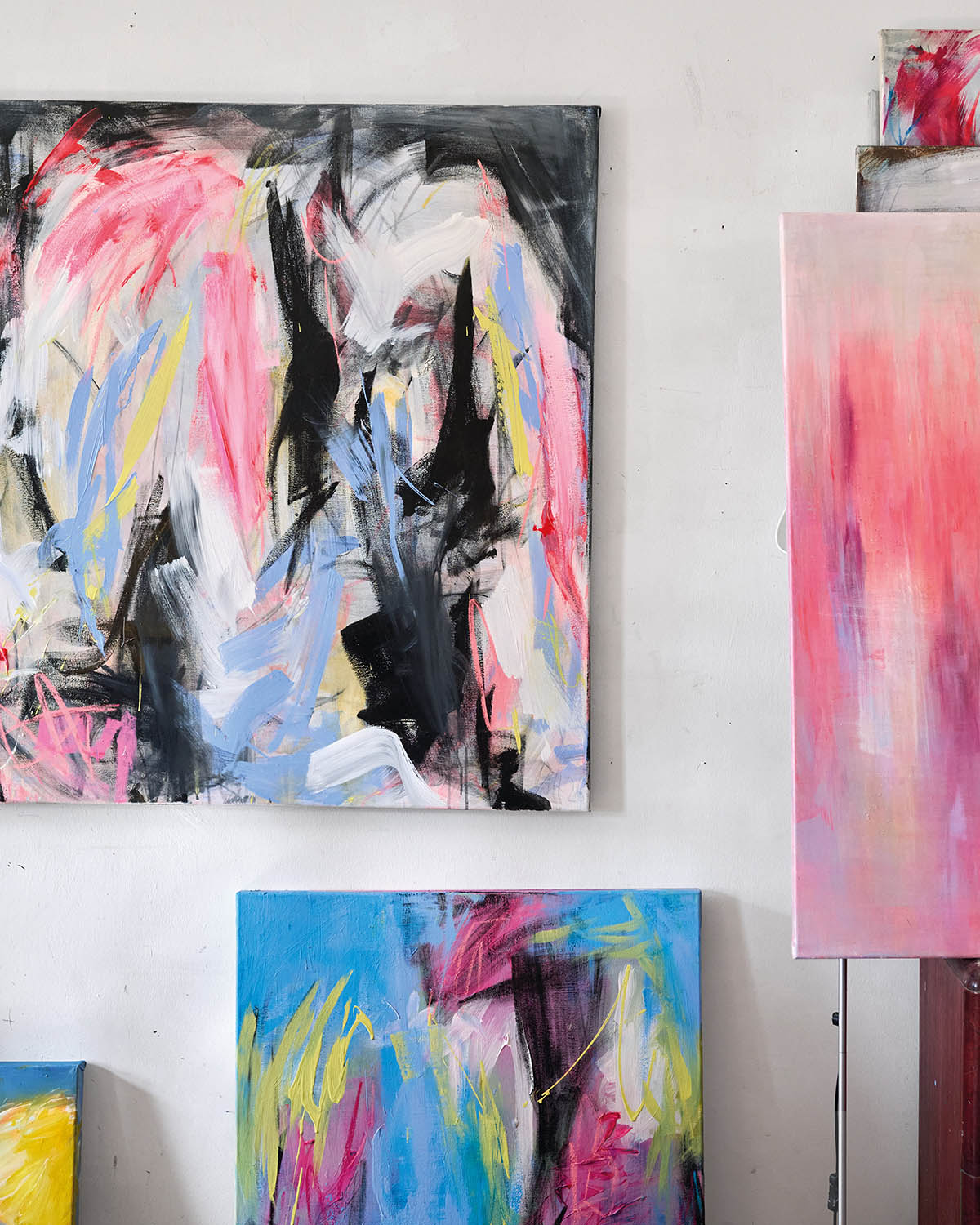
Which color palette are you currently most interested in?
Light blue, pink, and light yellow. The combination creates a very lively energy. Blue and pink form a beautiful contrast, while the yellow ties the colors together again and brings harmony to the mix.
Currently on view:
Solo exhibition: Monika Herschberger – ESSENCE
Exhibition duration: 9 October – 3 November 2026
Venue: FIVE PLUS ART GALLERY, Wiedner Hauptstrasse 40, 1040 Vienna
Opening hours: Tuesday and Thursday 4–6 pm · Wednesday 12–6 pm · Friday 11:30 am–6:30 pm
Upcoming Exhibition:
Exhibition: MOVE
Exhibition duration: 23 October – 27 November 2026
Opening: 22 October 2026 at 6 pm
Venue: Private Gallery Roland Puschitz, meeting point: Wieden Bräu, Waaggasse 5, 1040 Vienna, Austria
Opening hours: Wednesday–Saturday, 2–7 pm · Sunday, 2–5 pm
Further information and upcoming exhibition dates: www.herschberger.at/news
Monika Herschberger – www.herschberger.at, www.instagram.com/herschberger_art/