You studied at the University of Applied Arts Vienna (Department of Photography/Fine Arts, Gabriele Rothemann), and currently you live in Berlin. What’s it like living in Berlin?
I moved to Berlin during the last years of my studies, and I’ve been based here since the start of the pandemic. Even before that, I have been coming frequently, drawn to the openness but also to the intensity that defined the city’s club culture at the time. What drew me in was mostly people, the cultural variety, and vibrant exchange, which led to many collaborations I had in Berlin over the years. Being a foreigner didn’t matter much (probably as long as you had a European passport); people came from all over, and that gave me the space to free myself from certain ways of thinking tied to my upbringing and the culture I was familiar with. Since I’m from Slovakia, where I also lived during my studies, Vienna felt a little too close to home.
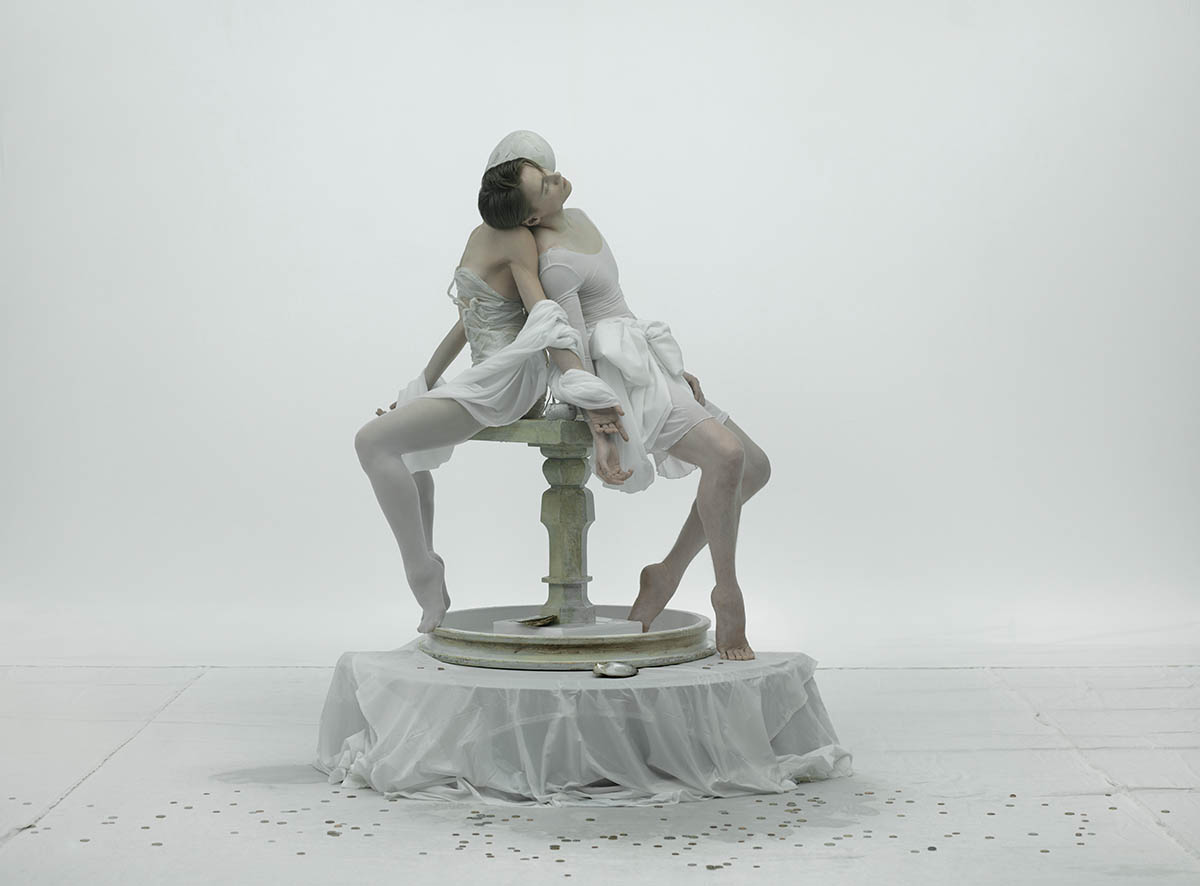
Additionally, each place where you live, or even visit, brings something into your work. Berlin’s influence was, from the start, something colder, quite urban and more digital. I would not say that my practice is tied to a specific place; rather, with every new encounter, it changes and expands. The Berlin I live in is quite different from the one I used to know, but maybe I have changed even more than the city. My current experience centers around art, our home, and community. There is always a lot happening if one has the time and energy to participate. I often travel for work, and being in Berlin also means studio time, a space for reading, thinking, researching, and all the background work that creates a base for actual making.
Your work moves between reality and fiction. Do you start with a specific narrative in mind, or does the story unfold during the process?
It is both, even at the same time. The ideas take time to form. I start with an overarching theme, an emotion, a specific plot, or a location, gradually build the basic framework, then refine it. The specific narrative emerges through research and detailed planning, during which I think through and sketch out the individual scenes. I have an idea of which props, symbols, or movements to use, but some things still need to be adjusted on set. I haven’t always worked this way, but as projects have grown larger and involved more members, I prefer a plan so that we can all prepare and know what to expect. We often shoot more than 20 scenes in a day, and when a team is on set, the next scene is already being prepared based on notes and sketches while I’m shooting. It also helps me manage time pressure and on-set stress, which I try to reduce through preparation and well-thought-out decisions.
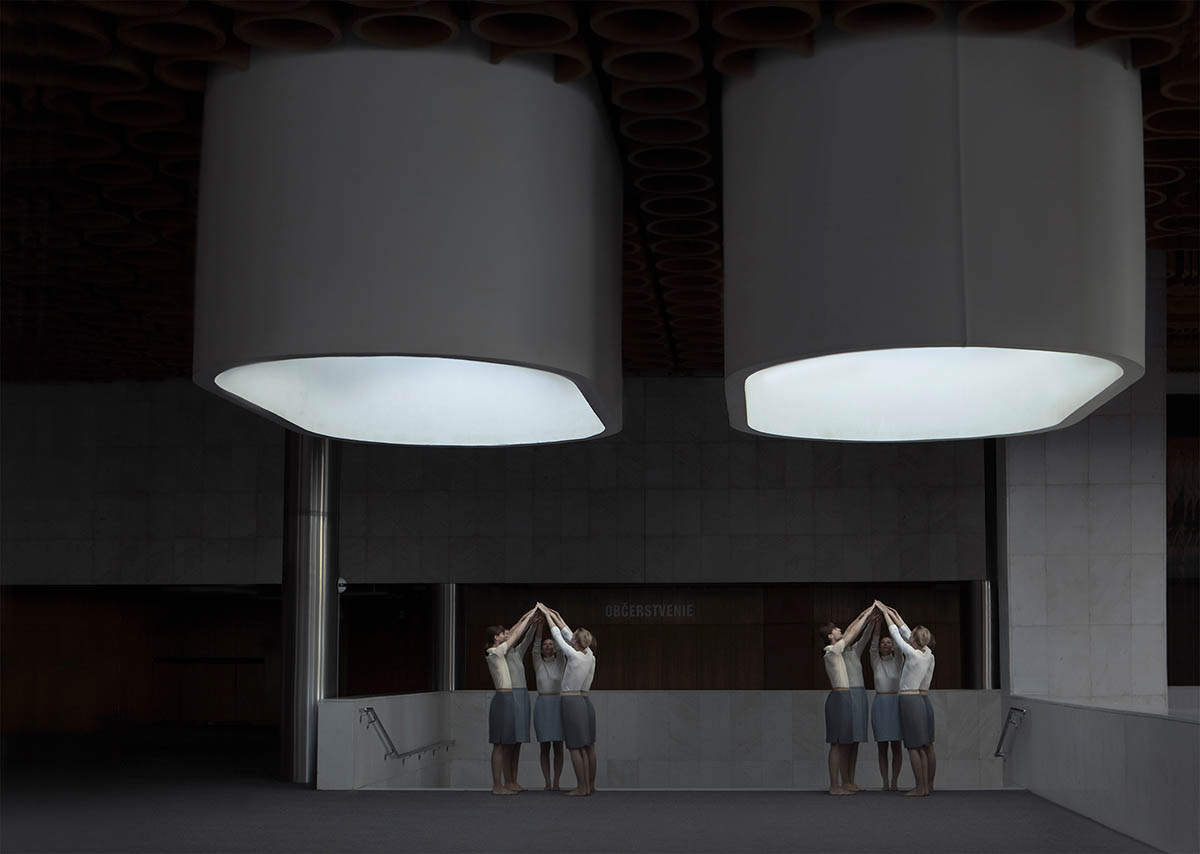
On the other hand, I am never too strictly tied to the plan or a script. I have them, but I also adapt things when I believe it will benefit the final result. Sometimes the scene develops naturally but differently than intended. In moments like these, which are incredibly precious and often felt by the entire team, the scene comes alive and moves away from its original form; it unfolds before our eyes and through us, and I have to go with its flow. I can always see when it was there in the final picture. But that picture still does not hold the power the moment had.
Reality hits differently, and I want to explore more live staging in my next projects.
Many of your works are surreal but also carry a humorous and emotional twist at times. How do you balance the message behind your work?
I appreciate that you see its humorous side and emotional twist in the details. Even though the topics I work with are serious and I take them seriously, I use exaggeration, which can border on irony. The images I make are not records of reality. They are reinterpretations, but their foundation is always rooted in reality.
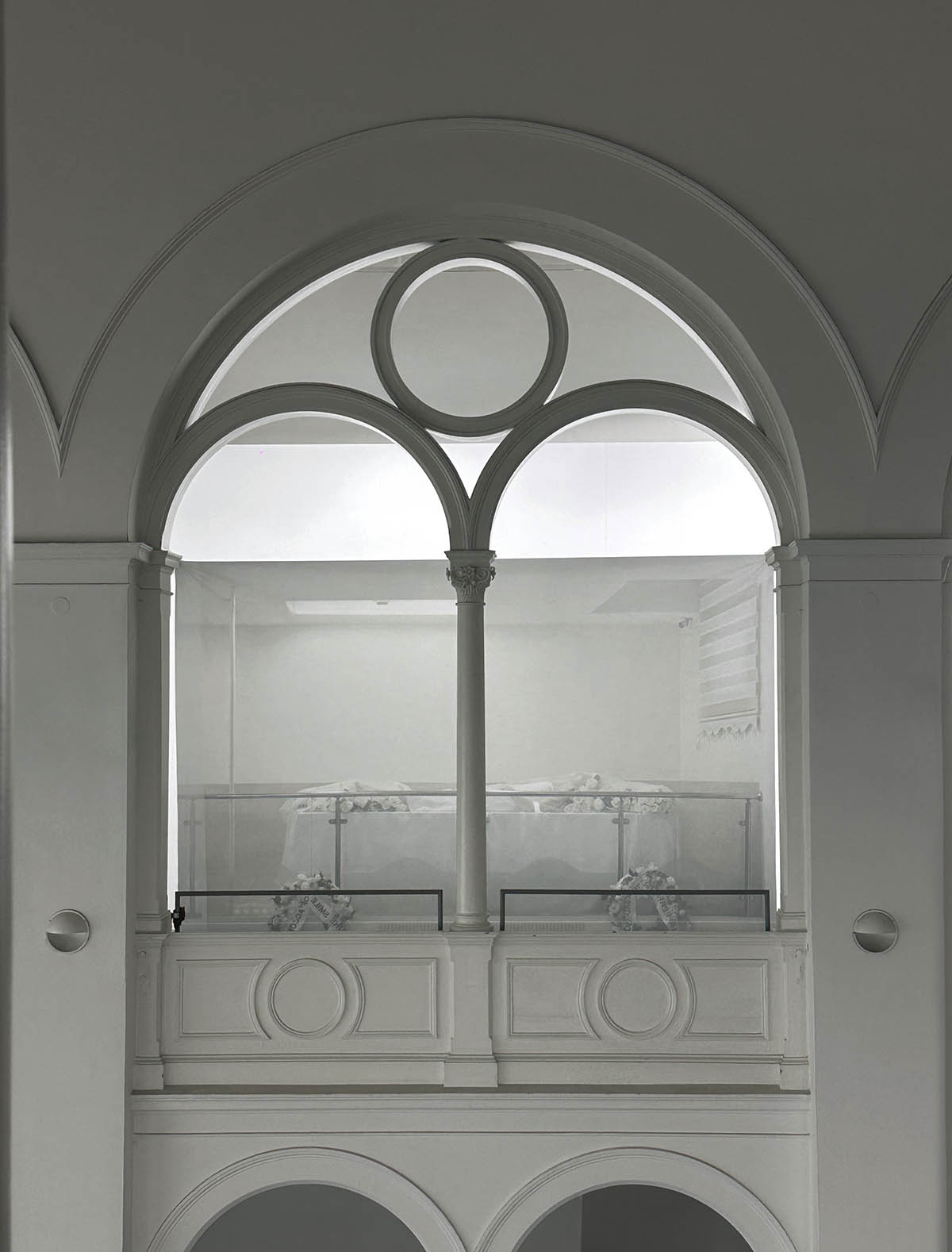
I appreciate that you see its humorous side and emotional twist in the details. Even though I take my topics seriously, I use exaggeration, which can border on irony. The images I make are not records of reality. They are reinterpretations, but their foundation is always rooted in reality. The entire process of finding a topic and diving into it is still so intriguing to me. Many ideas, but some get lost in the train of thought while others grow and materialize. That endurance of bringing a vision to reality, of continuously watering its roots, perhaps requires an urgency we feel with the topic that one deeply cares for. That urge is like a beam of light that gives direction through all the questioning, assuring, persuading, and occasional failing that occurs along the way. Sometimes it starts with a feeling, like a pulse that one cannot get rid of, calling for attention as if knocking on the skull, always returning. Something that has to be looked at more closely, explored, something that needs to be said, yet also something that gains clarity only with time.
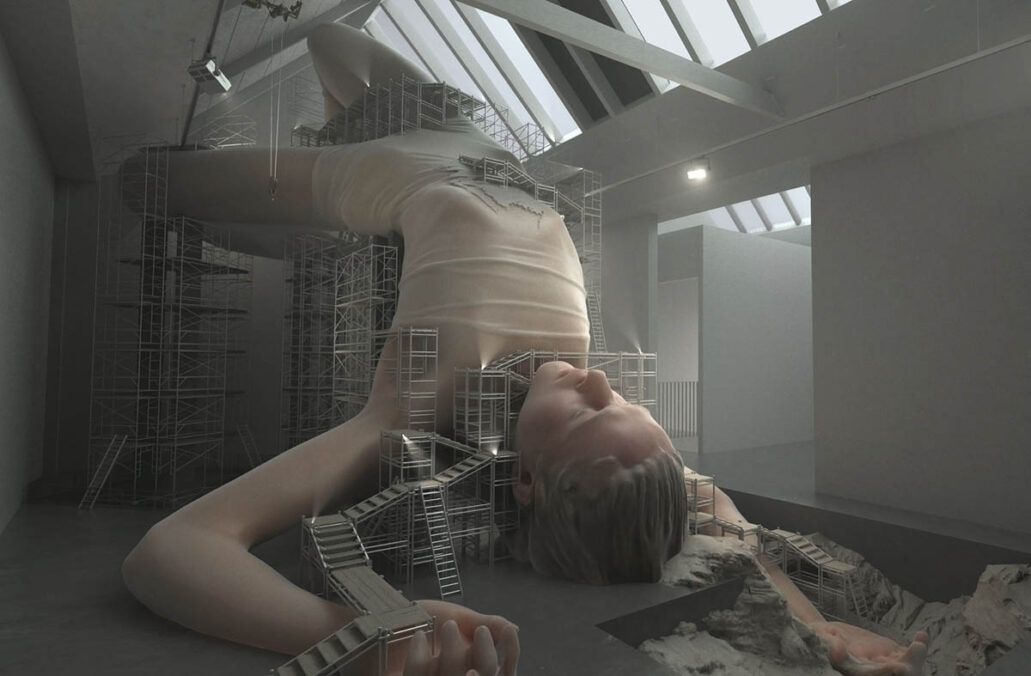
When I start, I often do not feel the personal layer of my interest. Instead, I first approach the topic in general terms—through research and writing—and try to understand and grasp what has already been written, done, and said. The message is not really clear to me yet; I need to build my perspective while staying open to what I find in the process. Only then can I see what caused the urgency that initiated the interest in the first place, and the more personal dimension of the project opens up to me, letting my perspective develop. Nevertheless, it’s rarely an individual path of clear direction; one can take different turns, depending on which level they focus on: the factual, intellectual; the spiritual, emotional; mine or your own. Every project is like a labyrinth, even for me, but it’s the message that lies at its centre—you can reach it from any starting or focal point, as long as you look closely enough.
I’ve noticed that you often choose a cool color palette. What draws you to it?
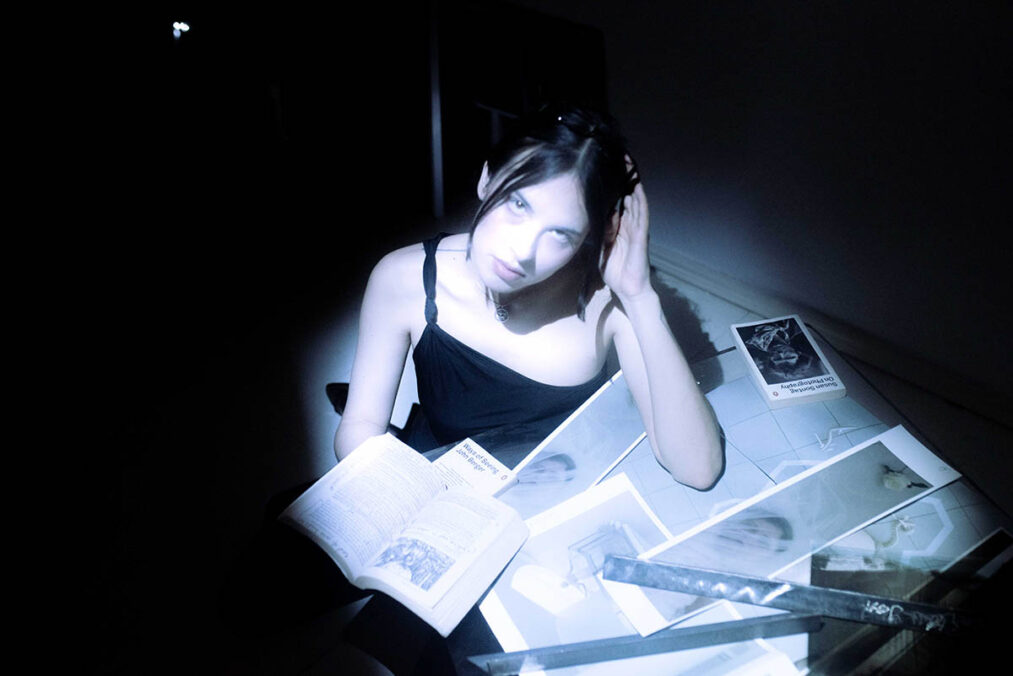
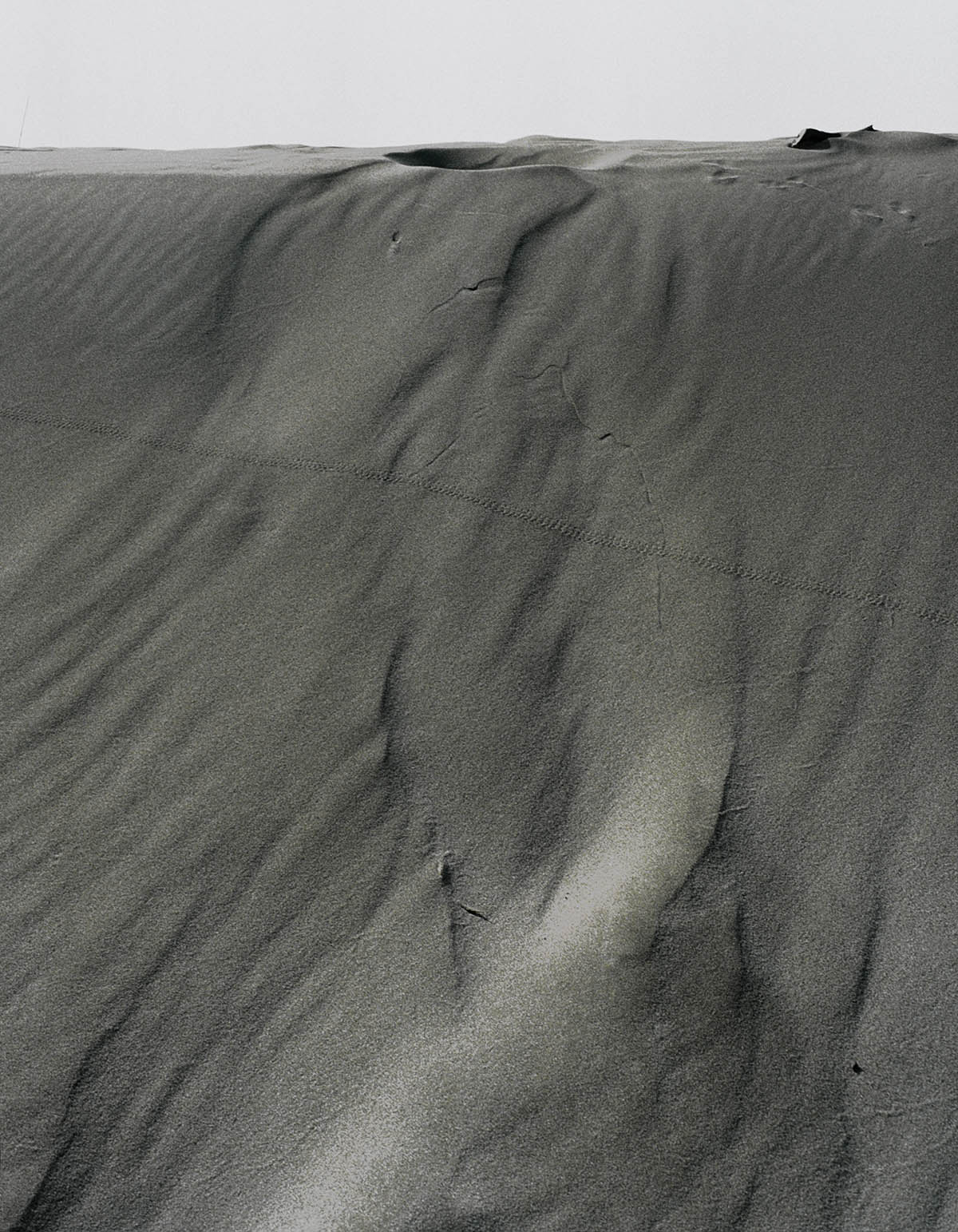
I use color reduction to strengthen the mood and bring attention to certain gestures and details. When used thoughtfully, color acts like a spotlight or a symbol. Then come the choices of location, costume, props, lighting, and editing. I do edit my photos, some more than others, but people on set are often surprised by how close the scene is to the final result. Still, I would conclude that editing is an important part of the process and also affects the final colors. A friend of mine described that the images, whatever is portrayed, always share the same air. A bit like everything is underwater or behind a glass. So, at this point I must admit that it is part of my visual language, even though that is constantly changing. I’m drawn to in-between places and states, like seeing before you are fully awake or conscious. It is probably clear enough that my scenes portray mental states and symbolic visions rather than actual things and beings. The colors support this mode of seeing. A dream is a sign, a direction somewhere, a warning, or a way of processing, and I guess I try to make my worlds be that as well.
What do you love most about staging a scene?
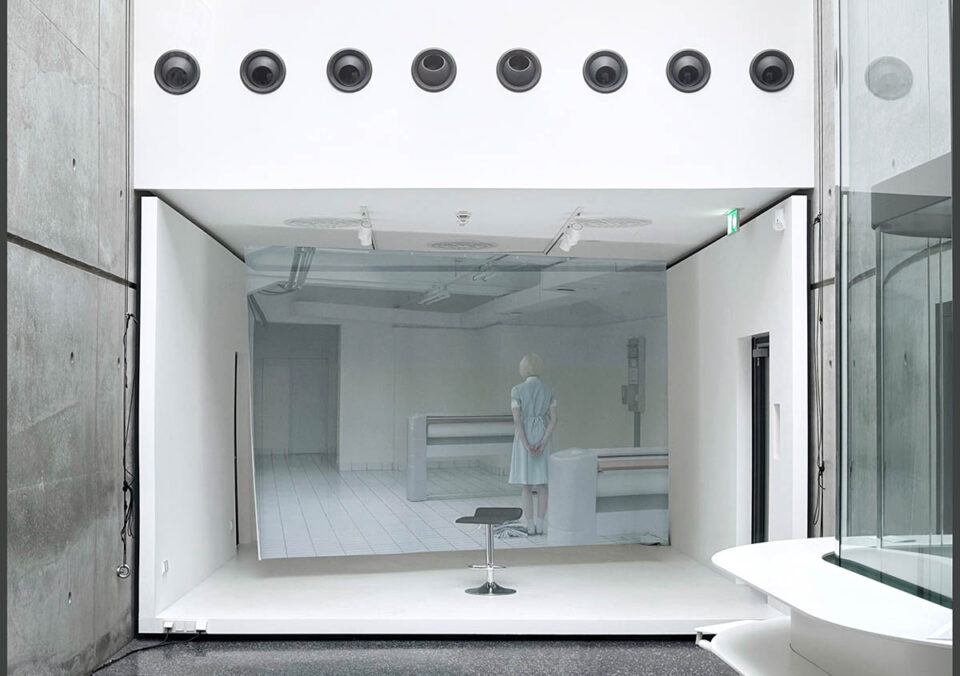
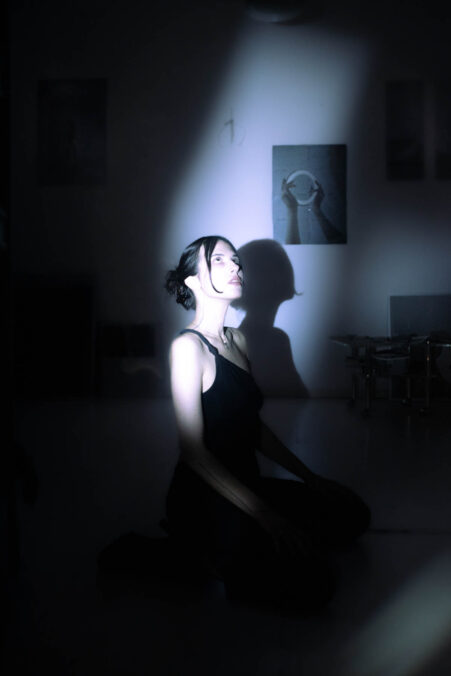
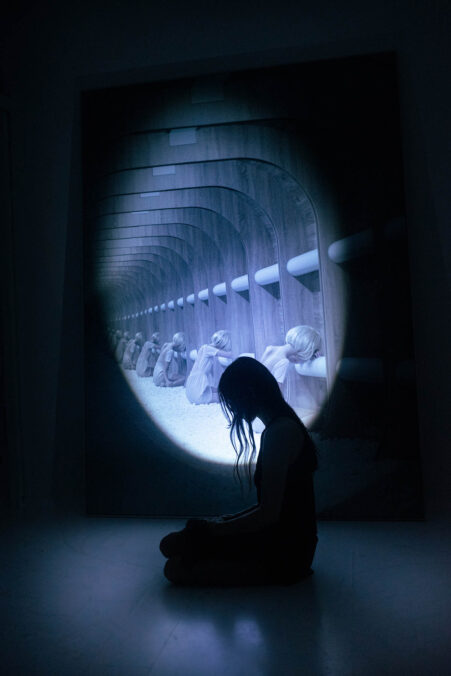
Staging is like a puzzle without a right or wrong way of building. With every object, gesture, and detail you add or remove, you weave a different story. I see myself more as a scenographer than a photographer. Taking the pictures is actually the shortest part of my process. Yet what precedes it connects my practice across different mediums, including digital spaces, where everything has to be created from scratch. To create a scene digitally is a difficult and slow process, but it gives the freedom to use all elements conceptually and create surreal scenes, even with a limited budget. That is what drew me to this field. Even though I did all the 3D work collaboratively, it was exactly the process of ideating, conceptualising, and staging the scene that I was mainly responsible for. Now I want to take this further. I am working on performative installations where the audience can experience the images in space and interact with them. My work is still rooted in photography, but I am moving beyond the image.
I explore what happens behind it. It feels exciting and a little scary but also very natural. In a way, I have been doing this for years, just without an audience.
What do you think of AI-generated imagery?
I’m still forming my opinion. AI interests me as a research topic, which gives some people the impression that I use it as a creative tool—something I haven’t really done so far. From my very limited experience with AI-generated imagery, I felt that the outcome depended less on creative sensitivity than on how much time and money one could invest in experimenting and refining it. As a viewer, I have seen many generic results but also artists using it in unique and reflective ways. I guess that, like all tools and mediums, it can go both ways. Additionally, those who use it frequently need to be aware of its environmental and social impact. I’m rather slow to use AI in practice; I use it for minor editing chores. Rather, I want to observe it critically and analyze its impacts, as we cannot deny its already massive influence on life, work, and culture.
What are you currently working on?
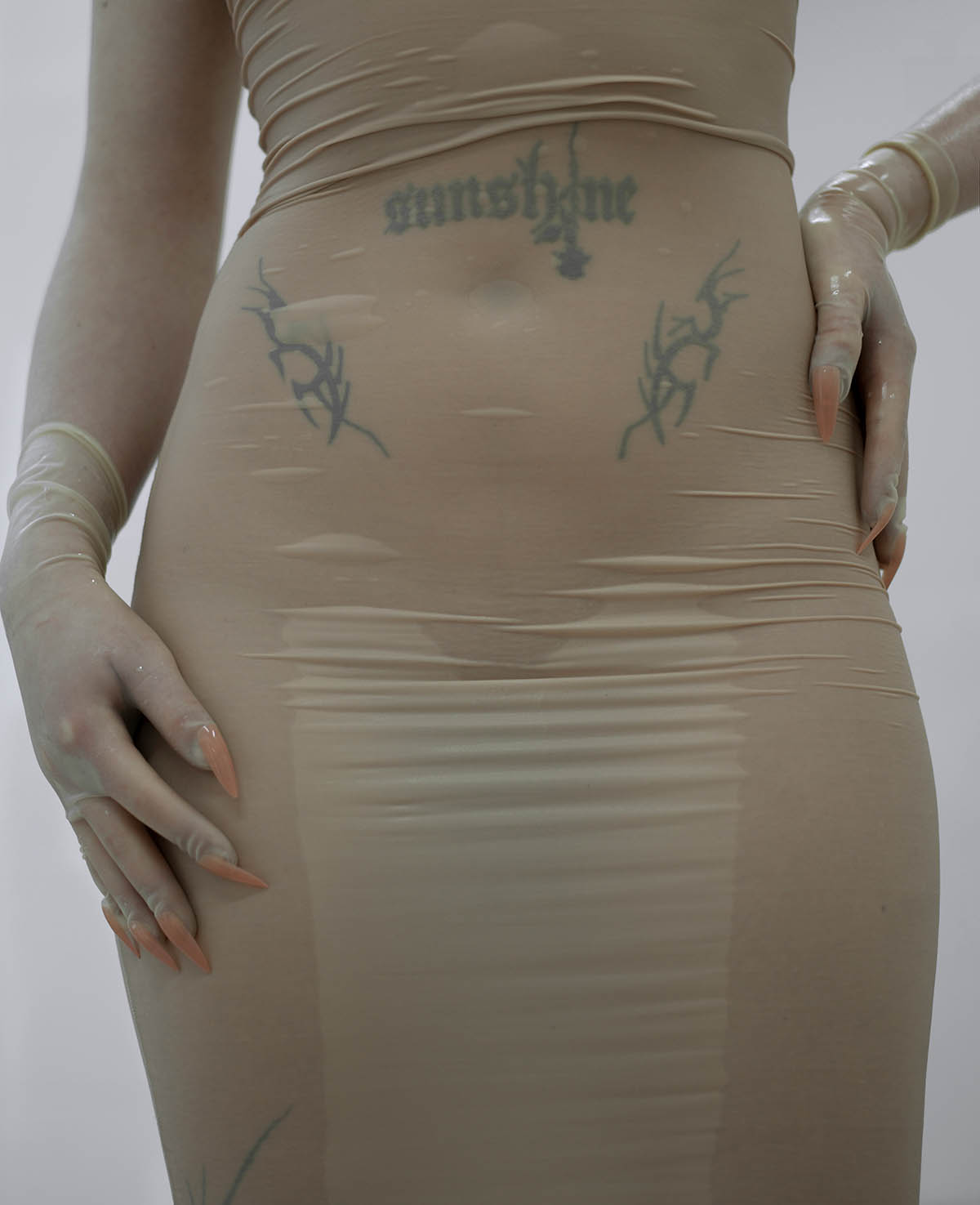
I’m currently finishing a project about how advances in AI are changing our relationship with intimacy, extending my research to the history of objectification and social programming. Just as artificial intelligence learns and operates according to the data and patterns embedded within it, human perception and cognition are shaped through socialization. I’m interested in how social norms and gender stereotypes shape the way we see ourselves and the world around us, looking at how these patterns are reflected in photography, film, technology, and online spaces. In Artificial Tears, I looked at AI voice assistants like Siri and Alexa and how they are often feminized. With Second Virgin, I’m looking more closely at how AI and digital characters are given a physical presence. The film I’m finishing currently, also part of the project, looks at problematic archetypes we still carry. It asks how these ideas shape our bodies, desires, and sense of identity. At its core, Second Virgin is about unlearning what we have been told we should be and exploring what we can learn or get on our terms.
Do you still find time to come back to Vienna?
I love coming to Vienna. I started to feel a new relationship forming with the city, and now I can focus more on what it offers. I’m also represented by Artemis, a new media-focused gallery originally from Lisbon. They opened a space in Vienna last year, where I took part in the show and will definitely do so again. I’m also enrolled in a PhD program in Bratislava, so I’ll be visiting more often. I’d also love to develop parts of my next project here and collaborate with creatives from Austria, Ukraine, Slovakia, the Czech Republic, Hungary, and Poland, as my research focuses on this region. I have not shown the majority of my projects in Vienna yet, so I hope to be more present in this cultural landscape, also with my artistic work and creative collaboration.
Evelyn Bencicova – www.evelynbencicova.com, www.instagram.com/evelyn_bencicova/
Evelyn Bencicova completed her master’s degree at the University of Applied Arts Vienna and is currently a PhD candidate at the Academy of Fine Arts and Design in Bratislava. She lives and works in Berlin. Her work explores themes such as gender bias in technology, the boundary between human and machine, the history of objectifying and feminising tools (Second Virgin, Artificial Tears), myth-making, and how stories shape society (Æther, Nine-Sun Sorcery, Anti-Atlantis). She also examines the links between architecture, politics, and behavior (Simulacrum, Asymptote, WIP), as well as mental health and disability in the media (The Rite, Alice, Notes on Hysteria).