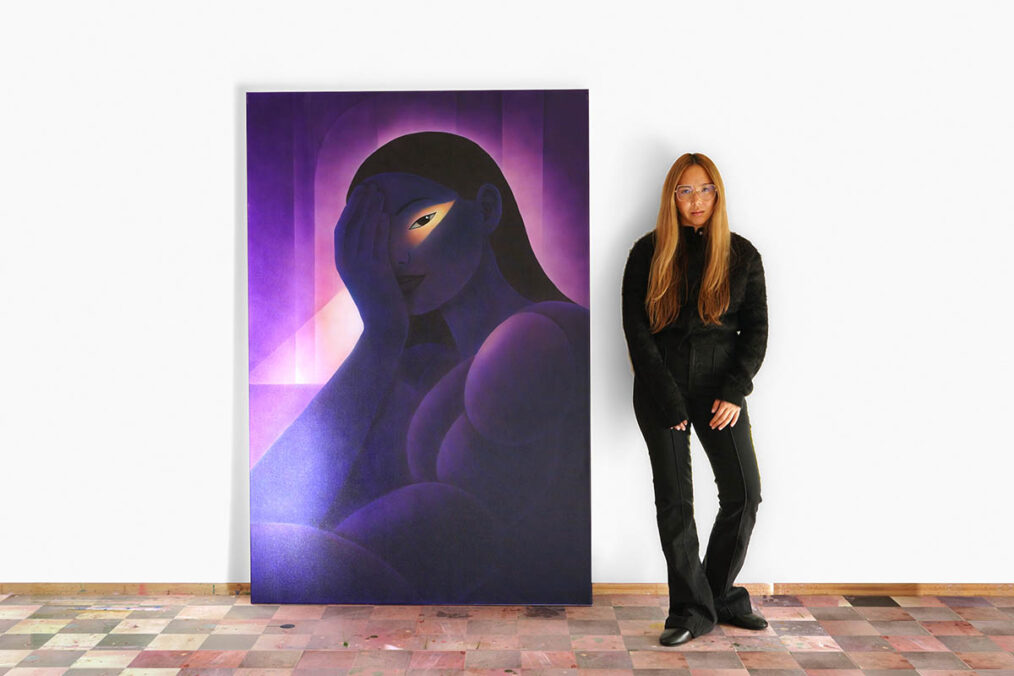
Aziya is a Kazakh-born Czech artist based in Prague. Her practice explores questions of identity, perception, and belonging through figurative painting, still lifes, and landscapes. Her paintings, characterized by sculptural forms, unconventional color palettes, and smooth, carefully controlled surfaces, examine the complexity of human experience and question the boundaries between the self and the surrounding world. She has exhibited internationally, including in Berlin, Prague, Paris, and Bratislava, and will open a solo exhibition in Tokyo in November 2026.
Tell us about your background. How did you grow up? What shaped you early on?
I grew up in Kazakhstan surrounded by art from an early age. On my father’s side, I come from a family of artists and sculptors; on my mother’s side, cinematographers. My father was a sculptor, and my mother was a musical theater actress. I spent much of my childhood backstage, watching my mother rehearse and perform, or in my father’s studio, where he worked with stone and brass. Looking back, I realize I was receiving a cultural education without realizing it.
I had a great childhood full of creativity but also discipline. I think these two aspects have shaped me throughout my life.
How do you start a new work?
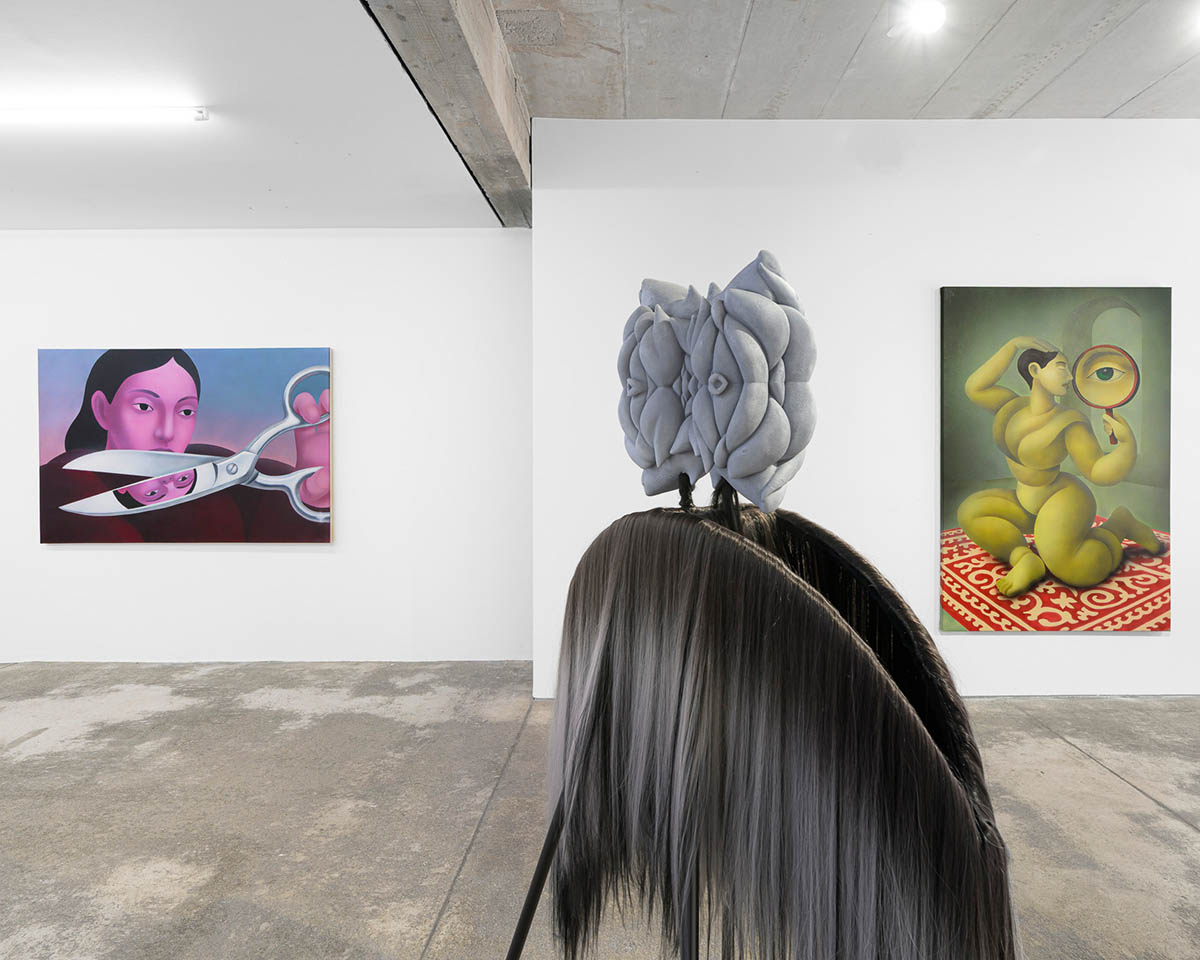
It begins with research. I read extensively and take long walks in the forest, where I observe color palettes, interplays of shapes, and textures. I believe literature and visual art are closely connected; they are different forms of communication that explore similar questions about what it is to be human.
When an idea captures my attention, I research it more deeply, drawing from anthropology, religion, history, and fiction. I collect different perspectives, translate them into sketches, and explore several compositions until I find the one I want to develop into a painting.
Although my work is carefully planned and technically controlled, I believe there must always be a certain humility before the canvas. Once I begin painting, I surrender to the process. Colors and composition may change, no matter how thoroughly I have prepared.
The women in your paintings seem familiar, yet distant at the same time. How do you develop this distinctive visual language?
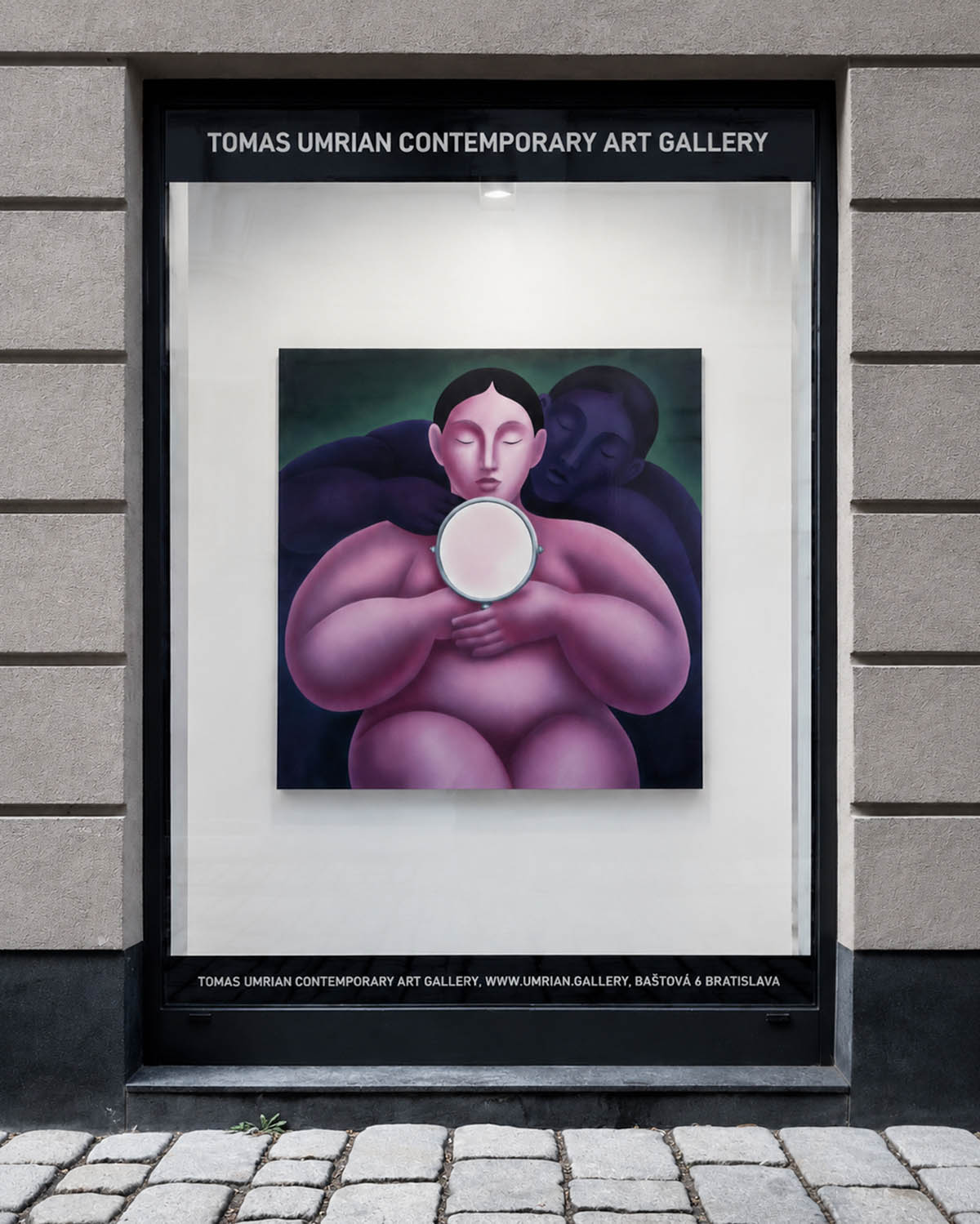
I do this intentionally to highlight the complexity of human experience. I never want to define it with a single state or narrative. I want to allow strength and vulnerability, confidence and uncertainty, to coexist. They often look directly at the viewer, inviting dialogue, and with their eyes closed, they invite you to discover them in an intimate, introspective state. Whether it’s a direct gaze or closed eyes, it can feel like an invitation to connect. At the same time, relationships between bodies and objects can be fragmented or distorted, creating psychological unease and distance.
Another factor that creates that distance is the almost invisible brushwork.
I feel that visible brushstrokes can create a certain intimacy between the viewer and the subject through the artist’s emotional presence. By removing them, I introduce another layer of distance. The women look directly at the viewer, acknowledging their presence, yet something remains inaccessible.
To what extent do personal experiences influence your work?
Personal experiences have always influenced my work, but their role has changed over time. Earlier, my practice was less autobiographical and focused more broadly on women’s experiences and empowerment.
Over time, my work has become more personal, reflecting my inner world and my experiences as a woman and an immigrant. I am currently interested in exploring questions of identity, perception, and belonging that reflect my experiences.
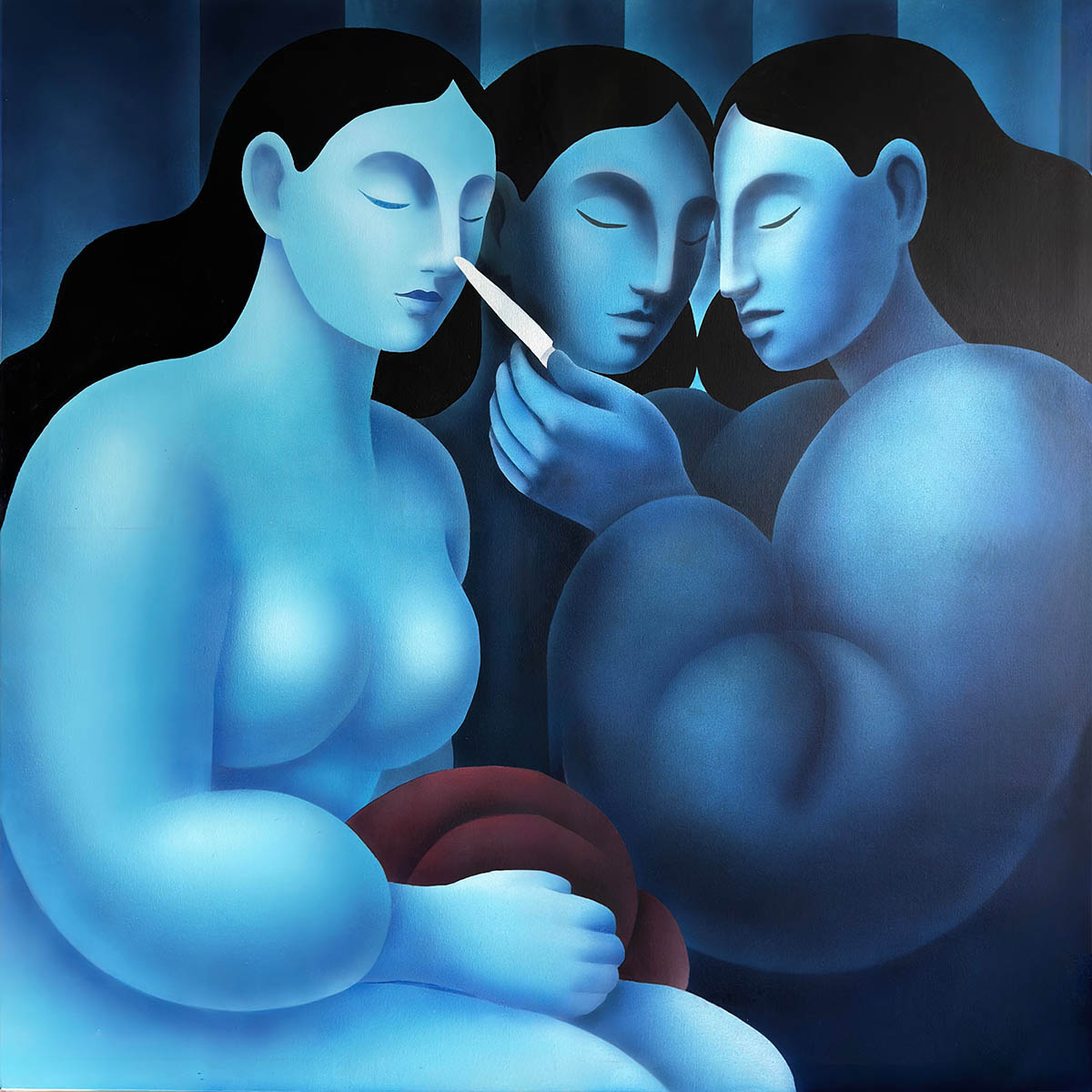
Please tell me more about your work „Night Whisper“.
The composition recalls the long tradition of depicting groups of women in Western art, particularly the Three Graces, a subject explored from antiquity through the Renaissance and beyond. However, unlike traditional representations of the Three Graces, which often emphasize idealized beauty, harmony, and the female body as an object of admiration, your figures appear absorbed in an ambiguous psychological encounter. The color palette suggests nighttime. It may already feel mysterious and uncertain. Then comes the knife, which is perhaps the most psychologically significant element in the composition. It introduces tension into an otherwise quiet, intimate scene. And suddenly it may start raising questions: Are these women united by a shared intention, or does the knife suggest a threat between them? Their relationship remains uncertain, leaving the viewer to imagine different narratives.
What questions are you most interested in exploring at the moment?
In exploring questions of identity, perception, and belonging. Who are we? How do we perceive ourselves, and how are we perceived by others? Where do we feel we belong? And perhaps most importantly, can identity ever become fully resolved, or is it something that remains in a constant state of becoming?
How does your day usually start? Do you have any rituals?
My day usually starts at 5 a.m. I have breakfast with my 1.8-year-old daughter. After my husband takes over, I enjoy an hour of reading with my morning coffee. Around 9 a.m., I take my daughter and our dog for a long walk in the forest. We return home around 10:30, just in time for her nap. I then take this couple of hours to do the actual painting in my studio.
These quiet morning hours are an important part of my creative process. Reading, reflecting, and observing nature help me to collect ideas and inspiration. I believe that being an artist requires you to be conscious and observant of life. Much of my work happens through observation and reflection.
What are you currently working on? What else do you have planned for 2026?
I am currently working on a monumental triptych about 1.5 to 4 meters for a private collector, consisting of three large-scale paintings that can exist independently but together form a single composition.
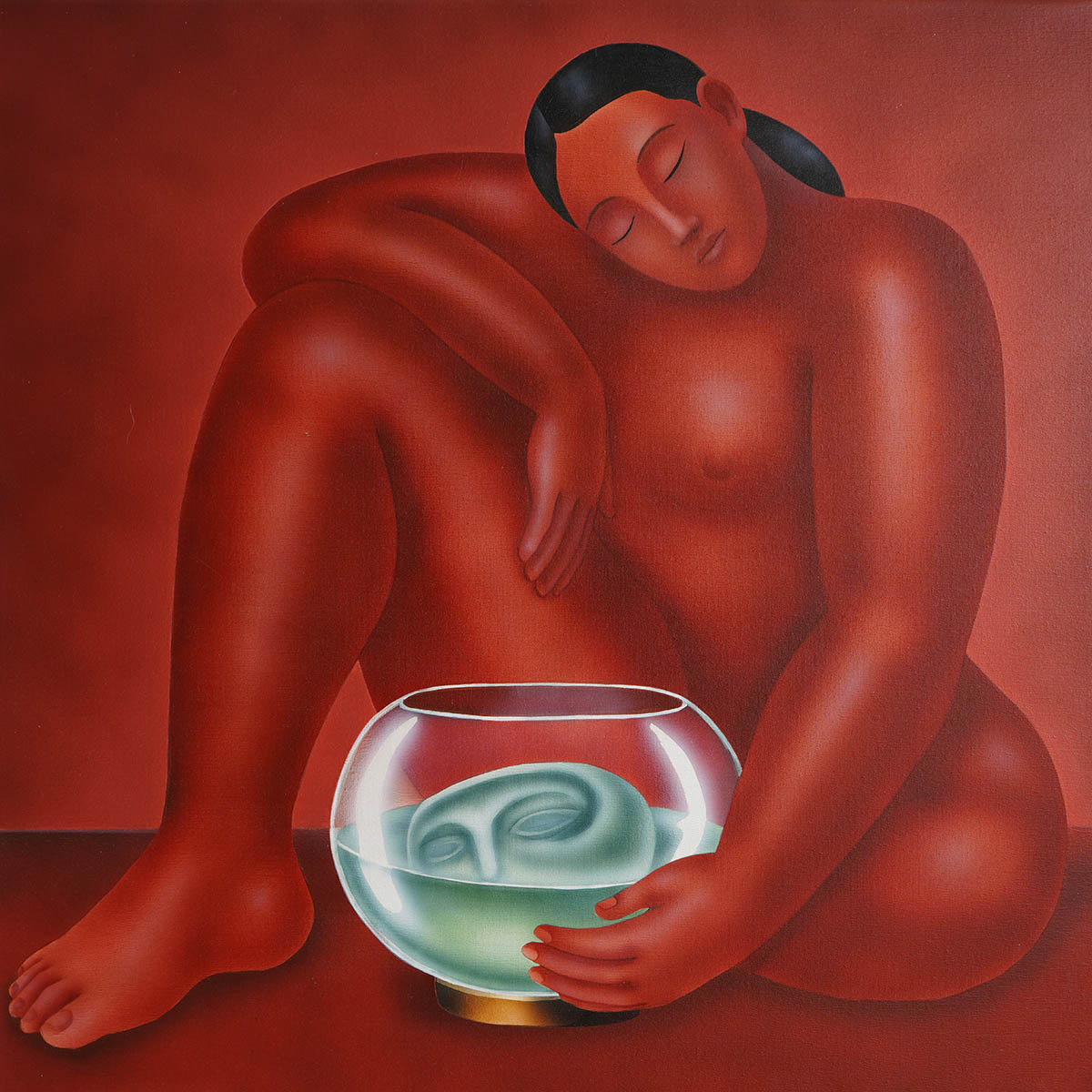
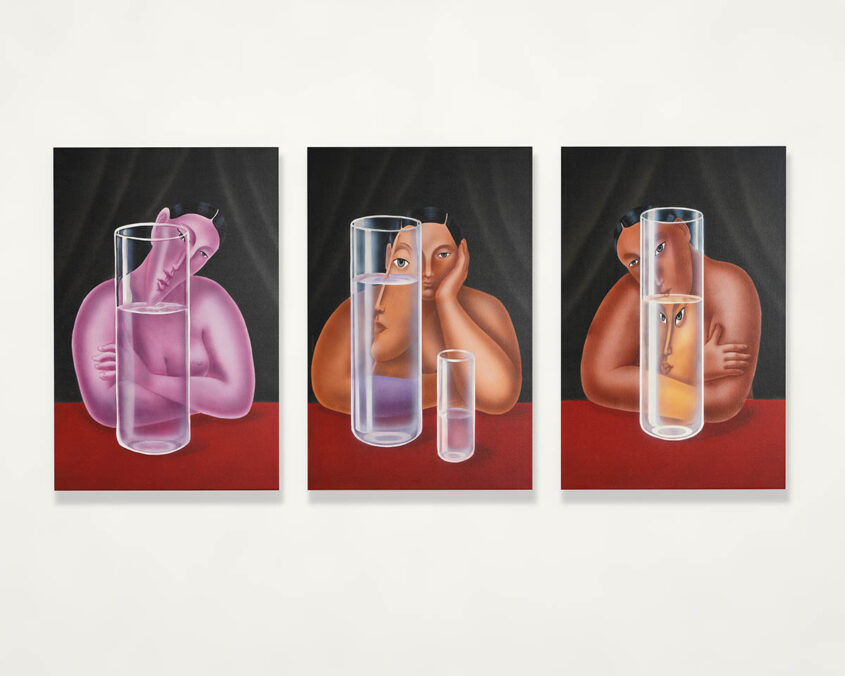
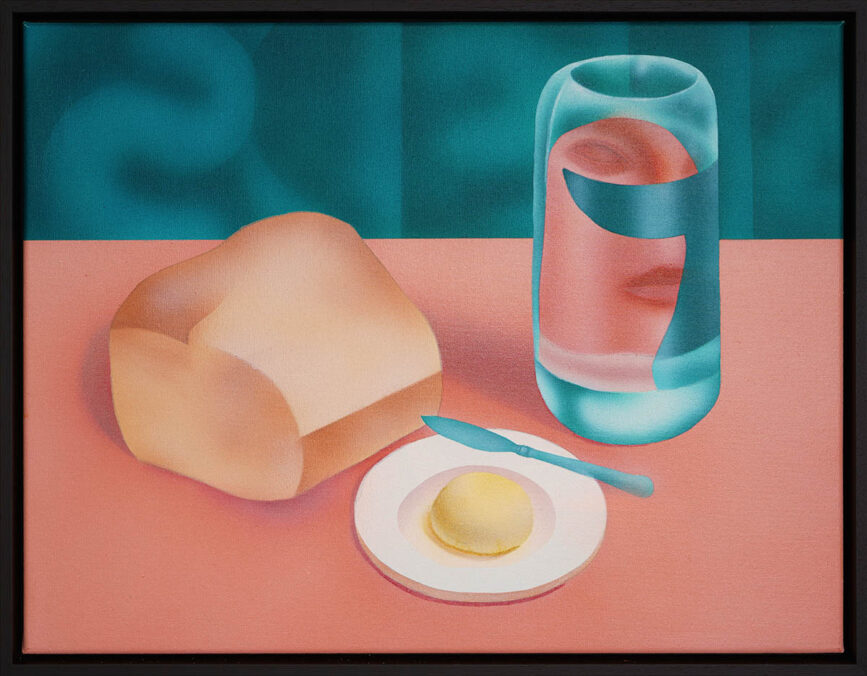
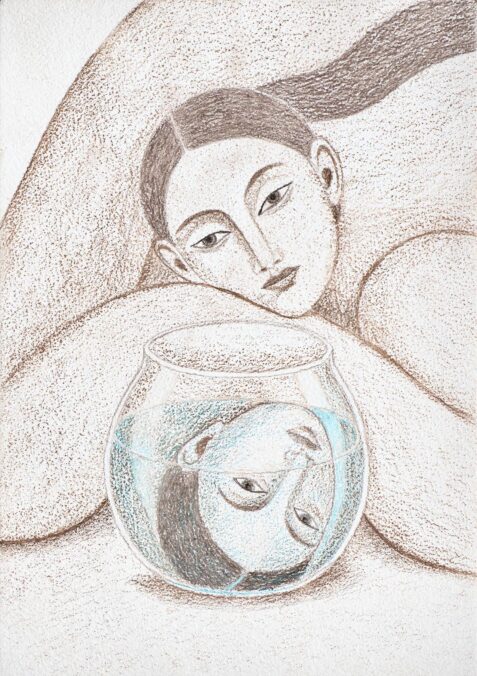
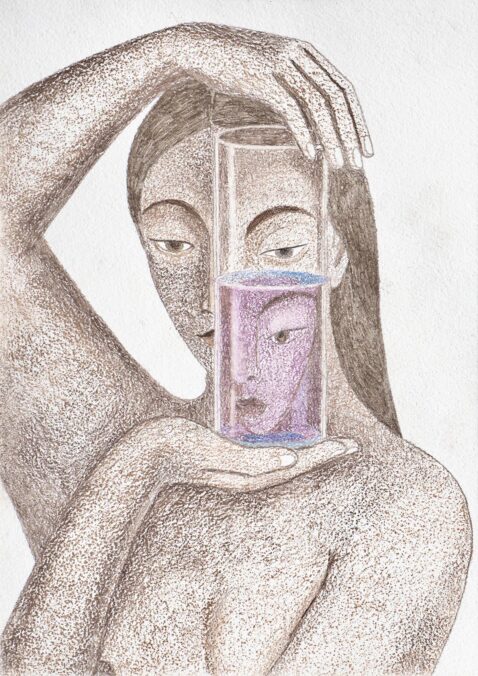
My solo exhibition opens on November 19 at Gallery IRRITUM in Tokyo. I developed a series of smaller paintings and drawings, which is rather unusual for my practice. In this series, I explore the relationship between vessels and the human figure. I was particularly drawn to the Buddhist understanding of emptiness, where the void is not simply nothingness but also a space of possibility. A vessel is always hollow, yet not necessarily empty. In my paintings, vessels contain fragmented or distorted reflections of faces and bodies, suggesting how our sense of self is continuously shaped and transformed through our relationship with the surrounding world.
Aziya – www.instagram.com/aziya/