Tell us about your background, studies, and when art became important and a profession for you?
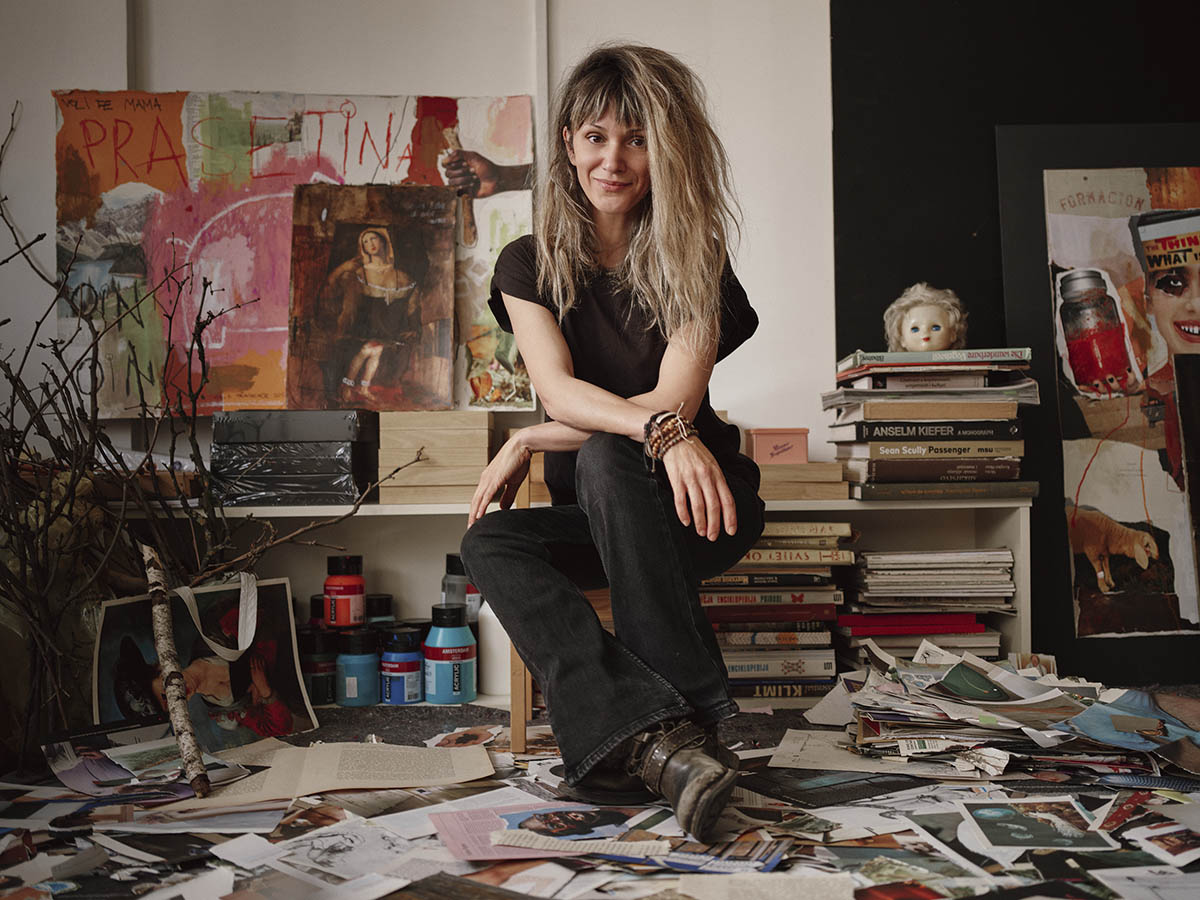
Art has been important to me for as long as I can remember. I’ve been drawing since the first time I picked up a pencil and put it to paper — it was, and still is, my most natural way of expression. I knew very early on that art was my true direction; I can’t imagine any other version of myself. That sense of clarity stayed with me throughout my childhood and education, so enrolling at the Academy of Fine Arts in Zagreb, where I specialized in Animation and New Media, felt like a natural step. During my studies, I became even more aware that art is not only an inner drive, but also my professional vocation — something I want to dedicate my life and work to in the long term.
Which personal experiences really shaped your artistic perspective? Was there a turning point in your practice?
I can’t single out one defining moment that shaped my artistic practice; for me, it is a continuous, lifelong process. I approach creating something intrinsic as a natural state of being, rather than a conscious decision tied to a particular event.
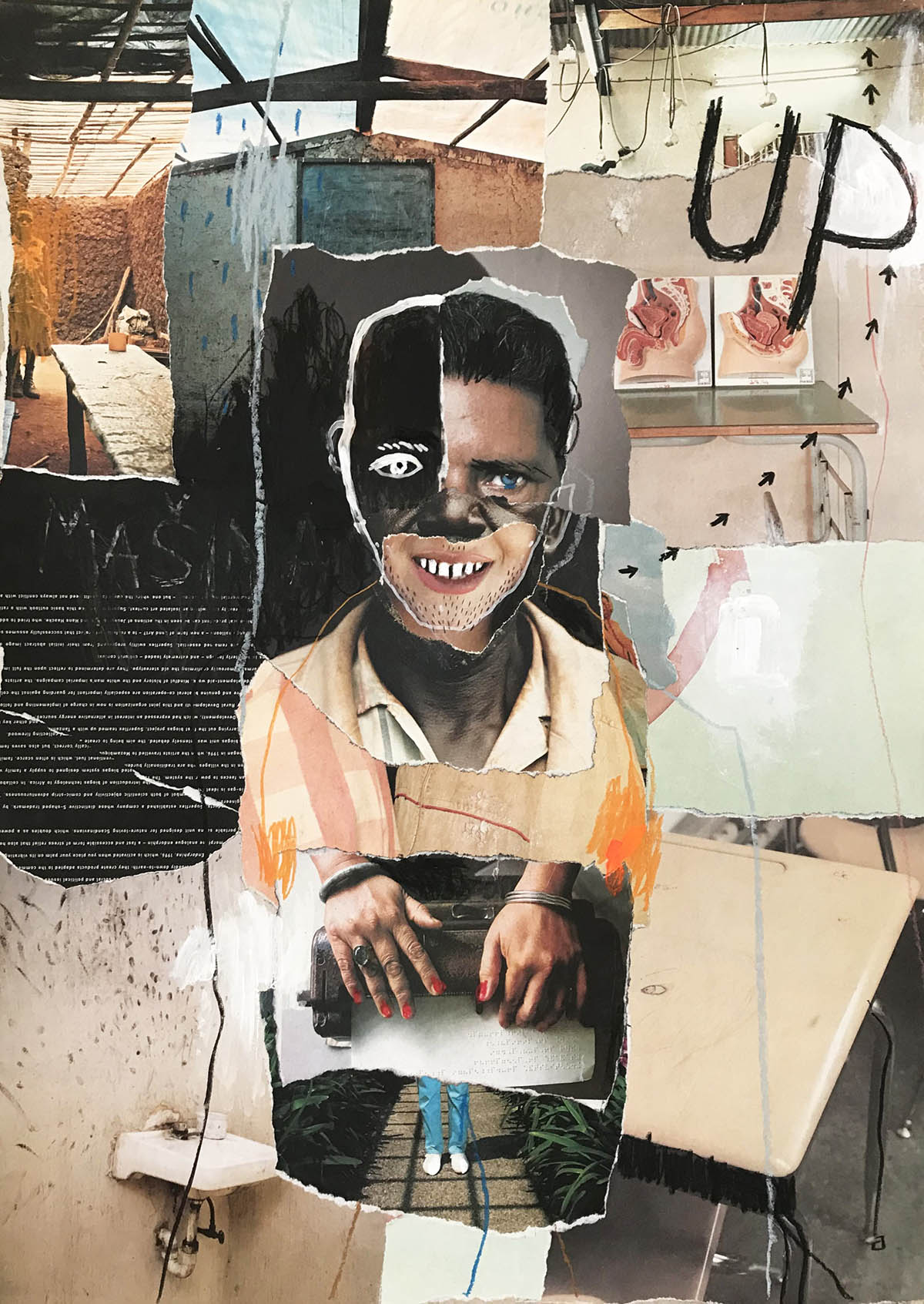
Personal experiences and situations from my life are strong driving forces behind my work, yet they are never presented literally. I do not engage in autobiography in the traditional sense. These events function as triggers — emotional impulses that initiate the process and then transform and become abstracted into more universal motifs.
My practice does not result from a single crucial moment, but from a steady process of growth, change, and inward conversation.
How do ideas usually begin for you, through material, a concept you work on before, or through intuition?
Ideas do not arrive abruptly; they gradually accumulate as part of an ongoing inner dialogue. They most often emerge from a synergy between previous works and my current reflections. Sometimes I begin with a concept, sometimes with a material, but intuition is always present as the connecting element.
Each new work develops naturally out of the one before it — both continuing it and subtly questioning it.
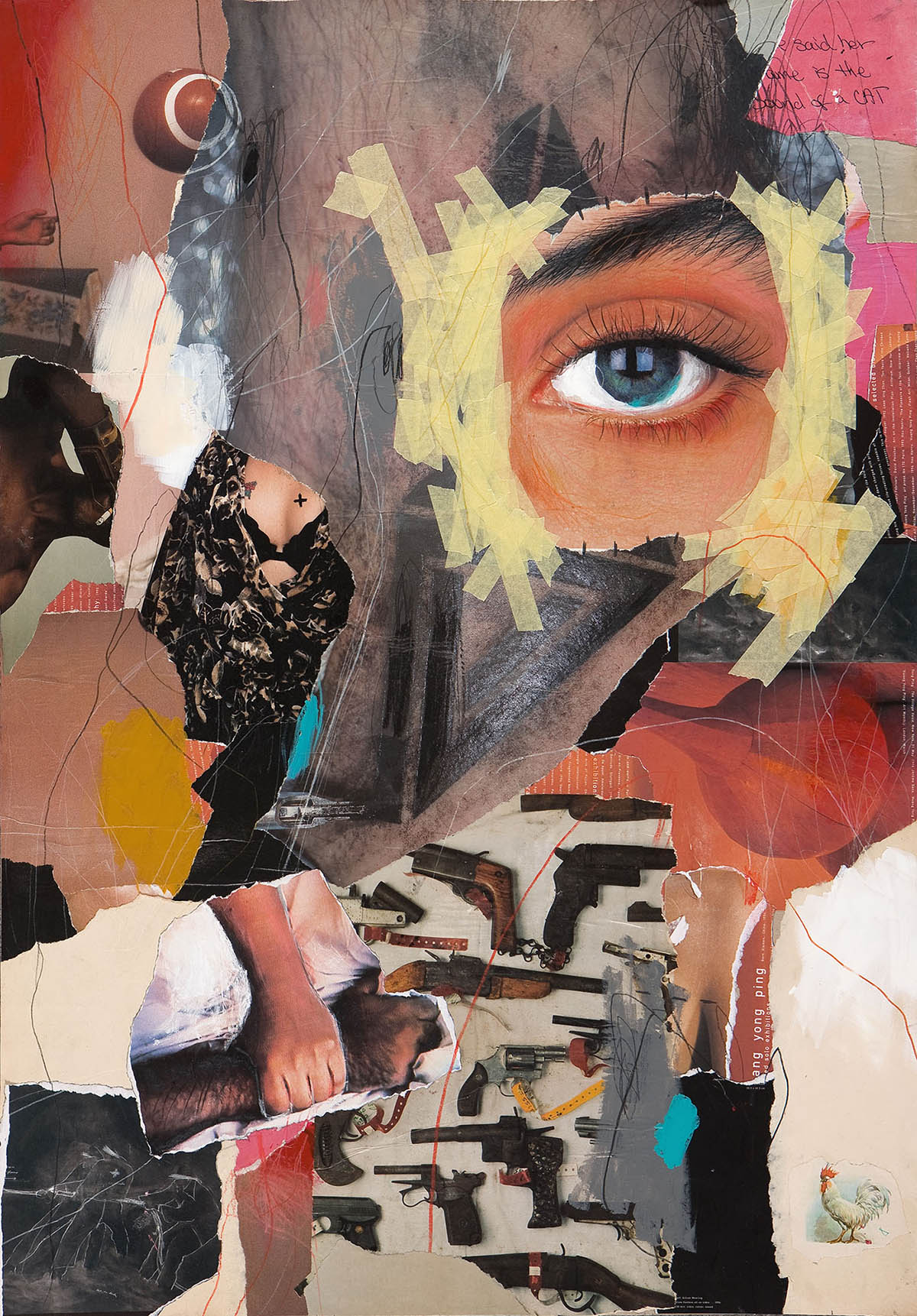
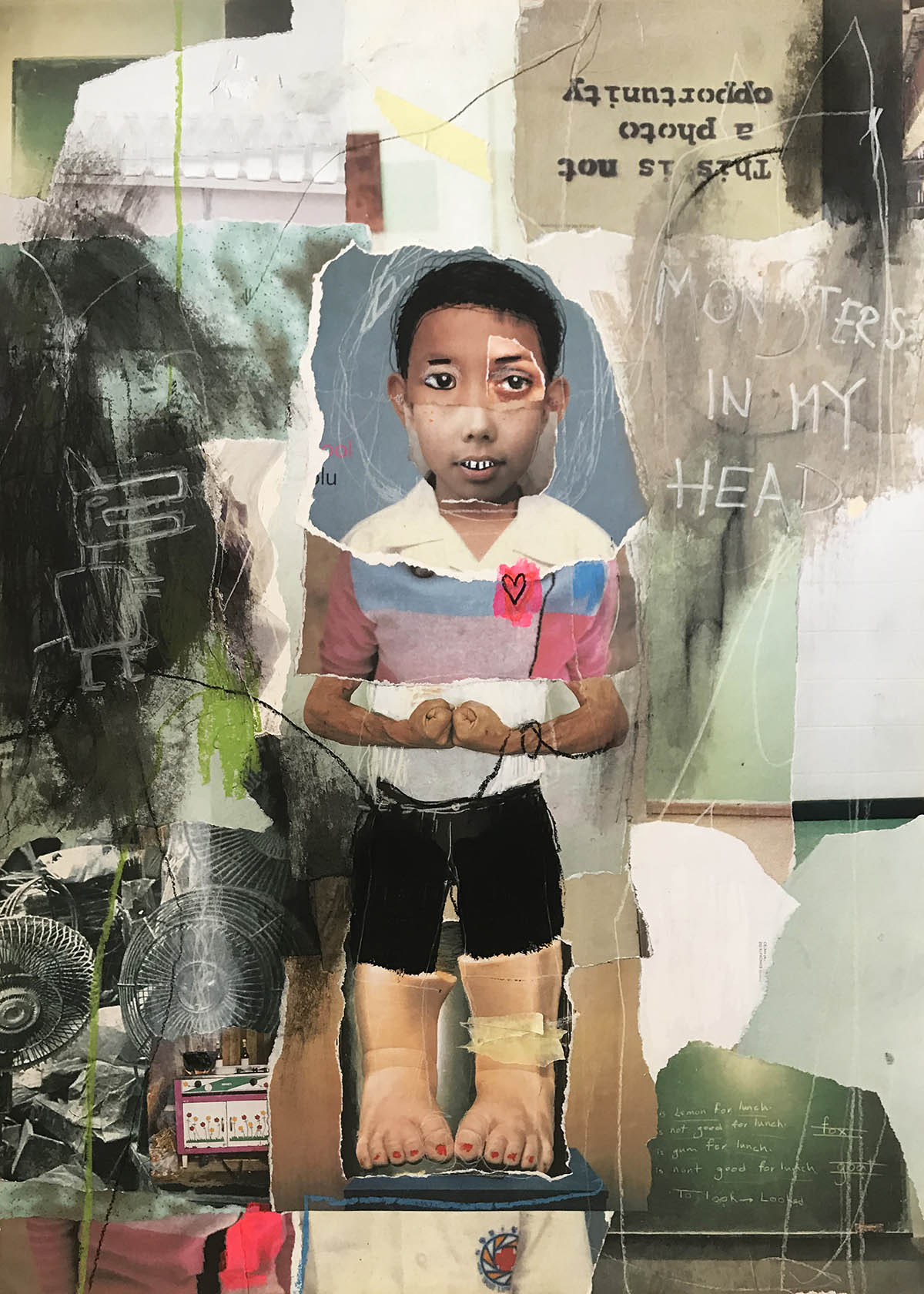
Photos: Courtesy of the artist
In your work, we see a lot of portraits of women, but also others in your work. How do you choose the motif you work with?
The motif is most frequently derived from the concept I am investigating at the time. In the creative process, especially with collages, I rely heavily on my subconscious — flipping through magazines, books, and archives of paper, following the fragments that intuitively catch my attention.
In the initial stage, I observe the work almost abstractly; I am guided by rhythm, the relationships between lines, colors, and shapes, rather than by narrative. Only later does the motif take on a clearer meaning and begin to engage more consciously with the theme.
How does the medium, whether it is collage, drawing, painting, photography, or a video scale, influence the work?
In my practice, the medium is not just a technical choice, but a way of thinking. Each medium has its own logic, rhythm, and limitations, and it is often precisely these limitations that prove productive. I approach a theme differently depending on whether I am working with an object, a collage, or a video — the medium shapes the pace of the work, the balance between control and chance, and my relationship to material and space.
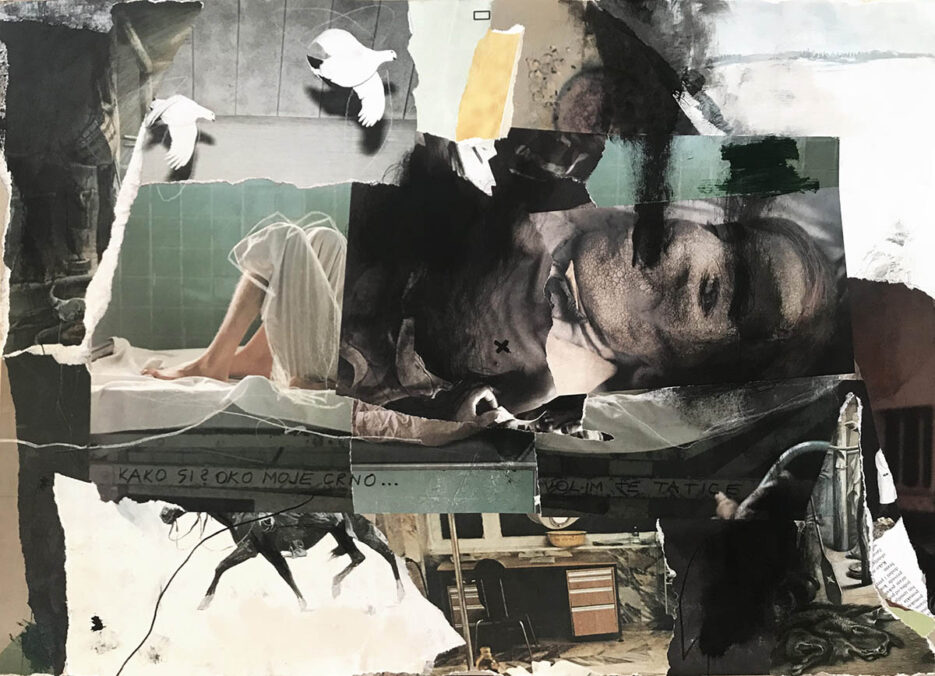
For me, the idea does not arise from the medium; it comes first. Yet the moment I begin translating it into a specific medium, it inevitably changes, adapting to the constraints of that medium. The medium does not generate the initial thought, but it transforms it — giving it form, intensity, and a particular way of communicating. It is in this process of translation that the tension I value emerges, keeping the work alive.
Tell us about the film Room (2012), which was broadcast on ARTE TV and selected for the New Directors/New Films program at MoMA.
The film Room is a five-minute work made in stop-motion animation, a medium that feels especially close to me because it allows the world to be built frame by frame, almost tangibly. In this “room,” I create a space on the edge between sexual fantasy and nightmare — a place where desire and discomfort constantly brush against each other.
I explore the pursuit of intimacy through sexuality, questioning how this act can be at once communication, a power play, a mask, and a form of exposure. The film carries a touch of humor and irony, but beneath this lightness lies a layer of tension and reflection on vulnerability. The set is carnival-like, slightly claustrophobic, and deliberately theatrical, heightening the sense of intimacy that is simultaneously private and performative.
The Room is a metaphor for the inner space where drives, fears, and the need for closeness meet.
![[Still] Video, Filmstil: The Room, Stop Motion, 2011, 5 min, Director, Script and Animation: Ivana Fischer, Music: Nikola Kovač and Luka Belani, Production: Kinorama. Photo: Courtesy of the artist](https://www.les-nouveaux-riches.com/wp-content/uploads/interview-ivana-fischer-07-1014x676.jpg)
The film Room perhaps best captures the thematic and visual layers of my practice. It brings together my interest in identity, the body, and social roles, while also exploring the tension between humor and discomfort, the grotesque and vulnerability.
I am interested in dissecting the individual within a wider social context — exploring intimacy that is never entirely separate from the collective. This interplay of playful aesthetics and subtle unease is a thread that runs consistently through my work.
![[Still] Video, Filmstil: The Room, Stop Motion, 2011, 5 min, Director, Script and Animation: Ivana Fischer, Music: Nikola Kovač and Luka Belani, Production: Kinorama. Photo: Courtesy of the artist](https://www.les-nouveaux-riches.com/wp-content/uploads/interview-ivana-fischer-06.jpg)
Do you see your practice as active in a feminist context? Do you see it active in any political context?
My practice begins in the personal, but the personal is never apolitical. Through themes of the body, identity, intimacy, and belonging, I inevitably enter terrain that is socially and politically charged.
I do not approach my work from an explicitly activist perspective, yet any consideration of the body, gender roles, or power relations carries a feminist and political dimension. When my work opens a space for questioning these structures, I see it as subtly, but consciously, situated within that context.
What do you expect your audience to take from your show?
I do not expect a specific opinion, but a reaction — emotional or thoughtful. Indifference is the least interesting response to me. I hope my work provokes reflection, discomfort, recognition, or even resistance. I see my work as a trigger — a space where the viewer can meet themselves.
A real treasure for you? What keeps you creating new works?
Antique shops, fairs, and other people’s childhood boxes. I am drawn to objects that have already lived, marked by touch, scratches, and faded colors. In their imperfections, I sense layers of time that cannot be faked.
![[Still] Video, Filmstil: The Room, Stop Motion, 2011, 5 min, Director, Script and Animation: Ivana Fischer, Music: Nikola Kovač and Luka Belani, Production: Kinorama. Photo: Courtesy of the artist](https://www.les-nouveaux-riches.com/wp-content/uploads/interview-ivana-fischer-09-1014x676.jpg)
For me, true treasure lies in the hidden stories within objects — the tension between past and present that continually inspires my work.
What do you think is really important and urgent to address in art today?
Human fragility — not as weakness, but as the foundation of our humanity. We live in a time that glorifies strength and certainty, while vulnerability is often suppressed. Yet it is through embracing our own fragility that empathy is born.
I see art as a space where it is possible to be fragile and imperfect. It does not need to offer solutions, but it can remind us that our connections are rooted in our shared vulnerability.
What risks do you take while making your work? Is the risk necessary?
I am constantly striving to push my own boundaries and set new challenges for myself. I believe creativity emerges through problem-solving, breaking familiar patterns, and stepping beyond the comfort zone.
Without risk, stagnation follows — and in my view, stagnation is the greatest threat for art.
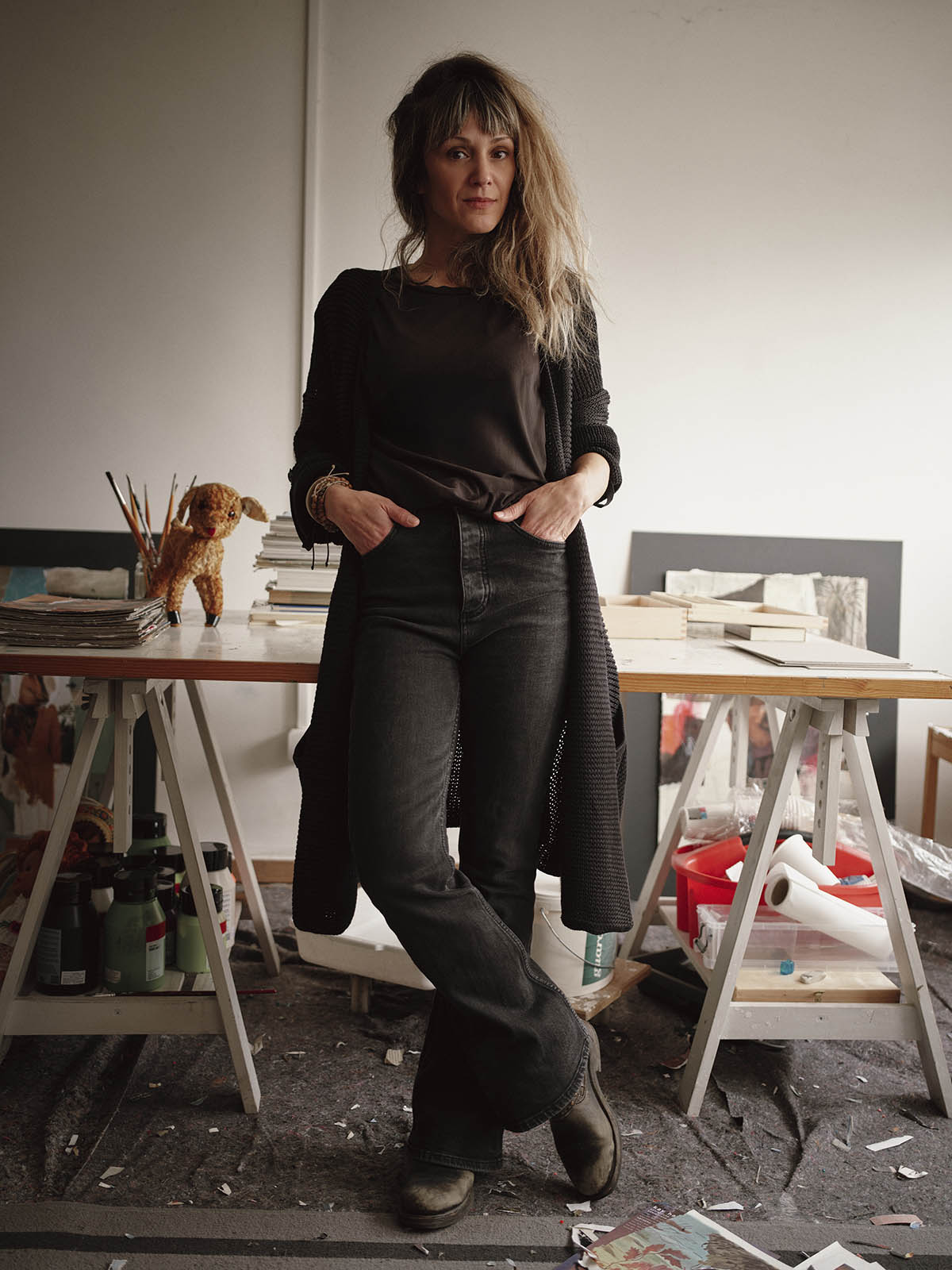
We would like to hear about your usual day in the studio, and what you „consume“ (read, watch) at the moment.
I begin my day in the studio with a cup of coffee, then dive into work — collages, sketches, drawings, or, at the moment, set design for a new animated film. I observe and question each piece; the process is a continual oscillation between creation and reflection.
In between, I read. Recently, I returned to L. Frank Baum’s books about Oz, and I’m fascinated by how relevant they remain today — particularly in their exploration of identity, power, and transformation. That world deeply resonates with my own interest in the construction and deconstruction of identity.
Tell us about your plans for the following year, and where we can see your work.
I am currently working on a new project, which I will present in September 2026 in a solo exhibition at Trotoar gallery in Zagreb. Alongside collages and objects, the exhibition will feature a screening of a new animated film. The film is a meditation on the fleeting nature of the body, the enduring presence of nature, and the human condition — a reminder that, even with an awareness of our own mortality, we continue to seek meaning within this cycle.
Address and contact:
TROTOAR Gallery
Mesnička 7, Zagreb, Croatia
www.trotoar-galerija.hr
Ivana Fischer – www.trotoar-galerija.hr/en/artists/ivana-fischer/, www.instagram.com/ivanafischer.multimediaart/
Ivana Fischer (born 1982, Osijek) graduated in Animated Film and New Media from the Academy of Fine Arts in Zagreb in 2008. Her artistic practice spans video, photography, collage, and installation, through which she explores how history, migration, cultural context, and interpersonal relationships shape both personal and collective perceptions of identity. Her projects often incorporate autobiographical elements and audience participation, creating space for dialogue and reflection on themes of belonging, memory, and personal transformation.