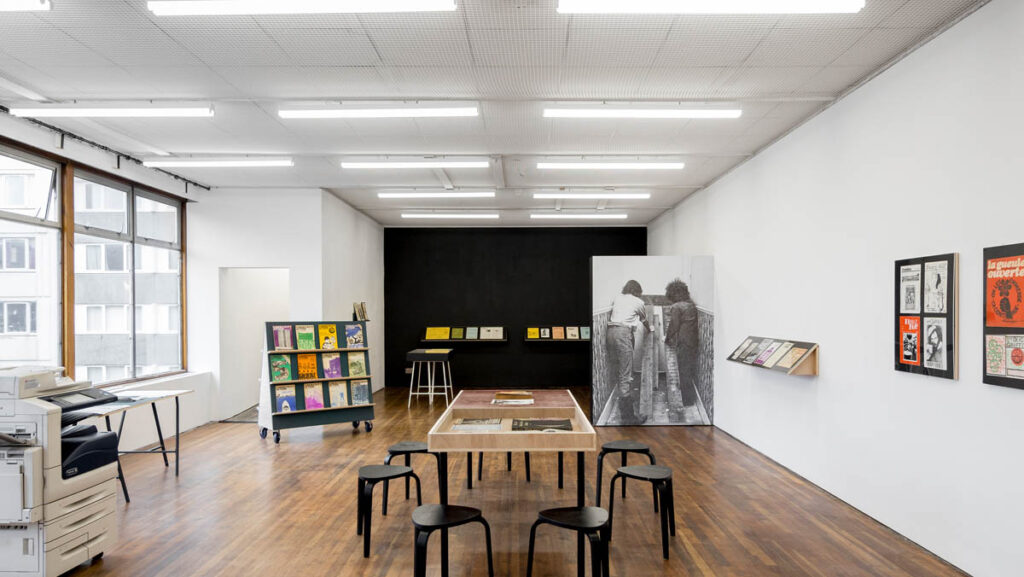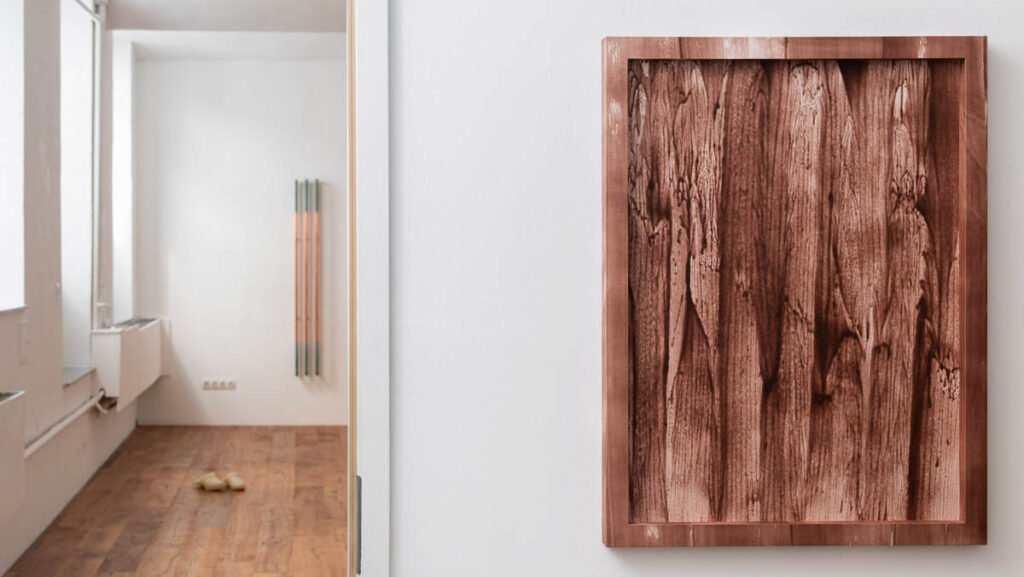
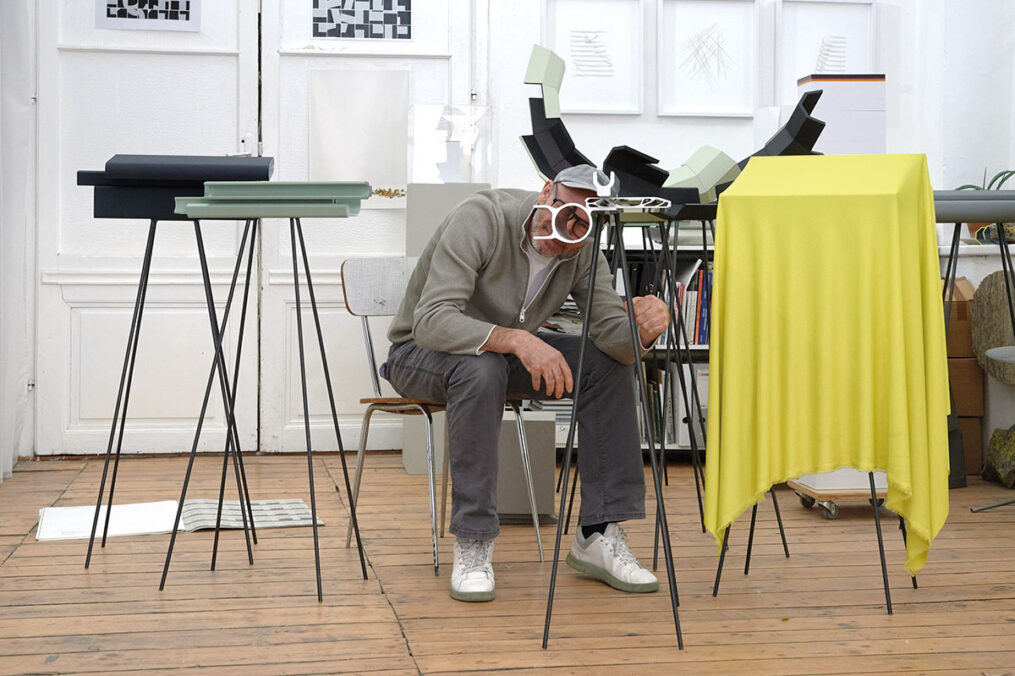
Your current exhibition „das Ich, das ich mir leihe“ takes place at gezwanzig gallery in Vienna. From what I’ve read, the theme of identity plays a central role. It’s such a complex and expansive topic today, and also so many issues connect to it. How do you approach identity in your work, in relation to images, passports, nationality, and similar elements?
Identity is something that has always been present in my work. It’s not a theme that suddenly appeared for this exhibition. I’ve been exploring it since I began as an artist. For this exhibition, though, I created a new piece, and that led me to frame the show more explicitly around identity. Many of my works relate to myself, to existence, to my surroundings, and to how we appear in the world. The “I” doesn’t just exist on its own. It’s shaped by influences.
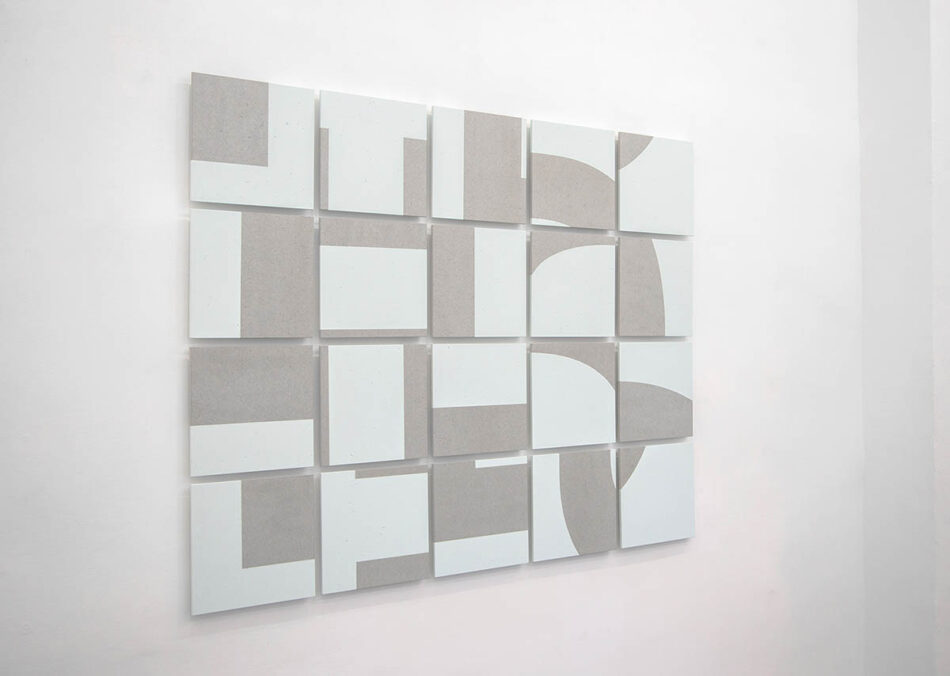
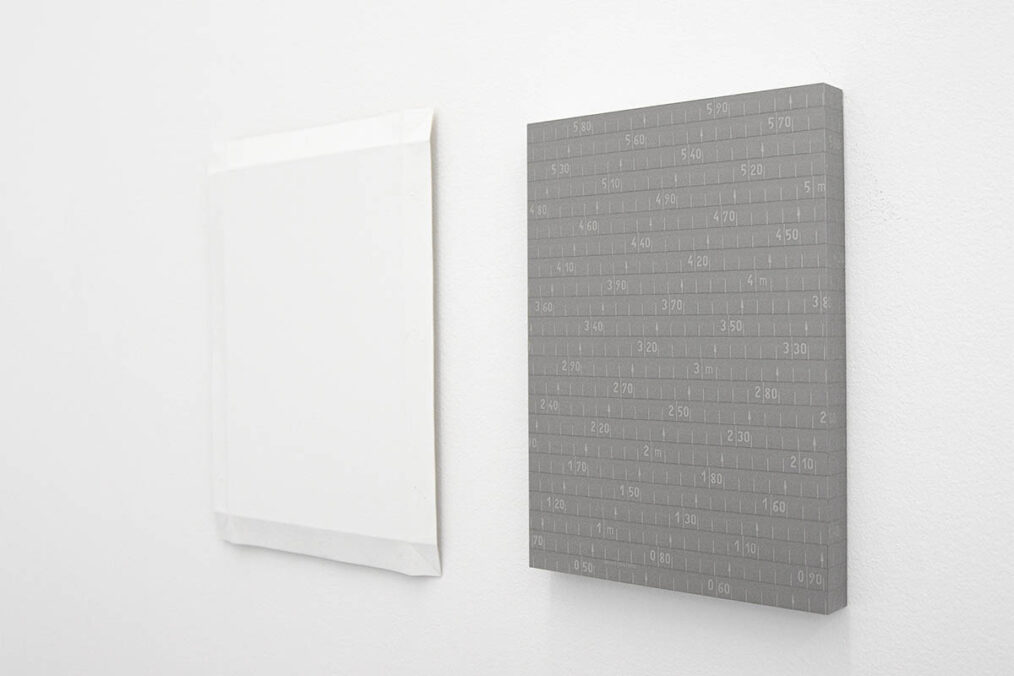
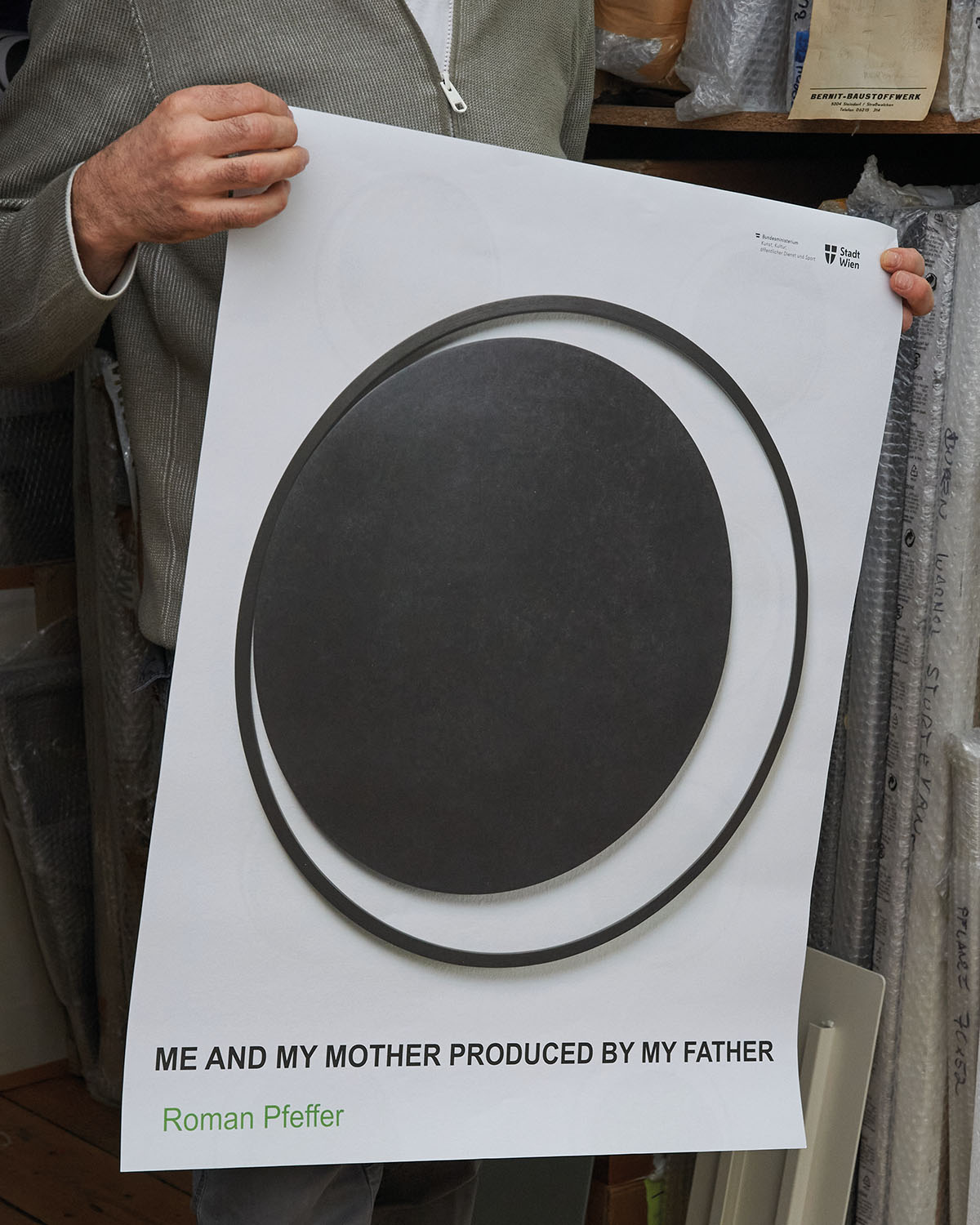
I grew up in a certain environment, had friends, went to school, and communicated with others. Through all of this, the “I” comes into being. I also explored this in an earlier work titled Me and My Mother, produced by My Father (2015); it reflects on the influence my father had on both my mother and me. He shaped our lives, our behavior, and even our identities through the way he seriously treated his family life. I also asked him to produce the artwork itself. This layered system, biological, emotional, and in the end artistic, is what the work tries to describe. It’s quite abstract work in its form, but the title gives it content.
That’s interesting, especially in relation to how you combine text, image, and objects. I would love to focus our talk on these connections and how you applied them in your past works and the newest ones.
Text was actually the starting point of my practice. I began painting in my studies, but at some point, I moved away from it. During my studies, we didn’t talk about the meaning behind it; we just produced work. There was a strong focus on form, on formal qualities, on things like the “perfect line.” But that kind of discussion didn’t interest me deeply. I became more interested in content—what the work actually says, what it communicates. That shift took time. I moved from painting toward text and from there into objects and installations. Then I started working with appropriation as well. Referencing existing works, building on them, sometimes even “correcting” them. That’s how things became more complex. And I enjoy that complexity. Not for its own sake, but because it reflects how meaning is actually constructed through many different perspectives.
I am interested in one of your early works: Family Portrait (2006). Can you explain how that work developed?
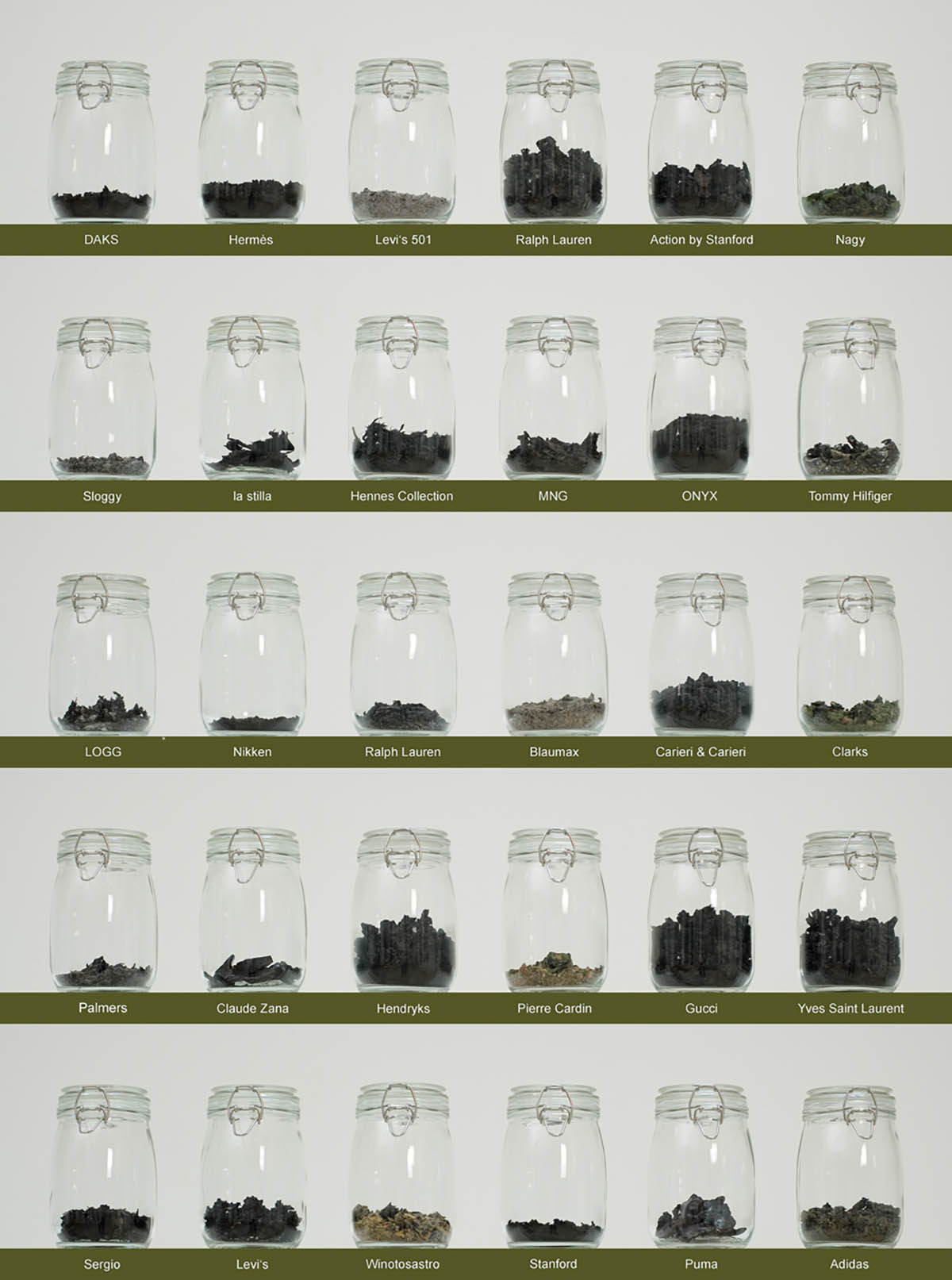
It actually started with me. I took off everything I was wearing for the full day, including shoes, socks, trousers, underwear, a shirt, and a pullover. Then I burned all the fabrics and placed each one in a separate glass container to create a kind of portrait of my surface, of how I appear. That was the first version of the work. Clothing interested me because they are a form of representation. The burned material remained, but the identity attached to it became more abstract.
I decided to create a kind of family portrait with one family from my surroundings back then. I asked each family member to give me a full outfit they had worn that day. There were five people: the father, the mother, and three children.
Did they know what you were going to do with the clothes?
They knew they wouldn’t get the clothes back. But they didn’t fully know what would happen. The work raises the question: What is the value of an object? Once the jacket becomes ash, materially, it’s no different from any other burned fabric. But for the person owning it, it carried a completely different meaning. This tension between material reality and perceived or attached value is central to my work.
Does the original price of the clothing define the value of the piece?
I once tested that idea. A collector asked me to create a similar family portrait for his family. I told him the price of the artwork would be exactly the amount of money they spent on the clothes they were wearing that day, and they would have to give me those clothes. He refused.
When value becomes personal and immediate, when it “hurts,” in a way, people stop being spontaneous. They begin to negotiate with the idea.
You mentioned in our chat before the work, Foundation Tower – Growing (2009), involving catalogs for the exhibition in “Ursula Blickle Stiftung.“
That was for a group exhibition „Bücher, Bücher, Bücher – Nichts als Bücher“ curated by Peter Weiermair at the Blickle Foundation. They produced a catalog for every exhibition that ever took place in the foundation, and I proposed to use all of them as material. I created a sculptural structure that kept growing upward, a kind of tower made from these catalogs, almost like an archive expanding into space. The idea was that the foundation continues to grow through its documentation. There’s also a personal story connected to that work.
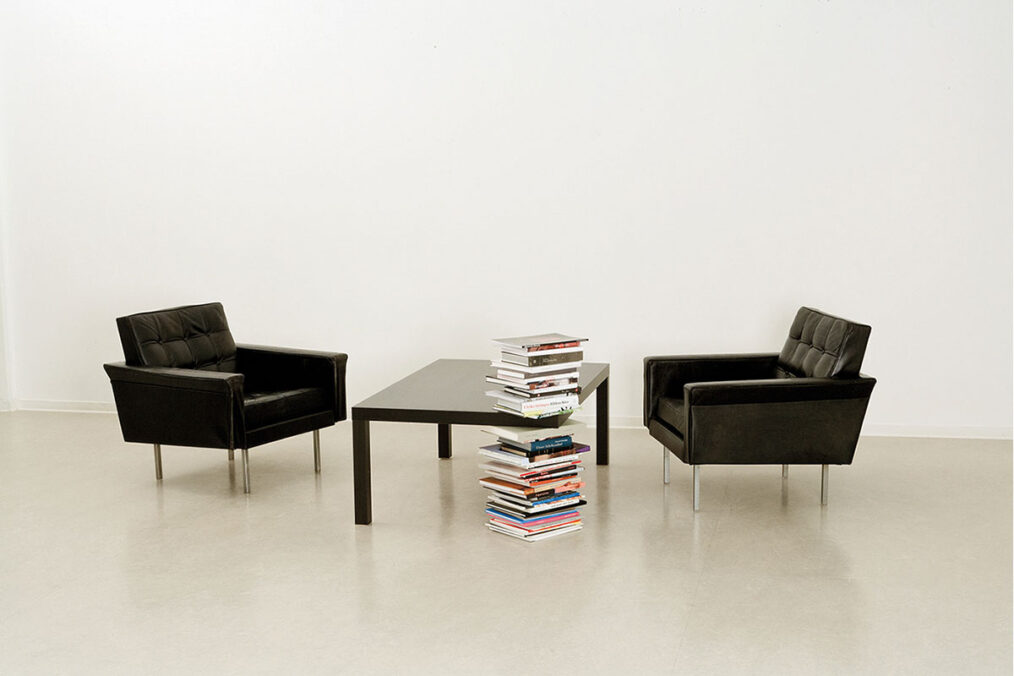
I was a young artist and tried to reduce costs by asking if the exhibition space could provide chairs instead of transporting mine. They refused; they said, “You’re the artist, you have to choose the chairs.” So I ended up taking chairs from my own apartment and sending them to the exhibition. Later, when the piece was sold to the Blickle Foundation, I realized I had effectively sold my own furniture as part of the artwork. Fortunately, the price allowed me to replace them.
There’s also a strong sense of structure in your work: mathematics, measurement, and even physics. Why do these systems play a big role?
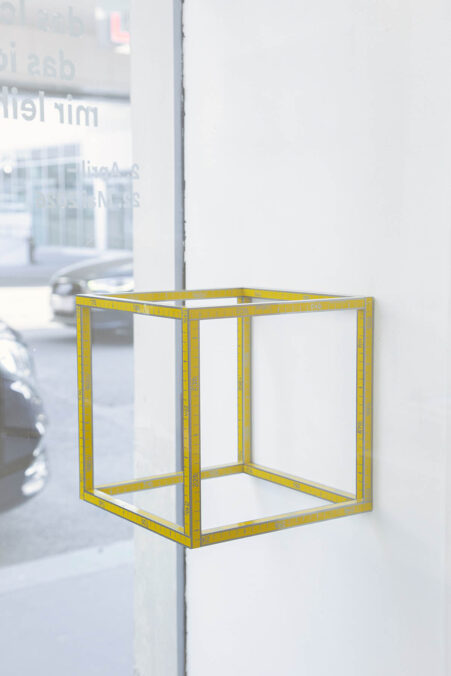
I think these systems provide a reference point and order. They ground the work. Then I can introduce variations or disruptions that shift how we perceive that structure. For example, in the piece Me and my mother, produced by my father (2015), the inside corresponds to my mother’s height, while the outside corresponds to mine. It’s a simple mathematical system, but there is a personal meaning that I attached to it.
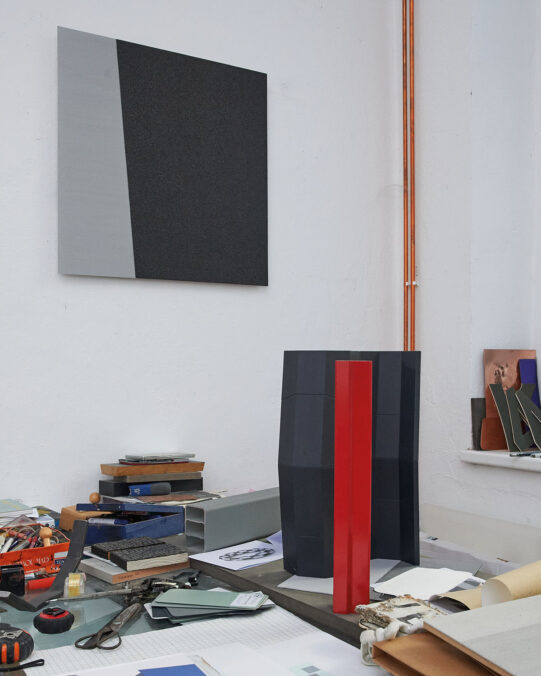
I prefer to work with systems that exist and then alter them. Another example is a sculpture where a stone rests on a pedestal. The pedestal only stands because the stone is there: If you remove it, the structure collapses. It becomes a question of balance between nature and human intervention.
Your work also seems to question value, not just in materials, but in broader social or political terms. Would you agree?
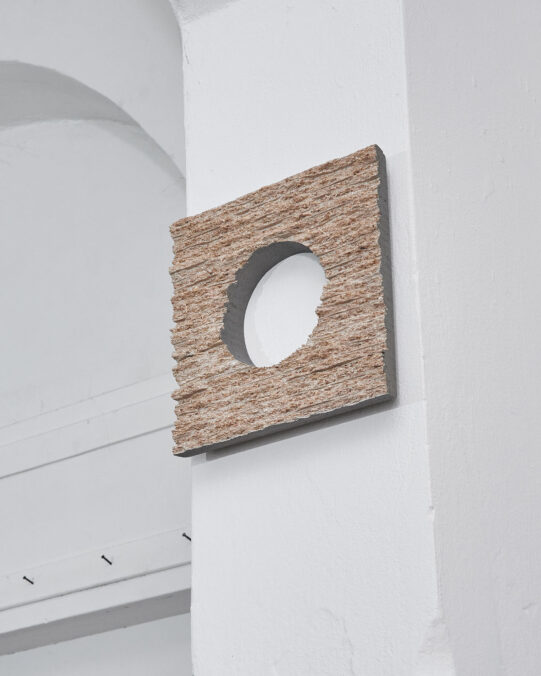
Yes, society is built on systems: political, economic, and social. These systems assign value to things, often in arbitrary ways. For instance, I created a piece that looks like stone but is actually made from chipboard—a cheap, artificial material made of wood and glue. It mimics something natural and valuable, but it’s a product of industrial production. It reflects the kind of “sedimentation” we create through consumption. In the beginning, I was very strict and systematic with my work. Over time, I allowed myself more freedom. The system is still there, but I don’t always use it completely. For example, instead of using all parts of a circle, I might use only seven segments instead of sixteen. If I used all sixteen, it would form a complete circle again—but by leaving parts out, the form remains open, incomplete, and more dynamic.
Could you elaborate on your approach to abstraction and the processes you engage with in your work?
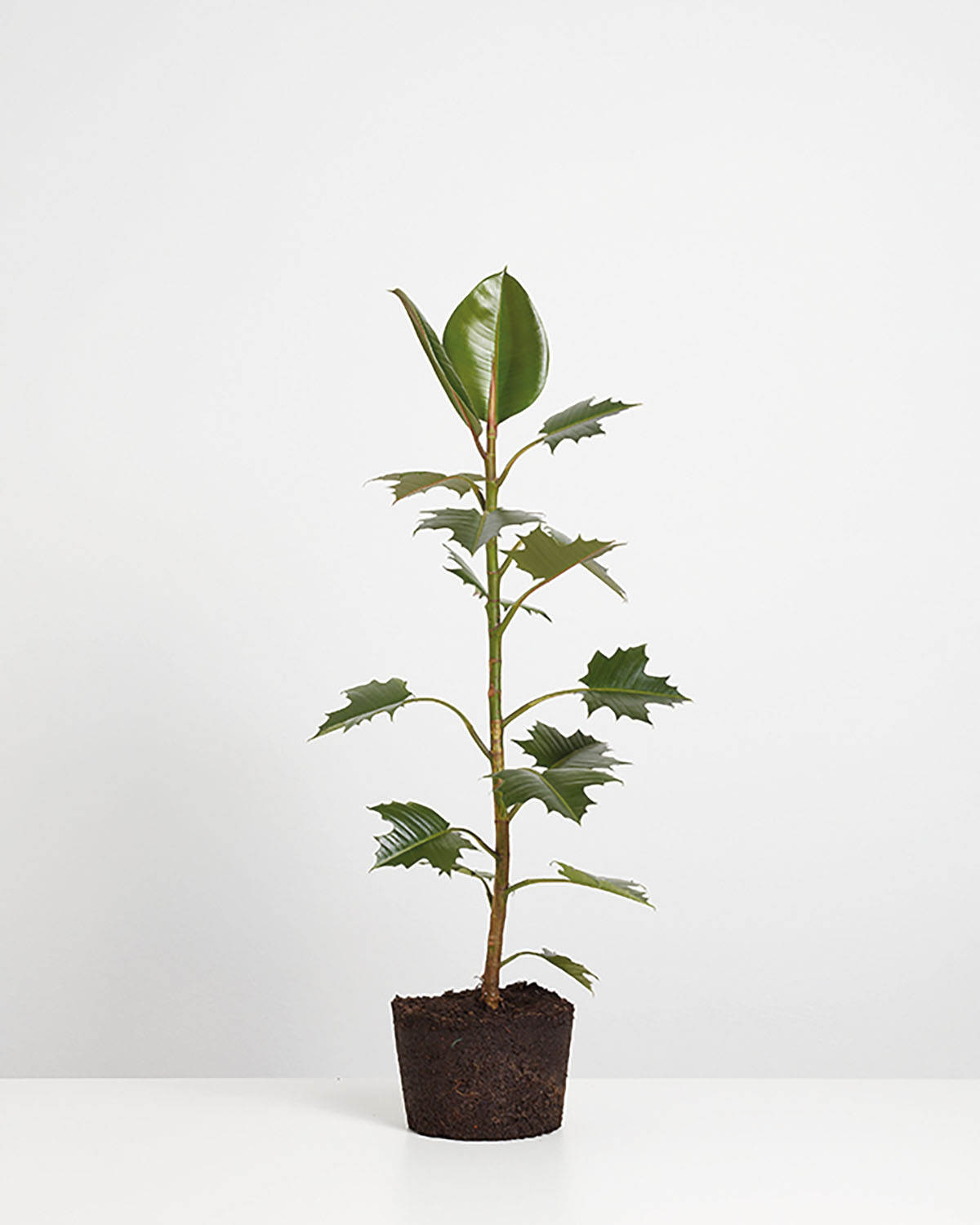
I add a layer that shifts the normality of the object, form, or concept. For example, I made a series called Cultivated Plants (2012). A photograph that looks like a depiction of a plant at first glance, but the leaves are shaped unnaturally: I cut them into forms that don’t belong to them but to other plants. At first, people might not notice anything unusual. But then something feels off, and they begin to question it. This moment of realization is important in that work; it opens up questions about how we shape nature, how far we go in controlling it, and where the boundaries lie.
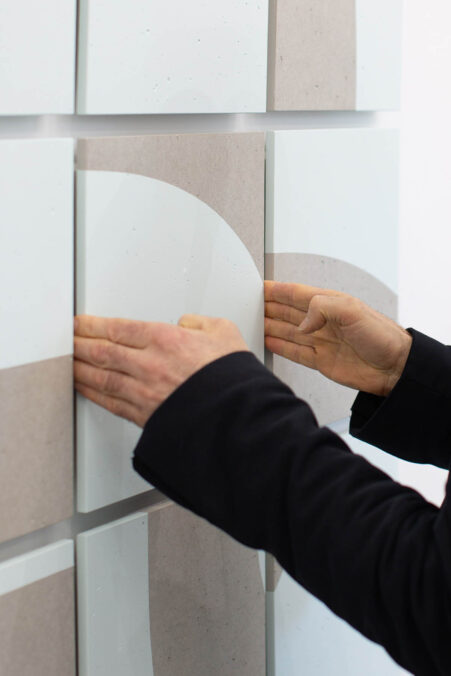
When something is purely abstract, it opens up possibilities, but it can also feel unsettling. I like to create a balance. I start with something that feels familiar.
Is there a particular work of yours that engages strongly with text as a primary medium?
There was an exhibition at Schloss Geymüller in Vienna for which I created a work titled Swap (2006). Back then, I was invited by curator and writer Maximilian Geymüller to create a work for the castle’s historical setting. Old paintings had become almost invisible; they turned into decoration. They got the same status as furniture at some point. Nobody looked at them anymore. So I removed the paintings and asked art historians to write about them. Then I printed those texts at the same size as the original paintings and presented them in their place. The writing became the painting.
What was your intention behind this work?
The key question was, „What do you actually need to know about something?“ In that case, I removed the paintings and presented only their descriptions. The description became the artwork. So instead of seeing the image, you read what it is. It’s a direct form of communication. It also highlights the role of the people who produce meaning around art—the writers, the theorists, the curators. Furthermore, it shows that art is not created by the artist alone. It’s a whole system: the artist, the artwork, the text, the curator, all the people working in the institution, and the audience. All of these elements and people are interconnected and shape how the work is understood.
Have you ever considered presenting the works purely as written concepts, where the idea itself is the work? Are you comfortable with viewers sometimes missing the meaning you wanted to communicate?
I don’t write down the concepts. The physical presence of the work is important to me. I do like it when people understand the work. Especially with certain pieces, the concept, and context add an important layer. But at the same time, it’s also possible for someone to connect with the work purely on a visual or material level. Some collectors have told me, “I don’t need the story—I just like the piece.” And that’s also valid.
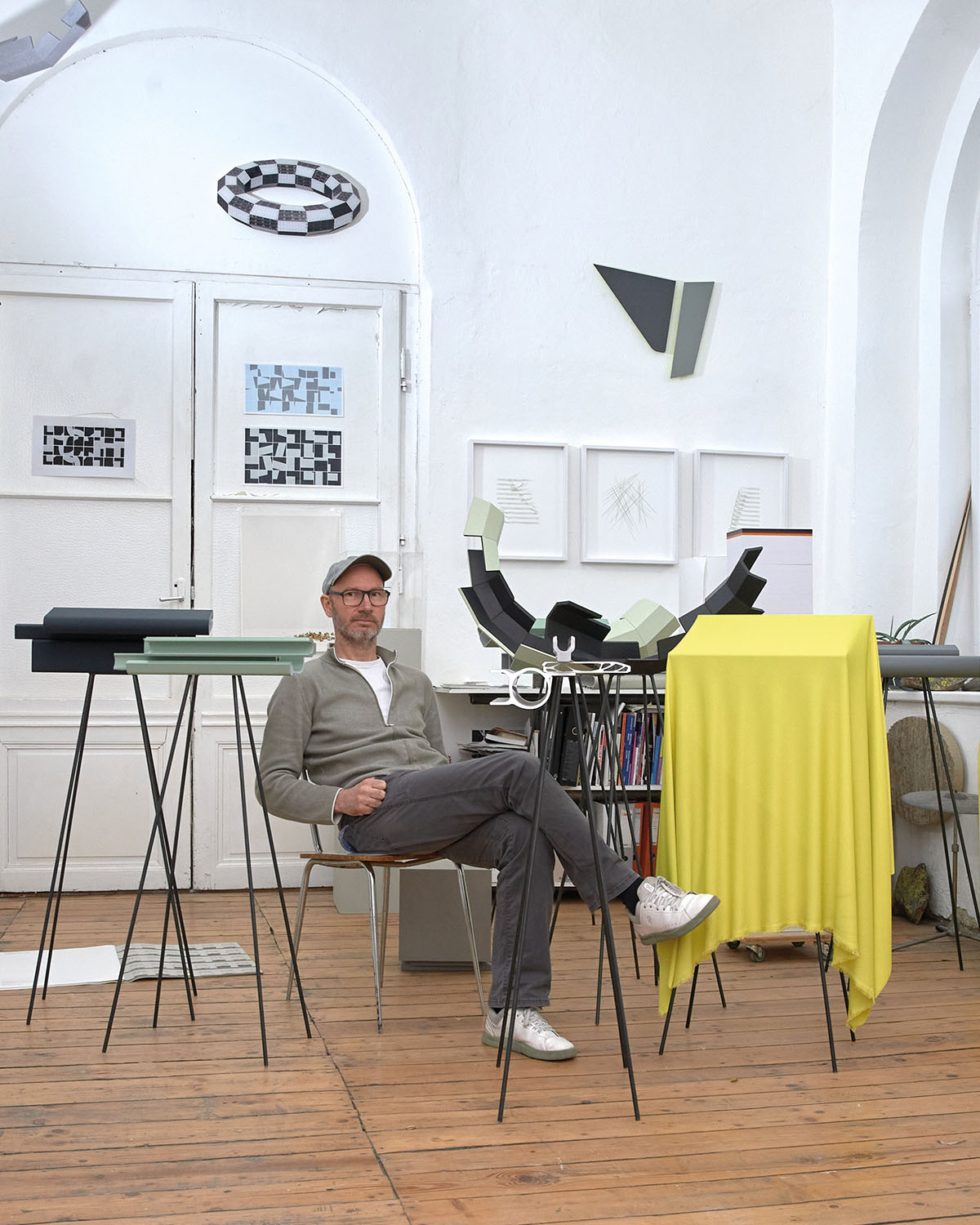
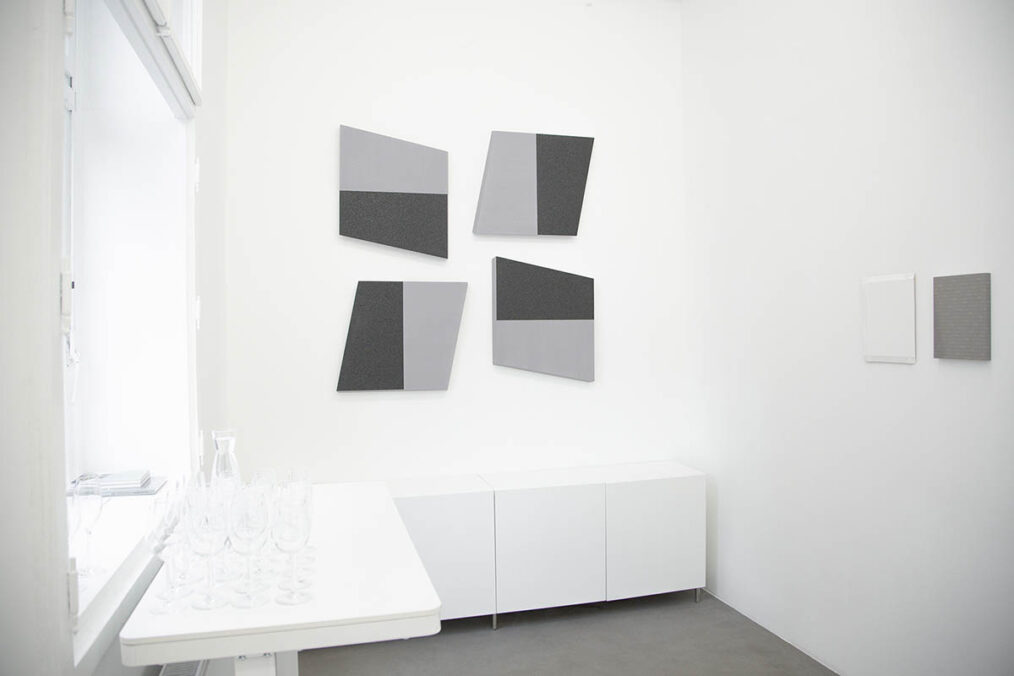
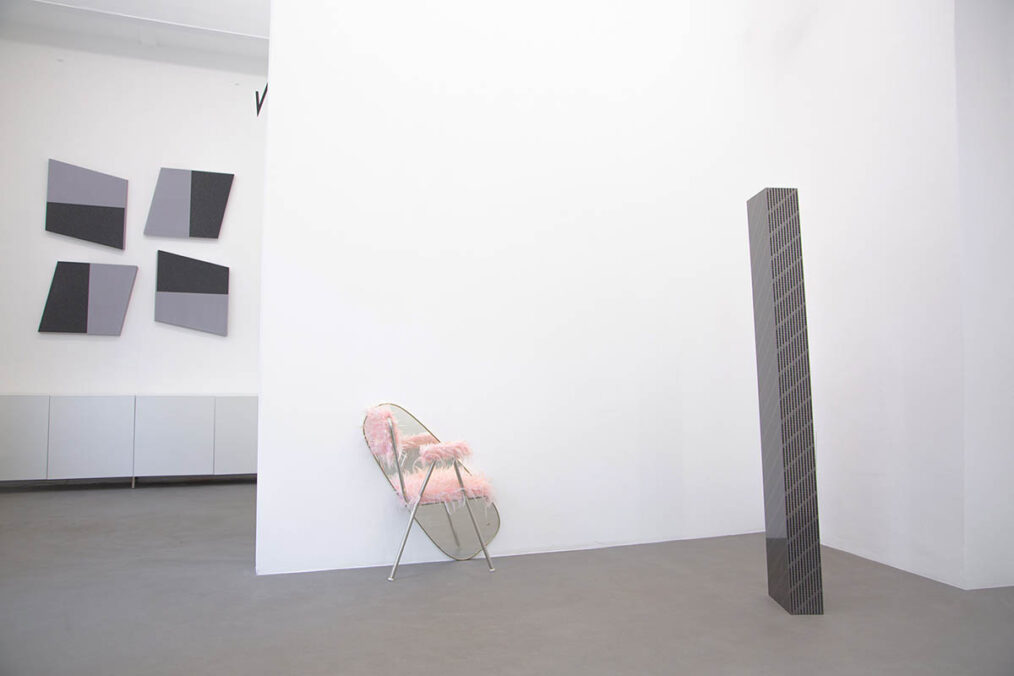
Many of my works operate on multiple levels. Take the ID pieces, for example, that are currently in the exhibition at gezwanzig gallery. On one level, you see letters: you recognize “ID,” something familiar and readable. But when I change the structure, like turning half of the elements, the text becomes abstract. This creates a shift: something we understand suddenly becomes unfamiliar. People often feel more comfortable when they can recognize something, when they can follow the meaning. But I’m interested in what happens when that clarity disappears. The question is, do we need to understand something to appreciate it? Or are we comfortable with abstraction?
Solo exhibition: Roman Pfeffer: das Ich, das ich mir leihe
Exhibition duration: 2.04 – 22.05 2026
Opening times: Wednesday to Friday: 11 AM-6 PM | Saturday: 11 AM-3 PM
Address and contact:
gezwanzig gallery
Gumpendorfer Straße 20
1060 Vienna, Austria
www.gezwanzig.com
www.instagram.com/gezwanzig.gallery
Roman Pfeffer – www.romanpfeffer.com, www.instagram.com/romanpfeffer
Roman Pfeffer (born in 1972) is from Upper Austria, Austria. Lives and works in Vienna. He is known for a conceptual, multidisciplinary practice that spans sculpture, installation, photography, and text-based works, often transforming everyday objects through processes of abstraction and irony. Pfeffer’s work explores perception, order, and the boundaries between art and daily life, and has been exhibited internationally, while he also teaches within the TransArts program at the University of Applied Arts Vienna.