Inspired by Dürer’s botanical studies, the program invites visual artists, architects, designers, and self-taught individuals with previous drawing experience to develop their own artistic perspectives on nature through close looking and hands-on drawing practice.
The workshop program Large Piece of Lawn – Drawing the World of Plants, which you will lead this summer during the Berlin Summer University of the Arts 2026, is based on a series of excursions. The open call for applications is still running. Tell us more about the location you are going to and how your program is responding to this year’s motto, „ENOUGH“ of the Berlin Summer University of the Arts 2026.
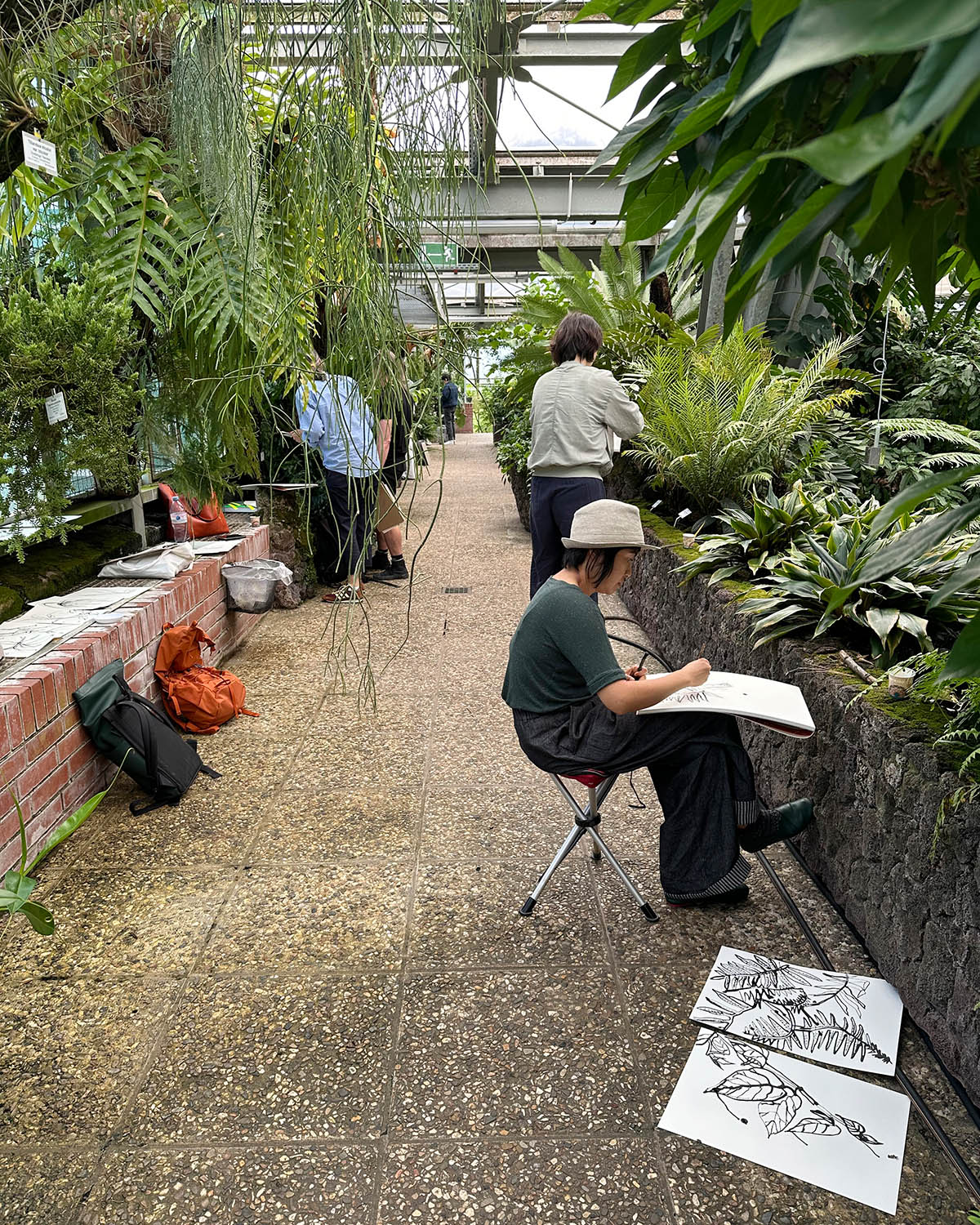
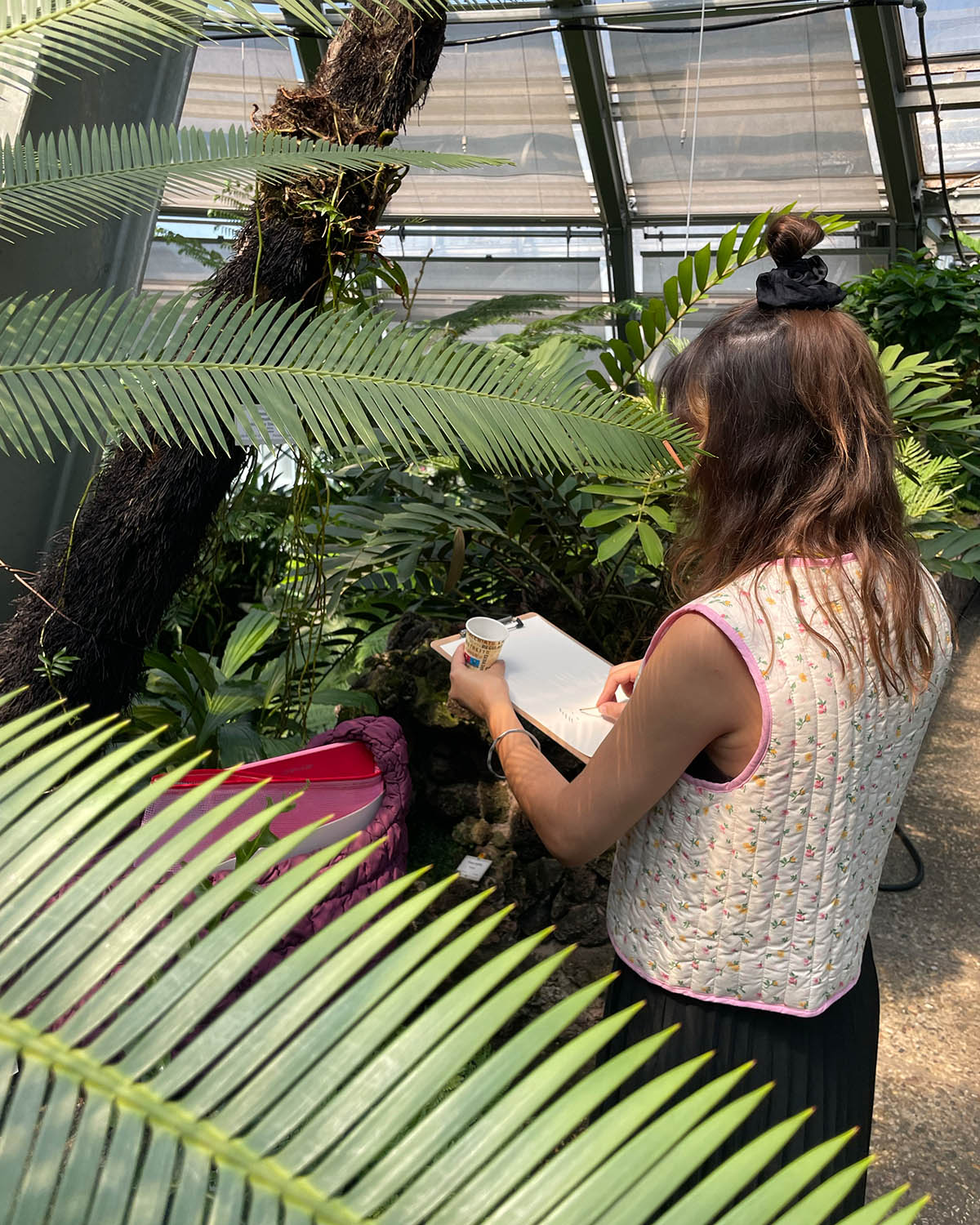
During the frame of six days of the workshop, we will take field trips to various locations in Berlin: the Botanical Garden, where we will explore the study of plants in their natural environment; the Drawing Studio, where participants will draw from instructional models and learn to identify relationships between forms and abstract concepts; the Kupferstichkabinett (Museum of Prints and Drawings) at the Staatliche Museen zu Berlin, where historical drawings by artists, primarily from the 17th, 18th, and 19th centuries, are studied and copied, and as the final station we will visit the microscopy lab at Humboldt University of Berlin, where the tiniest plant forms and their surface structures can be examined under binocular microscopes.
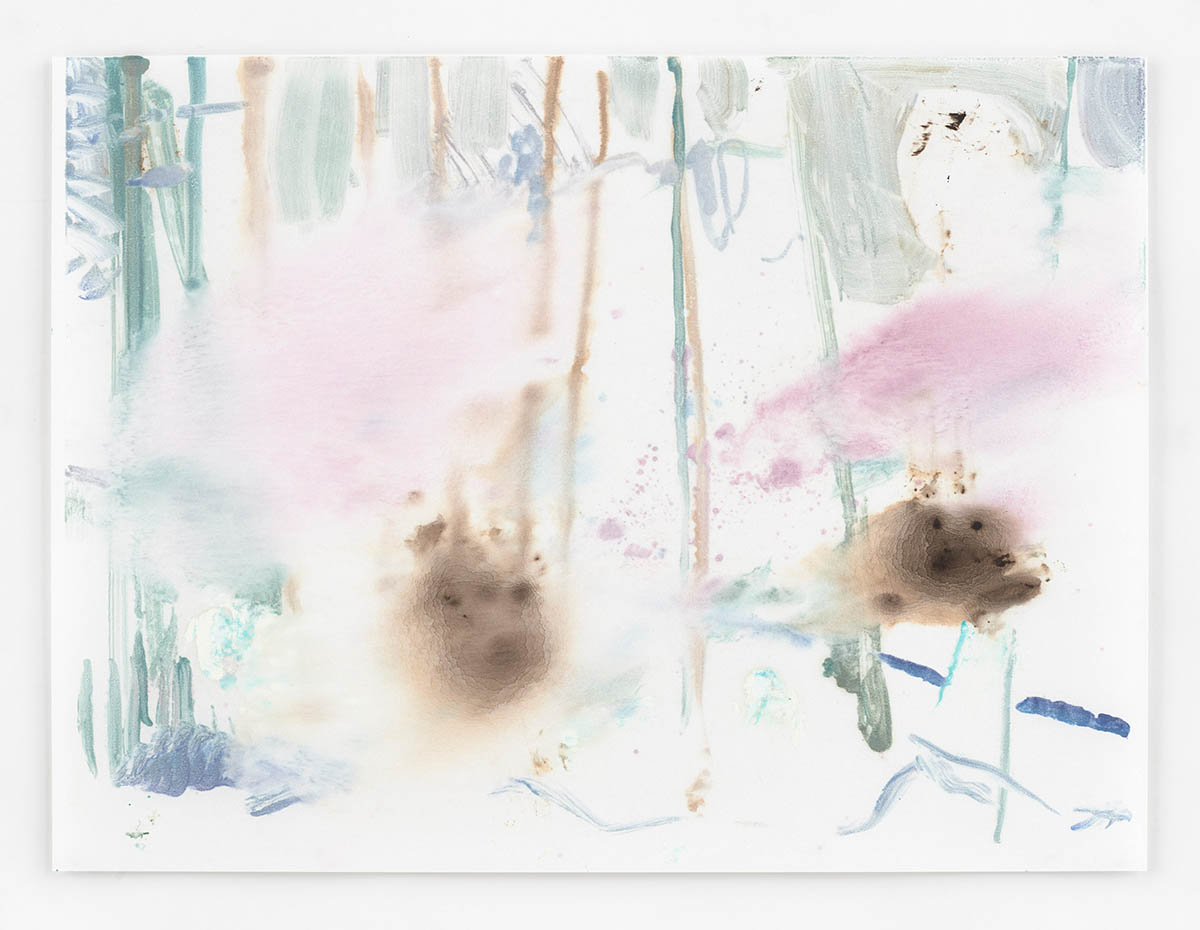
In this workshop, we won’t look far and wide; instead, we’ll take a very close look at aspects of the world that make our existence on this planet possible. The workshop raises awareness and fosters an appreciation for the beauty and fragility of the natural world. Using the simple and sustainable tools of a draftsman: pencil, paper, colored pencils, and water-soluble paint, we will explore the forms and variations of the plant world.
Tell us more about the process and technical part of the workshop.
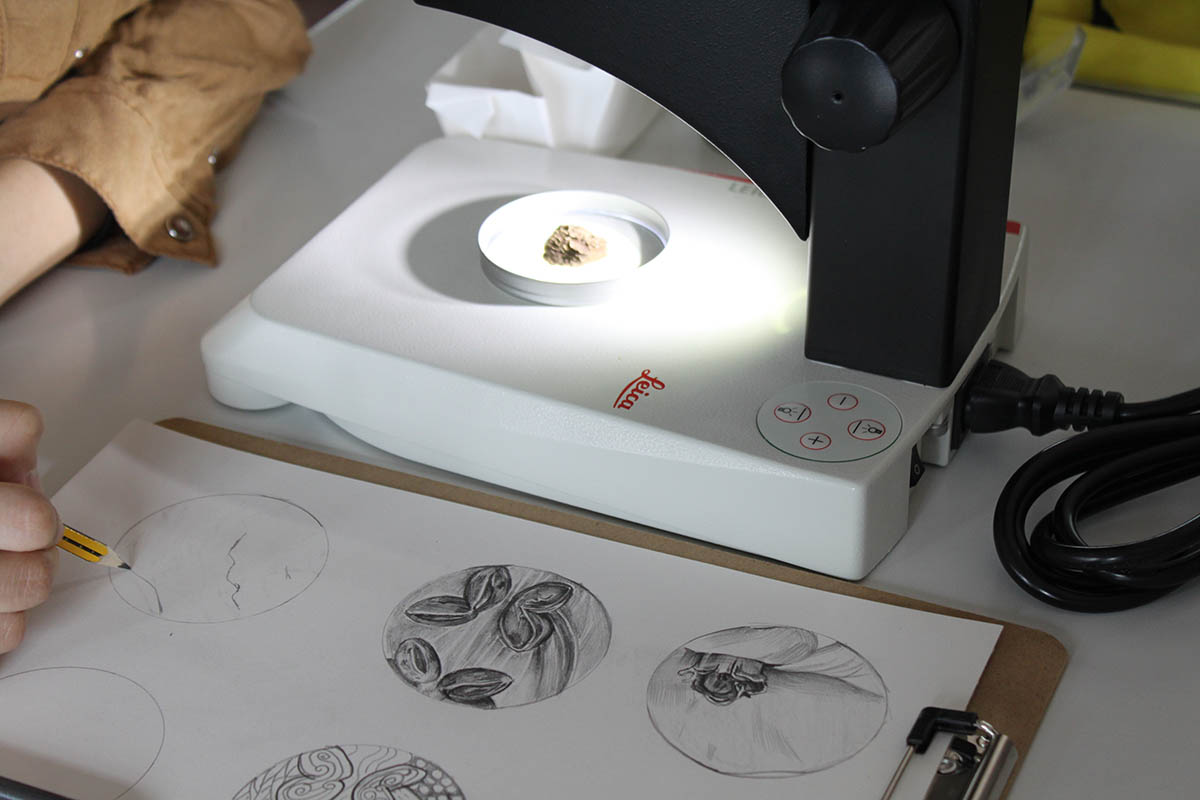
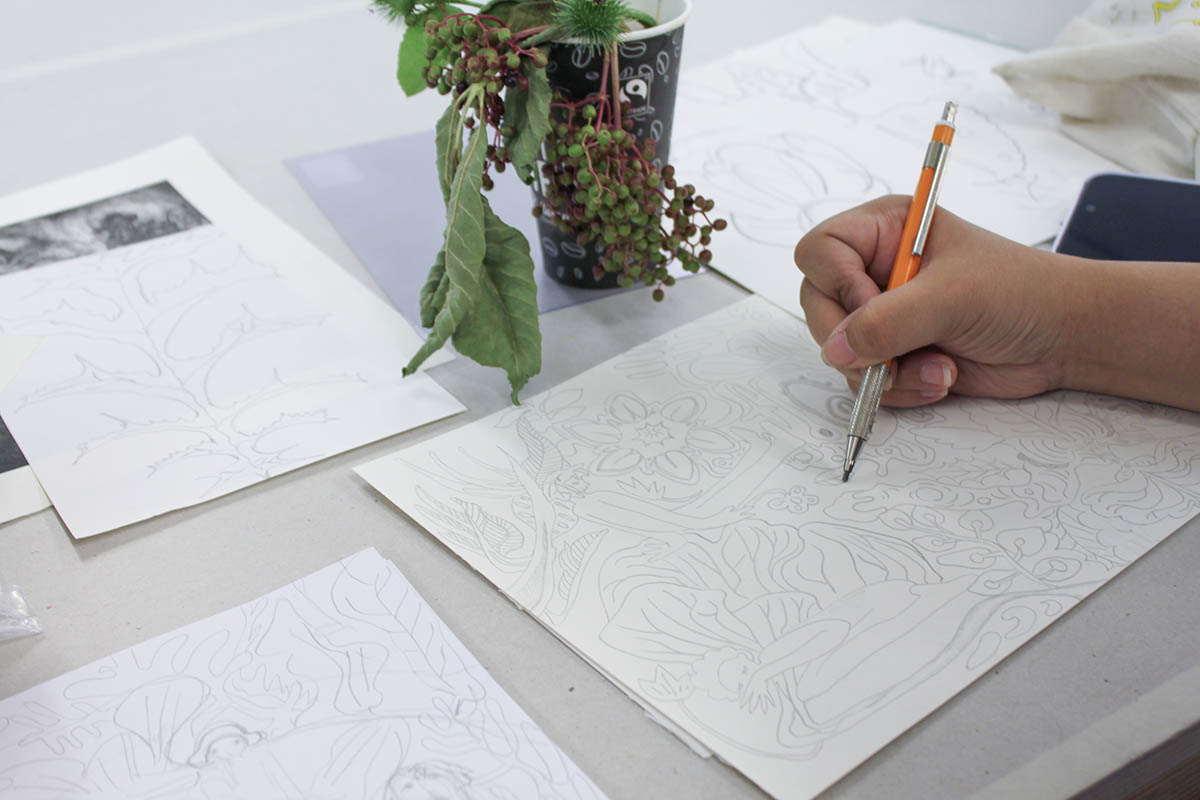
All these stops we are going to make are designed to present a comprehensive exploration of the plant world and the diversity of locations that offer opportunities to develop various drawing techniques and perspectives. We will make “collections” and categorize the parts of the plants into: blossoms, leaves, and stems. During the first few days of the course, participants will collect even the tiniest plant parts and seeds, which we will then examine under a microscope and sketch, alongside a small seed collection that I will provide.
It is always fascinating and rewarding to be able to explore the microcosm of a plant seed, a universe of structures and forms that is otherwise hidden from our view.
Since 2013, you have been the head of the Laboratory for Drawing at the Berlin University of the Arts. What is your background before coming to the position you are holding now?
In the early 1990s, I participated in a three-year preparatory program at the Dresden Academy of Fine Arts; later, I studied Communication Design at the Weissensee Academy of Art and completed a master’s degree under Nanne Meyer in 2001.
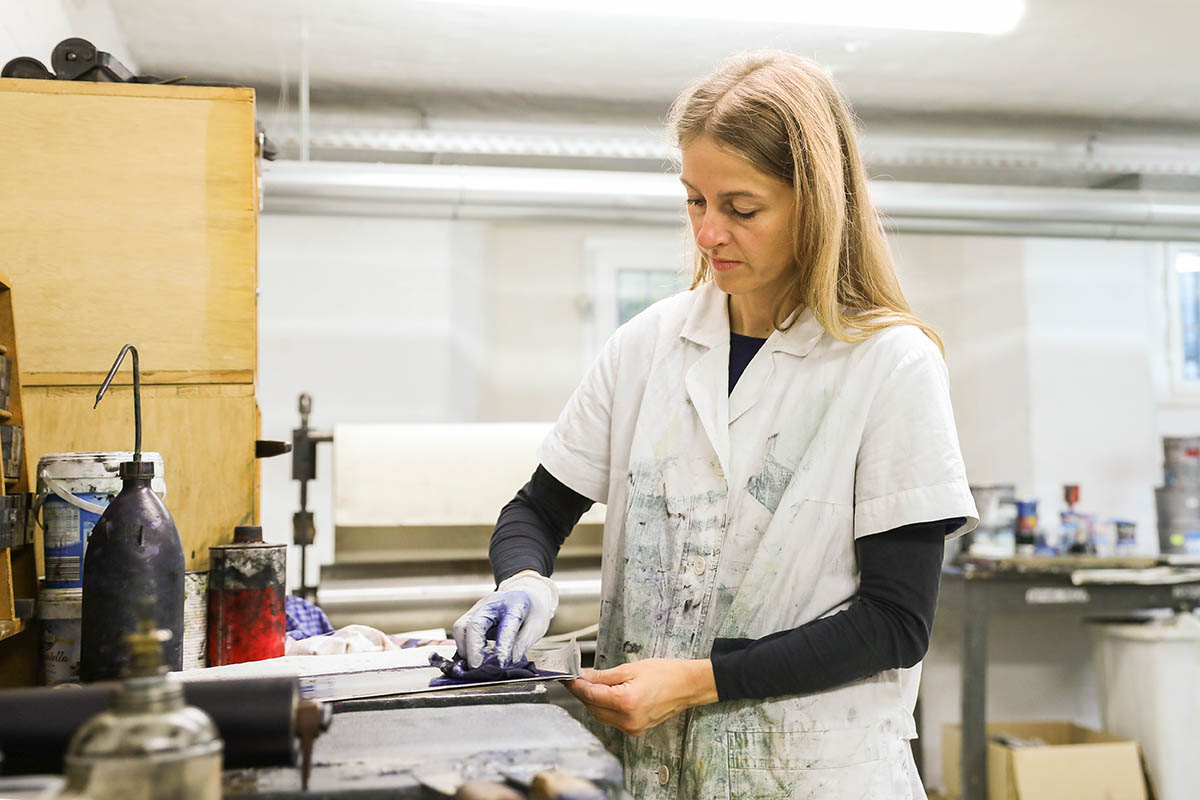
During my studies, I focused primarily on drawing and exploring projects related to the visual arts, and I attended the university’s workshops and explored various artistic media in addition to drawing and painting. Printmaking interested me a lot, and it continues to occupy me even today, through my position here at the UdK Berlin, where I also lead a small printmaking workshop in the Drawing Lab. I am working with Gravure Printing and Letterpress printing techniques, and combining them with drawing and painting.
What is the focus point in your practice, and what motivates you to come back to it over and over again?
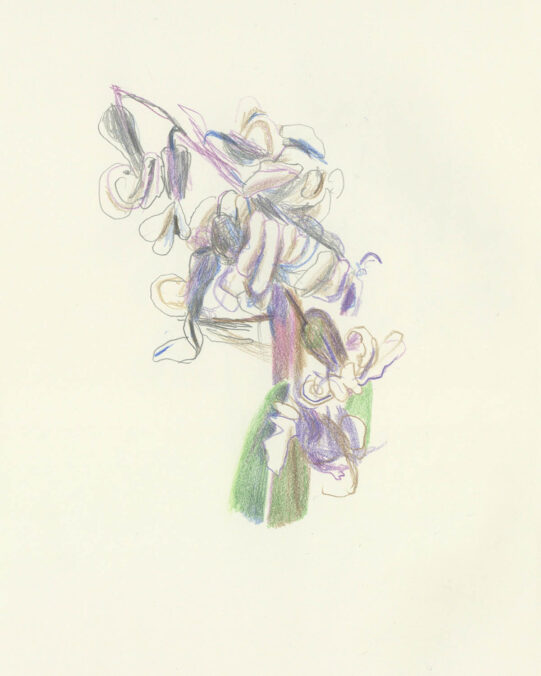
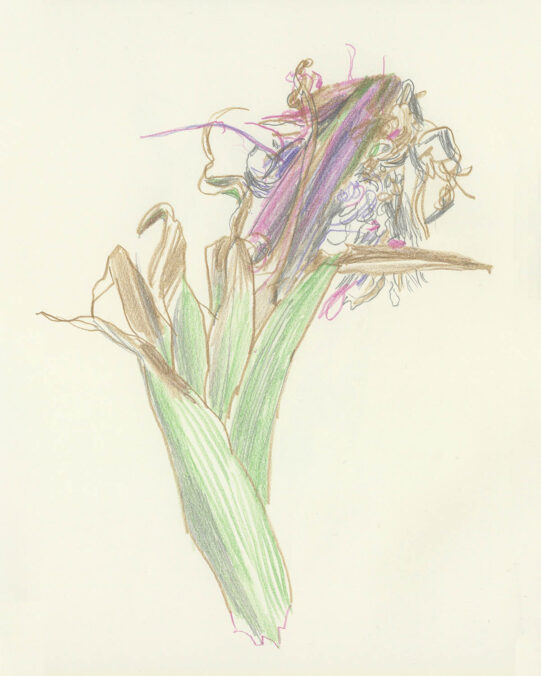
I am deeply fascinated by natural phenomena and plants. Wherever I go, I make numerous landscape studies and observe weather phenomena. I usually record my drawings in sketchbooks when I’m out in nature. Through drawing, I experience the process of perception more intensely and deeply, and at the same time, I build a collection of forms and memories of what I have observed; I draw from this archive for my independent artistic work in the studio and in the printmaking lab
For me, art is the opportunity to create a space in which the fleeting, ephemeral aspects of nature are preserved.
You worked for the Museum für Naturkunde Berlin, where you made scientific drawings in the zoology department. What was different in that process than in drawing plants, human figures, or expressive drawings?
My time at the Museum für Naturkunde was formative for me because it was there that I had the opportunity for the first time to create drawings of type specimens from the zoological collection under a microscope in collaboration with scientists. This opened up a whole new world of forms and information for me, which was immensely inspiring artistically. The key was to depict and highlight the essential characteristics of a collection specimen in great detail. In addition, given certain limitations in representability, it was necessary to refine drawing techniques and encode information about the object into graphical codes to make it presentable in scientific publications. This limitation of the drawing method opens a door to abstraction, and the new diversity of structural forms opens up a new level of perception.
The difference lies in the possibilities you have when drawing different subjects. Plants don’t move—or at least not fast enough for the human eye to perceive—which means there are ample opportunities to capture them in great detail. With animals, it’s different. Imagine a live bird or a butterfly; of course, it won’t sit still, so you can draw it in detail. But you can still capture it beautifully; it’s simply a different kind of work, perhaps more gestural or expressive. Furthermore, the plant world, across its various genera, is characterized by an incredible diversity and variety of forms, which can serve as an endless source of inspiration for artistic work.
Together with Angela Nikolai, you published the book PFLANZEN FORMEN LEHRE. What is it about, and how relevant is it to the studies of drawing?
This publication brings together student projects from the seminar “In the Footsteps of Meurer and Blossfeldt,” which was developed and conducted in the summer semester of 2015 in collaboration with art historian Angela Nikolai, and presents them in detail. Moritz Meurer (1839–1916) and Karl Blossfeldt (1865–1932) were German artists and art educators. Their collaborative work in the field of morphology and the development of construction principles in natural plants within art education influenced the development of 20th-century modern design and the New Objectivity movement.
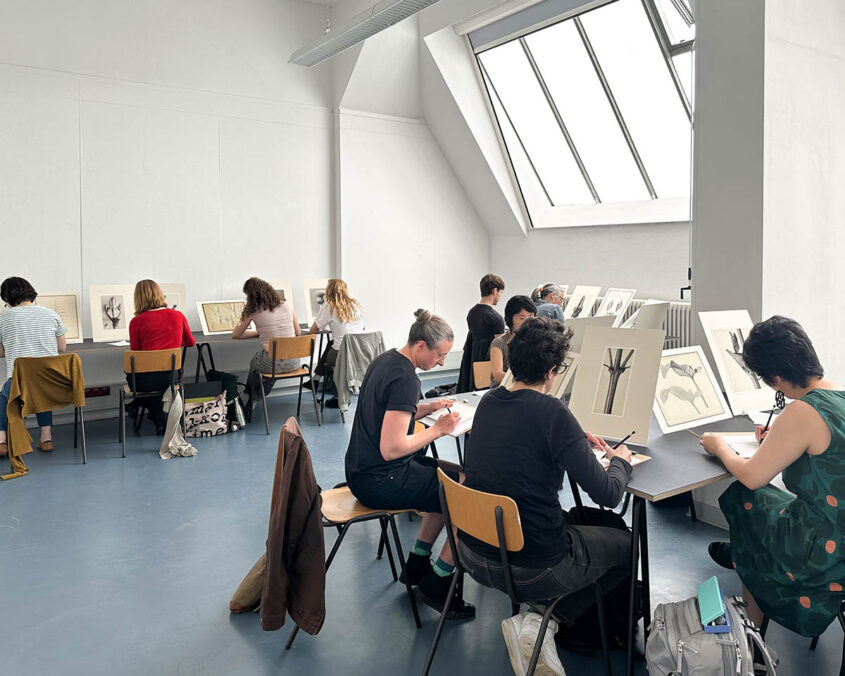
Meurer and Blossfeldt developed historical teaching materials for the school of the Berlin Museum of Decorative Arts, the predecessor institution of the University of the Arts. These materials enable a view already focused on the essentials, allowing the diversity of forms in the natural world to be structured and represented in space and on a flat surface. In our seminar, we explored how these historical teaching materials can be used in today’s art classes. The results were diverse, as the students were encouraged not merely to copy, but to develop their own approaches to botanical drawing based on their observations. The accompanying text we authored in the publication contextualizes contemporary nature drawing with an analysis of historical teaching methods from the period around 1890, when Meurer and Blossfeldt were teaching.
Why is the Berlin Summer University of the Arts important for the artists who might not be actively studying art?
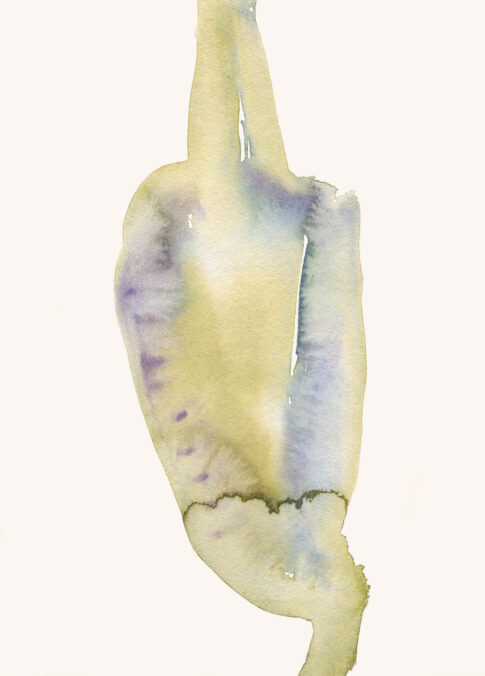
Artistic practice offers opportunities for self-awareness and self-expression. This is particularly true of drawing, as a direct form of expression that affirms our existence as active human beings through the mark we leave behind with every line we draw, which could be made with just a pen and organic watercolor. People who do not regularly practice art in their daily lives but are nonetheless interested in the arts have the opportunity, during the intensive and guided workshop sessions in the summer courses, to engage in artistic processes and exchange ideas with like-minded individuals—this is a wonderful opportunity.
For more information and to apply for Large Piece of Lawn – Drawing the World of Plants, led by Kerstin Hille, visit: www.summer-university.udk-berlin.de/?id=657
Large Piece of Lawn – Drawing the World of Plants, led by Kerstin Hille, is one of 30 international workshops taking place at the Berlin Summer University of the Arts at Berlin Career College, from June to September 2026. The programme is aimed at artists and creatives working across fine art, music, design, performing arts, and transdisciplinary practices.
The full programme of the Berlin Summer University of the Arts at UdK Berlin Career College, including all registration details, can be found at: www.summer-university.udk-berlin.de
Kerstin Hille – www.kerstinhille.de, www.instagram.com/kerstin.h.hille
Kerstin Hille is a visual artist and head of the Laboratory for Drawing at the Berlin University of the Arts. After graduating as a master student in 2001 at the Weißensee Kunsthochschule Berlin, she worked at the Museum für Naturkunde Berlin in 2004, where she produced scientific drawings in the zoology department. As an artist, she works in parallel with drawing and printmaking, forming intersections here and experimentally exploring the possibilities of these two media. Together with Angela Nikolai (née Bösl), she published PFLANZEN FORMEN LEHRE in 2016, which brings together historical and current positions in the study of plants in drawing at the Berlin University of the Arts.
Berlin Summer University of the Arts is offering creative workshops across June, July, August, and September at the Berlin University of the Arts (UdK Berlin). Organized by the Berlin Career College, the program brings together international participants for hands-on courses spanning the visual, performing, and applied arts. Financial support options are available for those who qualify, and full course listings can be found on www.summer-university.udk-berlin.de.